First aid for bleeding
- First aid for internal bleeding
1- If the injury appears to be minor, apply ice or a cold compress to help relieve pain and swelling. Place a cloth between the ice or cold compress and the injured person's skin to prevent skin damage
2- Get the injured person to the hospital immediately because internal bleeding cannot usually be treated with first aid. While you are waiting for medical help to arrive:
- Do not cause any further harm to the injured person
- Complete rest and not moving the injured person as much as possible
- Lay the injured person on the floor with his head turned to one side and advise him not to move
- Raise his legs if his injury allows it to help blood reach vital organs
- Loosen any tight clothing around the neck , chest and waist. Reassure the injured person and explain to him the need for him to relax
- Monitor CPR Basics
- Maintain normal body temperature
- Do not give the injured person anything by mouth
- Transport the injured person quickly to the hospital. Carry him on a stretcher while maintaining the treatment position
steps:
1. The type of bleeding (arterial or venous), its location (internal or external), and its cause (accident or post-surgery) are determined.
2. Direct pressure is applied to the wound using a sterile dressing in the case of external bleeding.
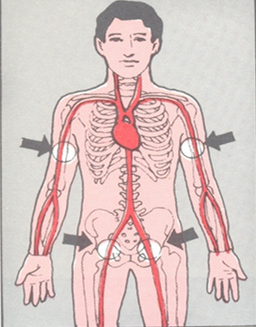
3. There are three practical methods to stop bleeding and reduce its severity:
o Direct hand pressure on the bleeding site.
o Applying pressure to specific areas of the body.
o Using arterial tourniquets.
4. Insert a large or larger-sized peripheral cannula.
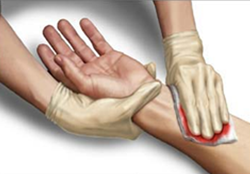
5. Draw a blood sample from the patient for a complete blood count and blood typing to reserve blood for the patient.
6. Place the patient under observation for blood pressure, pulse, temperature, and breathing.
7. Do not attempt to wipe blood from the wound site or remove the dressing or cloth if it becomes completely soaked with blood to avoid continued bleeding due to:
o Reducing pressure on the area for a certain duration.
o Interfering with the natural clotting process.
internal bleeding:
1- Treat shock and warm the patient
2- The injured person is not given any thing by mouth
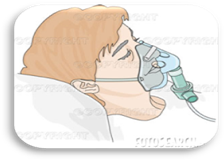
3- The injured person should be given oxygen
4- The patient is given fluids according to instructions
5- Create a fluid map to calculate the amount of fluid entering and exiting body
6- Vital Signs Observation