Nursing Care for Infectious Diseases
- Risk Factors
Anyone is considered susceptible to infectious diseases, but a human is more vulnerable to catching an infectious disease if their immune system is not functioning properly. This may happen in the following cases:
· Taking steroid medications or other drugs that suppress the immune system, such as anti-rejection drugs for organ transplants.
· Having Human Immunodeficiency Virus (HIV) or AIDS.
· Having certain types of cancers or other disorders affecting the immune system.
In addition, other medical conditions increase the likelihood of infection, alongside factors such as implanted medical devices and malnutrition. There are also types of infectious diseases whose prevalence rate is higher in certain age groups.
Complications
Most infectious diseases have only minor complications. However, some diseases like pneumonia, Acquired Immunodeficiency Syndrome (AIDS), and meningitis can be life-threatening.
Examples of infectious injuries and potential complications:
· Human Papillomavirus (HPV) infection may lead to cervical cancer.
· Helicobacter pylori infection may lead to stomach cancer and peptic ulcers.
· Hepatitis B and C virus infection may lead to liver cancer.
In addition, some infectious diseases may become dormant, but can reactivate again in the future, sometimes not activating until decades later. For example, someone who has had chickenpox may face the risk of developing shingles (herpes zoster) later on.
Prevention
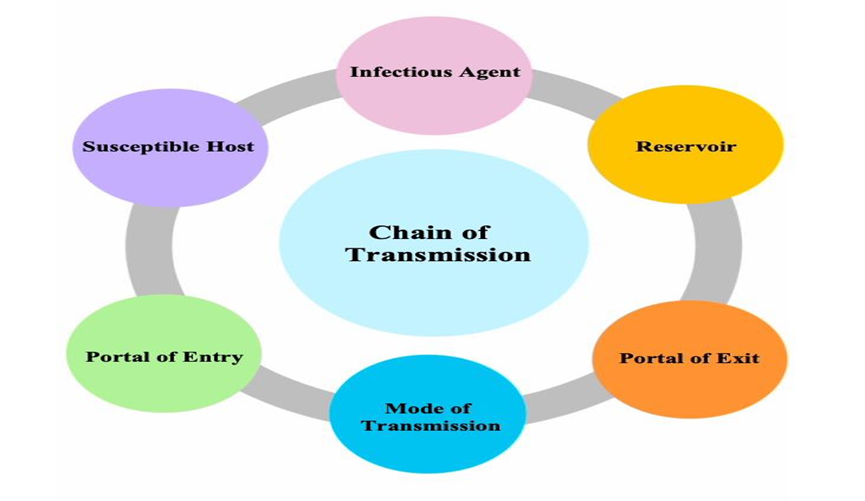
The diagram shown below represents the chains of infection. For an infection to occur, all these chains and the six conditions below must be present. Disabling any single one is sufficient to prevent infection. Efforts must join forces to break all these chains to ensure the greatest safety and minimize the likelihood of infection.
Infectious agents can enter your body through:
· Skin contact or injuries.
· Inhalation of airborne germs.
· Ingestion of contaminated food or water.
· Insect, tick, or mosquito bites.
· Sexual contact.
Prevention lies in
minimizing exposure to the pathogen by controlling infectious factors.
Tips to Reduce the Risk of Infection:
· Hand Washing: This is especially important before and after preparing food, before eating, and after using the restroom. Do not touch the eyes, nose, or mouth with hands after exposure to a potential contaminant.
· Getting Necessary Vaccinations: Vaccination can significantly reduce the chances of contracting many diseases.
· Reducing Interaction between People: Especially if someone among them has an infectious disease. For example, it is preferred that the patient stays home and does not go to work or mingle with others, especially in enclosed areas and halls.
· Safe Food Preparation: Maintain cleanliness of tables and other kitchen surfaces when preparing meals. Cook food at an adequate temperature sufficient to kill the infectious microbe. Examples: Ground meat at least 71°C; poultry at 74°C. Refrigerate leftovers promptly and do not leave cooked food at room temperature for long periods.
· Safe Sex: Always use condoms if there is a history of sexually transmitted infections or high-risk behavior.
· Do Not Share Personal Items: Such as toothbrushes, combs, and personal razors. Avoid sharing drinking cups or eating utensils.
· When Traveling: Research special vaccinations you may need, such as yellow fever, cholera, hepatitis A or B, or typhoid fever.
The Role of Family Nursing in Preventing Infectious Diseases
Infection control, protecting patients from microbes, and protecting health workers from those microbes represent one of the priorities of building patient safety as a behavior and method for delivering health service in various departments, including primary healthcare centers where it is very essential to apply infection control standards.
Providing nursing service assuming that all patients are potentially carrying infectious microbes, and therefore prevention means and measures must be applied to everyone.
Infection control measures remain one of the daily practices that medical care delivery systems need to repeat and remind all hospital and health center staff about. These practices, despite their simplicity, need reminding, especially since many cases of infectious diseases do not present with the patient visiting the hospital or health center for that direct reason, but rather for other medical reasons. Furthermore, patients may contract microbial infections in the hospital or primary healthcare centers which they visited free from infection.
Nursing must continue providing health information to staff, patients, and their families regarding prevention and treatment methods to limit the spread of these diseases, such as:
· Using medications and vaccines correctly: Keeping vaccines on schedule, and following recommended vaccinations for children, adults, and even pets.
· Using antibiotics exactly as prescribed, taking them for a full course as determined by the doctor, but not for colds or non-bacterial illnesses, and never self-medicating with antibiotics or sharing them with family or friends.
· Returning to the doctor for any infection that deteriorates rapidly or any injury that does not get better after taking prescribed antibiotics.
· If traveling from one country to another, obtaining all recommended vaccinations for that country and using travel prophylactic medications.
· Maintaining hygiene: Washing hands frequently, especially during cold and flu season. Being aware of what one eats and preparing foods carefully.
· Protection and staying away from carriers and infected people.
· Caution regarding all wild, domestic, and unfamiliar animals: After any animal bite, clean the skin with soap and water, and seek medical care immediately. Avoid areas where ticks and insects are present. Protect the body from mosquitoes.
· Minimizing the spread of infection: If sick with a cold or flu, staying home and not mixing with people, and even not moving around all rooms of the house is the best way to prevent spreading infection.
· Practicing safe sex with the spouse using condoms if either partner is exposed to a specific disease.
List of Infectious Diseases
· Meningitis
· Measles
· HIV / AIDS
· Tuberculosis (TB)
· Sexually Transmitted Diseases (STDs)
· Coronavirus (COVID-19)
· Seasonal Influenza
· Avian Influenza
· Hepatitis B & C
· Mumps
· Rubella
· Methicillin-Resistant Staphylococcus Aureus (MRSA)
· Diarrhea
Overview of Some Infectious Diseases, Their Symptoms, and Prevention
Meningitis
Symptoms:
In children:
· Severe crying
· Swelling in the fontanelle area of the head
· May be accompanied by dehydration symptoms due to the child refusing feeding
In adults:
· Sudden high fever
· Stiff neck
· Severe headache with nausea and vomiting
· Seizures
· Difficulty concentrating
· Fatigue and difficulty waking up from sleep
· Sensitivity to light
· Appearance of a skin rash
Prevention:
· Getting vaccinated for bacterial meningitis types
· Washing hands thoroughly
· Maintaining general hygiene and not sharing cups, toothbrushes, etc. with others
· Ensuring healthy nutrition and exercise to strengthen the body and its immunity against the disease
· Covering mouth and nose when sneezing
· Administering prophylactic treatment to arrivals from endemic areas or contacts of infected individuals
Measles
Measles usually begins with cold-like symptoms such as mild to moderate fever, which may be accompanied by a persistent cough, runny nose, conjunctivitis, and sore throat. These symptoms may last for two to three days.
Afterwards, a skin rash begins to appear, consisting of small red spots starting on the face, especially behind the ears and at the hairline, then spreading to the arms, trunk, over the thighs until reaching the legs and feet to cover most areas of the body. During its spread stage, the body temperature rises sharply, reaching 40–41°C.
The skin rash gradually fades starting from the face and ending at the thighs and feet.
Prevention:
· The best way to prevent measles is to receive the MMR (Measles, Mumps, and Rubella) vaccine, which is among the routine vaccinations given to children.
· Keeping infected people away from healthy ones until they recover, to prevent transmission of infection.
Leishmaniasis
This disease appears in the form of hypopigmented skin patches, papules, nodules, or skin redness in the facial area.
The nodules enlarge over time and form large greasy patches or plaques.
They often ulcerate as the disease stages progress over time.
It is common for the effect of this disease to extend to include the nerves.
Prevention and Control:
· Preventing and controlling leishmaniasis requires a combination of special strategies because disease transmission occurs in a complex system involving humans, the parasite, and sandfly vectors.
· Early detection and effective clinical management limit disease spread and prevent disability and death.
· Early detection and prompt treatment of cases help reduce transmission and monitor disease spread and burden.
· Very effective anti-leishmaniasis drugs (treatment with miltefosine) currently exist. Access to these drugs has been improved through the WHO drug donation program.
· Vector and insect control, especially flies, helps reduce or stop transmission of this disease, particularly in domestic settings.
· Control methods include spraying insecticides, using insecticide-treated mosquito nets, environmental management, and personal protection.
· Continuous monitoring of disease spread is important, and prompt reporting of data is an essential element in surveillance and taking action during outbreaks and cases with high fatality rates under treatment.
· Social mobilization and fostering partnerships and cooperation with various stakeholders and vector-borne disease control programs.
HIV / AIDS
Symptoms:
Symptoms vary depending on the stage of the disease:
· Stage One: May be asymptomatic, or mild flu-like symptoms may appear.
· Stage Two: Some symptoms appear on the patient; they may suffer from severe diarrhea, rapid weight loss, high body temperature, shortness of breath, and swelling in the lymph node area.
· Last Stage: More serious symptoms begin to appear. The patient becomes more vulnerable to various cancers, severe pulmonary infections, chronic diarrhea, constant headaches, significant weight loss, vision disturbance, persistent white spots and strange wounds on the tongue and oral cavity. The patient also suffers from permanent chills or constant fever as well as excessive night sweats.
Prevention:
Prevention is summarized by preventing infection or working to refrain from exposure to activities that may lead to infection:
· The three main transmission routes for HIV are sexual contact, exposure to infected body tissue or fluids, or from mother to fetus or newborn child.
· Using daily "Truvada" medication to reduce the acquisition of HIV.
Tuberculosis (TB)
Symptoms of TB:
· Persistent cough for three weeks or more
· Coughing up blood
· Chest pain when breathing or coughing
· Weight and appetite loss
· Lethargy
· High fever
· Sweating, especially at night
· Blood in the urine if the kidneys are infected
· Back pain if the spine is infected
Prevention:
· Staying at home or in a private room (especially in the first weeks of infection)
· Continuous room ventilation
· Covering mouth and nose when talking, sneezing, and coughing
· Wearing a mask when walking around or being with other people
· Ensuring medication is taken on time and for its full duration
· Taking the BCG vaccine is recommended
TB treatment takes a long time ranging between 6-9 months. The following drugs are used to treat it:
· Isoniazid
· Rifampin
· Ethambutol
· Pyrazinamide
Viral Hepatitis B and C
Introduction:
Viral hepatitis is an important health problem. It is one of the infectious diseases caused by viruses, causing damage to liver cells. This damage can be temporary or permanent. Viral hepatitis is characterized by the presence of hepatitis viruses within liver tissues.
Viral hepatitis infects the body with jaundice (yellowing of the skin), especially in children. There are multiple types of viruses that cause hepatitis, among the famous types transmitted via blood are (B) and (C). The danger of infection with these viruses lies in the complications they cause leading to chronic liver diseases such as chronic cirrhosis or liver cancer.
Prevention:
Hepatitis B and C virus infections are transmitted via blood transfusion, use of contaminated needles and surgical instruments, contaminated shaving tools, toothbrushes, from a virus-carrying mother to the fetus, and rarely transmitted via sexual contact.
Coronavirus (COVID-19)
Coronaviruses are a large family of viruses that may cause illness in animals and humans. In humans, several coronaviruses are known to cause respiratory infections ranging from the common cold to more severe diseases such as Middle East Respiratory Syndrome (MERS) and Severe Acute Respiratory Syndrome (SARS). The newly discovered coronavirus causes coronavirus disease COVID-19.
COVID-19 Disease:
COVID-19 was unknown before the outbreak began in Wuhan, China, in December 2019. It is an infectious disease caused by the newly discovered coronavirus.
Symptoms of COVID-19:
The most common symptoms are fever, fatigue, and dry cough. Some patients may have aches and pains, nasal congestion, runny nose, sore throat, or diarrhea. Some people become infected but don't develop any symptoms and don't feel unwell. Most people (about 80%) recover from the disease without needing special treatment. Around 1 out of every 6 people who gets COVID-19 becomes seriously ill and develops difficulty breathing. Older people and those with underlying medical problems like high blood pressure, heart problems, or diabetes, are more likely to develop serious illness.
How COVID-19 Spreads:
People can catch COVID-19 from others who have the virus. The disease can spread from person to person through small droplets from the nose or mouth which are spread when a person with COVID-19 coughs or sneezes. These small droplets land on objects and surfaces around the person. Other people then catch COVID-19 by touching these objects or surfaces, then touching their eyes, nose, or mouth. People can also catch COVID-19 if they breathe in droplets from a person with COVID-19 who coughs out or exhales droplets. This is why it is important to stay more than 1 meter (3 feet) away from a sick person.
Can someone catch the disease from someone with no symptoms?
The main way the disease spreads is through respiratory droplets expelled by someone coughing. The risk of catching COVID-19 from someone with no symptoms at all is very low. However, many people with COVID-19 experience only mild symptoms. This is particularly true at the early stages of the disease. Therefore, it is possible to catch COVID-19 from someone who has, for example, just a mild cough and does not feel ill.
Who is at risk of severe illness?
Older people and persons with pre-existing medical conditions such as high blood pressure, heart disease, and diabetes (develop severe illness).
Incubation Period of COVID-19:
The "incubation period" means the time between catching the virus and beginning to have symptoms of the disease. Most estimates of the incubation period for COVID-19 range from 1 to 14 days, most commonly around five days.
Is there a cure for Coronavirus?
There is no specific cure for the disease caused by COVID-19 coronavirus. However, many of its symptoms can be treated, and therefore treatment depends on the clinical condition of the patient. Supportive care for infected people can be highly effective.
What can be done to protect against the virus?
· Observe staying at home and avoid crowded places as much as possible.
· Use masks when present in crowded places.
· Wash hands with soap and water periodically along with using hand sanitizer.
· Organize and clean surfaces and objects that are frequently used and disinfect them periodically.
· Cover your mouth when sneezing and coughing and dispose of tissues properly.
Brucellosis (Malta Fever)
Symptoms:
· High temperature
· Sweating
· Feeling chills
· Loss of appetite
· Headache
· Pain in muscles, joints, back
· Fatigue and lethargy
Prevention:
· Ensuring meats are thoroughly cooked
· Refraining from consuming unpasteurized dairy products
· Taking safety precautions in workplaces, such as handling all samples in laboratories
· Washing hands before and after handling animals
· Taking precautions when working with animals by using rubber gloves, goggles, and protective clothing
· Ensuring wounds are covered with a bandage
Rabies
Symptoms:
· The incubation period for rabies usually ranges from one month to three months.
· Fever accompanied by pain.
· Infected individuals exhibit signs of hyperactivity, excitable behavior, and hydrophobia.
· Muscles gradually become paralyzed starting from the site of the bite or scratch. A coma slowly develops and the patient eventually dies.
Prevention:
· Humans are usually infected after exposure to deep bites or scratches from a rabid animal, therefore avoiding these injuries is the best way to prevent it.
· Post-exposure prophylactic treatment is immediate and includes:
o Thorough washing and local treatment of the wound as soon as possible after exposure.
o Administration of a series of potent and effective rabies vaccine doses meeting WHO standards.
o Administration of rabies immunoglobulin if recommended.
Mumps
Symptoms:
· Swollen and painful salivary glands in one or both sides of your face (parotitis)
· Fever
· Headache
· Muscle aches
· Weakness and fatigue
· Loss of appetite
· Pain while chewing or swallowing
Prevention:
· Administering the MMR vaccine (Triple Vaccine)
Rubella (German Measles)
Symptoms:
· Mild fever of 102°F (38.9°C) or less
· Headache
· Nasal congestion or runny nose
· Inflamed and red eyes
· Swelling and pain in lymph nodes at the base of the skull, back of the neck, and behind the ears
· Pink, fine skin rash starting on the face, then spreading to the trunk, arms, and legs before disappearing in the same sequential order
· Joint pain
Prevention:
· Administering the rubella vaccine mixed with measles, mumps, and rubella vaccines (Triple Vaccine).
Methicillin-Resistant Staphylococcus Aureus (MRSA)
Symptoms:
· Swelling and painful red bumps that may resemble pimples or spider bites
· High body temperature
· Pain and warmth of the infected area
· Infections in certain organs
Prevention:
· There is no vaccine protecting against staphylococcus.
· For healthcare workers: wear protective clothing and follow hand hygiene procedures.
· Keep wounds covered and sterilized until they heal.
· Properly disinfect contaminated surfaces and laundry items.
· Maintain continuous cleaning of places.
· Regular hand washing with soap and water.
· Avoid sharing personal items (such as towels, sheets, razors, clothing, sports equipment).
· Do not touch other people's bandages or wounds.
· Shower after playing sports.
· Sterilize sheets if a person has wounds or sores.
Diarrhea
Diarrhea is the passage of 3 or more loose or liquid stools per day. Formed stool is not considered diarrhea, nor is loose, pasty stool passed by breastfed babies. There are several causes of diarrhea, but the most common are a diverse range of bacteria, viruses, or parasites. This infection usually spreads to the patient through contaminated food or drinking water, or from person to person due to poor personal hygiene.
Undoubtedly, following preventive procedures to reduce diarrhea, including safe, potable water, using improved sanitation services, and handwashing with soap significantly reduces diarrhea. Diarrhea can be treated with a solution of pure water, sugar, and salt along with zinc tablets.
Clinical Types of Diarrhea:
· Acute watery diarrhea - lasts several hours or days and includes cholera.
· Acute bloody diarrhea - also called dysentery.
· Persistent diarrhea - lasts 14 days or longer.
Complications of Diarrhea:
Dehydration is the most severe danger of diarrhea. The amount of water and electrolytes in the body (sodium, chloride, potassium, and bicarbonate) is lost during illness through liquid stool, vomit, sweat, urine, and breath. Dehydration occurs when these elements are not replaced.
Dehydration is classified into three degrees:
· Early dehydration - has no signs or symptoms.
· Moderate dehydration:
o Thirst
o Restlessness or irritable behavior
o Reduced skin turgor
o Sunken eyes
· Severe dehydration:
o In this case symptoms become more severe, turning into deeper shock, reduced level of consciousness, oliguria (low urine output), cold and moist extremities, rapid and weak pulse, low blood pressure or difficulty measuring it, and pale skin.
o Severe dehydration can lead to death if body fluids and salts are not replaced, either using oral rehydration solution or intravenous infusion.
Causes of Diarrhea:
· Infection: Diarrhea is a symptom of infections caused by bacteria, viruses, or parasites, most of which spread through water contaminated with feces. Infection is more common when clean water for drinking, cooking, and cleaning is scarce. Rotavirus and E. coli are the most common and important causes of diarrhea in developing countries.
· Malnutrition: Children who die from diarrhea often suffer from underlying malnutrition, making them more vulnerable to the disease. Each episode of diarrhea, in turn, contributes to worsening their nutritional status. Diarrhea is also known to be one of the major causes of malnutrition in children under five years old.
· Sources: Water contaminated with human feces, coming from sewage, septic tanks, and latrines, is of particular concern. Animal feces also contain microbes capable of causing disease.
· Other Sources: Diarrhea can also spread among humans and worsen due to poor personal hygiene. Food is also a major cause of diarrhea when cooked or stored in unhygienic conditions. Water can contaminate food during irrigation. Fish and seafood from contaminated water can also contribute to the disease.
Prevention and Treatment of Diarrhea:
Here are some basic measures to prevent diarrhea:
· Access to safe drinking water.
· Improving sanitation facilities.
· Washing hands with soap.
· Ensuring personal and food hygiene.
· Educating people on how infections spread.
· Rotavirus vaccination.
Here are some basic measures to treat diarrhea:
· Rehydration: with oral rehydration salts (ORS). ORS solution is a mix of clean water, salt, and sugar that can be prepared safely at home. This treatment costs only a few cents. The solution is absorbed in the small intestine, helping to replace the water and salts lost in stool.
· Zinc supplements: Zinc supplements can reduce the duration of a diarrhea episode by 25% and reduce stool volume by about 30%.
· Rehydration: with intravenous fluids in case of severe dehydration or shock.
· Nutrient-rich foods: The vicious circle of malnutrition accompanying diarrhea can be broken by continuing to give nutrient-rich foods—including breast milk—during the illness, and providing a nutritious diet—including frequent breastfeeding during the first six months of life—for children when they are in good health.
· Consulting an occupational health specialist, especially in treating persistent diarrhea, when blood is present in the stool, or when signs of dehydration are present.