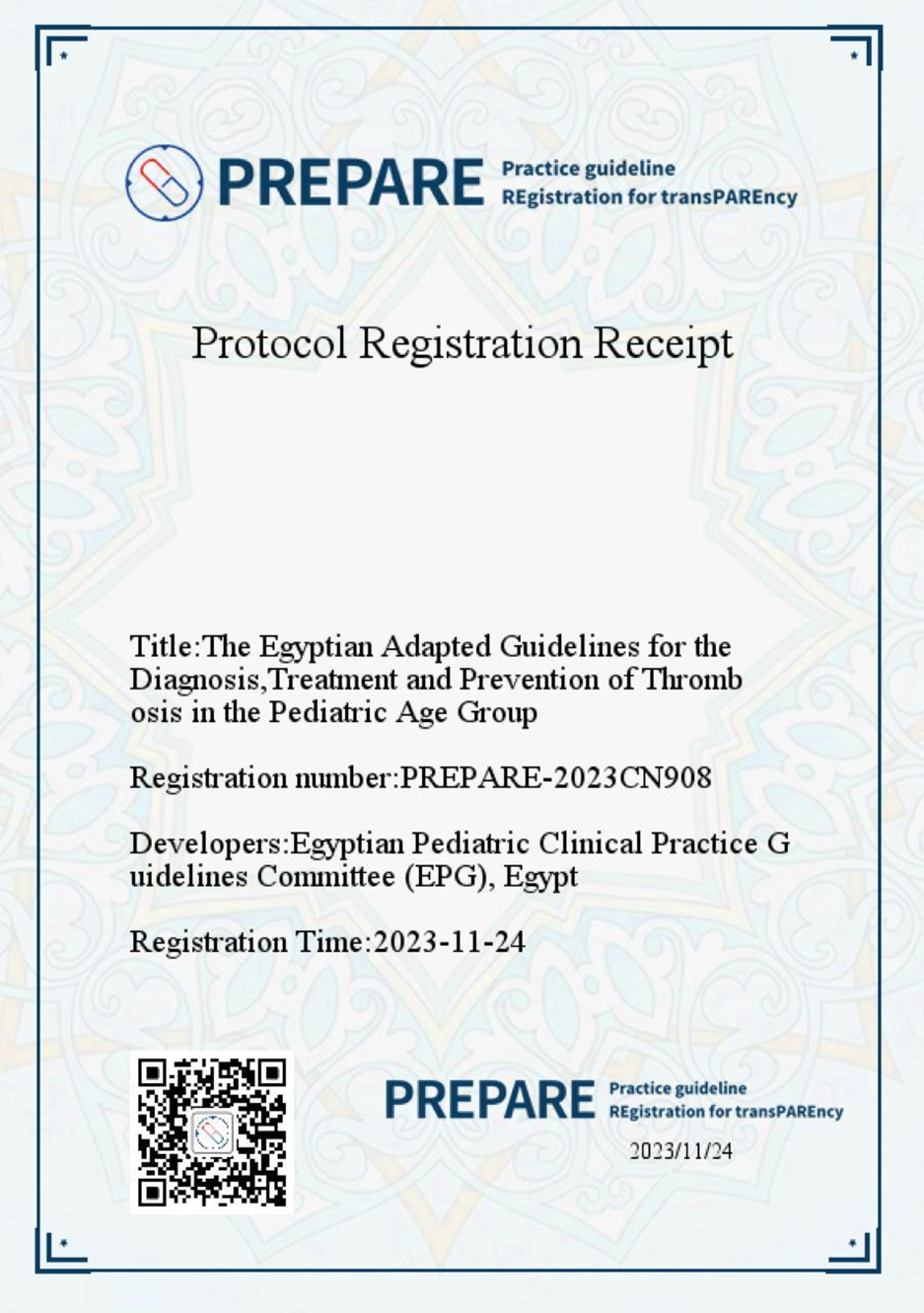
THE DIAGNOSIS, TREATMENT, AND PREVENTION OF THROMBOSIS IN PAEDIATRIC AGE GROUPS
- Appendices
➡️CPG databases and libraries:
1. Guidelines International Network Library and Registry (GIN).https://g-i-n.net/international-guidelines-library/
2. World Health Organization (WHO) Guidelines
3. National Institute of Clinical and Health Excellence (NICE) UK. http://www.nice.org.uk/guidance/
4. scottish Intercollegiate Guidelines Network (SIGN) UK. http://www.sign.ac.uk/guidelines/
5. ECRI Guidelines Trust (USA). https://guidelines.ecri.org/
6. DynaMed (Summaries: Guidelines and Resources)
➡️Bibliographic databases:
1. PubMed/ MEDLINE https://pubmed.ncbi.nlm.nih.gov/
➡️Specialized professional societies:
1. American Society of Hematology (ASH) https://www.hematology.org/
2. American College of Chest Physicians (ACCP) https://www.chestnet.org/
3. British Society for Haematology (BSH) https://b-s-h.org.uk/
4. Children’sOncologyGroup (COG)
5. International Society on Thrombosis and Haemostasis (ISTH)https://www.isth.org/
6. NationalComprehensiveCancer Network (NCCN)https://www.nccn.org/
Appendix 2. Search strategy
Keywords:Pediatric Thrombosis – Thrombophilia – Hypercoagulability – venous thrombosis– arterial thrombosis - Stroke – Pulmonary embolism - Thromboprophylaxis - Thrombectomy
PubMed/ MEDLINE https://pubmed.ncbi.nlm.nih.gov/
Appendix 3. CPG Databases
CPG Databases:
www./epg.edu.eg
Appendix 4. Adaptation Process
Methodology
Phase One – Set-Up
A preliminary rapid search showed a large number of published CPGs addressing this topic.
The project lead was assigned by the EPG who nominated the clinical chair (Ashraf Abdel Baky), and worked closely with the methodology chair (Tarek Omar), to define the initial scope of the CPG. A group of clinical experts was defined from the network of the EPG to be the members of the GAG (full list provided in Table 1). The methodology followed was according to the ‘Adapted-ADAPTE’ method.
Detailed composition of the GAG including clinical specialties and roles.
The topic of “Thrombosis in the Pediatric Age Groups” was identified by the EPG as one of the main high-priority topics for pediatric practice in Egypt.
The methodology chair conducted capacity-building sessions for the GAG members on the CPG adaptation methodology, a systematic review of CPGs, and evaluation of CPGs at the outset of the project in addition to hands-on technical support throughout the process.
All members of the GAG declared their conflicts of interest and agreed on the terms of references for CPG projects proposed by the EPG.
A timeline for the CPG adaptation project was outlined by the EPG and agreed upon by all GAG members.
Refer to the Scope and Purpose section. The PIPOH Model was used to identify the health questions that guided the search and screening process.
A comprehensive review of evidence-based CPGs for pediatric venous thrombosiswas conducted.
# Included: 6
# Excluded: 9
The GAG relied on the inclusion and exclusion (eligibility) criteria for screening and filtration.
➡️Inclusion / Exclusion CPGs Selection (eligibility) Criteria
1. Methods of Development:Evidence-Based CPGs: (Detailed Methodology of Development Documented; link Recommendations with Evidence; link to Systematic Reviews) rather than Consensus-based CPGs (Expert opinion)
2. Author(s) Organization (CPG development group) from CPGs Database (Producer or Finder) and Specialized Society (clinical specialty) rather than single authors.
3. Country: International or national CPGs.
4. Date of Publication: Range of year of publications (2024-2025) Last 5 years
5. Language: English and Arabic CPGs only
6. Status: Only source CPG (de novo developed) rather than adapted CPGs
The Appraisal of Guidelines Research & Evaluation (AGREE) II Instrument was used to assess the quality of the five eligible Source CPGs using the online platform (MY AGREE PLUS) by four independent appraisers from the GAG. Disagreements in the ratings of the AGREE II items were resolved by discussions.
Appendix Table 1. AGREE II assessment results and the standardized domain scores for the XX included CPGs
|
CPGs AGREE II DOMAINS |
CPG1
|
CPG2
|
CPG3 |
CPG4 |
CPG5 |
CPG6 |
|
D1: Scope & Purpose |
94.44 |
77.78 |
72.2 |
61 |
91.65 |
83.33 |
|
D2: Stakeholder Involvement |
50 |
77.78 |
83.3 |
72.2 |
91.65 |
72.22 |
|
D3:Rigour of Development |
68.75 |
87.75 |
93.75 |
68.8 |
86.45 |
85.42 |
|
D4: Clarity & Presentation |
94.44 |
83.33 |
100 |
77.8 |
88.9 |
88.88 |
|
D5: Applicability |
50 |
62.5 |
83.3 |
58.3 |
83.35 |
83.33 |
|
D6: Editorial Independence |
60 |
91.67 |
100 |
883.3 |
91.65 |
83.33 |
|
OA 1 |
68.12 |
80.12 |
89.1 |
71.7 |
88.1 |
84.06 |
|
OA 2 (Recommend for use) |
Yes |
Yes |
Yes |
Yes |
Yes |
Yes |
|
This table uses the AGREE II Domain Score Color codes (< 40% red; > 41 – 70% yellow; > 71 % green) |
||||||
1. CPG1: University of Wisconsin Venous Thromboembolism prophylaxis – Pediatric - Inpatient – Consensus care Guideline. UWHealth 2023
2. CPG2: Thrombophilia testing: A British Society for Haematology guideline. BSH 2022
3. CPG3: Guideline on the investigation, management, and prevention of venous thrombosis in children. BSH 2011 -addendum BSH 2021
4. CPG4: BSH Guideline: management of thrombotic and hemostatic issues in pediatric malignancy. BSH 2018
5. CPG5: American Society of Hematology 2018 Guidelines for the management of venous thromboembolism: treatment of pediatric venous thromboembolism. ASH 2018
6. CPG6: Antithrombotic Therapy in Neonates and Children. Antithrombotic Therapy and Prevention of Thrombosis, 9th ed: American College of Chest Physicians Evidence-Based Clinical Practice Guidelines. ACCP 2012
Based on the results of the AGREE II assessment, the GAG decided to adapt/ adopt all of the recommendations from the six CPGs.
Appendix Table 3. Currency survey of the CPG developer
|
1. Are you aware of any new evidence relevant to this CPG statement? Yes/ No |
|
2. Is there any new evidence to invalidate any of the recommendations comprising the CPG? Yes/ No |
|
3. Are there any plans to update the CPG in the near future? Yes/ No |
|
4. When the CPG was last updated? 5. What is the citation for the latest version? See Reference www.epg.edu.eg |
Steps 13-15 were not conducted as the GAG relied on the results of the AGREE II assessment to reach the required assessments of CPG content, consistency, acceptability, and applicability.
Steps 16 and 17: the AGREE II assessments were discussed among the members of the GAG. Therefore, the pediatric venous thrombosis CPG adaptation group decided to select the six CPG and adapt all of its recommendations and implementation tools.
The first draft of the adapted CPG was prepared and sent for external review via email with the related clinical review and methodology review forms.
Details of the members of the external review group.
The adapted CPG was approved by the EPG.
16. Step 21. Consulting with the source CPG developer(s)
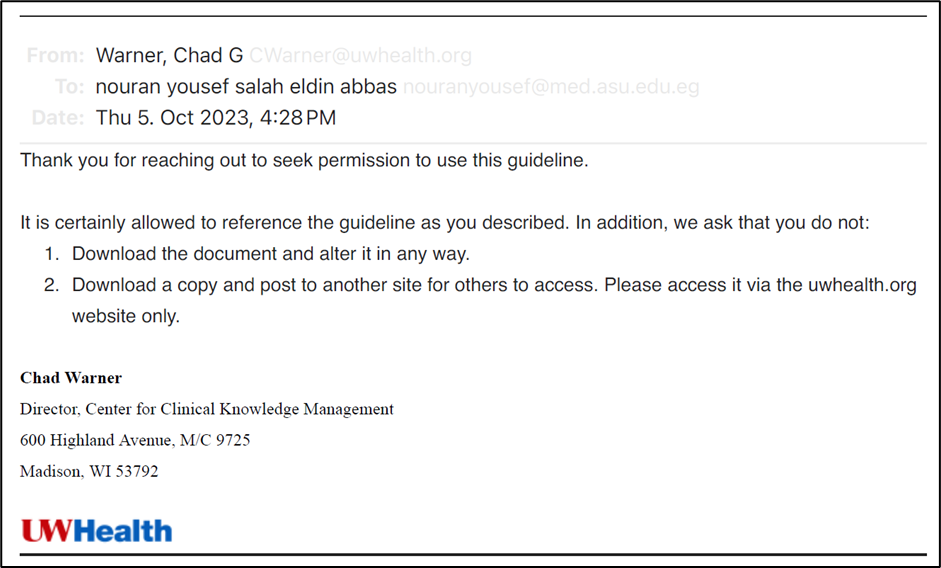
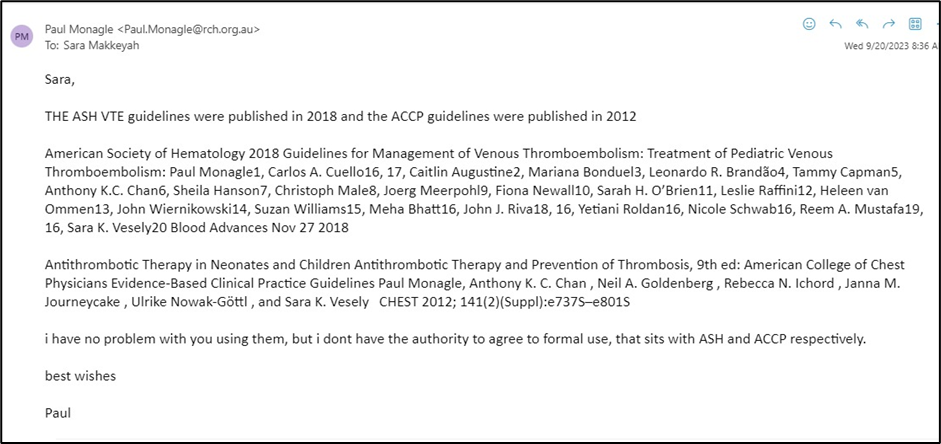
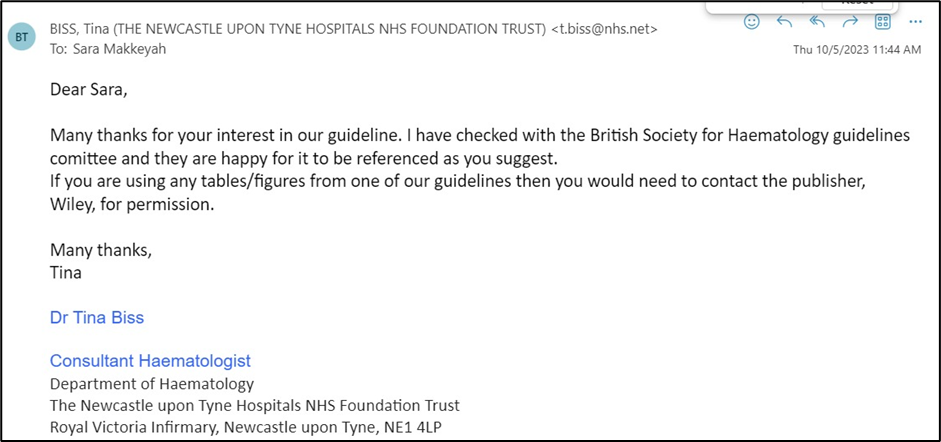
1. Step 22. Acknowledging the source documents
The source CPG(s), relevant articles, and websites have been acknowledged in the adapted CPG document.
The GAG decided on a plan for reviewing and updating the adapted CPG using the CheckUp Tool that is freely provided by the AGREE Enterprise.
This document represents the finalized adapted CPG full document. Table 9 presents the full map of the CPG adaptation process including the steps that were followed and the steps that were not followed with the relevant reasons.
Appendix Table 4. Decision Support for EPGAdaptation Working Group for CPG for ‘Management of pediatric venous thrombosis. Chairperson: Dr. Ashraf Abdelbaky Salama
|
PHASE |
MODULE |
STEP |
TOOL |
DECISION |
REASON (if not utilized) |
||||
|
Utilized |
Not utilized |
||||||||
|
ONE: SET-UP |
1.1. Preparation |
1 |
1 |
√ |
|
|
|||
|
2 |
√ |
|
|
||||||
|
2 |
|
√ |
|
|
|||||
|
3 |
|
√ |
|
|
|||||
|
4 |
|
√ |
|
|
|||||
|
5 |
3 |
√ |
|
|
|||||
|
4 |
√ |
|
|
||||||
|
1 |
√ |
|
|
||||||
|
6 |
5 |
√ |
|
|
|||||
|
|
|||||||||
|
TWO: ADAPTATION |
2.1. Scope and Purpose |
7 |
6 |
√ |
|
|
|||
|
2.2. Search and Screen |
8 |
2 |
√ |
|
|
||||
|
7 |
√ |
|
|
||||||
|
9 |
8 |
√ |
|
|
|||||
|
10 |
9 |
|
√ |
Decided to rely on inclusion/ exclusion criteria (filters) & PIPOH compatibility |
|||||
|
10 |
√ |
||||||||
|
2.3. Assessment |
11 |
9 |
√ |
|
|
||||
|
10 |
√ |
|
|
||||||
|
12 |
11 |
√ |
|
|
|||||
|
13 |
12 |
|
√ |
Decided to select NICU (Amer et al,2015) of the CPG |
|||||
|
14 |
13 |
|
√ |
Decided to rely on D3 Scores of AGREE II |
|||||
|
14 |
|
√ |
|||||||
|
15 |
15 |
|
√ |
Decided to rely on D5, D2 Scores of AGREE II |
|||||
|
2.4. Decision and Selection |
16 |
Table |
√ |
|
|
||||
|
17 |
Decision making and selection |
√ |
|
|
|||||
|
|
2.5. Customization |
18 |
16 |
√ |
|
|
|||
|
|
|||||||||
|
THREE: FINALIZATION |
3.1. External Review and Acknowledgment Module |
19 |
17 |
√ |
|
|
|||
|
20 |
|
√ |
|
|
|||||
|
21 |
|
√ |
|
|
|||||
|
22 |
|
√ |
|
|
|||||
|
3.2. Aftercare Planning |
23 |
18 |
√ |
|
|
||||
|
3.3. Final Production |
24 |
|
√ |
|
|
||||