Pigeon Diseases
- Circo Virus
Circo Virus
Circo Virus is sometimes called pigeon AIDS. Circo Virus damages the lymphocytes in the blood, which are closely associated with the immune system. With damaged lymphocytes, the pigeons become susceptible to secondary infections with other viruses, parasites and bacteria. Pigeons infected with Circo Virus can also have continuing problems with diseases like respiratory infections, chlamydia, or canker due to the fact that they cannot form natural immunities to them. Birds with Circo Virus have a yellowish discharge dried on the beak, and they are very reluctant to move, thin and dehydrated, and have no appetite and difficulty breathing.
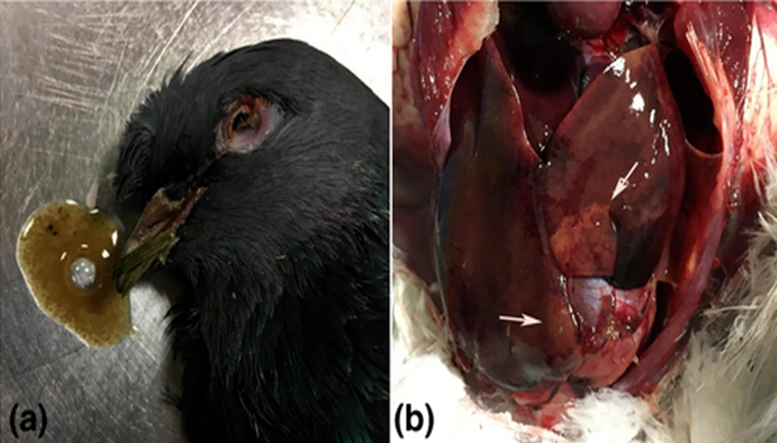
a) Picture of one of the infected birds that were necropsied. Vomit from the bird is shown beside the bird's head, characterised by mucous and watery content. The bird had shrunken eyes indicating dehydration and poor condition.
(b) Image of an example infected pigeon liver taken during necropsy. Widespread discoloration indicates severe necroses (white arrows) and haemorrhages on the liver
Prevention
- Use of probiotics and Antifungal while keeping the disease out of the loft by not introducing birds from lofts known to have health problems.
- Stray youngsters should be immediately removed if they do not look well, and try to identify carrier stock birds by re-pairing those whose offspring seem weak or die.
- If the virus comes into lofts, minimize its spread by taking sick birds out immediately and isolating them while giving them full doses of Improver, paying attention to ongoing hygiene.
- Good care, given day to day, places your pigeons in the best situation to resist infection, and gives those that become infected the best chances of recovery.
-The main defense against Circo Virus is to identify and treat secondary infections, allowing the birds to live long enough for immune system to repair itself.
- Probiotics help well birds resist the disease by maintaining a healthy bowel population of bacteria
Protocols for managing pigeon health and preventing most viral diseases transmission:
1. Implementing biosecurity to separate healthy from infected pigeons.
2. Avoiding the mixing of different age groups.
3. Restricting free-ranging pigeons from accessing captive areas.
4. Quarantining returning pigeons for six weeks post-competition.
5. Administering live attenuated vaccines via eye drops.
6. Recognizing the lack of specific treatments for adults, focusing on supportive care.
7. Providing specialized feeding and antibiotics to prevent secondary infections.
8. Conducting emergency vaccinations during outbreaks.
9. Isolating and removing clinically infected birds from the flock.