Pigeon Diseases
- Spironucleus columbae (hexamitiasis)
Hexamitiasis: is an intestinal disease of pigeons that is associated with mucoid, or even bloody feces caused by the flagellate, Hexamita columbae occurs in pigeon flocks mainly in the summer and autumn months. It primarily colonies the rectum. Especially susceptible are newly weaned squabs, whose resistance is still low. Infected adult pigeons do not normally show visible signs of the disease, but can excrete the pathogen in large quantities in their droppings (chronic carriers). The incubation period is 4-5 days.
Clinical signs
Acute catarrhal (or even bloody) enteritis with liquid, rice water-like or mucoid, malodorous diarrhea. Affected pigeons refuse feed and drink more water, resulting in emaciation and debility.
Recognition
Hexamita are demonstrated via microscopic examination smears from the intestinal mucosa of a recently killed, acutely affected pigeon. With extremely severe infestation, it is also possible to demonstrate the parasites in a cloacal swab from a live bird. They can be recognized from their characteristically rapid movements in a straight line - in contrast to trichomonads, which exhibit slow, circular movements around their own axis.
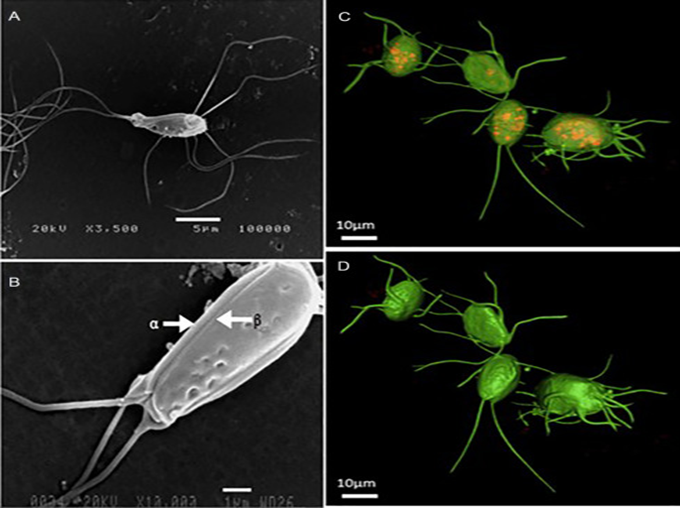
Spironucleus Hexamita columbae. Note shape of body and arrangement of the 8 flagella, each of which taper terminally culminating in a small bulb.