Rabbit diseases diagnosis, prevention and control
- Fungal Dermatitis or Superficial Mycosis
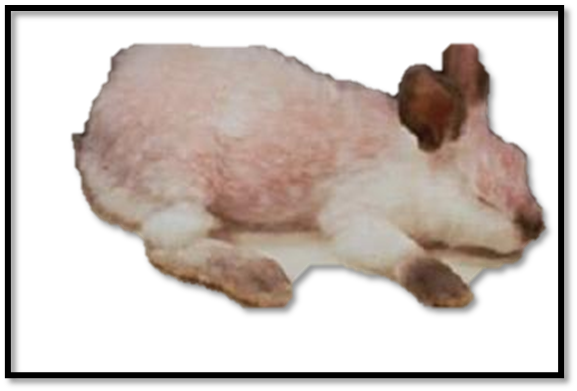
Def: Fungal dermatitis, also known as superficial mycosis, refers to skin infections caused by fungi that primarily affect the outermost layers of the skin, hair, and nails. These infections are common and often contagious, especially in warm, humid environments.
The causing agents are two pathogenic fungi:
- Trichophyton mentagrophytes = ringworm
May be carried asymptomatically in the coat of the rabbit.
- Microsporum canis
Occasionally rabbits are infected through contact with cats or dogs; this fungus can carry one or more zoonotic diseases (diseases that can be transmitted from animal to human).
Ringworm is the main cause of mycosis. It will infect not only the epidermis, but also the annex structures such as hair follicles and hair shafts. In some cases, cultures of infected tissue have revealed the presence of Microsporum sp.
Clinical signs:
Typically, lesions start around the head and spread to the legs and feet, more specifically to the toenail beds. The wound is raised, circumscribed and erythematous. It shows dry crusts with little or no pruritus and patchy alopecia. The tissue under the crusts usually shows inflammation and the hair follicles show abscessation, as the secondary result of a bacterial invasion.
Diagnosis:
1. Fungal or Dermatophyte Cultures: Grow the organisms on specialized fungal or dermatophyte media to identify the causative fungi.
2. Skin Scrapings Examination: Mount skin scrapings in 10% potassium hydroxide (KOH) to visualize and identify spores under the microscope.
3. Fluorescence under UV Light: Fluorescent examination offers limited assistance. *Trichophyton mentagrophytes* generally does not fluoresce, whereas *Microsporum canis* may fluoresce depending on the strain—some strains glow, others do not.
4. Special Stains: Techniques such as Gomori- methenamine silver stain, Gridley fungus stain, and periodic acid-Schiff (PAS) reaction help detect and identify spores in tissue samples.
Treatment: The hair around the lesion should be clipped, and disposed off safely. The best treatment for fungal dermatitis is oral administration of griseofulvin (25-50 mg/kg PO q24h or divided q12h). (Wear gloves while administering this drug). The treatment should continue two weeks after the disappearance of the clinical signs. Topical or systemic treatments are also possible: Antifungal cream or lotion; or spray; Miconazole cream.
The environment of the rabbit should be cleaned carefully: vacuum cleaning, boiling of towels and cleaning of surfaces with 1:10 bleach water.
D.D: The diagnosis should be distinguished from other causes of crusty hair loss on the scalp and ears, such as genetic hairlessness, trauma, depilatory hair loss, or fur pulling.