Affections Of Specific Parts and Organs of Food Animals
- II. Affections of the Head and Tongue
1. Cattle plague
Acute febrile infectious viral disease characterized by the presence of diphtheritic inflammation with cheese like deposits in the mouth and pharynx.
Free area: Total condemnation. (Diseased and contact animals).
Enzootic area: Condemnation of the viscera with heat treatment of the carcass and distribution in limited area.
2. Calf diphtheria:
The lesions in the form of diphtheritic patches and ulceration on tongue, mouth, pharynx or gums. These lesions appear as grey necrotic areas, which can only be scraped or peeled off with difficulty.
Localized: Heat treatment of the carcass after condemnation of the head.
Generalized: Total condemnation due to fever and emaciation.
3. Haemorrghic septicemia
The disease occur in two forms:
· Skin form which showed fever, marked swelling of the head, neck, throat and dewlap with the adjacent lymph nodes are enlarged and may be petechial hemorrhages.
· Pectoral form, which is characterized by high fever, petechial, hemorrhages in the serous and mucous membranes as well as all the organs. It show marked pneumonia. In both forms hemorrhagic enteritis is evident.
Judgment: Total condemnation
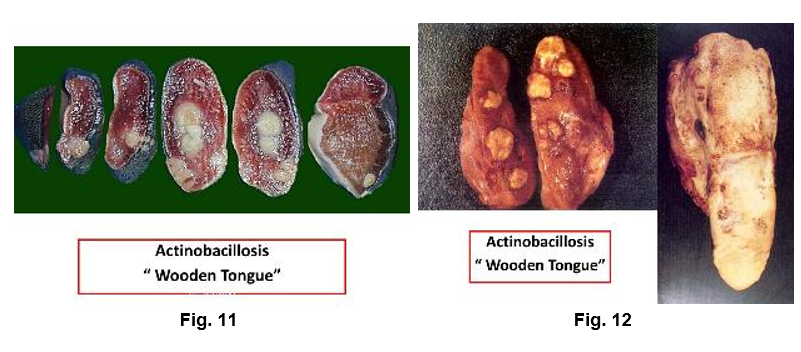
4. Actinobacillosis “Wooden tongue”
Actinobacillosis is a chronic granulomatous disease of the soft tissues (tongue, skin, and parenchymatous organs) of cattle and pig. Actinobacillus lignireesi is the main cause of the disease. The lesions in the tongue and muscles are associated with the lesions in the associated lymph nodes. The lymph node lesions are convex with small yellowish glistening nodules embedded in fibrous connective tissue and arranged characteristically in the peripheral portion of the cortex in irregular clusters toward one end of the node. The tongue showed enlargement and hardening.
Localized: Condemnation of head, Condemnation of liver, lung, stomach, peritoneum and shoulder if affected.
Generalized: Total condemnation due to fever and ill bleeding.
5. Actinomycosis “Lumpy jaw”
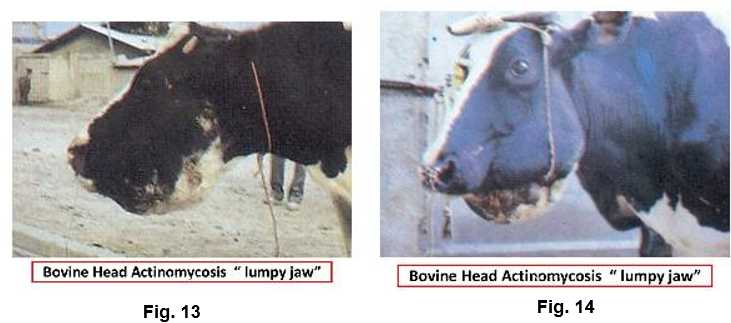
Actinomycosis is a chronic suppurative disease of bone tissue of cattle and udder tissue of pig. The lesions are usually confirmed to the head and involved the jaw bones to produce ‘”Lumpy Jaw”. The lower jaw is more affected than the upper one. The bone being thickened and presenting a bony combed appearance with small abscesses and suppuration tracts and fistulae on section.
In cattle: Condemnation of head and the carcass approved.
In Saw: Condemnation of udder and the carcass approved.
6. Tuberculosis
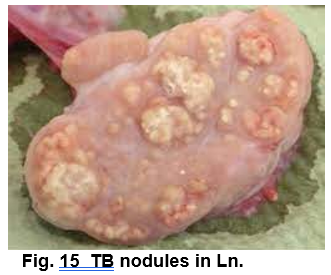
The common lesions of tuberculosis in the bovine head are mainly in the retropharengeal lymph node while in pig the sub maxillary nodes are commonly affected.
Localized: Without emaciation, condemnation of the head / with emaciation total Condemnation
Generalized: Total condemnation.
7. Parasitic
|
Pig |
Total condemnation even if one cyst present |
|
|
Sheep |
C. ovis |
Condemnation of the cyst |
|
Camel |
C. camelii |
Condemnation of the cyst |
|
Cattle |
C. bovis |
|
|
|
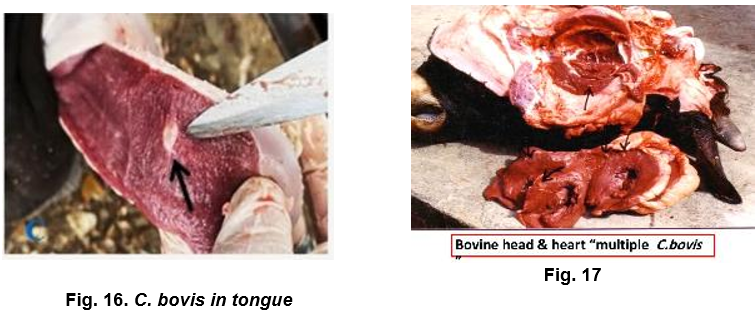
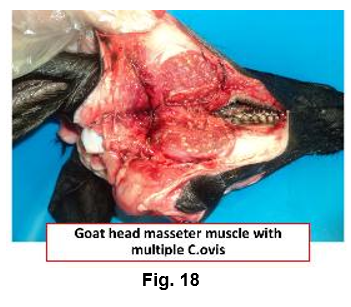
Cattle: C. bovis may be found in masseter muscle, tongue Oestrus bovis. Pig: C. cellulose. Sheep: C. ovis, Coenuris cerebralis, Oestrus ovis. Camel: C. dromedarii, C. bovis, C. ovis. |
|
8. Foot and Mouth Disease (FMD)
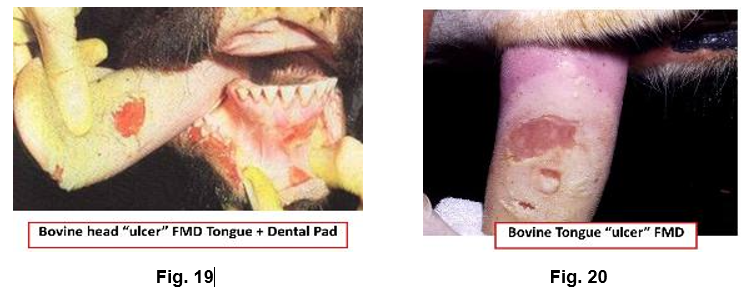
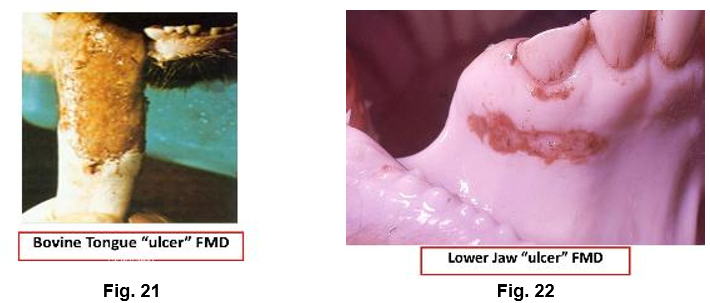
The vesicular lesions are found on the tongue, lips and dental pad. The vesicles eventually ruptured leaving red painful erosions. In sheep the vesicles are much smaller than in the cattle.
Causative agent: Aphthovirus
Judgment: Free countries: Total condemnation. Enzootic countries: When slaughter of contact is practicable, diseased animal showed fever (T), and those which show no fever and contacts (Kh+ D) When immediate slaughter is not economic, diseased animal (T), contact and recovered 3 months after last case or vaccination (L + D).
NB: D = partial condemnation of the head, feet, pharynx, esophagus, testicles, udder and bones
9. Blue tongue
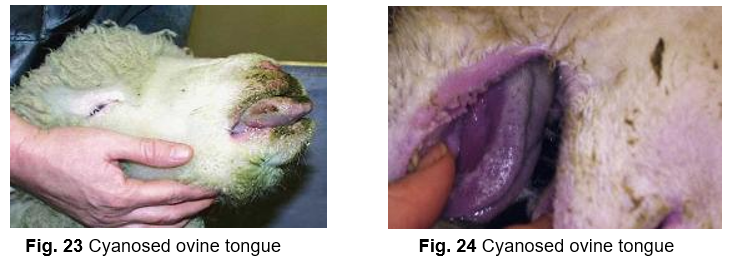
Blue tongue is an infectious viral disease of sheep and pigs characterized by stomatitis and severe loss of condition. The mouth lesions vary from superficial inflammation to ulcers, erosions and necrosis of the buccal mucosa. The tongue is swollen and cyanosed. Acute cases with widespread lesions necessitate total condemnation of the carcass.
Causative agent: Orbivirus
Judgment: Acute with widespread lesions: Total condemnation.
10. Ulcers
Ulcers may be of varying size and may be seen in actinobacillosis and FMD.
Causative agent: Various (e.g., FMD, actinobacillosis etc.)
Judgment: Based on primary cause
11. Pharyngeal abscesses
Pharyngeal abscesses in pig and sheep are generally traumatic in origin caused by swallowing of sharp objects.
Causative agent: Traumatic origin
Judgment: Condemn head.
12. Oestrus ovis
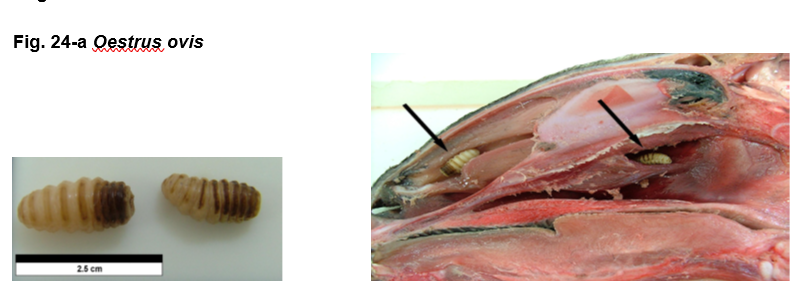
Causative agent: also known as the sheep nasal bot, is a fly approximately 10mm in length whose larval stage is parasitic in the nasal passages of sheep. The female adult fly is viviparus, the young hatching within the adult who then squirts fluid containing approximately 15-20 first stage larvae (L1) at the muzzle of the animal. The L1 larvae, approximately 1mm in length then migrates through the nostrils to the frontal sinuses where they feed on the mucoid secretion stimulated by their presence. After the first moult the L2 larvae crawl into the frontal passages where the second moult to the L3 larvae occurs.
Judgment: Condemn of head.
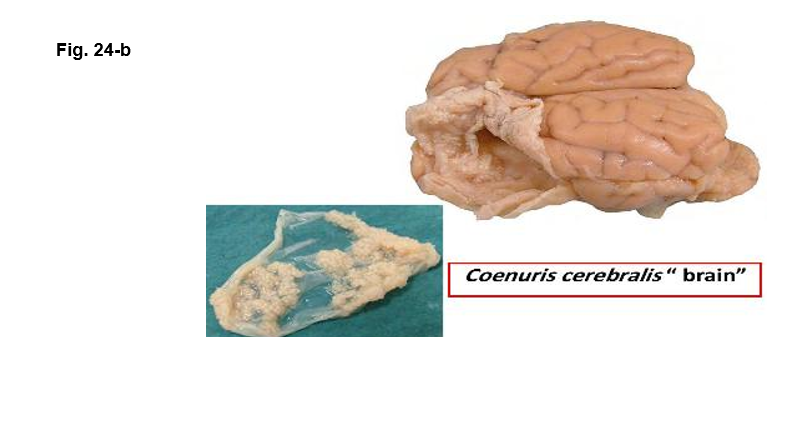
13. Coenuriosis (Coenurus cerebralis)
Causative agent: Also known as ‘gid’ and ‘sturdy’, coenuriosis is a condition of sheep caused by the presence of the migrating larvae and metacestode stage of the canine tapeworm Taenia coenurus (T. multiceps) of the central nervous system. In canines the adult tapeworm is 40-100cm in length .
Judgment: Condemn of head.