Emergency Management (Diagnosis and Treatment) of Seizures in Children beyond the Neonatal Period
- Annexes
Annex Table 1.
Declaration of Conflict of Interests
The members of the guideline development/ adaptation group and the external review group have no academic, financial, or competing interests to declare and none of them were involved in the development of the original source guideline(s).
Any identified potential COI has been reported below.
|
Egyptian Pediatric Clinical Practice Guidelines Committee (EPG) Guideline Adaptation Group (Clinical subgroup) |
|||
|
Name |
Affiliation, Area of expertise / Role, Country / Primary location [work] |
Declaration of interests |
|
|
Interest identified |
Management plan & decision |
||
|
Abdelsatr Abdallah Elsayeh |
Assistant professor of Pediatrics and Pediatric Neurology Faculty of Medicine for Males Al-Azhar University |
None |
Not Applicable |
|
Ashraf Azmy Al Refaei |
Professor of Child Health and Pediatric Neurology National Research Center |
None |
Not Applicable |
|
Azza Mohamed Elamin Oraby (late professor) |
Professor of Pediatrics and Pediatric Neurology Faculty of Medicine Cairo University |
None |
Not Applicable |
|
Ebtesam Hussein El Melegy |
Consultant Pediatric Neurologist Former Dean of the Neuromotor Institute Ministry of Health |
None |
Not Applicable |
|
Hammouda Eid El Gazzar |
Fellow and Lecturer in Pediatrics General Organization of Teaching Hospitals Under-secretary of El Beheira Health Directorate |
None |
Not Applicable |
|
Hayam Refaat Tantawi |
Professor of Pediatric Nursing Vice Dean of Community and Environmental Development Faculty of Nursing Ain Shams University |
None |
Not Applicable |
|
Lobna Abdel Gawad Mansour |
Professor of Pediatrics and Pediatric Neurology Faculty of Medicine Cairo University |
None |
Not Applicable |
|
Marwa Saeed Abd Elmaksod |
Assistant professor of Pediatrics and Pediatric Neurology Faculty of Medicine Alexandria University |
None |
Not Applicable |
|
Moustafa Zakaryia Mohamed |
Professor of Pediatrics and Pediatric Neurology Faculty of Medicine Cairo University |
None |
Not Applicable |
|
Omnia Fathy El Rashidy
|
Professor of Pediatrics and Pediatric Neurology and Neuro-disability Faculty of Medicine Ain Shams University |
None |
Not Applicable |
|
Sahar Mohamed Ahmed Hassanein |
Professor of Pediatrics and Pediatric Neurology Faculty of Medicine Ain Shams University |
None |
Not Applicable |
|
Tarek El-Sayed Ismail Omar |
Professor of Pediatrics and Pediatric Neurology Faculty of Medicine Alexandria University |
None |
Not Applicable |
|
Guideline Adaptation Group (Methodology Subgroup) |
|||
|
Prof. Ashraf Abdel Baky |
Professor of Pediatrics Ain Shams University, Egypt Founder and Chair of EPG |
None |
Not Applicable |
|
Dr. Yasser Sami Amer |
1. Pediatrics Department and Clinical Practice Guidelines and Quality Research Unit, Quality Management Department, King Saud University Medical City, Riyadh, Saudi Arabia; 2. Research Chair for Evidence-Based Health Care and Knowledge Translation, King Saud University, Riyadh, Saudi Arabia; 3. Chair, Adaptation Working Group, Guidelines International Network (GIN), Perth, Scotland 4. Department of Internal Medicine, Ribeirão Preto Medical School, University of São Paulo (FMRP-USP), Ribeirão Preto, São Paulo, Brazil. |
None |
Not Applicable |
|
Dr. Lamis Mohsen Elsholkamy |
Lecturer of Pediatrics, Faculty of Medicine, Modern University for Technology and Information (MTI), Egypt |
None |
Not Applicable |
|
External Review Group |
|||
|
Professor Hadeer Mahmoud Gamal Eldin Abdelghaffar |
Professor and Head of Pediatrics Department – Consultant Pediatric Neurologist – Faculty of Medicine - Fayoum University |
None |
Not Applicable |
|
Professor Hoda Yehia Tomoum |
Professor of Pediatrics and Pediatric Neurology – Faculty of Medicine – Ein Ain Shams University |
None |
Not Applicable |
|
External Reviewer for methodology |
|||
|
Prof. Iván D. Flórez |
Department of Pediatrics, University of Antioquia, Medellín, Colombia, Department of Health Research Methods, Evidence, and Impact, McMaster University, Hamilton, Canada, Leader, AGREE Collaboration (Appraisal of Guidelines for Research & Evaluation) Director, Cochrane Colombia |
None |
Not Applicable |
|
Prof. Airton Tetelbom Stein
|
Professor Titular de Saúde Coletiva, Fundação Universidade Federal de Ciências da Saúde de Porto Alegre (UFCSPA), Porto Alegre, Brazil Professor Adjunto, Universidade Luterana do Brasil (Ulbra), Canoas, Brazil Coordenador de Diretrizes Clínicas, Grupo Hospitalar Conceição, Porto Alegre, Brazil 4. Member, Board of Trustees, Guidelines International Network (G-I-N) |
None |
Not Applicable |
Web annexes
The following annexes can be added as a package of standalone supplementary documents.
Keywords: The MeSH terms for "Guideline for Emergency Management (Diagnosis and Treatment) of Seizures in Children beyond the Neonatal Period in the Egyptian " on PubMed are: convulsions, seizures, pediatric convulsions.
Annex Table. Annex Nurses and Parents Educational Guide in Arabic
ارشادات هامة للتعامل مع النوبات الصرعية الكبرى
مقدمة
الصرع هو مرض مزمن يظهر على شكل تشنجات دماغية متكررة أو اختلاجات دماغية. مرض الصرع ليس إعاقة عقلية ولا مرضاً نفسياً وهو غير معدي، و قد يصاحب بعض أمراض الدماغ الأخرى وهو مرض يصيب الدماغ وينتج عنه نشاط كهربائي غير طبيعي يؤدي إلى نوبات والى سلوكيات وأحاسيس غير معتادة وأحياناً ما يتسبب في فقدان الوعي. وتترتب على الصرع آثار عصبية و ادراكية ونفسية واجتماعية
قد تختلف أعراض نوبة الصرع حسب نوع النوبة، ووقت حدوث هذه الأعراض، حيث تسبق بعض الأعراض النوبة وتكون بمثابة أعراض تحذيرية، بينما تتزامن الأعراض الأخرى مع حدوث النوبة أو تليها.
فيما يلي أهم أعراض نوبات التشنج أو الصرع العامة generalized seizures
· يسبقها أحياناً حالة الهالة التي قد تشمل هلاوس سمعية، أو شم روائح خيالية، أو ضيق بالبطن، أو شعور بالضغط داخل الدماغ.
· نوبات التشنج الكبرى العامة تبدأ بفقدان مفاجئ للوعي، وتيبس الجسم، وقد يصبح الجسم منتصباً مثل السيخ المعدني،
· أو قد ينحني كالقوس إلى الخلف وتحدث بعد ذلك سلسلة من حركات الارتجاف في الذراعين والساقين والجذع، مع الصر على الأسنان.
· التبول أو التبرز اللاإرادي عند البعض.
· عادة ما تستمر نوبة التشنج بالكامل إلى ما لا يزيد عن دقيقتين.
بعد نوبة الصرع، قد يشعر الشخص بالتشويش والإرهاق لعدة ساعات وقد يصاب بصداع وتنتابه رغبة في النوم. ولا يتذكر الشخص أنه أصيب بنوبة صرع، لكنه قد يتذكر نوبة الهالة التي سبقتها.
· يسبقها أحياناً حالة الهالة التي قد تشمل هلاوس سمعية، أو شم روائح خيالية، أو ضيق بالبطن، أو شعور بالضغط داخل الدماغ.
· نوبات التشنج الكبرى العامة تبدأ بفقدان مفاجئ للوعي، وتيبس الجسم، وقد يصبح الجسم منتصباً مثل السيخ المعدني،
· أو قد ينحني كالقوس إلى الخلف وتحدث بعد ذلك سلسلة من حركات الارتجاف في الذراعين والساقين والجذع، مع الصر على الأسنان.
· التبول أو التبرز اللاإرادي عند البعض.
· عادة ما تستمر نوبة التشنج بالكامل إلى ما لا يزيد عن دقيقتين.
بعد نوبة الصرع، قد يشعر الشخص بالتشويش والإرهاق لعدة ساعات وقد يصاب بصداع وتنتابه رغبة في النوم. ولا يتذكر الشخص أنه أصيب بنوبة صرع، لكنه قد يتذكر نوبة الهالة التي سبقتها.
· إذا حدثت نوبات صرعية كبرى لمدة أطول من خمس دقائق أو تكررت مرات عديدة متعاقبة دون أن يستيقظ الشخص فيما بينها، قد تهدد حياة المريض، ويجب بدء الاسعافات الأولية و نقله فورا إلى أقرب مشفى.
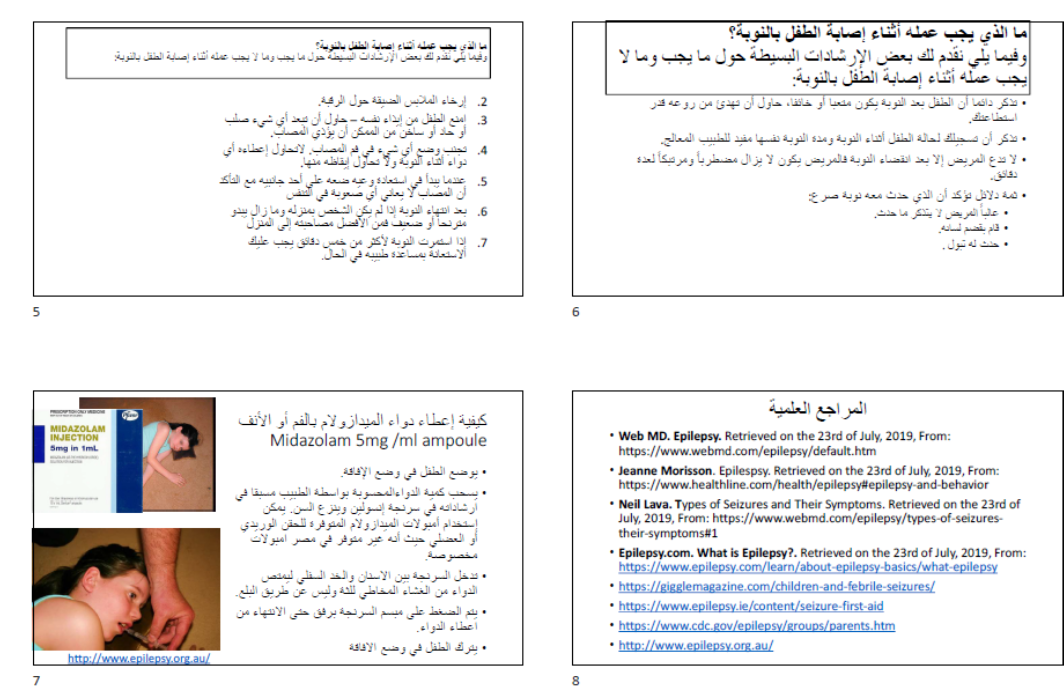
1. ما الذي يجب عمله أثناء إصابة الطفل بالنوبة؟
قد تكون لحظات فقدان الوعي أثناء النوبة قصيرة جدا وبالتالي هناك القليل الذي يمكن عمله للطفل أثناءها ومع هذا فإن مشاهدة حالة الصرع تجربة قاسية لكل شخص يتواجد حول الطفل إلا الطفل نفسه الذي يكون فاقدا للوعي تماما لما يدور حوله.
من المهم معرفة الطريقة الصحيحة للتعامل مع مريض الصرع أثناء النوبة، وذلك لتجنب حدوث أي مضاعفات أو حوادث ناجمة عن التعامل الخاطئ.
وفيما يلي نقدم لك بعض الإرشادات البسيطة حول ما يجب وما لا يجب عمله أثناء إصابة الطفل بالنوبة:
الإسعافات الأولية لنوبة الصرع:
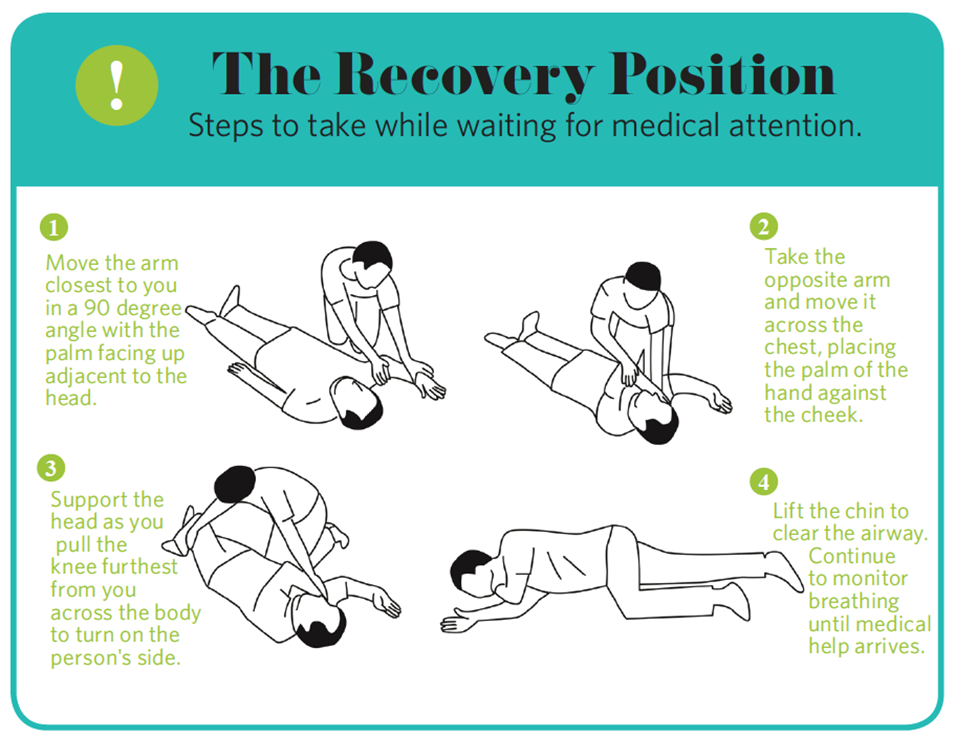
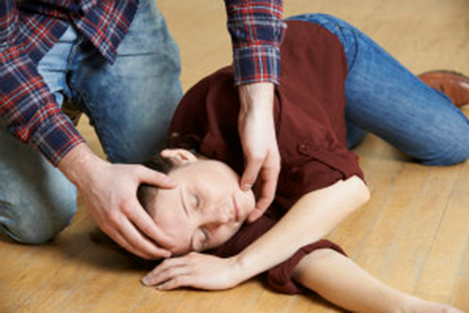
- ساعد المصاب على الاستلقاء على الأرض. ضع الطفل في رقدته على جانبه، واجعل الرأس مائلا قليلا إلى الخلف للسماح للعاب بالخروج ولتمكينه من التنفس. وضع الافاقة
https://dmgpzc86o16rj.cloudfront.net/wp-content/uploads/2018/10/Screen-Shot-2018-10-01-at-11.27.45-AM.png
https://www.cdc.gov/epilepsy/images/groups/seizure-first-aid.jpg
- إرخاء الملابس الضيقة حول الرقبة.
- امنع الطفل من إيذاء نفسه – حاول أن تبعد أي شيء صلب أو حاد أو ساخن من الممكن أن يؤذي المصاب.
- تجنب وضع أي شيء في فم المصاب. لاتحاول إعطاءه أي دواء أثناء النوبة ولا تحاول إيقاظه منها.
- عندما يبدأ في استعادة وعيه ضعه على أحد جانبيه مع التأكد أن المصاب لا يعاني أي صعوبة في التنفس
- بعد انتهاء النوبة إذا لم يكن الشخص بمنزله وما زال يبدو مترنحا أو ضعيف فمن الأفضل مصاحبته إلى المنزل
- إذا استمرت النوبة لأكثر من خمس دقائق يجب عليك الاستعانة بمساعدة طبيبه في الحال.
- تذكر دائما أن الطفل بعد النوبة يكون متعبا أو خائفا، حاول أن تهدئ من روعه قدر استطاعتك .
- تذكر أن تسجيلك لحالة الطفل أثناء النوبة ومدة النوبة نفسها مفيد للطبيب المعالج .
- لا تدع المريض إلا بعد انقضاء النوبة فالمريض يكون لا يزال مضطرباً ومرتبكاً لعدة دقائق.
- ثمة دلائل تؤكد أن الذي حدث معه نوبة صرع:
غالباً المريض لا يتذكر ما حدث.
قام بقضم لسانه.
حدث له تبول.
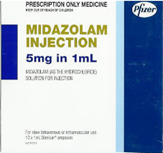
1. كيفية إعطاء دواء الميدازولام بالفم أو الأنف Midazolam 5mg /ml ampoule
• يوضع الطفل في وضع الإفاقة.
• يسحب كمية الدواءالمحسوبة بواسطة الطبيب مسبقا في ارشاداته في سرنجة إنسولين وينزع السن. يمكن إستخدام أمبولات الميدازولام المتوفرة للحقن الوريدي أو العضلي حيث أنه غير متوفر في مصر امبولات مخصوصة.
• تدخل السرنجة بين الاسنان والخد السفلي ليمتص الدواء من الغشاء المخاطي للثة وليس عن طريق البلع.
• يتم الضغط على مبسم السرنجة برفق حتى الانتهاء من اعطاء الدواء.
• يترك الطفل في وضع الافاقة
Appendix Table 4. The RIGHT-Ad@pt checklist |
|||||
|
7 sections, 27 topics, and 34 items |
Assessment |
Page(s)* |
Note(s) |
||
|
BASIC INFORMATION |
|||||
|
Title/subtitle |
|||||
|
1 |
Identify the report as an adaptation of practice guideline(s), that is include "guideline adaptation", "adapting", "adapted guideline/recommendation(s)", or similar terminology in the title/subtitle. |
☒ Yes ☐ No ☐ Unclear |
|
|
|
|
2 |
Describe the topic/focus/scope of the adapted guideline. |
☒ Yes ☐ No ☐ Unclear |
|
|
|
|
Cover/first page |
|||||
|
3 |
Report the respective dates of publication and the literature search of the adapted guideline. |
☒ Yes ☐ No ☐ Unclear |
|
|
|
|
4 |
Describe the developer and country/region of the adapted guideline. |
☒ Yes ☐ No ☐ Unclear |
|
|
|
|
Executive summary/abstract |
|||||
|
5 |
Provide a summary of the recommendations contained in the adapted guideline. |
☒ Yes ☐ No ☐ Unclear |
|
|
|
|
Abbreviations and acronyms |
|||||
|
6 |
Define key terms and provide a list of abbreviations and acronyms (if applicable). |
☒ Yes ☐ No ☐ Unclear |
|
|
|
|
Contact information of the guideline adaptation group |
|||||
|
7 |
Report the contact information of the developer of the adapted guideline. |
☒ Yes ☐ No ☐ Unclear |
|
|
|
|
SCOPE |
|||||
|
Source guideline(s) |
|||||
|
8 |
Report the name and year of publication of the source guideline(s), provide the citation(s), and whether source authors were contacted. |
☒ Yes ☐ No ☐ Unclear |
|
|
|
|
Brief description of the health problem(s) |
|||||
|
9 |
Provide the basic epidemiological information about the problem (including the associated burden), health systems relevant issues, and note any relevant differences compared to the source guideline(s).
|
☒ Yes ☐ No ☐ Unclear |
|
|
|
|
Aim(s) and specific objectives |
|||||
|
10 |
Describe the aim(s) of the adapted guideline and specific objectives, and note any relevant differences compared to the source guideline(s). |
☒ Yes ☐ No ☐ Unclear |
|
|
|
|
Target population(s) |
|||||
|
11 |
Describe the target population(s) and subgroup(s) (if applicable) to which the recommendation(s) is addressed in the adapted guideline, and note any relevant differences compared to the source guideline(s). |
☒ Yes ☐ No ☐ Unclear |
|
|
|
|
End-users and settings |
|||||
|
12 |
Describe the intended target users of the adapted guideline, and note any relevant differences compared to the source guideline(s). |
☒ Yes ☐ No ☐ Unclear |
|
|
|
|
13 |
Describe the setting(s) for which the adapted guideline is intended, and note any relevant differences compared to the source guideline(s). |
☒ Yes ☐ No ☐ Unclear |
|
|
|
|
RIGOR OF DEVELOPMENT |
|||||
|
Guideline adaptation group |
|||||
|
14 |
List all contributors to the guideline adaptation process and describe their selection process and responsibilities. |
☒ Yes ☐ No ☐ Unclear |
|
|
|
|
Adaptation framework/methodology |
|||||
|
15 |
Report which framework or methodology was used in the guideline adaptation process. |
☒ Yes ☐ No ☐ Unclear |
|
|
|
|
Source guideline(s) |
|||||
|
16 |
Describe how the specific source guideline(s) was(were) selected. |
☒ Yes ☐ No ☐ Unclear |
|
|
|
|
Key questions |
|||||
|
17 |
State the key questions of the adapted guideline using a structured format, such as PICO (population, intervention, comparator, and outcome), or another format as appropriate. |
☒ Yes ☐ No ☐ Unclear |
|
|
|
|
18 |
Describe how the key questions were developed/modified, and/or prioritized. |
☐ Yes ☒ No ☐ Unclear |
|
|
|
|
Source recommendation(s) |
|||||
|
19 |
Describe how the recommendation(s) from the source guideline(s) was(were) assessed with respect to the evidence considered for the different criteria, the judgements and considerations made by the original panel. |
☐ Yes ☒ No ☐ Unclear |
|
|
|
|
Evidence synthesis |
|||||
|
20 |
Indicate whether the adapted recommendation(s) is/are based on existing evidence from the source guideline(s), and/or additional evidence. |
☐ Yes ☒ No ☐ Unclear |
|
|
|
|
21 |
If new research evidence was used, describe how it was identified and assessed. |
☐ Yes ☒ No ☐ Unclear |
NA |
|
|
|
Assessment of the certainty of the body of evidence and strength of recommendation |
|||||
|
22 |
Describe the approach used to assess the certainty/quality of the body/ies of evidence and the strength of recommendations in the adapted guideline and note any differences (if applicable) compared to the source guideline(s). |
☐ Yes ☒ No ☐ Unclear |
NA |
|
|
|
Decision-making processes |
|||||
|
23 |
Describe the processes used by the guideline adaptation group to make decisions, particularly the formulation of recommendations.
|
☒ Yes ☐ No ☐ Unclear |
|
|
|
|
RECOMMENDATIONS |
|||||
|
Recommendations |
|||||
|
24 |
Report recommendations and indicate whether they were adapted, adopted, or de novo. |
☒ Yes ☐ No ☐ Unclear |
|
|
|
|
25 |
Indicate the direction and strength of the recommendations and the certainty/quality of the supporting evidence and note any differences compared to the source recommendations(s) (if applicable). |
☒ Yes ☐ No ☐ Unclear |
|
|
|
|
26 |
Present separate recommendations for important subgroups if the evidence suggests important differences in factors influencing recommendations and note any differences compared to the source recommendations(s) (If applicable). |
☒ Yes ☐ No ☐ Unclear |
|
|
|
|
Rationale/explanation for recommendations |
|||||
|
27 |
Describe the criteria/factors that were considered to formulate the recommendations or note any relevant differences compared to the source guideline(s) (if applicable). |
☒ Yes ☐ No ☐ Unclear |
|
|
|
|
EXTERNAL REVIEW AND QUALITY ASSURANCE |
|||||
|
External review |
|||||
|
28 |
Indicate whether the adapted guideline underwent an independent external review. If yes, describe the process. |
☒ Yes ☐ No ☐ Unclear |
|
|
|
|
Organizational approval |
|||||
|
29 |
Indicate whether the adapted guideline obtained organizational approval. If yes, describe the process. |
☒ Yes ☐ No ☐ Unclear |
SNS & NEBMC |
|
|
|
FUNDING, DECLARATION, AND MANAGEMENT OF INTEREST |
|||||
|
Funding source(s) and funder role(s) |
|||||
|
30 |
Report all sources of funding for the adapted guideline and source guideline(s), and the role of the funders. |
☒ Yes ☐ No ☐ Unclear |
|
|
|
|
Declaration and management of interests |
|||||
|
31 |
Report all conflicts of interest of the adapted and the source guideline(s) panels, and how they were evaluated and managed. |
☒ Yes ☐ No ☐ Unclear |
|
|
|
|
OTHER INFORMATION |
|||||
|
Implementation |
|||||
|
32 |
Describe the potential barriers and strategies for implementing the recommendations (if applicable). |
☒ Yes ☐ No ☐ Unclear |
|
|
|
|
Update |
|||||
|
33 |
Briefly describe the strategy for updating the adapted guideline (if applicable). |
☒ Yes ☐ No ☐ Unclear |
|
|
|
|
Limitations and suggestions for further research |
|||||
|
34 |
Describe the challenges of the adaptation process, the limitations of the evidence, and provide suggestions for future research. |
☐ Yes ☒ No ☐ Unclear |
-- |
|
|