Metabolic disorders in Ruminant, Ketosis, Ketonemia ,Woody cow syndrome
- Pathogenesis
1-Negative Energy Balance (NEB)
After calving, milk production increases rapidly, but feed intake lags. Energy deficit triggers adipose tissue lipolysis.
2-Liver Overload
Mobilized NEFAs enter the liver, where they are:
- Completely oxidized → CO₂ + ATP
- Partially oxidized → ketone bodies
- Esterified → triglycerides, contributing to fatty liver
3- Ketone Accumulation
High levels of BHBA and acetoacetate lead to:
- Suppressed appetite
- Reduced rumen motility
- Further worsening of NEB
4- Neurological Form (Nervous Ketosis)
High ketone levels alter brain metabolism → licking, chewing, head pressing, hyperexcitability.
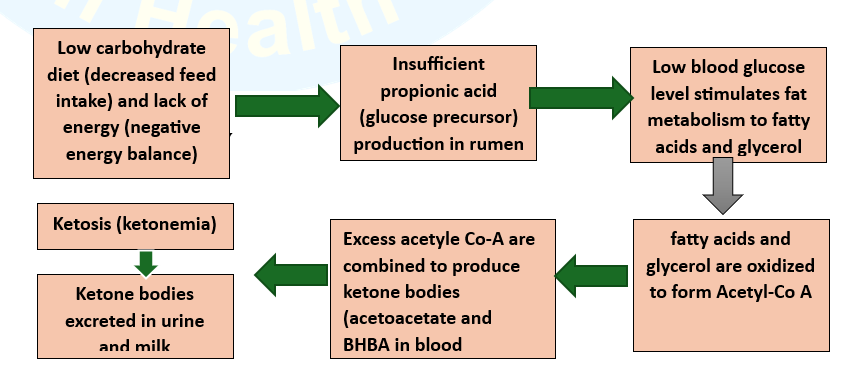
Diagram summarizing the pathogenesis of ketosis in cattle
How NEB is produced in cattle
· Around calving, lactating dairy cows naturally decrease dry matter intake (DMI) due to the advanced gestation stage, as well as metabolic changes which occur in this period. This DMI decrease leads to a NEB.
· During the last week of fetal development, the fetus uses approximately 46% of maternal glucose.
· The onset of milk production makes this energy shortage more remarkable. The mammary gland requires a large amount of glucose for milk lactose synthesis when lactation starts.