NICTITATING MEMBRANE (THIRD EYELID)
- Neoplasms of the nictitating membrane
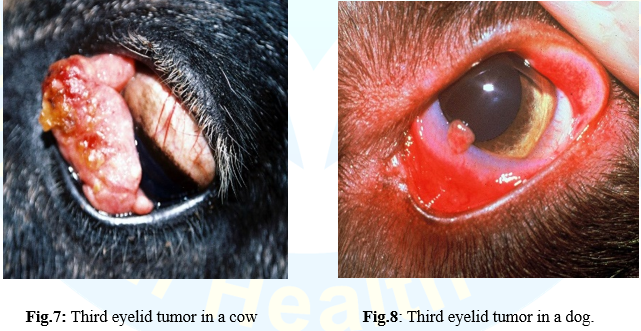
Squamous cell carcinoma is the most common tumor of the third eyelid in all species of animals. Adenoma and adenocarcinoma have been described in dogs. hemangioma or hemangiosarcoma
and adenocarcinoma of the third eyelid also are common. Unpigmented membranes are more susceptible.
Treatment:
Surgical removal of the affected area is the treatment of choice, but if the lesion is extensive, radical excision of the entire third eyelid is indicated. If the cartilage is exposed during surgical excision of the tumor, the conjunctival wound is sutured to prevent prolapse of the cartilage or gland.
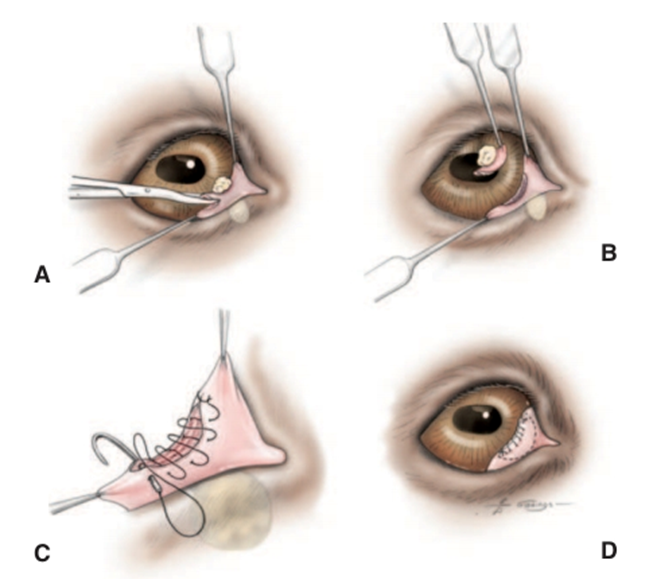
Fig.9: Surgical removal of a small neoplasm on the free margin of the third eyelid. A and B, The third eyelid is grasped with forceps or mosquito hemostats, and the mass plus adequate margin are removed with tenotomy scissors. C and D, The bulbar and anterior conjunctival surfaces are sutured over the edge of any exposed cartilage using 6/0 absorbable suture in a simple continuous pattern. Adjunctive radiation or cryotherapy may be necessary in the region outlined by a dotted line (Wilcock and Peiffer, 1988).