Chronic obstructive pulmonary disease Management and Follow up.
- Annex
Annex 1:
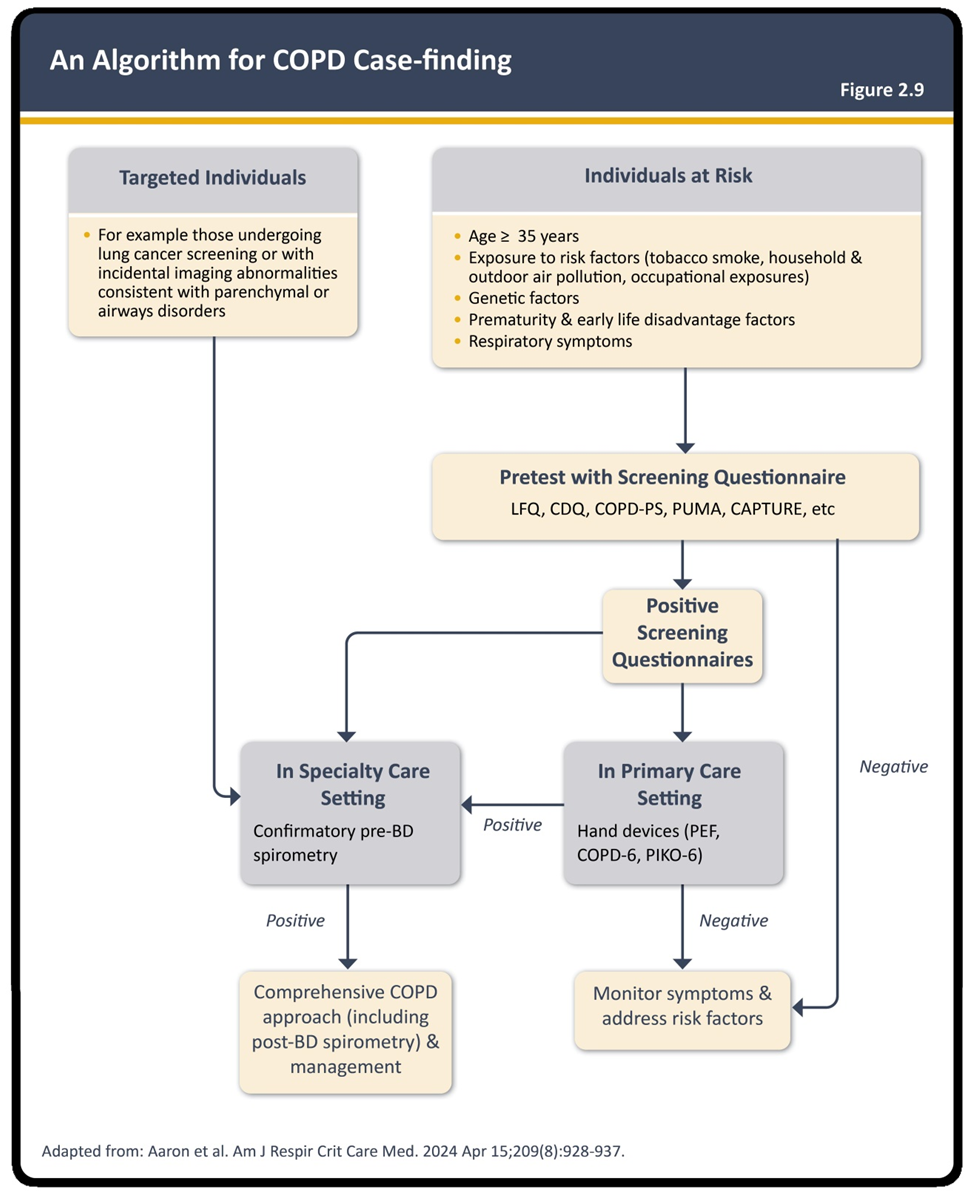
Annex 2: © 2025, 2026 Global Initiative for Chronic Obstructive Lung Disease
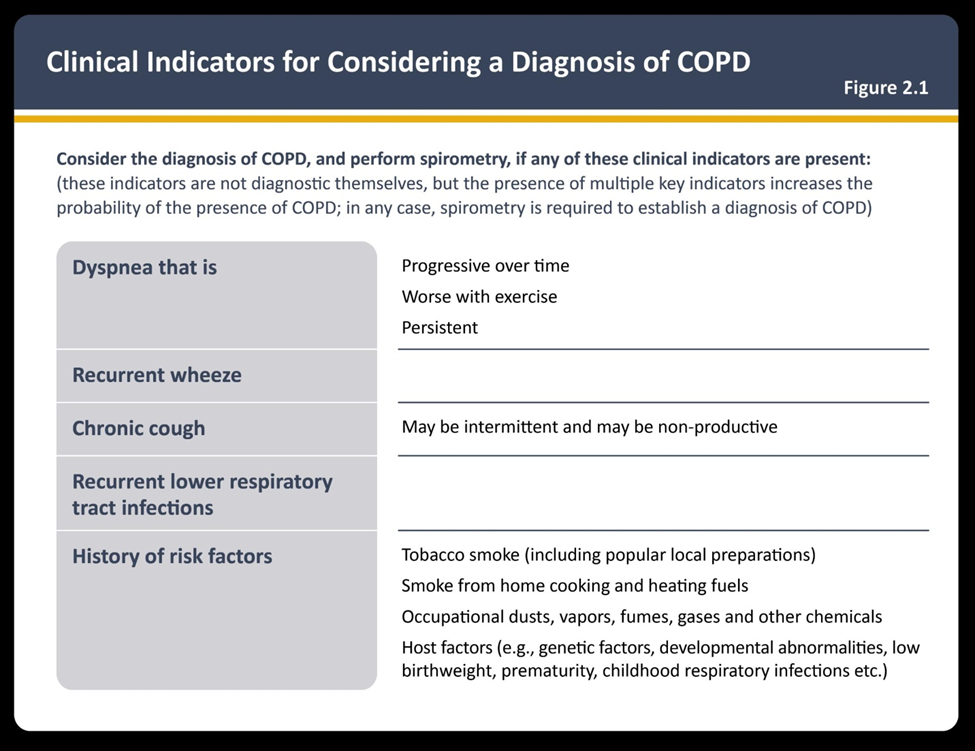
Annex 3 (a,b,c): Consideration of spirometry in COPD assessment © 2025, 2026 Global Initiative for Chronic Obstructive Lung Disease
Annex 3 (a: © 2025, 2026 Global Initiative for Chronic Obstructive Lung Disease
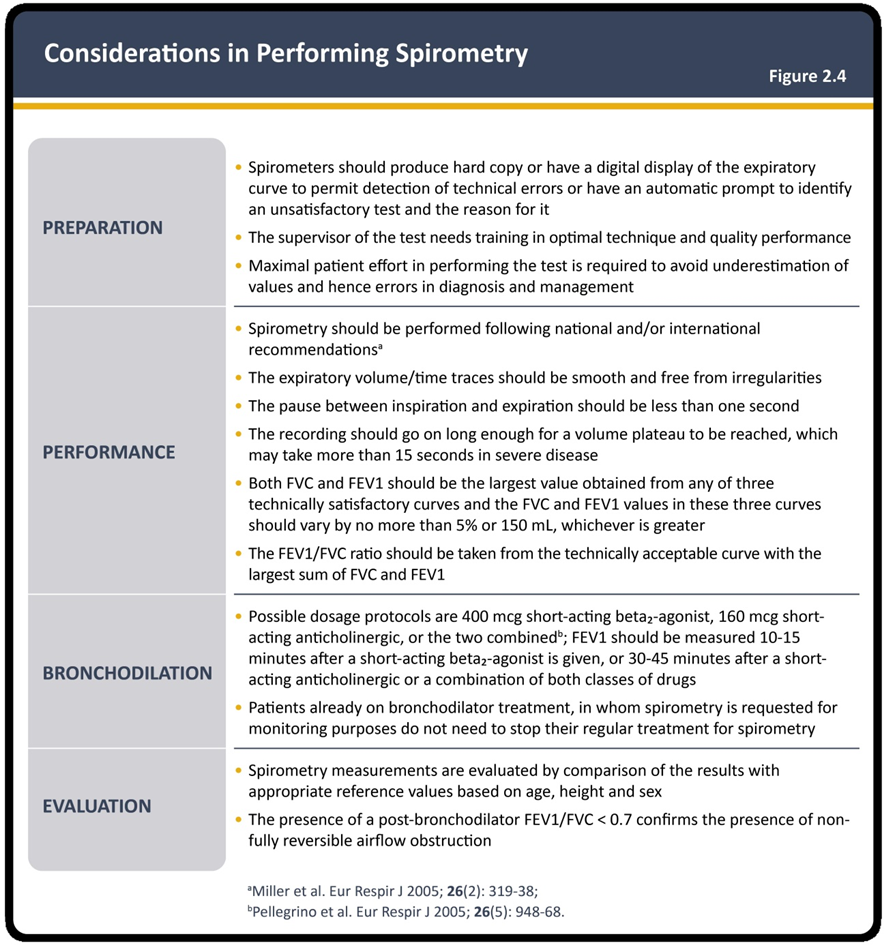
Annex 3 (b: © 2025, 2026 Global Initiative for Chronic Obstructive Lung Disease
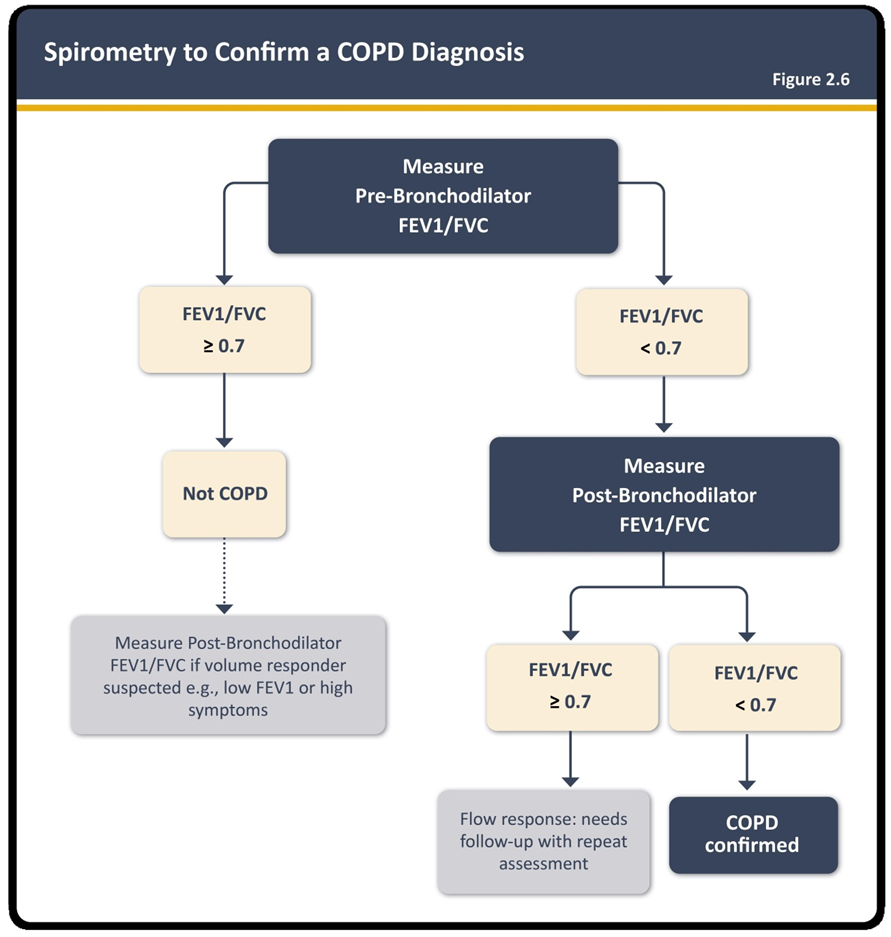
Annex 3 (c): © 2025, 2026 Global Initiative for Chronic Obstructive Lung Disease
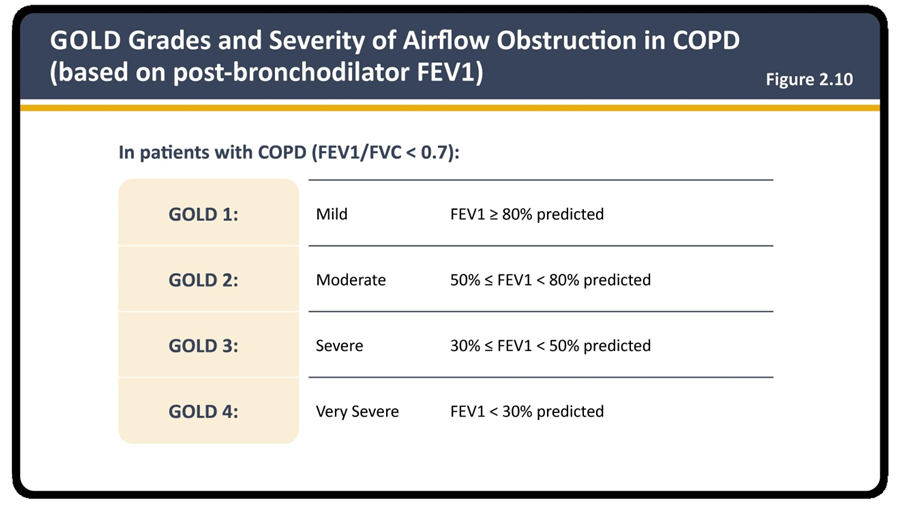
Annex 4 (a,b ): © 2025, 2026 Global Initiative for Chronic Obstructive Lung Disease
Annex 4 (a): © 2025, 2026 Global Initiative for Chronic Obstructive Lung Disease
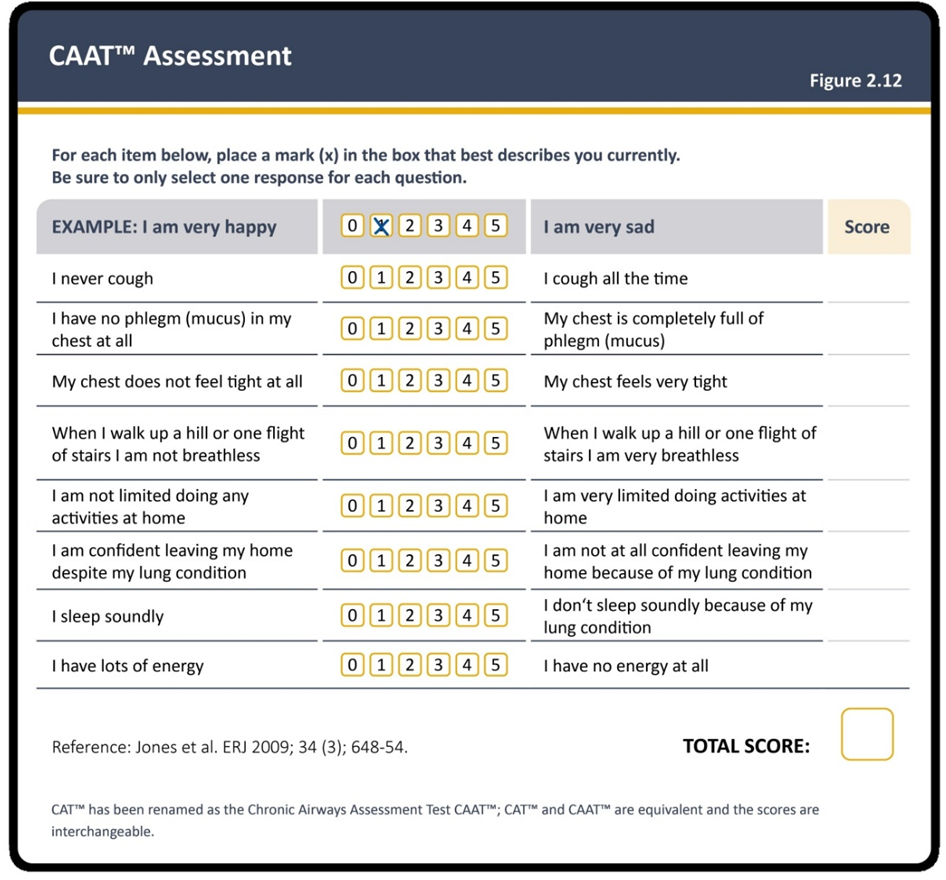
Annex 4 (b ): © 2025, 2026 Global Initiative for Chronic Obstructive Lung Disease
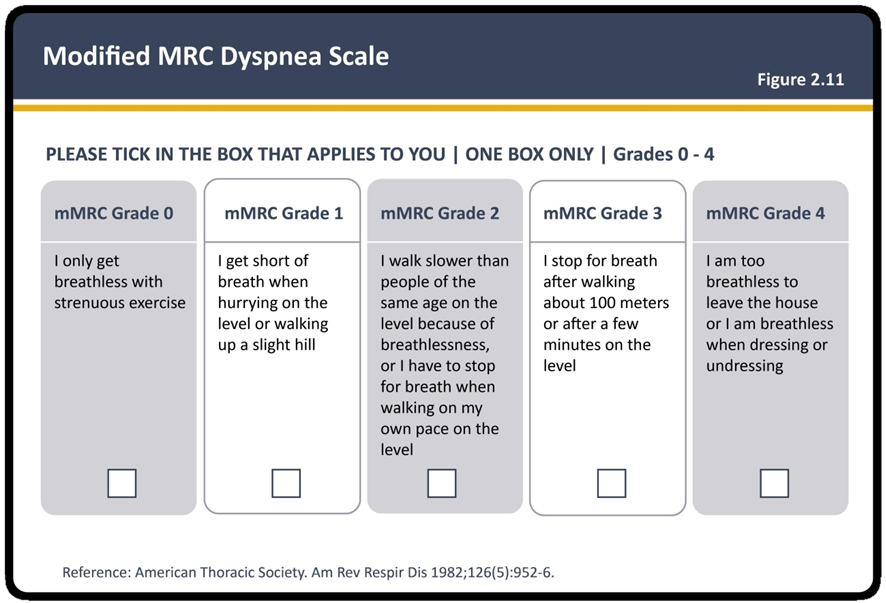
Annex 5: © 2025, 2026 Global Initiative for Chronic Obstructive Lung Disease
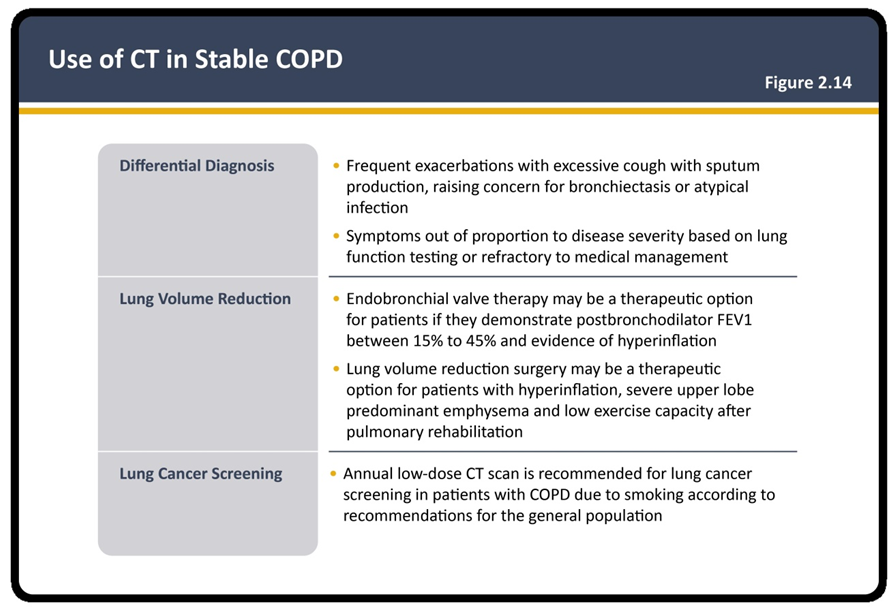
Annex 6 (a,b) : © 2025, 2026 Global Initiative for Chronic Obstructive Lung Disease
Annex 6 (a) : © 2025, 2026 Global Initiative for Chronic Obstructive Lung Disease
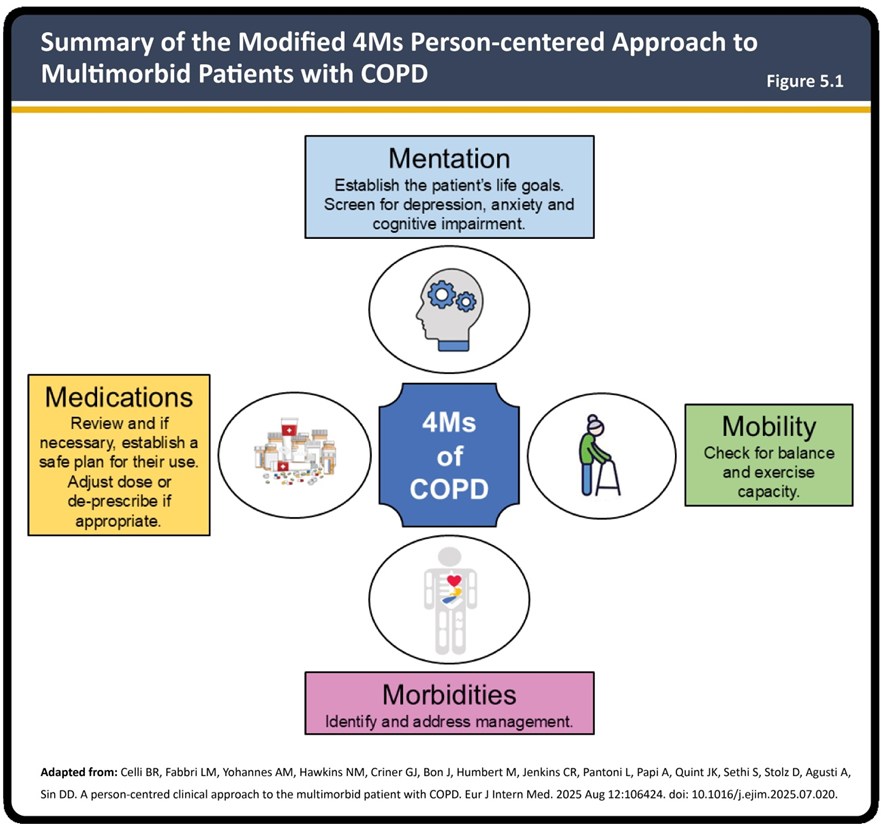
Annex 6 (b) : © 2025, 2026 Global Initiative for Chronic Obstructive Lung Disease
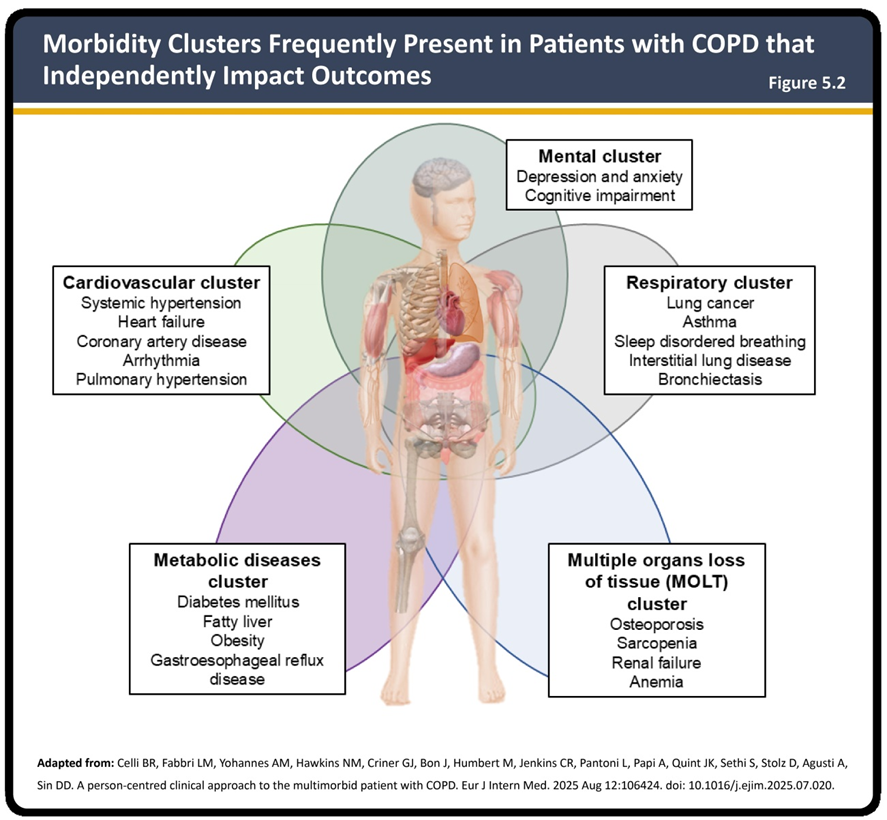
Annex 7: © 2025, 2026 Global Initiative for Chronic Obstructive Lung Disease
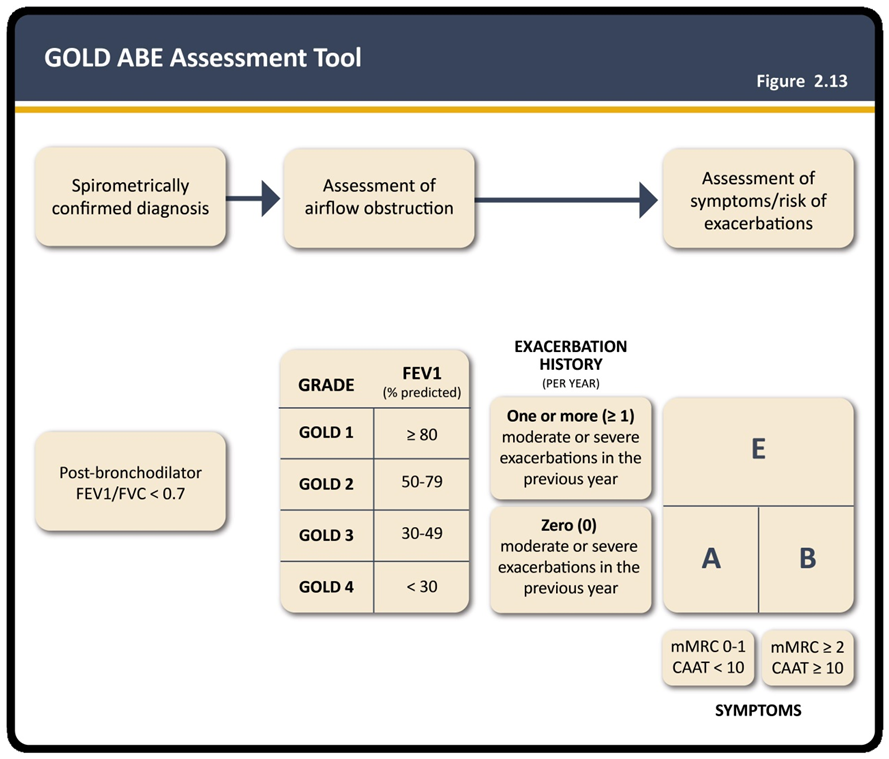
Annex 8,9: Management cycle of COPD
Annex 8: Management cycle of COPD
© 2025, 2026 Global Initiative for Chronic Obstructive Lung Disease
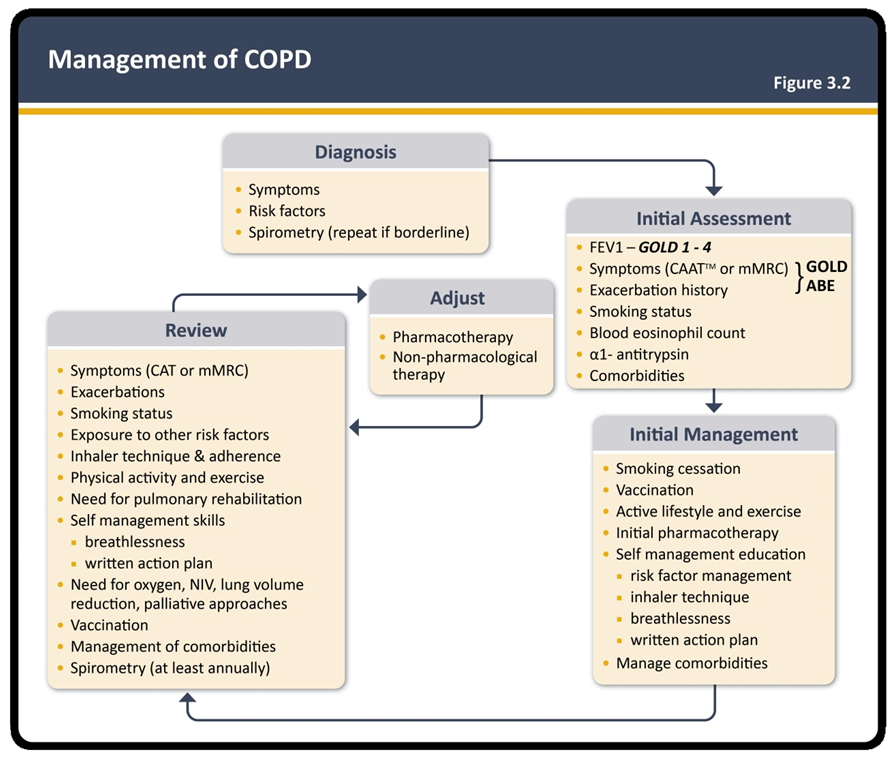
Annex 9: Management cycle of COPD
© 2025, 2026 Global Initiative for Chronic Obstructive Lung Disease
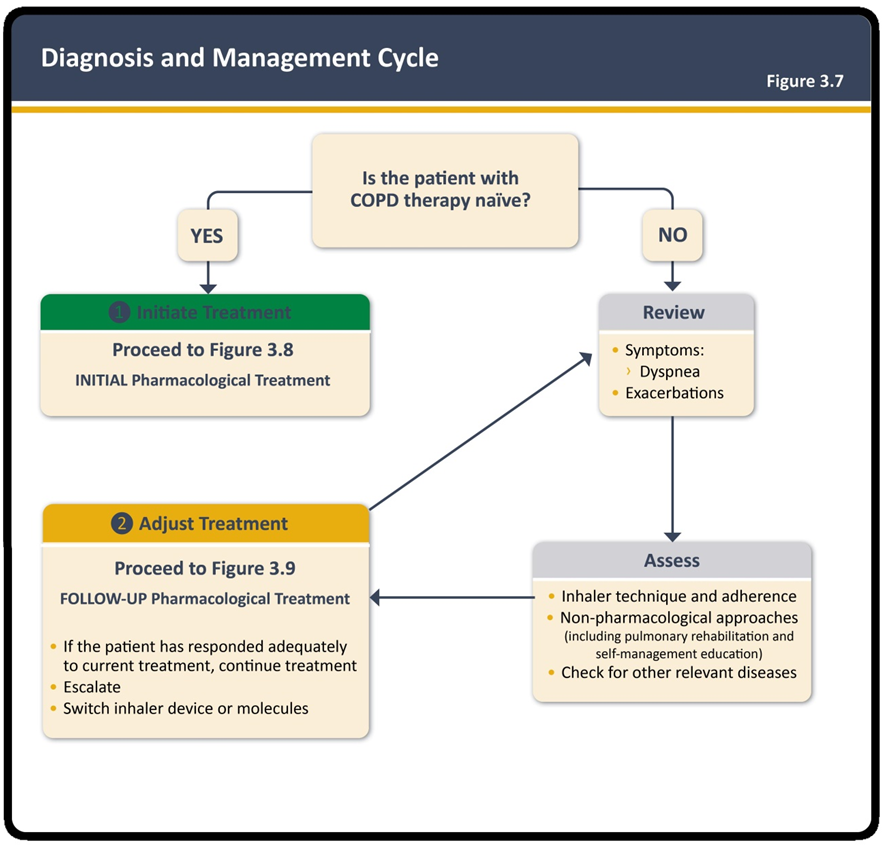
Annex 10(a,b): Pharmacological therapy approach © 2025, 2026 Global Initiative for Chronic Obstructive Lung Disease
Annex 10(a): Pharmacological therapy approach © 2025, 2026 Global Initiative for Chronic Obstructive Lung Disease
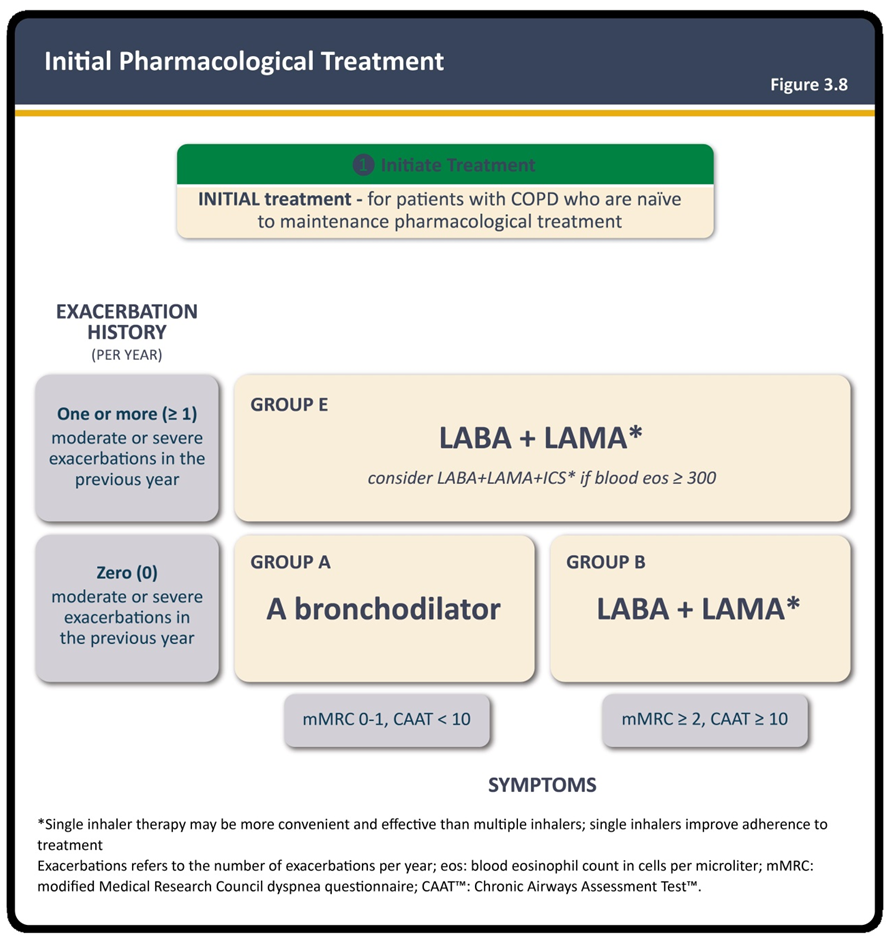
Annex 10(b): Pharmacological therapy approach © 2025, 2026 Global Initiative for Chronic Obstructive Lung Disease
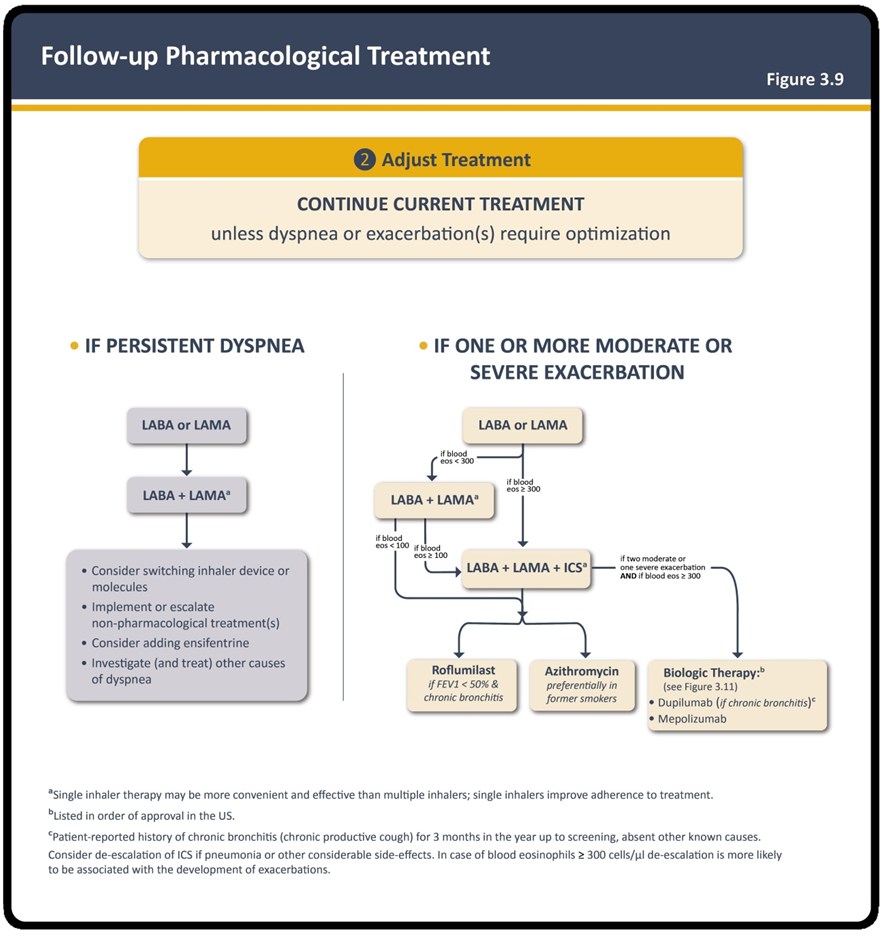
Annex 11: pharmacological combination therapy (30)
Table . Population, Intervention, Comparator, and Outcomes Questions and Recommendations for the Pharmacologic Treatment of Stable Chronic Obstructive Pulmonary Disease
|
PICO Question |
Recommendation |
Strength of Recommendation |
Certainty of Evidence |
|
1. In patients with COPD who complain of dyspnea or exercise intolerance, is LABA/LAMA combination therapy more effective than and as safe as LABA or LAMA monotherapy? |
In patients with COPD who complain of dyspnea or exercise intolerance, we recommend LABA/LAMA combination therapy over LABA or LAMA monotherapy. |
Strong |
Moderate certainty |
|
2. In patients with COPD who complain of dyspnea or exercise intolerance despite the use of dual therapy with LABA/LAMA, is triple therapy with ICS/LABA/LAMA more effective than and as safe as dual therapy with LABA/LAMA? |
In patients with COPD who complain of dyspnea or exercise intolerance despite dual therapy with LABA/LAMA, we suggest the use of triple therapy with ICS/LABA/LAMA over dual therapy with LABA/LAMA in those patients with a history of one or more exacerbations in the past year requiring antibiotics or oral steroids or hospitalization. |
Conditional |
Moderate certainty |
|
3. In patients with COPD who are receiving triple therapy (ICS/LABA/LAMA), should the ICS be withdrawn? |
In patients with COPD who are receiving triple therapy (ICS/LABA/LAMA), we suggest that the ICS can be withdrawn if the patient has had no exacerbations in the past year. |
Conditional |
Moderate certainty |
|
4. In patients with COPD and blood eosinophilia, should treatment include an ICS in addition to a long-acting bronchodilator? |
We do not make a recommendation for or against ICS as an additive therapy to long-acting bronchodilators in patients with COPD and blood eosinophilia, except for those patients with a history of one or more exacerbations in the past year requiring antibiotics or oral steroids or hospitalization, for whom we suggest ICS as an additive therapy. |
Conditional |
Moderate certainty |
|
5. In patients with COPD who have a history of severe and frequent exacerbations despite otherwise optimal therapy, is maintenance oral steroid therapy more effective than and as safe as no maintenance oral steroid therapy? |
In patients with COPD and a history of severe and frequent exacerbations despite otherwise optimal therapy, we advise against the use of maintenance oral corticosteroid therapy. |
Conditional |
Low certainty |
|
6. In patients with COPD who experience advanced refractory dyspnea despite otherwise optimal therapy, is opioid-based therapy more effective than and as safe as no additional therapy? |
In individuals with COPD who experience advanced refractory dyspnea despite otherwise optimal therapy, we suggest that opioid-based therapy be considered for dyspnea management, within a personalized shared decision-making approach. |
Conditional |
Very low certainty |
Annex 12, 13,14: combination therapy including ICS
© 2025, 2026 Global Initiative for Chronic Obstructive Lung Disease
Annex 12: © 2025, 2026 Global Initiative for Chronic Obstructive Lung Disease
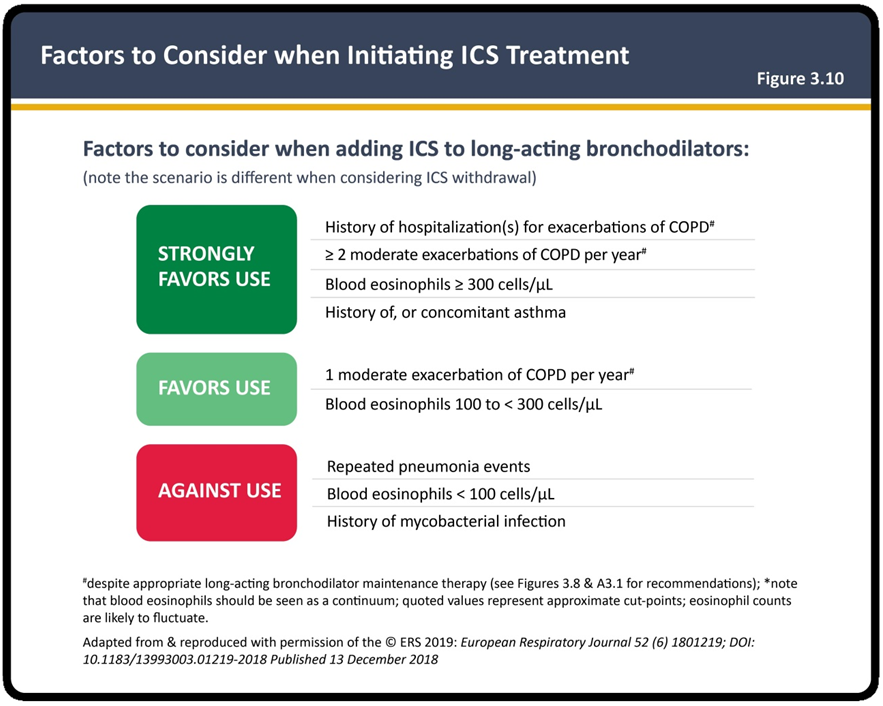
Annex 13 : © 2025, 2026 Global Initiative for Chronic Obstructive Lung Disease
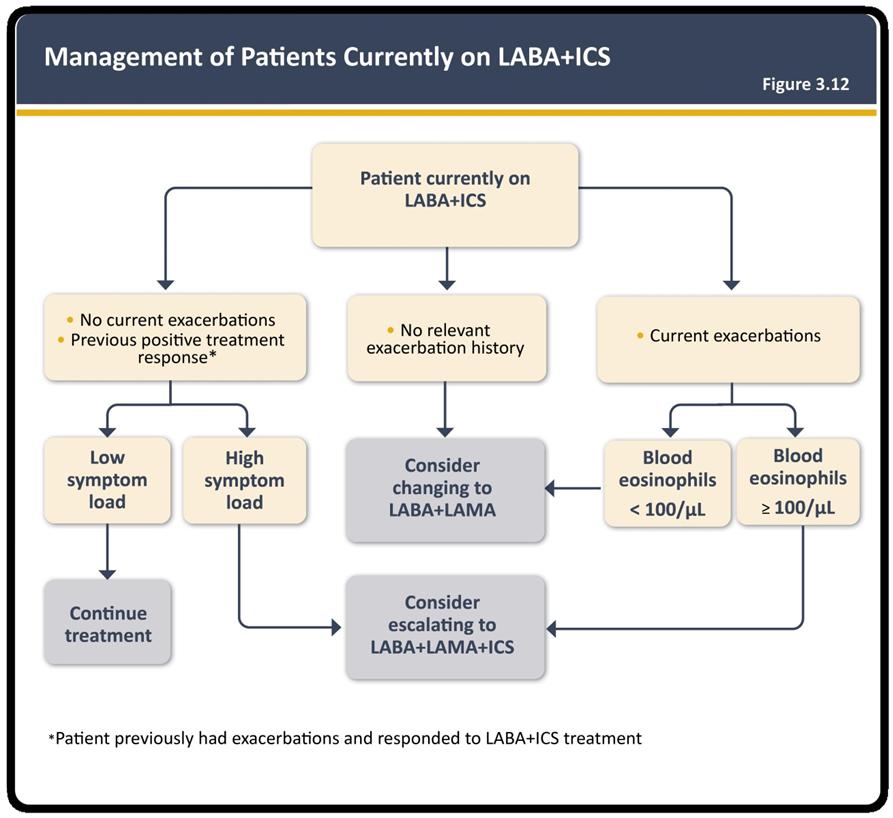
Annex 14: © 2025, 2026 Global Initiative for Chronic Obstructive Lung Disease
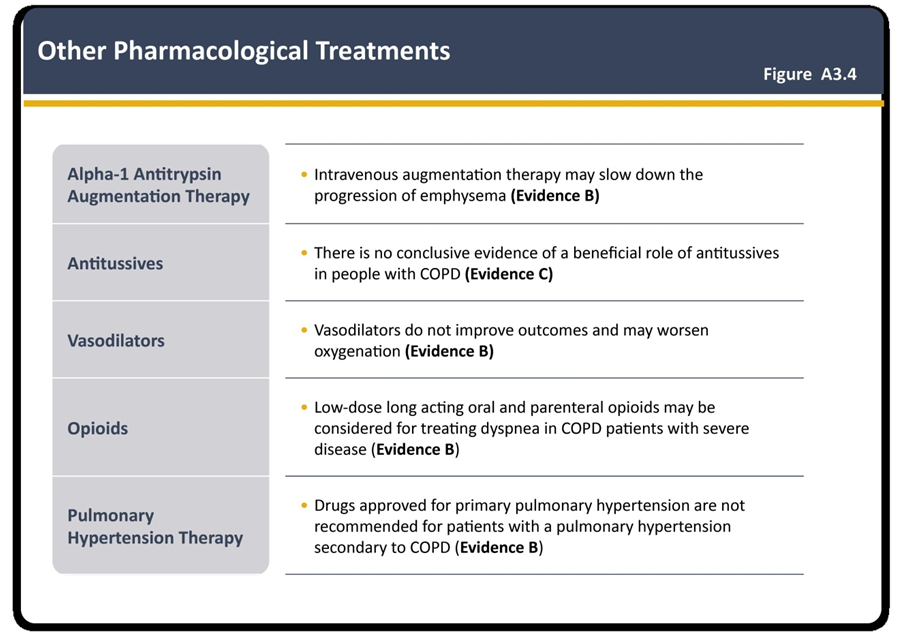
© 2025, 2026 Global Initiative for Chronic Obstructive Lung Disease
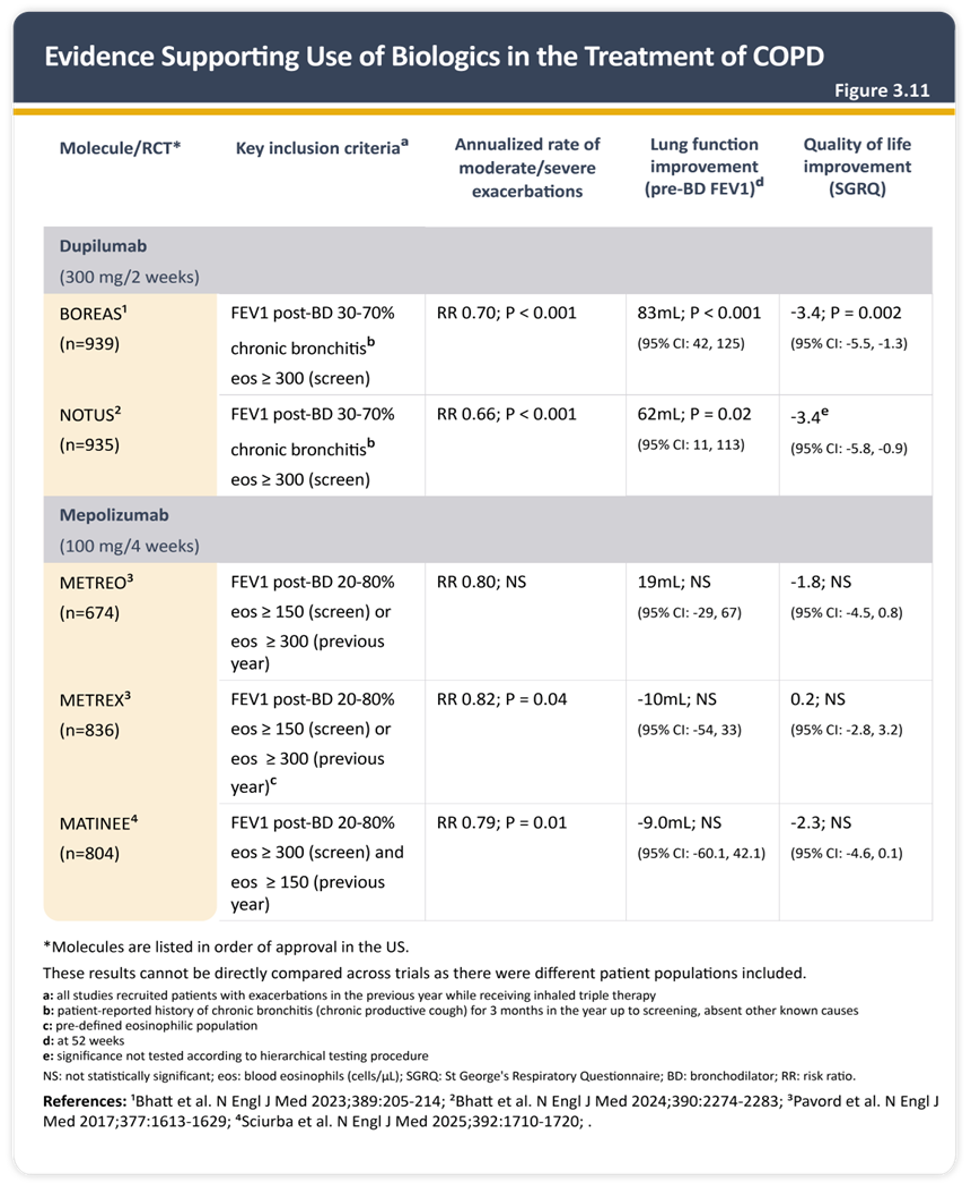
Annex 15: Biological therapy
© 2025, 2026 Global Initiative for Chronic Obstructive Lung Disease
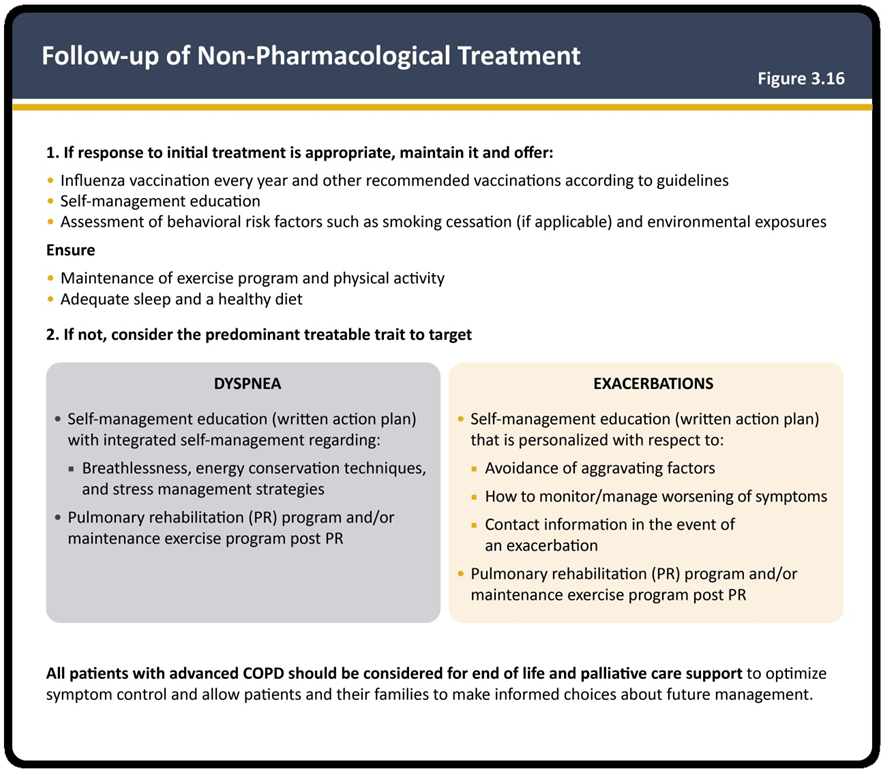
annex 16(a,b) : Nonpharmacological therapy
© 2025, 2026 Global Initiative for Chronic Obstructive Lung Disease
annex 16(a) : Nonpharmacological therapy
© 2025, 2026 Global Initiative for Chronic Obstructive Lung Disease
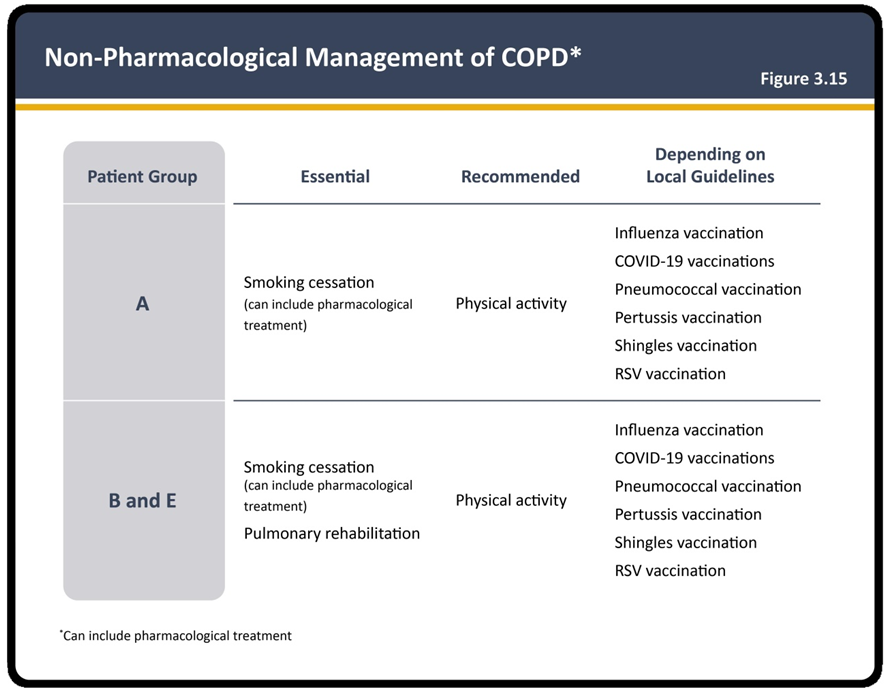
annex 16(b) : Nonpharmacological therapy
© 2025, 2026 Global Initiative for Chronic Obstructive Lung Disease
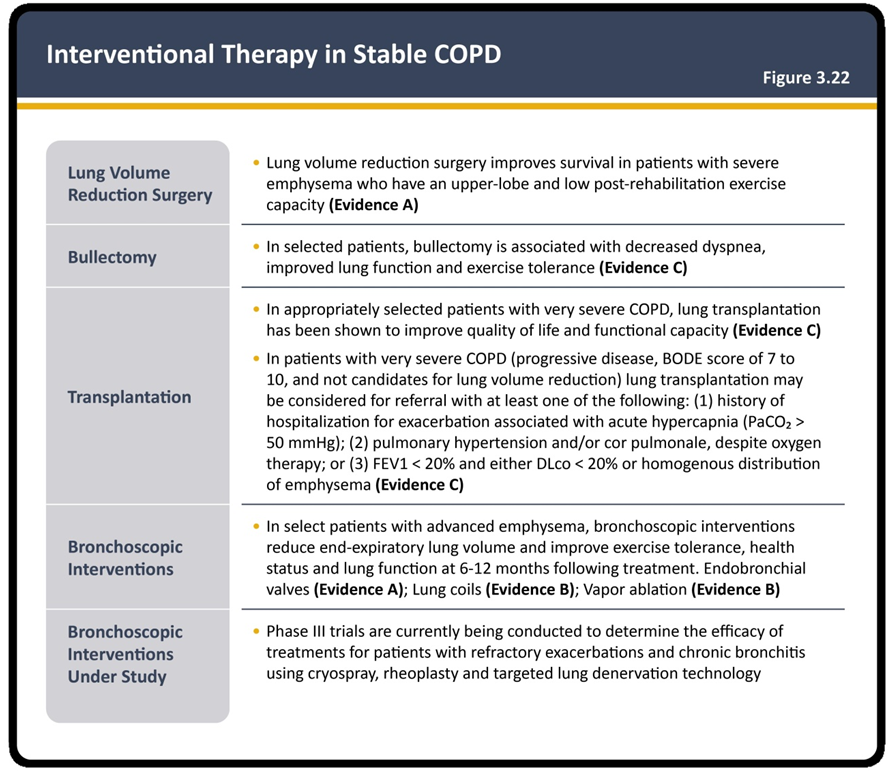
annex 17(a,b): Interventional therapy
© 2025, 2026 Global Initiative for Chronic Obstructive Lung Disease
annex 17(a): Interventional therapy
© 2025, 2026 Global Initiative for Chronic Obstructive Lung Disease
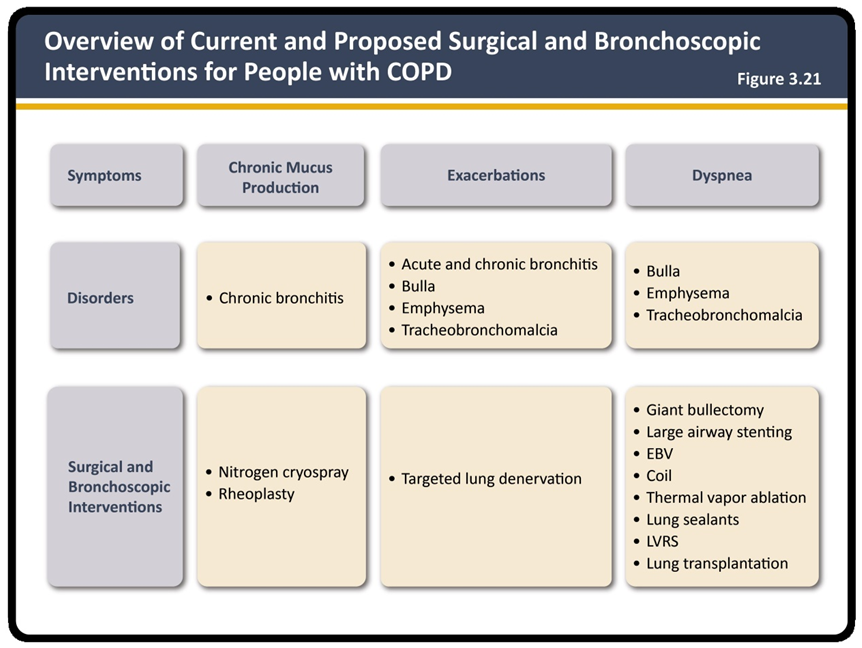
annex 17(b): Interventional therapy
© 2025, 2026 Global Initiative for Chronic Obstructive Lung Disease
Annex 18: vaccination in COPD
© 2025, 2026 Global Initiative for Chronic Obstructive Lung Disease
Table 1. Vaccine recommended by GOLD for COPD patients.
|
Vaccine |
Dosing and Frequency |
Specific Scenario or Indication |
Level of Evidence |
|
Influenza |
Annually |
- |
B |
|
Pneumococcal |
|
- |
B |
|
PCV 20 |
Once |
|
B |
|
PCV 15 followed by PPSV 23 |
PSV23 administered 1 year after PCV15 (or ≥8 weeks after PCV15 in patients with an immunocompromising condition, cochlear implant, or CSF leak) |
|
B |
|
Severe acute respiratory syndrome coronavirus 2 |
Two 2024-2025 formula, with the second dose given 2-6 months after the first dose |
Age ≥ 65, immunocompetent |
B |
|
|
One dose 2024-2025 formula |
Age 5-64, immunocompetent |
B |
|
|
At least three mRNA vaccine doses |
Immunocompromised |
B |
|
Respiratory syncytial virus |
Once |
Age > 60 |
A |
|
Pertussis |
Once |
For patients who were not vaccinated in adolescence |
B |
|
Varicella zoster |
Two doses 2-6 months apart for recombinant vaccine |
Age > 50 |
B |
PCV: Pneumococcal conjugated vaccine, PPSV: Pneumococcal polysaccharide vaccine; CSF: Cerebrospinal fluid;
Annex19: follow up of COPD
© 2025, 2026 Global Initiative for Chronic Obstructive Lung Disease
Discharge Criteria and Recommendations for Follow-up (Figure 4.10)
|
1. Full review of all clinical and laboratory data 2. Check maintenance therapy (see Figure 3.9, patients with elevated blood eosinophils should be discharged on LABA+LAMA+ICS) 3. Reassess inhaler technique 4. Ensure understanding of withdrawal of acute medications (steroids and/or antibiotics) |
1. |
2. 5. Assess need for continuing supplemental oxygen 3. 6. Provide management plan 4. 7. Follow-up comorbidities such as cardiovascular disease 8. Ensure follow-up arrangements: early follow-up < 4 weeks, and late follow-up > 12 weeks as indicated |
|
1 – 4 Weeks Follow-up |
|
12 – 16 Weeks Follow-up |
|
· Evaluate ability to cope in his/her usual environment · Review understanding of treatment regimen · Reassessment of inhaler techniques · Reassess need for long-term oxygen · Document the capacity to do physical activity and consider patient eligibility to be enrolled in pulmonary rehabilitation · Document symptoms: CAATTM or mMRC · Determine status of comorbidities |
· |
· Evaluate ability to cope in his/her usual environment · Review understanding of treatment regimen · Reassessment of inhaler techniques · Reassess need for long-term oxygen · Document the capacity to do physical activity and activities of daily living · Measure spirometry: FEV1 · Document symptoms: CAATTM or mMRC · Determine status of comorbidities |
Annex 20: © 2025, 2026 Global Initiative for Chronic Obstructive Lung Disease
Anti-Inflammatory Maintenance Therapy (Figure A3.3)
|
Inhaled Corticosteroids |
· Regular treatment with ICS increases the risk of pneumonia especially in those with severe disease (Evidence A) · An ICS combined with a LABA is more effective than the individual components in improving lung function and health status and reducing exacerbations in patients with exacerbations and moderate to very severe COPD (Evidence A) · We do not encourage the use of a LABA+ICS combination in COPD. If there is an indication for an ICS the combination LABA+LAMA+ICS has been shown to be superior to LABA+ICS and is therefore the preferred choice · Triple inhaled therapy of LABA+LAMA+ICS improves lung function, symptoms and health status, and reduces exacerbations, compared to LABA+ICS, LABA+LAMA or LAMA monotherapy (Evidence A). Recent data suggesta beneficial effect of triple inhaled therapy versus fixed-dose LABA+LAMA combinations on mortality in symptomatic COPD patients with a history of frequent and/or severe exacerbations · If patients with COPD have features of asthma, treatment should always contain an ICS · Independent of ICS use, there is evidence that a blood eosinophil count < 2% increases the risk of pneumonia (Evidence C) · Combinations can be given as single or multiple inhaler therapy. Single inhaler therapy may be more convenient and effective than multiple inhalers |
|
Oral Glucocorticoids |
· Long-term use of oral glucocorticoids has numerous side effects (Evidence A) with no evidence of benefits (Evidence C) |
|
PDE Inhibitors |
· In patients with chronic bronchitis, severe to very severe COPD and a history of exacerbations: · Roflumilast improves lung function and reduces moderate and severe exacerbations (Evidence A) · Ensifentrine improves lung function (Evidence A) but an effect on exacerbations has not been evaluated in patients at increased exacerbation risk |
|
Antibiotics |
· Long-term azithromycin and erythromycin therapy reduces exacerbations over one year (Evidence A) · Preferentially, but not only in former smokers with exacerbations despite appropriate therapy, azithromycin can be considered (Evidence B) · Treatment with azithromycin is associated with an increased incidence of bacterial resistance (Evidence A) and hearing test impairments (Evidence B) |
|
Mucoregulators & Antioxidant Agents |
· Regular treatment with mucolytics such as erdosteine, carbocysteine and N-acetylcysteine reduces the risk of exacerbations in select populations (Evidence B) · Antioxidant mucolytics are recommended only in selected patients (Evidence A) |
|
Biologics |
· In patients with moderate to severe COPD with a history of exacerbations despite triple therapy and higher blood eosinophils ($\ge 300\text{ cells}/\mu\text{L}$): · Dupilumab reduces exacerbations, improves lung function and quality of life in patients with chronic bronchitis (Evidence A) · Mepolizumab reduces exacerbations in patients with and without chronic bronchitis (Evidence A) |
|
Other Anti-Inflammatory Agents |
· Statin therapy is not recommended for prevention of exacerbations (Evidence A) · Simvastatin does not prevent exacerbations in COPD patients at increased risk of exacerbations and without indications for statin therapy (Evidence A). However, observational studies suggest that statins may have positive effects on some outcomes in patients with COPD who receive them for cardiovascular and metabolic indications (Evidence C) · Leukotriene modifiers have not been tested adequately in COPD patients |
Annex 21: © 2025, 2026 Global Initiative for Chronic Obstructive Lung Disease
Maintenance Medications in COPD* Figure A3.1
|
Generic Drug Name |
Inhaler Type |
Nebulizer |
Oral/Injectable Delivery |
Duration of Action |
|
BETA₂-Agonists |
||||
|
Short-acting (SABA) |
||||
|
Fenoterol |
MDI |
✓ |
tablet, solution |
variable |
|
Levalbuterol |
MDI |
✓ |
variable |
|
|
Salbutamol (albuterol) |
MDI, DPI |
✓ |
syrup, tablet |
variable |
|
Terbutaline |
DPI |
tablet |
variable |
|
|
Long-acting (LABA) |
||||
|
Arformoterol |
✓ |
12 hours |
||
|
Formoterol |
DPI |
✓ |
12 hours |
|
|
Indacaterol |
DPI |
24 hours |
||
|
Olodaterol |
SMI |
24 hours |
||
|
Salmeterol |
MDI, DPI |
12 hours |
||
|
Anticholinergics |
||||
|
Short-acting (SAMA) |
||||
|
Iratropium bromide |
MDI |
✓ |
6-8 hours |
|
|
Oxitropium bromide |
MDI |
✓ |
7-9 hours |
|
|
Long-acting (LAMA) |
||||
|
Aclidinium bromide |
DPI |
12 hours |
||
|
Glycopyrronium bromide |
DPI |
✓ |
solution |
variable |
|
Tiotropium |
DPI, SMI, MDI |
24 hours |
||
|
Umeclidinium |
DPI |
24 hours |
||
|
Revefenacin |
✓ |
24 hours |
||
|
Combination Short-Acting Beta₂-Agonist Plus Anticholinergic in One Device (SABA+SAMA) |
||||
|
Fenoterol/ipratropium |
SMI |
✓ |
6-8 hours |
|
|
Salbutamol/ipratropium |
SMI, MDI |
✓ |
variable |
|
|
Combination Long-Acting Beta₂-Agonist Plus Anticholinergic in One Device (LABA+LAMA) |
||||
|
Formoterol/aclidinium |
DPI |
12 hours |
||
|
Formoterol/glycopyrronium |
MDI |
12 hours |
||
|
Indacaterol/glycopyrronium |
DPI |
12-24 hours |
||
|
Vilanterol/umeclidinium |
DPI |
24 hours |
||
|
Olodaterol/tiotropium |
SMI |
24 hours |
||
|
Methylxanthines |
||||
|
Aminophylline |
solution, injectable |
variable |
||
|
Theophylline (SR) |
tablet, capsule, elixir, solution, injectable |
variable |
||
|
Combination of Long-Acting Beta₂-Agonist Plus Corticosteroid in One Device (LABA+ICS) |
||||
|
Formoterol/beclometasone |
MDI, DPI |
12 hours |
||
|
Formoterol/budesonide |
MDI, DPI |
12 hours |
||
|
Formoterol/mometasone |
MDI |
12 hours |
||
|
Salmeterol/fluticasone propionate |
MDI, DPI |
12 hours |
||
|
Vilanterol/fluticasone furoate |
DPI |
24 hours |
||
|
Triple Combination in One Device (LABA+LAMA+ICS) |
||||
|
Fluticasone/umeclidinium/vilanterol |
DPI |
24 hours |
||
|
Beclometasone/formoterol/glycopyrronium |
MDI, DPI |
12 hours |
||
|
Budesonide/formoterol/glycopyrrolate |
MDI |
12 hours |
||
|
Phosphodiesterase-3 and/or -4 Inhibitors |
||||
|
Roflumilast |
tablet |
24 hours |
||
|
Ensifentrine |
✓ |
12 hours |
||
|
Mucolytic Agents |
||||
|
Erdosteine |
capsule, suspension |
12 hours |
||
|
Carbocysteine† |
capsule, packet, solution, syrup |
6-8 hours |
||
|
N-acetylcysteine† |
✓ |
solution, tablet |
2-6 hours |
|
|
Biologics |
||||
|
Dupilumab |
injectable |
2 weeks |
||
|
Mepolizumab |
injectable |
4 weeks |
||
Overview of the medications: Annex 20, 21:
Pharmacological therapy for COPD is used to reduce symptoms, reduce the frequency and severity of exacerbations, and improve exercise tolerance and health status
Bronchodilators:
- Bronchodilators are medications that increase FEV1 and/or change other spirometric variables.
- Toxicity is dose related.
- Use of short acting bronchodilators on a regular basis is not generally recommended
Beta2-agonists:
- To relax airway smooth muscle by stimulating beta2- adrenergic receptors, which increases cyclic AMP and produces functional antagonism to bronchoconstriction.
- The effect of short-acting SABAs Regular and as-needed use of SABAs improve FEV1 and symptoms.
- Long-acting (LABAs show duration of action of 12 or more hours and do not preclude additional benefit from as-needed SABA therapy. Formoterol and salmeterol are twice-daily LABAs that significantly improve FEV1 and lung volumes, dyspnea, health status, exacerbation rate and number of hospitalizations, but have no effect on mortality or rate of decline of lung function.
- Beta2-agonists side effects: Can produce resting sinus tachycardia and has the potential to precipitate cardiac rhythm disturbances in susceptible patients. Exaggerated somatic tremors are troublesome in older patients treated with higher doses of beta2-agonists, regardless of route of administration. hypokalemia can occur, especially when treatment is combined with thiazide diuretics, and oxygen consumption can be increased under resting conditions in patients with chronic heart failure, these metabolic effects decrease over time (i.e., show tachyphylaxis).
Anti-muscarinic drugs:
- Antimuscarinic drugs block the bronchoconstrictor effects of acetylcholine on M3 muscarinic receptors expressed in airway smooth muscle.
- Short-acting antimuscarinics (SAMAs), namely ipratropium and oxitropium, also block the inhibitory neuronal receptor M2, which potentially can cause vagally induced bronchoconstriction
- Long-acting antimuscarinic antagonists (LAMAs), such as tiotropium, aclidinium, glycopyrronium bromide and umeclidinium have prolonged binding to M3 muscarinic receptors, with faster dissociation from M2 muscarinic receptors, thus prolonging the duration of bronchodilator effect
- Ipratropium, a short acting muscarinic antagonist, alone provided small benefits over short-acting beta2-agonist in terms of lung function, health status and requirement for oral steroids.
- LAMA treatments (tiotropium) improve symptoms and health status. They also improve rehabilitation the effectiveness of pulmonary and reduce exacerbations and related hospitalizations.
- Antimuscarinic antagonists are poorly absorbed which limits the troublesome systemic effects observed with atropine.
- side effects include Dryness of mouth, Urinary symptoms, A bitter, metallic taste, An unexpected small increase in cardiovascular events.
Methylxanthines:
- Addition of theophylline to salmeterol produces a greater improvement in FEV1 and breathlessness than salmeterol alone.
- There is limited and contradictory evidence regarding the effect of low-dose theophylline on exacerbation rates.
- Toxicity is dose-related, which is a particular problem with xanthine derivatives.
Anti-inflammatory agents:
- To date, exacerbations (e.g., exacerbation rate, patients with at least one exacerbation, time-to-first exacerbation) represent the main clinically relevant endpoint used for efficacy assessment of drugs with anti-inflammatory effects.
- Inhaled corticosteroids (ICS): Efficacy of ICS (alone). Most studies have found that regular treatment with ICS alone does not modify the long-term decline of FEV1 nor mortality in patients with COPD.
Triple inhaled therapy:
- The step up in inhaled treatment to LABA plus LAMA plus ICS (triple therapy) can occur by various approaches.
- This may improve lung function; patients reported outcomes and prevent exacerbations.
- A double-blind, parallel group, RCT reported that treatment with single inhaler triple therapy had greater clinical benefits compared to exacerbations tiotropium in patients with symptomatic COPD, FEV1 < 50%, and a history of exacerbation but double blind RCTs have reported benefits of single-inhaler triple therapy compared with LABA/LAMA combination therapy.
Oral glucocorticoids:
- have numerous side effects, including steroid which can contribute to muscle weakness, decreased functionality, and respiratory failure in subjects with very severe COPD.
- Systemic glucocorticoids for treating acute exacerbations in hospitalized patients, or during emergency department visits, have been shown to reduce the rate of treatment failure, the rate of relapses and improve lung function and breathlessness. Long term effects of Oral glucocorticoids in stable COPD are limited.
- Oral glucocorticoids play a role in the acute management of exacerbations; they have no role in the chronic daily treatment in COPD because of a lack of benefit balanced against a high rate of systemic complications.
Phosphodiesterase-4 (PDE4) inhibitors (Add on treatment):
- The principal action of PDE4 inhibitors is to reduce inflammation by inhibiting the breakdown of intracellular cyclic AMP
- Roflumilast is a once daily oral medication with no direct bronchodilator activity.
- Roflumilast reduces moderate and severe exacerbations treated with systemic
- Corticosteroids in patients with chronic bronchitis, severe to very severe COPD, and a history of exacerbations. The effects on lung function are also seen when roflumilast is added to long-acting bronchodilators, and in patients who are not controlled on fixed-dose LABA/ICS combinations.
- The beneficial effects of roflumilast have been reported to be greater in patients with a prior history of hospitalization for acute exacerbation.
- Adverse effects: The most frequent are diarrhea, nausea, reduced appetite, weight loss, abdominal pain, sleep disturbance, and headache
Antibiotics:
- Regular use of some antibiotics may reduce exacerbation rate.
- Azithromycin (250 mg/day or 500 mg three times per week)
- erythromycin (500 mg two times per day) for one year in patients prone to exacerbations reduced the risk of exacerbations compared to usual care.
- Continuous use of antibiotics has had no effect on the frequency of exacerbations in COPD
- Adverse effects: Azithromycin use was associated with an increased incidence of bacteria resistance, prolongation of QTc interval, and impaired hearing tests.
Mucolytic (mucokinetics, mucoregulators) and antioxidant agents (NAC, carbocysteine)
- In COPD patients not receiving inhaled corticosteroids, regular treatment with mucolytics such as erdosteine, carbocysteine N-acetylcysteine may reduce exacerbations and modestly improve health status