Nile tilapia propagation
- Introduction
Tilapia is native to Africa, but it was introduced into other tropical, sub-tropical and temperate areas of the world during the second half of the 20th century (El-Sayed, 2006). Several drawings from the Egyptian tombs discover that the culture of tilapia dates back 3000 years ago (El-Sayed, 2013). Around 22 species of tilapia have been farmed globally, Nile tilapia is the most cultured species.
3.1. Biology of Nile tilapia
Nile tilapia is a freshwater fish belonging to the Cichlidae family. It is the most cultured warm water fish due to it possesses many characteristics including fast growth rates, high tolerance to a wide range of environmental conditions (dissolved oxygen, temperatures, and salinity), resistance to stress and diseases, good quality meat, capability to reproduce in captivity, a short reproduction period, feed at a low trophic level and ability to fed on artificial feeds immediately after yolk-sac absorption (Ng and Romano, 2013; El-Sayed, 2019). There are several different strains used in aquaculture, however, GIFT (genetically improved farm tilapias) strain developed by ICLARM (World Fish Center) is regarded as a good strain for its fast growth and high fillet yields (Ibrahim et al., 2012)
Nile tilapia exhibits diurnal behavior and are opportunistic omnivores grazers that feed mainly on Phytoplankton, algae, zooplankton and detritus, because of their feeding patterns they do not accumulate toxins in their bodies. The Farmed Nile tilapia is sold at around 400–500 g, which they reach sexual maturity in ponds at around 5–6 months. The lower lethal temperature for Nile tilapia is 11-12 °C, while the optimal water temperature for growth and health ranges from 28 - 30 °C. During the spawning season of mature male Nile tilapia (Oreochromis niloticus) develops reddish coloration on their body (ventral surface of head and belly) and fins (pectoral, dorsal, and caudal) as secondary sex characteristics.
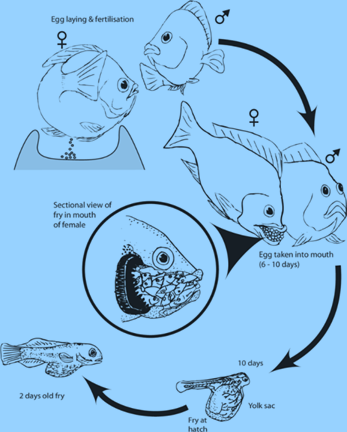
Based on their reproductive behavior, the commercial species of tilapia have been classified into three major categories: (1) maternal mouth brooders (Oreochromis species) means females picked up fertilized eggs into their mouth, incubated 3-5 days, hatched and larvae brooding for 10-12 days ; (2) biparental mouth brooders (Sarotherodon species) means both male and females picked up fertilized eggs into their mouth; and (3) substrate spawner (Tilapia species) means female laying eggs on a solid surface rather than brooding them in their mouth (Popma and Masser,1999). Being a maternal mouth brooder, the number of eggs per spawn is small in comparison with most other pond fishes. The egg number is proportionate to the body weight of the female. Female weighing 100 g will produce about 100 eggs per spawn, while that weighing 600-1 000 g can produce 1000 to 1500 eggs.
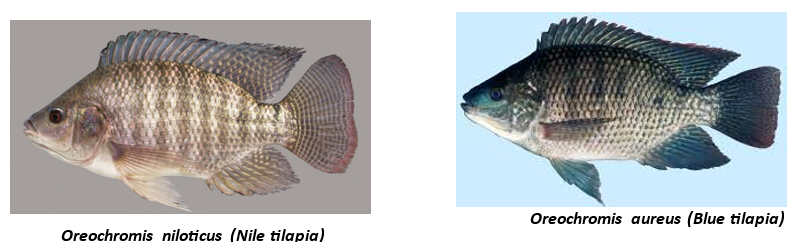
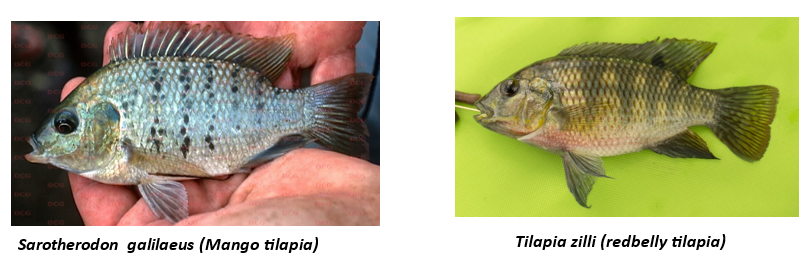
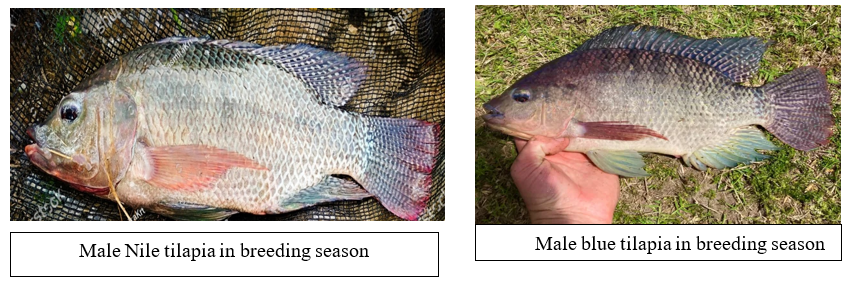
Table 1: Nile Tilapia (O. niloticus) characteristics that can generally be used to distinguish from Blue Tilapia (Trewavas 1983)
|
Nile Tilapia |
Blue Tilapia |
|
|
Number of dorsal spines |
16-18 (mode 17) |
15-16 (mode 16) |
|
Total dorsal fin rays |
29-31 (mode 30) |
27-30 (mode 28) |
|
Banding on caudal fin |
Distinct, regular dark stripes |
No distinct bands/stripes |
|
Male breeding coloration |
Head and body: Reddish coloration across their body (ventral) and fins. |
Head: Metallic blue |
|
Dorsal fin margin |
Dark grey or black |
Vermillion (Intense red-orange) |
3.2. Natural Breeding
Temperature and sunlight are the most important factors that influence spawning. Spawning activity begins when the water temperature reaches 24 °C with optimum temperature of 25-28°C, and broodstocks reach sexual maturity. Optimal reproductive performance takes place in a normal daylength cycle, which is 12 hours of sunlight and 12 hours of darkness. The breeding process begins when the male establishes a territory by digging a craterlike spawning nest and guards his territory. The ripped female responds by spawning in the nest, and immediately after fertilization by the male, the female collects the eggs into her mouth and moves off. The female incubates the eggs in her mouth and broods the fry after hatching (10 – 12 days) until the yolk sac is absorbed. Incubating and brooding are completed in 1 to 2 weeks, depending on temperature. After fry are released, they may swim back into her mouth if danger threatens (El-Sayed, 2019). The male stays in his territory, guarding the nest, and is able to fertilize eggs from a succession of females. The female may spawn continuously, if there is no decline in water temperature (cold period). During the female is brooding eggs, she eats little or nothing led to decrease in growth rate.
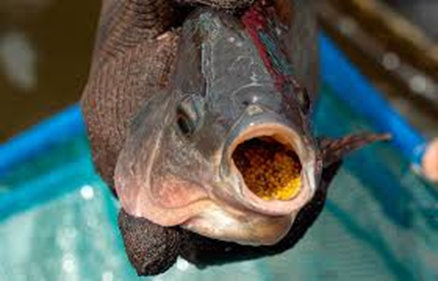
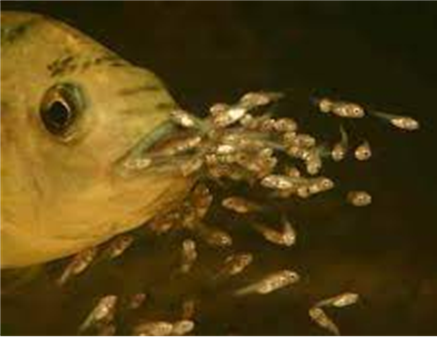
- It is important to maintain the correct stocking density and sex ratio of broodstock in ponds or hapas for efficient seed production. Males are aggressive in nature and consequently, the paired mating sometimes leads to injuries of high value broodstock. Therefore, cutting of premaxilla (upper lip) of the male is done to eliminate this offensive behavior (Thodesen et al., 2011). The stocking rat is every 1 male for 3 to 4 females, but a ratio of one male for every two females is optimal for synchronous spawning and high fertilization rate. In Hybridization breeding program that occurs between two species of tilapia (O. aureus male and O. niloticus female), the stocking rate is every 1 male for 1 female.
3.3. Hatchery production (Semi-Artificial breeding)
- In tilapia, hormones are not used to induce spawning because of its asynchronous breeding. For seed production, hatchery tanks made from fiberglass, plastic, glass, concrete, or wood (range from 4 to 100 m2 and up to 1.5 m deep) are used. The broodfish are stocked at rate of one female to one male or up to 7-10 females at an age of 4-5 months. The most common sex ratios used are one male to four female broodfish (FAO, 2010). The stocking density for broodstock varies depending on the type of facilities used for hatchery production. In ponds, stocking density of broodfish is 2 fish/ m2 (1:1), In hapas, 6 fish/ m2 (3:3) and 10 fish/ m2 (5:5) in case of fiberglass tanks. Hapas in ponds are cheap to construct and more convenient to manage in commercial tilapia hatcheries. In Egypt, a range of hapa sizes typically 7 m × 3 m × 1 m are used (Nasr-Allah et al., 2012).
- The male digs a nest of the fine gravel on the aquarium and drives off the females for courtship, spawning and fertilization require less than 2 hours, then females collect eggs in their mouth and incubated for 3-5 days; after that Catch breeders and forcibly opening their mouth to release the larvae / sac-larvae /eggs. This method significantly increases seed production compared with natural incubation of eggs. Due to tilapia eggs are negatively buoyant and, in the absence of a current to suspend them in the water column, they will sink quickly, clump together and fungal infection develops, therefore, up-welling Zuger-type hatching jars have been used for tilapia eggs.
- Egg loading rates range from 650 to 1 350 eggs per liter in small incubators, and up to 4 000 eggs per liter in large incubators. Water flow rates are 1 L/min in small incubators and 1 L/s per 10 000 eggs in large incubators. About 50 hours after transformation to the container at 25-27 C the eggs hatch. Sac-fry harvested from broodfish also must be held in the hatchery (8-10 days) until yolk sac absorption is complete. When the fry reached a total length in size of 6 to 7 mm (1 to 2 grams) they can be moved to the nursery tanks (Salin and Yakupitiyage, 2023).
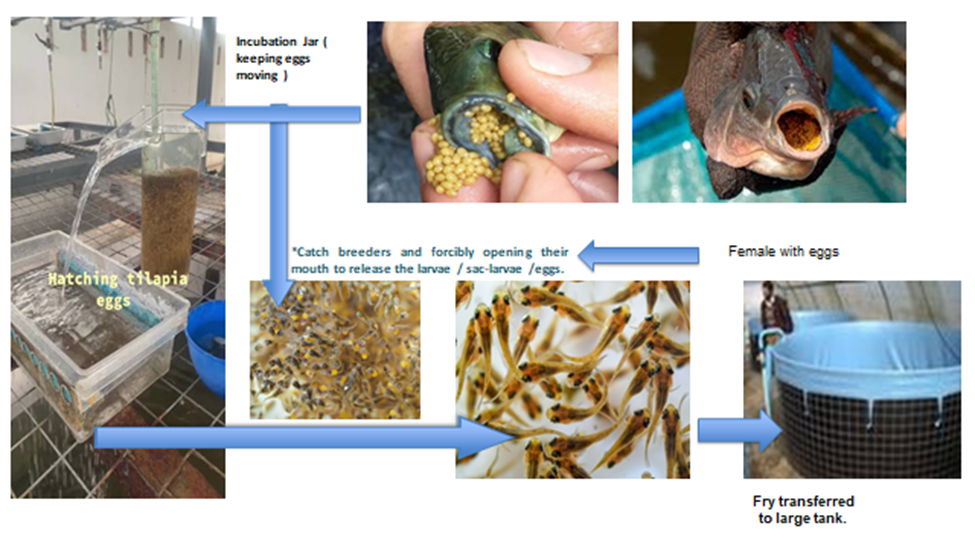
In semi-artificial propagation, female from which eggs are taken become ready to spawn 1-2 week after, So, the female can spawn 10 -12 times / year compared to 4 - 5 times/ year in natural propagation in pond.
- Maintenance of good water quality is critical to successful hatchery operations. In addition, careful broodstock selection and management are the key factors of hatchery to ensure maximum survival and enhanced reproductive performance, including proper gonadal development, high fecundity and high fry survival. The farmer should select the broodfish genetically pure fish, large fish, free from any physical deformities or Injuries, diseases or parasites, and fast-growing stock. Moreover, avoid broodfish that are too old and have spawned several times, cull broodstock older than 1.5 to 2 years as fecundity drops as fish get older (Salin and Yakupitiyage, 2023)
- The performance and reproductive efficiency of tilapia broodstock depend greatly on the quality of their diet. The broodstock needs relatively higher levels of protein in their diets, generally in the range of 30%–45% for Nile tilapia. Feeding rates significantly influence hatchery efficiency and profitability, so it’s recommended to increase the feeding rate immediately after harvesting the eggs or sac-fry, followed by decreasing feeding rate or no feeding at all for fish raised in good fertilized earthen pond (Macintos and Little, 1995).