Bronchial Asthma
- Annexes
The following annexes are reproduced from the Egyptian MoH Asthma Management Protocol for Adolescents and Adults (2023), except Annexes 13 and 14, which are retained to operationalize the Protocol’s dosing and written-action-plan recommendations.
Annex 1. Treatment Summary Chart — Steps 1–5 (initiation by ACT score)
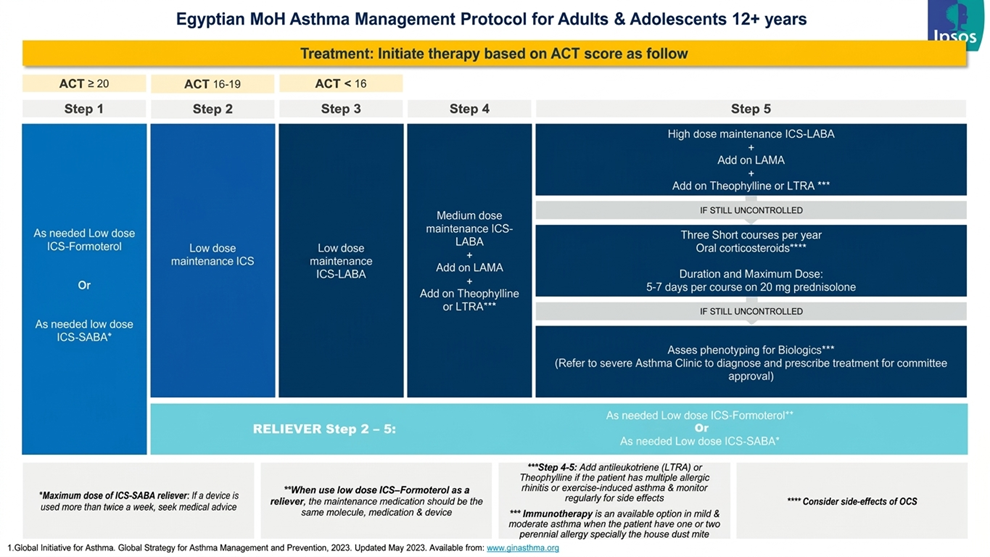
Initiate therapy by ACT score: ACT ≥20 → Step 1; ACT 16–19 → Step 2; ACT <16 → Step 3 (escalate to Steps 4–5 if still uncontrolled). Reliever at Steps 2–5: as-needed low-dose ICS-formoterol or ICS-SABA. Source: Egyptian MoH Asthma Management Protocol (2023).
Annex 2. Asthma Control Test (ACT) — Arabic patient version
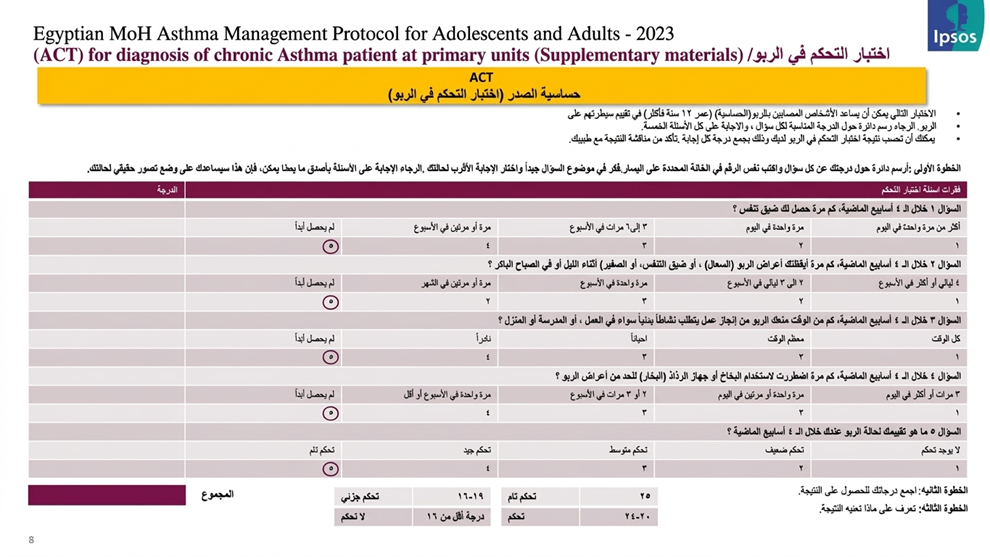
Scoring: total 20–25 = well controlled; 16–19 = partly controlled; <16 = uncontrolled. Source: Egyptian MoH Asthma Management Protocol (2023).
Annex 3. Checklists — comorbidities/aggravating factors and environmental triggers
|
Checklist for comorbidities / aggravating factors |
Yes |
No |
Checklist for triggers |
Yes |
No |
|
Allergic rhinitis |
☐ |
☐ |
Indoor — Animal dander |
☐ |
☐ |
|
Gastroesophageal reflux disease (GERD) |
☐ |
☐ |
Indoor — House dust mite |
☐ |
☐ |
|
Obesity |
☐ |
☐ |
Outdoor — Occupational |
☐ |
☐ |
|
Psychiatric disease |
☐ |
☐ |
Outdoor — Non-occupational |
☐ |
☐ |
|
Obstructive sleep apnea (OSA) |
☐ |
☐ |
|
|
|
Source: Egyptian MoH Asthma Management Protocol (2023).
Annex 4. Step-Down Table — options for stepping down by current step


Source: Egyptian MoH Asthma Management Protocol (2023).
Annex 5. Definition of severe asthma and its qualifying criteria
|
Severe asthma is asthma that requires treatment with high-dose ICS and LABA (± antileukotriene / theophylline) ± systemic corticosteroids for ≥50% of the previous year to prevent it from becoming uncontrolled, OR that remains uncontrolled despite this therapy — together with any one of the following: |
|
· Poor symptom control: ACQ >1.5, ACT <20 (or “not well controlled” by NAEPP/GINA). · Frequent severe exacerbations: ≥2 bursts of systemic corticosteroids (>3 days each) in the previous year. · Serious exacerbations: ≥1 hospitalization, ICU stay or mechanical ventilation in the previous year. · Airflow limitation: FEV₁ <80% predicted after appropriate bronchodilator withholding; FEV₁/FVC below the lower limit of normal. · Controlled asthma that worsens on tapering of treatment. |
Source: Chung KF et al. (reference 36); adopted by the Egyptian MoH Asthma Management Protocol (2023).
Annex 6. Difficult-to-treat versus severe asthma
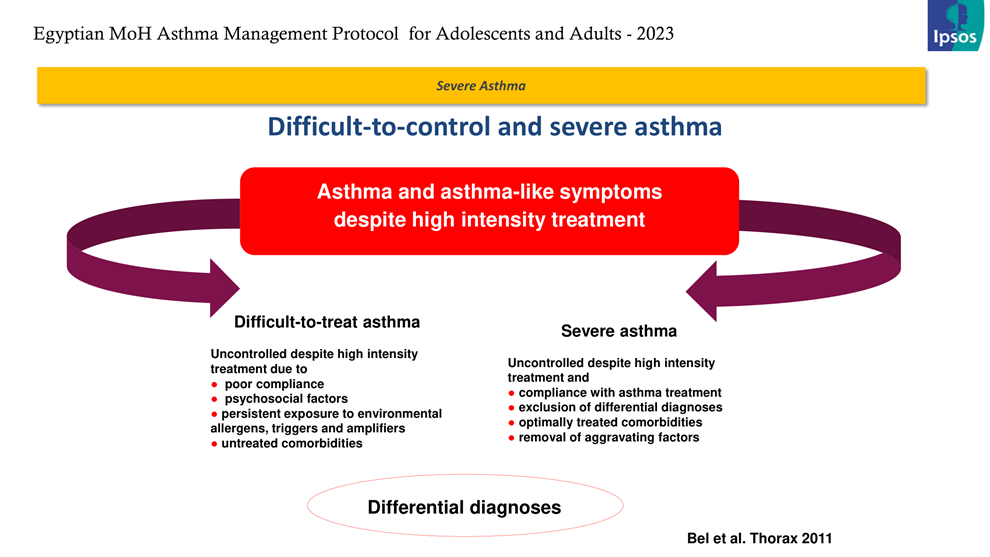
Source: Egyptian MoH Asthma Management Protocol (2023).
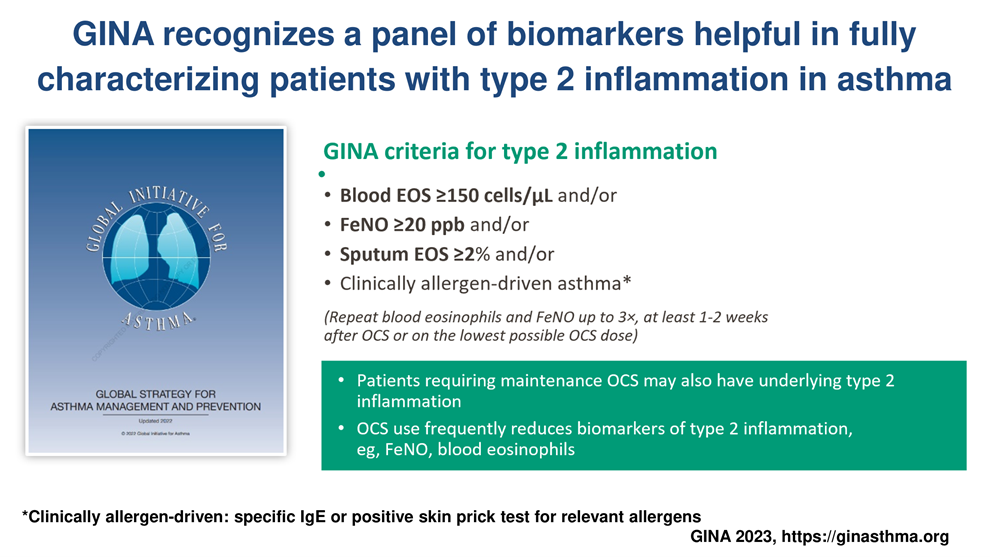
Annex 7. Panel of Type 2 biomarkers
|
Class |
Name |
Age |
Asthma indication |
Other indications |
|
Anti-IgE |
Omalizumab |
≥6 years |
Severe allergic asthma |
Chronic spontaneous urticaria |
|
Anti-IL-5Rα |
Benralizumab |
≥12 years |
Severe eosinophilic / Type 2 asthma |
— |
|
Anti-IL-4Rα |
Dupilumab |
≥6 years |
Severe eosinophilic / Type 2 asthma, or maintenance OCS |
Atopic dermatitis, CRSwNP |
Clinically allergen-driven disease = specific IgE or positive skin-prick test for relevant allergens. Source: GINA 2023, adopted by the Egyptian MoH Protocol (2023).
Annex 8. Biologics in severe asthma in Egypt
|
Class |
Name |
Age |
Asthma indication |
Other indications |
|
Anti-IgE |
Omalizumab |
≥6 years |
Severe allergic asthma |
Chronic spontaneous urticaria |
|
Anti-IL-5Rα |
Benralizumab |
≥12 years |
Severe eosinophilic / Type 2 asthma |
— |
|
Anti-IL-4Rα |
Dupilumab |
≥6 years |
Severe eosinophilic / Type 2 asthma, or maintenance OCS |
Atopic dermatitis, CRSwNP |
Check local eligibility criteria for specific biologic therapies. Source: Egyptian MoH Asthma Management Protocol (2023).
Annex 9. Selection of biologics for severe uncontrolled asthma (by blood-eosinophil stratum)
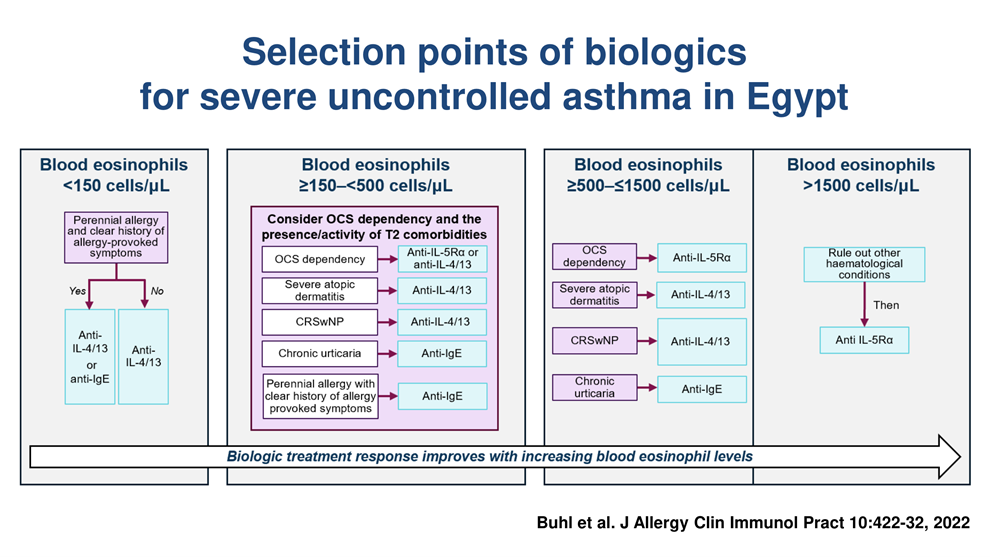
Source: Buhl R et al. (reference 42); adopted by the Egyptian MoH Protocol (2023).
Annex 10. Risk factors for asthma-related death
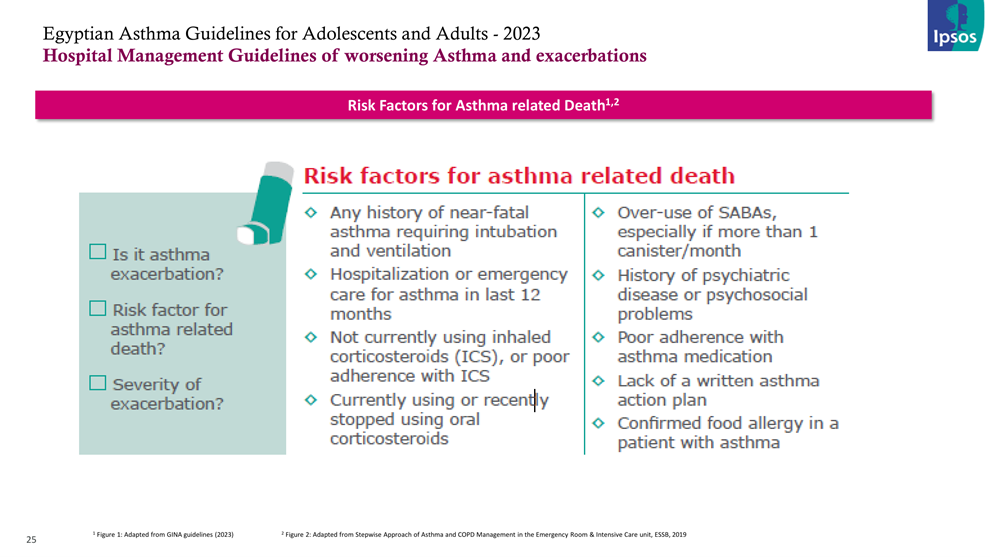
Source: GINA 2023 and ESSB 2019, adopted by the Egyptian MoH Protocol (2023).
Annex 11. Classification of asthma exacerbation severity
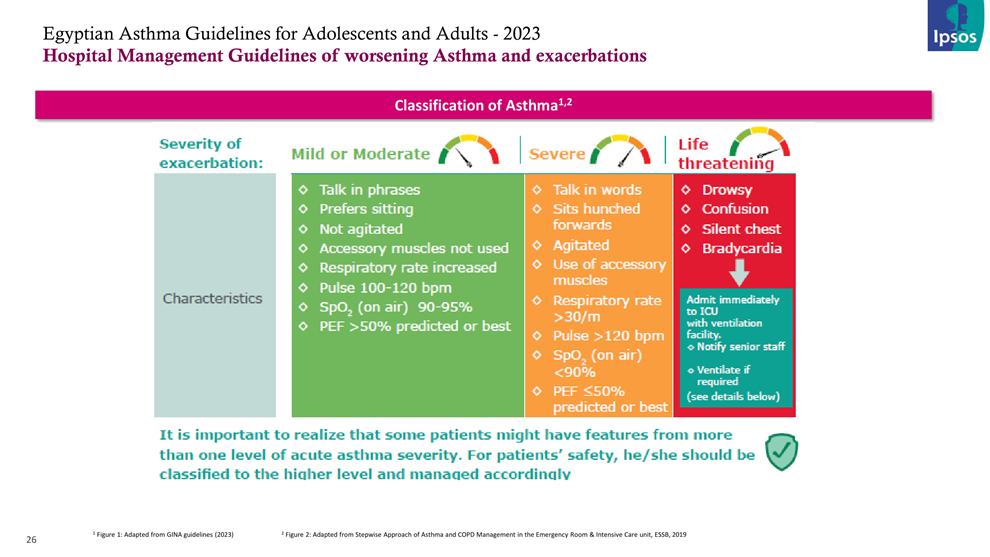
Patients with features of more than one severity level should be classified to the higher level and managed accordingly. Source: GINA 2023 and ESSB 2019.
Annex 12. Treatment of exacerbations by severity and time interval (ER / ICU)
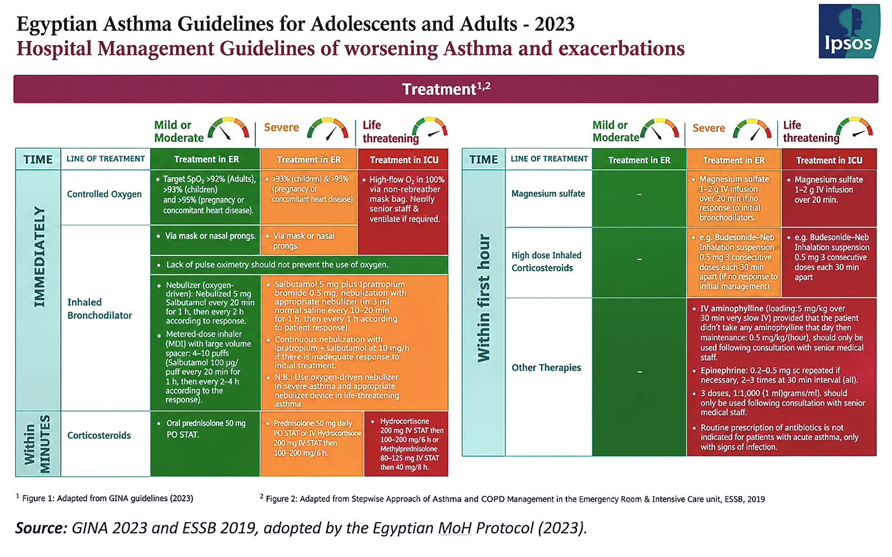
Source: GINA 2023 and ESSB 2019, adopted by the Egyptian MoH Protocol (2023).
Annex 13. Low, medium and high daily metered doses of inhaled corticosteroids
Retained to operationalize the Protocol’s “low/medium/high-dose ICS” prescribing.
Annex 14. Written Asthma Action Plan
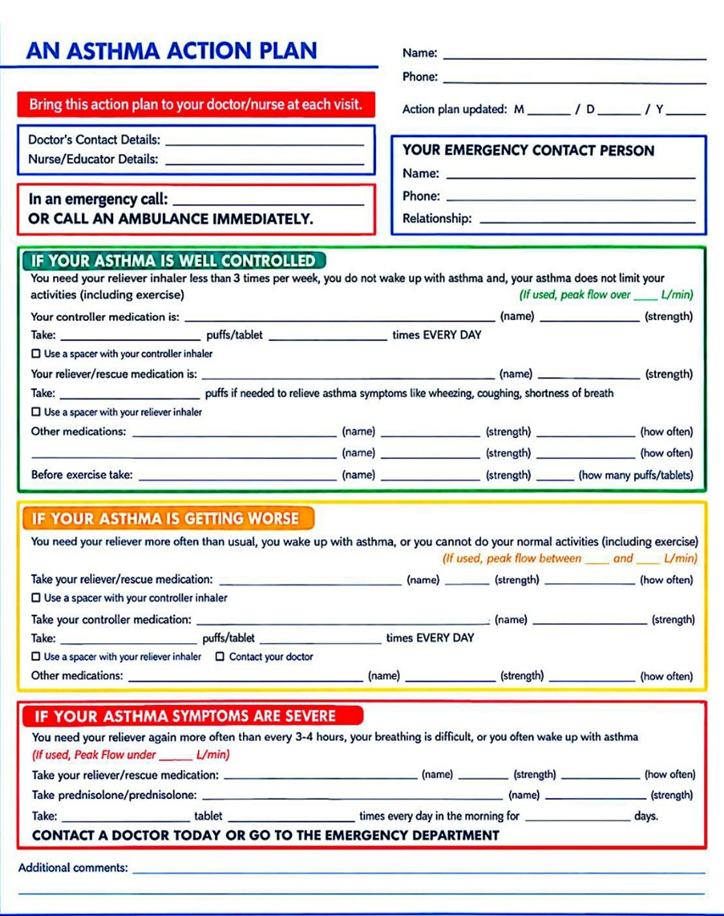
Retained; required by recommendations 4.13.3 and Section 8 (written action plan).