Medication of patients with renal failure
| Site: | EHC | Egyptian Health Council |
| Course: | Nursing Procedures Guidelines for Hemodialysis |
| Book: | Medication of patients with renal failure |
| Printed by: | Guest user |
| Date: | Sunday, 20 September 2026, 5:51 PM |
Description
"last update: 10 March 2025"
- Prepared by
Under supervision
- Prof. Dr. Mohamed Latif, CEO of the Egyptian Health Council
Dr. Kawthar Mahmoud, Head of the
Egyptian Nursing Syndicate - Member of the Senate
Prepared by
Title
Name
NO.
Dean Of Faculty Nursing, Professor of Medical and
Surgical Nursing, Tanta University
Dr Afaf Abdel Aziz Abdel Aziz Basal
1
Professor Of Critical Care Nursing
Prof.Dr/Zeinab Hussain Ali
2
Professor And Head of the Department of Medical
Surgical Nursing. Faculty-. Benha University
Amal Said Taha Refaie
3
Supervisor Of the Education Sector at Port Said
University
Amal Ahmed Khalil Morsy
4
Professor Of Medical Surgical Nursing- Faculty of
Nursing- Cairo University
Dr. Hanan Ahmed Al Sebaee
5
Head of central administration on secondment at MOHP
Dr Neveen ab drab al0nabi Mohamed
6
Director Of Primary Health Care Nursing Department at
MOHP.
Maysa Hosny Ahmed Tammam
7
Supervisor Of Technical Education- EHA
Nancy Alaa Eldeen Abd-Elbaset Ali
8
Supervisor Of Nursing Services Development- EHA
Sherien Mohamed Saad
9
Assistant Professor of Maternity and Neonatal Health
Nursing - Faculty of Nursing- Ain Shams University
Assist.Perof. Dr./Heba Mahmoud Mohammed
10
General manager of general administration of health
institutes affairs
Dr Mai Galal Ibrahim Al-Assal
11
Participants
member of the Nursing
administration at EHA, port said branch
Mr. Ahmed Zarq Al-Sayed
12
member of the Nursing
administration at EHA, ismailia branch
Mrs. Radwa Al-Sayd Al-Nagdi
13
member of the Nursing
administration at EHA, ismailia branch
Mrs. Omnia Hassan Absi
14
|
Title |
Name |
NO. |
|
Dean Of Faculty Nursing, Professor of Medical and Surgical Nursing, Tanta University |
Dr Afaf Abdel Aziz Abdel Aziz Basal |
1 |
|
Professor Of Critical Care Nursing |
Prof.Dr/Zeinab Hussain Ali |
2 |
|
Professor And Head of the Department of Medical Surgical Nursing. Faculty-. Benha University |
Amal Said Taha Refaie |
3 |
|
Supervisor Of the Education Sector at Port Said University |
Amal Ahmed Khalil Morsy |
4 |
|
Professor Of Medical Surgical Nursing- Faculty of Nursing- Cairo University |
Dr. Hanan Ahmed Al Sebaee |
5 |
|
Head of central administration on secondment at MOHP |
Dr Neveen ab drab al0nabi Mohamed |
6 |
|
Director Of Primary Health Care Nursing Department at MOHP. |
Maysa Hosny Ahmed Tammam |
7 |
|
Supervisor Of Technical Education- EHA |
Nancy Alaa Eldeen Abd-Elbaset Ali |
8 |
|
Supervisor Of Nursing Services Development- EHA |
Sherien Mohamed Saad |
9 |
|
Assistant Professor of Maternity and Neonatal Health Nursing - Faculty of Nursing- Ain Shams University |
Assist.Perof. Dr./Heba Mahmoud Mohammed |
10 |
|
General manager of general administration of health institutes affairs |
Dr Mai Galal Ibrahim Al-Assal |
11 |
|
Participants |
||
|
member of the Nursing administration at EHA, port said branch |
Mr. Ahmed Zarq Al-Sayed |
12 |
|
member of the Nursing administration at EHA, ismailia branch |
Mrs. Radwa Al-Sayd Al-Nagdi
|
13 |
|
member of the Nursing administration at EHA, ismailia branch |
Mrs. Omnia Hassan Absi |
14 |
- Medications used in the treatment of kidney failure patients
|
Precautions |
Side effects |
The benefit |
Name |
|
|
It
is given at the end of the session.
|
High
blood pressure
|
It treats anemia (stimulates the production of RBCs by the bone marrow).
|
Eritropoyetina
|
1- |
|
------- |
----- |
Compensating for vitamin deficiencies during washing
|
نيوروفيت VIT.B complex
|
2- |
|
To use it for reducing phosphate levels (must be taken with food, either chewed or swallowed). Measuring parathyroid hormone levels before starting its intake.
|
The sensation of tingling in the extremities. Vomiting, nausea, and constipation Bloating and excessive gas
|
Reducing the levels of phosphate and parathyroid hormone
|
Calcium
|
3-
|
|
Measuring parathyroid hormone before starting treatment and every 3-6 months.
|
Dry mouth The itch Constipation
|
Treatment
of hyperparathyroidism
|
One alfa
|
4- |
|
Monitoring coagulation tests Monitoring the formation of clots during the session
|
Low platelet count Hair loss
|
Prevention of strokes
|
Heparin
|
5- |
|
Monitoring for any bleeding in the body
|
Occurrence of gastrointestinal bleeding Heartburn Nausea and blood fluidity Headache and dry mouth Constipation or diarrhea
|
Helps prevent the formation of clots in the catheter or arteriovenous fistula. |
Aspirin
|
6- |
|
It must be taken at night before bed.
|
Dry mouth and nausea Constipation
|
It treats allergy symptoms.
|
Benaddryl
|
7- |
|
It must be taken at night after dinner.
|
Dry mouth and nausea Constipation
|
Treatment for stress and fever reducer |
Atarex
|
8- |
|
Measuring blood pressure before taking the medication It is preferable to take it after dinner.
|
Swelling of the extremities Facial redness and nausea Headache and dizziness
|
Treatment for high blood pressure Treatment of a heart attack |
Aldomet
|
9- |
|
It is given at the end of the session either intravenously or orally (tablets).
|
Constipation and nausea Black-colored feces
|
Treating anemia and raising hemoglobin levels |
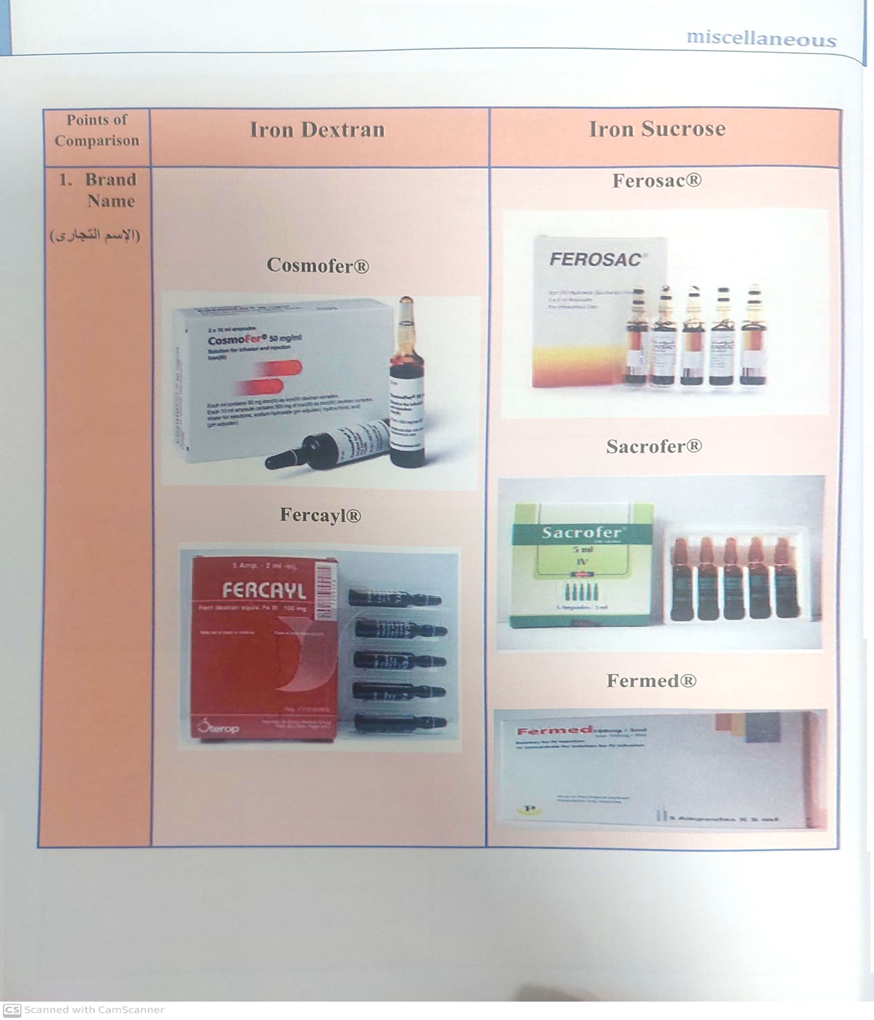
Iron
|
10- |
|
Follow-up on the lack of mental disturbance and lack of concentration.
|
Headache Sleep disorder Stomach pain |
Antacid |
Zantac
|
11- |
- The medications used in the kidney transplant procedure
➡️Medications to prevent kidney transplant rejection:
The human body has lines of defense that protect it from harmful influences, including the external line such as the skin and the mucous membranes lining many body organs, and the internal line known as the immune system, which consists of white blood cells and antibodies secreted by some of these cells. We know that a kidney transplant patient needs to undergo many tissue compatibility tests before the operation, and despite these tests, the transplanted kidney is still considered a foreign organ to the body, prompting the immune system to attack it (i.e., reject it). For the operation to be successful, the immune system must be suppressed, a process known as immunosuppression, so that it does not attack the transplanted kidney.
➡️And immune suppression requires two stages:
Rehabilitation:
And strong doses of these medications are usually given intravenously before the surgery and sometimes during the first few days after the surgery.
Continuity:
In it, oral
medications are given daily to maintain a low performance rate of the immune
system, allowing the transplanted kidney to be accepted without rejection while
keeping a certain level of body immunity that works against many microbes it
may encounter.
Thanks to scientific advancement, many of these medications have been
discovered, making it possible to administer them according to each patient's
condition, whereas in the past, the options were limited to two or three
medications given to all patients, which could negatively affect their health
if side effects of these medications appeared.
➡️Among these medications:
-Prednisolone.
- Imuran.
- Cellcept.
- Neoral.
- Prograf.
- Rapamune.
The doses of these medications are gradually reduced to the lowest amount by the end of the first year after the transplant.
Preventing infections for kidney transplant patients:
- Immunosuppressive
drugs inhibit or reduce the body's immunity, which is necessary to prevent
kidney rejection. At the same time, a certain level of immunity must be
maintained to fight various microbes. Therefore, the treating physician
conducts regular tests to ensure the levels of these drugs in the blood
and their effectiveness, and thus tries to balance the difficult equation
of preserving the kidney and preventing infection.
- However, the patient may go through periods where their immunity decreases to a level that allows for infections to occur. This can be due to general reasons like any other person, such as cold spells, seasonal changes, and malnutrition, or specific reasons like increasing medication doses to suspect or treat kidney rejection, or the necessity of using certain medications that enhance the effect of rejection-preventing drugs on the immune system. We should not forget that some infections, especially viral ones, can significantly lower the body's immunity.
- The body's immunity is at its lowest during the first six months after the transplant, so antiviral, antibacterial, and antifungal medications are prescribed to the patient during this period to help reduce the likelihood of infections. Patients are generally advised to avoid contact with individuals who have infectious diseases, especially children, and to stay away from crowded and poorly ventilated places. They should consume fresh home-cooked meals and avoid ready-made meals available in the market. It is important to consult a doctor immediately if there is an outbreak of infectious diseases in the patient's surroundings.
Vaccination and kidney transplantation:
Following vaccination schedules according to the advice of the treating physician is an essential element for preventing bacterial and viral diseases that a kidney failure patient is exposed to before and after undergoing a transplant. This is done in consultation with the treating physician and the surveillance and virology department at the hospital. As a basic rule, vaccinations derived from a live attenuated (i.e., inactive) microbe, which are known at various vaccination centers, cannot be administered.
➡️Notes :
1-That
kidney patients often also suffer from high blood pressure
(Therefore, the amount of salt consumed should be reduced, especially in canned
cheeses, processed meats, and ready-made meals).
2- He also suffers from high blood cholesterol or triglycerides.
Therefore, the amount of fats he consumes, which are often found in full-fat
dairy products, meats, fried foods, chocolate, and nuts, should be reduced.
3-The rising rates of diabetes in our country, especially since it is one of
the main causes of kidney failure, mean that a significant percentage of kidney
transplant patients suffer from this disease.
Therefore, it is necessary to adhere to a special diet that prevents high blood
sugar levels and, more importantly, prevents the emergence of new cases among
those predisposed to this disease due to genetic factors or other health
reasons.
4- Kidney transplant medications may be responsible for some nutritional
problems such as increased appetite, weight gain, high blood pressure, and
diabetes. These can be managed by following the necessary diet for these
various health issues. They may also cause gastrointestinal disturbances,
leading to dehydration or malnutrition.
➡️Contraceptive pills:
There are side effects of contraceptive pills that are not suitable for kidney transplant patients and may cause health problems for them, so they should be avoided except in limited cases with the approval of the treating nephrologist.
- References
▪️ Pagels AA, Söderkvist BK, Medin C, Hylander B, Heiwe S. Health-related quality of life in different stages of chronic kidney disease and at initiation of dialysis treatment. Health Qual Life Outcomes. 2018;10:71.
▪️ Polikandrioti M, Koutelekos I, Gerogianni G, Stefanidou S, Kyriakopoulos V, Floraki E, et al. Factors associated with hemodialysis machine dependency. Med Arch. 2019;71(2):122-7.
▪️ Schrier, R. W.: Renal and electrolyte disorders, 6th ed., Philadelphia:USA: Lippincott Williams & Wilkins. (2017). Pp, 227-235.
▪️ Identification of patients with CKD in medical databases: a comparison of different algorithms Clin J Am Soc Nephrol, 16 (2021), pp. 543-551
▪️ Chronic kidney disease (CKD) surveillance system: 2021 Accessed September 30, 2021
▪️ Identification of incident CKD stage 3 in research studies Am J Kidney Dis, 64 (2022), pp. 214-221