تصنيف و تقييم مرضي الحوادث
| الموقع: | EHC | Egyptian Health Council |
| المقرر الدراسي: | دلائل الاجراءات التمريضية لقسم الاستقبال والطوارئ |
| كتاب: | تصنيف و تقييم مرضي الحوادث |
| طبع بواسطة: | مستخدم ضيف |
| التاريخ: | الأحد، 20 سبتمبر 2026، 5:55 PM |
الوصف
"last update: 17 March 2025" تحميل الدليل
- اعداد
تحت اشراف
- أ.د/ محمد لطيف الرئيس التنفيذي للمجلس الصحي المصري - د/ كوثر محمود نقيب عام التمريض المصري – عضو مجلس الشيوخ
تمت المراجعة
- أ.د/ شريف وديع ناشد مستشار وزير الصحة للطوارئ والرعاية العاجلة
اعداد
م | الاسم | الوظيفة | |
1 | أ.د /امل احمد خليل مرسي | نائب رئيس الجامعة لشئون التعليم والطلاب – جامعة بورسعيد | |
2 | أ.د / عفاف عبد العزيز عبد العزيز بصل | عميد كلية التمريض –استاذ تمريض باطنه وجراحي جامعة طنطا | |
3 | أ.د/ زينب حسين على محمد سعد | وكيل الكلية لشئون البيئة وخدمة المجتمع – كلية التمريض – جامعه حلوان | |
4 | أ.د/ امل سعيد طه رفاعي | أستاذ ورئيس قسم التمريض الباطني الجراحي – جامعة بنها | |
5 | أ.د/ حنان احمد السباعي على | استاذ التمريض التمريض الباطني الجراحي- كلية التمريض – جامعة القاهرة | |
6 | د /نيفين عبدربه النبي محمد عبد النبي | رئيس الإدارة المركزية ندباَ –وزاره الصحة | |
7 | د/ مايسة حسني احمد تمام | مدير عام للإدارة ندباَ – وزاره الصحة | |
8 | د/ نانسي علاء الدين عبد الباسط على | المشرف على التعليم الفني- الهيئة العامة للرعاية الصحية | |
9 | د /شيرين محمد محمد سعدالدين | المشرف على تطوير الخدمات التمريضية –الهيئة العامة للرعاية الصحية | |
10 | د/مى محمود العسال | مدير عام الإدارة العامة لشئون المعاهد الفنية الصحية | |
11 | أ.م.د/ هبة محمود محمد | أستاذ مساعد تمريض صحة الام وحديثي الولادة –كلية التمريض - جامعة عين شمس | |
المشاركين | |||
12 | د/ عزة جلال أحمد | مدير إدارة التمريض العلاجي- وزارة الصحة | |
13 | /أأحمد محمد أحمد النوبي | عضو إدارة التمريض الهيئة العامة للرعاية الصحية فرع الأقصر | |
14 | أ / أنغام حمدي عبد الخالق | أخصائي تمريض بالإدارة العامة للتمريض- وزارة الصحة | |
15 | أ /أحمد محمد حسين مبارز | أخصائي تمريض بالإدارة العامة للتمريض- وزارة الصحة | |
16 | أ /عبد العظيم السعيد عبد العظيم الحنفي | أخصائي تمريض بالإدارة العامة للتمريض- وزارة الصحة | |
17 | أ / شوكت يسرى حسين | أخصائي تمريض بالإدارة العامة للتمريض- وزارة الصحة | |
18 | أ / كريم أحمد صادق | أخصائي تمريض بالإدارة العامة للتمريض | |
- تعريف الفرز
هي عملية تستخدم لتحديد حالة المرضي من حيث حدة و خطورة المرض و ذلك لتوجية المريض الصحيح للمكان الصحيح في الوقت الصحيح لمقدم الخدمة الصحيح.
- اجراءات الفرز
أ.توافر العاملون المؤهلون خلال أوقات العمل
يوجد فريق طبى مؤهل من الأطباء والتمريض والفنيين يعمل على مدار 24 ساعة 7 أيام فى الأسبوع بقسم الطوارئ .
يتم التعامل مع الفرز فى البداية من قبل ممرضة مؤهلة ذات مهارات تواصل جيدة.
ب. وضع ضوابط لتحديد أولويات الرعايه وفقا لعملية الفرز المتعارف عليها
1-يتم التعامل مع الفرز في البداية من قبل ممرضة مؤهلة ذات مهارات تواصل جيدة مع المهام التا
يجب أن يكون التقييم سريع في منطقة التسجيل و منطقة الانتظار في جميع الأوقات
إجراء تقييم بصري موجز
2-بمجرد وصول المريض لقسم الطوارئ تقوم الممرضة المسئولة عن الفرز البصرى بفرز المرضى (فى مدخل الطوارئ ) عن طريق الملاحظة الدقيقة للمظهر العام للمريض والشكوى الحالية للمريض
3-فى حالة مرضى المرحلة 1 تقوم ممرضه الفرز البصرى بتوجيه ذوى المريض لعمل CPR للمريض داخل غرفة الانعاش القلبى الرئوى وتقوم الممرضة بإكمال التقييم لهم فى الحال
4-فى مرضى المرحلة 2 تقوم ممرضه الفرز البصرى بتوجيه ذوى المريض للتعامل الفورى مع المريض داخل غرفة الطوارىء وتقوم الممرضة بإكمال التقييم لهم فى الحال
5-تقوم ممرضة الفرز البصرى بتوجيه باقى الحالات التى لم يتم تحديد درجة التصنيف لها لغرفة الترياج ليتم تقييمها وقياس العلامات الحيوية لتحديد درجة التصنيف بواسطة ممرضة حجرة الترياج واستيفاء نموذج الفرز
لا ينبغي أن يستغرق تقييم الفرز أكثر من دقيقتين إلى خمس دقائق ، للحصول على معلومات كافية لتحديد حدة المرض وتحديد الاحتياجات لرعاية فورية
6-تقوم الممرضه بتسجيل جميع المعلومات التي تم الحصول عليها أثناء عملية الفرز و التقييم بنموذج الفرز
قد تتغير أولوية الرعاية بعد تطور علامات وأعراض المريض
7-تقوم ممرضة الترياج بإخطار المرضى و عائلاتهم عن مستوى التصنيف والوقت المتوقع انتظاره قبل تقييم الطبيب
8-تقوم ممرضة الترياج بإعادة تقييم المرضى المنتظرين حسب الضرورة
لا يهدف تقييم الفرز الى اجراء تشخيص لحالة المريض .
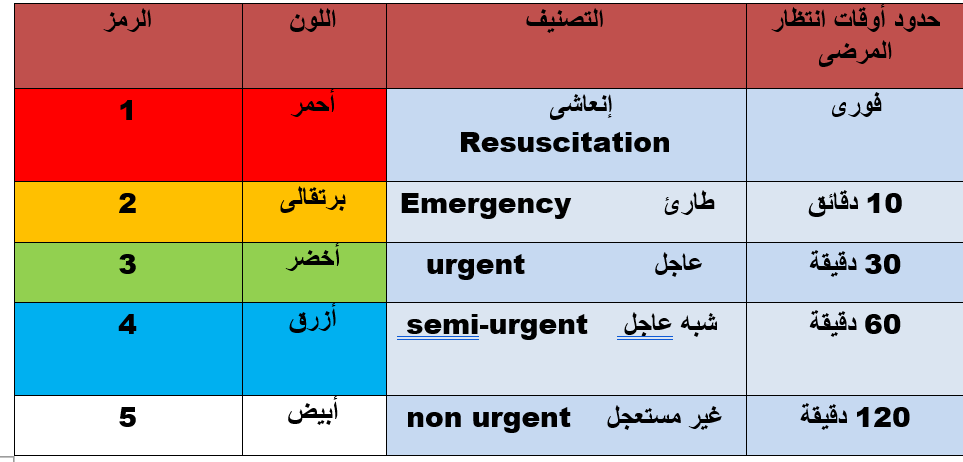
- تصنيف الفرز AUSTRALIAN TRIAGE SCALE
المجموعة الأولى : الانعاش (كارت أحمر ) :
الحالات التى تتطلب تقيم ، وعلاج فورا من قبل الممرضه والطبيب ويجب التدخل فورا أى تأخير فى العلاج قد يشكل خطورة على حياة المريض . وتشمل الحالات :
تعرض مجرى الهواء لأى خطورة
توقف القلب والتنفس
صدمة شديدة
إصابة العنق والعمود الفقرى
إصابة متعددة فى أجهزة الجسم .
التشنجات لمدة طويلة أو التشنجات أثناء الحمل
اضطراب سلوكى حاد مع التهديد بالعنف الخطير.
هبوط حاد فى الدورة الدموية (ضغط الدم أقل من 80 فى البالغين ) .
الجروح النافذة فى الصدر والبطن والحوض .
حروق من الدرجة الثالثة
نزيف شديد يؤثر على الوظائف الفسيولوجية بالجسم .
· يتم التعامل مع المريض في غرفة التصنيف والتحرك به الى غرفة انعاش القلب الرئوى إن أمكن
· تقوم الممرضة باختبار العلامات الحيوية للمريض (من تنفس و نبض و درجة الوعي ) والتأكد من أن المريض يحتاج إلى انعاش القلب و الرئه أو حسب BLS.
· تقوم الممرضه باستدعاء فريق الكود بلو من خلال ابلاغ السويتش 100، 101 لاستدعاء فريق الانعاش الرئوى .
· يقوم فريق الكود بلو باتباع بروتوكول انعاش القلب الرئوى المتقدم على المريض.
المجموعة الثانية (الفرز الطارئ أو العاجل ) كارت برتقالى :
هؤلاء المرضى حالتهم حرجة أو تدهور سريعا واحتمالية حدوث خطر على حياتهم أو فشل فى عضو أو أجهزة الجسم وتتطلب تدخل سريع واذا لم يتم العلاج خلال 10 دقائق من الوصول والحالات التى تحتاج الى علاج فى الوقت الحالى وفى حالات الألم الشديدة وتشمل الحالات :
تجلط الدم أو التسمم .
صعوبة بالتنفس شديدة
زيادة فى ضربات القلب أكثر من 50 أو أقل من 50 فى البالغين .
فقدان شديد بالدم .
هبوط بضغط الدم مع تأثيرات فى الدورة الدموية بالجسم .
نقص الترويه بالجسم
تسمم بالدم
درجة الوعى أقل من 13
جلطة دماغية
حمى مع حالات خمول او التهاب سحائى.
كسر مضاعف أو بتر الأعضاء
اصابات الرأس
إصابة شديدة ، الم بالصدر متعلق بالقلب
خمول وهن غريب أو تهيج
التعمد فى الافراط بالجرعة
حساسية شديدة
تعرض العينين لمادة كيميائية
نزيف الجهاز الهضمى مع علامات حيوية غير مستقرة .
· تقوم الممرضة بتوجيه المريض إلى غرفة الطوارئ أو منطقه الفحص والانتظار ( قاعه الطوارئ ) طبقا لنوع الاصابة .
· يقوم الطبيب بتقييم حالة المريض و طلب الفحوصات التشخيصية اللازمه حيث يتم نقل المريض لمكان الفحص (الاشعة – المعمل)
· تقوم الممرضة والطبيب بمتابعة المريض حتي ظهور نتائج الفحوصات التشخيصية
· يقوم الطبيب للوصول للتشخيص النهائي الذي يحدد علي اساسه وجهة المريض أما دخول الرعاية أو العمليات أوالقسم الداخلي أو تحويل طبقا للحالة و البروتوكول الخاص بقسم الطوارئ
المجموعة الثالثة الفرز المستعجل (كارت أخضر ) :
هى الحالات التى قد تحدث خطر على حياة المريض أو حدوث المرض أو حدوث نتائج عكسية إذا لم يتم التقييم وإعطاء العلاج من قبل الممرضه والطبيب خلال نص ساعة من الوصول ، تشمل الحالات :
إصابة الرأس مع قئ وفقدان قصير فى الوعى .
ارتفاع ضغط الدم الشديد .
فقدان الدم بدرجة متنوسطة لأى سبب .
ضيق فى التنفس .
القئ المستمر
جفاف
ألم بالصدر غير متعلق بالقلب .
ألم بالبطن من غير علامات خطورة .
اصابة الأطراف بطريقة متوسطة مثل سحق أو تمزق .
اظطراب فى الاحساس
أزمة ربو متوسطة
إصابة متوسطة
إيذاء جسدى أو آثار إهمال أو عنف .
نزيف الجهاز الهضمى مع علامات حيوية مستقرة.
تاريخ سابق لنوبة قلبية .
· تقوم الممرضة بتوجيه المريض الي غرفة الكشف او منطقه الفحص والانتظار ( قاعه الطوارئ ) .
· يقوم الطبيب بتقييم حالة المريض و طلب الفحوصات التشخيصية اللازمه حيث يتم نقل المريض لمكان الفحص (الاشعة – المعمل)
· يقوم الطبيب بإعطاء المريض العلاج طبقا لبروتوكول الطوارئ .
· يقوم الطبيب بالوصول إلى التشخيص النهائي و تحديد وجهة المريض أما دخول الأقسام الطبية المتخصصه أو خروج للمنزل أو تحويل لمستشفي اخري .
المجموعة الرابعة أقل عجلة (اللون الأزرق ) :
قد يوجد احتمالية خطورة على حياة المريض أو قد تتدهور اذا لم يتم التدخل خلال ساعة من الوصول وتشمل الحالات :
نزيف بسيط .
اصابة الرأس بدون قئ أو فقدان الوعى .
إصابة بسيطة بالجسم
صعوبة البلع مع عدم وجود ضيق بالتنفس
التواء الكاحل .
قئ وإسهال لمريض أكبر من سنتين بدون جفاف .
ألم بالأذن
حساسية بسيطة
جسم غريب بقرنية العين .
المجموعة الخامسة الفرز غير مستعجل ( اللون الأبيض )
الحالات التى تتطلب إجراء التقييم خلال ساعتين من وصول الحالة ، تشمل الحالات :
ارتفاع بسيط فى الحراة منذ عدة أيان .
ألم فى أحد الأطراف
ألم بالبلعوم أو الحنجرة .
ألم مزمن بالبطن .
اعادة الفرز :
المرحلة 1 | المرحلة 2 | المرحلة 3 | المرحلة 4 | المرحلة 5 |
باستمرار | كل 10 دقائق | كل 30 دقيقة | كل 60 دقيقة | كل 120 دقيقة |
اللون الأسود:
· يعتبر المريض متوفى فى حال عدم وجود نبض و تنفس.
· يتم أتباع سياسة الاجراءت المتتبعة لوصول الطوارئ متوفى.
- التقييم وإعادة التقييم وإدارة الرعايه تبعا لأدلة العمل والبرتوكولات الإكلينيكيه المعتمده
· يقوم الطبيب بإعادة الفرز كل 10 دقائق لحالات Orangوكل 30 دقيقة لحالات GREEN بينما تخضع حالات RED للمراقبة والإدارة المستمرة
· يتم عمل جميع التقييمات و إعادة التقييمات طبقا لسياسة التقييم و إعادة التقييم بواسطة أطباء و تمريض مؤهلون ووفقا للوائح و القوانين المعمول بها بالمستشفى
· يتم توثيق جميع التقييمات و إعادة التقييمات و كذلك نتائج الفحوصات بالملف الطبي الخاص بالمريض
تقييم مرضي الاصابات بالاستقبال
تقييم مرضى الإصابات (Trauma Assessment) هو عملية أساسية تهدف إلى تحديد مدى وشدة الإصابات التي تعرض لها المريض نتيجة حادث أو إصابة خطيرة، وتقديم الرعاية اللازمة في أسرع وقت ممكن. يهدف هذا التقييم إلى تحديد الأولويات الطبية لضمان سلامة المريض والحفاظ على حياته.
يتضمن التقييم عدة خطوات منهجية، تتبع عادة منهج "ABCDE" وهو اختصار لمراحل التقييم الأساسي للحالات الطارئة:
A – Airway (التأكد من مجرى الهواء):
التأكد من أن مجرى الهواء مفتوح ونظيف.إذا كان المريض فاقدًا للوعي أو يعاني من انسداد في مجرى الهواء، يتم التدخل لفتح مجرى الهواء باستخدام تقنيات مثل إمالة الرأس أو رفع الذقن أو إدخال أنبوب للتنفس
. B – Breathing (التنفس):
تقييم عملية التنفس ومدى كفاءتها.التأكد من أن المريض يتنفس بفعالية، ومعرفة ما إذا كان هناك أي صعوبات في التنفس أو إصابات تؤثر على الرئتين (مثل الصدر المفتوح أو انكماش الرئة)
. C – Circulation (الدورة الدموية):
فحص النبض وضغط الدم وكمية الدم المتدفقة إلى الأطراف.التأكد من أن القلب يعمل بشكل سليم وأن الدورة الدموية كافية لنقل الأكسجين والمواد المغذية إلى الأنسجة.
D – Disability (الإعاقات أو الاضطرابات العصبية):
تقييم حالة الوعي لدى المريض باستخدام مقياس غلاسكو (Glasgow Coma Scale).فحص وظائف الأعصاب ومعرفة ما إذا كان هناك أي شلل أو ضعف في الحواس.
. E – Exposure (التعرض الكامل والفحص الشامل):
الكشف عن جسم المريض بشكل كامل لتحديد أي إصابات أخرى غير مرئية، مثل الجروح العميقة أو الحروق.السيطرة على درجة حرارة الجسم ومنع انخفاض حرارة الجسم.الخطوات الإضافية:التاريخ الطبي: من المهم في مرحلة متقدمة معرفة تاريخ المريض الطبي والأدوية التي يتناولها.التصوير والتشخيص: قد تتطلب بعض الإصابات استخدام وسائل التصوير مثل الأشعة السينية أو التصوير المقطعي لتحديد مدى خطورة الإصابات الداخلية.
التقييم الثانوي:
بعد استقرار الحالة الحيوية للمريض، يتم إجراء التقييم الثانوي الذي يتضمن فحصًا أكثر تفصيلاً للإصابات الأقل خطورة، وجمع المعلومات التاريخية المتعلقة بالحادث أو الإصابة.أهمية تقييم مرضى الإصابات:تقييم مرضى الإصابات بسرعة ودقة يساعد في:إنقاذ حياة المريض: التدخل السريع في إصابات حرجة مثل انسداد مجرى الهواء أو النزيف الشديد يمكن أن يكون حاسمًا في إنقاذ حياة المريض.تقليل المضاعفات: التدخل المبكر يساعد في منع تطور المضاعفات التي قد تؤدي إلى تفاقم حالة المريض.تحديد الأولويات: في حالات الكوارث أو الحوادث الجماعية، يساعد التقييم في فرز المرضى حسب الأولوية لتقديم الرعاية اللازمة.الخلاصة:تقييم مرضى الإصابات هو عملية حيوية تتطلب تدريبًا وخبرة طبية لتحديد الإصابات الخطيرة والتدخل السريع للحفاظ على حياة المريض. تعتمد العملية على منهجية ABCDE التي تساعد في التركيز على أهم الوظائف الحيوية في الجسم والتأكد من استقرارها قبل متابعة التقييم والعلاج
تقييم المريض بالاستقبال
مسار المريض في قسم الاستقبال (أو الطوارئ) يشمل سلسلة من الخطوات التي تهدف إلى تقديم الرعاية الصحية بشكل فعال وسريع. هذه الخطوات يمكن أن تختلف قليلاً حسب النظام الصحي والمستشفى، ولكنها بشكل عام تشمل ما يلي:
1. الاستقبال الأولي
- الاستقبال والتسجيل: عندما يصل المريض إلى قسم الطوارئ، يتم تسجيله من قِبل موظف الاستقبال. يشمل التسجيل جمع معلومات أساسية مثل الاسم، تاريخ الميلاد، معلومات الاتصال، والتأمين الصحي إن وجد.
- التصنيف الأولي: يقوم موظف الاستقبال أو ممرض التقييم الأولي بتحديد مدى خطورة الحالة بناءً على الأعراض التي يشتكي منها المريض. قد يتضمن ذلك قياس العلامات الحيوية مثل ضغط الدم، معدل التنفس، والنبض.
2. التقييم الطبي الأولي
- التقييم الطبي: يتم فحص المريض بواسطة طبيب أو ممرض مختص. يشمل التقييم الطبي جمع التاريخ الطبي الكامل، إجراء الفحوصات البدنية، وتحديد مدى الحاجة إلى فحوصات أو تدخلات إضافية.
- تحديد الأولوية: بناءً على التقييم الطبي، يتم تصنيف حالة المريض حسب الأولوية. قد يكون هناك تصنيف حسب النظام الرباعي (أحمر، أصفر، أخضر، أزرق) أو نظام آخر لتحديد مدى الحدة.
3. التشخيص والفحوصات
- الفحوصات والاختبارات: إذا لزم الأمر، يتم طلب اختبارات إضافية مثل تحليل الدم، الأشعة السينية، أو فحوصات تصويرية أخرى لتحديد التشخيص بدقة.
- العلاج الأولي: بناءً على التقييم والتشخيص، يتم بدء العلاج المناسب. يمكن أن يشمل العلاج الأدوية، تقديم السوائل، أو التدخلات الطارئة.
4. المراقبة والعلاج
- المراقبة: يتم مراقبة الحالة الصحية للمريض بشكل مستمر خلال فترة العلاج في قسم الطوارئ. يتم تحديث الحالة حسب الحاجة وتعديل خطة العلاج بناءً على تطور الحالة.
- استشارة التخصص: إذا كانت الحالة تتطلب تدخلات تخصصية، يتم استشارة الأطباء المتخصصين أو تحويل المريض إلى القسم المناسب.
5. الخروج أو التحويل
- قرار الخروج: بعد استقرار الحالة وتلقي العلاج اللازم، يتم اتخاذ قرار بشأن خروج المريض. يتم تقديم تعليمات واضحة للمريض حول الرعاية المنزلية والأدوية، إذا كانت هناك حاجة لذلك.
- التحويل إلى المستشفى: إذا كانت الحالة تتطلب رعاية مستمرة أو تدخلات متقدمة، يتم تحويل المريض إلى قسم المستشفى المناسب أو وحدة العناية المركزة.
- التوثيق: يتم توثيق كافة تفاصيل العلاج والتقييمات في ملف المريض لضمان متابعة جيدة وتوفير سجل طبي شامل.
6. التثقيف والمتابعة
- التثقيف: يتم توجيه المريض وعائلته بشأن الرعاية اللاحقة، الأدوية، علامات التحذير، ومتى يجب العودة إلى المستشفى.
المتابعة: قد يتم تحديد موعد للمتابعة مع طبيب متخصص أو في عيادة الطوارئ لمراجعة الحالة والتأكد من عدم حدوث أي مضاعفات.