hemodialysis
| Site: | EHC | Egyptian Health Council |
| Course: | Nursing Procedures Guidelines for Hemodialysis |
| Book: | hemodialysis |
| Printed by: | Guest user |
| Date: | Sunday, 20 September 2026, 8:55 PM |
Table of contents
- - Prepared by
- - Procedures for receiving a first-time patient
- - Procedures for welcoming a resident patient
- - Nursing procedures for the insertion of a subclavian catheter (Mahoker)
- - Nursing procedures during the insertion of a femoral catheter
- - Nursing procedures to start a dialysis session
- - Nursing procedures during a dialysis session
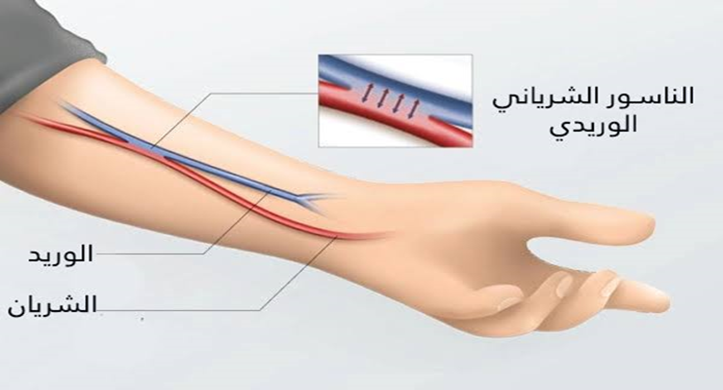
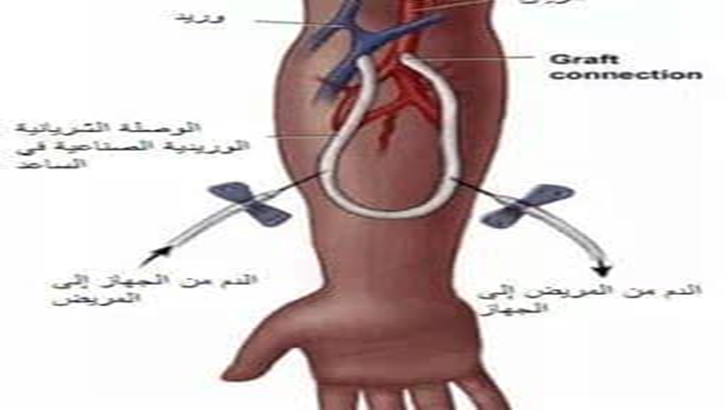
- - Nursing procedures for a patient with dialysis access.
- - Nursing interventions during the occurrence of dialysis complications
- - Nursing procedures to finish a dialysis session
- - Care for the dialysis machine
- - ONLINE CLEARANCE MONITORING
- - Monthly analysis procedures
- - Health education
- - References
- Prepared by
Under supervision
- Prof. Dr. Mohamed Latif, CEO of the Egyptian Health Council
Dr. Kawthar Mahmoud, Head of the Egyptian Nursing Syndicate - Member of the Senate
Prepared by
|
Title |
Name |
NO. |
|
Dean Of Faculty Nursing, Professor of Medical and Surgical Nursing, Tanta University |
Dr Afaf Abdel Aziz Abdel Aziz Basal |
1 |
|
Professor Of Critical Care Nursing |
Prof.Dr/Zeinab Hussain Ali |
2 |
|
Professor And Head of the Department of Medical Surgical Nursing. Faculty-. Benha University |
Amal Said Taha Refaie |
3 |
|
Supervisor Of the Education Sector at Port Said University |
Amal Ahmed Khalil Morsy |
4 |
|
Professor Of Medical Surgical Nursing- Faculty of Nursing- Cairo University |
Dr. Hanan Ahmed Al Sebaee |
5 |
|
Head of central administration on secondment at MOHP |
Dr Neveen ab drab al0nabi Mohamed |
6 |
|
Director Of Primary Health Care Nursing Department at MOHP. |
Maysa Hosny Ahmed Tammam |
7 |
|
Supervisor Of Technical Education- EHA |
Nancy Alaa Eldeen Abd-Elbaset Ali |
8 |
|
Supervisor Of Nursing Services Development- EHA |
Sherien Mohamed Saad |
9 |
|
Assistant Professor of Maternity and Neonatal Health Nursing - Faculty of Nursing- Ain Shams University |
Assist.Perof. Dr./Heba Mahmoud Mohammed |
10 |
|
General manager of general administration of health institutes affairs |
Dr Mai Galal Ibrahim Al-Assal |
11 |
|
Participants |
||
|
member of the Nursing administration at EHA, port said branch |
Mr. Ahmed Zarq Al-Sayed |
12 |
|
member of the Nursing administration at EHA, ismailia branch |
Mrs. Radwa Al-Sayd Al-Nagdi
|
13 |
|
member of the Nursing administration at EHA, ismailia branch |
Mrs. Omnia Hassan Absi |
14 |
- Procedures for receiving a first-time patient
➡️Steps:
· Patients are received at the kidney clinic, where they are examined, tested, and their condition is assessed to determine whether dialysis is needed or not.
· The patient was received in the designated area for dialysis unit patients in the outpatient clinic.
· The card is being issued.
· A customized form specifying the patient's name, date of birth, assigned code number, and their financial treatment system.
· The patient goes to the unit and presents his card to the unit's secretary, who retrieves the treatment file and hands it to him.
· This file contains his monthly research, medical history, and the forms designated to monitor his condition during the dialysis session.
- Procedures for welcoming a resident patient
➡️steps :
▪️ The unit administrator follows up by confirming appointments through the appointment card and recording the patient in the unit's accounting records.
▪️ Ask the patient to go to the restroom to avoid excessive movement during the session.
▪️ Ask the patient to wash their hands up to the elbows with soap and water to remove dirt.
▪️ Weigh the patient before entering the session and compare the baseline weight with the current weight.
▪️ Recording the patient in the unit's visitor log.
▪️ The excess weight over the normal weight is calculated so that it can be deducted.
▪️ Placing the patient in their designated spot and raising the sides of the bed.
▪️ Performing a complete set of vital signs.
▪️ Preparing the patient for a dialysis session.
▪️ Testing electrical and water connections.
▪️ Preparing the washing solution container and placing it next to the machine, then inserting the stick into the container according to the type of washing solution.
▪️ Opening the machine and conducting a test on the machine.
▪️ Placing the filter in its position on the machine.
▪️ Placing the arterial and venous grafts in their correct positions.
▪️ Connecting the arterial line to a saline solution bottle to remove air from the filter lines.
▪️ Ensure the air is expelled, place heparin in the venous connection, and create a closed loop.
▪️ Pass the solution through the machine for 30 minutes.
▪️ Connecting the patient to the designated machine.
➡️ Smile and love!
First thing, you must greet the patient with a broad smile to make them feel welcome, because dialysis can be psychologically exhausting, and a friendly atmosphere alleviates the stress.
➡️ A simple introduction to the unit
Explain to him briefly how things work in the dialysis department, the session times, and the team that will be with him. Take it easy, meaning don't let him get bogged down in too many details.
➡️ Medical inquiry
Of course, there will be a form, but the most important thing is to talk to him personally: ask him about his health condition, any symptoms, or medications he is under the supervision of the medical team.
➡️ His reassurance about the procedures
Dialysis can be scary the first time, right? Let him know that it's safe and that there will be a specialized team with him the whole time, monitoring his condition and checking the machines.
➡️ Security procedures
Introduce him to preventive measures like washing hands and wearing a mask, for his safety and the safety of others. Always make him feel like a partner in maintaining his health.
- Nursing procedures for the insertion of a subclavian catheter (Mahoker)
steps
· Routine hand washing
· Preparing instruments and tools
1. cath-set
2. syringe
3. adhesive tap
4. beta dine ( surgical )
5. lidocaine
6. surgical gloves
7. suture
8. S.T sponge
9. Kidney basin
▪️ Explaining the procedure in a simple way helps with the patient's psychological motivation.
▪️ Surgical hand washing.
▪️ Helping the doctor sterilize the installation site.
▪️ Helping the doctor to administer Xylocaine at the insertion site.
▪️Follow up on transferring the patient to the radiology department for a chest X-ray by the staff after the procedure.
▪️ The X-ray was shown to the doctor to monitor the catheter's location.
▪️ Helping the doctor in securing the catheter.
▪️ Administering a heparin ampoule is done according to the doctor's orders in the arteriovenous fistula after the session ends.
▪️ Changing the location of the mahoker.
▪️ Washing hands is routine.
▪️
Safe disposal of waste. 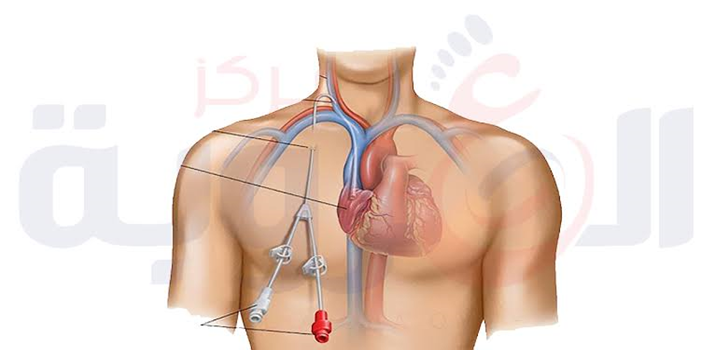
- Nursing procedures during the insertion of a femoral catheter
steps
· Routine hand washing
· Preparing instruments and tools
1. cath-set
2. syringe
3. adhesive tap
4. beta dine ( surgical )
5. lidocaine
6. surgical gloves
7. suture
8. S.T sponge
9. Kidney basin
· Explaining the procedure in a simple way helps with the patient's psychological motivation.
· Surgical hand washing.
· Sterilize the catheter site (thigh) with Beta dine, taking into account the contact time.
· Helping the doctor administer Xylocaine at the insertion site.
· Helping the doctor to secure the catheter.
· Washing hands is routine after finishing the installation.
· Washing hands and wearing personal protective equipment.
· Removing the femoral catheter after the session and applying pressure to the catheter site for 15 minutes while performing exercises with the leg where the catheter is located.
· Applying a sterile dressing to the catheter site and placing a plaster after the bleeding has stopped.
- Nursing procedures to start a dialysis session
Steps :
· Handwashing is a routine wash.
· Preparing the supplies.
· Washing hands before starting work.
· Wearing protective clothing (gloves - mask - goggles).
· Measuring vital signs before the session, and blood pressure is measured every hour during the session and as needed based on the patient's condition.
· Ensuring the connection works properly by:
o 1 - Hearing the sound of blood flow (BRUIT)
o 2-Ensure the presence of the thrill.
o 3-Ensuring there are no bruises, redness, or any changes.
o 4-Ensure that there are no fibrous tissues; they should be soft and palpable.
· Disinfect the arteriovenous connection site on the patient's hand with Betadine, taking into account the contact time of Betadine with the arteriovenous connection in the patient's arm after ensuring the catheter is secured in the patient's arm and the patient is connected to the machine.
· Connecting the closed arterial connector with the closed arterial needle.
· Opening the valve after ensuring there is no air in the connections.
· Slowly open the blood suction pump and administer the agreed-upon amount of heparin with the treating physician.
· Closing the vein connection valve when blood reaches it and stopping the blood pump.
· Connecting the closed valve end of the patient's line to the closed end of the intravenous needle.
· Slowly open the blood pump while opening all the closed valves.
· Ensure the blood level rises in the air barrier and gradually speed up the blood pump.
· Wrapping the connections around the patient's arm securely and fastening them.
· Hand washing is a routine wash.
- Nursing procedures during a dialysis session
Steps :
· Filling out nursing forms during the session for each patient: weight, vital signs, medications, and solutions during the session. Recording excess weight, pump speed.
· Observe any signs of low blood pressure (dizziness, sweating, fainting, lack of concentration).
· Administering the heparin dose at the scheduled times.
· Monitoring blood pressure every hour during the session.
· Observing any changes that occur in the patient during the dialysis session (bleeding from the arteriovenous fistula site - continuous monitoring of the dialysis machine - vomiting... etc.)
- Nursing procedures for a patient with dialysis access.
Steps :
· Hand washing.
· Wearing personal protective equipment.
· Applying the sterile dressing to the catheter site after the session.
· Administer the blood-thinning medication as directed by the doctor.
· After finishing my hand washing routine.
· Remind the patient to keep the dressing dry, especially when showering and between sessions.
· Inform the doctor when the temperature rises to prescribe the appropriate treatment.
· Advising the patient to be cautious and handle with care when putting on and taking off clothes, when placing and uncovering the blanket, and when sleeping.
- Nursing interventions during the occurrence of dialysis complications
A) Low blood pressure
Steps
· Withdrawal is stopped after the doctor's review.
· Reducing the withdrawal rate after consulting the doctor
· Increasing the sodium and calcium solution in the dilsate converter after consulting the doctor
· Reducing the temperature of the dilsate after consulting the doctor
· Stopping high blood pressure medication about 4 hours before the session after consulting the doctor.
· Administering blood pressure-raising medications as directed by the doctor, such as Midodrine 6 mg, half an hour to an hour before the session.
· All the previous procedures are carried out in the presence of the doctor and under their instructions
B) Muscle cramp .
steps :
· Reducing the withdrawal rate after consulting the doctor.
· Giving a saline solution after consulting the doctor.
· Massage the tense area.
C) Imbalance
Steps :
· Using small-sized filters after consulting the doctor.
Reducing the blood flow rate (the pump) and the dialysate after consulting the doctor.
C )Chest pain
Steps
- Reducing the blood flow rate to 200 ml and stopping the suction.
- The patient is placed in a sitting position.
- Giving oxygen and pain relief as per the doctor's instructions.
- If the pain does not subside, the session will be terminated and an ECG will be performed on the patient.
- Nursing procedures to finish a dialysis session
Steps :
· Handwashing
· Preparing the necessary supplies (bandage + sterile gauze)
· Wearing protective clothing (apron - gloves - mask - goggles)
· Measuring blood pressure before ending the session to determine the type of solution used, saline or glucose.
· Closing the blood pump and closing the artery valve and artery needle
· Placing the arterial line in the solution bottle and opening the blood pump.
· Activating the connections and filter to ensure that blood does not clot in the filter.
· Raising the arterial-venous fistula needle and applying gentle pressure on it.
· Disinfect the arteriovenous fistula site with Betadine, sterile gauze, and a plaster after ensuring there is no blood at the fistula site.
· Disposing of connections, filters, and all patient-related consumables, and changing the bedding.
· Disinfecting the machine from the outside with chlorine and alcohol
· The patient's weight and recording it in the medical file.
· Measuring blood pressure before allowing the patient to leave the unit
· Recording all supplies and medications and obtaining the signatures of the responsible nursing staff
· Following up on the patient's signature for the session and confirming the time for the next session.
· Monitoring the patient's discharge from the unit by the staff.
- Care for the dialysis machine
Steps :
Wearing
personal protective equipment.
Remove the solution stick from the jug and place it in the machine.
Connecting the dialysis tubes to the machine
· Ensure that all doors (pump, blood
reservoir) are closed to create a closed loop Rinse
· Enter the program first.
· Entering the machine into the Dis
infection program.
· The necessary solution for the machine is a chlorine solution for acetate
washing and a citric solution for bicarbonate washing.
· Shut down the machine after it
completes the program
Wipe the outside of the machine with diluted bleach at a ratio of 100 cm of
bleach per liter of water for the machine body.
Wipe the parts of all control switches with 95% alcohol.
Protocol for sterilizing the Fresenius dialysis machine model 4008
First: In the
case of washing using a solution:أسيتات
A rinse is done between each session.At the end of the day (every day), one of
the two methods is followed.
First way :
Chemical cold
disinfection PGM5 using a 10% diluted sodium hypochlorite.
The commercial name (Javel or Clorox)
The hot rinse program is working.برنامج الشطف الساخن
Second way :
Conduct a hot chemical decontamination on PGM2 (from the back of the yellow link) using one of the following media –
Fresenius Diasteril
Fresenius Citrosteril
- ONLINE CLEARANCE MONITORING
Purpose: Improving the quality of dialysis, enhancing health status, and reducing mortality rates.
|
|
 K×T÷V ≥
1.2……...1.8
K×T÷V ≥
1.2……...1.8The monitoring ratio is calculated through:
K the actual ratio of the urea
clearance rate from the blood and it is measured
T the actual time for the dialysis session is entered.
V distribution volume of urea in the blood and it is measured in the
laboratory.
The OCM value ranges from 1.2 to 1.8.
Influencing factors:
· Factors that negatively affect the time rate:
· The session time is less than required.
· Ending the session before the time is up.
· Repeated warnings during the session (specifically for blood and connections)
· Factors that negatively affect the selection factor:
· Decreased blood flow rate.
· Presence of Fistula Recirculation
· The concentrations of the dialysis solutions are incorrect.
· Decrease in the dialysis flow rate.
· The small area of the filter surface.
· Using a low flux filter.
· The occurrence of clots inside the filter.
- Monthly analysis procedures
steps :
· Accompanying the doctor to the patient and determining the type of required tests.
· Follow-up on writing the analyses
· Explaining the procedure in a simple way to the patient
· Preparing the specific tubes for the sample type.
· Collecting samples while following infection control instructions
· Sending the sample to the lab
· Bringing the lab test results by the medical secretary
· Informing the doctor of the results and recording them in the patient's file and the analysis notebook.
· Giving a copy of the test authorization to the accounts clerk to place it in the patient's file.
· Presenting the monthly analyses to the unit manager
The most important tests:
- Na (sodium): 135-145
- K (potassium): 3.5-5.5
- Ca(calcium): 9-11
- Mg (magnesium): 1.8-3
- Cl(chloride): 96-106
- P (phosphorus): 3-4.5
- PH: 7.35-7.45
- HCO3: 22-26
- CO2: 35-45
- Health education
1-Understanding
the process of dialysis
Dialysis is a method of purifying the blood from waste and toxins that the
kidneys cannot eliminate due to impaired function. The education here focuses
on:
Number of weekly sessions (usually 3 times a week)
The duration of each session (usually around 4 hours).
How to purify the blood.
2.
Adhering to the laundry schedule
One of the most important things is the patient's commitment to the session
schedules and not missing them. Skipping a dialysis session could lead to the
accumulation of toxins in the body.
3.
The diet
The diet for dialysis patients is very sensitive. Some tips include:
Reducing salt intake to avoid high blood pressure and fluid retention in the
body.
Reducing phosphorus and potassium, because their high levels can cause problems
with bones and the heart. Foods that contain phosphorus, like nuts and legumes,
and potassium, like bananas and potatoes, should be reduced.
Controlling fluid intake: Because the kidneys cannot eliminate excess fluids,
it is necessary to limit the amount of fluids consumed daily.
4.
Care of the arteriovenous fistula (AV Fistula)
The arteriovenous fistula is the lifeline in the dialysis process. The patient
must learn how to maintain it.
Avoid lifting heavy weights or putting pressure on them.
5.Monitoring
any signs of inflammation such as redness or swelling.
Ensuring to hear the "pulse" or "hum" in the area daily.
Not wearing tight clothes
Not measuring blood pressure from the same arm
Finger tapping to increase the efficiency of the arteriovenous fistula.
Not wearing any accessories on the same hand.
6-.
Dealing with side effects
Dialysis can cause symptoms like:
Fatigue and exhaustion after the session.
Itching of the skin due to high phosphorus levels.
Muscle spasms. The patient must know how to deal with them and contact the
medical team if there are any abnormal symptoms.
7.
Maintaining physical activity
Even with dialysis, it is important for the patient to maintain light physical
activity such as walking or light exercises. This helps improve both mental and
physical well-being.
8.
Psychological and social support
Health education also includes the psychological aspect. A dialysis patient
goes through psychological and social challenges, so they need to know that
psychological support is available, whether from family or support groups.
Talking about their feelings and dealing with stress and depression is part of
the treatment.
9.
Continuous communication with the medical team
The patient must learn that any health issue, no matter how minor, should be
reported to the doctor or nurse. Regular check-ups like blood tests and blood
pressure monitoring are essential to maintain the stability of their condition.
- References
◾ Pagels AA, Söderkvist BK, Medin C, Hylander B, Heiwe S. Health-related quality of life in different stages of chronic kidney disease and at initiation of dialysis treatment. Health Qual Life Outcomes. 2018;10:71.
◾ Polikandrioti M, Koutelekos I, Gerogianni G, Stefanidou S, Kyriakopoulos V, Floraki E, et al. Factors associated with hemodialysis machine dependency. Med Arch. 2019;71(2):122-7.
◾ Schrier, R. W.: Renal and electrolyte disorders, 6th ed., Philadelphia:USA: Lippincott Williams & Wilkins. (2017). Pp, 227-235.
◾ Identification of patients with CKD in medical databases: a comparison of different algorithms Clin J Am Soc Nephrol, 16 (2021), pp. 543-551