Handling serums
| Site: | EHC | Egyptian Health Council |
| Course: | Nursing Procedure Guidelines for the Reception and Emergency Department |
| Book: | Handling serums |
| Printed by: | Guest user |
| Date: | Sunday, 20 September 2026, 5:07 PM |
Description
"last update: 6 April 2025" تحميل الدليل
- اعداد
تحت اشراف
- أ.د/ محمد لطيف الرئيس التنفيذي للمجلس الصحي المصري - د/ كوثر محمود نقيب عام التمريض المصري – عضو مجلس الشيوخ
تمت المراجعة
- أ.د/ شريف وديع ناشد مستشار وزير الصحة للطوارئ والرعاية العاجلة
اعداد
|
م |
الاسم |
الوظيفة |
|
|
1 |
أ.د /امل احمد خليل مرسي |
نائب رئيس الجامعة لشئون التعليم والطلاب – جامعة بورسعيد |
|
|
2 |
أ.د / عفاف عبد العزيز عبد العزيز بصل |
عميد كلية التمريض –استاذ تمريض باطنه وجراحي جامعة طنطا |
|
|
3 |
أ.د/ زينب حسين على محمد سعد |
وكيل الكلية لشئون البيئة وخدمة المجتمع – كلية التمريض – جامعه حلوان |
|
|
4 |
أ.د/ امل سعيد طه رفاعي |
أستاذ ورئيس قسم التمريض الباطني الجراحي – جامعة بنها |
|
|
5 |
أ.د/ حنان احمد السباعي على |
استاذ التمريض التمريض الباطني الجراحي- كلية التمريض – جامعة القاهرة |
|
|
6 |
د /نيفين عبدربه النبي محمد عبد النبي |
رئيس الإدارة المركزية ندباَ –وزاره الصحة |
|
|
7 |
د/ مايسة حسني احمد تمام |
مدير عام للإدارة ندباَ – وزاره الصحة |
|
|
8 |
د/ نانسي علاء الدين عبد الباسط على |
المشرف على التعليم الفني- الهيئة العامة للرعاية الصحية |
|
|
9 |
د /شيرين محمد محمد سعدالدين |
المشرف على تطوير الخدمات التمريضية –الهيئة العامة للرعاية الصحية |
|
|
10 |
د/مى محمود العسال |
مدير عام الإدارة العامة لشئون المعاهد الفنية الصحية |
|
|
11 |
أ.م.د/ هبة محمود محمد |
أستاذ مساعد تمريض صحة الام وحديثي الولادة –كلية التمريض - جامعة عين شمس |
|
|
المشاركين |
|||
|
12 |
د/ عزة جلال أحمد |
مدير إدارة التمريض العلاجي- وزارة الصحة |
|
|
13 |
/أأحمد محمد أحمد النوبي |
عضو إدارة التمريض الهيئة العامة للرعاية الصحية فرع الأقصر |
|
|
14 |
أ / أنغام حمدي عبد الخالق |
أخصائي تمريض بالإدارة العامة للتمريض- وزارة الصحة |
|
|
15 |
أ /أحمد محمد حسين مبارز |
أخصائي تمريض بالإدارة العامة للتمريض- وزارة الصحة |
|
|
16 |
أ /عبد العظيم السعيد عبد العظيم الحنفي |
أخصائي تمريض بالإدارة العامة للتمريض- وزارة الصحة |
|
|
17 |
أ / شوكت يسرى حسين |
أخصائي تمريض بالإدارة العامة للتمريض- وزارة الصحة |
|
|
18 |
أ / كريم أحمد صادق |
أخصائي تمريض بالإدارة العامة للتمريض |
|
- Definition
▶️Serum : They are ready-made antibodies, or ready-made antitoxins, that take effect immediately upon administration, and this effect lasts for a short period. They are called serums because they are prepared from the serum of another host, and then transferred via intramuscular or intravenous injection.
▶️ Vaccine: It is the antigens in the form of a suspension of the microbe, whether it is alive or weakened.
▶️ Serums represent an important part of immunity, called passive immunity , which is used or resorted to when active immunity is not available , or in the event of an epidemic, and there is not enough time to acquire immunity, or the vaccination against this epidemic has not been taken before.
- Types of serums
· There are many types of serums, most of which are prepared industrially, to prevent the transmission of blood diseases.
· Some of them are prepared in horses, after injecting them with the microbe, then the antibodies are extracted from the plasma, purified and packaged.
· Some serums may be prepared in volunteers, after conducting the necessary tests to ensure that they are free of diseases.
· The antibody used in serums is called globulin , and there are three main types: human, highly immune, and intravenous.
Human Immune Globulin
• This type of serum is prepared from serum or plasma extracted from a number of volunteers. It contains concentrated immunoglobulin of the IgG type, along with IgM and IgA, but in small amounts.
• It is stored at a temperature of 4°C.
• It starts to be effective in the body 48 hours after injection, and its effectiveness lasts for about three weeks.
• This serum is primarily used for the prevention of the following diseases: Hepatitis A, chickenpox, and rubella, particularly for pregnant women in the first three months of pregnancy. One of the drawbacks of this serum is that it provides temporary immunity, its effectiveness may vary from one type to another, it causes pain during intramuscular injection, and in some cases, it can cause severe allergic reactions.
Hyper immune globulin
• This type of serum is prepared from individuals who have a high level of antibodies specific to a particular disease. It is obtained from these patients during the recovery phase. It can also be prepared by stimulating the immune system of healthy individuals by giving them the vaccine for the disease. Examples of this type of serum include:
• Rabies serum, Hepatitis B serum, Tetanus serum, and Varicella-Zoster serum. One of its drawbacks is that it is painful during intramuscular injection, and it can also be accompanied by severe allergic reactions.
Intravenous Immune Globulin (IVIG)
• This type of serum is characterized by being administered via intravenous injection rather than intramuscular, which helps in giving large and repeated doses of the serum without causing pain. • For this reason, it is considered the best drug of choice for treating premature infants, those with low weight and growth, from bacterial and viral infections such as meningitis or AIDS.
• Despite the absence of pain during injection, the potential for allergic reactions remains a drawback of this serum.
- Examples of serums
Some diseases are characterized by having both a serum and a vaccine at the same time, such as diphtheria and tetanus, which have a vaccine made from their toxoids (Taxied), called D.T., used to build long-term immunity. They also have a serum called "Diphtheria Antitoxin" and "Tetanus Immune Globulin (TIG)," which are used for immediate and rapid treatment of these diseases, especially in patients who have not been vaccinated against them.
An important case for using serums is food poisoning (Botulism), for which a serum called "Botulinum Antitoxin" is used. The treatment using serums prepared by modern immunization methods for snake, scorpion, spider bites, and others is called "Venom Immunotherapy," which is a safe and effective treatment, especially in cases where there is a reaction or allergy to the serum itself before immune treatment, or during pregnancy. The use of serums, due to the antibodies they contain to prevent certain infectious diseases, is called "Immunoprophylaxis."
Antisnake Venom Serum
It is worth noting that snake venom is 50% poisonous and 50% non-poisonous
The patient is initially evaluated in the hospital in an observation room where symptoms, if present, are divided into
· Snake bite causing bleeding - Haemorrhagic
· Paralytic snake bite
haemorrhagic snake bite
Clinical picture
|
Clinical picture |
GRADE: Impact Level
|
|
No local or general symptoms appear within 12 hours of the bite |
Minimal No effect |
|
Swelling is noted with a feeling of fatigue, without any general or bloody changes |
Mild
Low impact
|
|
The condition develops by increasing swelling at the site of the bite without tissue destruction No blood changes and no general symptoms
|
Moderate
Average impact
|
|
Local development at the site of the bite with tissue destruction and severe general symptoms (weakness)
General, diarrhea, shock) with life-threatening blood changes) |
Sever
Highly influential |
Laboratory tests
➡️ The following tests are performed on the patient urgently
(Complete blood count, kidney function, blood sugar, prothrombin time and concentration - INR)
Complete bleeding profile: It is done for the patient every 104 hours regularly and includes:
• Platelet count.
• INR.
• Prothrombin time and concentration.
• Fibrinogen level.
Medical Management
First: Minimal cases
· The patient is placed under medical observation for 24 hours
· The above-mentioned laboratory tests are performed, with a warning to perform a complete bleeding profile.
· The affected limb (the site of the sting) is monitored every hour, and it is examined gently and carefully, and the size of the swelling and redness at the site of the sting is determined with each time the examination is performed
· Alert to deal with the development of the condition if it deteriorates to Mild - Moderate Severe) by giving the necessary intravenous solutions and also giving the anti-venom serum as will be mentioned later
· Symptomatic cases that include (Sever-Moderate Mild)
· The affected limb should be fully extended and elevated to avoid increased swelling
· Adequate intravenous satanic crystalloid is given to support circulation and maintain urine output at least 1 ml/kg/hr.
· Giving antivenom to snakes in the following cases:
- In cases of circulatory collapse and heart rhythm disturbances.
- Severe reduction in platelet count.
- Occurrence of convulsions and muscle disturbances.
- Local deterioration of swelling and redness.
- Moderate-Severe cases with moderate to severe effects.
- Mild cases with local deterioration of the sting or the occurrence of general symptoms or disturbance in previous lab test results.
- Severe bleeding cases.
- Platelet count < 50,000 / mm³.
- INR > 3.
- Prothrombin time and concentration > 50 seconds.
- Fibrinogen level < 75 mg/DL.
Basic indications for giving serum
- Circulatory disorder.
- Coagulation disorder due to low platelet count.
- Neurotoxic muscle poisoning.
- Development and increase of swelling.
- In moderate to severe cases.
- Mild cases with exacerbation of local injury and abnormal lab results.
- Severe bleeding cases:
- Platelet count > 50,000 / mm³.
- INR > 3.
- Prothrombin time and concentration > 50 seconds.
- Fibrinogen level > 75 mg/DL.
Important note
· The serum is not given as a preventive measure for normal cases with no or few symptoms .
· No doses of serum for children and young children
· A sensitivity test is performed on the serum before it is given
Serum dose
|
Minimal No effect
|
Mild |
Moderate |
severe |
|
No treatment required |
3 ampoules in each side over a span of two hours, to be administered in a drip with Ringer's solution or glucose solution at a specified percentage. |
5 ampoules in each side over a span of two hours, to be administered in a drip with Ringer's solution or glucose solution at a specified percentage. |
The patient is given 10 ampoules, increasing up to 20 ampoules in critical cases, distributed on both arms through intravenous access, with 5 ampoules in each side over two hours, to be administered in a drip with Ringer's solution or glucose solution at a specified percentage. |
Very important
It may be necessary to repeat the dose of the serum, typically ranging from 0.5 to 10 ampoules at once, for the purpose of stabilizing the patient's condition.
A sensitivity test for the serum is conducted before administration. If allergic reactions appear in the patient, corticosteroids and adrenaline are given.
The solution is administered very slowly over a period of 5 hours.
Thirdly, severe bleeding cases
Blood transfusion or its derivatives, such as plasma and platelets, are required as follows:
- Red blood cell transfusion: According to a decrease in hemoglobin levels below 8g/dL, with a therapeutic dose of 105- 1/ kg.
- Fresh frozen plasma transfusion: The recommended therapeutic dose for adults is 15 mL/kg in cases of severe bleeding that cannot be controlled, in addition to prolonged PT+PTT.
- Platelet transfusion: In cases of platelet count below 30,000 platelets.
Secondly, paralytic snake bite:
Clinical picture
All symptoms are neurological, including:
- Tongue heaviness
- Numbness and tingling
- Double vision
- Difficulty swallowing
- Muscle weakness
- Hoarseness
- Weakness of the eye muscles
- Muscle twitches
- Weakness and paralysis of respiratory muscles
Close medical observation for 24 hours is necessary unless coral snake bite is ruled out.
Medical Management
- Clean the bite site and perform necessary surgical cleaning.
- Administer necessary antibiotics intravenously.
- Physical therapy in case of joint stiffness in the affected limb.
- The patient may require intubation and placement on a ventilator if respiratory muscles are affected.
Give the serum as follows:
· The serum is given to patients who have neurological symptoms and signs
· The vaccine is intended for patients who are suspected of having been bitten by a coral snake, even without symptoms
- The loading dose: 3-5 vials, repeated until reaching 10 vials.
Ant spider Venom Serum
Widow Spider or the Brown Spider , which secrete neurotoxins like snake venom
Its bite causes pain like pinpricks, and leaves a mark that is a blue bruise and a sore in the middle, surrounded by circles; giving it the shape of a target for shooting training , with muscle cramps in the arm or foot, stiffness in the abdominal muscles, high temperature and pressure, profuse sweating, agitation and vomiting
Treatment protocol for dealing with scorpion stings
First aid:
- Reassure the victim and try to keep them calm.
- Remove the stinger, if present, using a flat object such as a card, not a sharp object. Avoid using tweezers as they can squeeze the sting site, increasing venom secretion into the bloodstream.
- Wash the sting site with soap and water and remove any rings, watches, or jewelry from the affected area as it may swell.
- A gauze bandage can be applied above the sting site, ensuring it is tied lightly to close only the vein, not the artery, to avoid compromising blood flow to the parts below the sting.
- Apply ice wrapped in cloth to the sting site for 10 minutes, then remove it for another 10 minutes. Repeat this to prevent swelling and reduce venom absorption into the bloodstream.
- Do not use painkillers unless advised by a doctor.
- Record the vital signs of the patient, particularly pulse, respiration, and blood pressure.
Assessing the patient's condition in terms of severity:
|
High Impact Level 3 |
Average Impact Level 2 |
Low Impact Level 1 |
No effect level 0 |
Impact level |
|
Level 2 symptoms + neuromuscular dysfunction of any kind anywhere in the body |
Level 1 symptoms + increased heart rate, irregular heartbeat, vomiting and nausea |
Local signs such as pain Numbness and tingling at the site of the bite Cold extremities Low blood pressure |
There are no general local symptoms or signs |
Symptoms |
|
5 ampoules of serum diluted with 1-10 physiological saline solution by intravenous drip over 30 minutes, observing vital signs every half hour, and if there is no improvement, repeat the dose after 1-2 hours |
2-1 ampoule of scorpion antivenom serum intramuscularly or subcutaneously after a skin allergy test. If there is no improvement, repeat the dose after 1-2 hours after monitoring and recording vital signs every half hour. |
No treatment required |
Theraputic treatment |
|
Notes:
The dose should be increased in the following cases:
· Head, neck or shoulder injury
· If the period of time between the infection and the treatment is long, a maximum of 10 ampoules
A skin allergy test must be performed before giving the serum as follows:
➡️ 0.1-0.2 ml of the serum diluted in a ratio of 1:10 is injected into the skin. A positive result appears as a rash that may be surrounded by redness within 30 minutes
➡️ The solvent is stored at the same temperature as the refrigerator, from 2 to 8 degrees
Signs of improvement:-
· A regularization of rapid heartbeats and their return to their normal rate
· warmth in cold extremities
· Restore normal blood pressure
· Respiratory rate returns to normal
- RABIES immune globulin serum
Definition:
Rabies vaccination is giving the child or patient a dose of the rabies virus, which is a killed virus, so that the child’s immune system recognizes the virus and then quickly controls it and prevents the disease from developing if the child is bitten.
Initial symptoms of rabies:
Symptoms include fever, pain or tingling at the site of the wound, and as the disease progresses, the patient may experience hallucinations, insomnia or mental disturbance. Generally, the disease appears in the following two forms:
Rabies:
It appears in the form of hyperactivity, agitation, hydrophobia and sometimes aerophobia , and death usually occurs as a result of the respiratory muscles stopping after a few days
Paralytic rabies: This is less common, and in it the muscles gradually become paralyzed, starting at the site of the bite or scratch, then slowly progressing to coma and then death
It is worth noting that the World Health Organization's definition of the clinical diagnosis of human rabies is based on the appearance of neurological symptoms (encephalitis) in the infected person that develop into coma and death, in addition to a history of being bitten or scratched by an animal suspected of being infected with rabies.
Post-exposure prevention measures:
First : Local treatment of wounds
1- . good wound washing
The process of wound cleaning for all cases, regardless of the severity of the wound, is considered one of the essential pillars that determine the effectiveness of preventive procedures:
1. Wound Cleaning: The wound should be cleaned as quickly as possible for at least 15 minutes. All wounds should be washed with running water and soap, followed by the application of antiseptic agents (such as Povidone iodine or other virucidal substances). The wound should then undergo regular daily cleaning.
2. Wound Edge Removal or Primary Sutures: It is prohibited to perform wound edge excision or primary suturing, except in cases of life-saving interventions (such as continuous bleeding, reconnecting amputated limbs, or complex fractures).
3. Appropriate Treatment: Administer the appropriate treatment, including analgesics or antibiotics, as per the doctor's recommendations.
4. Tetanus Vaccine: Administer the tetanus vaccine intramuscularly according to the applicable protocol.
Second : Rabies Vaccine
The rabies vaccine currently used in Egypt is a vaccine cultured on vero cells, and it is administered for cases of bites, scratches, or contamination of mucous membranes or compromised skin by saliva from an animal suspected of having rabies.
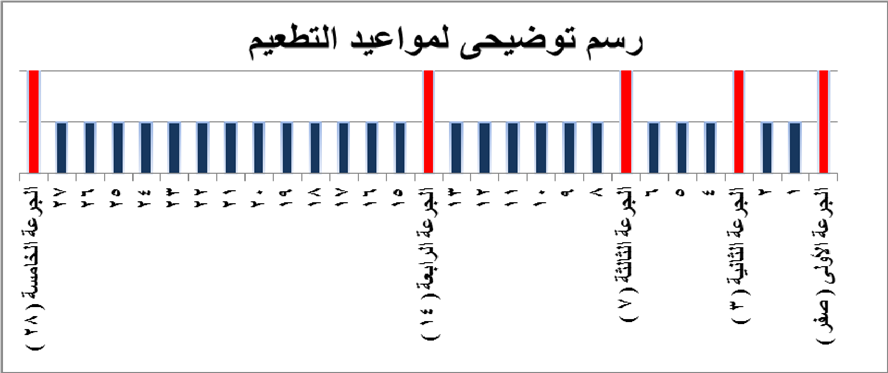
• Five (5) doses of the vaccine are given by injection according to the following schedule:
- First dose: Day 0 (Day of the bite)
- Second dose: Day 3
- Third dose: Day 7
- Fourth dose: Day 14
- Fifth dose: Day 28
• The vaccine is administered to both children and adults in the same
dosage and according to the same schedule.
• The vaccine is given to adults in the deltoid muscle (shoulder), while for
children under five years of age, it is administered in the anterior aspect of
the thigh muscle.
• There are no contraindications for the vaccine.
• The vaccination process can be stopped if the biting animal (in case of a dog
or cat bite) shows no symptoms within 10 days from the date of the bite, or if
it is confirmed that the animal is not infected with rabies through negative
laboratory results based on approved tests.
• The vaccine should be used with caution in cases of allergies to streptomycin
and neomycin. Some medications, such as corticosteroids and immunosuppressive
drugs, may affect the effectiveness of the vaccine.
• The vaccine should be stored in the refrigerator at a temperature of +2°C to
+8°C.
• Two doses of the vaccine are given: the first dose (Day 0) and the second
dose (Day 3) if it is confirmed that the person bitten has received a full
course of post-exposure vaccination in the last five years.
Third : Rabies Immunoglobulin
Immunoglobulin is given to cases with the following priorities:
1. Bites or scratches accompanied by bleeding on the arms and neck.
2. Deep or lacerated wounds, especially if they are multiple.
3. Bites or scratches from an animal suspected to be infected with rabies.
• Rabies immune globulin is administered (20 international units/kg of body weight, with a maximum of 1500 international units). Half of the dose is injected around the wound site, and the other half is given in the anterolateral aspect of the thigh muscle.
• The immune globulin dose is given once (on the day of the bite) and should not be repeated. It can be administered within a period not exceeding 7 days from the date of the first vaccination dose. It should not be given after that, as administering it after this period will inhibit the production of antibodies.
• Cases where immune globulin should not be given:
1. Bruises, abrasions, or superficial scratches not accompanied by bleeding.
2. Wounds not contaminated by the animal’s saliva (with a barrier like clothing or other material).
3. If it is confirmed that the person bitten has received a full and correct course of post-exposure vaccination in the last five years.
4. If the person visits the bite treatment center after 10 days or more have passed since the bite incident, with no signs of rabies in the biting animal.
Fourth: Patients are asked to follow the following:
• Care for wounds resulting from bites or scratches and treatment of surgical complications immediately after they occur
• Notify your doctor of any side effects that occur during treatment
• Refrain, as much as possible, from taking general anesthesia for surgical operations for at least six months
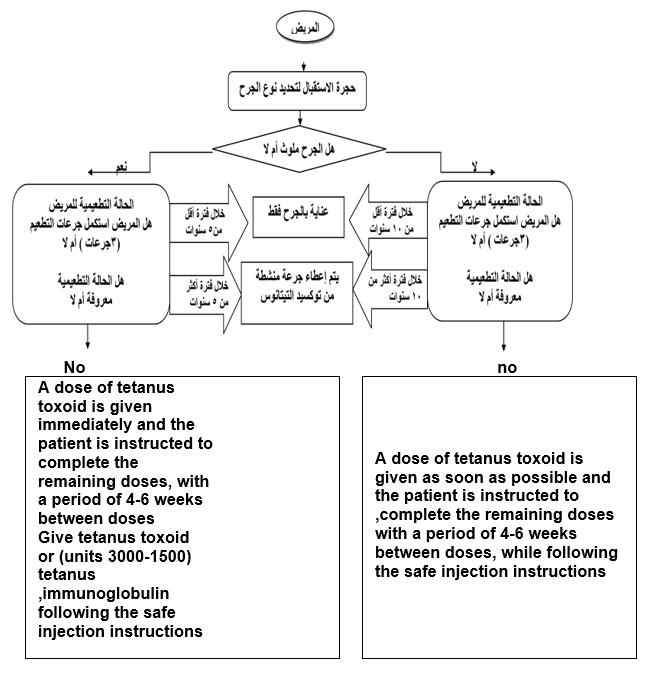
- Tetanus
Measures taken to prevent tetanus infection in case of wounds
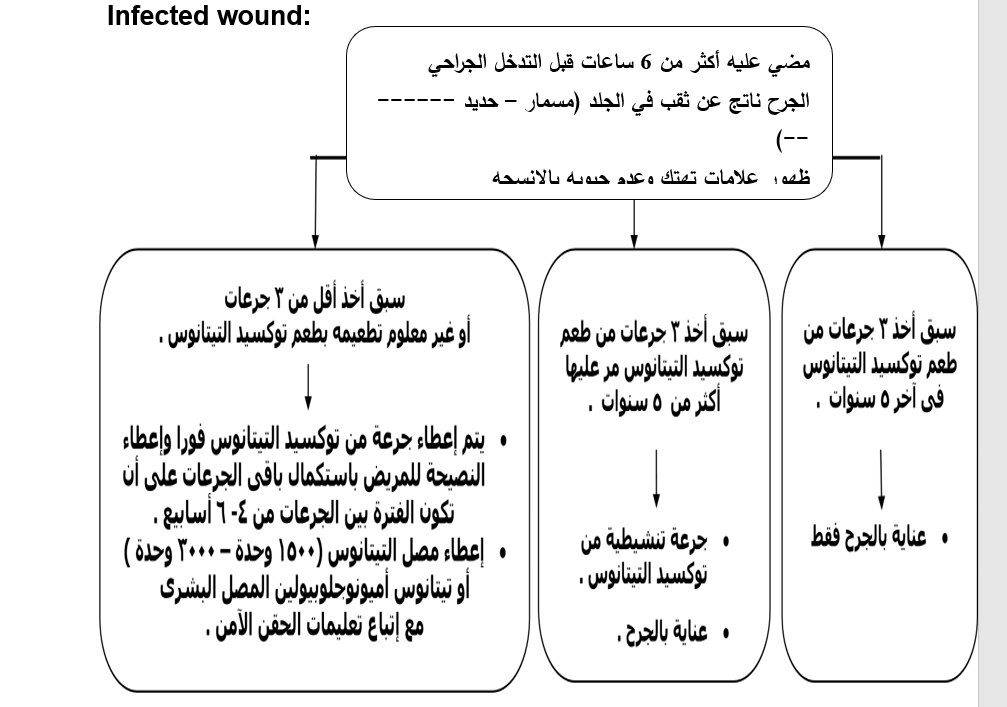
Measures taken to prevent tetanus infection in case of wounds
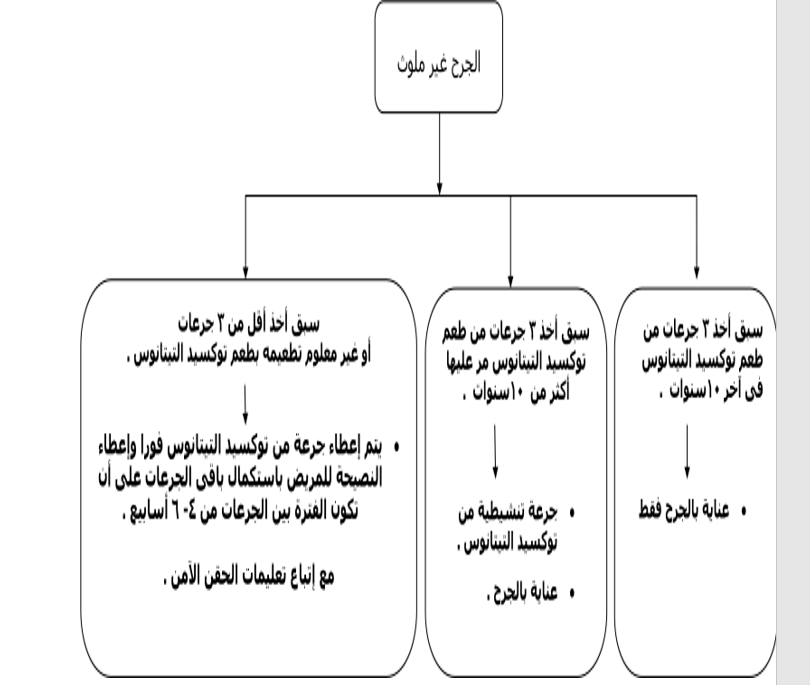
Measures taken to prevent tetanus infection in case of wounds