The Procedural Work For The Cannula
| Site: | EHC | Egyptian Health Council |
| Course: | Evidence of nursing procedures for internal sections |
| Book: | The Procedural Work For The Cannula |
| Printed by: | Guest user |
| Date: | Sunday, 20 September 2026, 5:08 PM |
Description
"last update: 13 April 2025" تحميل الدليل
- Prepared by
Inpatient guide
Under supervision
- Prof. Dr. Mohamed Latif, CEO of the Egyptian Health Council
Dr. Kawthar Mahmoud, Head of the Egyptian Nursing Syndicate - Member of the Senate
Prepared by
|
Title |
Name |
NO. |
|
Dean Of Faculty Nursing, Professor of Medical and Surgical Nursing, Tanta University |
Dr Afaf Abdel Aziz Abdel Aziz Basal |
1 |
|
Professor Of Critical Care Nursing |
Prof.Dr/Zeinab Hussain Ali |
2 |
|
Professor And Head of the Department of Medical Surgical Nursing. Faculty-. Benha University |
Amal Said Taha Refaie |
3 |
|
Supervisor Of the Education Sector at Port Said University |
Amal Ahmed Khalil Morsy |
4 |
|
Professor Of Medical Surgical Nursing- Faculty of Nursing- Cairo University |
Dr. Hanan Ahmed Al Sebaee |
5 |
|
Head of central administration on secondment at MOHP |
Dr Neveen ab drab al0nabi Mohamed |
6 |
|
Director Of Primary Health Care Nursing Department at MOHP. |
Maysa Hosny Ahmed Tammam |
7 |
|
Supervisor Of Technical Education- EHA |
Nancy Alaa Eldeen Abd-Elbaset Ali |
8 |
|
Supervisor Of Nursing Services Development- EHA |
Sherien Mohamed Saad |
9 |
|
Assistant Professor of Maternity and Neonatal Health Nursing - Faculty of Nursing- Ain Shams University |
Assist.Perof. Dr./Heba Mahmoud Mohammed |
10 |
|
General manager of general administration of health institutes affairs |
Dr Mai Galal Ibrahim Al-Assal |
11 |
|
Participants |
||
|
Head of nursing administration at EHA, Ismailia branch |
Ms. Nahla Kamel Mostafa |
12 |
|
member of the Nursing administration at EHA, Ismailia branch |
Ms. Maha Mohamed Saad |
13 |
|
member of the Nursing administration at EHA, Ismailia branch |
Mr. Tharwat Abdel-Al Mohamed |
14 |
|
nursing specialist at the General Administration of Nursing - MOHP |
Mr. Mona Ali Abdul Rahman Al-Katami |
15 |
|
nursing specialist at the General Administration of Nursing - MOHP |
Ms. Sherine Abdel Hakim Abdel Hakim Khattab |
16 |
|
nursing specialist at the General Administration of Nursing - MOHP |
Mr. bahaa fuoad barsom |
17 |
- Peripheral Venous Catheters (Cannulas)
Intravenous Treatment Using Peripheral Venous Catheters
A peripheral cannula is inserted in a large proportion of patients in the hospital's internal medicine departments, as this procedure is one of the most common invasive procedures performed in hospitals. Central venous catheters are also inserted for patients in intensive care units, which are among the leading causes of sepsis and blood infection. Therefore, infection prevention methods must be applied when inserting these catheters.
- Reasons for Inserting a Cannula
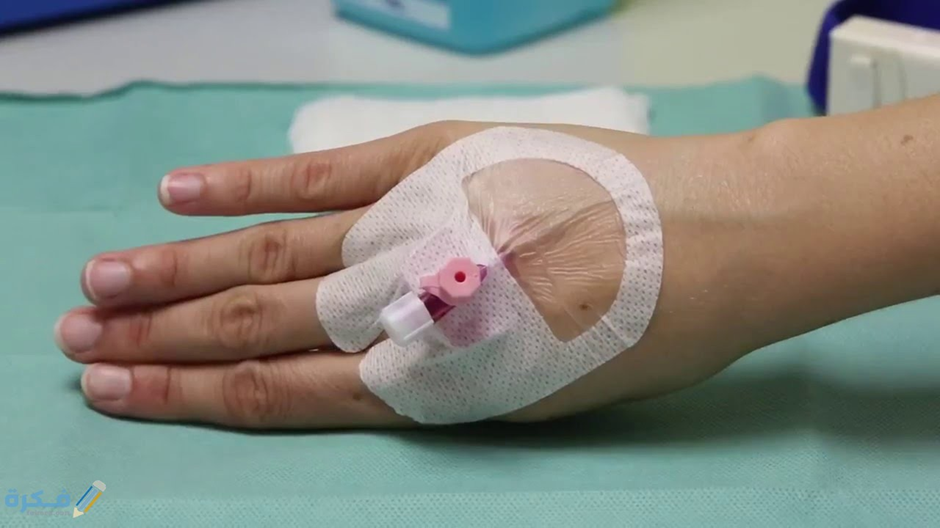
Uses of Cannulas
Cannulas have multiple uses and are inserted for different purposes. Their types and insertion sites vary depending on three factors: age, type of disease, and the patient's condition. Some of the main uses include:
- Replacing Fluid Loss and Rebalancing Body Electrolytes: Such as in cases of burns.
- Administering Medications and Intravenous Solutions.
- Intravenous Nutrition.
- Blood Transfusion or Blood Donation.
- Venous Preloading Before Surgery.
- Administering Antibiotics.
- In some cases, for administering chemotherapy.
- For MRI or CT scans, cannulas are inserted to administer contrast agents.
- Types of Cannulas
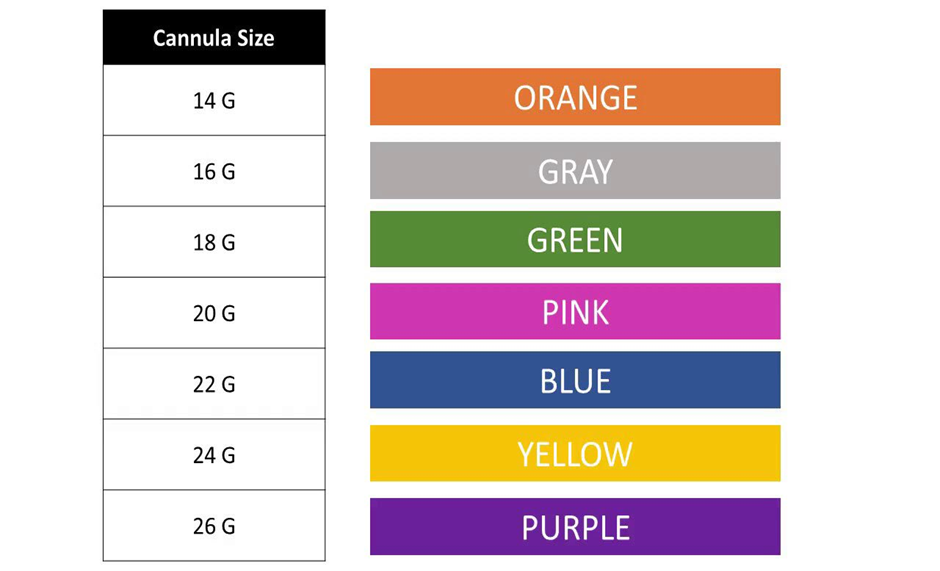
There are different types of cannulas used depending on the patient's age and the condition of the veins:
- Yellow Cannula (24 gauge): Used for children, neonates, and small veins.
- Blue Cannula (22 gauge): Used for elderly patients, for slow fluid administration, or for individuals with weak veins.
- Pink Cannula (20 gauge): The most commonly used among patients, often for non-emergency blood transfusions.
- Green Cannula (18 gauge): Used during surgeries for quick administration of anesthetics and blood transfusions.
- Gray Cannula (16 gauge): Used for trauma patients who require rapid blood transfusion.
- Orange Cannula (14 gauge): Used for central venous catheterization and is inserted into large veins
- Method of Insertion
- The appropriate size of the cannula is selected, as the ideal size reduces the risk of injury and vein congestion.
- The suitable site for the cannula insertion is chosen.
- Simple washing with water and soap or rubbing hands with alcohol or an alcohol-based solution.
- The upper arm is tied with a pressure band (single-use tourniquet), preferably on the less-used arm.
- The insertion site is disinfected with a suitable antiseptic, ensuring that the skin at the insertion site is clean and that the insertion site is not touched after disinfection (sterile technique).
- If the first attempt fails, a new cannula should be used for the second attempt. The same cannula should not be re-inserted.
- After securing the cannula, the pressure band (tourniquet) is released, and the cannula is secured with a sterile dressing, noting the date of insertion.
- Dispose of sharp instruments in a designated safety container.
- Wash and dry hands after removing gloves.
Follow-up and Monitoring for IV Therapy to Prevent Infection:
- Avoid inserting a cannula in the veins of the legs, especially for diabetic patients.
- Regular monitoring of the insertion site for signs of swelling or infection.
- Keep the cannula insertion site clean and dry.
- Reassess the need for the cannula every 24 hours.
- The cannula should be removed in the following cases:
- When it is no longer needed.
- If any signs of inflammation appear.
- After 72-96 hours of insertion, unless it is difficult to insert a new cannula, such as in certain neonate cases, as long as there are no signs of infection.
- If the type of solution changes, the IV set should be replaced to prevent reactions between solutions.
- If there is no likelihood of a reaction between solutions, the same IV set can be used, but it must be removed from the empty solution bottle and placed in the new solution bottle directly after disinfecting the insertion point.
- The IV set should not be used for more than 72-96 hours (same duration as the cannula). Both the IV set and the cannula should be removed together when the duration ends or if they are no longer needed.
- If administering intravenous nutrition or lipid solutions, the IV set and cannula should be changed every 24 hours at most.
- The IV set and cannula should be changed immediately after blood transfusion or administration of blood products.
- Essential Requirements
- Hand washing or rubbing with alcohol before inserting the cannula and during follow-up procedures.
- Disinfection of the skin at the insertion site.
- Use of a sterile technique during insertion, follow-up, and removal of the cannula.
- Secure the IV set to prevent movement of the cannula.
- Ensure that the system remains closed.
- Keep the cannula insertion site covered with a sterile dressing and remove it early when no longer needed.
- Monitor the insertion site daily for signs of inflammation.
- The indications for inserting a cannula should be precise and clear, such as during surgeries, dehydration, blood transfusion, or intravenous nutrition.
- The skin at the insertion site should be disinfected, kept dry, and protected from contamination, with a sterile dressing applied.
- Select the appropriate insertion site and cannula type and remove it immediately when it is no longer needed.