Procedural Guide For Oxygen Therapy
| Site: | EHC | Egyptian Health Council |
| Course: | Evidence of nursing procedures for internal sections |
| Book: | Procedural Guide For Oxygen Therapy |
| Printed by: | Guest user |
| Date: | Sunday, 20 September 2026, 5:07 PM |
Description
"last update: 14 April 2025" تحميل الدليل
- Prepared by
Inpatient guide
Under supervision
- Prof. Dr. Mohamed Latif, CEO of the Egyptian Health Council
Dr. Kawthar Mahmoud, Head of the Egyptian Nursing Syndicate - Member of the Senate
Prepared by
|
Title |
Name |
NO. |
|
Dean Of Faculty Nursing, Professor of Medical and Surgical Nursing, Tanta University |
Dr Afaf Abdel Aziz Abdel Aziz Basal |
1 |
|
Professor Of Critical Care Nursing |
Prof.Dr/Zeinab Hussain Ali |
2 |
|
Professor And Head of the Department of Medical Surgical Nursing. Faculty-. Benha University |
Amal Said Taha Refaie |
3 |
|
Supervisor Of the Education Sector at Port Said University |
Amal Ahmed Khalil Morsy |
4 |
|
Professor Of Medical Surgical Nursing- Faculty of Nursing- Cairo University |
Dr. Hanan Ahmed Al Sebaee |
5 |
|
Head of central administration on secondment at MOHP |
Dr Neveen ab drab al0nabi Mohamed |
6 |
|
Director Of Primary Health Care Nursing Department at MOHP. |
Maysa Hosny Ahmed Tammam |
7 |
|
Supervisor Of Technical Education- EHA |
Nancy Alaa Eldeen Abd-Elbaset Ali |
8 |
|
Supervisor Of Nursing Services Development- EHA |
Sherien Mohamed Saad |
9 |
|
Assistant Professor of Maternity and Neonatal Health Nursing - Faculty of Nursing- Ain Shams University |
Assist.Perof. Dr./Heba Mahmoud Mohammed |
10 |
|
General manager of general administration of health institutes affairs |
Dr Mai Galal Ibrahim Al-Assal |
11 |
|
Participants |
||
|
Head of nursing administration at EHA, Ismailia branch |
Ms. Nahla Kamel Mostafa |
12 |
|
member of the Nursing administration at EHA, Ismailia branch |
Ms. Maha Mohamed Saad |
13 |
|
member of the Nursing administration at EHA, Ismailia branch |
Mr. Tharwat Abdel-Al Mohamed |
14 |
|
nursing specialist at the General Administration of Nursing - MOHP |
Mr. Mona Ali Abdul Rahman Al-Katami |
15 |
|
nursing specialist at the General Administration of Nursing - MOHP |
Ms. Sherine Abdel Hakim Abdel Hakim Khattab |
16 |
|
nursing specialist at the General Administration of Nursing - MOHP |
Mr. bahaa fuoad barsom |
17 |
- Profession Oath
"I swear by Almighty God
That I will be devoted to my work, fear God in my profession, respect its laws
and regulations, and perform my duties with competence and dedication.
I will rely on the knowledge derived from nursing sciences in my practice.
I will exert my utmost effort to care for those entrusted to me, preserve their
dignity, keep their secrets, defend their rights, and protect them from any
harm.
I will not fear to speak the truth, regardless of the consequences, and will
provide a safe environment for the patient, the family, and the community.
I will continue to develop myself, honor and respect those who taught me, and
collaborate with my colleagues in the profession on righteousness and piety.
God is witness to what I say."
- Nursing Care Vision and Mission
Nursing Care Vision in the Inpatient Unit
The nursing staff in the inpatient unit is committed to advancing the nursing profession and providing effective, safe, and high-quality nursing care to the patients in the unit, in accordance with Egyptian, national, and international standards.
Nursing Care Mission in the Inpatient Unit
The nursing staff in the inpatient unit is dedicated to improving the health of patients and providing them with the best nursing care in line with the hospital’s objectives and procedures, as well as the nursing management. Additionally, we aim to enhance the scientific and practical level of all nursing staff in the unit and shift their attitudes towards modern trends in nursing and medical sciences.
- Oxygen Therapy
Oxygen is a gas that makes up about 21% of the air we breathe. The lungs take oxygen from the air and transfer it to the bloodstream. Oxygen is essential for burning fuel and releasing energy, much like in a car engine. Similarly, all living tissues require oxygen to provide energy for the body; without an adequate supply, cells perform poorly and eventually die.
Many diseases, especially lung diseases, reduce the amount of oxygen in the bloodstream. In such cases, individuals may benefit from receiving additional oxygen. Doctors have traditionally administered extra oxygen to many people, but evidence has shown that oxygen is not beneficial unless the oxygen levels in a person are already low. Breathing too much oxygen can eventually cause lung damage over time.
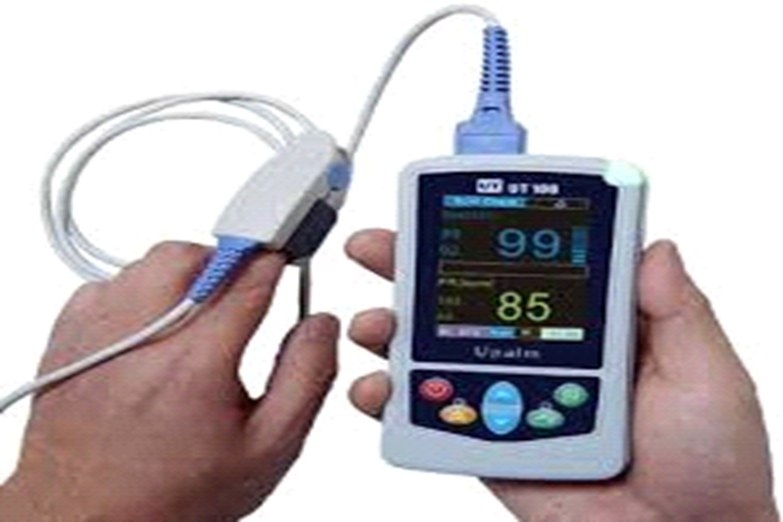
To ensure oxygen is only given to those who need it, doctors measure oxygen levels in the bloodstream using a blood test or a fingertip sensor (pulse oximetry). Once the oxygen level is determined, the pulse oximeter may be used to adjust the oxygen flow settings (the amount of oxygen a person receives per minute) over time.
Thus, oxygen therapy is used as a medical intervention to treat a range of both chronic and acute conditions.
Signs of Oxygen Deficiency in the Blood:
- Shortness of breath
- Increased blood pressure
- Changes in heart rate and irregularities
- Cyanosis (bluish discoloration) – a late sign of oxygen deficiency
- Profuse sweating and cold extremities
- Changes in mental status, ranging from agitation to confusion, drowsiness, and coma
Indications for Use:
- Hypoxia (low oxygen in the blood)
- Increased oxygen requirements, as seen in asthma and anemia
- Cardiac muscle strain
- Anesthesia
- Heart failure
- Chronic obstructive pulmonary disease (COPD)
- Shortness of breath
- Asthma
- Pneumonia
- Sleep apnea
- Any medical procedure that causes oxygen deficiency, potentially depriving tissues of adequate oxygen supply.
Purpose of Oxygen Therapy:
The goal of oxygen therapy is to prevent or treat low oxygen levels in the body’s tissues. Oxygen is considered a medication and should only be administered under a doctor’s order, except in emergency situations.
Oxygen Toxicity:
Oxygen is a medication and can cause severe side effects, with oxygen toxicity being one of the most dangerous when high concentrations (above 50%) are administered for prolonged periods.
Symptoms of Oxygen Toxicity:
- Severe pain under the sternum
- Altered sensation accompanied by discomfort
- Shortness of breath
- Fatigue and malaise
- Increased difficulty in breathing
- Increased heart rate
Additional Methods to Increase Oxygen Saturation in the Body:
- Ensuring open airways and preventing obstruction
- Improving hemoglobin levels
- Treating respiratory diseases
- Using bronchodilators to treat airway obstruction
- Clearing mucus when necessary
Methods of Oxygen Administration:
- Portable Oxygen Cylinders:
These cylinders are filled with oxygen and can be transported from one place to another.
- They are made of rust-resistant steel and are designed to withstand certain pressures for oxygen storage.
- The cylinders are equipped with a valve to control the release of oxygen.
- Centralized Oxygen System:
This system uses wall-mounted oxygen pipelines that extend throughout the hospital and connect to a central oxygen source. It features taps (outlets) for use in rooms with flow meters.
Safety Precautions for Oxygen Use:
To prevent fires and ensure patient safety, the following precautions should be followed:
- Display "No Smoking" signs in areas with oxygen cylinders or tubing.
- Do not leave matches or candles in rooms with oxygen.
- Never allow oils or greases to come into contact with oxygen equipment.
- Avoid dropping oxygen cylinders or subjecting them to impacts.
- Do not tamper with safety devices or attempt to repair oxygen equipment; this should only be done by trained personnel.
- Always close valves when cylinders are empty or not in use.
- Store oxygen cylinders in cool, well-ventilated areas, away from heat sources.
- Ensure electrical equipment used in patient rooms is safe and does not pose a risk of sparks that could ignite the oxygen.
Before administering oxygen, several assessments must be made to determine the patient's need, such as:
- Clinical evaluation
- Pulse oximetry (normal range 95–100%)
- Arterial blood gas analysis (ABG)
Methods of Oxygen Administration:
1. Low Flow Devices:
· Nasal
Cannula :
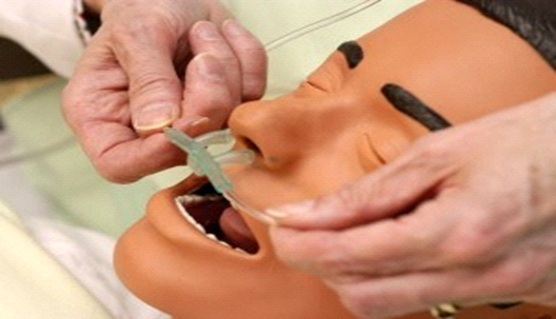
A nasal cannula is a device used to deliver oxygen through two small prongs
that are inserted into the patient's nostrils. It is commonly used for patients
who require low concentrations of oxygen and is often employed in outpatient or
home care settings. It allows the patient to talk, eat, and breathe normally
while receiving oxygen.
· Simple
Face Mask :
A simple face mask is used to deliver oxygen at a higher flow rate than a nasal
cannula. It covers the patient's nose and mouth and is typically used for
short-term oxygen therapy. It can deliver oxygen concentrations between 40-60%.
· Partial
Rebreathing Mask:
This mask is similar to a simple face mask but includes a reservoir bag. The
patient inhales both oxygen from the mask and some exhaled air, which is mixed
with oxygen from the bag. This method allows the patient to receive higher
concentrations of oxygen, typically between 60-90%.
· Non-Rebreathing
Mask :
A non-rebreathing mask has a one-way valve that prevents exhaled air from
entering the reservoir bag, thus providing a higher concentration of oxygen.
This mask is used for patients who require high concentrations of oxygen and is
commonly used in emergency situations. It can deliver oxygen at concentrations
between 70-100%.
2. High Flow Devices:
· Venturi
Mask :
A Venturi mask is a high-flow device that delivers a precise oxygen
concentration. It uses different color-coded adapters to deliver varying levels
of oxygen, ranging from 24% to 60%. It is commonly used for patients with
respiratory conditions such as COPD (Chronic Obstructive Pulmonary Disease),
where precise control of oxygen delivery is essential.
· CPAP
(Continuous Positive Airway Pressure):
CPAP is a device that delivers continuous air pressure to help keep the airways
open in patients who have sleep apnea or respiratory distress. The device
provides a steady stream of air through a mask that the patient wears over the
nose or face, ensuring that the airways do not collapse and preventing low
oxygen levels during sleep or respiratory events.
It delivers between 24% to 44% oxygen to the body:
- 1 liter per minute = 24%
- 2 liters per minute = 28%
- 3 liters per minute = 32%
- 4 liters per minute = 36%
- 5 liters per minute = 40%
- 6 liters per minute = 44%
It is used for both short-term and long-term treatment, and it is preferred for stable patients who require small amounts of oxygen.
One of its advantages is that the patient can talk and eat comfortably during treatment.
2- Simple Face Mask
- Delivers 40-60% oxygen to the body.
- It is administered at a flow rate of 5-10 liters per minute.
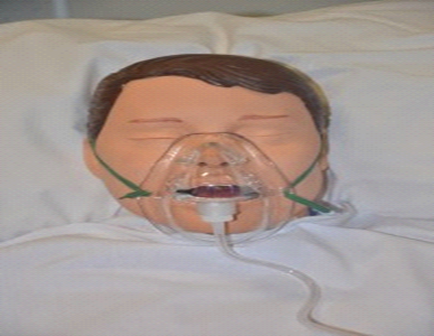
- The mask is placed around the mouth and nose and contains small openings on the sides that allow the patient to expel carbon dioxide. These openings must always be kept open.
The mask includes a metal strip over the nose to ensure a secure fit and proper sealing.
The effectiveness of the mask depends on how well it fits on the patient’s face and the patient’s oxygen needs.
Note:
There may be dryness in the nasal passages if the flow rate exceeds 4 liters
per minute.
3-Partial Rebreather Mask
- Delivers 60-80% oxygen to the body.
- Administered at a flow rate of 10-15 liters per minute.
Used for a short period in patients who require a high amount of oxygen.
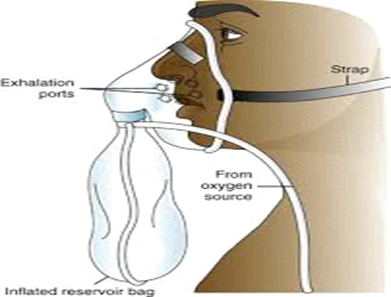
- The mask has a simple breathing mask with openings that allow external air to enter the mask.
- When inhaling, the patient breathes in air from the reservoir bag mixed with external air. During exhalation, exhaled air exits through small openings in the mask.
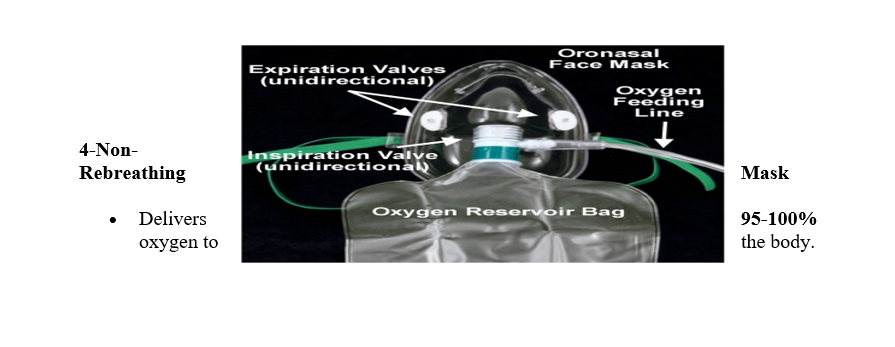
- Administered at a flow rate of 10-15 liters per minute.
The mask consists of a simple breathing mask with small openings at the edges, equipped with one-way valves that prevent external air from entering, while allowing exhaled carbon dioxide to escape. It also has a reservoir bag attached to the mask.
- When inhaling, the patient breathes in air from the reservoir bag.
Disadvantages:
- The patient is at risk of suffocation if the oxygen flow is interrupted, so the patient should never be left alone while using this mask.
This device is used by respiratory specialists for short durations and for specific purposes, especially if the patient requires a high amount of oxygen.
Second: High Flow Devices:
- Venturi Face Mask
- It allows for the delivery of oxygen at a very precise concentration and is particularly used in cases such as:
- Chronic lung diseases
- Chronic Obstructive Pulmonary Disease (COPD)
The Venturi mask is characterized by colored parts that are used to adjust the oxygen concentration level being delivered. Each colored piece represents a specific oxygen concentration as follows:
- Blue (24%) = 2 liters/minute
- White (28%) = 4 liters/minute
- Orange (31%) = 6 liters/minute
- Yellow (35%) = 8 liters/minute
- Red (40%) = 10 liters/minute
- Green (60%) = 15 liters/minute
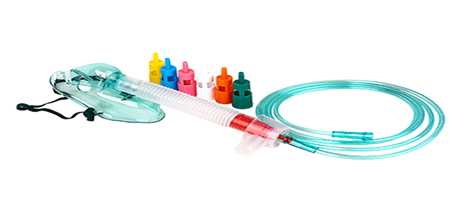
This mask allows for a steady and precise flow of oxygen, making it ideal for situations that require precise management of oxygen levels.
CPAP (Continuous Positive Airway Pressure)
CPAP is a method of providing breathing assistance by delivering air at a positive pressure, but in a non-invasive manner.
Uses:
- It is used as a method to wean patients off a mechanical ventilator.
- It is used for patients who are able to breathe voluntarily but need assistance by supplying them with pressurized air.
Oxygen Humidifier:
Oxygen is a dry gas and must be humidified before it enters the lungs and the mucous membranes lining the lungs. The humidification device consists of a glass container with a lid that has a seal to prevent leakage. It can be connected to an oxygen regulator. A metal tube extends from the lid into the bottle to maintain a low water level inside.
The humidifier helps ensure that the oxygen delivered to the patient does not dry out the respiratory passages and provides comfort during oxygen therapy.
Nurse's Duties When Administering Oxygen to a Patient:
• Administer oxygen as per the doctor's instructions,
including the prescribed oxygen flow rate and method of administration.
• Monitor vital signs every two hours (respiratory rate).
• Ensure that the oxygen connection to the oxygen source is not tightened or
obstructed.
• Ensure the distilled water level in the humidifier is between the indicated
levels.
• Observe for signs of inflammation at the points of contact between the tube
and the nostrils or the mask and the skin.
• Ensure the tube is not blocked with mucus and clean it as needed, or dry the
mask every two hours, while also maintaining oral and nasal care.
• Perform breathing exercises for the patient every two hours unless
contraindicated by the doctor.
• Provide chest physical therapy every two hours.
• Suction chest secretions every two hours or as required by the patient's
condition.
• Position the patient in a semi-sitting or prone position as per the doctor's
instructions.
- References
- Internal Department Operational Work Guide