Common Respiratory Problems in Newborns
| Site: | EHC | Egyptian Health Council |
| Course: | دلائل الاجراءات التمريضية لقسم حديث الولاده |
| Book: | Common Respiratory Problems in Newborns |
| Printed by: | Guest user |
| Date: | Sunday, 20 September 2026, 5:04 PM |
Description
"last update: 6 February 2025" تحميل الدليل
- Prepared by
NICU guide
Under supervision
- Prof. Dr. Mohamed Latif, CEO of the Egyptian Health Council
Dr. Kawthar Mahmoud, Head of the Egyptian Nursing Syndicate - Member of the Senate
Prepared by
|
Title |
Name |
NO. |
|
Dean Of Faculty Nursing, Professor of Medical and Surgical Nursing, Tanta University |
Dr Afaf Abdel Aziz Abdel Aziz Basal |
1 |
|
Professor Of Critical Care Nursing |
Prof.Dr/Zeinab Hussain Ali |
2 |
|
Professor And Head of the Department of Medical Surgical Nursing. Faculty-. Benha University |
Amal Said Taha Refaie |
3 |
|
Supervisor Of the Education Sector at Port Said University |
Amal Ahmed Khalil Morsy |
4 |
|
Professor Of Medical Surgical Nursing- Faculty of Nursing- Cairo University |
Dr. Hanan Ahmed Al Sebaee |
5 |
|
Head of central administration on secondment at MOHP |
Dr Neveen ab drab al0nabi Mohamed |
6 |
|
Director Of Primary Health Care Nursing Department at MOHP. |
Maysa Hosny Ahmed Tammam |
7 |
|
Supervisor Of Technical Education- EHA |
Nancy Alaa Eldeen Abd-Elbaset Ali |
8 |
|
Supervisor Of Nursing Services Development- EHA |
Sherien Mohamed Saad |
9 |
|
Assistant Professor of Maternity and Neonatal Health Nursing - Faculty of Nursing- Ain Shams University |
Assist.Perof. Dr./Heba Mahmoud Mohammed |
10 |
|
General manager of general administration of health institutes affairs |
Dr Mai Galal Ibrahim Al-Assal |
11 |
|
Participants |
||
|
Professor of Obstetrics and Gynecology Nursing |
Dr. Nagat Salah Shalabi Salama |
12 |
|
member of the Nursing administration at EHA, port said branch |
Mrs. Shaima Abdel Basset Ibrahim Salim |
13 |
|
member of the Nursing administration at EHA, port said branch |
Mrs. Hoda Al-Sayd Muhammad |
14 |
|
member of the Nursing administration at EHA, port said branch |
Mrs. Walaa Ahmed Ali |
15 |
|
member of the Nursing administration at EHA, port said branch |
Mrs. Omnia Abdel Qader Muhammad |
16 |
|
member of the Nursing administration at EHA- South Sinai branch |
Mrs. Yasser Abdel Karim Omar Abdel Jawad |
17 |
- Neonatal Apnea
Neonatal apnea is defined as a cessation of breathing for more than 20 seconds, accompanied by a heart rate drop below 100 beats per minute, cyanosis, and reduced blood oxygen saturation. Apneic episodes are more frequent in preterm infants.
Types of Apnea:
- Obstructive Apnea: Caused by airway blockage due to improper positioning, weak pharyngeal muscles, or tissue inflammation.
- Central Apnea: Due to an immature nervous system, commonly seen in preterm infants.
- Mixed Apnea: A combination of both obstructive and central apnea.
Causes of Apnea:
- Congenital heart defects
- Infections and sepsis
- Birth asphyxia and intracranial hemorrhage
- Hypoxia
- Hypoglycemia
- Anemia
- Gastroesophageal reflux
- Hypothermia or hyperthermia
- Sedative medications transferred from the mother through the placenta
Nursing Care:
- Continuous monitoring of vital signs and oxygen saturation using a monitor
- Maintaining the infant’s body temperature
- Keeping the airway open by positioning the baby correctly (placing a small towel under the shoulders while lying on the back)
- Documenting apnea episodes, including duration, symptoms, and the baby’s response to interventions (e.g., tactile stimulation, oxygen administration, repositioning, airway suctioning, or using an ambu bag)
- Administering medications such as caffeine or theophylline as prescribed to reduce apnea episodes
- Neonatal Respiratory Distress
Respiratory distress is a common issue requiring neonatal intensive care unit (NICU) admission and is a leading cause of neonatal mortality. The causes may be related to respiratory or non-respiratory conditions.
Causes of Respiratory Distress in Newborns:
A) Respiratory Causes:
- Hyaline Membrane Disease (HMD) – seen in preterm infants
- Transient Tachypnea of the Newborn (TTN)
- Meconium Aspiration Syndrome (MAS)
- Neonatal Pneumonia
- Pneumothorax (Air leakage in the pleural space)
- Pulmonary Hemorrhage
B) Non-Respiratory Causes:
- Congenital heart defects
- Persistent pulmonary hypertension of the newborn (PPHN)
- Birth asphyxia and intracranial hemorrhage
- Diaphragmatic hernia
- Hypoglycemia
- Acidosis
- Temperature instability
- Sepsis
- Blood disorders such as anemia
Nurse’s Assessment:
- History Collection:
- Gestational age
- Mode of delivery (normal or cesarean)
- History of previous siblings with respiratory distress
- Maternal conditions (diabetes, hypertension, infections)
- Presence of meconium-stained amniotic fluid
- Physical Examination:
- Signs of Respiratory Distress:
- Rapid breathing (≥60 breaths per minute)
- Retractions (chest pulling inward during breathing)
- Grunting sounds during exhalation
- Cyanosis or pale, mottled skin
Downs' Score for Assessing Respiratory Distress:
|
Interpretation:
- Score < 4: No respiratory distress
- Score 4-7: Mild to moderate respiratory distress
- Score > 7: Severe respiratory failure requiring arterial blood gas analysis and possible mechanical ventilation
Required Tests:
- Chest X-ray
- Arterial blood gas analysis
- Complete blood count
- Blood culture
Treatment:
- Oxygen therapy
- Continuous Positive Airway Pressure (CPAP)
- Mechanical ventilation if necessary
- Surfactant therapy as prescribed
- Intravenous antibiotics if sepsis is suspected
- IV fluids or total parenteral nutrition
Nursing Care:
- Continuous monitoring of vital signs and oxygen saturation
- Maintaining proper body temperature
- Keeping the airway open (correct positioning with a small towel under the shoulders)
- Evaluating breath sounds and chest movements
- Administering oxygen as per medical instructions (maintaining SpO₂ at 89-93%)
- Suctioning secretions when needed and documenting their characteristics (color, amount, viscosity)
- Monitoring blood glucose levels
- Preparing IV fluids as needed
- Keeping emergency equipment ready (oxygen source, ambu bag, laryngoscope, endotracheal tubes, suction device)
- Neonatal Asphyxia
Neonatal asphyxia occurs when oxygen supply to the brain and body tissues is insufficient due to impaired gas exchange in the placenta or lungs during birth. Affected newborns may exhibit:
- Acidosis (pH < 7.45)
- Low Apgar score (<3 at 5 minutes post-birth)
- Seizures
- Multiple organ dysfunction
Severe birth asphyxia can lead to brain damage, cerebral palsy, intellectual disability, or even death. Immediate neonatal resuscitation is crucial to minimize complications.
Causes of Neonatal Asphyxia:
- Maternal Causes During Pregnancy or Labor:
- Placental insufficiency (e.g., placental abruption, abnormal placental position)
- Umbilical cord problems (e.g., cord prolapse, cord compression, nuchal cord)
- Uterine rupture
- Prolonged or difficult labor
- Maternal hypoxia due to heart, lung, or nervous system disorders
- Maternal conditions (thyroid disease, diabetes, preeclampsia, infections)
- Smoking or substance exposure during pregnancy
- Neonatal Causes:
- Prematurity
- Meconium aspiration
- Severe respiratory distress
- Cyanotic congenital heart disease
- Severe anemia (due to hemorrhage or hemolysis)
- Birth trauma
- Neonatal infections and sepsis
Neonatal Asphyxia
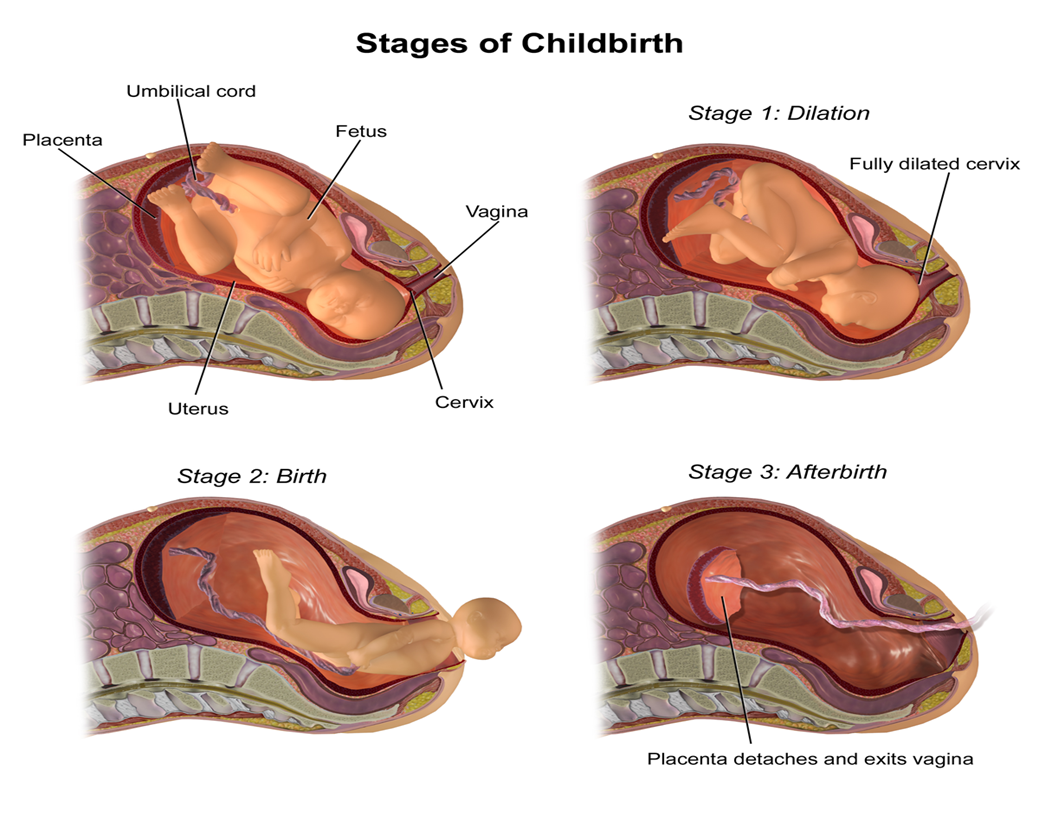
Neonatal asphyxia occurs as a result of prolonged labor, with the first and
second stages exceeding 20 hours in primigravida and more than 14 hours in
multiparous women.
Clinical Manifestations:
There are several indicators during delivery that suggest the possibility of
neonatal asphyxia, such as:
· Meconium-stained amniotic fluid
· Low Apgar score
· Cyanosis or pallor of the body
· Respiratory distress and bradycardia
· Convulsions or generalized muscular hypotonia
Grades of Neonatal Asphyxia:
First Degree – Characterized by:
· Periods of hyperalertness and irritability, with tremors or abnormal movements, either spontaneous or triggered.
· Exaggerated Moro reflex.
· Weak sucking reflex.
· Tachycardia.
· Pupil dilation.
· Absence of seizures at this stage.
· Symptoms typically resolve within 24 hours.
Second Degree – Characterized by:
· Lethargy.
· Weak Moro reflex.
· Weak or absent sucking reflex.
· Bradycardia and hypotension.
· Pupil constriction.
· Seizures occurring in 50–70% of neonates within 24 hours after birth.
Third Degree – Characterized by:
· Coma.
· Severe muscle hypotonia.
· Absence of Moro reflex.
· Loss of sucking reflex.
· Episodes of apnea.
· Persistent bradycardia and hypotension.
· Seizures are uncommon, but if present, they are usually resistant to treatment.
· Mortality rate reaches approximately 50%; survivors often suffer from serious complications.
Investigations and Laboratory Tests:
· Monitoring blood glucose levels.
· Assessing serum calcium, sodium, and magnesium levels.
· Arterial blood gas analysis.
· Complete blood count.
· Cranial ultrasound and computed tomography (CT) scan.
Management:
1. Prevention of Neonatal Asphyxia – the most effective approach, achieved through:
o Providing adequate antenatal care to identify high-risk pregnancies and manage them appropriately during the perinatal period, ensuring maternal and neonatal safety.
o Effective implementation of neonatal resuscitation protocols.
2. Supportive management for the brain and other body systems.
3. Seizure control.
4. Whole-body therapeutic hypothermia to protect the brain and minimize complications of moderate to severe hypoxic-ischemic encephalopathy, achieved by reducing the infant’s core body temperature.
Nursing Care:
· Ensuring airway patency at all times by maintaining proper positioning and performing suctioning when indicated.
· Maintaining the neonate’s body temperature within the normal range.
· Administering oxygen appropriately as prescribed.
· Monitoring blood glucose levels regularly.
· Preparing and administering intravenous fluids as ordered by the physician.
· Recording fluid intake and output, ensuring accurate urine measurement.
· Monitoring for seizure activity and reporting immediately to the physician if it occurs.
· Performing neurological assessments, including level of consciousness, activity, posture, muscle tone, sucking reflex, Moro reflex, heart rate, respiration, and pupillary reaction
- Meconium Aspiration
Meconium aspiration is a condition in which a newborn inhales meconium (the dark green or black stool) during or after delivery. This condition may cause respiratory complications and often requires urgent medical intervention.
Nursing Interventions include:
1. Close Monitoring: Continuous assessment of vital signs, including respiratory rate, heart rate, and oxygen saturation.
2. Clinical Evaluation: Physical examination to identify signs of respiratory distress or infection.
3. Immediate Airway Clearance: Prompt suctioning if meconium is present in the airway to facilitate clearance.
4. Oxygen Administration: Providing supplemental oxygen as needed if the newborn experiences difficulty in breathing.
5. Medical Support: Collaborating with physicians to determine appropriate interventions such as oxygen therapy or pharmacological treatment.
6. Family Education: Guiding the family on recognizing warning signs and providing instructions on proper newborn care