الارشادي لمكافحه العدوى بالعمليات
| الموقع: | EHC | Egyptian Health Council |
| المقرر الدراسي: | دلائل الاجراءات التمريضية لقسم العمليات |
| كتاب: | الارشادي لمكافحه العدوى بالعمليات |
| طبع بواسطة: | Guest user |
| التاريخ: | الأحد، 20 سبتمبر 2026، 5:06 PM |
الوصف
"last update: 4 March 2025" تحميل الدليل
- اعداد
دليل العمليات
تحت اشراف
- أ.د/ محمد لطيف الرئيس التنفيذي للمجلس الصحي المصري - د/ كوثر محمود نقيب عام التمريض المصري – عضو مجلس الشيوخ
اعداد
م | الاسم | الوظيفة |
1 | أ.د /امل احمد خليل مرسي | نائب رئيس الجامعة لشئون التعليم والطلاب – جامعة بورسعيد |
2 | أ.د / عفاف عبد العزيز عبد العزيز بصل | عميد كلية التمريض –استاذ تمريض باطنه وجراحي جامعة طنطا |
3 | أ.د/ زينب حسين على محمد سعد | وكيل الكلية لشئون البيئة وخدمة المجتمع – كلية التمريض – جامعه حلوان |
4 | أ.د/ امل سعيد طه رفاعي | أستاذ ورئيس قسم التمريض الباطني الجراحي – جامعة بنها |
5 | أ.د/ حنان احمد السباعي على | استاذ التمريض التمريض الباطني الجراحي- كلية التمريض – جامعة القاهرة |
6 | د /نيفين عبدربه النبي محمد عبد النبي | رئيس الإدارة المركزية ندباَ –وزاره الصحة |
7 | د /مايسة حسني احمد تمام | مدير عام للإدارة ندباَ – وزاره الصحة |
8 | د /نانسي علاء الدين عبد الباسط على | المشرف على التعليم الفني- الهيئة العامة للرعاية الصحية |
9 | د/ شيرين محمد محمد سعدالدين | المشرف على تطوير الخدمات التمريضية –الهيئة العامة للرعاية الصحية |
10 | د/ مى محمود العسال | مدير عام الإدارة العامة لشئون المعاهد الفنية الصحية |
11 | أ.م.د/ هبة محمود محمد | أستاذ مساعد تمريض صحة الام وحديثي الولادة –كلية التمريض - جامعة عين شمس |
المشاركين | ||
12 | /أأدهم عبد الناصر عكاشة | عضو إدارة التمريض بالهيئة العامة للرعاية الصحية |
13 | /أجهاد أكرم حسين | عضو إدارة التمريض بالهيئة العامة للرعاية الصحية فرع الأقصر |
- الإجراءات القياسية لمكافحة العدوى بوحدة العمليات
مقدمه :
ان العدوى موضع الجراحه المقصود بعا العدوى التى تحدث فى مكان اجراء الجراحه فى جسم المريض هى احدى انواع العدوى الشائعه المرتبطه بالرعايه الصحيه وتسبب هذه العدوى نسبه كبيره من المضاعفات وهناك العديد من العوامل التى تتسبب فى حدوث هذه العدوى والتى عندما تحدث بشكل عميق فى مكان التدخل الجراحى فانها قد تتسبب فى حالات الوفاةهوغالبا ما يحدث دخول الميكروبات المسببه للامراض الى موضع الجراحه اثناء الاجراء الجراحى داخل غرفه العمليات ولذا فانه ينبغى للحد من مخاطر العدوى فى موضع الجراحه تطبيق برنامج وقائى محدد مع ادراك ان هذه المخاطر تتاثر بحاله المريض وقت اجراء الجراحه ونوع لعمليات والعاملين والمنشاه الصحيه.
مصادر عدوى المواضع الجراحيه :
1-مصادر داخليه :
تاتى الميكروبات المسببه لاغلب حالات عدوى موضع الجراحه من البكتريا المستعمره لبشره المريض او الاغشيه المخاطيه او الامعاء ( الفلورا الطبيعيه) وعندما يحدث قطع فى الجلد او الغشاء المخاطى فان الانسجه تكون معرضه لخطر التلوث بهذه البكتريا وعاده ما تكون هذه البكتريا من المكورات الهوائيه موجبه الاستجابه لصبغه جرام (مثل البكتريا العنقوديه ) ولكنها قد تشمل البكتريا المستعمره للبراز (كالبكتريا اللاهوائيه والبكتريا الهوائيه سالبه الاستجابه لصبغه جرام) وذلك عندما تحدث الجروح بالقرب من الشرج او الفخذ وفى عمليات الجهاز الهضمى تكون العصيات سالبه الاستجابه لصبغه جرام مثل المكورات المعويه احيانا البكتريا اللاهوائيه مثل العصويه الهشه عاده هى التى يتم عزلها من عدوى المواضع الجراحيه .
2-مصادر خارجيه :
وتشمل العاملين بالجراحه (خاصه اعضاء فريق لجراحه) وبيئه غرفه العمليات وجميع الادوات والاجهزه والمواد التى تدخل المجال اثاء اجراء الجراحه وغالبا ما تحدث العدوى من بكتريا هوائيه لاسيما موجبه الاستجابه لصبغه جرام
ولذا يجب لمنع عدوى موضع الجراحه :
◀️ -التقليل او الحد من التلوث الميكروبى لانسجه المريض او ادوات الجراحه المعقمه
◀️ -استخدام المضادات الحيويه الوقائيه قبل اجراء الجراحه
◀️ -الاسلوب الجراحى السليم
◀️ -نظام التهويه المناسب لغرفه العمليات .....................الخ
◀️ ويعتبر التحكم فى العدوى الخاص بالجراحه كتحضير المريض وتطهير الجلد وفريق الرعايه والتوقيت الملائم للمضادات الحيويه الوقائيه واعداد غرفه العمليات اسهل اذا تم مقارنته بالتحكم فى عوامل الخطوره لدى المريض .
التحكم فى البيئه داخل جناح العمليات :
توفير بيئه امنه فى جناح العمليات :
◀️ يجب ان تخصص غرف محدده لتنفيذ التدخلات الجراحيه والطبيه وتخصيص غرف للاسخدمات الاخرى كما يجب التحكم فى اتجاهات السير والحركه والانشطه فى تلك امناطق
◀️ موقع جناح العمليات
◀️ يجب ان توجد اجنحه وغرف العمليات فى اماكن معده خصيصا لهذا الغرض
◀️ يجب ان تقع هذه الاجنحه بحيث يسهل الوصول اليها من اقسام الجراحه وقسم الحوادث والطوارى وبحيث تنفصل عن مسار الحركه الرئيس بالمستشفى والطرقات الرئيسيه فى نفس الوقت
◀️ يجب ان تكون الارضيات والحوائط مضاده للاستاتيكيه او مضاده للاستاتيكيه والميكروبات معا
◀️ يجب ان تكون الزوايا بين الارضيات والحوائط وبين الحوائط وبعضها مستديره (زوايا غير حاده ) مما يودى الى الحد من معدلات تراكم الاتربه والسوائل ويسمح بالتنظيف والتطهير المتكرر
◀️ يجب ان لا تكون اسقف العمليات من نوع الاسقف المعلقه واذا تعذر ذلك يجب ان تكون من الشرائح الطويله وذلك لتقليل عدد الفواصل.
درجه الحراره والرطوبه :
◀️ تلعب درجه الحراره والرطوبه دورا هاما للغايه فى توفير الشعور بالراحه للمريض وطاقم العاملين لذا يجب تنظيمها ومراقبتهما بدقه.
◀️ يجب التحكم فى درجه الرطوبه حيث يظل بين 30-60 %
◀️ يجب التحكم فى درجه الحراره والاحتفاظ بها بين درجتى 20-24 درجه مئويه ويجب ان تقل درجه حراره غرفه العمليات دلرجه مئويه وحده على الاقل عن درجه حراره الردهات الخارجيه حيث يساعد ذلك على حركه الهواء الى الخارج .
التهويه المثاليه فى غرف العمليات :
◀️ التهويه موجبه الضغط.
◀️ ينبغى المحافظه على التهويه موجبه الضغط فى غرفه العمليات مقارنه بما يتصل بها من ردهات ومناطق مجاوره وينبغى ان يتوافق عدد غرف العمليات المزوده بوحدات معالجه الهواء مع العد الذى حددته الشركه المصنعه لوحدات معالجه الهواء وينبغى كذلك القيام بالصيانه الدوريه لوحدات معالجه الهواء ( من فلاتر وغيرها)
◀️ كما يجب ان يتم تسجيل درجه الحراره والرطوبه والضغط قبل بدء كل عمليه جراحيه فى سجل خاص بذلك
المعايير الواجب توافرها ان امكن بناءا على الموارد المتاحه هى :-
◀️ معدل تغيير الهواء: تغيير الهواء من 15-20 مره فى الساعه على ان تكون ثلاث مرات منها على الاقل بها هواء متجدد من الخارج ومفلتر
◀️ تنقيه الهواء : ترشيح الهواء بمرشحات عاليه الكفاءه خاصه فى حالات زرع النخاع والاعضاء وعمليات المخ والاعصاب وبعض عمليات العظام
◀️ التزويد بالهواء : ينبغى التاكد من وجود اتجاه واحد لدخول وخروج الهواء على ان تكون فتحات اخراج الهواء على بعد 20-30 سنتيمتر من الارض مع مرعاه عدم وجود الاثات او الاشياء القابله للتحريك امام فتحات اخراج الهواء حيث تعمل على منع الهواء من الدوران فى غرفه العمليات ومن ثم ينبغى التقليل منها .
◀️ يجب ان يكون فى مدخل كل غرفه عمليات موشرات لقياس الضغط والحراره والرطوبه داخل الغرفه
◀️ الابواب : يجب ان تكون ابواب غرف العمليات ذاتيه الغلق .
◀️ حركه السير : يقتصر دخول غرفه العمليات على الاشخاص اللازم وجودهم فى الاجراء الجراحى حيث تزداد نسبه الميكروبات بزياده عدد الاشخاص الذين يتحركون فى غرفه العمليات .
الوقايه من العدوى داخل غرف العمليات :
◀️ تتحقق الوقايه من العدوى داخل غرفه العمليات من خلال الاتباع الدقيق للاساليب المانعه للتلوث
◀️ غسل اليدين المناسب لطبيعه الاجراء
◀️ استخدام ادوات الوقايه الشخصيه المناسبه لطبيعه الاجراء
◀️ عزل موضع اجراء الجراحه عما يحيط به من بيئه غير معقمه
◀️ خلق مجال معقم والابقاء عليه معقما طول فتره الجراحه.
أولا : العناية باليدين قبل إجراء العمليات الجراحية
إن غسل فريق الجراحة لأيديهم يعد احد أكثر الطرق فعاليه لتقليل مخاطر العدوي.
ثانيا : ادوات الوقاية الشخصية المستخدمة فى غرف العمليات
يققل استخدام الواقيات الشخصية من تعرض المريض الى مكروبات التى تتساقط من الجلد او الاغشية المخاطية او شعر اعضاء فريق الجراحة كما أنه يحمى اعضاء طاقم الجراحة من التعرض للدم وسوائل الجسم الاخرى .
واقيات القدم : يجب على العاملين الالتزام بارتداء واقيات الاقدام ( أحزية برقبه ذات طول مناسب أو سابوه ) لحماية الاقدام من التعرض للسوائل و الادوات الحادة.
أغطية رأس : يجب تغطية الرأس تماما باستخدام اغطية وحيدة الاستخدام , فهذه الاغطية تقلل من التلوث فى منطقة اجراء الجراحات والذى قد ينتج عن المكربات الموجودة بالشعر والخلايا البشرية المتساقطة من فروة الرأس
يجب إرتداء أغطية الشعر أولا , حتى لا تسقط الشعيرات فوق الملابس النظيفة الخاصة بغرفة العمليات.
الاقنعة الجراحية القياسية :
◀️ يجب ان تغطى تلك الاقنعة الانف والفم طول وقت العمل ولا يجوز ارتدائها مطلقا حتى الانف والفم او وضعها فى الجيوب لإعادة استعمالها
◀️ يجب تقدير الاقنعة بصفة مستمرة اذا تعرضت للرطوبة والبلل , كما يجب تغيرها فيما بين الحلات المختلفة وعند الخروج من الغرفة
◀️ يجب ان تتوفر اقنعة عالية الكفائة لستخدامها اثناء العمليات الجراحية الخاصة بالمرضى المحتمل او المؤكد اصابتهم بالعدوى الميكروبيه التى تنتقل عبر الهواء ( مثل البكتريا المسببه لمرض الدرن ,)
◀️ يجب استخدام اقنعة جراحية خاصة لمقدمى الخدمة ذوى اللحى .
واقيات العين والوجه : ينبغى ارتداء واقيات العين ( النظرات الواقيه للعينين ) او العين والوجه ( واقى الوجه ) لحماية عين وانف وفم فريق العمل عندما يكون تناثر رزاز الدم وسوائل الجسم الاخرى حدثا متوقعا .
العباءة الجراحية ( الجاون ) : العباءة الجراحية المعقمه المصنوعة من قماش غير منفذ للسوائل تحول دون تلوث ساعد او صدر او ملابس اى فرد من افراد فريق الجراحة بالدماء او سوائل الجسم الاخرى , كما انها تحد من انتقال الميكروبات من فريق الجراحة الى المرضى , ويجب ارتداء مريلة بلاستيكية احادية الاستخدام تحت الجاون اذا كان القماس المصنوع منه الجاون منفذ للسوائل .
القفازات الجراحية : يجب ان يرتدى طاقم الجراحة قفازات معقمه مناسب لمقاس اليد تماما , وذلك للحد من انتقال الميكروبات من ايدي افراد فريق العمل بالدم وسوائل الجسم الاخرى , كما يجب تغير القفازات اذا تلوثت او كان هناك شك فى سلامتها .
خطوات ارتداء القفازات الجراحية :
1. قم بغسل اليدين جراحيا , وجففهما بفوطه معقمه ثم يقوم التمريض المناولة بفتح الغلاف الخارجى لعبوة القفاز
2. افتح الغلاف الداخلى المحيط بالقفاز بحيث تكون راحة اليد بالقفاز لاعلى
3. التقط القفاز الاول من نحيت الطرف المثنى ملامسا فقط الجزء الداخلى من الطرف المثنى ( الجانب الداخلى هو الجانب الملامس للجلد عند ارتداء القفاز )
4. اثناء حمل الطرف المثنى احدى اليدين , ادخل اليد الاخرى فى القفاز ( توجيه اصابع القفاز الى الارضيه سوف يجعلها مفتوحة ) احزر ان تلامس اى شئ وجعل القفاز فوق مستوى الخصر التقط القفاز الاخر بإدخال اصابع اليد المرتديه القفاز تحت الطرف المثنى للقفاز اليد الثانية , أحزر من تلويث اليد المرتديه للقفاز باليد الاخرى
5. أدخل اليد الاخرى ( العارية ) فى القفاز عن طريق الجانب المتأنى عبر الطرف المثنى , اضبط اصابع القفاز واطرافه حتى يتناسب تماما مع اليد.
خطوات خلع القفازات الجراحية :
1. امسك القفاز بالقرب من طرفه المثنى واجزبه بعيدا عن اليد وسينقلب القفاز الى جهته الاخرى , اترك الفرده الاولى من القفاز فى اليد جزئيا قبل خلع الفردة الثانيه لحمايتك من لمس الجانب الخارجى من فردة القفاز بيدك العارية
2. امسك فردة القفاز الثانية بالقرب من طرفها المثنى واجزبها بعيدا عن اليد مع ترك القفاز الاول فوق الاصابع اترك القفاز الاخر فوق اليد جزئيا
3. اخلع القفازين فى وقت واحد بحرص واحترس من لمس اى شئ بيدك العارية الا سطح الداخلى للقفاز
4. احذر من حدوث تناثر للملوثات العالقه بالقفاز فى البيئه المحيطة اثناء خلعك للقفاز
5. تخلص من القفازات على الفور فى سلة النفايات الخطرة , أغسل اليدين فور خلع القفاز
توفير مجال معقم والحفاظ عليه :
يجب توفير مجال معقم والحفاظ عليه للحد من مخاطر تلوث موضوع اجراء الجراحة 0 ويتحقق ذلك عن طريق وضع فوط معقمه غير منفذ للسوائل ( او استخدام المواد العازلة اللاصقة البلستيكية الشفافة المعقمه المخصصة لهذا الغرض ) حول موضوع اجراء العملية 0 ويجب فرش المريض بالكامل بحيث يكون المكان الوحيد غير المغطى هو المكان قطع الجراحى
يمكن الحفاظ على مجال معقم عن طريق :
◀️ يجب وضع الالات والادوات المعقمة فقط داخل المجال المعقم
◀️ فتح الادوات المعقمه وتوزيعها ونقلها دون تلوثها
◀️ اعتبار كل ما يقع اسفل مستوى المريض المغطى للمفارش ا لمعقمه غير معقمه ( خارج مجال المعقم )
◀️ عدم السماح للاشخاص غير المشاركين فى الجراحة باختراق المجال المعقم اة لمس الادوات المعقمه
◀️ يحظر لمس المنطقة المعقمة من الجاون المواجهة للمجال المعقم عند ارتداء وتمتد هذه المنطقة من الصدر الى مستوى الخصر والاكمام لمسافة 5سم فوق المرفق الى الطرف المطوق للرسخ ( الاسورة ) ولا تعتبر مناطق الرقبة والكتاف والظهر ضمن المجال المعقم وتجب مراعاة وضع الجسم لحركته فى كل وقت داخل حول المجال المعقم بالطريق التى تحافظ التعقيم ويمنع منعا بتا وضع السوائل المطهرة او اى نوع اخر من السوائل على ترابيزة الالات .
◀️ عند الشك فى سلامة الادوات والمستلزمات المعقمه تعتبر ملوثة ولا يتم استخدامها .
المطهرات الخاصة بإعداد جلد المريض وايد العاملين قبل الاجراء الجراحى :
هى مواد توقف نمو او عمل الميكروبات , سواء عن طريق ايقاف نشاطها او تدميرها , وتستخدم موضوعيا على الانسجه الحية وليس المقصود تلك المطهرات التى تستخدم لتطهير الاشياء غير الحاجة كالادوات والاسطح .
تعليمات حول استخدام المطهرات :
· يجب وضع كميه مناسبة من المطهر داخل الجفنه المعقمه ثم يتم التخلص من المطهر غير المستخدم المتبقي بعد اعداد المريض
· اذا كانت المطهرات تورد في حاويات كبيرة فينبغى اخذ كمية قليلة منها تكفى لاستخدام نوبة عمل واحدة فى حاوية اصغر ذات غطاء محكم
· فى نهاية نوبة العمل ، يجب التخلص من المطهرات المتبقية ويجب ان يتم اعادة معالجة الاوعية الخاصة بها قبل استعمالها مرة أخرى
· يحظر ترك المطهرات فى أوان مفتوحة
الصيانة فى غرفة العمليات :
◀️ يجب فحص الاجهزة والمعدات أسبوعيا او طبقا لشروط عقد الصيانة
◀️ يجب فحص نظام التهوية ( مثل : العلاقة بين الضغوط , عمليات تغير الهواء / ساعة ) دوريا ويجب تغيير الفلاتر عند اللزوم وطبقا لتعليمات الشركة المصنعة
◀️ يجب ابلاغ فريق مكافحة العدوى عند فصل نظام التهوية اثناء صيانة النظام او اصلاح الاعطال
◀️ ينبغى على فريق مكافحة العدوى لتعاون مع مهندسى الوحدة المساعدة فى تحديد الحاجة الى الرقابة البيئية المطلوبة عند اعادة تركيب نظام التهوية
◀️ ينبغى فحص الفلاتر عمليات تغير الهواء قبل استخدام غرفة العمليات بعد فترة انقطاع العمل
أخذ عينات من غرفة العمليات :
لا ينصح بان تؤخذ عينات من الهواء او أسطح غرفة العمليات بشكل روتينى
ينبغى ان تؤخذ العينات فى حالات تفشى العدوى او بعد التغير ف نظام التهوية ( مثل : تركيب وحدة معالجة هواء جديدة ) او بعد انشاء غرف جديدة او اجراء اى تطوير فى البنيه الاساسية
عمليات تغير وفحص تيارات الهواء :
يجب القيام بإختبارات ( مثل : اختبار الدخان وغيره ) للتأكد من حركة تيارات الهواء وكذلك يجب التأكد من أن المرشحات الجديدة لن تقلل من معدلات تغير الهواء ويجب تصحيح اى اختلاف فى هذه المعدلات على الفور مع تسجيل وتوثيق ذلك .
- غسيل الأيدى
( غسل اليدين الجراحي )
الهدف من غسيل اليدين هو :
الجو الرطب الدافئ داخل القفاز الجراحي يساعد على النمو السريع للميكروبات على الأيدي داخل القفاز . ولذلك عملية الغسيل الجراحي باستخدام مطهر قبل بدء الإجراء الجراحي تساعد على منع هذا النمو السريع للميكروبات لفترة من الوقت مما يقلل من مخاطر حدوث عدوى للمرضى في حالة حدوث ثقب أو تهتك للقفاز في أثناء العملية .
غسيل الأيدى جراحياً :
1- يجب عدم لبس الخواتم أو الأساور أو الساعة في وحدة العمليات والجراحة .
2- يجب ألا تطال الأظافر .
3- يجب ألا تكون مدهونة بطلاء أظافر .
4- يجب عدم وجود أي أظافر صناعية .
5- يفضل أن يتم غسيل الأيدي بين كل عملية وأخرى ولكن يمكن استخدام 3-5 مم من الكحول
( Alcohol hand rub ) بين العمليات وتدعك به الأيدي جيداً حتى يجف وذلك عندما يكون هناك ضغط عمليات كثيرة وراء بعضها لمنع التهابات الجلد نتيجة لاستخدام البيتادين كثيراً .
6- يستخدم البيتادين في غسيل الأيدي جراحياً ولكن الأحدث الآن هو غسيل الأيدي بالماء الدافئ والصابون السائل ثم الدعك بالكحول ( Alcohol hand rub ) .
7- دائماً ترفع الأيدي فوق مستوى الكوع حتى ينساب الماء من الأيدي ( الأقل تلوث ) إلى الأذرع (الأكثر تلوث ) .
الدراسات الحديثة أوضحت أن استخدام الفرشاة الناعمة في دعك الأيدي لا يؤثر على تقليل الميكروبات أكثر بل على العكس قد يؤدي إلى تشققات وجروح دقيقة وتهيج للجلد مما يؤدي نتيجة عكسية .
متى يتم الغسيل الجراحى :
⬅️ قبل التدخلات الجراحية.
⬅️ قبل تركيب القساطر البولية.
⬅️ قبل تركيب قسطرة وريد مركزية.
⬅️ قبل الغيار على الجروح العميقة والحروق.
خطوات دلك اليدين بالكحول استعداداً للتدخل الجراحي :
⬅️ قبل القيام بأول تطهير لليدين يجب غسلهما جيداً باستخدام الصابون العادي بنفس الطريقة و الخطوات السابقة.
⬅️ التأكد من تجفيف اليدين جيداً ثم صب حوالي 5 ملل من الكحول في أحد الكفين.
⬅️ دلك الأيدي بالكحول والتأكد من وصوله إلى المناطق الموجودة أسفل الأظافر وأعلى الساعد.
⬅️ كرر الإجراء على اليد والساعد الآخر.
خطوات غسيل الإيدى الجراحي
1. اخلع جميع الحلي باليدين أو المعصمين.
2. بلل اليدين والساعدين تماماً إلى أعلى مستوى المرفق.
3. نظف أسفل كل ظفر من الأظافر وحول قاعدته، يحظر استخدام الفرشاة الخشنة لتنظيف الأظافر حيث أنها تتسيب في التهايات الجلد مما يساعد على انتقال العدوى.
4. ضع مادة مطهرة مما سبق ذكره على اليدين والساعدين إلى المرفق مع رفع اليدين إلى أعلى فوق مستوى المرفق وبحركة دائرية، ابدا عند أطراف الأصابع فى إحدى اليدين ورغي ثم اغسل بين الأصابع واستمر من أطراف الأصابع إلى المرفق. كرر هذه العملية باليد والذراع الأخريين. واصل الغسل لمدة ٥ دقائق على الأقل قبل أول عملية في اليوم ولمدة ٥ - ٢ دقائق على الأقل قبل العمليات التالية.
5. اشطف كل ذراع على حدة بدءا بأطراف الأصابع مع رفع اليدين أعلى مستوى المرفق.
6. استخدم منشفة معقمة للتجفيف. استخدم أحد جانبي المنشفة تجفيف إحدى اليدين والجالب الآخر من المنشفة لتجفيف اليد الأخرى.
7. اجعل اليدين فوق مستوى الخصر ولا تلمس أي شئ قبل ليس الرداء المعقم والقنارات الخاصة بالجراحة
" التنظيف " أو "التنظيف والتطهير" أو التنظيف والتعقيم" حسب نوع الأداء أو الآلة
المستخدمة وكيفية الاستخدام.
• التنظيف (Cleaning) : هو الخطوة الجوهرية الأولى التى يتم تنفيذها عند إعادة معالجة الأدوات • و تشتمل عملية التنظيف على مادة منظفة أو سائل إنزيمي للتخلص من المواد العالقة (مثل الأترية والمواد العضوية والميكروبات).
• التطهير (Disinfection) : أي صلية كيميائية أو فيزيانية تقلل الحمل الحيوي (عدد الكائنات الحية الدقيقة) إلى الحد الذي يصبح التعامل مع ما تم تطهيره أمناً.
• المادة المطهرة (Disinfectant) : هي عامل كيميائي في أغلب الأحيان وقد يكون عاملاً فيزيائياً (مثل الحرارة أو أشعة إكس أو الأشعة فوق البنفسجية) حيث تعمل هذه المواد على قتل كافة الميكروبات، إلا أنها قد تعجز عن قتل كل الحريصلات البكتيرية.
يستخدم التطهير الكيميائي إذا كان التطهير باستخدام الحرارة غير مناسب بسبب إمكانية تعرض المعدات للتلف عن طريق الحرارة ، وهناك مجموعة كبيرة من المطهرات الكيميائية ذات انشطة مختلفة في مقاومة الميكروبات. ومن المدير بالذكر أنه يجب التفرقة بين تلك المطهرات المستخدمة لتطهير الجوامد والأجسام الصلبة (Disinfectants) مثل الآلات والمعدات عن تلك التي يتم استخدامها في معالجة الأنسجة الحية والقضاء على الميكروبات . (Antiseptics) الموجودة على الجلد
ونظراً لاتساع قاعدة المطهرات فإنه يمكن تقسيمها وفقاً لنشاطها في مقاومة الميكرويات إلى ثلاثة أقسام: مطهرات ذات مستوى مرتفع ومطهرات ذات مستوى متوسط ومطهرات ذات بستوى منخفض،
• المطهر المنخفض المستوى ("Low level disinfectant "LLD) : هو العامل الذي يتسنى من خلاله القضاء على كافة البكتيريا الحية المتكاثرة غير المتحوصلة" (ما عدا البكتيريا المسبية للدرن) والفيروسات الدهنية وبعض الفيروسات غير الدهنية.
وبعض الفطريات.
: (Intermediate Level Disinfectant "ILD") المطهر ذو المستوى المتوسط •
هو عامل يمكن من خلاله القضاء على البكتيريا الحية المتكاترة متضمنة البكتيريا المسيبة المدرن ، والفيروسات الدهنية وبعض الفيروسات غير الدهنية والحويصلات الفطرية ، إلا أنه ليس فعالاً في القضاء على الحويصلات البكتيرية.
• المطهر ذو المستوى المرتقع ("High Level Disinfoctant "HLD) : يعرف
المطهر ذو المستوى المرتفع بأنه المادة التي يتسنى من خلالها القضاء على بعض
الحويصلات اليكتيرية حينما يتم استخدامه بتركيز مناسب وتحت درجة حرارة مناسبة ولعدة زمنية معددة وفي ظل الظروف المناسبة ، ومن المتوقع أن يكون لهذا العطير نو المستوى المرتفع أثراً بالغا فى مقاومة البكتيريا الحية المتكائرة غير المتحوصلة والفطريات والغيروسات كما يعمل على قتل عصيات البكتيريا العسبية لعرض الدرن .
لكن ميرز قصور هذا النوع من المطهرات في القضاء على اعداد كبيرة من الحريصلات ليكتيرية.
• الفيروس الدهني (Lipid Virus) : هو الغيروس الذي تحاط مادته الوراثية بطبقة من البروتين أو البروتين الدهني. ويمكن بسهولة أن يتم تقليل نشاط الغيروسات التي تتدرج تحت هذه الفئة من الغيروسات مثل فيروس العوز المناعي البشري (HIV) والالتهاب الكيدي الغيروسى بي" ، لسى" باستخدام الأنواع المختلفة من المطهرات بما في ذلك المطهرات ذات المستوى المنخفض ، وتعرف هذه الفيروسات أيضاً باسم الغروسات المغلقة،
• الفيزوس غير الدهني (Non-Lipid Virus) : هو الفيروس الذي لا يحاط الحمض النووي له بطبقة دهنية • وتتصف هذه الفيروسات بشكل عام بمقاومتها الشديدة لتأثير المطهرات حيث يصعب تقليل نشاطها ، وتسمى هذه القيروسات أيضاً باسم الفيروسات لممتصة للماء مثل فيروس الكوكساكي (coxsackie) ومجموعة الإنتير وفيرس
(Enteroviruses)
⁃ مولدات الحمى (Pyrogens) : هى المواد المسيبة للحمى مثل السعوم الداخلية الناتجة من الأعشية الخارجية للبكتيريا السالبة لصيغة حرام.
• تصنيف سبولدينج (Spaulding Classification) : الاستراتيجية التي وضعه د / لبرل اتش سبولديتج لإعادة معالجة الأدوات والآلات الطبية الملوثة.
وتنقسم الأدوات الطبية في طل هذا التصنيف إلى أدوات عالية الخطورة ومتوسطة الخطورة وقليلة الخطورة بناء على درجة الخطورة التي يتعرض لها المريض من الأداء الملوثة . ومن ثم فقد تم تطبيق ثلاثث طرق لإعادة المعائحة وفقاً لهذه الخطورة ، فعلى سبيل المثال، تعد الأداء التى يتم استخدامها في اختراق الأنسجة عالية الخطورة ومن ثم يتبغي أن يتم تنظيفها ثم تعقيمها، كذلك تحتاج الأداء التي تلامس الأغشية المخاملية إلى القيام يتنظيعها ثم تطبيرها بعادة مطهرة ذات مستوى عالي من الكفاءة إذا كانت لا تتحمل الحرارة العالية، وأما الأداء التى تلامس الجلد السليم فلا تحتاج سوبى التتخليف.
* المادة المعقمة (Sterilant) : هى التى تقضي على كافة الأشكال الميكروبية الحية والبرايرنات-
• التعقيم (Sterilization) : هو التخلص من الميكرربات والقضاء على كافة أنواع الحياة الميكروبية بما فى ذلك الحريصلات البكتيرية وذلك من خلال عمليات فيزيائية أو كيميائية ، ويلزم تنظيف وتعقيم الأدوات أو الآلات التي يتم تصنيفها على أنها أدوات خطيرة طبقاً لتصليف سبولدينج.
وتعتمد عملية التعقيم الخاصة بالأدوات أو المعدات على التعقيم باستخدام البخار المضغوط أو التعقيم الحرارى الجاف أو التعقيم تحت درجات حرارة متخفضة.
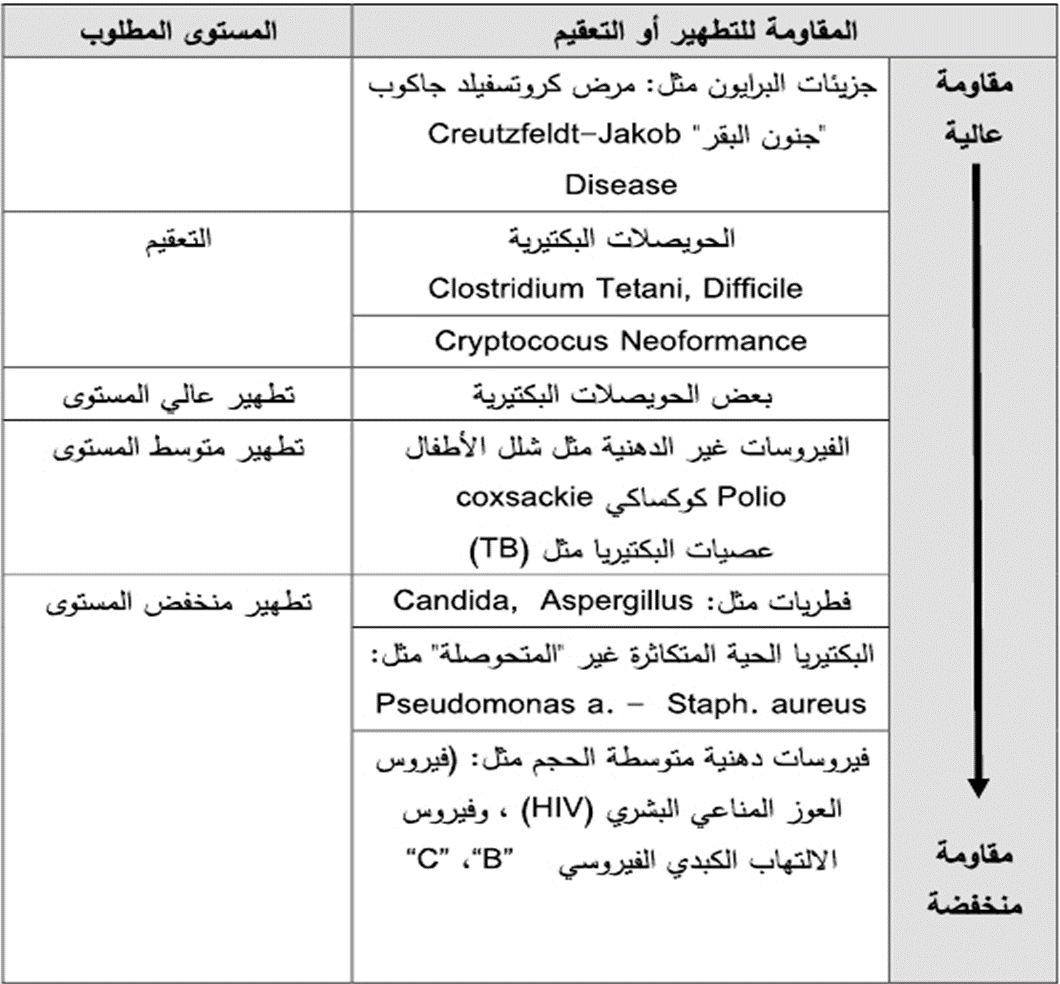
جدول رقم (١١): الترتيب التنازلى لمقاومة الميكروبات للتطهير والتعقيم :
وتتصف البرابونات بمقاومتها لطرق التطهير والتعقيم التقليدية.
- دورة معالجة المعدات
يوجد خطوتان لمعالجة المعدات التى تستخدم في الإجراءات السريرية (الإكلينيكية)
والجراحية، أولها التنظرف وهو أهم خطوة ثم بعد ذلك يأتى إما التطهير أو التمقيم ورتم الاستخدام بعد ذلك فوراً أو يتم تخزين ما تم تعقيمه بطريقة صحيحة.
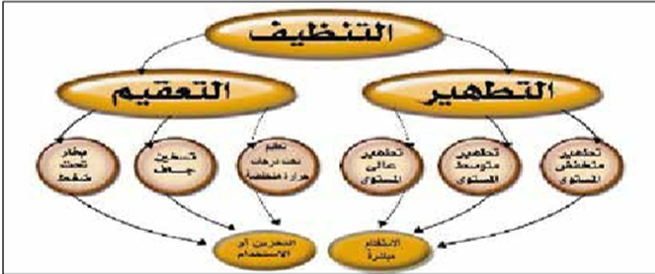
مخاطر انتقال العدوى من المعدات
تنقسم احتعالات انتقال الحدوى من المعدات الطبيه إلى ثلاث فنات، ويساعد تقسيم الأدوات والمعدات إلى أحد الفنات التالية على اختيار المستوى الأستل اللازم للتنظيف أو التطهير لو التعقيم من أجل حماية المرضى والعاملين في سحال الرعاية السحية.
آلات/أدوات منخفضة الخطورة :
يكفى أن يتم تنظيف وتجفيف الأدوات التى تتلامس مع الجلد السليم (مثل: سماعة الطبيب أو جهاز الضغط) ولكن قد يتطلب الأمر التطهير إذا استخدمت هذه الأشياء لمرضى منقرصي المناعة أو مرضى مصابين بعرض شديد العدوى أو أن تكون قد تلوثت بالدم أو سوائل الجسم.
الات/أدوات متوسطة الخطورة:
هي تلك الآلات/الأدوات التي تتلامس مع الأعشية المخاطية أو الأجزاء غير السليمة من الجلد ولكنها لا تخترق الجلد أو الأعشية المخاطية ولا تصل إلى الأجزاء المعقمة من الجسم وينبغي ان يتم تنظيفها ثم تطهيرها بمطهر عالى المستوى.
وتتضمن هذه المعدات أجهزة التنفس وبعض المنافير المرئة ومناظير الحنجرة وأنابيب القصبة الهوانية والترمومترات وغير ذلك من الأدرات والمعدات المشابية.
الات/أدوات مرتفعة الخطورة :
هي الأدوات التى تخترق الجلد والأنسجة المعقمة بما في ذلك تجاويف الجسم والجهاز الدوري .
وتعتبر علها الأدوات على درجة مرتفعة من الخطورة لارتفاع احتمالات انتقال العدوى بها إذا كانت ملوثة باي ميكروبات قبل اختراقها النصيح ، ولذلك يجب أن يتم تنظيفها أولاً ثم تعقيمها.
ومن امثلة هذه الأدوات (الآلات الجراحية).
ويتحكم تركيب وتصميم الجهاز فى تحديد نوع التعقيم أو التطهير المناسب للجهاز أو الآلة
(كيمياني - حراري).
الادوات احاديه الاستخدام
هى الأدوات التي تستخدم لمرة واحدة حزث تخضع لمستوى معون من التطمير أو التعقيم اثتاء صنيعها ويتم استخدامها لمرة واحدة ثم يتم التخلص منها ومن أملة ذلك القفازات والأبر والسرنجات.
التنظيف
التنظيف هو إزالة كافة المواد العالقة مثل (العواد العضوية وغير العضوية) المتواجدة على سطح الأدوات التي ينبغي إعادة معالجتها، وهناك مكونان رئيسيان لعملية التنظيف وهما الفرك لكي يسهل إزالة المادة العالقة ثم الشطف الجيد بالماء الجارى لإزالة تلك العواد.
يفضل أن يتم البدء في عملية التنظرف بعد الاستخدام مباشرة أو أن يتم التقع في محلول منظف (ماء ومنظف سائل أو مادة إنزيمية) كخطوة مبدئية ملفصلة لحين البدء في عملية التنظيف.
يتم التخلص من معظم الميكرويات التي تغطى الأسطح عن طريق التنظيف ولذلك يجب أن يتم التنظيف قبل إجراءات التطهير أو التعقيم، فإذا لم يتم تنظيف الأدوات والألات فقد لا يجدي التطهير أو التعقيم نظرا لأن بعض الميكروبات الموجودة في المواد العضوية وغير العضرية قد تظل حية مما يحد من كفاءة عمليتي التطهير أو التعقيم.
إن التنظيف يتم عادة باستخدام المياه الجارية والمواد المنظفة السائلة أو المواد المنظفة الإنزيمية، وتعتبر عملية التنظيف ضرورية من أجل إزالة البروتينات والزبوت العالقة بالأدوات والمعدات بعد استخدامها،
ويكون التنظيف إما يدوياً أو آلياً باستخدام الموجات فوق الصوتية أو ماكينات الغسيل والتطهير التي قد تسهل عمليتي التنظيف والتطهير لسطح وتجاويف وستون ومفاصل وتنايا بعض الأدوات والآلات ومن ثم تصبح أمنة للتعامل أو تؤهلها لاستكمال إجراءات التطهير أو التعقيم.
وفي أهلب الأحيان يكون المحلول المستخدم في التنظيف من مادة مشبعة سلفاً بإنزيمات مذيبة للمواد العضوية . ويمكن أن تستخدم مادة منغلفة بدلاً من العادة الإنزيمية ، حيث تعمل هذه المنظفات على تقليل التوتر السطحى وبهذه الطريقة لتمكن من إزالة الأترية والزيوت من على سطح الأدوات.
قد يفضل أن يتم نقع الأدوات قبل البدء في عملية التنظيف كخطوة منفصلة لزيادة كفاءة عملية التنظيف. يمكن أن يتم مله حاوية عميقة بكمية من الماء ومحلول منظف أو محلول مذيب الزيمي بحرث تحتوى هذه الحارية على سلة من شبك السلك ثم توضع الأدوات يداخل السلة الشبكية. ثم يتم إرسال الحاوية بما تحريه من آلات إلى قسم التعقيم المركزي حيث يتم بعد ذلك تفريغ السلة على متضدة أو صينية لفصل الأدرات عن بعضها قبيل تتغليفها.
التنظيف اليدوي
ينبغي أن يتم فك لجزاء كل الأدوات والآلات (القابلة للفك والتركيب) قبل التنظيف، ويفضل استخدام الماء الفاتر حيث أنه سيزيل معظم الموك البروتينية. (الدم والمخاط .. الخ) والتي يمكن أن تتجلط بفعل الحرارة ومن ثم يصعب إزالتها ، وأسهل أسلوب ذو نتائج فعالة يمكن أن يتم اتباعه هو فرك الآلة بفرشاة ناعمة مع الاحتفاظ بالفرشاة تحت سطح المياء لمنع تنائر الرذاذ ، واخيراً تشطف الأداء بمياء نظيفة جارية ثم تجفف، ويجب أن يتم تنظيف وتطهير الفرشاة وتجفيفها بعد الاستخدام . وهكذا تصبح الأدوات قليلة الخطورة جاهزة للاستعمال كما تصبح الأدوات متوسطة الخطورة جاهزة للتطهير بينما تصبح الأدوات مرتفعة الخطورة جاهزة للتعقيم.
أدوات التنظيف
• تستخدم أدوات تنظيف داعمة من شانها ألا تخدش الآلات التي تنظفها لأن الخدوش والثنايا تتجمع فيها كائنات مجهرية كما قد يؤدى الأمر إلى تأكل الأدوات.
• تستخدم فرش مختلفة الأشكال والأحجام لتناسب جميع أنواع واشكال الأدوات والآلات.
• يفضل استخدام مسدس ضخ الماء والمحلول المنظف والهواء للمساعدة في تنظيف الأدوات والآلات ذات التجاويف.
ملحوظة :
يتم فحص الأدوات والآلات بعد تنظيفها بالعين المجردة أو باستخدام العدسات المكبرة.
مزايا التنظيف اليدوي :
ا انخفاض التكلفة،
⁃ المكانية الرصول إلى الأجزاء المعقدة (مثل المفصلات والتجاويف).
⁃ إمكانية فحص الأدوات التي يتم نقظيفها أثناء عملية التنظيف.
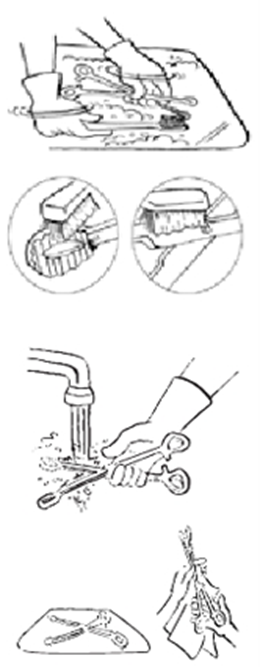
خطو]ات التتغليف اليدوي للآلات
1. يتم ارتداء تفازات مطاطية شديدة التحمل ومريلة بلاستيكية وواقي للعين و قناع جراحي وواقى قدم أثناء التتغليف .
2. يتم عمر الأدوات في مياه فاترة تحتوى على منظف ذو رغوة.
3. يتم فرك الأدوات بإتقان باستخدام فرشاة ناعمة وماء ومنظف مع الاحتفاظ بالأدوات تحت سطح العاء لتجنب تناثر الرذاذ كما يجب التاكد من تنظيف الننايا واالسنون والمفصلات من بقايا العادة العضوية ويجب إدخال الماء و المنظف إلى التجاويف الداخلية للالات ويمكن استخدام أدوات خاصة لهذا الغرض (مسدس ضغط) .
4. يتم شطف داخل التجاويف باستخدام انتفاع الماء.
5. يتم شعطف الأنوات جيداً بعياء جارية نظيفة لإزالة آثار . المنظف (قد تعرق أي كميات متبقية من المنظفات عمليات لتطهير أو التعقيم) ثم يتم وضع الأدوات على سرتية .
6. يتم فحص الآلات جيداً للتأكث من نظافنها.
7. يتم تجفيف الأدوات بعتشفة نظيفة و ذلك لتجتب تخفيف محاليل التطهير أو التعقيم.
التنظيف الألي :
تعمل معظم وحدات التنظيف الحديثة أوتوماتيكياً معا يؤدي إلى التقليل من تعامل طاقم العاملين بالأيدي مع المعدات.
⁃ ماكينة الغسيل: لها دورة مصممة بحيث يتم غسيل الأدوات بعاء قاتر ثم تغسل بماء ساخن تصل درجة حرارته إلى ٧١ درجة مئوية لعدة دقيقتين، ثم تغسل لعدة عشر ثوان فى مياه ساخفة درجة حرارتها ٩٠ -٨٠ درجة مئوية . ثم يتم التجفيف باستخدام سخان مزود بمروحة تحت درجة حرارة تتراوح ما بين ٧٥ - ٥٠ درجة مئوية.
⁃ ماكيلة الغسيل والتطهير: ماكينات خاصة يتم استخدامها لتنظيف وتطهير بعض المعدات حيث يتم تشغيلها لعدة ٤٥ دقيقة ثم تمر في دورة تنظيف بالماء الذي تبلغ درجة حرارته من ١٠٠ - ٨٠ درجة مئوية ومحلول منظف ويستمر ذلك لمدة دقيقتين.
المزايا :
• عملية التنيف تتم بصورة أوتوماتيكية.
• يمكن أن تعتمد عملية التنظيف على استقدام منظفات خشنة قوية لا يمكن ستخدامها أثناء إجراء عملية التنظيف يدوياً.
• إمكانية إجراء عمليات التنظيف والتطهير الحراري والتجذيف للآلات والمعدات الطبية.
• يمكن بواسطتها إعادة معالجة وصلات الجماز التنفس وأقنعة
التخدير والأمبوباج.
العيوب:
• ارتفاع التكلفة.
• الحاجة إلى إجراء صيانة دورية لضمان كفاءة عمليتى التنظيف
والتطهير الحراري.
• إذا لم يتم إزالة أي من المواد البروتينية أثناء مرحلة الغسيل ، فإن هذه المواد البروتياية تتخلط على أسطح الآلات والمعدات الطبية في مرحلة التطمير لحراري.
جهاز الموجات فوق الصوتية : عبارة عن حرض ماء متصل بغرقة لتوليد الموجات فوق الصوتية بطاقة كهربائية تبلغ ٤٥،- وات إسم" ، مما يعرض الماء لاهتزازات عذيفة ومتتابعة، وتتعرض فقاعات الهواء الميكروسكوبية فى الماء يفعل الاهتزازات العالية إلى الانساط والانقياض، الأمر الذي يؤدي إلى تمزق أي جسم غير صلب والتخلص من جميع المواد العضوية من على سطح الآلات والمعدات الملوثة.
• تحقق درجة عالية من النظافة.
• يمكن اللجوء إلى استخدامه بالإضافة إلى الطرق الأخرى للتنظيف : قبل طرق التنظيف الأخرى أو يعدها.
العيوب
• غالى الثمن.
• الحاجة إلى إجراء صياتة دورية باهظة التكلفة لضمان كفاءة عملية التنظيف.
مؤشرات التنظيف
• يفضل أن تستخدم مؤشرات التنظيف مثل (مجموعة فعص بقايا الملوثات البروتينيةResidual protein detection kit علي الأسطح
• مؤشرات التنظيف لماكيدات الغسيل الفوق صوتية مثل اختيار ورق الألومونيوم (اختيار الفريل).
تذكر :
• لا تستخدم قطع الصابون فى عملية تنظيف الآلات لأنها تترك بقايا الصابون على الأدوات.
• لحرص على ارتداء التفازات والقناع الجراحي وراقى العينين عندما تقوم بتنظيف الأدوات .
• يفضل استخدام آلات الغسيل الأوتوماتيكية ذات دورات شطف وتجنيف عن الغسيل اليدوي.
التطهير
يمكن أن يتم التطهير بإحدى طريقتين: إما باستخدام الحرارة أو باستخدام المواد الكيميائية ويفضل التطهير الحراري كلما أمكن ، ويرجع سبب ذلك لإمكانية الاعتماد على نتائجه بشكل أكبر من المواد الكيميائية حيث أله يوفر الوقت والمال ولا يترك أي رواسب أو بقايا فضلاً عن سهولة التحكم فيه كما أنه ليس له آثار سامة ، أما بالنسبة للأدوات التى تنشف بالحرارة فيلزم عتدئذ استخدام مادة كيمياتية للتطهير .
وتعوق المواد العضوية (مثل الدم وسوائل الجسم الأخرى) كفاءة التطهير في القضاء على الميكروبات ، وايضاً كلما زاد عدد الميكروبات كلما تطلب الأمر وقتاً أطول لتطهيرها - لذلك فإنه.
من المهم إجراء عملية تنظيف دقيقة قبل عملية التطهير.
تطهير عال المستوى اللدرات ذات الخطورة المتوسطة) ا
• التطهير بالغليان.
• التطهير الكرميائي.
ملاحظة
يعتبر التطهير ذو المستوى العالى هو البديل الوحيد المقبول على الأقل لمعالجة الأدوات ذات الخطورة المتوسطة وذلك في حالة تعذر إجراء عملية التعقيم.
ويعتبر الغليان والتعريض لحرارة اللهب نوع من أنواع التطهير عالى المستوى و ليس تعقيماً.
لتطهير عال المستوى عن طريق القليان :
يعتبر التطهير بالغليان هو أحد طرق التطهير عال المستوى للأدوات متوسطة الخطورة التي تتعمل الحرارة، حرث يمكن القضاء على الميكروبات باستثناء الحويصلات.
يجب التقاط الأدوات بعد مرور ١٠ دقائق على الأقل من بداية الغليان.
لتطهير عال المستوى باستخدام المطهرات الكيمائية :
يجب التأكد معا إذا كانت هناك وسيلة تطهير أخرى مناسبة قبيل الشروع في استخدام مادة كرمرائية مطهرة، وتعتبر المعدات التى لا يتحمل درجات الحرارة المرتفعة من أهم ما يتم تطهير.
كيميائياً (مثل المناظير).
وهناك عدد محدود من المطهرات التي يمكن استخدامها لتغي بهذا الغرض وهي :
• تركيز أكثر من ٢ % من الجلوتار الدهايد لمدة (٩٠ - ٢٠) دقرقة.
• تركيز ٧،٥% من فوق أوكسود المردر وجون لعدة (٣٠) دقرقة.
• حامض البيراسيتيك وفوق أوكسيد الهيدروجين (٧٠٣٥ - %٠٠٢٣ %) لمدة ١٥ دقيقة.
• أورثوفتا الدهايد ٥ دقائق للاستخدام بواسطة الماكيلة ،١٢ دقرقة للاستخدام اليدوي.
وينبغي الشطف الجرد للأدوات باستخدام الماء المعقم عقب إتمام عملية التطهير، وإذا تعذر استخدام الماء المعقم يمكن استخدام ماء سبق عليه حديثاً لمدة ١٠ - ٥ دقائق.
خطوات التطهير باستخدام الجنوتراندهايد:
لا يسبب محلول الجلوتار الدهايد تأكل المعادن • كما لا يتأثر كثيراً بالمواد العضوية، والمستحضر العلوى منه يحتاج لعملية تلشيط وتستمر فعاليته بعد ذلك لمدة أسبوعين.
بلزم بعد تلشيط المحلول أن يتم إعدادم في حاوية نظيفة ومحكمة الغلق ، ويجب أن يتم التختصر من المحلول الذي استخدم في تطهير المعدات والمستلزمات بعد ٢٨ دورة تطهير أو بعد سبوعين من استخدامه أيهما أقرب أو فور تغير مواصفاته.
ويستخدم شريط كاشف في حالة استخدام محلول تم إعداده مسبقاً للتاكد من سريان فعالية المحلول وذلك بصورة يومية. لما في حالة استخدام محلول معد لأول مرة فيح وضعه في حارية نظيفة محكمة الغطاء على أن يتم كوين تاريخ تحصير المحلول وتاريخ انتهاء صلاحيته
على الحاوية من الخارج ولا يعتبر المحلول صالحاً للاستخدام بعد انتهاء فترة الصلاحية أو عدد الدورات المسموح حتى فى حالة عدم تغير نتيجة المؤشر والذى قد يشير إلى صلاحية المحلول.
1. يجب فتح المعدات والأدوات ذات المفصلات كما يلزم فك الأدوات والمعدات التي تتالف من أجزاء منزلقة أو من عدة أجزاء وذلك لضعان وصول السائل لكافة الأسطح المراد تطهيرها،
2. توضع الأدوات في المحلول بحيث يتم عمرها تماماً، كما ينصح بوضع الأوعية والحاويات في وضع قائم وليست في وضع مقلوب حتى تمثلى بالمحلول.
3. إحكام عطاء الحاوية وترك الأدوات في المحلول لمدة ٩٠ - ٢٠ دقيقة. وفي خلال هذه الفترة يحظر إضافة أو إخراج أية أدوات من الحاوية كما يجب مراقبة الوقت.
4. يجب إخراج الأدوات التى تم تطهيرها من الحاوية باستخدام ملقاط سبق تعقيمه أو تطميره بمطير عال المستوى على الأقل. ج) يجب شطف الأدوات بالماء المعقم أو ماء سبق عليه حديثاً لعدة ١٠ - ٥ دقائق بعناية شديدة للتخلص من أية أثار للمواد الكيمبائية العالقة بها، وتعتبر هذه الآثار المتبقية من المادة الكيميائية سامة للجلد والأنسجة.
٦) يجب استخدام المعداث والأدوات فور الانتهاء من تطيررها (أو أن يتم الاحتفاظ بها على أن يعاد تطهرها مباشرة قبل الاستخدام كما فى حالة المناظير المرنه)..
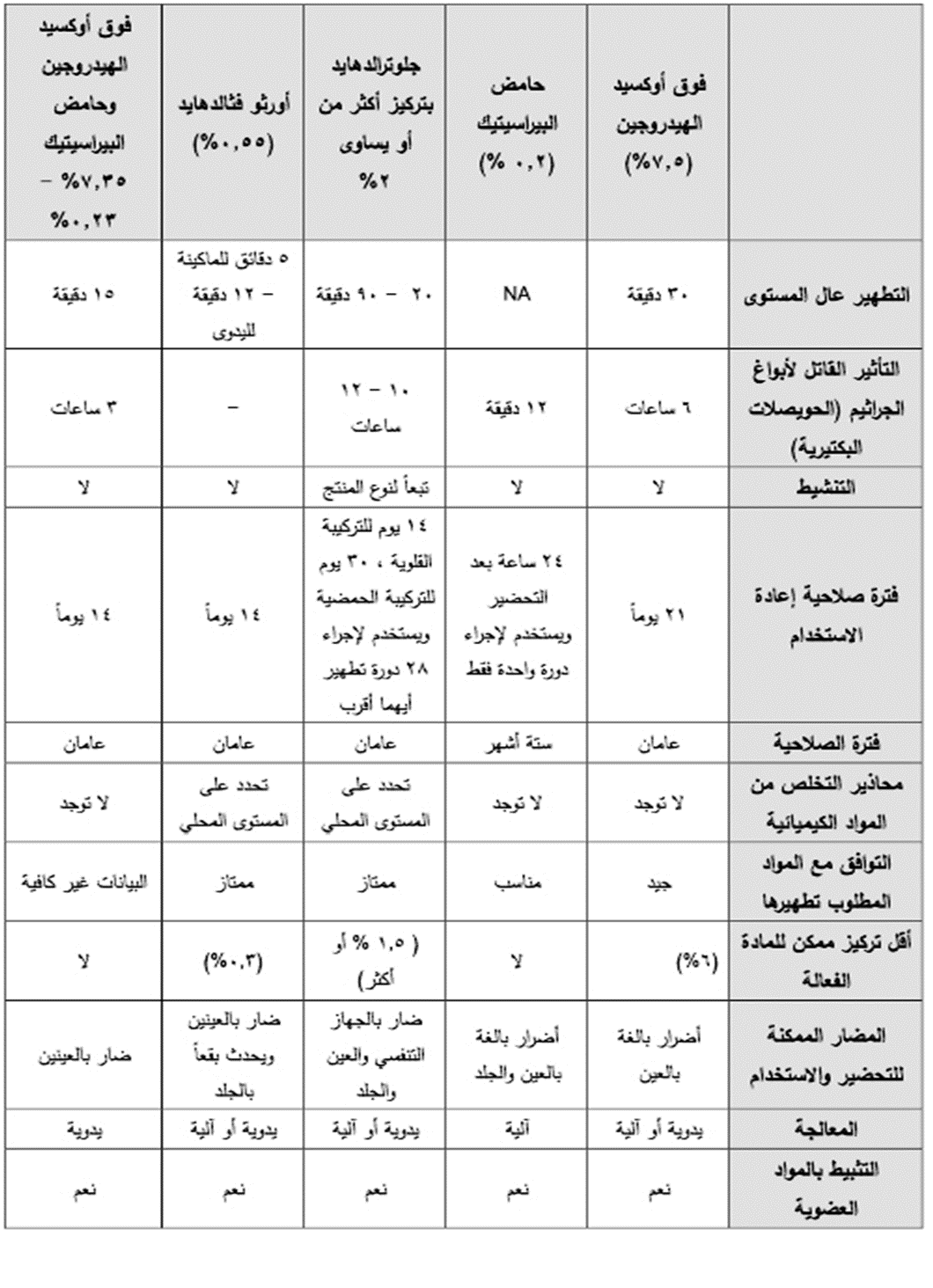
يجب التأكد من تركيزات المراد المستخدمة للتطهير والتمقيم الكيميائي وأزمنة التلامس حيث قد تختلف تلك التركيزات ومن ثم أزمنة التلامس المطلوبة تبعاً لاختلاف الشركات المصنعة. لذا يجب التأكد من تعارمات الشركة المصنعة للمادة المستخدمة للتطهير قبل الاستخدام.
التعقيم
القضاء على جميع أشكال الحياة الميكروبية بما فيها الحريصلات البكتيرية • يمكن تقسيم طرق التعقيم بصفة أساسية للأتى:
أولاً : التعقيم الحراري:
• التعقيم الحراري الرطب: التعقيم بالحرارة الرطبة باستخدام البخار تحت ضغط في جهاز (الأوتوكلاف).
• التعقيم الحراري الجاف: التعتيم باستخدام الحرارة الجافة في فرن التعقيم الكهربي.
ثانياً : التعقيم تحت درجات الحرارة المنخفضة:
• التعقيم باستخدام أجهزة غاز اوكسيد الإيتلين لو بلازما غاز فرق أوكسيد الهيدروجين أو بخار الفررمالدهايد مع مراعاة شروط الأمان لكل منها.
• التعقيم باستخدام السوائل الكيميائية (التعقيم الكيميائي) مثل سائل جلوترالدهايد النشط بتركيز أكثر من ٢% أو فوق أوكسيد الهيدروجين وحامض البيراسيتيك (٠,٢٣- %٧.٣ %) مع مراعاة زمن التلامس.
ثالثا : وسائل أخرى للتعقيم:
• التعقيم بأشعة جاما: من اهم طرق تعقرم المستلزمات الطبية كالسرنجات والقفازات.
• التعقيم بالترشيح (الفلترة): يستخدم في تتقية التركيبات الدرائية من البكتيرر التي لا يمكن التخلص ملها باي وساتل أخرى سوى باستخدام مرشحات (فلاتر) ذات مسام دقيقة ( ٠,٢٢ ميكروميتر) أقل من احجام البكتيريا.
أولاً : التعقيم الحراري
أ. التعقيم باستخدام البخار تحت ضغط (جهاز الأوتوكلاف):
يعد التعقيم باستخدام البخار من أفضل الطرق المتبعة في تعقيم الأدوات التي تستخدم لاختراق الجلد والأغشية المخاطية يشرط أن تكرن هذه الأدوات لا تتلف بسبب الحرارة، ولعل أهم ما ميز التعقيم بالبخار هو إمكانية الاعتماد عليه فى القضاء على الميكرريات فضلاً عن كونه
غير ضار على البيئة أو الصحة العامة كما يمكن رفع درجة حرارته بسرعة وله قدرة كبيرة عطى احتراق المسام.
أنواع اجهزة التعقيم بالبخار:
١. أجهزة تعل عن طريق إزاحة الهواء.
يتم ملء جهاز التعقيم بالبخار ويتم إزاحة الهواء إلى أسفل بحرث يخرج من خلال صمام لصرف معتمداً على الجانبية الأرضية.
• أجهزة التعظيم الصغيرة التى توضع فوق المنضدة:
⁃ يستخدم أحياناً في عيادات الأطباء البشريين ولطباء الأسنان.
⁃ تماثل في طريقة عملها لرعية الطهي التي تعمل بالشفط
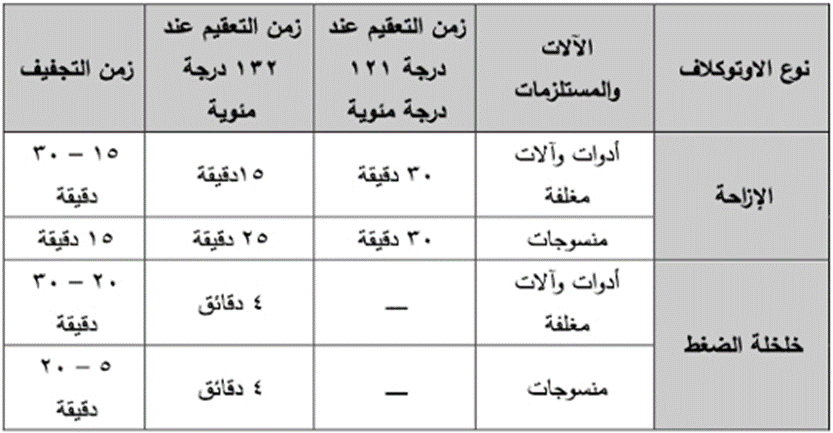
⁃ يتم تثبيت درجة الحرارة للأدوات خير المغلفة كالتالي: ١٢١ درجة منوية لمدة ٢٠ دقيقة أو ١٣٢ درجة مئوية لمدة ٤ دقائق.
• لجهزة التعقيم الكبيرة:
⁃ أكبر من أجهزة التعقوم السابق ذكرها بالإضافة إلى إمكانية التعكم الأوتوماتيكي.
٢. أجهزة التعقيم التي تعمل بخلفلة الضغط عن طريق تفريخ الهواء بسرعة عالية:
تعمل بنظام مضخة التفريغ التي تقوم بسحب الهواء من حجرة التعقيم بالجهاز قبل دخول البخار مما يزدي إلى خلق حالة من الضغط السلبي داخل غرفة التمقيم الأمر الذى يردي إلى اختصار الوقت الذي يستغرقه البخار في اختراق الأدوات المغلفة والمنسوجات والأشياء المحترية على مسام صغيرة.
مثالي لتعقيم الأدوات المغلفة والأشياء التي تحتوي على مسام (المسرحات والآلات ذات التجاويف).
3- (Immediate Use - Flash Autocive) أجهزة تعقيم الطوارى .
هى نوع من أجهزة التعقيم التي تعمل إما بالأراحة أو بخلخلة الضغط
لايتم استخدام هذه الأنواع من الأجهزة روتياياً، لكن يتم وضع هذه الأجهزة في جناح العمليات للتعقيم السريع للألات ير المغلقة، يمكن استخدام مؤشرات بيولوجية سريعة النتائج (بعد ١ إلى ٣ ساعة) لتأكيد عملية التعقيم، يتم التعقيم في دورة سريعة ملتها ٤ دقائق في درجة حرارة ١٣٢ درجة مئوية.
جدول رقم (١٣): الأزمنة اللازمة للتعقيم بالبخار :
ملاحظة :
• لا يشمل زمن التعقيم الزمن الذعهم يتم استغراقه للوصول إلى درجة الحرارة أو مستوى الضغط لمطلوبين ولا يشمل أيضا زمن التقريغ أو التجفيف، ولذا فإن هذا الزمن يكون أقل من الزمن الكلى للدورة.
ملاحظات هامة عند التعليم باستخدام البخار تحت ضغط !
1. يتم التأكد من تنظيف وتجفيف الأدوات المستخدمة المراد تعقيمها (يجب تنظيف وتجفيف الآلات الجراحية الجديدة قبل تغليفها ثم تعقيمها للمرة الأولى لازالة طبقة الشمع).
2. يجب عدم تعقيم الآلات الجراحية التي اصابها الصدا واستبعادها عن العمل.
3. يتم التأكد من فتح وفك كافة الأدوات ذات المفصلات كما يلزم فك الأدوات متعددة الأجرّاء.
4. يتم تغليف الآلات والأدوات قبل تعقيمها بالبخار، حيث تفرد عماية التغليف قبل التعقيم في المحافظة على التعقيم لعين الاستخدام.
5. يمكن تغليف الألات والأدوات لدى تعقرمها بالبخار باستخدام الرولات المخصصة للتعقيم (وجه ورقي روجه شفاف) و بغلاف مزدوج (طبقين) من ررق الكريب، ويمكن في المنشآت محدودة الموارد استخدام طبقتين من الأنسجة العطنية (يحظر استخدام الأنسجة الغليظه من القطن او الكتان او الانسجه غير الساميه لصعوبه اختراق البخار لها. كما ينصح بعمل نقاط أو ثنيات ليتمكن من خلالها من سرستخدم تك الأدوات من فتحها يدون إجلاف تعقيمها أو تلويثها).
6. يتم تحميل جهاز الأوتركلاف بوضع الأسطرانات أو العبرات أو الأدوات المللقة بعد تمويزها أو الأدوات التي ان يتم تغارقها فى جهاز التعتيم بطريقة تسمح بانتقال البغار صلاسة. ويحظر تكديس العبوات المراد تعقيمها فوق بعضها البعض حتى لا تعرق وصول البخار.
7. يجب مراحاة الدقة التامة وذلك عند رضع علامات على الحاويات مدون بها محتويات العوة وتاريخ معالمة الأدوات وتاريخ انتهاء صلاحية التقوم ثم يتم حفظ المولد المغلقة في مكان مخصص للتفزين.
8. يجب التجاع تعليمات الشركة المصنعة عند تشغول جهاز (الأوتوكلاف).
في حالة استخدام الأجهزة غير الأوتوماتيكية يجب لتباع الآتي :
1. من الأفضل استخدام جهاز مرقاتي لضيط الوقت لضمان التحكم في الوقت بصورة مناسبة. يحظر البدء في تسجول الرقت المطلوب للتعقيم إلا بعد وصول درجة حرارة وضغط جهاز (الأوتوكلاف) جى المعادير المطلوبة. ولذلك يجب أن تبدا الدورة من جديد إذا لم يتم تسجول الوقت عند بداية التشغيل.
2. يلزم فصل التيار الكهربائي عن جهاز (الأوتركلاف) بعد مرور الوقت المذاسب ثم يتم فتح صمام تصريف البغار، و لا يفتح جهاز (الأوتوكلاف) إلا حينما يشور مؤشر مقيالس الضغط إلى صفر.
تخزّين الأدوات:
منطقة التخزين
لايد من تخزين الألات والأدوات المعقمة بمتطقة تخزين نظرفة جافة جيدة التهوية، كما لايد من مراعاة وضع المستلزمات المعقمة على أرقف بعيداً عن الأرض والحوائط.
لعوامل التي تؤثر على طول فترة التخزين ؟
• نوع المادة المصنوع منها الغلاف
• سلامة الأعلفة من التمزق والبلل.
• طريقة وعدد مرات كاول الباكتات قبل الاستخدام.
• خزانات الحفظ المفتوحة أو المغلفة.
• ظروف منطقة التخزين (الرطوبة ، التهويه).
* استخدام أكياس حفظ الرولات والباكتات وطريقة إحكام علق الأعلفة.
فترة التخزين : (حسب فروف التخزين)
• الرولات : شهر
• ورق الكريب : شهر فى حالة استخدام طبقة مزدوجة من الورق ، اسبوع فى حالة استخدام طبقة ولحدة من الورق.
• الفوط القماشية : ثلاثة أيام.
• لسطوانات التعتيم التقرنية : ٢٤ ساعة.
ملحوظة:
* يتم استخدام الأدوات غير المغلفة فور خروجها من جهاز (الأوتوكلاف) أو الفرن الحراري لو يتم حفظها في حاوية معقمة جاقة محكمة الغطاء لمدة ٨ ساعات
• تعتبر العبوة المغلفة معقمة طالما أن الأعلفة سليمة وجافة. وفى حالة الشك أيما إذا كالت العبوة معتمة أم لا، يلزم حرنئذ أن يتم اعتبارها ملوثة ومن ثم تجب إعادة معالجتها بداية من خطوة التنظيف.
مزايا وعيوب عملية التعقيم باليخار
المزايا:
• فعالية ملحوظة.
• سرعة الوصول إلى درجة حرارة مرتفعة وسرعة التوعل داخل الأدوات والآلات.
• ليس له أنار سامة (صديق للبيئة).
العيوب:
• لابد أن تكون الأدوات قادرة على تعمل الحرارة والرطوبة.
: لا يصلح لتعقيم المساحيق او المراهم أو الزيوت.
صيانة الأوتوكلاف :
يتعين فحص جهاز الأوتوكلاف" بصورة دورية وذلك للتاكد من سلامة أدائه، ويفرد في ذلك ستخدام سجل لكل جهاز لمتابعة أداء ذلك الجهاز من حيث درجة الحرارة والترقيت ودورة لجهاز.
لضمان الصياتة الصليمة للأوتوكلاف يتبغى إجراء ما يلي:
• النظر إلى الصيانة الدورية على أنها إجراء قياسى، ومن ثم يعهد بها إلى شخص متخصص بتولى مسئولية ذلك الإجراء.
• مراعاة تعليمات الشركة المصنعة متى أمكن ذلك، لأن صيانة الأوتركلاف نختلف تبعاً لأنواعه المختلفة.
ب. أجهزة التعقيم الحراري الجاف (الفرن الحراري):
لضمان الرصول إلى التعقيم الحراري الجاف عن طريق الفرن الحراري يلزم ترفير مصدر دائم للكهرباء، وتفضل هذه الطريقة لتعقيم الزجاجيات التى يعاد استخدامها، والأدوات المعدنية المصمتة، والزيوت، والعراهم والمساحيق، ولا ينبغي اللجوء إلى هذه الطريقة عند تعقيم الأدوات المعرضة للحرق أو الانصهار مثل الخيوط الجراحية والمفروشات.
بفضل أن تكون أفران التعقيم مزودة بمروحة داخلية لضمان توزيع الحرارة بشكل متسار داخل غرفة التعقيم.
لخطوات المتبعة في التعقيم الحرارى الجاف:
1. ضرورة تنظيف جميع المعدات المراد تعقيمها وتجفيفها.
2. قم بتغليف المعدات مستخدماً ورق الرمليوم أو قم بوضع المعدات مكشوفة فوق رف لو صينية أو ضع تلك المعدات في وعاء معدني مع مزاعاة أنه أثناء دورة التعقيم يتم وضع الغطاء بحيث يتخلل الهواء بسهولة محتويات الوعاء.
3. ضبع المعدات داخل الفرن الحرارى وقم بالتسخين للوصول إلى درجة الحرارة المحددة.
4. اترك المعدات داخل الفرن لتبرد وتصل إلى درجة حرارة الغرفة قبل إخراجها، ويحظر تبريدها بواسطة الماء الجاري.
5. يتم استخدام ملاقط معقمة لإخراج الأدوات في حالة وضعها مكشوفة داخل الفرن لتستخدم فور إخراجها أو تخزن لحين الاستخدام لمدة ٨ ساعات على الأكثر في حالة وضعها داخل رعاء معدني معلم ومغطى بإحكام، حرث لا تقل أهمية التخزين السليم من عملية التعقيم ذاتها.
تخزين الأدوات التي تم تعقيمها بواسطة التمقيم الحراري الجاف:
يتعين استخدام الأدوات المعقمة بواسطة التعقيم الحراري الجاف فور إخراجها من الفرن أو تحفظ في وعاه جاف مغطى معقم لمدة قد تصل إلى ٨ ساعات على الأكثر في خزائة مغلقة وجافة تقل بها نسبة الرطوبة ومعتدلة الحرارة في منطقة هير مزدحمة بالعمل أو الأهراد.
ملاحظة:
• يتعين أن يكون الفرن مزوداً بمقياس لدرجة الحرارة للتاكد من الوصول إلى درجة الحرارة المحددة.
• لا يتم احتساب الوقت اللازم للتعقيم إلا بعد وصول درجة حرارة الفرن إلى درجة الحرارة المطلوبة.
• يحظر استخدام الأقران الحرارية كمخزن للآلات المعقمة
مزايا التعقيم الحراري الجاف وعروية
المزايا :
• يجوز استخدام هذه الطريقة للزجاج والمساحيق والزبوت اللامائية.
• تصل هذه الطريقة إلى أجزاء الآلات غير القابلة للفك.
• لا تؤدي إلى صدا المعدات أو تأكلها.
• تعتبر هذه الطريقة ماخفضة التكاليف.
العيوب:
• تتطلب تعرض الآلات للحرارة لأوقات طويلة.
• تودي درجات الحرارة المرتفعة إلى إتلاق المصنوعات المطاطية وبعض الألياف.
• تستخدم لمجموعة محدودة من المواد.
صياقة أفران التعقيم الحراري الجاف
يتعرن فحص أفران التعقيم الحراري الجاف للتأكد من سلامة أدائها، وعلى طاقم العاملين
مراعاة ما يلى:
• المحافظة على نظافة الأقران.
• التاكد من عمل مقراس درجة الحرارة بصورة سليمة ويكون ذلك بصفة منتظمة ويكفي أن يتم كل بضعة اسابيع، وذلك بان يتم إدخال مجس حراري داخل الفرن ومقارية قراءة درجة الحرارة التي سجلها بقراءة درجة الحرارة التى تم تسجيلها بواسطة المقياس المزود به الفرن.
ثانيا: التعقيم تحت درجات حرارة منخفضة
أ. التعقيم باستخدام غاز أوكسيد الإرثيلين:
يستخدم لتعقيم الآلات والأدوات التي لا تتعمل درجة الحرارة المرتفعة والرطوبة ، ويجب مراعاة العوامل والاشتراطات التالية:
• يجب أن يكون تركيز الغاز من ٤٥٠-١٢٠٠ ملح إلتر .
• معدل درجات الحرارة من ٣٧-٦٣ درجة مزية.
• نسبة الرطوية من ٨٠-%٤٠%.
• زمن التعرض للغاز من ساعة الى ٦ ساعات.
لتجهيز للتعقيم بغاز أوكسيد الإيثياين:
1. التحقق من ملاسة ( المستلزمات ) الآلات والأدوات التي سوتم تعقيمها.
2. تفكرك وتتظرف وتجليف الألات والأدوات قبل عملية التغليف
3. يجب أن يتم فتح الآلات والأدوات ذات التجاويف من الطرفين.
4. يجب أن تكون جميع الآلات والأدوات خالية من قطرات الماء.
5. أن تكون نسبة الرطوبة من ٣٥٪ إلى ٧٠٪، و معدل درجات الحرارة من ١٨ - ٢٢درجة مئوية خلال عملية التعقيم.
6. يجب عدم تكديس المستلزمات والآلات والأدوات أثناء التعقيم.
العوامل التي تؤثر على عملية التعقيم باستخدام غاز أوكسيد الإثراين :
1. الحرارة.
2. الرطوية.
3. التعبئة والتغليف.
4. زمن التعرض من ساعة إلى ٦ ساعات.
التهوية
1. التفريخ بعد التعقيم لإزالة غاز اوكسيد الإيثيلين إلى مستوى آمن.
2. يمكن أن يتم ذلك بإحدى طريقتين إما بصورة سلبية عن طريق الدابيب التهوية الموجودة فى كابينة التعقيم لو عن طريق التهوية الميكانيكية بالإزاحة الحركية للغاز.
الآثار الجانبية الناتجة عن التعقيم باستخدام غاز اوكسيد الإثيلين:
1. تكوين جلايكول الإيثيلين السام مع الماء.
2. تكرار تعرض الآلات للغاز يمكن أن يزثر على بعض لخصائصها.
3. أوكسيد الإثيلين السائل يسبب المحروق.
4. مخاطر تعرض العاملين لغاز لوكسيد الإيثيلين : (تعرض حاد)
• مضاعفات فى الجهاز التنفسي العلوي.
• تهيج العينين.
• الغثيان، والقىء، والإسهال.
• النعاس، والضعف العام.
• التهجان، والشلل التنفسي.
• الشنجات.
٥) محاطر تعرض العاملين لفترات طويلة لغاز أوكسيد الإيثياين:
• حروق القرنية.
• (neuropathy) الاعتلال العصبي
• المياء البيضاء على عدسة العين (cataract) .
• الأنيميا
مميزات التعقيم باستخدام غاز أوكسيد الإثيلين:
1. فعال صد جميع العيكروبات.
2. إضراره بالألات والأدوات ضعيف جداً.
3. يممح بتعقيم الآلات مغلفة ( على خلاف بعض الأجهزة الأخرى ).
عوب التعقيم باستخدام غاز أوكسيد الإثيلين:
1. خطر الحريق او الاتفيار .
2. تحتاج الدورة لوقت طويل ١٤ ساعة.
3. عال التكلفة.
4. يحتاج لكواشف حيوية.
دورة التقيم بغاز أوكسيد الإيثيلين: (خمس خطوات)
1. الإعداد والترطيب .
2. إدخال الغاز.
3. التعرض (٦-١ ساعات).
4. إخلاء .
5. التهرية.
أنواع غاز اوكسيد الإيثيلين:
1- اوكسيد الإيثيلين.100%
2- مخلوط مع غازات أخرى:
• هيدروكلورولوروكربون ٩٦,٤%-أوكسيد الإيثيلين ٨,٦%.
• هيدروكلوروفلوروكربون ٩٠% لوكسيد الإيثيلين ١٠ %.
• ثاني لوكسيد الكربون ٩١,٥ %- لوكسيد الإيتلين ٨,٥%.
ب. التعقيم باستخدام جهاز البلازما
البلازما هي الحالة الرابعة للمادة والتى تتميز عن الحالة الغازية، السائلة، والصلبة ، ويتم توليد البلازما في غرفة مغلقة فى ظروف تفريغ للضغط باستخدام الموجات الكهر ومغناطيية قصيرة المدى لإثارة جزيئات الغاز ويتم إنتاج الجميعات الحرة المشحونة.
كيفية عمل البلازما :
آلية عمل هذا الجهاز هو إنتاج الجزيئات الحرة داخل حقل البلازما والتي لها القدرة على التفاعل مع مكونات خلية الميكروب الأساسية (الإنزيمات والأحماض النووية) وبالتالى تعطيل عملية التمثيل الغذائي للكائنات الدقيقة.
مزايا التعقيم بالبلازما وتشمل:
1. املة وغير سامة.
2. مرفرة للوقت (حوالى ساعة واحدة).
3. الماء والأوكسجين هي المخلقات الأولية لجهاز التعقيم بالبلازما لذا ليست هناك حاجة للتهوية حيث أنها تعد مواد أولية أمنة.
العيوب:
• ليست مصمة للاستخدام مع المنتجات القائمة على السليلوز مثل الكتان والورق.
• ليس مفيداً مع الأجهزة ذات التماويف المسدودة، والمساحيق أو السواتل.
المؤشرات البيولوجية لمراقبة الجودة :
المؤشر البيولوجى المستخدم هو حويصلات الجراثيم العصوية ( bacillus atrophaous
-(spores
ج. التعقيم بواسطة غاز الفور مالديهايد :
استخداماته داخل المستشفى:
يستخدم محلول الفورمالديهايد على نطاق واسع في التشريح، وأقسام علم الأمراض والجراحة وايضاً بشكل محدود في الأمراض الجلدية واقسام الأشعة السينية ، كما يستخدم بشكل رئيس في المستشفيات لتثريت الأنسجة.
التعقيم تحت درجة حرارة منخفضة باستخدام غاز الفورمالديهايد والبخار
Low temperature steam Formaldehyde( LTSF)
• في عملية LTSF يتم استبدال الطاقة الحرارية البخارية بمزيج من بخار الماء وغاز الفررمالديهايد.
• يكون الغاز في درجات حرارة إما ٥٥،٦٠٠٦٥٠٨٠ أو ٥٠ درجة مئوية.
• وجود بخار الماء يسمح للفورمالديهايد بالاختراق وقتل أي ميكروبات.
تتكون العملية من أربع مراحل:
1. ما قبل المعالجة : عملية التفريغ المتكررة ودفع البخار .
2. دخول الفورمالديهايد :
• يتم حقن محلول الفورمالين من زجاجة مغلقة.
• ثم يبخر الفورمالين ويدخل الغرفة كغاز.
• يساعد تفريغ الغرفة على دخول الغاز .
• ثم يضاف البخار للحفاظ على درجة الحرارة عدد مستوى محدد مسبقاً.
• تكرر العملية عدة مرات لتعزيز تغلغل الغاز في التجاويف الضيقة والطويلة.
3 - التعقيم
اثناء وقت التعرض يتم الحفاظ على الغرفة في درجة حرارة محددة، وتركيز ثابت للغاز والضغط والرطوية.
4 - بعد المعالجة
• بعد لنقضاء مدة التعرض تتم إزالة الفور مالديهاود بصررة لفعالة من الآلات المعقمة من طريق التفريخ المتكرر .
• عملية المعالجة تنتهى مع تفريخ للضفط ، يليه عدد كبير من لقمات الهواء عبر فلتر الهواء ويتم خلال هذه المرحلة إزالة آثار الفورمالديهايد المتبقية فى الغرفة والمعدات.
التحقق من عملية التعقيم بغاز الفور مالدهيد والبخار:.
المؤشرات الكيميائية
تغير اللون يدل على أن غاز الفورمالدهيد قد ترخل بكمية كافية ووقت كاف لإجراء عملية التعتيم
المؤشرات الحيوية:
Stearothermophilus المؤشر المستخدم هو حريصلات
- خصائص المطهرات الكيميائية
حيث ان التعقيم بسوائل التعقيم الكيميائية يحتاج للغمر التام للمعدات والمستلزمات لفترات طويلة يفضل عدم اللجوء لاستخدام المواد الكيميائية في تعقيم المعدات والمستلزمات ، وبخاصة عند إمكانية تعترمها ياحد البدائل الأخرى:
قبل المضي في استخدام مواد كرميائية للتعقيم يراعى ما إذا كانت هناك طريقة اكثر ملاسة من التعقوم الكرمياني • حيث وستخدم التمقيم الكيمائي فقط مع الأنوات التي تنلف بالحرارة (وذلك فى حالة عدم وجرد وسائل أخرى التعقيم تحت درجات الحرارة المتخفضة مثل التعقيم باستخدام بعض أنواع الغازات) ، ويمكن تعقيم المعدات والأدوات عن طريق عمرها فى محلول كيميانى وتركها لفترة ثم تشطف بعد ذلك بالعياء المعقمة ، وتمتمر فترة الغمر زمنا مناسباً حسب نوع المادة المستخدمة فى التعقيم لكي ثمر عن قتل الحويصلات البكتيرية، وتكمن الصعوبة في كيفية المحافظة على الأدوات دون أن تتلوث وخاصة بعد أن يتم عمرها لعترة مناسبة فى محلول كيميائى وشطفها بالعاء المعقم وما يعقب ذلك من نقل هذه الأدوات إلى مكان معتم « حيث يرجع ذلك إلى عدم إمكانية تغليف الآلات والأدوات التى يعاد معالجتها بالمحاليل الكيميائية ، وعلى عكس وسائل التعقيم بالبخار يعد المؤشر البيولوجي غير مناسب بالنسبة لمعظم المواد الكيميائية الممتظمة في التعقيم.
وحينما توضع هذه القيود في الاعتبار يفضل قصر استخدام هذه المواد على التطهير حال المستوى.
أنواع المواد الكيميانية المستخدمة فى التعقيم :
تعتبر الجلوتوالدهيدات من محاليل التعقيم الشائعة . ويمكن الحصول على بعض المواد الكيميائية محلياً مثل حامض البراسيتيك (٠.٣٥ - ٠,٢%) أو فوق أركسيد الهيدررجين (٧.٥%) أو فوق اوكسود الهيدروجين مع حامض البيراسيتولد (٠,٢٣ - %٧,٣٥%) ، ولا يستخدم محلول الفور مالدهود في أعراض التحقيم أو التطهير للأدوات والآلات (حيث يتصف بالسمية).
١. الجلوتر الدهايد
الاستخدامات :
يمكن استخدام محلول الجلوتر الدهيد بتركيز أكثر من ٢% لمدة (١٢ - ١٠ ) ساعة لتعقيم الأدرات التى تتائر بالحرارة ، وتعتبر الجلوتر الدهيدات من المواد المهيجة للبشرة والعين والجهاز التنفسى.
يترافر فى صورة حامضية غير منشطة ويلزم لتنشيطه مادة محفزة قلوية ويستمر مفعوله لمدة أسبوعين بعد التنشيط.
الاحتياطات :
كما ذكر سالفاً فإن الجلوتر الدهيدات مواد مهيجة للعين والأنف وقد تتسبب في الإصابة ببعض أمراض الجهاز التنفسي وحساسية الجلد، ومن ثم يحظر استخدامها داخل المناطق المغلقة أو سهلة التهوية ، وعند إعداد محلول الجلوتر الدهيد يتعين ارتداء واقيات للعين ومرايل بلاستيكية أحادية الاستخدام وقفازات ، وينطبق الأمر ذاته عدد التخلص من ذلك المحلول أو عند استخدامه في التعقيم ، ويمكن ارتداء ففازات مصنوعة من اللاتك عندما تكون فترة التلامس بالمحلول قصيرة (أقل من خمس دقائق مثلاً) ثم يتم التخلص من تلك القعارات يعد ذلك ، أما في فترات الاستخدام الطويلة فيتعين ارتداء الققارات المصنوعة من النتريل، وعند تخزين الجلوتر الدهيدات يتعين أن يتم ذلك في أوعية محكمة العلق وفي أماكن جيدة التهوية وبعيدة عن مصادر الحرارة.
ويختلف طول فترة استخدام محاليل الجلوتر الدهيدات من نوع لآخر تصل عادة إلى أسبوعين .
ويجب استبدال المحاليل فوراً عندما تتعكر أو تتغير مواصفاتها.
٢. حامض اليبراسينياك :
الاستخدامات :
يستخدم مطول البيراسيتيك يتركيز من (٠.٣٥ - ٠,٢%) لمدة قد تصل إلى ١٥ دقيقة وذلك لتعقيم الأدوات السريعة التأثر بدرجات الحرارة المرتفعة (مثل العناظير المرنة). ومن أهم مزليا حامض البيراسيتيك أن تولتجه المعللة غير ضارة فضلاً عن تكون رواسب قليلة جناً ، ويحفظ حامض البيراسيتيك بفاعليته في وجرد المادة العضوية كما أنه يقضى على المويصلات البكتررية حتى تحت درجة حرارة منخفضة. ويسبب هذا الحامض تأكل النحاس الأحمر والأصفر والبرونز والفولاد العادي والعديد المجلفن . إلا أنه يمكن تقليل هذه الآثار من طريق إضافة بعض المواد ، ويكون هذا الحامض غير مستقر إذا ما تم تخفيفه.
ويتفوق حامض البيراسيتيك على محلول الجلوتر الدهايد في قدرته على اختراق المادة العضوية .
لكن يتسبب هذا الحمض في تأكل المواد ومن ثم يحظر استخدامه في حالته الطبيعية كمادة مطهرة ما لم توجد مادة ماتعة للتأكل فى تركيته.
نيوسيديكس : هو محلول يحتوى حامض ببراسيتيك مع مادة مائعة للتاكل.
وينبغى اتباع توصيات الشركة المصنعة بالتخلص من المحلول عقب مرور ٢٤ ساعة من استخدامه.
التعقيم باستخدام حمض البيراسيتيك : لقد تتم هذه العملية باستخدام جهاز إعادة معالجة أوتوماتيكى لكى يقوم بتخفيف تركيز حمض البيراسيتيك من ٠,٣٥ % إلى ٠,٢% يحيث وصلح للاستخدام .
ويمكن استخدام هذه الطريقة إذا كان الجهاز المراد تعقيمه يمكن ممره في السائل.
شروط التعقيم الكيميائي :
• ارتداء الواقيات الشخصية المناسبة.
• ضرورة تنظيف وتجفيف كافة الأدوات التي سوف يتم تعقيمها.
• ضرورة اتباع توصيات الشركة المصنعة عند تحضير محطول التعقيم الكيميائي.
• استخدام شريط معباري (كاشف) في حالة استخدام محلول سبق تحطيره من قبل لتحديد ما إذا كان المحلول ساري المفعول أم لا.
• ضرورة تحصير المحلول الجديد الذي تم إعداده في حارية نظيفة ذات غطاء محكم ، ويتم تنوين تاريخ التحضير وتاريخ انتهاء الصلاحية على الحاويه من الخارج.
هى مؤشرات (كواشف) سهلة الاستخدام وسريعة النقائج وتستخدم بالإضافة إلى المؤشرات المرلوجية، ومنها ما يستخدم للتأكد من فعالية التعتيم الكيميائي عند درجات الحرارة المنخفضة.
تنقسم المؤشرات الكيميائية إلى ٦ فنات :-
الفنة 1: توضع المؤشرات (الكواشف) على عبوة التعقيم من الخارج، حيث أن تغير لولها يركد على تعرضها لبعض ظروف التعقيم ، ولا تعتبر المؤشرات الخارجية بديلاً عن استخدام المؤشرات الداخلية.
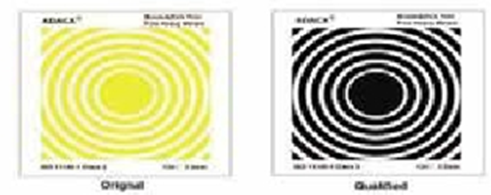
الفنة 2 : كواشف تستخدم فقط لاختبار كفاءة التخلص الكامل من الهواء من الأجهزة التي تعمل بنظام خلفلة الضغط مثل:
1- اختبار.( Bowie-dick test)
2- . اختبار (Helix Test)
اختبار Bowie dick
⁃ يتم إجراء هذا الاختبار في أول اليوم قبل تحمول الجهاز فى دورة خاصة ، كما يتم إجرازه عند اختبار الجهاز لأول مرة أو بعد إجراء الصيانة.
⁃ يوضع الاختبار في وسط مجموعة من الفرط ومن ثم توضع هذه المجموعة على الرف السفلي لجهاز التعقيم فوق فتحة سحب الهواء من الجهاز.
• ضرورة فتح كافة الأدوات ذات المفصلات ، كما ينبغى فك كافة الأدوات التي تحتوي على اجزاء منزلقة أو المركبة من أجزاء عديدة لضمان وصول محلول التعقيم إلى كافة لجزاء الألة العراد تعقيمها.
• التأكد من عمر كافة الأدرات بشكل كاف في المحلول كما نيغي وضع الأرانى والحاويات قائمة غير مقلوية لكى تمتلى بالمعلول.
• إحكام غطاء العاوية واتباع توصيات الشركة المصدعة فيما يتعلق بالفترة الزمنية المناسبة لإتمام التمقيم ، وفى خضون هذه الفترة يحظر إضافة أو إخراج أي أدوات من الحارية ، كما يجب تسجيل قراءات الوقت في دفتر تسجيل بحيث يتم مراجعته والاطلاع عليه.
• ضرورة استخدام ملائط كبيرة معتمة عند إخراج الأدوات المعتمة من الحارية.
• ضرورة شطف الأدوات المعقمة التي تم إخراجها من العاوية بالماء المعقم بطاية شديدة للتخلص من رواسب المادة الكيميائية العالفة بالأدوات.
• ضرورة استخدام الأدوات فرر أنتها• عملية إعادة المعالجة مباشرا ، حيث لا يسمح بلخزيلها.
مراقبة فعالية التعقيم
أولاً : موشرات ميكانيكيه .
تعمل هذه المؤشرات (العدادات) التى تعتير جزه من جهاز (الأوتوكلاف) أو الفرن الحراري على تسجيل قراءات الوقت والحرارة والضغط لنماء عملية التعقيم.
ثانياً : موشرات كيميائية
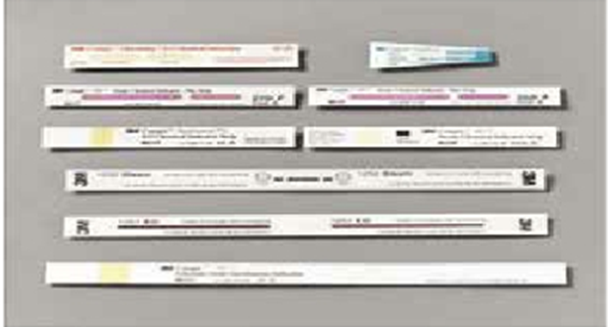
: اختبار (Hallx Test)
يستخدم للتأكد من نفاذ البخار إلى داخل الآلات والأدوات ذات التجاريف.
الفئة 3: وهي مزشرات داخلية توضع في كل عبوة تعقيم وتقيس مذغير واحد حسب تعليمات الشركة المصدعة ، وتستخدم غالبا في أحمزا التعقيم التي تعمل تعت درجات حرارة منخفضة.
الفئة 4 : وهى موشرات داخلية توضع في كل عبوة تعقيم وتعيس اشين أو أكثر من المدغيرات فى نفس الوقت (حرارة - درجة التشبع بالبطار - زمن) حسب تعليمات الشركة المصنعة.
الفئة 5 : وهى مؤشرات داخلية توضع في كل دورة تعنيم أو في كل عبوة تعقيم لقياس جميع المتغيرات في نفس الوقت (حرارة - درجة التشبع بالبخار - زمن) وذلك لتضاهي الموشرات الببولوجية، لكنها ليست بدبلا عن المؤشرات البيولوجية.
الفنة 6 : وهي مؤشرات داخلية توضع في دورة تعقيم خاصة لقباس جميع المتغيرات في نفس الوقت وهي لتقسم إلى مجموعات حسب درجة حرارة وزمن كل دورة تعقيم، وهي الأكثر تعقيداً ولكنها لا تعد بديلاً عن المؤشرك البيولوجية.
ويطلق على المؤشرات ٦٠٥،٤ الموشرات التداخلية لإمكانيتها قيلس أكتر من مؤثر فى نفس الوقت.
ثالثا : الموشرات البيولوجية
تعتمد المؤشرات البرولوجية في استخدامها على الحويصلات البكتيرية الأكثر مقاومة لظروف للتعقيم المختلفة لتحديد ما إذا كانت عملية التعقيم قد تمت بنجاح أم لا ، ويتم وضع الاختبار البيولوجي على الرف السفلي الغرفة التعقيم فرق فتحة سحب الهواء.
• يمكن الحكم على نجاح عملية التعقيم في حالة الفضاء على حويصلات البكتيريا الموجودة على الشرائط داخل كسولات الاختبار .
• توضع كسولات الاختبار داخل حهار التعقيم أثناء عمله ، وبعد إتمام عملية التعقيم يتم وضع الشرائط في مزرعة بكتيرية تساعد على عملية الإنماء في درجة حرارة كالآتي !
G. Stearothermophtus
٦٠ - ٥٥ درجة ملوية
B. Atrophaeus
٣٧ - ٣٥ درجة مئوية
لمدة ٤٨ ساعة، فإذا لم يطهر ائرا للبكتيريا كانت عملية التعقيم ناجحه . وتبرز أهمية هذه الطريقة في أنها تعدد فعالية التقيم بشكل مباشر لكن يتضح قصور هذه الطريقة في أنها غير فورية مثل المؤشرات الميكانيكيه والكيميائيه حيث يجب عمل مزرعة بكتيرية والتعرف على نتائجها قبل لن يتم تعديد فعالية التعقيم .
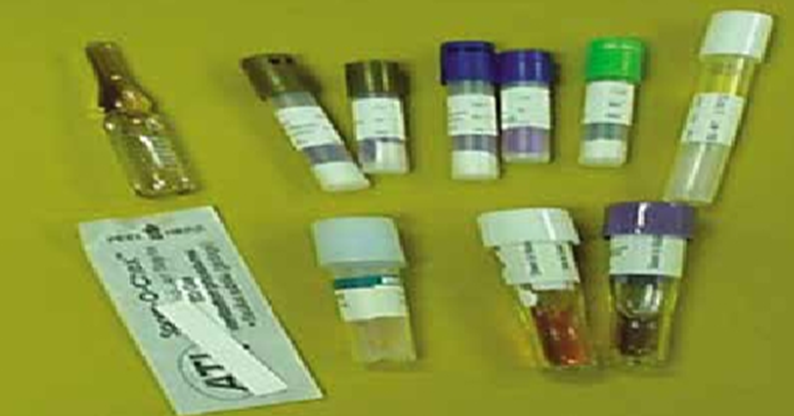
شكل رقم (٢٧)
المؤشرات البيولوجية.
• إذا كانت نتيجة الاختبار ايجابية (بوجد نمو للبكترريا) وكانت لتيجة الاختبارات الكيمرائية والفيزياتية تلجعة فيتم إعادة الاختبار البيولوجي مرة أخرى فإذا تكررت إيجابية الإختبار البيولوحي يتم وقف العمل بالجهاز وإبلاغ قسم الصيالة لعمل اللازم ويتم استرجاع عبوات التعقيم التي بها أجزاء الززع فقط ( Implants).
• يجب ان يتم إجراء الاختيار باستخدام المؤشرات البيولوجية:
⁃ عند بداية تشغيل جهاز التعقيم لأول مرة.
⁃ لسبوعياً.
⁃ في حالة حتوث أعطال بالجهاز أو بعد إجراء عمليات صيانة للجهاز.
⁃ في حالة احتراء الدورة على الأجزاء الصناعية المزروعة (implants).
نظام المراقبة والتسجيل :
يتبغى اتباع إجراءات التسجيل التالية :
• يجب أن تتم مراجعة المخطط البياني الذي يوضعه جهاز (الأوتوكلاف) عقب كل تعميل (إذا كان الجهاز مزوداً بمخطط بياني) ، فإذا لم يكن الأمر كذلك فينبغي أن يتم تسجيل قراءات الحرارة والزمن والضغط في دفتر تسجيل بحيث يمكن الاطلاع عليه عقب كل تحميل.
• يلزم تجول قراءات الحرارة والزمن في التمقيم الحراري الجاف في دفتر تسجول بحرث يتم الاطلاع عليه بعد كل مرة يتم فيها تعينة الجهاز بالأدوات المراد تعقيمها، كما يمكن وضع مجس حراري في أصعب مكان لوصول الحرارة في الحمل المراد تعقيمه .
- قسم خدمات التعقيم (قسم التعقيم المركزي )
قسم خدمات التعقيم المركزي من أهم مقومات أي برلامج ناجح لمكافعة العنوى ، لما يتميز به الفراد هذا القسم من خيرة ومعرفة بإجراءات التعقيم والتطهير للآلات ، كما يحقق هذا القسم اقتصاداً في الإنفاق على العدى البعيد.
تجهيز مكان خاص لإعادة معالجة الآلات والأدوات الطبية :-
• يجب ضعان مستوى جيد من النظافة فى اماكن التعقيم والتطهير عالي المستوى وتخزين الآلات والأدوات حيث أن تلك الأماكن تعتبر اماكن نظرفة ، لما الأماكن التي تعتبر غير لظيفة فهي الغرف التي يتم فيها غسيل الأدوات الملوئة ، ولذلك فمن المهم أن يكون هناك على الأول ثلاث عرف منفصلة ، واحدة لاستقبال الأدوات والمعدات وتنظيفها ، وأخرى للقحص والتغليف والمعالجة النهائية (التعقيم أو التطهير) . وأخرى للتخزين.
• إذا لم تتوافر إلا غرفة واحدة (كما هو الحال في وحدات الرعاية الصحية الأولية) فإنه يمكن إعادة تصميم الغرفة بحيث يكون خط سير العمل بها يتوافق مع الاشتراطات
المطلوبة (من المتسخ إلى النظرف) ، ومن المضروري أن يتوافر على الأقل حوض لفصيل الآلات وحرض آخر لغسل الأيدي ومتضدة لاستقبال المستلزمات المتسخة وأخرى للتجفيف والتعبئة، كما يجب أن تتوافر مساحات للتخزين (يفضل خزائن ملقة) ، ويلزم أن تترك مسافات فاصلة بين الأماكن التي يتم فيها تداول الأدوات المتسخة وبين الأماكن النظيفة التي يتم فيها تعيئة النظيف منها .
- دورة الآلات والمستلزمات بالمنشات الصحية
يجب أن يتم جمع المعدات الملوثة التي يعاد استخدامها من الأقسام المختافة بالمنشاة ونقلها إلى قسم خدمات التعقيم حيث يتم تنظيفها وتطهيرها أو تعينتها وتعقيمها وإعادتها إلى الأقسام ثانية.
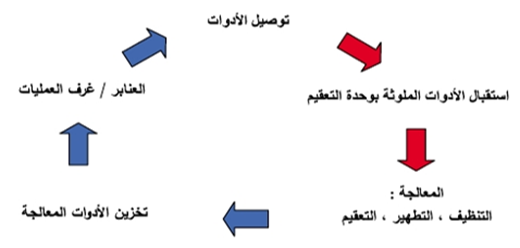
شكل رقم (٢٨)
مخطط يوضح مسار العمل المتبع لإعادة معالجة الآلات
جمع ونقل الآلات والأدوات الملوثة
• يتم جمع الأدوات الملوثة (التي يعاد استخدامها) فى الأقسام في حاوية بها ماء ومادة منظفة سائلة محكمة الغلق ملصق عليها بطاقة توضح ما فيها.
• يتم اتخاذ الإجراءات اللازمة لتوصيل الأدوات الملونة إلى قسم خدمات التعقيم بصورة آمنة ويحظر تنظيف أي منها في أقسام المستثفى.
التعامل مع الآلات والأدوات يقسم لخدمات التعقيم :
• توضع الأدوات الملوثة في المكان المخصص لذلك بالقسم.
• يتم تنظيف كافة الأدرات بماء ومادة منطقة سائلة لو بمعلول إنزيمي سواء كان ذلك آليا لو يدويا مع الالترام بارتداء الواقيات الشخصية المناسبة.
• يتم تجفوف الآلات جيداً.
• يتم فحص جميع المعدات لضعان نظافتها وعلم تلفهاء
• يتم إرسال الأدوات التالفة لقسم الصيانة بعد تطهيرها تطهيراً عال المستوى أو تعقيمها.
• يتم تغليف الأدوات النظيفة الخطرة تمهيداً للتعقيم.
• يتم تعقيم الأدوات لو تطهيرها حبب ما يتطلب الأمر .
• يتم التأكد من كفاءة عملية التعقيم (بقراءة المؤشرات).
• بعد تمام عملية إعادة المعالجة يتم إعادة المعدات إلى الأقسام أو تخزينها في مكان نظيف جيد التهرية.
• يراعى فصل مسار الأدوات والآلات الملولة عن تلك النظيفة أو المعقمة داخل قسم خدمات التعقيم كما يراعى استخدام عربات أو حاويات خاصة لنقلها بخلاق العربات لو الحاريات المخصصة للآلات الملوثة.
تصميم قسم خدمات التعقيم :
ينبغى أن يتم فصل الأماكن النظيفة في قسم خدمات التعقيم عن الأماكن العلوثة وذلك عن طريق حواجز مادية (سهلة التنظيف والتطهير)، مع مراعاة ما يلي :
• يراعى أن يكون اتجاء حركة الهواء من الأماكن النظيفة إلى الأماكن غير النظيفة.
• يتم تصميم مكان العمل بحيث لا تختلط الأدوات المنسخة مع تلك النظيفة أو المعقمة لو تلك التي تم تطهيرها.
• يتم إعلاق أبواب القسم للحيلولة دون حدوث تلوث بسبب الأثرية أو دخول الذباب، مع الحفاظ على التهرية المناسبة.
• ان يكون هناك تجهيزات كافية ومناسبة لتنظيف اليدين.
• يتم تخصيص طاقم عمل منفصل لكل منطقة عمل وإذا استحال ذلك يلتزم فريق العمل بالاحتياطات القياسية المتبعة للاجراءات المختلفة بكل منطقة عمل.
• يتم توفير مستلزمات منفصلة واماكن للتخزين لكل منطقة عمل.
ملحوظة هامة
يتبغي أن يتم تطعيم طاقم عمل قسم خدمات التحقيم شد الالتهاب الكبدي الفروسي (بى) (الرجع إلى الفصل تحت عنوان: السلامة والصحة المهنية ).
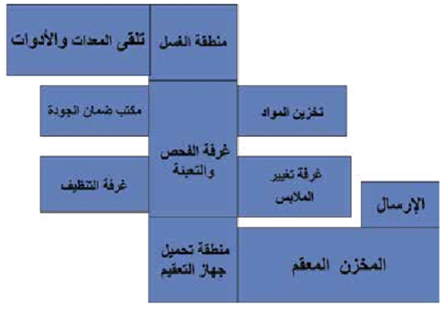
مخطط عام لقسم العمليات
- فتح صينية الأجهزة ولف الفوط والجاونات
الإحتياجات المطلوبة :
الجاونات المطلوبة أو لفة الفوط .
صينية الأجهزة .
مائدة أو تروللى نظيفة.
أقمشة ومحلول مطهر.
الخطـوات :
1. نظف سطح التروللى أو مائدة الفوط والجاونات بالكلورالمخفف أو أى مطهر لقتل الجراثيم.
2. جفف جيداً ( لتجنب أن الورق أو الفوط تبلل ).
3. خذ اللفافة المطلوبة أو صينية الأجهزة وراجع الأتى:
- تاريخ الإنتهاء .
- الغطاء الخارجى للتأكد من عدم وجود أى تمزق والتأكد من شريط الأوتوكلاف. ( اللفافة أو الصينية لا يمكن ضمان تعقمها إذا كان إنتهاء تاريخ المفعول أو هناك تلف فى الغطاء أو أن الاوتوكلاف غير واضح المعالم ).
- فى حالة إنتهاء تاريخ إستعمالها وجود تلف فى الغطاء الخارجى بأى شكل أو شريط الأوتوكلاف غير واضح العلاقات تطرح جانباً.
4. إفتح لفافة الفوط والجاونات طبقاً للخطوات المتبعة ( لفتح اللفافات المعقمة ).
5. إخرجها لتسير على التروللى أو المائدة ويكون أطرافها لأعلى ( إذا وضعت اللفافة على المائدة وأطرافها لأسفل لن يكون فتحها ).
6. يفتح التمريض المعقم الفوط بشد الطرف الأول نحوه (دون تلوث القفازات).
7. عند فتح صينية المعدات يقوم تمريض المناولة بوضع الصينية على المائدة النظيفة .
8. إقطع شريط الأوتوكلاف وإمسك الجزء الغير معقم فى الطرف للغطاء الخارجى فقط .
9. شد لفتحه (لتجنب ثنى الطرف على الصينية وتلوث محتوياتها).
10. لف حول المائدة وإفتح باقى الأغطية بنفس الطريقة .
- التأكد من عدم لمس داخل الأكياس ( الباكت ) .
- التأكد من عدم ميل أو لمس سطح الصينية .
- فتح باكتة الخيط
الإحتياجات :
باكتة الخيط المطلوبة.
الخطوات :
1. فتح فقط الخيوط التى سوف تفتح للإستعمال .
- فى حالة عدم التأكد لإستعمال كارت الجراح المفضل أو سؤال الجراح .
2. التمريض المناول تأخذ الخيط المطلوب وتتأكد أن الغلاف الخارجى لاصق بإحكام وعدم وجود أى تقطع أو تلف إذا كان الكيس تالف تخلصى من الخيط ( الخيط يكون غير معقم غير مأمون الإستعمال فى حالة وجود أى تلف فى غلافه الخارجى ).
3. يمسك التمريض المناول الباكتة فى يد وتفصل الطبقة الرقيقة من الطبقة البلاستيك بحرف إبهام اليد الأخرى .
4. تشد الطبقة الرقيقة جيداً بين أصابع الإبهام والسبابة .
5. تشد الطبقة اللاستيك بين إصبعى الإبهام والسبابة التابعان لليد الأخرى .
- تمسك الباكتة بعناية بين قبضة اليدين .
6. تدفع أصابع الإبهام للخارج حتي يتمكن التمريض من نزع الطبقات للخلف مع بعضها وكشف عن الطبقة الداخلية المعقمة للباكته .
- يجب التأكد من أن الأصابع والإبهام بعيد عن الجزء الداخلى للباكتة ( لوقاية الطبقة الداخلية للباكته من التلوث ).
7. يقف التمريض المناول فى إحدى التروللى ماسك بالخيط التمريض المعقم ليأخذه .
أ- يجب التأكد من عدم الميل بالجسم على التروللى أو أى جزئيات على التروللى مصاحبة محتويات الباكته ..
ب- يجب التأكد من عدم رمى الطبقة الداخلية للباكتة على التروللى .
8. يستعمل التمريض المعقم ماسك الأغطية المساك الإسفنجى لأخذ الطبقة المعقمة بالباكتة.
9. لنزع أى باكتة تستخدم هذه الطريقة .
- فتح الباكتة المعقمة
الإحتياجات :
باكتة معقمة
الخطوات :
1. الباكتة المعقمة لا تفتح إلا عند إعدادها للإستعمال.
2. يأخذ التمريض المناول الباكتة المعقمة المطلوبة وتراجع تاريخ الإنتهاء وتتأكد من عدم وجود أى قطع فى غلافها الخارجى والتأكد من عدم تغير لون شريط التعقيم .
- فى حالة إنتهاء مدة الصلاحية أو وجود قطع فى الغلاف الخارجى أو شريط التعقيم لا يدل على تعقيمها لا تستعمل الباكتة .
3. قطع شريط الأوتوكلاف ثم وضع أصابع الإبهام فى أعلى طرف ثانية الباكتة حتى يستقيم الجزء العلوى المطوى للباكتة .
4. مسك الباكتة من أسفل ووضعها بعيداً عن الملابس
- تخرج المحتويات حتى الجزء العلوى للباكتة بحيث يراها التمريض المعقم .
5. الوقوف فى إحدى جوانب الترابيزة المعقمة للإمساك بالباكتة .
أ- التمريض المعقم لتخرج محتوياتها .
ب- التأكد من عدم الميل بالجسم على الترابيزة ( لوقاية التروللى المعقم من التلوث ).
ت- التأكد من عدم قذف محتويات الباكتة المعقمة على الترابيزة ( للتأكد من عدم وقوع تراب وأى شئ آخر على التروللى مع محتويات الباكته ).
6. بإستخدام جفت الغيار أو ماسك الإسفنج يقوم التمريض المعقم بإستخراج محتويات الباكتة .
7. فى حالة الغطاء وفتح الباكتة المعقمة غير الباكتة المطلوبة من جهة التمريض المعقم يجب عدم إستعمال الباكتة وإرجاعها إلى التعقيم المركزى لإعادة تعقيمها ثانية .
- يجب عدم قفلها لإستعمالها فيما بعد .
8. يقف التمريض المناول فى إحدى جانبى التروللى ماسكة بالخيط للتمريض المعقم لتأخذه .
أ- يجب التأكد من عدم الميل بالجسم على التروللى .
ب- يجب التأكد من عدم رمى الطبقة الداخلية للباكتة على التروللى .
9. يستعمل التمريض المعقم ماسك الأغطية المساك الإسفنجى لأخذ الطبقة المعقمة بالباكتة .
10. لنزع أى باكتة تستخدم هذه الطريقة .