دليل العناية بمشكلات الجهاز التنفسي
| الموقع: | EHC | Egyptian Health Council |
| المقرر الدراسي: | دلائل الاجراءات التمريضية لقسم حديث الولاده |
| كتاب: | دليل العناية بمشكلات الجهاز التنفسي |
| طبع بواسطة: | Guest user |
| التاريخ: | الأحد، 20 سبتمبر 2026، 5:07 PM |
الوصف
"last update: 9 February 2025" تحميل الدليل
- اعداد
- أ.د/ محمد لطيف الرئيس التنفيذي للمجلس الصحي المصري - د/ كوثر محمود نقيب عام التمريض المصري – عضو مجلس الشيوخ
م | الاسم | الوظيفة |
1 | أ.د/ امل احمد خليل مرسي | نائب رئيس الجامعة لشئون التعليم والطلاب – جامعة بورسعيد |
2 | أ.د / عفاف عبد العزيز عبد العزيز بصل | عميد كلية التمريض –استاذ تمريض باطنه وجراحي جامعة طنطا |
3 | أ.د/ زينب حسين على محمد سعد | وكيل الكلية لشئون البيئة وخدمة المجتمع – كلية التمريض – جامعه حلوان |
4 | أ.د/ امل سعيد طه رفاعي | أستاذ ورئيس قسم التمريض الباطني الجراحي – جامعة بنها |
5 | أد حنان احمد السباعي على | استاذ التمريض التمريض الباطني الجراحي- كلية التمريض – جامعة القاهرة |
6 | د /نيفين عبدربه النبي محمد عبد النبي | رئيس الإدارة المركزية ندباَ –وزاره الصحة |
7 | د /مايسة حسني احمد تمام | مدير عام للإدارة ندباَ – وزاره الصحة |
8 | د /نانسي علاء الدين عبد الباسط على | المشرف على التعليم الفني- الهيئة العامة للرعاية الصحية |
9 | د /شيرين محمد محمد سعدالدين | المشرف على تطوير الخدمات التمريضية –الهيئة العامة للرعاية الصحية |
10 | د./ مى محمود العسال | مدير عام الإدارة العامة لشئون المعاهد الفنية الصحية |
11 | أ.م.د/ هبة محمود محمد | أستاذ مساعد تمريض صحة الام وحديثي الولادة –كلية التمريض - جامعة عين شمس |
المشاركين | ||
12 | د/ نجاة صلاح شلبي سلامة | أستاذ تمريض النساء والتوليد |
13 | أ/شيماء عبد الباسط إبراهيم سليم | عضو إدارة التمريض بالهيئة العامة للرعاية الصحية فرع بورسعيد |
14 | أ/هدي السيد محمد | عضو إدارة التمريض بالهيئة العامة للرعاية الصحية فرع بورسعيد |
15 | أ/ولاء أحمد على | عضو إدارة التمريض بالهيئة العامة للرعاية الصحية فرع بورسعيد |
16 | أ/أمنية عبد القادر محمد | عضو إدارة التمريض بالهيئة العامة للرعاية الصحية فرع بورسعيد |
17 | أ/ياسر عبد الكريم عمر عبد الجواد | عضو إدارة التمريض بالهيئة العامة للرعاية الصحية فرع جنوب سيناء |
- العلاج بالاكسجين
يستخدم الأكسجين كعلاج هام للمشاكل التنفسية الحادة، ولمنع التأثيرات الضارة التي قد يتسبب فيها نقص وصول الأكسجين إلى أنسجة الطفل، وخصوصاً المخ، ويعتبر الأكسجين علاجاً طبياً للأطفال حديثى الولادة المصابين بصعوبة التنفس، و بالتالى فإن معدل تدفق الأكسجين، وتركيزه لابد أن يكونا حسب تعليمات الطبيب، و تقوم الممرضة بملاحظتهما باستمرار، لمنع حدوث المضاعفات الناتجة عن نقص أو زيادة العلاج بالأكسجين.
دواعي الإستخدام :
· حالات نقص الأكسجين الملحوظة بنتائج غازات الدم الشريانية.
· الافاقة بعد الولادة و الأنعاش القلب الرئوى.
· حالات صعوبة التنفس المصحوبة بالزرقة.
· معالجة الإختلالات الوظيفية لأجهزة الجسم التي تنشأ عن نقص إمداد الأنسجة بالأكسجين (الصدمة).
· نوبات توقف التنفس المتكررة.
علامات حدوث نقص الأكسجين بالدم :
· زيادة معدل التنفس
· الأنجذاب الصدرى
· النتة أثناء الزفير
· التنفس السطحى السريع
· نوبات متكررة من توقف التنفس
· تغير لون الطفل إلى الزرقة
طرق إعطاء الأكسجين داخل وحدات رعاية حديثي الولادة :
يمكن إعطاء الأكسجين للأطفال حديثى الولادة بإحدى الطرق الآتية :
· أكسجين المحضن (Oxygen incubator)
· صندوق الرأس (Head box)
· قناع الوجه (Face mask)
· القثطرة الأنفية (Nasal catheter–prongs)
· القثطرة الأنفية البلعومية (Nasopharyngeal catheter)
· التنفس بإستخدام نظام الضغط الموجب المستمر على مجرى الهواء عن طريق الأنف (NCPAP)
·
التنفس الميكانيكي من خلال الأنبوب الحنجري (Mechanical ventilation)
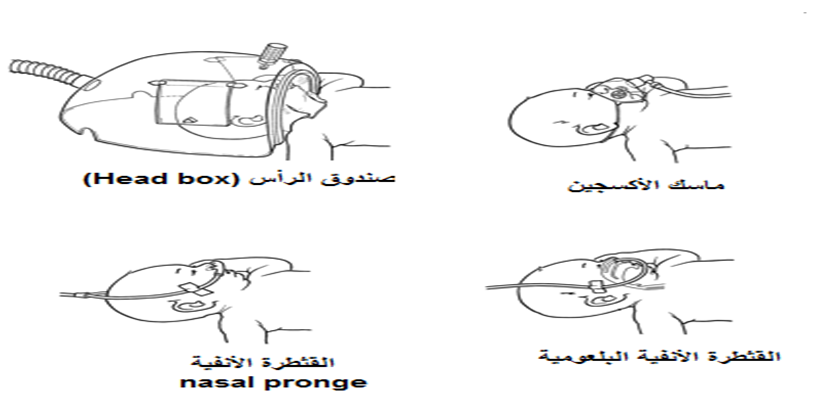
الطرق المختلفة لإعطاء الأكسجين داخل وحدات رعاية حديثي الولادة ومعدلات تدفق الأكسجين (لتر/دقيقة)، ومميزات وعيوب كل طريقة :
الطريقة | معدل تدفق الأكسجين لتر/دقيقة | المميزات | العيوب |
أكسجين المحضن | ٦ – ١٠ لتر/دقيقة | –طريقة غير إختراقية و غير مكلفة –تستخدم أثناء عملية فطام الطفل من الأكسجين | –طريقة غير فعالة مع الحالات الحرجة |
صندوق الرأس | ٤ – ۷ لتر/دقيقة | –طريقة غير إختراقية –تستخدم أثناء عملية فطام الطفل من الأكسجين | –طريقة غير مُحكمة، يمكن حدوث تسريب للأكسجين –يصعُب إعطاء الرعاية التمريضية المطلوبة للطفل |
قناع الوجة | ٣ – ٦ لتر/دقيقة | –طريقة غير إختراقية –طريقة بسيطة وغير مكلفة –تستخدم أثناء عملية الأفاقة بعد الولادة | –إنتفاخ بالبطن –ضغط على الوجه والعينين –إحتباس غاز ثاني أكسيد الكربون |
القثطرة الأنفية | 0,5 – ٢ لتر/دقيقة | –طريقة غير إختراقية –طريقة فعالة مع بعض حالات صعوبة التنفس | –إنتفاخ بالبطن –جروح بالأنف |
التنفس بإستخدام نظام الضغط الموجب المستمر على مجرى الهواء عن طريق الأنف | ۸ – ١٠ لتر/دقيقة (أكسجين + هواء مضغوط) | –طريقة غير إختراقية –طريقة فعالة لعلاج حالات صعوبة التنفس الشديدة | –إنتفاخ بالبطن –جروح شديدة بالحاجز الأنفي –إرتفاع التكلفة |
التنفس الصناعي من خلال الأنبوبة الحنجرية | حسب تعليمات الطبيب | –طريقة فعالة لعلاج حالات صعوبة التنفس الحادة المصحوبة بفشل وظائف التنفس | –طريقة إختراقية –قد تسبب عدوى الجهاز التنفسي –يحتاج عناية تمريضية ومهارات طبية عالية الجودة –يحتاج تقنية متقدمة (إمكانيات المستوى الثالث من الرعاية) –إرتفاع التكلفة |
الرعاية التمريضية :
▘ ملاحظة وتدوين اللون، الجهد التنفسي، العلامات الحيوية للطفل، وإبلاغ الطبيب فورًا في حالة حدوث أي إختلال.
▘ الملاحظة المستمرة لنسبة تشبع الدم بالأكسجين بإستخدام جهاز البالس أوكسيميتر (pulse oximeter)، والمحافظة عليها في حدود ۸٩ – ٩٣٪، وحسب تعليمات الطبيب.
▘ اعطاء الأكسجين رطب وذلك لمنع جفاف الغشاء المخاطى للمجرى الهوائى و الذى قد يتسبب فى زيادة لزوجة الأفرازات و تراكمها داخل الجهاز التنفسى.
▘ ملاحظة وتدوين معدل تدفق الأكسجين، الطريقة المستخدمة لأعطاء الأكسجين، و نسبة تشبع الدم بالأكسجين.
▘ تشفيط المجرى الهوائي كلما إستدعت الحالة مع ملاحظة و تدوين الإفرازات التي تم تشفيطها.
▘ عمل تحليل غازات وحموضة الدم الشرياني.
▘ متابعة قياس تركيز الأكسجين بإستخدام جهاز محلل الأكسجين (oxygen analyzer)؛ إن أمكن، لمنع المضاعفات التي قد تنتج عن زيادة نسبة الأكسجين المعطى للطفل عن الحد المسموح به.
المضاعفات الناتجة عن نقص الأكسجين :
▘ زيادة الضغط داخل الشريان الرئوى.
▘ التشنجات
▘ الأعتلال المخى بسبب نقص الأكسجين
▘ الشلل الدماغى
▘ الإعاقات الذهنية و السلوكية فى الأطفال على المدى البعيد.
المضاعفات الناتجة عن زيادة الأكسجين :
▘ تليف شبكية العين وفقدان البصر عند إعطاء الأكسجين؛ بنسب عالية لفترة طويلة، خصوصًا للمواليد ناقصي الوزن والنمو.
▘ تعّود الرئة على الأكسجين، وصعوبة الفطام من الأكسجين (مرض الرئة المزمن).
▘ الإسترواح الصدري؛ خاصةً مع إستخدام نظام الضغط الموجب المستمرعلى المجرى الهوائي أو التنفس الصناعي.
- العلاج الطبيعي للصدر
الهدف :
▘ التخلص من الإفرازات المتراكمة المجرى الهوائي.
▘ زيادة سعة الممرات الهوائية والرئتين
▘ تحسين وظائف التنفس من خلال تحسين عملية تبادل الغازات.
▘ الوقاية من إنسداد الأنبوبة الحنجرية.
▘ منع عدوى الجهاز التنفسي
الأساليب والأوضاع المختلفة لتطبيق العلاج الطبيعي للصدر :
▘ أوضاع التصريف (Postural Drainage)
▘ النقر Percussion) )
▘ الإهتزاز (Vibration)
▘ التشفيط من القصبة الهوائية
الأساليب والأوضاع المختلفة لتطبيق العلاج الطبيعي للصدر
الطريقة | مميزاتها | موانع إستخدامها |
أوضاع التصريف (Postural Drainage) | ▘ هي مجموعة من الأوضاع التي يمكن تطبيقها حسب مكان تراكم الإفرازات بالرئة لفترة زمنية محددة، وتعتمد على تأثير الجاذبية الأرضية لتحريك هذه الإفرازات من الرئة إلى مركز الصدر، أو منطقة تفرع الشعبتين الهوائيتين (الكارينا)، ليتم سحبها عن طريق التشفيط. ▘ الوقاية من تجمع الإفرازات نتيجة عدم تحريك الطفل لفترة طويلة، أو نتيجة لإنتقال العدوى من مكان إلى مكان آخر. ▘ منع الإلتصاقات التي قد تحدث في الرئة بعد فصل الطفل من على جهاز التنفس الصناعي. | ▘ تجنب الوضع المائل بخفض مستوى رأس الطفل لأسفل في الحالات الآتية: – الطفل ناقص النمو أقل من ١٢٥٠جم. – نزيف المخ – إستسقاء الرأس الغير معالج – بعد الرضاعة مباشرةً – نزف العين الناجم عن إصابات الولادة – إرتفاع ضغط الدم ▘ حالات تجنب وضع الوليد على بطنه، في حالة وجود: – جراحة حديثة بالبطن – إنتفاخ البطن |
النقر(التخبيط) (Percussion) | ▘ الهدف منه تحريك الإفرازات المتراكمة فى اتجاه مركز الصدر لتسهيل خروجها من الممرات الهوائية الصغيرة إلى الممرات الهوائية الكبيرة ليتم سحبها عن طريق التشفيط أو تحفيز منعكس الكحة، و ذلك عن طريق التخبيط بلطف على ناحيتى صدر الطفل بإستخدام ماسك مبطن " يمكن استخدام حلمة صناعية مبطنة"، مع ملاحظة مدى تحمل الطفل، ومراعاة وضع راحة اليد الأخرى تحت رأس الطفل لمساندتها أثناء التخبيط على الصدر. | ▘ الموانع السابقة لأوضاع التصريف ▘ الإسترواح الصدري والإمفزيما ▘ سيولة الدم وقابلية النزف ▘ النزيف الرئوي ▘ وجود كسور بالضلوع ▘ وجود إلتهابات، كدمات، أو جروح بالجلد |
الإهتزاز (Vibration)
| ▘ يتم عن طريق عمل مساج على منطقة تراكم الإفرازات بالرئتين عن طريق اليد أو بإستخدام جهاز الإهتزاز لتحريك الإفرازات من الممرات الهوائية الصغيرة إلى الممرات الهوائية الكبير ة ليتم التخلص منها عن طريق التشفيط أو تحفيز منعكس الكحة. مع الأخذ فى الأعتبار مدى تحمل الطفل للأجراء، ومراعاة و ضع راحة اليد الأخرى تحت رأس الطفل. |
دور الممرضة :
أولاً: تقييم حالة الطفل وتجهيز الأدوات اللازمة قبل البدء في تنفيذ خطوات العلاج الطبيعي للصدر :
▘ تقييم مدى إحتياج الطفل للعلاج الطبيعى للصدر، وإختيار الأسلوب المناسب لحالته.
▘ التأكد من إستقرار العلامات الحيوية للطفل (الحرارة، النبض، معدل التنفس، الضغط، ونسبة تشبع الدم بالأكسجين).
▘ توصيل الطفل بالمونيتور.
▘ فحص صدر الطفل بالسماعة لتحديد أماكن تجمع الإفرازات بالرئة.
▘ عمل أشعة على الصدر (توضح منطقة تراكم الإفرازات بالرئة).
▘ تجهيز الأدوات اللازمة على حسب الأسلوب الذي تم إختياره لتطبيق العلاج الطبيعي للصدر وتشمل:
– ماسكات ذات حواف مبطنة بمقاسات مختلفة (يتم إختيار الماسك المناسب لحجم الطفل)
– جهاز تشفيط
– جهاز إصدار الإهتزازات بالمواصفات الآتية:
o يعمل بالبطارية
o آمن من الشحنات الكهربائية
o ذو سطح أملس
o يسهل تطهيره بين كل طفل وآخر
– قساطر تشفيط بمقاسات مختلفة مقاس (٦ ، ۸ ، ١٠)
– قفاز معقم
– محلول ملح
– قطع درسنج معقمة
– فوطة صغيرة
– مصدر للأكسجين
– مونيتور أو جهاز قياس نسبة تشبع الدم بالأكسجين
– أمبوباج
– سماعة طبيب
ثانيًا : الخطوات :
في حالة تطبيق أوضاع التصريف (Postural drainage)
▘ أولاً تحديد منطقة تراكم الإفرازات بالرئة، وإختيار أفضل الأوضاع لتحريك هذه الإفرازات من مكانها.
▘ يتم تطبيق أوضاع التصريف والحفاظ على وضعية الطفل (بإستخدام فوطة صغيرة) لفترة زمنية محددة تتراوح بين ١٠ – ١٥ دقيقة لكل وضع، أو حسب تعليمات الطبيب.
▘ يتم عمل جدول لتغير وضع الطفل.
▘ يتم تشفيط الإفرازات.
الأضرار المحتملة الحدوث مع تطبيق أوضاع التصريف
▘ خروج الأنبوبة الحنجرية، قسطرة السرة، أو الأنبوبة الصدرية
▘ إرتفاع الضغط الدماغي
▘ الضغط على الحجاب الحاجز
▘ سهولة دخول مكونات المعدة إلى الممر الهوائي
▘ توقف التنفس الناتج عن إنسداد الممر الهوائي
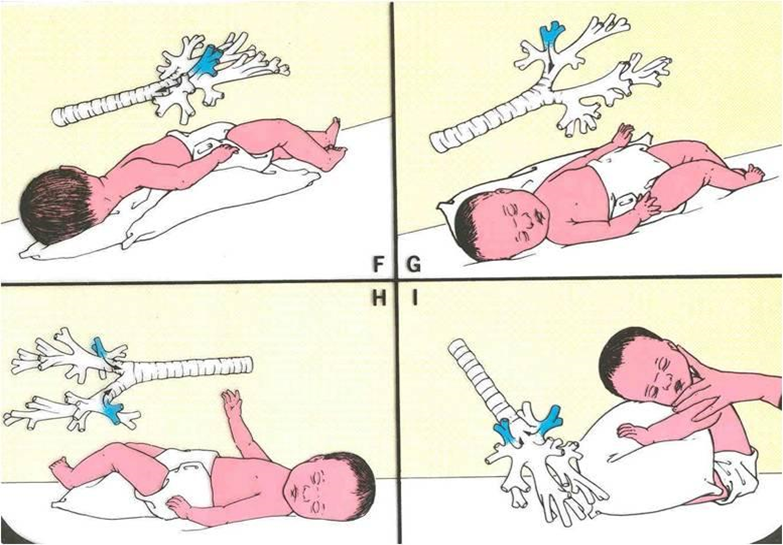
نماذج لبعض أوضاع العلاج الطبيعي للصدر (التصريف)
في حالة تطبيق أسلوب الإهتزاز (Vibration)
▘ يتم تحديد منطقة تجمع الإفرازات بالرئة.
▘ يوضع الطفل على أحد جانبيه.
▘ توضع قطعة ناعمة الملمس بين الجهاز (الفرشاة الكهربائية) والجلد.
▘ يتم تشغيل الجهاز على ظهر الطفل، بحيث يتم تحريكه من أسفل إلى أعلى في حركة دائرية.
▘ يجب تنظيم حركات الإهتزاز مع الزفير.
▘ مدة الجلسة لكل وضع تتراوح بين ٢ – ٣ دقائق لكل منطقة، أو تبعًا لتعليمات الطبيب.
▘ يتم تشفيط الإفرازات.
الأضرار المحتملة الحدوث مع تطبيق أسلوب الإهتزاز
▘ نقص الأكسجين بالدم
▘ سحجات بالجلد
في حالة تطبيق أسلوب النقر (الطرق) (Percussion)
▘ يتم تحديد منطقة تجمع الإفرازات بالرئة.
▘ يوضع الطفل على أحد جانبيه.
▘ يتم النقر بلطف شديد بإستخدام ماسك مبطن عدة مرات على المنطقة المتأثرة بالصدر من أسفل إلى أعلى، وذلك لمدة تتراوح بين ٥ – ١٠ دقائق .
▘ يتم تشفيط الإفرازات.
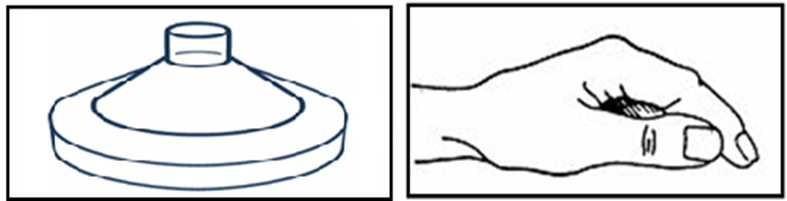
وسائل تنفيذ أسلوب النقر
الأضرار المحتملة الحدوث مع تطبيق أسلوب النقر
– نقص الأكسجين بالدم
– سحجات بالجلد
– كسور بالضلوع
– تهتك أنسجة الكبد والطحال
– حدوث ألم للطفل
ثالثًا: تقييم حالة الطفل بعد تنفيذ خطوات العلاج الطبيعي للصدر :
▘ التأكد من إستقرار العلامات الحيوية للطفل (الحرارة، النبض، معدل التنفس، الضغط، ونسبة تشبع الدم بالأكسجين)
▘ فحص صدر الطفل بالسماعة
▘ فحص صدر الطفل بالحس اليدوي (وجود تزييق)
▘ عمل أشعة على الصدر
▘ تقييم مدى استجابة الطفل
إستجابة الطفل للعلاج الطبيعي للصدر
إستجابة إيجابية للطفل | إستجابة سلبية للطفل |
– تحسن المجهود التنفسي – تحسن معدل التنفس – تحسن مستوى تشبع الدم بالأكسجين – تحسن نتائج غازات الدم – تحسن الحالة العامة للطفل | – إجهاد للطفل – زيادة المجهود التنفسي ومعدل التنفس – إنخفاض مستوى تشبع الدم بالأكسجين – حدوث نوبات متكررة من توقف التنفس – تدهور الحالة العامة للطفل |
- العناية التمريضية للطفل على جهاز تنفس صناعي
|
تقوم فكرة التنفس الصناعى على استخدام جهاز يتم ضبطه، توصيله بالأنبوبة الحنجرية، حيث يقوم بدفع غاز الأكسجين المخلوط بالهواء المضغوط، لتكوين الغاز المستنشق، وذلك بمعدل وضغط مناسبين خلال فترة زمنية محددة. دواعى وضع الوليد على جهاز التنفس الصناعى ▘ الإضطراب الحاد فى وظائف الجهاز التنفسى : - الضغط الجزئى للأكسجين في الدم الشريانى (PaO2)أقل من 50 ملليمتر زئبقي على الرغم من أن تركيز الأكسجين المعطى للوليد من 80 %-100%. - الضغط الجزئى لثاني أكسيد الكربون (PaCO2) في الدم الشريانى أكثر من 60-65 ملليمتر زئبقي. - حمضية الدم الشريانى(arterial pH) أقل من 7.35. ▘ حالات صعوبة التنفس الشديدة و إنجذاب الصدر مع توقع فشل بعملية التنفس، بعد مراجعة الطبيب. ▘ توقف التنفس لفترات طويلة أو إزدياد معدل حدوث نوبات توقف التنفس. أنظمة التنفس الصناعى :
دورالممرضة : 1. معرفة ضبط و تدوين قراءات جهاز التنفس الصناعى :
2. المساعدة فى إدخال الأنبوبة الحنجرية : يتم توصيل جهاز التنفس الصناعى بالأنبوبة الحنجرية، ويكمن دور الممرضة فى مساعدة الطبيب أثناء إدخالها، ومتابعتها بعد التركيب، لذا يجب عليها معرفة كيفية اختيار المقاس المناسب للطفل و تحديد مسافة دخولها بالقصبة الهوائية، و العناية بها. دور الممرضة قبل إدخال الأنبوبة الحنجرية : 1. تحديد مقاس الأنبوبة الحنجرية : ▘ يعتمد مقاس الأنبوبة الحنجرية على وزن الطفل، وعمره الرحمى حسب الجدول الموضوع : المقاس المناسب للأنبوبة الحنجرية حسب العمر الجنينى ووزن الطفل.
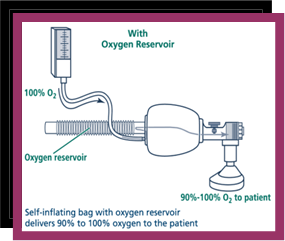
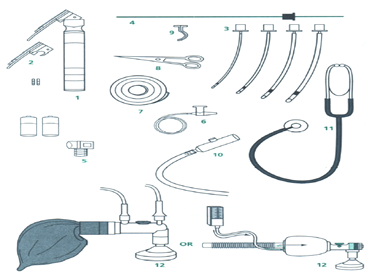
2. تحضيرالأدوات المستخدمة أثناء تركيب الأنبوبة الحنجرية : ▘ منظار حنجري يعمل بكفاءة مع وجود حجر بطارية زيادة. ▘ نصل منظار حنجرى مستقيم و منحنى مقاس (1) و (صفر). ▘ أنابيب حنجرية مقاسات (2.5)، (3) ، (3.5) ، (4). ▘ جهاز تشفيط. ▘ انابيب تشفيط مقاسات (5)، (6) ، (8) ، (10). ▘ بلاستر. ▘ مقص. ▘ سماعة طبيب. ▘ أمبوباج ذو ماسك مناسب. ▘ مصدر للأكسجين أنواع قرب الإنعاش (الأمبوباج) والماسكات المستخدمة : ▘ الخصائص العامه لقرب و ماسكات الانعاش لحديثي الولادة : · حجم القربة (200 الي 750 مل) · قدرة الاكسجين 90%-100% · قدرتها علي تجنب الضغط الزائد · الماسك مناسب (مبطن، مناسبة لوزن الوليد و عمره الجنينى). 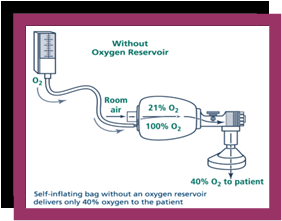
3. تحديد مسافة دخول الأنبوبة الحنجرية : ▘ عند تركيب الأنبوبة عن طريق الفم، فإن الطول المناسب يمكن حسابه ً من خلال المعادلة الآتية : الطول المناسب = 6 سم + وزن الطفل بالكيلو جرام. ▘ عند تركيب الانبوبة عن طريق الأنف م فإن الطول المناسب يمكن حسابه ً من خلال المعادلة الآتية : الطول المناسب = 2+6 سم + وزن الطفل بالكيلو جرام. دور الممرضة أثناء تركيب الأنبوبة الحنجرية : 1. وضع الوليد أثناء تركيب الأنبوبة الحنجرية 2. يتم وضع الوليد على الظهر (وضع التنشق) مع وضع ملاءة ملفوفة تحت كتيفية و شد الرقبة قليلاً للخلف لفتح المجرى الهوائى . 3. يتم التشفيط من الفم والأنف وذلك لإزالة الأفرازات المخاطية المتراكمة ولتسهيل الرؤية عند تركيب الأنبوبة الحنجرية 4. يجب متابعة الحالة العامة للوليد أثناء تركيب الأنبوبة الحنجرية مع ملاحظة الآتى : ▘ لون الطفل ▘ معدل التنفس ▘ نسبة تشبع الدم بالأكسجين ▘ معدل النبض 5. توصيل الأمبوباج بمصدر الأكسجين. 6. وضع ماسك الأمبوباج ذو مقاس مناسب على وجه الوليد، بحيث يغطى الذقن، و الفم، و الأنف معاً. 7. تثبيت الماسك بواسطة أصبعى أبهام وسبابة اليد اليسرى، وإصبع الوسطى يقوم بسند الفك السفلى للطفل، وشد الذقن قليلاً للخلف، لفتح المجرى الهوائى. 8. مسك قربةالأمبوباج باليد اليمنى، والقيام بعصرها بأصابع الأبهام، والسبابة، والوسطى، بمعدل 60 نفس فى الدقيقة، مع مراعاة إعتصار القربة بالقوة المناسبة لحجم الطفل، وحالته. 9. ملاحظة حركة الصدر أثناء عمل التهوية بالأمبوباج، ويتم تعديل قوة الأعتصار حسب درجة إرتفاع الصدر. 10. 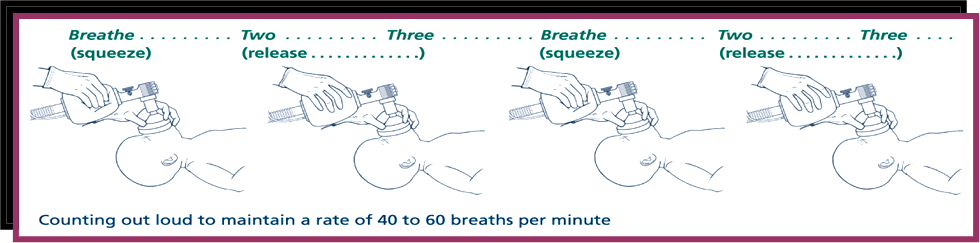 معدل التهوية أثناء تركيب الأنبوبة الحنجرية إدخال الأنبوبة الحنجرية : 1. فتح المنظار الحنجرى، ومناولته للطبيب. 2. شد رقبة الوليد قليلاً للخلف، لفتح المجرى الهوائى. 3. مناولة الطبيب الأنبوبة الحنجرية. 4. الضغط قليلاً على الحنجرة، لسهولة تركيب الأنبوبة إذا لزم الأمر. 5. إستعدى للتشفيط، فى حالة صعوبة الرؤية، نتيجة تراكم الإفرازات المخاطية. 6. حساب وقت محاولة تركيب الأنبوبة الحنجرية. دور الممرضة بعد تركيب الأنبوبة الحنجرية : 1. توصيل الأمبوباج بالأنبوبة الحنجرية مباشر وإعطاء تنفس صناعى. 2. سماع صوت دخول الهواء على الناحيتين. 3. تركيب أنبوبة معدية (رايل) ، وسحب الهواء من المعدة. 4. متابعة الوظائف الحيوية للوليد ونسبة تشبع الدم بالأكسجين. 5. تثبيت الأنبوبة الحنجرية، عند مسافة الدخول المحسوبة 6. تجهيز جهاز التنفس الصناعى، ومراجعة قراءات الجهاز مع الطبيب. 7. تشفيط الممرات الهوائية. 8. عمل أشعة للوليد، حسب تعليمات الطبيب. 9. يتم تدوين ما يلى بتذكرة الطفل: ▘ وقت تركيب الأنبوبة الحنجرية والمقاس. ▘ مقاس الأنبوبة الحنجرية وطريقة تركيبها (من الفم أو الأنف). ▘ مستوى دخول أو تثبيت الأنبوبة من الأنف أو الفم بالسنتيميتر. ▘ الملاحظات أثناء تركيب الأنبوبة الحنجرية والأدوية المعطاة. ▘ علامات استجابة الوليد للتنفس الصناعى المضاعفات الناتجة عن تركيب الأنبوبة الحنجرية وكيفية منع حدوثها
الرعاية التمريضية الروتينية المطلوبة للوليد على جهاز التنفس الصناعى : يجب على الممرضة متابعة النقاط الاتية عند الفحص الروتينى للوليد فى بداية كل شفت 1. متابعة ضبط الجهاز : ▘ التأكد من قراءات الجهاز لما هو مدون بتذكرة الطفل . ▘ التأكد من أن الوصلات مثبتة جيداً مع بعضها. ▘ التأكد من أن الوصلات خالية من بخار الماء المتكثف وتفريغها عند اللزوم. ▘ الإستجابة للإنذارات تبعاً للجدول الآتى وإبلاغ الطبيب المعالج فوراً أنواع إنذارات جهاز التنفس الصناعي، و الإجراء المتبع للتعامل معها:
2. سحب عينة غازات الدم : يحتاج الوليد على جهاز التنفس الصناعى للتقييم المستمر لحالته العامه، ووظائف التنفس، من خلال مؤشرات نتائج غازات الدم، و مستوى الأكسجة، و توازن الحمضيات والقلويات بالدم، و مقارنتها بالمعدلات الطبعية لها، وبذلك يتم تعديل قراءات الجهازحسب احتياج الوليد، لذا يجب على الممرضة أن تكون على دراية كافية بأهمية عمل تحليل غازات الدم، وأيضاً المعدلات الطبيعية لها. المعدلات الطبيعية لغازات الدم فى حديثى الولادة:
▘ يتم الحصول على عينة غازات الدم وتحليلها خلال 10-15 دقيقة من بدء التنفس الصناعى. ▘ يتم تحليل الغازات بالدم كل 6 ساعات وحسب تعليمات الطبيب، الا اذا حدث أي تغير مفاجئ فى حالة الوليد. ▘ يتم تحليل الغازات بالدم كل 10-15 دقيقة عند تغيير أوضاع وقراءات الجهاز. كيفية سحب عينة غازات الدم : يمكن سحب عينة غازات الدم من كعب القدم كبديل لغازات الدم الشريانية, ويجب على الممرضة أخذ الإحتياطات اللازمة أثناء سحب عينة غازات الدم من كعب القدم، حتى لا تؤثر على نتائج غازات الدم، وتتبع ما يلى: ▘ يجب تدفئة مكان سحب العينة، وذلك بلف قطنة مبلل بماء دافئ (42 درجة مئوية) حولها، قبل سحب العينة لمدة 5 دقائق. ▘ تجنب الإفراط فى هبرنة الأنبوبة الشعرية. ▘ تطهير مكان سحب العينة قبل الوخز بالكحول، ويترك حتى يجف جيداً. ▘ وخز كعب القدم وخزة واحدة من أحد الجانبين، وليس من المنتصف ▘ التخلص من نقطة الدم الأولى، مع تجنب تعصير كعب القدم. ▘ تملئ الأنبوبة الشعرية بالدم، مع تجنب دخول فقاعات الهواء بالعينة. ▘ إرسال العينة للمعمل فور إستكمال سحبها. ▘ الضغط على مكان الوخز بعد سحب العينة. 3. العناية بالانبوبة الحنجرية : ▘ التأكد من تثبيتها جيداً، بأقل كمية بلاستر، وبدون جذب أو شد للشفة أو الأنف. ▘ ملاحظة وجود جروح بالجلد حول الشفة أو الأنف مكان التثبيت. ▘ تغيير مكان التثبيت من اليمين الى اليسار والعكس يومياً، لتفادى التهاب الجلد. ▘ التاكد من عدم إنسداد الأنبوبة الحنجرية بالإنثناء، أو بتراكم الإفرازات اللزجة. ▘ التشفيط من الأنبوبة الحنجرية كل 3-4 ساعات أو عند الحاجة. ▘ سماع صوت التنفس بالناحيتين كل 2- 4 ساعات. ▘ ملاحظة علامات الخروج المفاحئ للأنبوبة الحنجرية من مكانها، (زرقة، إنخفاض نسبة تشبع الدم بالأكسجين، تدهورمفاجئ لحالة الوليد ، إنتفاخ البطن ، بكاء مسموع ، إنخفاض حركة الصدر ، إنخفاض معدل ضربات القلب). 4. متابعة العلامات الحيوية : ▘ توصيل الوليد بجهاز المراقبة المرئية للقلب و التنفس ▘ ملاحظة العلامات الحيوية كل 3 ساعات، خاصةً المجهود المبذول فى عملية التنفس وضغط الدم. ▘ ملاحظة لون الوليد، و نسبة تشبع الدم بالأكسجين . 5. العلاج الطبيعى على الصدرو التشفيط : ▘ يتم عمل علاج طبيعى على الصدر. ▘ يتم التشفيط حسب الحاجة . 6. التغذية : ▘ من الممكن ان يتناول الوليد التغذية عن طريق الانبوبة المعدية، حسب حالته، وطبقا لتعليمات الطبيب. 7. تغيير وضع الوليد : ▘ يجب تغيير وضع الوليد كل 2ساعه، على جانبية أو على الظهر أو البطن وفقا لجدول التقليب، وذلك لتفادى تراكم الإفرازات، مع مراعاة التثبيت الجيد للأنبوبة الحنجرية، و الحفاظ عليها. فطام الوليد من جهاز التنفس الصناعى : يراعى فطام الوليد قبل فصله من على جهاز التنفس الصناعى عن طريق تقليل معدلات ضبط الجهاز (الضغط ، نسبة تركيز الأكسجين المستنشق ، و معدل التنفس تدريجياً) لتحفيز التنفس التلقائى للوليد. فصل الوليد من على جهاز التنفس الصناعى : عند إقرار الطبيب فصل الوليد من جهاز التنفس الصناعى، يجب على الممرضة مراعاة الآتى: ▘ يتم إيقاف التغذية بالرايل لمدة ساعتين قبل إخراج الأنبوبة الحنجرية. ▘ يتم عمل علاج طبيعى للصدر ويتم التشفيط قبل إخراج الأنبوبة الحنجرية مباشرةً. ▘ يتم سحب الأنبوبة أثناء الشهيق. ▘ تتم ملاحظة حالة التنفس بعد فصل الوليد بصورة متكررة. ▘ يتم تحليل غازات الدم بعد إخراج الأنبوبة بنصف ساعة. ▘ يتم إبلاغ الطبيب عند ظهور أى مشكلة. المشاكل المحتملة الحدوث مع إستخدام جهاز التنفس الصناعى : ▘ إنسداد الأنبوبة الحنجرية بالإفرازات أو بالإنثناء. ▘ النزع المفاجئ للأنبوبة أو خروجها من مكانها. ▘ الأسترواح الصدرى والامفزيما نتيجة إستخدام ضغط عالى. ▘ إنخفاض معدل ضخ القلب للدم نتيجة ارتفاع الضغط داخل الرئة. |
- نظام الضغط الموجب المستمر على مجرى الهواء عن طريق الانف
يعتبرنظام الضغط الموجب المستمر على مجرى الهواء عن طريق الأنف، المعروف باسم السيباب الأنفى (CPAP) هو أحد أنظمة التنفس الصناعى اللأختراقىة والآمنة حيث لا تحتاج لتركيب أنبوبة حنجرية، يقوم السيباب الأنفى على دفع حجم مناسب من غاز الأكسجين المخلوط بالهواء تحت ضغط إيجابي مستمر على المجرى الهوائى، وذلك للحفاظ على بقاء الحويصلات الهوائية مفتوحة، ومنع إنطواءها أثناء عملية الزفير، و يمكن استخدام نظام السيباب فى وحدات حديثى بطرق مختلفة، منها الماسك، و القسطرة الأنفية البلعومية، و الأنبوبة الحنجرية، و لكن يبقى السيباب الأنفى من أكثر الطرق إنتشاراً.
دواعي الإستخدام :
▘ صعوبة التنفس الناتجة عن مرض الغشاء الهياليني (Hyaline membrane disease) في المواليد ناقصي النمو، نتيجة نقص إفراز مادة السيرفاكتنت، حيث يساعد السيباب على منع إنطواء الحويصلات الهوائية، وذلك لزيادة كفاءة الرئتين، و تقليل الإحتياج إلى إستخدام التنفس الصناعي.
▘ عندما يكون الضغط الجزئي للأكسجين في الدم الشرياني (PaO2)أقل من 50 ملليمتر زئبقي؛ على الرغم من إعطاء الأكسجين بتركيز٦٠٪ أو أكثر بإحدى الطرق البسيطة الأخرى لإعطاء الأكسجين.
▘ حالات صعوبة التنفس التي يعاني فيها االطفل حديثى الولادة من أعراض صعوبة التنفس المتوسطة: إزدياد معدل التنفس عن 60 نفس/الدقيقة أو أكثر، أو نتة، أو إنجذاب أسفل الصدر مثل حالات:
– النهجان المؤقت لدى حديثي الولادة
– إستنشاق العقي
▘ نوبات توقف التنفس المتكررة للمواليد ناقصي الوزن والنمو (Apnea of prematurity).
▘ يستخدم بعد فطام الطفل من جهاز التنفس الصناعي.
موانع الاستخدام :
▘ حالات الفشل التنفسى التى تحتاج للتنفس الصناعى.
▘ نوبات توقف التنفس المتكررة والمصاحبة لأنخفاض معدل ضربات القلب ولا تتحسن مع استخدام السيباب الأنفى.
▘ العيوب الخلقية بالجهاز التنفسى العلوى مثل شق سقف الحلق و انسداد القناة الأنفية.
▘ حالات فتق الحجاب الحاجز.
▘ أمراض القلب الحادة و الغير مستقرة.
مكونات نظام السيباب الأنفى (Nasal–CPAP):
▘ مصدر للغازات المخلوطة والمرطبة (أكسجين + هواء مضغوط) والمرطبة.
▘ مولد للضغط لتكوين ضغط موجب في وصلات الجهاز.
▘ أداة (وسيط) لتوصيل وصلات الجهاز بالمجرى الهوائي للوليد.
مكونات نظام الضغط الموجب المستمر على مجرى الهواء (CPAP) :
دائرة دفع الغاز المستنشق
وتتكون من:
▘ مدخل لكلاً من وصلة الأكسجين والهواء المضغوط، لتكوين الغاز المستنشق.
▘ خلاط أكسجين blender)) لمزج الأكسجين والهواء المضغوط، بهدف توصيل الأكسجين إلى الوليد بالتركيز المطلوب، مُلحق به مقياس إندفاع الهواء (فلوميتر) للتحكم في تدفق الغاز المستنشق، يتم ضبطه على 8 – 10 لتر/الدقيقة، ومقياس التحقق من معدل الضغط المتولد (مانوميتر).
مرطب هواء Humidifier))
لتدفئة وترطيب الغاز المستنشق، مُتصل به مجس لقياس درجة حرارة الغاز المستنشق.
وحدة توليد الضغط الموجب (المولدGenerator – )
يتم توليد الضغط الموجب المطلوب للغاز المستنشق عن طريق المولد (شكل)، بحيث ينعكس هذا الضغط في نهاية الزفير على رئة الوليد، ويؤدي إلى المحافظة على الحويصلات الهوائية مفتوحة؛ أي يمنع إنطوائها فور إخراج الوليد لهواء الزفير.
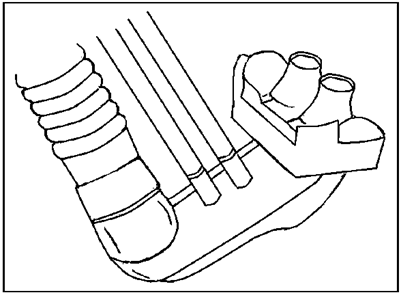
مولد الضغط الموجب (Generator)
طرق أخرى لتوليد الضغط الموجب
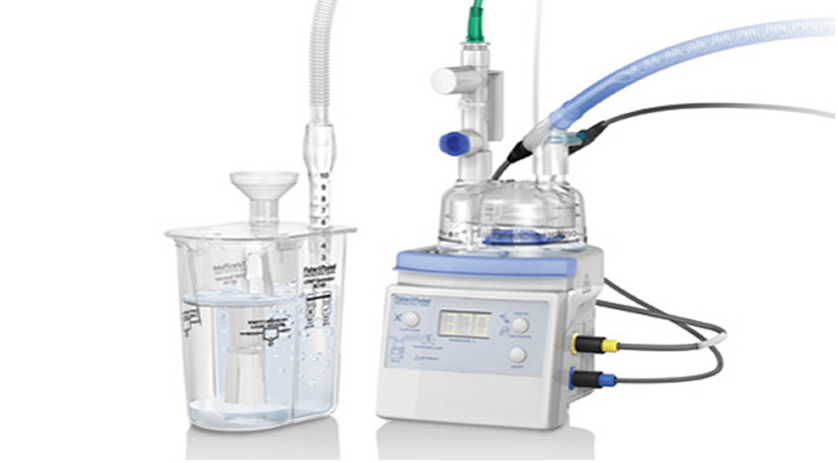
▘ غمس الطرف الحر لأنبوبة الزفير تحت سطح الماء للمسافة اللازمة (5 سم)، لتوليد الضغط الموجب المطلوب داخل الحويصلات الهوائية (Bubble-CPAP) كالآتي : (شكل 20-2)
– يتم لصق مازورة قياس مدرجة على الجدار الخارجي لزجاجة الماء المعقم.
– تُملأ الزجاجة بالماء المعقم، حتى يصل مستوى الماء بالزجاجة عند الرقم 7 (تحدد على مازورة القياس).
– يُغمس الطرف الحر لأنبوبة الزفير تحت سطح الماء للمسافة المطلوبة (5 سم)، وتترك مسافة 2 سم بين طرف الأنبوبة وقاع الزجاجة (حتى لا يزداد الضغط الموجب المتولد داخل الحويصلات الهوائية عن الحد المطلوب).
– ينبغي التأكد من ظهور فقاعات الهواء بعد توصيل الوليد وبدأ تشغيل جهاز السيباب.
▘ توصيل وصلة الزفير الخاصة بالجهاز بصمام (valve).
قسطرة الأنف ذات النتوءين (Nasal prongs)
تتصل بنهاية المولد لتوصيل دائرة دفع الغاز المستنشق للطفل.
وصلات الجهاز
▘ أنبوبة متعرجة قصيرة تصل مقياس إندفاع الهواء (الفلوميتر) الموجود على خلاط الأكسجين بالمرطب.
▘ وصلة الشهيق: وهي أنبوبة متعرجة طويلة تحمل الغاز المستنشق من المرطب؛ لتوصيله إلى وحدة توليد الضغط الموجب (المولد) والأنبوبة الأنفية ذات النتوءين، فيصل هواء الشهيق إلى الوليد رطب ودافئ.
وصلة الزفير: وهي أنبوبة متعرجة تتصل بالأنبوبة الأنفية ذات النتوءين، وبوحدة توليد الضغط الموجب من الخلف، ويتم توصيلها بالمانوميتر للتحقق من مقدار الضغط المتولد.
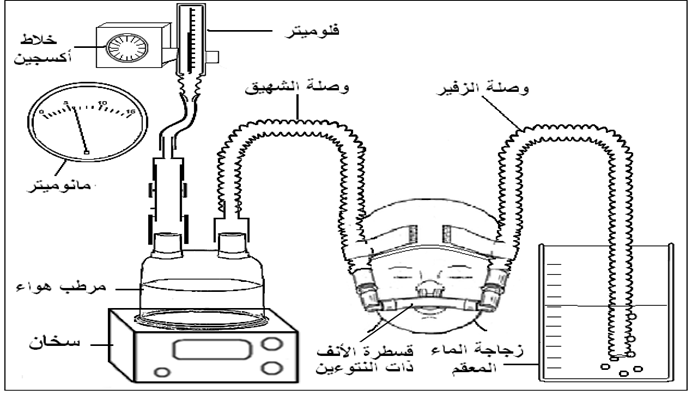
جهاز الضغط الموجب على مجرى الهواء (Bubble CPAP)
دور الممرضة :
يجب أن يكون هذا الجهاز جاهزًا على الدوام لإستخدامه في أي وقت داخل وحدات رعاية حديثي الولادة، وأن تكون الوصلات متوفرة؛ وتحوي جميع مقاسات القسطرة الأنفية ذات النتوءين، حسب وزن الطفل وعمره الرحمي.
التجهيز لتوصيل الوليد بالجهاز
▘ يجب إتباع قواعد التحكم في العدوى، وذلك لتجنب إنتشار العدوى التنفسية، وضمان كفاءة عمل الجهاز التنفسي للوليد من خلال:
– غسل الأيدي جيدًا قبل لمس الجهاز، القسطرة، أو الوليد.
– إرتداء قفازات معقمة أثناء تشفيط المجرى الهوائي للوليد.
– المحافظة على الناحية الحرة من الأنابيب بعيدة تمامًا عن الأرض، أو عن أي مصدر للتلوث.
▘ توصيل وصلة الأكسجين والهواء إلى خلاط الأكسجين، وضبط معدل تدفق الأكسجين مابين ۸–١٠لتر/ الدقيقة.
▘ ضبط مؤشر الأكسجين على النسبة المئوية المطلوبة.
▘ توصيل الأنبوبة المتعرجة القصيرة بمرطب الأكسجين، ووضع مجس قياس درجة حرارة الغاز المستنشق بالفتحة المخصصة له بالمرطب.
▘ يُملأ مرطب الأكسجين بالماء المعقم حتى العلامة المحددة، ثم يُفتح زر التشغيل ويتم ضبط درجة الحرارة عند 37°م.
▘ يتم إختيار مقاس القبعة (الطاقية) المناسب لحجم رأس الوليد.
▘ يتم إختيار مقاس القسطرة الأنفية المناسب؛ عن طريق تمرير شريط تحديد المقاس المناسب للقسطرة الأنفية على فتحتي أنف الوليد لتحديد المقاس المناسب تمامًا، والذي يختلف بإختلاف وزن الوليد وعمره الجنيني، حيث يؤدي إختيار المقاس الأصغر من القسطرة الأنفية إلى التسريب من حول القسطرة؛ بشكل يصعب معه الحفاظ على الضغط المطلوب، في حين يؤدي إختيار المقاس الأكبر إلى حدوث قروح بالأغشية المخاطية للحاجز الأنفي.
▘ يتم تركيب قسطرة الأنف على نهاية المولد وتغلق بإصبع السبابة؛ للتأكد من كفاءة عمل الجهاز من خلال إرتفاع مؤشر مقياس التحقق من معدل الضغط المتولد (مانوميتر) حول الرقم المطلوب (الرقم 5 سم/ماء).
توصيل الوليد بالجهاز
▘ يجب غسل الأيدي روتينيا او الدلك بالكحول.
▘ التأكد من أن الوليد لا يعاني من إنسداد في فتحتي الأنف الخلفيتين (عيب خلقي في بعض المواليد).
▘ يتم توصيل الوليد بجهاز المتابعة المرئية (المونيتور أو جهاز قياس نسبة تشبع الدم بالأكسجين).
▘ إرتداء قفازات.
▘ التشفيط من الأنف، الفم، والبلعوم عن طريق إدخال أكبر قسطرة تشفيط يمكن إستخدامها بدون مقاومة.
▘ وضعية الوليد: رفع السرير لأعلى بزاوية 30 درجة، ولف ملاءة ووضعها تحت كتفي الوليد؛ بحيث تكون الرقبة مفرودة قليلاً إلى الخلف، للإبقاء على المجري الهوائي مفتوحًا.
▘ تُوضع القبعة (الطاقية) المناسبة لحجم رأس الوليد، على أن يتم ثني حرفها لمسافة 2– 3 سم، بحيث يكون طرفها فوق الأذن مباشرة.
▘ يتم إدخال القسطرة ذات النتوءين في الأنف، ثم تُثبت من خلال الخيوط المتصلة بالقسطرة في الفتحات الموجودة على جانبي القبعة، ثم يعاد ضبط منحنى القسطرة الأنفية في وضعه السليم داخل الأنف، مع ملاحظة الآتي:
– قسطرة الأنف تملأ فتحتي الأنف تمامًا.
– الجلد حول أرنبة الأنف غير مشدود، ويمكن التأكد من ذلك بالنظر إلى لون الجلد، فإذا ظهر شحوب في لون الجلد، فإن ذلك يعني وجود ضغط على الجلد.
– قسطرة الأنف لا تضغط على الحاجز الأنفي.
– وجود مسافة بين طرف الحاجز الأنفي، وبين القنطرة التي تصل طرفي قسطرة الأنف.
– قسطرة الأنف لا تستند على الشفة العليا.
▘ تثبت أنبوبة الزفير المتعرجة على الجبهة، من خلال الأربطة المتصلة بقبعة الرأس.
▘ يتم إدخال أنبوبة تغذية من الفم لتشفيط محتوى المعدة، وتوصيل نهاية الأنبوبة بسرنجة للإبقاء عليها مفتوحة؛ لتفريغ الهواء الزائد من داخل المعدة.
▘ يجب تنظيف الشفة العليا للوليد ومنطقة الخدود بالماء الدافئ، ثم تترك لتجف وتدهن كريم مرطب حسب وصف الطبيب؛ للتخفيف من آثار التسلخات التي قد يُحدثها الضغط المستمر على هذه المناطق.
متابعة الوليد على الجهاز
▘ فحص الوليد كل 2– 4 ساعات لتقييم:
– التنفس: من حيث المعدل، وجود تة، وإنجذاب أسفل الصدر مع سماع أصوات التنفس بالسماعة.
– درجة حرارة الجسم: يجب أن تقاس بدقة.
– الدورة الدموية: من حيث حساب وقت إعادة إمتلاء الشعيرات الدموية، قياس ضغط الدم، والإستماع إلى ضربات القلب.
– الجهاز العصبي: من حيث النشاط، الحركة، وردود الأفعال الإنعكاسية للتنبيهات المختلفة.
– الجهاز الهضمي: من حيث وجود إنتفاخ في البطن.
– أجهزة المتابعة المرئية والتأكد من كفاءة عملها.
▘ تشفيط الأنف، الفم، البلعوم، والمعدة حسب الحاجة. وهناك بعض العلامات التي ترجح إحتياج الوليد إلى التشفيط على فترات أقل من ساعتين وهي:
– زيادة المجهود المبذول في التنفس.
– زيادة الإحتياج إلى الأكسجين.
– حدوث فترات من توقف التنفس، أو إنخفاض في عدد ضربات القلب.
▘ ملاحظة وتدوين كمية ولون الإفرازات الناتجة عن التشفيط.
▘ يتم التأكد من كفاءة عمل النظام بأكمله من خلال ملء قائمة الفحص الملحقة.
▘ يجب تغيير وضع الوليد كل 4 – 6 ساعات؛ لمساعدته على التخلص من الإفرازات التي تتجمع في الرئة.
▘ يجب صرف نواتج التكثف في وصلات الجهاز، والتخلص منها بصورة دورية.
فطام الوليد من نظام الضغط الموجب المستمر على مجرى الهواء
مؤشرات القيام بعمل محاولة الفطام
حدوث تحسن عام في حالة الوليد، بحيث يصبح قادرًا على التنفس تلقائيًا بطريقة مريحة، إنخفاض معدل التنفس، إختفاء الإنجذاب الصدري، وتحسن اللون.
خطوات الفطام
▘ حسب تعليمات الطبيب، تبدأ محاولة الفطام بتقليل مؤشر الأكسجين تدريجيًا بنسبة 2 – 5٪ من تركيز الأكسجين الحالي كل مرة، حتى تصل نسبة الأكسجين في الهواء المستنشق إلى 21٪، على أن يتم الإسترشاد بجهاز قياس نسبة تشبع الدم بالأكسجين، أو عمل تحليل الغازات بالدم؛ لمتابعة ضغط الأكسجين الجزئي بالدم.
▘ محاولة نزع القسطرة الأنفية عن الوليد بعض الوقت بشكل تدريجي، وفحص الوليد خلال هذه المحاولة من حيث:
– إزدياد سرعة التنفس
– ظهور الإنجذاب الصدري
– نقص نسبة الأكسجين في الدم
– حدوث نوبات من توقف التنفس
– حدوث زرقة
▘ عند ظهور أي من هذه الأعراض؛ تصبح محاولة الفطام فاشلة، ويتم إستخدام النظام مرة أخرى، ولا تبدأ محاولة فطام أخرى إلا بعد مرور 24 ساعة.
▘ إذا كان هناك أي شك في أن إيقاف عمل النظام سيؤدي إلى إعادة حدوث إنطواء الحويصلات الهوائية، فيجب عدم محاولة الفطام، حيث أن منع مثل هذا الانطواء أفضل من حدوثه ثم معالجته.
التغذية مع نظام الضغط الموجب المستمر على مجرى الهواء
إذا كان الوليد في حالة مستقرة، فيمكن تغذيته عن طريق الجهاز الهضمي من خلال أنبوبة التغذية، سواءً بالجاذبية أو بالتنقيط بإستخدام مضخة السرنجة، حيث أن إستخدام هذا النظام لا يمنع التغذية من خلال الجهاز الهضمي، ولكن يجب تشفيط الهواء الزائد في المعدة قبل إعطاء الرضعة.
المشاكل محتملة الحدوث مع إستخدام نظام الضغط الموجب المستمر على مجرى الهواء
▘ جروح بالحاجز الأنفي نتيجة إرتكاز القسطرة الأنفية على الحاجز الأنفي لفترة طويلة
▘ جروح بالجلد نتيجة ضغط الوصلات على الوجه
▘ إنتفاخ البطن
▘ زيادة الإفرازات
▘ الإسترواح الهوائي
قائمة الفحوصات التي يتم ملؤها عن طريق الممرضة المسئولة عن الحالة في كل مناوبة (نوبتجية) لكل وليد يستخدم نظام الضغط الموجب المستمر على مجرى الهواء (NCPAP)
التاريخ ....../ ....../ ...... | النوبتجية ( - ) | النوبتجية ( - ) | النوبتجية ( - ) | التعليق |
الفحص | (نعم – لا) | (نعم – لا) | (نعم – لا) | |
مؤشر الأكسجين مضبوطًا على النسبة المطلوبة |
|
|
|
|
سرعة إندفاع الهواء بين 8– 10 لتر/دقيقة |
|
|
|
|
مؤشر مقياس التحقق من معدل الضغط المتولد (مانوميتر) حول رقم 5 سم/ماء |
|
|
|
|
مستوى الماء في مرطب الأكسجين عند العلامة المحددة |
|
|
|
|
زر السخان على وضع التشغيل ودرجة الحرارة عند 37°م |
|
|
|
|
مقاس قسطرة الأنف مناسب |
|
|
|
|
قسطرة الأنف في وضعها السليم؛ غير مرتكزة على الحاجز الأنفي |
|
|
|
|
الحاجز الأنفي سليم |
|
|
|
|
القبعة مناسبة تمامًا لحجم رأس الوليد |
|
|
|
|
أنبوبة الزفير في مكانها الصحيح |
|
|
|
|
اللفة تحت الكتفين ذات حجم مناسب وفي مكانها الصحيح |
|
|
|
|
مستوى الرأس مرفوع بزاوية 30 درجة |
|
|
|
|
مجس نسبة الأكسجين متصل بالوليد |
|
|
|
|
الماء الزائد في الأنابيب المتعرجة يتم نزحه بإستمرار |
|
|
|
|
توقيع الممرضة |
|
|
|
|
قائمة الفحوصات الخاصة بالإستعداد لتشغيل نظام الضغط الموجب المستمر على مجرى الهواء (NCPAP) بوحدات رعاية حديثي الولادة (يتم ملؤها عن طريق رئيسة الممرضات بوحدة رعاية حديثي الولادة في كل مناوبة(
التاريخ ....../ ....../ ...... | النوبتجية ( - ) | النوبتجية ( - ) | النوبتجية ( - ) | التعليق |
الفحص | (نعم – لا) | (نعم – لا) | (نعم – لا) | |
جهازالسيباب الأنفي جاهز للعمل |
|
|
|
|
وجود عدد كافي من الوصلات ومقاسات مختلفة من قسطرة الأنف |
|
|
|
|
وجود زجاجات الماء المعقم |
|
|
|
|
مرطب الأكسجين صالح للإستخدام |
|
|
|
|
توقيع الممرضة |
|
|
|
|