Surgical Instruments Manual
| Site: | EHC | Egyptian Health Council |
| Course: | دلائل الاجراءات التمريضية لقسم العمليات |
| Book: | Surgical Instruments Manual |
| Printed by: | Guest user |
| Date: | Sunday, 20 September 2026, 5:08 PM |
Description
"last update: 8 July 2025" تحميل الدليل
- Prepared by
Operation Room guide
Under supervision
- Prof. Dr. Mohamed Latif, CEO of the Egyptian Health Council
Dr. Kawthar Mahmoud, Head of the Egyptian Nursing Syndicate - Member of the Senate
Prepared by
|
Title |
Name |
NO. |
|
Dean Of Faculty Nursing, Professor of Medical and Surgical Nursing, Tanta University |
Dr Afaf Abdel Aziz Abdel Aziz Basal |
1 |
|
Professor Of Critical Care Nursing |
Prof.Dr/Zeinab Hussain Ali |
2 |
|
Professor And Head of the Department of Medical Surgical Nursing. Faculty-. Benha University |
Amal Said Taha Refaie |
3 |
|
Supervisor Of the Education Sector at Port Said University |
Amal Ahmed Khalil Morsy |
4 |
|
Professor Of Medical Surgical Nursing- Faculty of Nursing- Cairo University |
Dr. Hanan Ahmed Al Sebaee |
5 |
|
Head of central administration on secondment at MOHP |
Dr Neveen ab drab al0nabi Mohamed |
6 |
|
Director Of Primary Health Care Nursing Department at MOHP. |
Maysa Hosny Ahmed Tammam |
7 |
|
Supervisor Of Technical Education- EHA |
Nancy Alaa Eldeen Abd-Elbaset Ali |
8 |
|
Supervisor Of Nursing Services Development- EHA |
Sherien Mohamed Saad |
9 |
|
Assistant Professor of Maternity and Neonatal Health Nursing - Faculty of Nursing- Ain Shams University |
Assist.Perof. Dr./Heba Mahmoud Mohammed |
10 |
|
General manager of general administration of health institutes affairs |
Dr Mai Galal Ibrahim Al-Assal |
11 |
|
Participants |
||
|
Head of nursing administration at EHA |
Mr. Adham Abdel Nasser Okasha |
12 |
|
member of the Nursing administration at EHA, luxor branch |
Mr. Gehad Akram Hussein |
13 |
- Scissors
All types of scissors have either sharp or blunt edges:
- (A: Sharp-Sharp)
- (B: Blunt-Blunt)
Additionally, all types have blades that are either straight or curved.
Figure (1)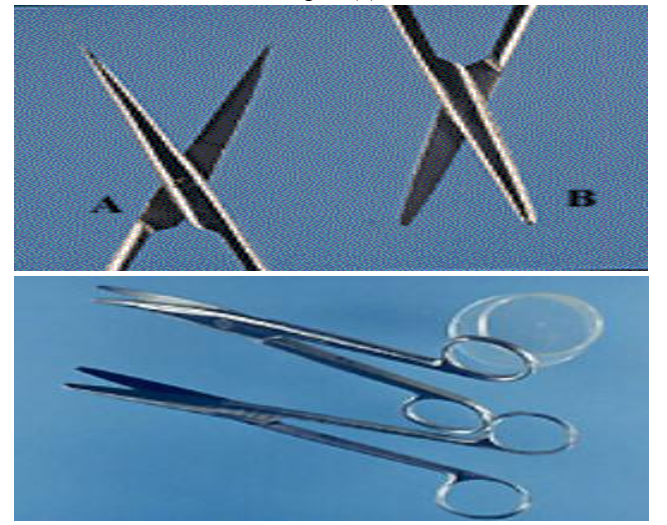
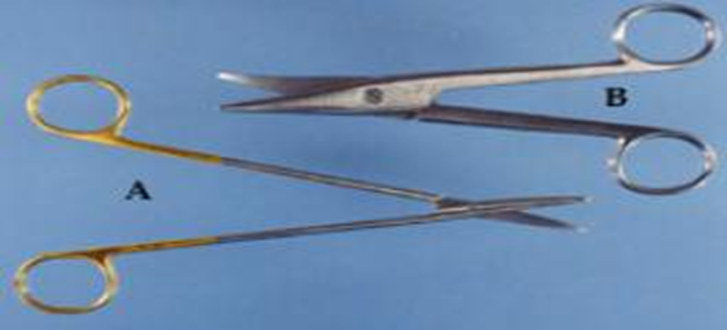
Mayo and Metzenbaum
- Mayo Scissors (B): Used for cutting thick fascia and sutures.
- Metzenbaum Scissors (A): Thinner than Mayo scissors and used for cutting delicate tissues.
- Dressing and Tissue Forceps
Forceps consist of two gripping tips held together at the end and equipped with a spring mechanism that allows them to open.
- Forceps can be classified as either dressing or tissue forceps:
- Dressing Forceps: Have smooth tips for handling dressings.
- Tissue Forceps: Have serrated tips for gripping tissues.
Most forceps are named after their designer, such as Adson forceps.
- Rat Tooth Tissue Forceps:
- Feature interlocking teeth that provide a firm grip on tissues without slipping.
- Used for holding skin and dense tissues.
Figure (2)
Adson Tissue Forceps
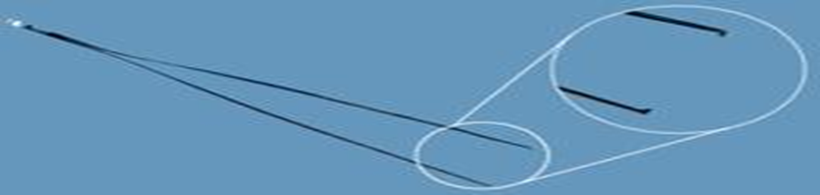
A fine-toothed instrument with small serrations at the tip. Adson tissue forceps have thin, precisely serrated tips, designed for carefully grasping tissues.
Figure (3)
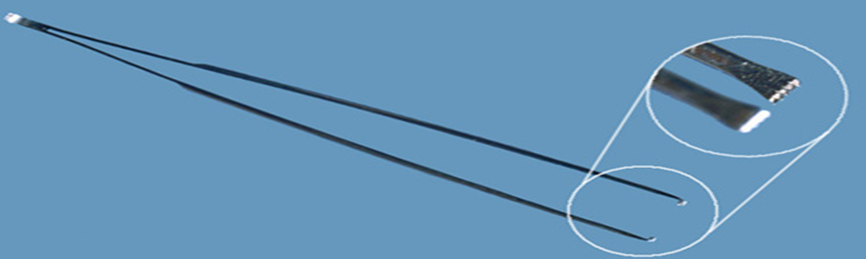
Intestinal Tissue Forceps
- Allis Forceps: Designed to lock when used to grasp tissues.
- Intestinal Tissue Forceps: Used for holding the intestines, tissues, omentum, and skin.
Figure (4)
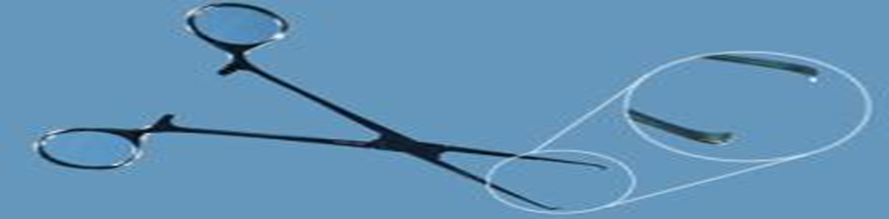
Babcock Intestinal Tissue Forceps
- Babcock forceps have finer serrations than Allis forceps.
- Features a wide, outward-curving tip with a smooth gripping surface.
- Used for holding delicate, traumatized organs such as the intestines and bladder.
Figure (5)
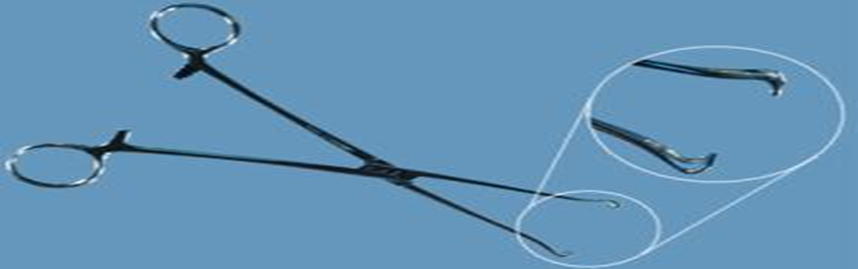
- Sponge Forceps
- Sponge forceps can be straight or curved.
- The tips may be serrated or smooth.
- Used for grasping delicate, traumatized organs such as the intestines and bladder.
Figure (6)
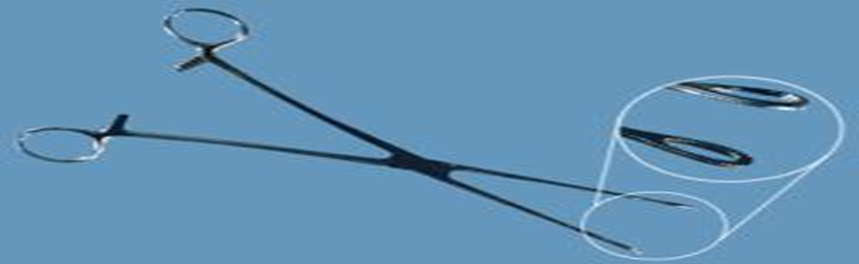
- Hemostats (Hemostatic Forceps)
- Hemostatic forceps are locking clamps used to grasp and constrict blood vessels.
- Most hemostats are named after their designers (Kelly, Halsted, Crile).
- Classified based on size, shape, and tip dimensions.
- Available in curved or straight forms.
Figure (7)
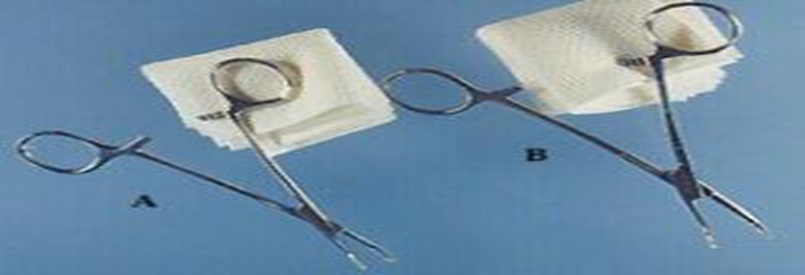
Kelly Hemostatic Forceps & Mosquito Hemostats
- Kelly Hemostatic Forceps (B): Used for clamping medium to large blood vessels.
- Mosquito Hemostats (A): Thinner than Kelly forceps, designed for smaller blood vessels.
- Both have transversely serrated tips.
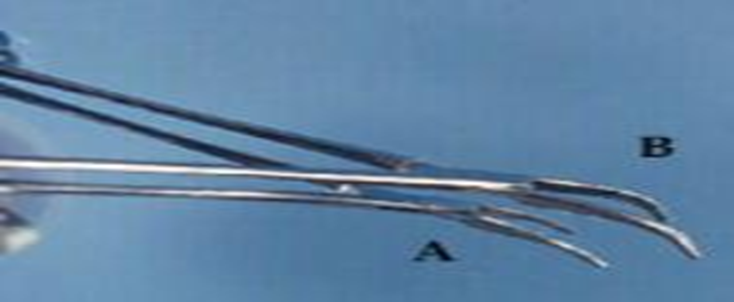
Comparison of Kelly vs. Mosquito Hemostat Tips:
- (A) Mosquito Hemostat: Has a smaller tip for delicate procedures.
Figure (8)
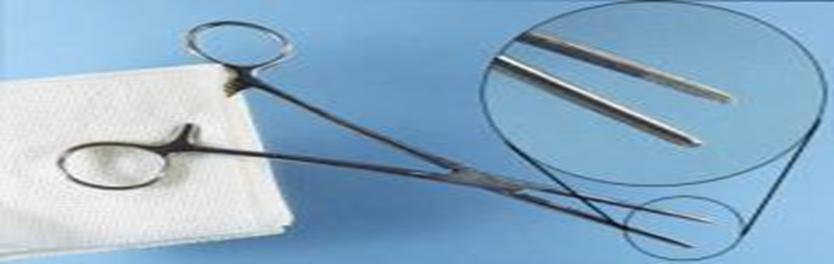
Carmalt Hemostatic Forceps
- Preferred for clamping ovarian vessels during ovariectomy due to its longitudinal serrations.
Figure (9)
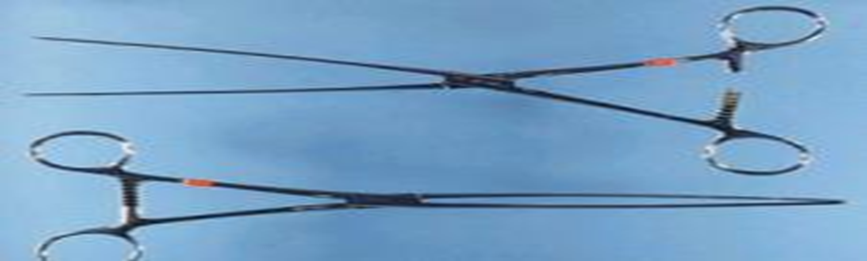
- Intestinal Forceps
- Doyen Intestinal Forceps:
- Feature longitudinal serrations.
- Used to grasp the intestines and temporarily occlude their lumen.
Figure (10)
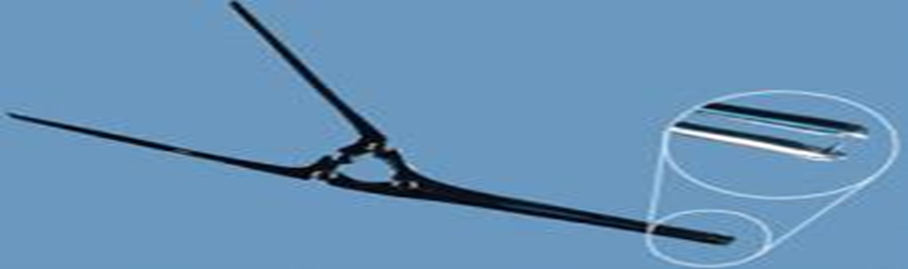
- Payr Pylorus Clamps
- A crushing intestinal clamp used to close the bowel end during resection.
Figure (11)
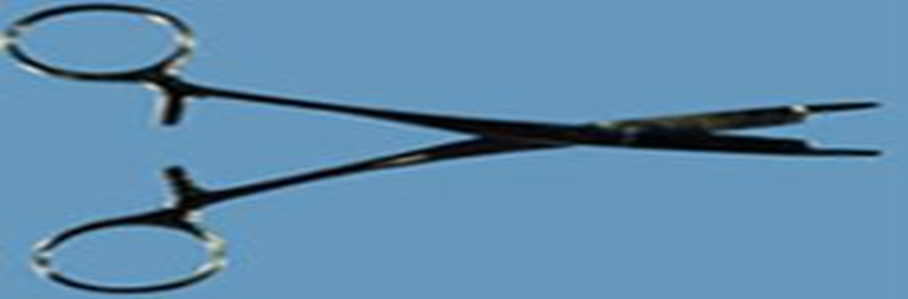
- Needle Holders
- A locking instrument used to hold surgical needles during suturing.
- High-quality types have tungsten carbide inserts at the tips for enhanced grip.
Figure (12)

- Mayo–Hegar Needle Holder
- Heavy-duty with moderate, grooved jaws.
- No cutting edge.
- Olsen–Hegar Needle Holder
- Combines the functions of a needle holder and scissors.
- Disadvantage: The sharp cutting edge may accidentally cut sutures transversely.
Figure (13)
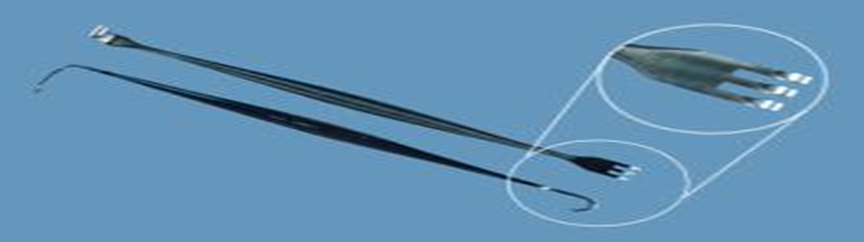
- Hand-Held Retractors
- Senn Retractor:
- Features dual-ended tips, which can be blunt (fine) or sharp.
- Used for retracting the peritoneum.
Figure (14)
Hohmann Retractor
- Used to elevate tissues away from the bone during fracture reduction and orthopedic procedures.
Figure (15)

Self-Retaining Retractors
- Weitlaner Retractor:
- Features sharp or blunt prongs.
- Has a rake-like design.
- Equipped with a locking mechanism to hold tissues apart.
Figure (16)
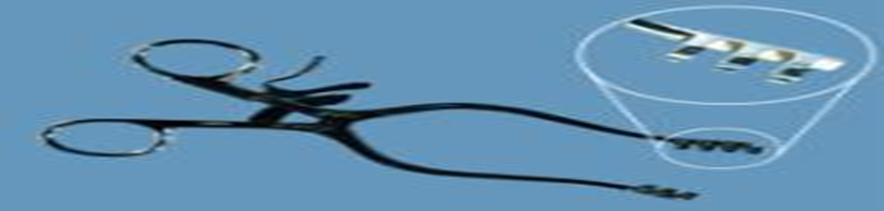
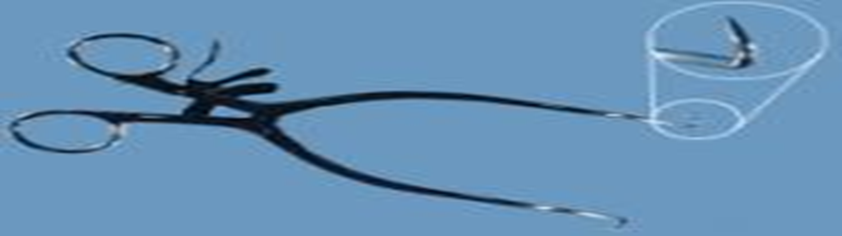
Gelpi Retractor
- Features a single, pointed tip.
- Equipped with a locking mechanism to hold tissues apart.
Figure (17)
- Scalpels and Blades
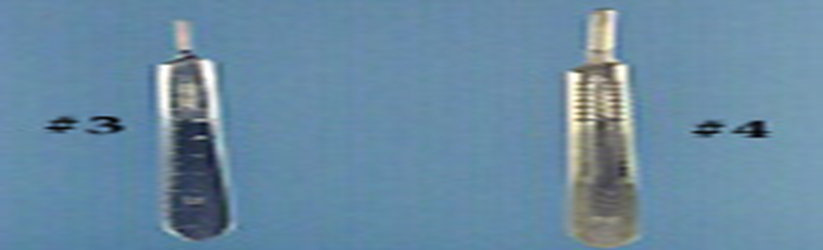
- Handles:
- Size 3 Handle
- Size 4 Handle
Figure (18)
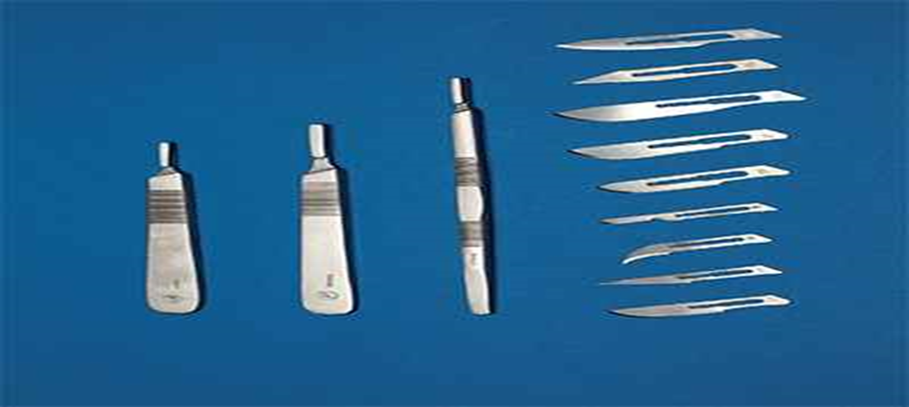
Handles and Blades:
- Blades (Sizes 10, 11, 12, 15) fit Handle Size 3.
- Blades (Sizes 22, 23) fit Handle Size 4 and are mainly used for large animals.
Figure (19)
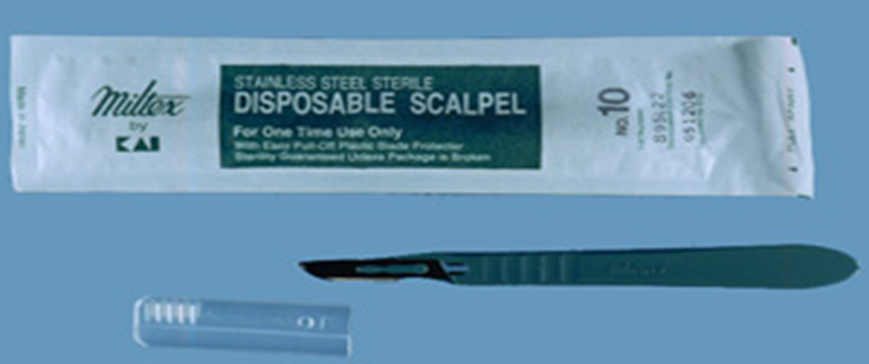
Disposable Scalpel :
Figure (20)
- Towel Clamps
- Towel clamps are used to secure a sterile drape onto the patient’s skin and can also be used to grasp tissues.
- Backhaus Towel Clamp:
- Curved design
- Locks during use
Figure (21)
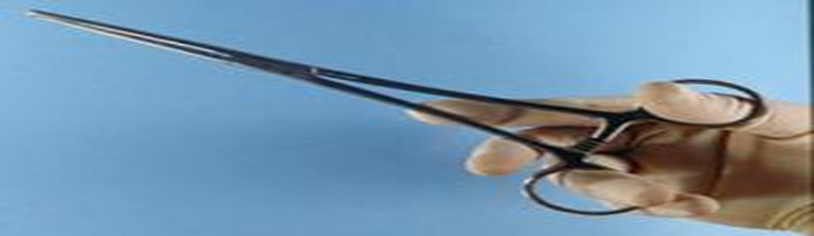
Scalpels
- The scalpel is held using the thumb, middle, and ring fingers, while the index finger rests on the upper edge for guidance.
- A smooth, continuous incision causes less tissue trauma compared to an interrupted cutting motion.
Figure (22)
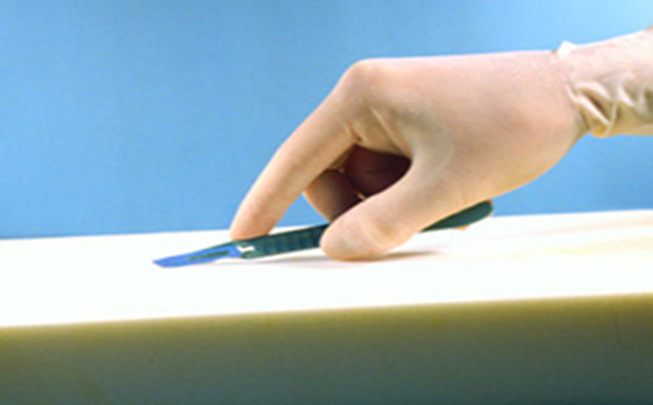
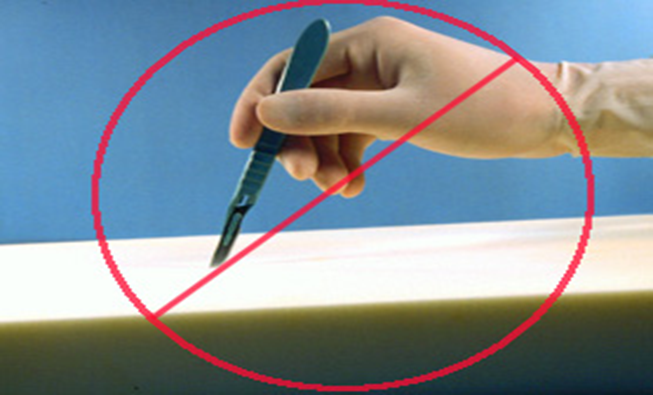
The scalpel should not be used in stabbing movements.
Figure (24)