Supportive Developmental Care for Newborns
| Site: | EHC | Egyptian Health Council |
| Course: | دلائل الاجراءات التمريضية لقسم حديث الولاده |
| Book: | Supportive Developmental Care for Newborns |
| Printed by: | Guest user |
| Date: | Sunday, 20 September 2026, 5:06 PM |
Description
"last update: 9 February 2025" تحميل الدليل
- Prepared by
NICU guide
Under supervision
- Prof. Dr. Mohamed Latif, CEO of the Egyptian Health Council
Dr. Kawthar Mahmoud, Head of the Egyptian Nursing Syndicate - Member of the Senate
Prepared by
|
Title |
Name |
NO. |
|
Dean Of Faculty Nursing, Professor of Medical and Surgical Nursing, Tanta University |
Dr Afaf Abdel Aziz Abdel Aziz Basal |
1 |
|
Professor Of Critical Care Nursing |
Prof.Dr/Zeinab Hussain Ali |
2 |
|
Professor And Head of the Department of Medical Surgical Nursing. Faculty-. Benha University |
Amal Said Taha Refaie |
3 |
|
Supervisor Of the Education Sector at Port Said University |
Amal Ahmed Khalil Morsy |
4 |
|
Professor Of Medical Surgical Nursing- Faculty of Nursing- Cairo University |
Dr. Hanan Ahmed Al Sebaee |
5 |
|
Head of central administration on secondment at MOHP |
Dr Neveen ab drab al0nabi Mohamed |
6 |
|
Director Of Primary Health Care Nursing Department at MOHP. |
Maysa Hosny Ahmed Tammam |
7 |
|
Supervisor Of Technical Education- EHA |
Nancy Alaa Eldeen Abd-Elbaset Ali |
8 |
|
Supervisor Of Nursing Services Development- EHA |
Sherien Mohamed Saad |
9 |
|
Assistant Professor of Maternity and Neonatal Health Nursing - Faculty of Nursing- Ain Shams University |
Assist.Perof. Dr./Heba Mahmoud Mohammed |
10 |
|
General manager of general administration of health institutes affairs |
Dr Mai Galal Ibrahim Al-Assal |
11 |
|
Participants |
||
|
Professor of Obstetrics and Gynecology Nursing |
Dr. Nagat Salah Shalabi Salama |
12 |
|
member of the Nursing administration at EHA, port said branch |
Mrs. Shaima Abdel Basset Ibrahim Salim |
13 |
|
member of the Nursing administration at EHA, port said branch |
Mrs. Hoda Al-Sayd Muhammad |
14 |
|
member of the Nursing administration at EHA, port said branch |
Mrs. Walaa Ahmed Ali |
15 |
|
member of the Nursing administration at EHA, port said branch |
Mrs. Omnia Abdel Qader Muhammad |
16 |
|
member of the Nursing administration at EHA- South Sinai branch |
Mrs. Yasser Abdel Karim Omar Abdel Jawad |
17 |
- Developmental Care
Premature and low-birth-weight newborns face numerous physiological challenges due to the immaturity of their organs, which prevents them from functioning optimally. As a result, these infants often require admission to the Neonatal Intensive Care Unit (NICU) to receive the necessary level of care. While advanced technology in NICUs has significantly improved the healthcare provided to premature and low-birth-weight infants, it has also introduced additional challenges. These newborns are exposed to stressful and painful stimuli beyond their ability to adapt to the environment outside the womb, which may negatively impact their growth and development.
Developmental Care
Developmental care refers to a set of interventions provided to premature and low-birth-weight infants in NICUs to support their optimal growth and development. This is achieved by minimizing stress and discomfort during their stay in the unit, which helps stabilize their physiological and behavioral functions. As a result, their overall physiological stability and developmental indicators improve.
Guidelines for Developmental Care
- Each newborn requires individualized interventions that may not be suitable for another.
- Only one intervention should be performed at a time.
- The intervention should be applied for a short duration based on the infant’s tolerance.
- The intervention should be stopped if the infant shows any signs of distress, such as irritability.
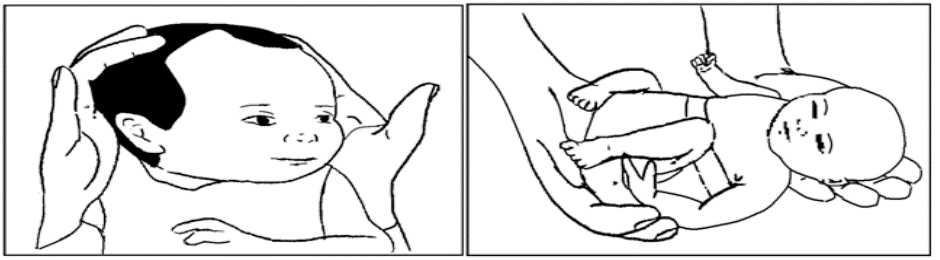
- Positive Touch and Massage
Positive touch and massage serve as a silent form of communication between the caregiver and the infant, aiming to provide a gentle and reassuring touch. It includes:
- Light finger tipping – Gentle tapping with fingertips.
- Resting a hand – Placing hands softly on the infant’s skin.
- Containment – Providing physical support to help the infant feel secure.
- Massage – Gentle rubbing to promote relaxation.
Benefits of Positive Touch
- Provides the infant with a sense of security and reassurance by introducing a comforting touch that is not associated with pain.
- Helps the infant return to a calm state after experiencing a painful procedure.
- Reduces stress caused by maternal separation.
- Enhances the infant’s ability to self-regulate.
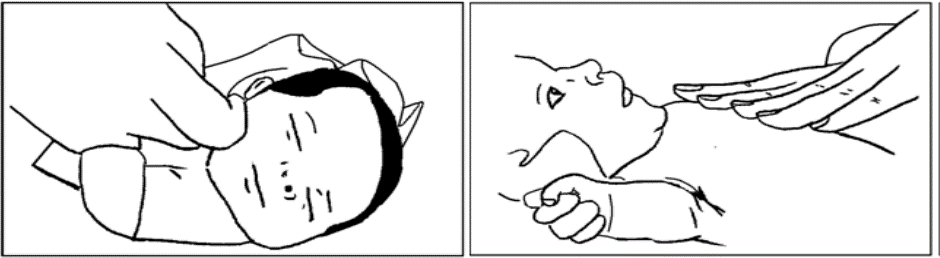
Positive Touch for
the Newborn
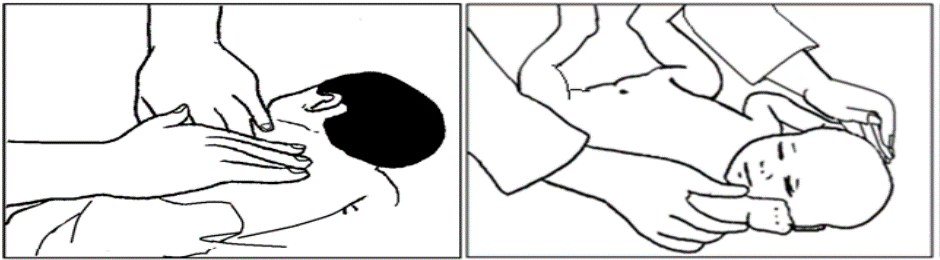
Infant Massage
Infant Massage
Massage involves gently gliding hands over the baby's skin to create a soothing, comforting, and muscle-relaxing effect.
Benefits of Infant Massage:
- Reduces episodes of apnea of prematurity (temporary pauses in breathing in preterm infants).
- Helps the baby reach full digestive feeding more quickly.
- Improves oxygen saturation levels in the blood.
- Enhances blood circulation.
- Helps the baby relax.
- Promotes deep and prolonged sleep in low-birth-weight infants.
- Aids in weight gain for preterm infants.
- Reduces the length of hospital stay.
Steps for Infant Massage:
Initially, the baby should be placed in a prone position (lying on the stomach), and each step should be repeated six times using gentle strokes:
- From the top of the head to the base of the skull, then back.
- From the neck to the shoulders, then back.
- From the shoulders to the lower back, then back along the spine.
- From the shoulders to the wrists, then back along the back of the arms.
- From the pelvis to the heels, then back along the back of the legs.
Next, turn the baby onto their back (supine position) and perform six repetitions of flexion and extension for:
- Each arm separately, while stabilizing near the collarbone.
- Each leg separately, while stabilizing near the pelvic bones.
- Both legs together, while holding the ankle joints.
Finally, turn the baby back onto their stomach and repeat steps 1 to 5.
- Nesting (Positioning the Infant in a Nest)
Definition:
Nesting refers to surrounding the infant with a soft fabric roll to create a
secure and supportive environment.
Objective:
Premature infants lack the ability to position themselves as they would in the womb due to their underdeveloped nervous system. Nesting helps simulate the womb-like environment, providing the baby with a sense of security and containment, which promotes stabilization of vital signs and weight gain.
Steps for Nesting:
- Prepare a clean, square cloth.
- Roll the edges of the cloth to form a soft cylindrical shape, making the middle section thicker and the ends slightly thinner.
- Shape the fabric roll into a horseshoe (U-shape).
- Position the thicker part under the baby’s lower back and wrap the rest of the roll around their body.
- Place a small towel under the baby’s shoulders for additional support.
- Adjust the baby’s arms and legs into a flexed position, bringing the limbs close to the midline of the body.
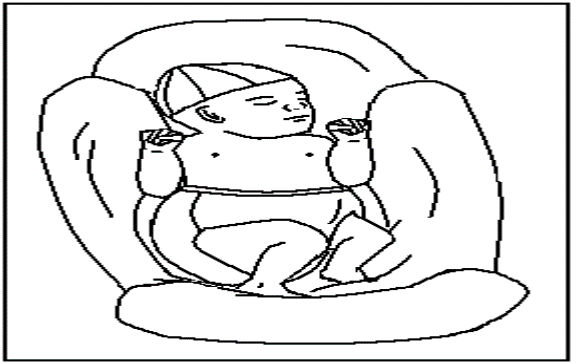
Nesting (Positioning the Infant in a Nest)
Benefits of Nesting for the Infant
- Helps the infant cope with stress caused by routine painful or uncomfortable procedures, such as heel pricks or blood sample collection.
- Assists in regulating the infant’s neuromuscular reflex response during challenging and painful procedures, such as airway suctioning and chest physiotherapy.
- Clustering of Care
It is crucial to cluster routine care procedures for preterm infants into a
single session to support their growth and development. This allows the infant
to experience prolonged periods of uninterrupted, restful sleep and reduces
energy loss.
For example, performing diaper changes, umbilical cord care, and sample
collection all at the same time after preparing the necessary equipment
beforehand.
- Non-Nutritive Sucking
Sucking on fingers or hands is an innate behavior observed in the fetus during pregnancy. Non-nutritive sucking can be implemented by offering the infant an empty breast (without milk) or a pacifier during routine care or tube feeding.
Benefits of Non-Nutritive Sucking
- Reduces the infant’s perception of pain by shifting focus to sucking instead.
- Provides comfort and soothes the infant.
- Helps the infant return to a calm state quickly after being disturbed.
- Supports the development of swallowing and digestion, strengthening sucking ability and accelerating the transition from tube feeding to oral feeding.
- Enhances digestive function and promotes weight gain.
Note: Excessive non-nutritive sucking, especially in preterm infants, should be avoided to prevent weight loss due to energy expenditure during sucking.
- Noise Reduction
Infants in neonatal care units are exposed to significant noise from their surroundings, which can lead to severe ear damage, hearing loss, excessive crying, increased intracranial pressure, and reduced oxygen saturation levels.
Examples of Developmental Auditory Care in the NICU
- Playing recordings of parents' or siblings' voices.
- Playing soft, calming music.
- Talking to the infant in varied tones.
- Calling the infant by name during interactions.
Noise Protection Measures
- Avoid loud conversations inside the NICU, especially when infants are sleeping.
- Close doors gently and quietly.
- Avoid placing objects on top of the incubator.
- Quickly remove air bubbles from oxygen tubing or ventilators.
- Set phone ringtones to the lowest volume or move the phone outside the NICU when possible.
- Minimize disturbing the infant’s sleep unless absolutely necessary.
- Lift furniture rather than dragging it to move it within the NICU.
- Light Reduction
Excessive exposure to bright lights, including phototherapy devices, can affect the infant's vision and disrupt the natural day-night rhythm (nocturnal-diurnal cycle). Scientific studies confirm that reducing light levels in neonatal units promotes comfort and adequate sleep.
Examples of Developmental Visual Care in the NICU
- Covering the mattress with black-and-white patterned fabric.
- Stimulating eye movement by visually engaging the infant.
- Moving black-and-white toys within the infant’s visual field.
Light Protection Measures
- Placing incubators away from direct sunlight and clear glass windows.
- Using a cover over the incubator to shield the infant from bright light.
- Reducing light levels at night.
Note: The incubator cover should not obstruct close monitoring of the infant, so the infant should ideally be connected to a heart and respiratory monitor.
- Family-Centered Care
Encouraging parents to participate in their infant’s care helps reduce the psychological stress associated with neonatal intensive care unit (NICU) admission. This approach also enhances parental confidence by allowing them to contribute to their infant’s well-being through activities like positive touch or diaper changing.
- Kangaroo Mother Care (KMC)
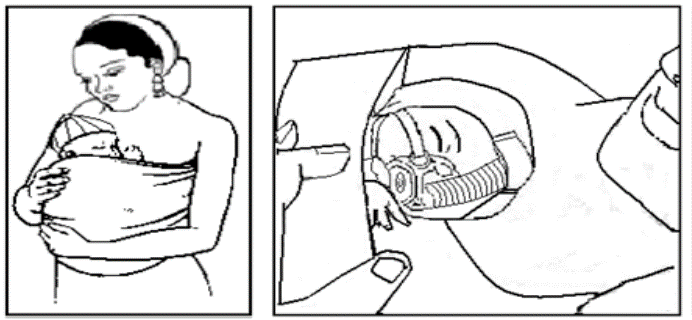
Kangaroo care is inspired by how a mother kangaroo carries her baby in a pouch to provide warmth and security. The method involves direct skin-to-skin contact between the infant and a parent to enhance bonding.
Procedure:
- The infant is undressed, except for a diaper, hat, and socks.
- The infant is placed in an upright position against the parent’s bare chest.
- The head is turned so that the infant’s ear is aligned with the parent's heartbeat.
This technique promotes attachment, stabilizes vital signs, and supports growth and development.
Kangaroo Mother Care
Kangaroo Mother Care (KMC)
Kangaroo Mother Care is inspired by how a kangaroo mother carries her baby in a pouch to keep it warm and safe. This method aims to strengthen the bond between the newborn and their parents through direct skin-to-skin contact, contributing to improved health and growth.
Benefits of Kangaroo Mother Care for the Infant
- Helps improve oxygen saturation levels.
- Helps regulate the infant’s heartbeat within normal rates.
- Stabilizes the infant’s body temperature.
- Reduces stress, which can negatively affect the infant’s nervous system.
- Supports early initiation of breastfeeding, increases milk production, and extends the breastfeeding duration.
- Contributes to weight gain by reducing energy loss.
- Shortens the infant’s hospital stay.
Benefits of Kangaroo Mother Care for Parents
- Strengthens the emotional bond between parents and their sick newborn.
- The infant’s pressure on the mother’s abdomen helps reduce postpartum bleeding.
Infants Suitable for Kangaroo Mother Care
- Can be applied to infants of any gestational age or postnatal age.
- The infant should be physiologically stable, with a body temperature not lower than 36°C.
- If the infant has apnea or a low heart rate, it should be mild and responsive to stimulation.
- Can be applied even if the infant is receiving nasal CPAP (NCPAP) or mechanical ventilation.
The Nurse's Role in Implementing Kangaroo Mother Care
- Explain the importance of this method to the mother to ensure successful implementation.
- Provide a comfortable chair for the mother to sit on.
- Offer suitable clothing for the mother, such as an open-front gown with another open-back gown on top.
- Maintain the mother’s privacy and ensure a quiet environment.
- Measure the infant’s temperature before placing them on the mother’s chest.
Reducing Pain from Invasive Procedures in Newborns
Both full-term and preterm infants experience pain and react to it, which is evident through changes in their cardiovascular and respiratory systems, such as increased heart rate, elevated blood pressure, and reduced oxygen saturation levels. Therefore, it is crucial to minimize pain exposure for newborns in neonatal intensive care units (NICUs) during invasive procedures by following these guidelines:
Before Performing an Invasive Procedure:
- Cluster invasive procedures and perform them before feeding.
During the Invasive Procedure:
- Swaddle the infant while carrying out the painful procedure.
- Use non-nutritive sucking by providing a pacifier.
After the Invasive Procedure:
- Reduce light exposure and limit noise.
- Perform massage therapy or other forms of positive touch.
- Allow a parent to apply Kangaroo Care or hold the infant immediately after the procedure.
- Maintain the infant’s position by surrounding them with hands or wrapping them in a cloth nest (Nesting).

Swaddling Newborns