مستويات الخدمه لحديثى الولاده
| الموقع: | EHC | Egyptian Health Council |
| المقرر الدراسي: | دلائل الاجراءات التمريضية لقسم حديث الولاده |
| كتاب: | مستويات الخدمه لحديثى الولاده |
| طبع بواسطة: | Guest user |
| التاريخ: | الأحد، 20 سبتمبر 2026، 5:05 PM |
الوصف
"last update: 9 February 2025" تحميل الدليل
- اعداد
- أ.د/ محمد لطيف الرئيس التنفيذي للمجلس الصحي المصري - د/ كوثر محمود نقيب عام التمريض المصري – عضو مجلس الشيوخ
م | الاسم | الوظيفة |
1 | أ.د/ امل احمد خليل مرسي | نائب رئيس الجامعة لشئون التعليم والطلاب – جامعة بورسعيد |
2 | أ.د / عفاف عبد العزيز عبد العزيز بصل | عميد كلية التمريض –استاذ تمريض باطنه وجراحي جامعة طنطا |
3 | أ.د/ زينب حسين على محمد سعد | وكيل الكلية لشئون البيئة وخدمة المجتمع – كلية التمريض – جامعه حلوان |
4 | أ.د/ امل سعيد طه رفاعي | أستاذ ورئيس قسم التمريض الباطني الجراحي – جامعة بنها |
5 | أد حنان احمد السباعي على | استاذ التمريض التمريض الباطني الجراحي- كلية التمريض – جامعة القاهرة |
6 | د /نيفين عبدربه النبي محمد عبد النبي | رئيس الإدارة المركزية ندباَ –وزاره الصحة |
7 | د /مايسة حسني احمد تمام | مدير عام للإدارة ندباَ – وزاره الصحة |
8 | د /نانسي علاء الدين عبد الباسط على | المشرف على التعليم الفني- الهيئة العامة للرعاية الصحية |
9 | د /شيرين محمد محمد سعدالدين | المشرف على تطوير الخدمات التمريضية –الهيئة العامة للرعاية الصحية |
10 | د./ مى محمود العسال | مدير عام الإدارة العامة لشئون المعاهد الفنية الصحية |
11 | أ.م.د/ هبة محمود محمد | أستاذ مساعد تمريض صحة الام وحديثي الولادة –كلية التمريض - جامعة عين شمس |
المشاركين | ||
12 | د/ نجاة صلاح شلبي سلامة | أستاذ تمريض النساء والتوليد |
13 | أ/شيماء عبد الباسط إبراهيم سليم | عضو إدارة التمريض بالهيئة العامة للرعاية الصحية فرع بورسعيد |
14 | أ/هدي السيد محمد | عضو إدارة التمريض بالهيئة العامة للرعاية الصحية فرع بورسعيد |
15 | أ/ولاء أحمد على | عضو إدارة التمريض بالهيئة العامة للرعاية الصحية فرع بورسعيد |
16 | أ/أمنية عبد القادر محمد | عضو إدارة التمريض بالهيئة العامة للرعاية الصحية فرع بورسعيد |
17 | أ/ياسر عبد الكريم عمر عبد الجواد | عضو إدارة التمريض بالهيئة العامة للرعاية الصحية فرع جنوب سيناء |
- تحديد مستويات الخدمه لحديثى الولاده
تقدم وحدات رعایة حدیثي الولادة بالمستشفیات التابعة لوزارة الصحة والسكان خدمات متعددة للأطفال حدیثي الولادة سواءً أكانوامكتملي أو ناقصي النمو.
وتعتمد نوعیة الخدمات التي توفرھا ھذه الوحدات على عدة عوامل منھا:
· المكان المتاح
· أنواع وأعداد الأجھزة والمعدات المتوفرة بھذه الوحدات
· عدد الأفراد القائمین على الخدمة الصحیة ومستواھم الفني
· عدد حالات الدخول وأنواع الأمراض التي تستقبلھا ھذه الوحدات
رعایة ما حول الولادة طبقا للتوزیع الجغرافي :
· ھو نظام یتعاون فیه جمیع أفراد الفریق الصحي والمستشفیات لتقدیم خدمة طبیة متمیزة للأم والولید في مرحلة ما حول الولادة، من خلال تطبیق نظام الإحالة في منطقة جغرافیة محددة طبقاً لمستوى الرعایة المطلوبة.
- المستوى الاول
یختص برعایة حدیثي الولادة مكتملي النمو والوزن (العمر الرحمي للولید ٣٧ أسبوعًا أو أكثر، ویزن ٢٥٠٠ جم أو أكثرعند الولادة ولا یعاني من أي مضاعفات، مع الأخذ في الاعتبار تقدیم الرعایة الطبیة والتمریضیة العاجلة في حالة حدوث أي مضاعفات غیر متوقعة، خاصةً فیما یتعلق بإفاقة حدیثي الولادة.
المكان الملائم :
· مع الأم في حجرة ملاحظة ما بعد الولادة الخاصة بالأمھات، مع مراعاة أن یكون عدد الأسِرة الخاصة بالموالید، على الأقل مساوى لعدد الأسِرة الخاصة بالأمھات، ولا یجب فصل الأم عن ولیدھا.
· یتم ضبط درجة حرارة الغرفة بحیث تكون ملائمة للولید) 24 الى ٥26 م ) .
التجھیزات والمستلزمات اللازمة :
✔ جھاز تدفئة
✔ شنطة إفاقة كاملة المستلزمات والأدویة
✔ سماعة طبیب خاصة بالأطفال حدیثي الولادة
✔ جهاز تشفيط
✔ میزان موالید
✔ میزان حرارة ) ترمومتر( للولید
✔ قطرة مطھرة للعین ( مضاد حیوي )
✔ ( كحول إیثیلي ٧٠ ٪ (للغیار السري.
الأفراد :
ممرضة لكل 4 موالید، مع الأخذ في الاعتبار أن تكون مدربة على إفاقة الأطفال حدیثي الولادة .
- المستوى الثاني
یختص بتقدیم الرعایة للحالات الآتیة :
· الموالید ناقصوا النمو من عمر ٣٢اسبوع إلى أقل من ٣٧ أسبوعًا ) عمر رحمي )
· الموالید ناقصوا الوزن الذین تتراوح أوزانھم ما بین ١٥٠٠ إلى أقل من ٢٥٠٠ جم
· ولید الأم المصابة بالسكري
· موالید الحمل الخطیر أو الولادات ذات الخطورة العاليه
· صعوبة التنفس البسیطة أو المتوسطة التي لا تحتاج إلى تنفس صناعي میكانیكي، وتحتاج إلى العلاج بالأكسجین أو إلى استخدام جھاز نظام الضغط الموجب المستمر (NCPAP) على مجرى الھواء عن طریق الأنف
· ارتفاع نسبة الصفراء التي تحتاج إلى علاج ضوئي فقط
· التسمم الدموي الولیدي
· حالات انخفاض درجة حرارة الولید
المكان الملائم :
ارجعي إلى المعاییر القیاسیة لمدخلات وحدات رعایة الأطفال حدیثي الولادة.
التجھیزات والمستلزمات اللازمة :
ارجعي إلى المعاییر القیاسیة لمدخلات وحدات رعایة الأطفال حدیثي الولادة.
الأفراد :
· ممرضه لكل من 3:1مولود في المرحله الثانيه مع العلم ان المستويات لم تدرج في دليل تخطيط العماله التابعه لهيئه الرعايه الصحيه FTE
· طبیب مقیم مدرب على رعایة الأطفال حدیثي الولادة متواجد بالوحدة على مدار ٢٤ ساعة.
· أخصائي أطفال مدرب على رعایة الأطفال حدیثي الولادة على مدار ٢٤ ساعة.
- المستوى الثالث (الرعاية المركزه لحديثي الولاده)
یختص بتقدیم الرعایة للحالات الآتیة :
· الموالید ناقصوا النمو أقل من ٣٢ أسبوعًا ) عمر رحمي(
· الموالید ناقصوا الوزن أقل من ١٥٠٠ جم
· الموالید المصابون بالصدمة
· صعوبة التنفس الشدیدة التي تحتاج إلى استخدام جھاز التنفس الصناعي المیكانیكي
· الموالید الذین یعانون من التشنجات
· ارتفاع نسبة الصفراء التي تتطلب عمل تغییر الدم
· الموالید الذین یحتاجون إلى تغذیة كاملة بالورید
المكان الملائم :
ارجعي إلى المعاییر القیاسیة لمدخلات وحدات رعایة الأطفال حدیثي الولادة.
التجھیزات والمستلزمات اللازمة :
ارجعي إلى المعاییر القیاسیة لمدخلات وحدات رعایة الأطفال حدیثي الولادة.
الأفراد :
· ممرضة لكل ١ – 2 ولید على الأكثر في كل مناوبة، وتكون على درایة كاملة بكیفیة تقدیم رعایة تمریضیة متمیزة للموالید ذوي الحالات الحرجة.
· طبیب مقیم بالوحدة على مدار ٢٤ ساعة، ویكون مدربًا على العنایة بالموالید ذوي الحالات الحرجة.
· طبیب استشاري أطفال حدیثي الولادة على مدار ٢٤ ساعة.
- تنظيم درجه حراره الوليد
تنتظم درجة حرارة الجسم عندما یحدث اتزان بین معدل الحرارة المفقودة والمكتسبة. وإذا زاد معدل فقد الحرارة عن معدل اكتسابھا أو انتاجھا، یحدث انخفاض في درجة حرارة الجسم والعكس. لذلك یصبح التحكم في البیئة التي یتواجد بھا الولید ھدفًا رئیسًا للقائمین على رعایة الأطفال حدیثي الولادة من أجل الإبقاء على درجة الحرارة الداخلیة لجسمھ حول معدلھا الطبیعي، وللتقلیل من معدل الطاقة المفقودة.
الظروف البیئیة الحراریة المعتدلة :
ھي الظروف البیئیة التي تستقر فیھا درجة الحرارة الداخلیة لجسم الولید حول معدلھا الطبیعي ما بین 36,5 - 37,5 °م بأقل معدل فقد للطاقة، وأقل معدل استھلاك للأكسجین.
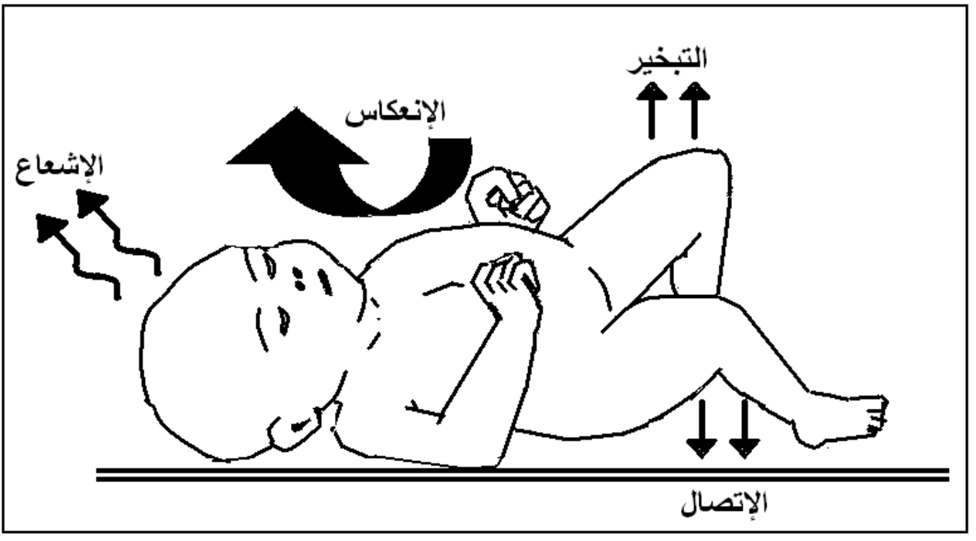
الطرق التي یتم من خلالھا فقدان درجة حرارة الجسم الداخلیة :
i. التبخیر
· یحدث انخفاض في درجة حرارة جسم الولید بھذه الطریقة عندما یترك أي سائل مثل ماء الاستحمام أو السائل الأمنیوسي على جلده دون تجفیفه بمنشفة قطنیة جافة.
· الإجراء الوقائي المتبع :
✔ تجفیف جسم الولید بفوطة ناشفة جیدًا بعد الولادة، بعد الاستحمام، وخصوصًا منطقة الرأس.
ii. الاتصال
· إذا حدث اتصال مباشر بین جلد الولید وأي سطح صلب بارد، خاصةً إذا كان جسمًا أو سطحًا معدنیًا، فإن درجة حرارة جسمه ستنخفض من خلال اكتساب الجلد جزء من برودة ھذا السطح، وإعطائھ جزء من درجة حرارة الجسم.
· أمثلة على فقد الحرارة عن طریق الاتصال:
✔ وضع الولید على مرتبة أو ترابیزة باردة.
✔ وضع الولید على میزان ستانلس أو على اللوح المعدني الخاص بعمل الأشعة بدون وضع طبقة قماش عازلة بین جلد الولید وبین ذلك السطح.
✔ وضع السماعة بعد مسحھا بالكحول مباشرًة على جلد الولید دون تدفئتھا.
· الإجراء الوقائي المتبع:
✔ یجب التأكد من وضع طبقة قماش عازلة بین جسم الولید وبین أي سطح صلب سیلاصق جلده.
iii. الانعكاس
· یحدث انخفاض في درجة حرارة جسم الولید بھذه الطریقة عندما یتعرض لتیارات ھوائیة، حیث یتم استبدال طبقة الھواء الدافئة الملاصقة لجسم الولید بطبقه أخرى باردة نتیجة التعرض لتیار الھواء، فتكتسب ھذه الطبقة بدورھا جزءً من درجة حرارة الجسم، ویحل محلھا طبقة أخرى باردة، وھكذا طالما استمر تعرض الولید للتیارات الھوائیة.
· أمثلة عن فقد الحرارة عن طریق الانعكاس:
✔ تعرض الولید لمصدر أكسجین یحوي ماء بارد بالمرطب.
✔ تعرض الولید للتیارات الھوائیة، مثل مكیف الھواء أو المروحة.
· الإجراء الوقائي المتبع:
✔ إبعاد الولید عن أي مصدر للتیارات الھوائیة.
✔ وضع ماء دافئ في مرطبات الأكسجین مع تغییره باستمرار كلما فقد درجة حرارته
iv. الاشعاع
· یحدث انخفاض في درجة حرارة الجسم بھذه الطریقة عندما یشع جسم الولید جزء من درجة حرارتھ لجسم آخر صلب قریب منه أقل منه في درجة الحرارة، دون أن یحدث بینھما اتصال مباشر.
· مثال على فقد الحرارة عن طریق الإشعاع:
✔ وضع حضانة الولید بجوار الحائط دون ترك المسافات المفروضة (١ متر من الاتجاھات الأربعة للحضانة)
· الإجراء الوقائي المتبع:
✔ مراعاة ضبط درجة حرارة غرفة الولادة على الدرجة الملائمة (ما بین ٢٤ –٢٦ °م) .
✔ وضع الحضانات بمنتصف الغرفة كلما أمكن ذلك، وإبعادھا عن الحائط بالمسافة المفروضة.
اضطرابات تنظیم درجة حرارة الجسم :
تظھر إما في صورة انخفاض أو ارتفاع في درجة حرارة الجسم.
أولاً: انخفاض درجة الحرارة :
ھي انخفاض درجة حرارة الجسم الداخلیة للولید عن36,5 °م
الأسباب
· برودة البیئة الخارجیة المحیطة بالولید بسبب عدم مراعاة ضبط درجة حرارة غرفة الولادة على الدرجة الملائمة ( 24 – 26 °م)
· عدم الحفاظ على درجة حرارة الولید فور ولادته ، خصوصًا إذا كان مبتسرًا، حیث تنخفض درجة حرارة الولید ١°م مباشرةً بعد الولادة، ومن أمثلة ذلك:
✔ عدم وضع الولید تحت السیرفو الذي تم تشغیله وتدفئته مسبقاً أثناء القیام بالعنایة الفوریة بعد الولادة.
✔ التأخر في تجفیف الولید، أو ترك الفوط المبللة تحته .
✔ فصل الولید عن أمه .
✔ عمل حمام للولید بعد الولادة مباشرةً، حتى وإن كان ذلك بماء دافئ.
✔ إلباس الولید ملابس خفیفة أو غیر كافیة.
الموالید الأكثر عرضة لانخفاض درجة الحرارة
· ناقصوا الوزن والنمو
· الذین یعانون من انخفاض مستوى الجلوكوز في الدم
· الذین یعانون من الاختناق الولیدي
· الذین یعانون من التسمم الدموي
· الذین یعانون من عیوب خلقیة في القلب أو في الجھاز الھضمي مثل : خروج محتویات البطن مع الحبل السري
· الذین یعانون من حدوث تكسیر في كرات الدم الحمراء فور عملیة الولادة بسبب عدم توافق عامل ریزوس بین الأم والولید
· الذین یعانون من صعوبة التنفس
الأعراض الدالة على انخفاض درجة حرارة جسم الولید
أعراض مبدئیة
· الإحساس ببرودة جلد الولید عند ملامسته، خصوصًا الأطراف وظھور زرقة طرفیة.
· ضعف القدرة على المص، أو فقد القابلیة للرضاعة.
· ظھور علامات صعوبة التنفس ) زیادة معدل التنفس ( مع زیادة معدل ضربات القلب.
· خمول وبكاء ضعیف.
· تغیر لون الجلد من الشحوب والزرقة إلى المبرقش.
أعراض متأخرة
· مع استمرار انخفاض درجة حرارة جسم الولید، من الممكن حدوث الآتي:
✔ نوبات من توقف التنفس
✔ انخفاض معدل ضربات القلب
✔ نقص مستوى الجلوكوز بالدم
✔ زیادة نسبة حموضة الدم
✔ نزیف بالمخ أو نزیف رئوي
✔ تصلب الأنسجة الدھنیة تحت الجلد (Sclerema neonatorum)
ثانیا: ارتفاع درجة الحرارة
ھي ارتفاع درجة حرارة الجسم الداخلیة للولید عن 37.5 °م
الأسباب
· تعرض الولید لدرجة حرارة عالیة من البیئة المحیطة به.
· الإفراط في تدفئة الولید، من خلال رفع درجة حرارة الحضانة عن المعدل المطلوب .
· تعرض الولید لجھاز العلاج الضوئي، دون إعادة ضبط درجة حرارة الحضانة لتتناسب مع الحرارة المنبعثة من جھاز العلاج الضوئي
· الجفاف الشدید
· التسمم الدموي
· النزیف المخي
الأعراض الدالة على زیادة درجة حرارة جسم الولید
· جلد الولید دافئ عند ملامسته ویبدو متوردًا في بادئ الأمر، ثم یصبح لونھ باھتًا بعد ذلك .
· زیادة معدل ضربات القلب
· زیادة معدل التنفس
· تھیج الولید
دور الممرضة في الحفاظ على درجة حرارة الولید
1- في حجرة الولادة
· تھیئة بیئة دافئة لاستقبال الولید بعیدة عن أي مصدر للتیارات الھوائیة، مع مراعاة ضبط درجة حرارة غرفة الولادة على الدرجة الملائمة ما بین( ٢٤ - ٢٦ °م ) .
· ضبط المصدر الحراري ) السیرفو( على وضع التشغیل بمجرد دخول الأم إلى غرفة الولادة قبل ولادة الطفل ( بحوالي ١٠ - ٢٠ دقیقة) .
· تجفیف الولید جیدًا بعد الولادة مباشرةً، مع مراعاة عدم ترك الفوط المبللة تحته .
· وضع الولید ملاصقًا لجلد الأم بعد الولادة، قدر الإمكان.
2- في وحدة رعایة حدیثي الولادة
عند استقبال الولید بوحدة رعایة حدیثي الولادة، یجب اتباع الآتي :
· یجرد الولید من الملابس، فیما عدا الحفاض، ویوضع في المنتصف تحت المصدر الحراري ) السیرفو) .
· یُثبت مجس الحرارة على جلد البطن ) في الناحیة الیمنى العلیا) .
· ضبط درجة حرارة السیرفو على 3,5 °م.
· تقاس درجة حرارة الولید كل نصف ساعة - ساعة أو حسب تعلیمات الطبیب، حتى تصبح حول معدلاتھا الطبیعیة.
عند دخول الولید إلى وحدة رعایة حدیثي الولادة، یجب اتباع الآتي :
· متابعة درجة حرارة الولید كل 3- 4 ساعات، وضبط درجة حرارة الحضانة حسب عمر ووزن الولید ( جدول 8- 1 ) .
· یجب وضع الحضانة بعیدًا عن أشعة الشمس أو أي مصدر للتیارات الھوائیة.
· عدم فتح أبواب الحضانة إلا عند الضرورة.
· یجب متابعة الحرارة إذا وضع الولید تحت العلاج الضوئي، لتجنب حدوث زیادة بدرجة حرارته .
( جدول 8- 1 ) الظروف البیئیة الحراریة المعتدلة ) تنظیم درجة حرارة الحضانة )
العمر والوزن | حرارة الحضانة (درجة مئویة)
| |
البدایة | تتراوح بین | |
من ٠ - 6 ساعات ✔ أقل من ١٢٠٠ جم ✔ ١٥٠٠ جم – ١٢٠٠ ✔ ٢٥٠٠ جم – ١٥٠١ ✔ أكثر من ٢٥٠٠ جم |
✔ 35 ✔ ٣٤,١ ✔ ٣٣,٤ ✔ ٣٢,٩ |
✔ 34.4-35 ✔ 33.9-34.4 ✔ 32.8-33.8 ✔ 32-33.8 |