Nursing Procedures for Pregnancy
| Site: | EHC | Egyptian Health Council |
| Course: | دلائل الإجراءات لتمريض الرعاية الاولية |
| Book: | Nursing Procedures for Pregnancy |
| Printed by: | Guest user |
| Date: | Thursday, 5 November 2026, 2:37 AM |
Description
"last update: 20 Feb.2025" تحميل الدليل
Table of contents
- - Prepared by
- - Importance of Health Care During Pregnancy
- - The Nurse's Role in Preparing the Pregnancy Follow-up Room
- - The First Visit for the Pregnant Woman
- - Clinical Examination of the Pregnant Woman
- - High-Risk Pregnancy
- - Minor Health Problems Faced by Pregnant Women and How to Overcome Them
- - تطعيم الحوامل ضد التيتانوس
- - References
- Prepared by
Primary healthcare guide
Under supervision
- Prof. Dr. Mohamed Latif, CEO of the Egyptian Health Council
Dr. Kawthar Mahmoud, Head of the Egyptian Nursing Syndicate - Member of the Senate
Prepared by
|
Title |
Name |
NO. |
|
Dean Of Faculty Nursing, Professor of Medical and Surgical Nursing, Tanta University |
Dr Afaf Abdel Aziz Abdel Aziz Basal |
1 |
|
Professor Of Critical Care Nursing |
Prof.Dr/Zeinab Hussain Ali |
2 |
|
Professor And Head of the Department of Medical Surgical Nursing. Faculty-. Benha University |
Amal Said Taha Refaie |
3 |
|
Supervisor Of the Education Sector at Port Said University |
Amal Ahmed Khalil Morsy |
4 |
|
Professor Of Medical Surgical Nursing- Faculty of Nursing- Cairo University |
Dr. Hanan Ahmed Al Sebaee |
5 |
|
Head of central administration on secondment at MOHP |
Dr Neveen ab drab al0nabi Mohamed |
6 |
|
Director Of Primary Health Care Nursing Department at MOHP. |
Maysa Hosny Ahmed Tammam |
7 |
|
Supervisor Of Technical Education- EHA |
Nancy Alaa Eldeen Abd-Elbaset Ali |
8 |
|
Supervisor Of Nursing Services Development- EHA |
Sherien Mohamed Saad |
9 |
|
Assistant Professor of Maternity and Neonatal Health Nursing - Faculty of Nursing- Ain Shams University |
Assist.Perof. Dr./Heba Mahmoud Mohammed |
10 |
|
General manager of general administration of health institutes affairs |
Dr Mai Galal Ibrahim Al-Assal |
11 |
|
Participants |
||
|
Member of nursing administration - EHA |
Mr. Mohamed Al-Sayed Abdel Hamid |
12 |
|
nursing specialist at the General Administration of Nursing - MOHP |
Mrs. Shaima Hassan gamal Mady |
13 |
|
nursing specialist at the General Administration of Nursing - MOHP |
Mrs. Salwa Nasser Fahim Attia |
14 |
|
nursing specialist at the General Administration of Nursing - MOHP |
Mr. tarek Ramadan Rashad El Gamal |
15 |
|
nursing specialist at the General Administration of Nursing - MOHP |
Mr. Mahmoud Muhammad Ali Afifi |
16 |
|
nursing specialist at the General Administration of Nursing - MOHP |
Mr. Ahmed Abdel Tawab Attia |
17 |
|
nursing specialist at the General Administration of Nursing - MOHP |
Mr. Muhammad Jamal Al-Shaar |
18 |
- Importance of Health Care During Pregnancy
First: For the Mother
· Maintaining the physical and psychological health of the pregnant woman.
· Protecting the mother from many complications that could occur.
· Early detection of diseases affecting the mother and fetus.
· Urgent medical intervention and referring the mother to specialized medical services when necessary.
· Preparing the pregnant woman for childbirth, breastfeeding, and newborn care.
Second: For the Child
· Protecting the fetus from certain diseases and congenital defects.
· Delivering a physically healthy newborn.
Objectives of Pregnancy Care
· Identifying pregnant women early and urging them to visit health centers and maintain regular follow-ups.
· Providing health services to pregnant women at the center during the first visit and regular follow-up visits:
Clinical examination of the pregnant woman.
Evaluating the health status of the fetus in the womb.
Vaccination against neonatal tetanus.
· Identifying minor health problems faced by the pregnant woman and how to overcome them.
· Identifying high-risk pregnancy cases and referring them to a doctor.
· Determining the level of care (health center or hospital) where follow-up and care will continue until birth.
· Conducting health education for pregnant women based on their actual needs and within the prevailing customs and traditions of the community.
· Reducing morbidity and maternal and infant mortality rates during the perinatal period.
Confirmed Signs of Pregnancy
· Hearing the fetal heartbeat: The fetal heartbeat can be heard starting from the twentieth week using normal methods, and it can be heard using a fetal doppler (Sonicaid) starting from the twelfth week. Noise, excess amniotic fluid, and obesity may hinder hearing the fetal heartbeat through normal methods.
· The doctor feeling fetal movement: This sensation begins from the twenty-second week of pregnancy.
· Examining the fetus using ultrasound.
Importance of Health Care Providers in Pregnancy Care
· Preserving and working to improve the life of the mother and child during pregnancy and childbirth.
· Detecting high-risk pregnancies by taking medical history.
· Providing medical care during pregnancy to protect the mother and deliver a healthy, full-term live birth.
· Reducing the occurrence of complications during pregnancy.
· Assisting the mother psychologically and socially during pregnancy and childbirth.
· Providing health awareness and education to the mother.
· Encouraging healthy habits.
· Encouraging the mother to space out pregnancies and practice family planning.
- The Nurse's Role in Preparing the Pregnancy Follow-up Room
The nurse plays an important role in assisting both the doctor and the mother through several points:
· Maintaining the mother's privacy: The place should not be exposed, and the doors must be closed. The examination bed should also be covered with a sheet.
· Preparing the furniture: The furniture must be organized, clean, suitable for the medical team, and comfortable for the mother.
· Preparing necessary equipment: A pregnancy scale with a height meter, fetal stethoscope, stethoscope, blood pressure monitor, thermometer, etc. They must be intact and clean.
· Preparing stationery: There must be a desk with records and follow-up cards.
· Placing educational materials: Such as pictures, posters, models, and educational books to teach the mother. They must be placed in a way that attracts the mother's attention and are easily accessible.
· Preparing the waiting room: It should be equipped with enough seats, well-ventilated, and provided with various educational tools if available.
- The First Visit for the Pregnant Woman
Importance of the First Visit
The pregnant woman's
first visit to the prenatal care clinic is of special importance for several
reasons, including:
·
Basic
data about the pregnant woman is obtained during this visit, which helps
identify her health status and facilitates her follow-up. The earlier the
pregnant woman's first visit to the center (as soon as she feels pregnancy
symptoms), the better the care she will receive.
·
During
the visit, the pregnant woman's health, social, and educational needs are
determined, and a care plan is developed.
·
During
this visit, a good relationship can be established with the pregnant woman to
help gain her trust and encourage her to visit the center regularly.
Components of the First Visit
The pregnant woman's
first visit includes the following services:
1. Taking data about the pregnant woman and
recording it in the health card and records: When
taking the necessary data, the pregnant woman should be seated in a comfortable
place, away from the hearing and sight of others so she feels privacy and
speaks openly. The nurse must also record the data accurately and briefly and
write her notes.
The data taken includes:
·
Personal
history.
·
History
of previous pregnancies and births, their type, and the outcome of pregnancy
and childbirth.
Examples of Recording Previous Pregnancies and Births
Example 1: A woman who has been pregnant 5 times visited the health unit as
follows: Delivery of live twins - abortion - stillborn baby - death under 7
days - live birth.
Number
of Pregnancies
Number
of Abortions
Live
Birth
Stillbirth
Others
Death
under 7 days
5
1
3
1
1
Example 2: A woman who has been pregnant 4 times visited the health unit as
follows: Delivery of live twins - Delivery of twins (one live, one dead) -
abortion - ectopic pregnancy.
Number
of Pregnancies
Number
of Abortions
Live
Birth
Stillbirth
Others
Death
under 7 days
4
1
1
1
1
Note: Number of pregnancies = Number of abortions + live birth +
stillbirth + others.
Death under 7 days is
recorded in the live birth column and in the death under 7 days column.
Therefore, when calculating the number of pregnancies, cases of death under 7
days are not added.
In the case of a
previous birth of twins where one is alive and the other is dead, it is
recorded in the stillbirth column only.
·
Current
Pregnancy History: The Expected Date of
Delivery (EDD) is calculated by adding 7 days and 9 months to the date of the
first day of the last menstrual period (LMP).
·
Social
history of the family.
·
Medical
and family history: To detect genetic
diseases such as diabetes, blood pressure, heart diseases, or any previous surgical
operations.
·
History
of diseases related to the reproductive system.
·
Current
complaints, if any.
Number of Pregnancies
Number of Abortions
Live Birth
Stillbirth
Others
Death under 7 days
5
1
3
1
1
Number of Pregnancies
Number of Abortions
Live Birth
Stillbirth
Others
Death under 7 days
4
1
1
1
1
- Clinical Examination of the Pregnant Woman
· Weight: Measured to determine the monthly weight gain (normal range for weight gain during pregnancy is 10 - 12 kg).
· Height: Women shorter than 150 cm must be noted.
· General appearance: Walking style and physical build.
· Enlargement of lymph nodes and thyroid gland.
· Measuring blood pressure and examining the heart and lungs: If blood pressure is 140/90 or more, this is considered a pathological symptom that requires investigating the causes and referring the case to a specialist.
· Examining the breasts and nipple condition.
· Examining the legs for any swelling or varicose veins: The legs are examined to check for swelling. If swelling is accompanied by high blood pressure and protein in the urine, this indicates the onset of pre-eclampsia.
· Abdominal Examination: A specific pregnancy examination that includes observing:
Abdomen shape.
Fundal height.
Pregnancy signs.
Previous surgical scars.
Fetal movements.
Palpating the uterine fundus, lower palpation, and lateral palpation to estimate fetal age and detect if the uterus size is larger or smaller than expected for the gestational age.
· Hearing the fetal heartbeat: Using a Pinard stethoscope starting from the twentieth week of pregnancy, or a fetal doppler starting from the twelfth week.
- High-Risk Pregnancy
Definition
A high-risk pregnancy is one in which the mother, fetus, or newborn is at a higher risk at any stage of pregnancy, childbirth, and the postpartum period.
Although pregnancy and childbirth are natural physiological functions, a small percentage of women remain more vulnerable to problems and complications. These women need special medical care to protect them from life-threatening complications. Successful health care must focus on detecting risk indicators and referring cases to the hospital for specialized care to reduce mortality rates.
Identifying High-Risk Pregnancies
Risk indicators can be identified by taking a health history, conducting a comprehensive clinical examination, and performing laboratory tests during the first and subsequent follow-up visits.
Symptoms and Signs that Make a Pregnancy High-Risk:
· Maternal age over 35 years: More prone to high blood pressure, congenital anomalies, delayed intrauterine fetal growth, and obstructed labor.
· Maternal age under 18 years: Due to incomplete maturity of the reproductive system and pelvic bones, they are more prone to miscarriage, premature birth, and cesarean delivery. They may also have less experience in caring for their health, nutrition, and the newborn.
· Maternal Medical History: Chronic heart diseases, chronic kidney and urinary tract diseases, diabetes, glandular diseases, venereal diseases, pulmonary tuberculosis, epilepsy, cancerous diseases, positive syphilis blood test, and chronic anemia unresponsive to treatment.
· History of Previous Pregnancies and Births:
More than 3 pregnancies (more prone to weak uterine contractions, obstructed labor, uterine rupture, postpartum hemorrhage).
Less than two years between the expected date of delivery and the previous birth date.
Previous cesarean or forceps delivery.
Stillbirth.
Live birth that died in the first week.
Premature birth (less than 37 weeks) or prolonged pregnancy (more than 42 weeks).
More than one miscarriage.
Birth of a child with congenital anomalies.
Previous twin pregnancy.
Complications in the postpartum period after a previous birth.
Previous pre-eclampsia.
Cervical tear in a previous birth.
Previous birth where the newborn required intensive care.
Medical factors that led to the termination of a previous pregnancy.
· Symptoms that may appear in the current pregnancy:
Uterine bleeding.
General swelling or swelling in the legs.
Complaints of continuous headache, blurred vision, and pain in the pit of the stomach.
Delayed fetal growth.
Abnormal fetal position persisting until birth.
Abdomen size smaller than expected (low amniotic fluid, delayed growth, fetal death).
Abdomen size larger than expected (excess amniotic fluid, twin pregnancy, large fetus).
Hemoglobin drop below 9 g/dL.
Leakage of amniotic fluid from the vagina.
Premature birth (more than 3 weeks before the expected date).
Pregnancy duration exceeding 42 weeks.
Small pelvic size compared to the fetus or short stature (less than 150 cm).
Cessation or noticeable slowing of fetal movement.
Persistent intractable vomiting.
Severe high fever.
Severe abdominal pain, especially in the second half of pregnancy.
Vaccination of Pregnant Women against Tetanus
According to the following schedule:
|
Dose |
When Given |
Protection Percentage |
Duration of Immunity
|
|
First Dose |
At the first visit early in pregnancy (after the 3rd month) |
0% |
- |
|
Second Dose |
At least 4 weeks after the 1st dose, and 2 weeks before birth |
80% |
3 years |
|
Third Dose |
At least 6 months after the 2nd dose, or during the next pregnancy |
95% |
5 years |
|
Fourth Dose |
At least 1 year after the 3rd dose, or during the next pregnancy |
99% |
10 years |
|
Fifth Dose |
At least 1 year after the 4th dose, or during a new pregnancy |
99% |
Lifetime |
Notes:
- The first dose should be avoided in the first three months of pregnancy, not because it causes miscarriage or deformities, but to prevent rumors.
- For the second dose to be effective, it must be given more than two weeks before the expected date of birth.
- Live vaccines must be strictly avoided during pregnancy.
Importance of Tetanus Vaccination
1. Providing immunity to the mother and newborn against the tetanus microbe.
2. Protecting the newborn from neonatal tetanus, a leading cause of neonatal mortality.
How to Administer the Vaccine
· Must be stored in a refrigerator (second shelf at 4-8°C).
· Check the expiration date.
· The vaccine must be homogeneous with no sediments.
· Administered as a 0.5 ml intramuscular injection in the upper left arm.
Pregnancy Follow-up Visits Schedule
· Once a month until the sixth month of pregnancy.
· Twice a month during the seventh and eighth months.
· Once a week during the ninth month.
· Plus a visit at any time if the pregnant woman feels she needs medical care or experiences any danger signs.
Danger Signs Requiring Immediate Medical Attention
· Vaginal bleeding, no matter how small.
· Blurred vision.
· Convulsions.
· Fluid leaking from the vagina.
· Continuous vomiting.
· Severe and continuous headache.
· Swelling of the face or hands.
· High body temperature.
Methods of Evaluating Fetal Health in the Womb
· Mother's weight: Low or no weight gain threatens fetal development.
· Fetal size: By estimating the fundal height (uterine age) and comparing it to the expected age.
· Fetal movements: Starts at 18 weeks in multiparous women and 20 weeks in primiparous women. Normal count is at least 10 movements in 12 hours. Note: Movement stops completely 48 hours before intrauterine fetal death.
· Hearing the fetal heartbeat.
· Ultrasound (Sonar) importance: Differential diagnosis, estimating fetal age and growth, identifying twins or anomalies, checking amniotic fluid, evaluating placenta position, and determining fetal presentation.
- Minor Health Problems Faced by Pregnant Women and How to Overcome Them
Due to physiological, hormonal, psychological, and mechanical changes during pregnancy, minor health problems may occur. The nurse plays a vital role in guiding pregnant women to manage these issues.
· Nausea and Vomiting: Occurs due to hormonal and psychological factors, mostly in the morning until the end of the 3rd month. Advice: Eat dry food in the morning, have small frequent meals, avoid fatty/spicy foods, and reassure the mother.
· Heartburn: Due to hormonal changes (early pregnancy) or mechanical pressure on the stomach (late pregnancy). Advice: Drink large amounts of milk, avoid spicy/fatty foods, and eat light, frequent meals.
· Constipation: Caused by hormonal relaxation of the intestines or mechanical pressure from the uterus. Advice: Drink plenty of fluids, eat fresh fruits and vegetables, avoid laxatives/enemas, and exercise lightly.
· Hemorrhoids: Due to weakened blood vessels and uterine pressure. Advice: Avoid constipation, apply cold compresses (lead acetate), and avoid ointments/suppositories without medical advice.
· Varicose Veins in Legs and Vulva: Due to hormonal changes, uterine pressure, or prolonged standing. Advice: Avoid prolonged standing, elevate legs, and wear compression stockings upon waking.
· Muscle Cramps: Usually due to calcium deficiency. Advice: Consume milk and take prescribed calcium supplements.
· Vaginal Discharge: Due to hormonal changes causing cervical hypertrophy or fungal infections (like Monilia, especially in diabetics). Advice: Maintain personal hygiene, wear cotton underwear, and consult a doctor.
· Itching: Due to hormonal changes. Advice: Maintain regular hygiene, wear cotton clothing, use glycerin soap, and consult a doctor if symptoms persist.
· Frequent Urination: Due to hormonal changes early on and uterine pressure on the bladder later. Advice: Reduce fluid intake at night and reassure the mother that this is normal.
- تطعيم الحوامل ضد التيتانوس
|
الجرعة |
متى تعطى |
نسبة الوقاية |
مدة المناعة |
|
الجرعة الأولى |
عند أول زيارة للحامل في بداية الحمل ( بعد الشهر الثالث للحمل) |
صفر |
- |
|
الجرعة الثانية |
علي الأقل 4 أسابيع بعد الجرعة الأولى وقبل أسبوعين من الولادة |
80% |
3 سنوات |
|
الجرعة الثالثة |
علي الأقل 6 شهور بعد الجرعة الثانية أو خلال الحمل التالي |
95% |
5 سنوات |
|
الجرعة الرابعة |
علي الأقل سنة بعد الجرعة الثالثة أو خلال الحمل التالي |
99% |
10 سنوات |
|
الجرعة الخامسة |
علي الأقل سنة بعد الجرعة الرابعة أو خلال حمل جديد |
99% |
مدى الحياة |
⬅️ يجب تجنب إعطاء الجرعة الأولى في الثلاث شهور الأولى من الحمل، وذلك ليس بسبب إنه يسبب إجهاض أو تشوهات خلقية ولكن حتى لا يشاع ذلك.
⬅️ لكى تكون الجرعة الثانية فعالة يجب إعطائها قبل ميعاد الولادة بأكثر من أسبوعين.
⬅️ تطعيم الحامل بتوكسيد التيتانوس تكميلي ولا تكرر أي جرعات.
ملحوظة:
يجب التنبيه على تجنب إعطاء التطعيمات الحية تماماً.
أهمية تطعيم السيدة الحامل ضد التيتانوس
⬅️ 1. إعطاء مناعة للأم والمولود ضد ميكروب التيتانوس.
⬅️ 2. حماية المولود من التيتانوس الوليدي الذي يعتبر من أسباب وفيات حديثي الولادة.
كيفية إعطاء الطعم
قبل إعطاء الطعم لابد من التأكد من صلاحيته كالآتى:
⬅️ أن يكون محفوظاً في الثلاجة (على الرف الثاني درجة الحرارة 4-8 مْ).
⬅️ أن يتم التأكد من تاريخ صلاحية الطعم على العبوة.
⬅️ أن يكون الطعم متجانساً ولا يوجد به أي رواسب.
يعطى الطعم كالآتي:
نصف سم حقنة في العضل في أعلى الذراع الأيسر .
جدول زيارات متابعة الحمل
⬅️ مرة كل شهر حتى الشهر السادس من الحمل.
⬅️ مرتين كل شهر أثناء الشهرين السابع والثامن من الحمل .
⬅️ مرة كل أسبوع أثناء الشهر التاسع من الحمل.
بالإضافة إلي زيارة في أي وقت عندما تشعر السيدة الحامل أنها بحاجة إلي الرعاية الطبية أو إذا حدث لها أي من الأعراض التالية :
⬅️ نزف من المهبل مهما كانت كميته قليلة.
⬅️ ألم في المعدة.
⬅️ زغللة في العينين.
⬅️ تشنجات.
⬅️ نزول سائل من المهبل.
⬅️ قيء مستمر.
⬅️ صداع مستمر وشديد.
⬅️ تورم الوجه أو اليدين.
⬅️ ارتفاع في درجة الحرارة.
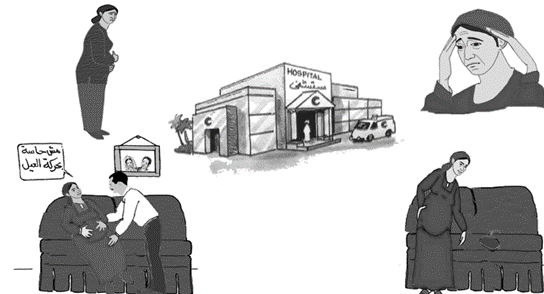
وطبقا لتوصيات منظمة الصحة العالمية يجب ألا تقل عدد مرات الفحص الدوري للأم أثناء فترة الحمل عن أربع مرات وبالنسبة لتوصيات وزارة الصحة المصرية ألا تقل عن أربع مرات خلاف الزيارة الأولى.
وفي حالات الحمل الخطر تكون الزيارات كل خمسة عشر يوماً .
فى كل زيارة يتم:
⬅️ السؤال عن أي شكوى جديدة.
⬅️ الفحص:
⬅️ فحص عام ويشمل: الوزن-الضغط- تورم الساقين
⬅️ تحديد وضع الجنين
⬅️ سماع نبض الجنين
⬅️ فحص معملى ويشمل :
قياس نسبة الهيموجلوبين بالدم .
قياس نسبة السكر والزلال بالبول .
طرق تقييم الحالة الصحية للجنين داخل الرحم :
وزن الأم
إذا اكتسبت الأم زيادة قليلة في الوزن أو لم يكن هناك أي زيادة في الوزن فإن هذا عادة ما يهدد تطور ونمو الجنين.
حجم الجنين
بتقدير مستوى قاع الرحم (العمر الرحمي للجنين) ومقارنته بالعمر المتوقع.
حركات الجنين
تبدأ في الأسبوع الثامن عشر في الحمل المتكرر (المتكررة) وفي الأسبوع العشرين في الحمل الأول (البكرية). وعند الشكوى بقلة الإحساس بحركة الجنين يتم عد حركات الجنين في خلال 12 ساعة متوالية (يجب ألا تقل عدد حركات الجنين عن10 حركات /12 ساعة).
ملحوظة:
تتوقف حركة الجنين تماما قبل وفاة الجنين داخل الرحم بـ 48 ساعة.
⬅️ سماع نبض الجنين .
⬅️ أشعة الموجات فوق الصوتية (السونار) وأهميتها:
⬅️ التشخيص التمييزي (Differential Diagnosis) عند الاشتباه في وجود مشاكل خاصة بالحمل.
⬅️ تقدير عمر الجنين ومتابعة نموه.
⬅️ التعرف على الأجنة (إذا كان هناك اشتباه في توأم أو وجود عيوب خلقية).
⬅️ فحص حجم الجنين والسائل المحيط به.
⬅️ تقييم وضع المشيمة والتعرف على حجم مشكلة النزيف (إن حدث) أثناء الحمل.
⬅️ فحص الجنين في أوقات الأزمات الصحية.
⬅️ تحديد وضع الجنين (presentation) إذا كانت هناك صعوبة في تحديده بالفحص العادي (الإكلينيكي).
طرق أخرى مثل التحاليل الكيميائية وغيرها.
- References
· Salem, Basyouni Zaki. History and Development of Primary Health Care in Egypt. Giza: Atlas for Publishing and Media Production, 2017.
· Infectious Diseases and Mortality in Libya (WHO Report).
· Emerging Infectious Diseases: Global Preparedness and Response. Ministry of Health, Jordan.
· Infectious Diseases. World Health Organization (WHO).
· Ihab El-Beblawy: Communication Disorders. Dar Al-Zahraa, Riyadh, Saudi Arabia, 2014.
· Ahmed Musa Al-Dawaideh, Yasser Fares Khalil: Communication Disorders. International Publisher House, Riyadh, Saudi Arabia, 2011.
· Protocol for Dealing with Snake and Scorpion Bites. Poison Center - Faculty of Medicine, Ain Shams University.
· Protocol for Dealing with Snake and Scorpion Bites. Poison Center - Faculty of Medicine, Menoufia University.
· Egyptian Vaccination Program.
· The World Health Report 2002: Reducing Risks, Promoting Healthy Life. Geneva, WHO.
· The World Health Report 2008: Primary Health Care - Now More Than Ever. Geneva, WHO.
· The World Health Report 2010: Health Systems Financing - The Path to Universal Coverage. Geneva, WHO.
· The World Health Report 2013: Research for Universal Health Coverage. Geneva, WHO.
· Assessment of Availability and Readiness of Services in Health Facilities in Libya - Final Report 2017.
· Gamal Shoukry Othman et al.: Contemporary Trends between Theory and Practice. Dar Al-Hakim, Cairo, 1994.
· Royal Health Awareness Society: Healthy Community Clinic 2019.
· Environmental Protection Specialization: Health Education. Saudi Arabia, General Organization for Technical and Vocational Training.
· National Guidelines for Infection Control 2016.
· Primary Health Care: Report of the International Conference on Primary Health Care, Alma-Ata, USSR, September 1978. Geneva, WHO, 1978.
· Suhair Kamel Ahmed, Dina Ibrahim Mustafa: Introduction to Special Education. Al-Rushd Library, Riyadh, Saudi Arabia, 2007.
· Ali Hussein Zeidan: Skills and Applications. Dar Al-Mohandes, Cairo, 2006.
· Directorate of Health Awareness and Information, Ministry of Health, Jordan 2019.
· Concept and Objectives of Health Education. Kenana Online.
· World Health Organization: Eastern Mediterranean Regional Office. High Blood Pressure: A Public Health Problem.
· World Health Organization: Diabetes.
· World Health Organization: Chronic Respiratory Diseases.
· Nouf bint Nasser Al-Tamimi et al.: Human Communication. Al-Rushd Library, Riyadh, 2014.
· Ministry of Health, Iraq (2014). Psychiatric and Mental Health Nursing. Technical Affairs Department / Nursing and Health Professions Department.