Safe Management of Linen in Hospitals
| Site: | EHC | Egyptian Health Council |
| Course: | Infection Prevention and Control Guidelines |
| Book: | Safe Management of Linen in Hospitals |
| Printed by: | Guest user |
| Date: | Sunday, 20 September 2026, 4:42 AM |
Description
"last update: 28 April 2025" Download Guideline
- Executive Summary
To reduce the risk to health care workers, laundry staff and patients that may be associated with the use and handling of laundry that is potentially or actually contaminated with an infectious agent. Ensure that standards are in place for infection control to enable patient wellbeing. Help minimize risk of infection control issues.
|
Recommendations |
|
Ensure that laundry areas have handwashing facilities and products and appropriate PPE available for workers (Conditional recommendation) |
|
Use and maintain laundry equipment according to manufacturers’ instructions. (Good practice statement) |
|
Do not leave damp textiles or fabrics in machines overnight. (Good practice statement) |
|
Bag or otherwise contain contaminated textiles and fabrics at the point of use. (Strong recommendation) |
|
Do not sort or pre rinse contaminated textiles or fabrics in patient-care areas(Strong recommendation) |
|
Use leak-resistant containment for textiles and fabrics contaminated with blood or body substances. (Strong recommendation) |
|
Identify bags or containers for contaminated textiles with labels, color coding, or other alternative means of communication as appropriate (Conditional recommendation) |
|
Establish a facility policy to determine when textiles or fabrics should be sorted in the laundry facility (i.e., before or after washing). (Good practice statement) |
|
If hot-water laundry cycles are used, wash with detergent in water ≥160°F (≥71°C) for ≥25 minutes. (Strong recommendation) |
|
Choose chemicals suitable for low-temperature washing at proper use concentration if low- temperature (<160°F [<71°C]) laundry cycles are used. (Good practice statement) |
|
Package, transport, and store clean textiles and fabrics by methods that will ensure their cleanliness and protect them from dust and soil during interfacility loading, transport, and unloading. (Good practice statement) |
|
Do not conduct routine microbiological sampling of clean textiles (Strong recommendation) |
|
Use microbiological sampling during outbreak investigations if epidemiologic evidence suggests a role for health-care textiles and clothing in disease transmission. (Strong recommendation) |
|
Use sterilized textiles, surgical drapes, and gowns for situations requiring sterility in patient care. (Strong recommendation) |
|
Use hygienically clean textiles (i.e., laundered, but not sterilized) in neonatal intensive care units. (Strong recommendation) |
|
Follow manufacturers’ recommendations for cleaning fabric products including those with coated or laminated surfaces. (Good practice statement) |
|
Keep mattresses dry; discard them if they become and remain wet or stained, particularly in burn units. (Strong recommendation) |
|
Clean and disinfect mattress covers using EDA or MoHP-registered disinfectants, that are compatible with the cover materials to prevent the development of tears, cracks, or holes in the cover. (Strong recommendation) |
|
Maintain the integrity of mattress and pillow covers. (Good practice statement) |
|
Replace mattress and pillow covers if they become torn (Good practice statement) |
|
Clean and disinfect moisture-resistant mattress covers between patients using an EDA or MoHP registered product. (Strong recommendation) |
|
If using a mattress cover completely made of fabric, change these covers and launder between patients. (Strong recommendation) |
|
Launder pillow covers and washable pillows in the hot-water cycle between patients or when they become contaminated with body substances. (Strong recommendation) |
|
Handle used textiles and fabrics with minimum agitation to avoid contamination of air, surfaces and persons. (Strong recommendation) |
|
Maintain the receiving area for contaminated textiles at negative pressure compared with the clean areas of the laundry during the time of facility construction. (Conditional recommendation) |
- Recommendations
Recommendations |
Ensure that laundry areas have handwashing facilities and products and appropriate PPE available for workers (Conditional recommendation, Moderate grade evidence) |
Use and maintain laundry equipment according to manufacturers’ instructions. (Good practice statement) |
Do not leave damp textiles or fabrics in machines overnight. (Good practice statement) |
Bag or otherwise contain contaminated textiles and fabrics at the point of use. (Strong recommendation, Moderate grade evidence) |
Do not sort or pre rinse contaminated textiles or fabrics in patient-care areas. (Strong recommendation, Moderate grade evidence) |
Use leak-resistant containment for textiles and fabrics contaminated with blood or body substances. (Strong recommendation, Moderate grade evidence) |
Identify bags or containers for contaminated textiles with labels, color coding, or other alternative means of communication as appropriate (Conditional recommendation, Moderate grade evidence) |
Establish a facility policy to determine when textiles or fabrics should be sorted in the laundry facility (i.e., before or after washing) (Good practice statement) |
If hot-water laundry cycles are used, wash with detergent in water ≥160°F (≥71°C) for ≥25 minutes (Strong recommendation, Moderate grade evidence) |
Choose chemicals suitable for low-temperature washing at proper use concentration if low- temperature (<160°F [<71°C]) laundry cycles are used. (Good practice statement) |
Package, transport, and store clean textiles and fabrics by methods that will ensure their cleanliness and protect them from dust and soil during interfacility loading, transport, and unloading. (Good practice statement) |
Do not conduct routine microbiological sampling of clean textiles. (Strong recommendation, Moderate grade evidence) |
Use microbiological sampling during outbreak investigations if epidemiologic evidence suggests a role for health-care textiles and clothing in disease transmission. (Strong recommendation, Moderate grade evidence) |
Use sterilized textiles, surgical drapes, and gowns for situations requiring sterility in patient care. (Strong recommendation, Moderate grade evidence) |
Use hygienically clean textiles (i.e., laundered, but not sterilized) in neonatal intensive care units. (Strong recommendation, Moderate grade evidence) |
Follow manufacturers’ recommendations for cleaning fabric products including those with coated or laminated surfaces. (Good practice statement) |
Keep mattresses dry; discard them if they become and remain wet or stained, particularly in burn units. (Strong recommendation, Moderate grade evidence) |
Clean and disinfect mattress covers using EDA or MoHP-registered disinfectants, that are compatible with the cover materials to prevent the development of tears, cracks, or holes in the cover. (Strong recommendation, Moderate grade evidence) |
Maintain the integrity of mattress and pillow covers. (Good practice statement) |
Replace mattress and pillow covers if they become torn (Good practice statement) |
Clean and disinfect moisture-resistant mattress covers between patients using an EDA or MoHP- registered product (Strong recommendation, Moderate grade evidence) |
If using a mattress cover completely made of fabric, change these covers and launder between patients. (Strong recommendation, Moderate grade evidence) |
Launder pillow covers and washable pillows in the hot-water cycle between patients or when they become contaminated with body substances (Strong recommendation, Moderate grade evidence) |
Handle used textiles and fabrics with minimum agitation to avoid contamination of air, surfaces and persons. (Strong recommendation, Moderate grade evidence) |
Maintain the receiving area for contaminated textiles at negative pressure compared with the clean areas of the laundry during the time of facility construction. (Conditional recommendation, Weak grade evidence) |
1.1.1 The effectiveness of the laundering process depends
on many factors, including:
1.1.2 Linen
and Laundry Worker Safety
·
Practice
hand hygiene before application and after removal of personal protective
equipment (PPE).
· The
use of PPE when employees are engaged in handling soiled linen ( Gloves,
Masks, aprons )/If there is risk of splashing should wear:, Eye Protection (e.g., face
shield, goggles) to protect against cross-contamination and protect workers
from bloodborne pathogens or other transmissible microorganisms.
· This
reduces the risk of healthcare workers exposure to infectious agents during handling and
cleaning of contaminated textile.
· Proper
maintenance and adherence to manufacturer guidelines ensure equipment functions
optimally, reducing risks of inadequate disinfection, cross-contamination, or
equipment failure. Equipment should be checked to ensure the manufacturer has
programmed the machine correctly and tested on an annual basis to ensure the
machine's equipment is within the tolerances for heat control.
1.1.3 Handling of Used or Infectious Linen
1.1.4 Machine Wash Programs
1.1.5 Handling and Storage of Clean Linen
· Clean
linen should never be transported with used or infectious linen.
· Performing
hand hygiene before handling linen (PPE is not required when handling clean
linen)
· Correct
handling of clean linen and removal of linen from transportation
bags/containers/hampers will prevent cross-contamination of microorganisms.
· Storing
clean linen in an appropriately designed and designated area – for example, an
enclosed cupboard or room.
· Storage
provision should be intact and impervious to moisture, cool and dry
· Appropriate
storage of clean linen will contribute to preventing the transmission of
infectious disease.
1.1.6 Special Fabric Care and Alternatives
· Improper cleaning can damage special coatings, reducing
their effectiveness and lifespan.
· No evidence is available to suggest that use of these
products will make consumers and patients healthier or prevent disease. No data
support the use of these items as part of a sound infection-control strategy,
and therefore, the additional expense of replacing a facility's bedding and
sheets with these treated products is unwarranted.
· Evidence is insufficient to favor one over the other;
decisions depend on cost, environmental factors, and infection control priorities.
1.1.7 Mattresses, Pillows, and Covers
1.1.8 Handling and Facility Design
1.2 Indicators
for Monitoring:
To
ensure compliance and alignment with established standards, it is essential to
monitor the presence of required practices, such as relevant regulations,
protocols, training, and processes. This involves conducting regular audits and
reviews to identify any gaps or inconsistencies in practices. By verifying that
all operations and personnel are adhering to the outlined requirements,
organizations can maintain high levels of accuracy and efficiency.
Additionally, routine assessments allow for the identification of potential
risks or deviations early, enabling corrective actions to be taken promptly.
1.2.1 Percentage of Linen Laundered at Correct Temperatures and cycles:
· Definition: Percentage of linen washed at temperatures and cycles that meet infection prevention and
control requirements.
· Target: ≥ 95% of linen laundered at the correct temperatures
(e.g., ≥ 71°C for contaminated linen) and cycles (hot and cold cycles)
· Purpose: Ensures linen is properly disinfected during the
laundering process to reduce infection risks.
1.2.2 Linen Collection Compliance Rate:
· Definition: Percentage of used linen collected
according to infection control policy (in sealed bags, with a color code).
· Target: ≥ 95% compliance.
· Purpose: Ensures the safe handling and
containment of soiled linen to minimize cross-contamination
1.3 Plan to Update this National Clinical Guideline
1.3.1 This guideline
will be reviewed and updated when new evidence emerges that is likely to
influence the recommendations.
1.1.2 Linen and Laundry Worker Safety
· Practice hand hygiene before application and after removal of personal protective equipment (PPE).
· The use of PPE when employees are engaged in handling soiled linen ( Gloves, Masks, aprons )/If there is risk of splashing should wear:, Eye Protection (e.g., face shield, goggles) to protect against cross-contamination and protect workers from bloodborne pathogens or other transmissible microorganisms.
· This reduces the risk of healthcare workers exposure to infectious agents during handling and cleaning of contaminated textile.
· Proper maintenance and adherence to manufacturer guidelines ensure equipment functions optimally, reducing risks of inadequate disinfection, cross-contamination, or equipment failure. Equipment should be checked to ensure the manufacturer has programmed the machine correctly and tested on an annual basis to ensure the machine's equipment is within the tolerances for heat control.
1.1.3 Handling of Used or Infectious Linen
1.1.4 Machine Wash Programs
1.1.5 Handling and Storage of Clean Linen
· Clean linen should never be transported with used or infectious linen.
· Performing hand hygiene before handling linen (PPE is not required when handling clean linen)
· Correct handling of clean linen and removal of linen from transportation bags/containers/hampers will prevent cross-contamination of microorganisms.
· Storing clean linen in an appropriately designed and designated area – for example, an enclosed cupboard or room.
· Storage provision should be intact and impervious to moisture, cool and dry
· Appropriate storage of clean linen will contribute to preventing the transmission of infectious disease.
1.1.6 Special Fabric Care and Alternatives
· Improper cleaning can damage special coatings, reducing their effectiveness and lifespan.
· No evidence is available to suggest that use of these products will make consumers and patients healthier or prevent disease. No data support the use of these items as part of a sound infection-control strategy, and therefore, the additional expense of replacing a facility's bedding and sheets with these treated products is unwarranted.
· Evidence is insufficient to favor one over the other; decisions depend on cost, environmental factors, and infection control priorities.
1.1.7 Mattresses, Pillows, and Covers
1.1.8 Handling and Facility Design
1.2 Indicators for Monitoring:
To ensure compliance and alignment with established standards, it is essential to monitor the presence of required practices, such as relevant regulations, protocols, training, and processes. This involves conducting regular audits and reviews to identify any gaps or inconsistencies in practices. By verifying that all operations and personnel are adhering to the outlined requirements, organizations can maintain high levels of accuracy and efficiency. Additionally, routine assessments allow for the identification of potential risks or deviations early, enabling corrective actions to be taken promptly.
1.2.1 Percentage of Linen Laundered at Correct Temperatures and cycles:
· Definition: Percentage of linen washed at temperatures and cycles that meet infection prevention and control requirements.
· Target: ≥ 95% of linen laundered at the correct temperatures (e.g., ≥ 71°C for contaminated linen) and cycles (hot and cold cycles)
· Purpose: Ensures linen is properly disinfected during the laundering process to reduce infection risks.
1.2.2 Linen Collection Compliance Rate:
· Definition: Percentage of used linen collected according to infection control policy (in sealed bags, with a color code).
· Target: ≥ 95% compliance.
· Purpose: Ensures the safe handling and containment of soiled linen to minimize cross-contamination
1.3 Plan to Update this National Clinical Guideline
1.3.1 This guideline will be reviewed and updated when new evidence emerges that is likely to influence the recommendations.
· Time and temperature.
· Mechanical action.
· Water quality (pH, hardness).
· Volume of the load.
· Extent of soiling.
· Model/availability of commercial washers and dryers.
· Damp linen creates an ideal environment for microbial growth, microbial growth can cause unpleasant Odors and degrade the quality of the textiles, increasing the risk of contamination or infection transmission.
· Using suitable linen containers to point of use helps in appropriate segregation of used or infectious linen and removal of sanitary wear, dressings, and solid-matter at the point-of-use to minimizes the risk of spreading contaminants to the environment, healthcare workers, and patients during transport and damage to the machine.
· Good laundry practice means the washing machine drum should be according to manufacturer’s recommendation to allow movement of the load and provide optimum mechanical action.
· Leak-resistant containment ensures that potentially infectious materials, such as blood or bodily fluids, do not escape and contaminate surrounding areas, equipment, or other textiles, thereby minimizing the risk of spreading infections.
· Proper identification reduces the risk of accidental mixing of contaminated and clean laundry, ensuring correct processing and reducing cross-contamination.
· Clear policies ensure consistency and efficiency in processing contaminated textiles, reducing the risk of mishandling and contamination.
· Used linen must be washed on the highest temperature possible according to the item laundering care label for the appropriate time or using an alternative low temperature chemical disinfection process. This will ensure adequate decontamination of the linen and will assist in stain removal and to prevent fixation of any protein stains.
· Traditional thermal disinfection processes, this includes the obligatory mixing time required to allow the heat to penetrate the full load based on the expected size of machines. This should be checked to ensure the manufacturer has programmed the machine correctly and tested on an annual basis to ensure the machine’s equipment is within the tolerances for heat control.
· Alternatively, sensitive or heat liable items such as personal clothing, mattress covers which can’t be disinfected at high temperatures can be processed using low temperature chemical disinfection without compromising fabric integrity.
· Routine sampling is unnecessary in non-outbreak scenarios and can be resource-intensive without clear benefit.
· Targeted microbiological sampling identifies the source of contamination and informs infection control measures during outbreaks.
· Sterilized textiles ensure an aseptic environment, preventing surgical site infections.
· Neonates are highly vulnerable to infections; hygienically clean textiles reduce their risk of exposure to pathogens.
· Moist environments increase microbial growth and infection risks, particularly in high-risk areas like burn units.
· Proper cleaning must be with registered products to prevent material degradation and ensure the covers remain effective barriers against pathogens. Registered disinfectants are tested and proven to be effective against a broad spectrum of microorganisms.
· Tears or cracks compromise the barrier function, increasing contamination risks.
· Hot-water cycles ensure thorough disinfection, preventing transmission of pathogens between patients. Mattress covers should be replaced when torn; the mattress should be replaced if it is visibly stained. Wet mattresses can be a substantial environmental source of microorganisms. Pillows and their covers should be easily cleanable, preferably in a hot water laundry cycle. These should be laundered between patients or if contaminated with body substances.
· Avoid shaking textiles. Roll or fold items before placing in suitable containers as handling used or infectious linen appropriately will prevent airborne.
· After removing used or infectious linen, segregate into appropriate linen containers.
· Negative pressure prevents airborne contaminants from spreading to clean areas, enhancing infection control.
- Acknowledgements
We would like to acknowledge the Infection Control Guidelines Committee for developing these guidelines.
Head of IPC Guidelines Committee
Professor Ghada Ismail (Professor of Clinical Pathology (Clinical Microbiology), Faculty of Medicine, Ain Shams University, Secretary of Supreme IPC Committee, SCUH, Member of WHO Global Guidelines Groups (GDG) for Infection Prevention)
Secretary of IPC Guidelines Committee
Professor Walaa Abd El-Latif (Professor of Medical Microbiology and Immunology, Faculty of Medicine Ain Shams University, IPC Consultant)
Members of the Committee
▪ Professor Amal Sayed (Deputy Manager of Environmental Affair, Infection Control Director, Cairo University Hospitals)
▪ Professor Amani El-Kholy (Clinical Pathology Department (Microbiology), Faculty of Medicine, Cairo University, Infection Control Consultant)
▪ Dr Asmaa Mohamed Abdelfatah Mohamed (Lecturer, Faculty of Nursing MTI University)
▪ Dr Gehan Mohamed Fahmy (Professor clinical microbiology ASUSH consultant infection control, Board member of IFIC EMERO region)
▪ Professor Hebatallah Gamal Rashed (Clinical Pathology Department (Microbiology), Faculty of Medicine, Assuit University, Infection Control Consultant)
▪ Dr Iman Afifi (Consultant Clinical Pathology (Microbiology) and IPC, Ain Shams University, Director IPC units of Ain Shams internal medicine and Geriatric hospitals
▪ Professor Maha El Touny (Department of internal medicine. Faculty of Medicine, Ain Shams University. Infection Control Consultant)
▪ Professor Nagwa Khamis (Emeritus Consultant Clinical Pathology (Microbiology) and IPC, ASU Director IPC Department and CEO Consultant IPC, CCHE-57357)
▪ Professor Nesrine Fathi Hanafi (Professor in Medical Microbiology and Immunology Faculty of Medicine Alexandria University, Head of Infection Prevention and Control, Alexandria University Hospitals)
▪ Dr. Reham Lotfy Abdel Aziz (Environmental Health Director, EEAA, Hazardous Waste Consultant, WMRA, Ministry of Environment)
▪ Professor Sherin ElMasry (Professor of Clinical Pathology, Ain Shams University, Chief Director of IPC ASU, Health Care Quality & Patient Safety Consultant)
▪ Dr Shimaa El-Garf (Coordinator): Clinical Pathology Specialist, Coordinator of HAI Surveillance and Audit Electronic System for University Hospitals, RLEUH- SCUH
- Abbreviations
1.1.1
CDC: Centers for Disease Control and Prevention
1.1.1
EDA: Egyptian Drug Authority
1.1.2
HAI: Health Associated Infections
1.1.3
HPA: Health Protection Agency
1.1.4
IPC: Infection Prevention and Control
1.1.5
MoHP: Ministry of Health and Population
1.1.6
pH: Potential of Hydrogen
1.1.7
PPE : Personal Protective Equipment
1.1.8
WHO: World Health Organization
- Glossary
● Linen: All reusable textile items requiring cleaning/disinfection via laundry processing. Examples of linen include bed linen (bed sheets, duvet, duvet covers, pillowcases), blankets, curtains, towels, patient clothing (gowns, nightdresses and shifts, pyjama tops and bottoms) and staff clothing (coats, uniforms, scrubs).
● Negative pressure: Air pressure differential between two adjacent airspaces such that air flow is directed into the room relative to the corridor ventilation (i.e., room air is prevented from flowing out of the room and into adjacent areas).
- Introduction
Linen management plays a crucial role in infection
prevention and control (IPC) in healthcare settings. Hospital linens, including
bed sheets, towels, gowns, and patient clothing, can easily become contaminated
with pathogens such as bacteria, viruses, and fungi. These pathogens can be
transmitted through direct contact or by being transferred between patients and
healthcare workers, potentially leading to healthcare-associated infections
(HAIs). Proper linen management involves a comprehensive approach to the
handling, laundering, and disposal of used linens to minimize the risk of
cross-contamination and maintain a safe and hygienic environment for patients
and staff.
Effective linen management ensures that linens are
handled with the utmost care, from collection to laundering and delivery,
according to established guidelines. It includes training healthcare staff on
infection control practices, utilizing appropriate protective equipment, and
following protocols for storing and transporting linens in a manner that
prevents contamination. By adhering to these practices, healthcare facilities
can significantly reduce the spread of infectious agents, safeguarding both patient
health and the well-being of healthcare workers.
- Scope and Purpose
➡️Scope
The scope of linen management guidelines in IPC
provides a structured framework for healthcare facilities to ensure the safe
handling, laundering, storage, and disposal of linen to prevent the spread of
infectious agents. These guidelines aim to safeguard both patients and
healthcare workers by reducing the risk of HAIs through proper linen management
practices. The key components of the scope of these guidelines are as follows:
● Collection and handling of soiled linen
● Segregation of linen
● Laundering cleaning and disinfection
● Transportation and storage of clean linen
➡️ Purpose
The purpose of linen management guidelines in IPC is to establish a
structured and consistent approach to the handling, laundering, storage, and
disposal of linens in healthcare settings. These guidelines aim to reduce the
risk of HAIs by preventing the spread of infectious agents through contaminated
linens. The primary objectives of these guidelines are:
● Minimize
infection risk: To provide clear and effective protocols for managing healthcare
linens in a way that reduces the potential for cross-contamination and the
transmission of harmful pathogens between patients, healthcare workers, and the
environment.
● Ensure
safe linen handling: To outline safe and hygienic practices for the collection,
transportation, and segregation of soiled linens, ensuring that pathogens are
contained and do not spread within healthcare facilities.
● Promote Effective Laundering and
Disinfection: To set standards for laundering practices that guarantee the
thorough cleaning and disinfection of linens, eliminating harmful
microorganisms and ensuring that clean linens are safe for patient use.
● Standardize
practices across healthcare settings: To create uniform procedures for
linen management that can be applied consistently across various healthcare
settings, ensuring that all staff members follow the same infection control
protocols, regardless of their role or department.
● Enhance Staff Awareness and
Training: To provide staff with the knowledge and tools they need to follow
infection prevention measures effectively, emphasizing the importance of linen
management in safeguarding both patient and healthcare worker health.
● Improve
patient and healthcare worker safety: By adhering to these guidelines,
healthcare facilities aim to protect the health and well-being of patients,
staff, and visitors by reducing the incidence of HAIs linked to improper linen
handling and management.
- Target Audience
1.1.1 All
staff who handle linen
1.1.2 Infection Prevention and Control Team.
1.1.3 Heads of Nursing/Matrons/Department Manager, Hospital
Managers
- Methodology
A comprehensive search for guidelines was undertaken to identify the most relevant guidelines to consider for adaptation.
Inclusion/ exclusion criteria followed in the search and retrieval of guidelines to be adapted:
● Selecting only evidence-based guidelines (guideline must include a report on systematic literature searches and explicit links between individual recommendations and their supporting evidence)
● Selecting only national and/or international guidelines
● Specific range of dates for publication (using Guidelines published or updated in 2013 and later)
● Selecting peer reviewed publications only
● Selecting guidelines written in English language
● Excluding guidelines written by a single author, not on behalf of an organization to be valid and comprehensive, a guideline ideally requires multidisciplinary input.
● Excluding guidelines published without references as the panel needs to know whether a thorough literature review was conducted and whether current evidence was used in the preparation of the recommendations.
The following characteristics of the retrieved guidelines were summarized in:
● Developing organization/authors
● Date of publication, posting, and release
● Country/language of publication
● Date of posting and/or release
● Dates of the search used by the source guideline developers.
All retrieved Guidelines were screened and appraised using AGREE II instrument (www.agreetrust.org) by at least three members. The panel decided on a cut-off point or ranked the guidelines (any guideline scoring above 50% on the rigor dimension was retained). The committee decided to adapt from:
· Centre for Disease Control and Prevention (CDC). Summary of Recommendations Guidelines for Environmental Infection Control in Health-Care Facilities (2003) updated on April 12, 2024.
· Centre for Disease Control and Prevention (CDC). Guideline for Disinfection and Sterilization in Healthcare Facilities, (2020).
· Health Protection Agency (HPA). Management and prevention of healthcare associated infections in primary and community care, (2012).
➡️Evidence assessment
According to WHO Handbook for Guidelines, we used the GRADE (Grading of Recommendations, Assessment, Development and Evaluation) approach to assess the quality of a body of evidence, develop and report recommendations. GRADE methods are used by WHO because these represent internationally agreed standards for making transparent recommendations. Detailed GRADE information is available on the following sites:
● GRADE working group: https://www.gradeworkinggroup.org/
● GRADE online training modules: http://cebgrade.mcmaster.ca/
Table (1) Quality and Significance of the four levels of evidence in GRADE
|
Quality |
Definition |
Implications |
|
High |
The guideline development group is very confident that the true effect lies close to that of the estimate of the effect |
Further research is very unlikely to change confidence in the estimate effect |
|
Moderate |
The guideline development group is moderately confident in the effect estimate: the true effect is likely to be close to the estimate of the effect, but there is a possibly that it is substantially different |
Further research is likely to have an important impact on confidence in the estimate of the effect and may change the estimate |
|
Low |
Confidence in the effect estimate is limited: the true effect may be substantially different from the estimate of the true effect |
Further research is very likely to have an important on confidence in the estimate of effect and is unlikely to change the estimate |
|
Very low |
The group has very little confidence in the effect estimate: the true effect is likely to be substantially different from the estimate of the effect |
Any estimate of the effect is very uncertain |
Table (2) Factors that determine How to upgrade or downgrade the quality of evidence.
|
Downgrade in presence of |
Upgrade in presence of |
|
Study limitations. 1- Serious limitations 2- Very serious limitations |
Dose- response gradient. +1 Evidence of a dose-response gradient |
|
Consistency 1- Important inconsistency |
Direction of plausible bias + All plausible confounders would have reduced the effect |
|
Directness 1- Some uncertainty 2- Major uncertainty |
Magnitude of the effect +1 Strong, no plausible Confounder, consistent and direct evidence |
|
Precision 1- Imprecise data |
+2 very strong, no major threats to validity and direct evidence |
|
Reporting bias 1- High probability of reporting bias |
|
The strength of the recommendations
The strength of a recommendation communicates the importance of adherence to the recommendation.
● Strong recommendations
With strong recommendations, the guideline communicates the message that the desirable effects of adherence to the recommendation outweigh the undesirable effects. This means that in most situations the recommendation can be adopted as policy.
● Conditional recommendations
These are made when there is greater uncertainty about the four factors above or if local adaptation has to account for a greater variety in values and preferences, or when resource use makes the intervention suitable for some, but not for other locations. This means that there is a need for substantial debate and involvement of stakeholders before this recommendation can be adopted as policy.
When not to make recommendations?
When there is lack of evidence on the effectiveness of an intervention, it may be appropriate not to make a recommendation.
- Annex
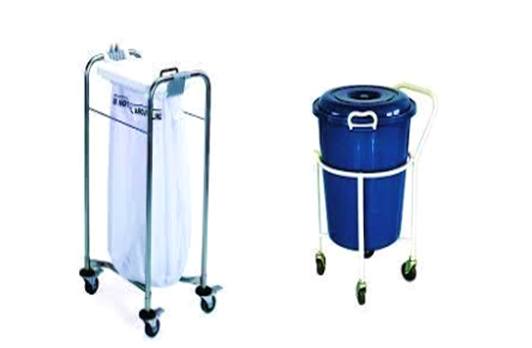
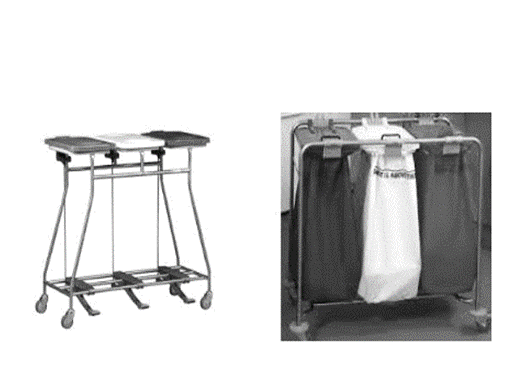
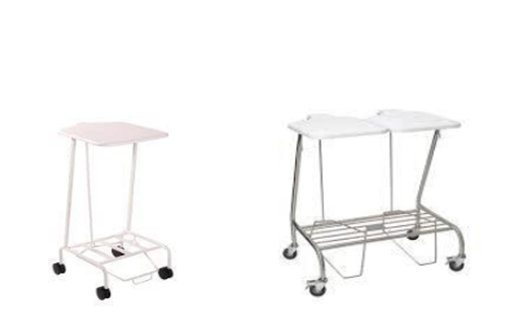
Annex 1. Examples of
trolley solution
- References
· Centre for Disease Control and Prevention (CDC). Summary of Recommendations Guidelines for Environmental Infection Control in Health-Care Facilities (2003) updated on April 12, 2024. Available at: https://www.cdc.gov/infection-control/hcp/environmental-control/summary-recommendations.html.
· Centre for Disease Control and Prevention (CDC). Guideline for Disinfection and Sterilization in Healthcare Facilities, (2020).
· Health Protection Agency (HPA). Management and prevention of healthcare associated infections in primary and community care, (2012). Available at: https://assets.publishing.service.gov.uk/media/5a7c7303ed915d48c240fcea/0174.pdf.
· World Health Organization (WHO). Infection prevention and control of epidemic- and pandemic-prone acute respiratory infections in health care, (2009).