Introduction to Stroke and the Stroke Care Unit
| Site: | EHC | Egyptian Health Council |
| Course: | Guidelines for stroke nursing procedures |
| Book: | Introduction to Stroke and the Stroke Care Unit |
| Printed by: | Guest user |
| Date: | Thursday, 5 November 2026, 2:39 AM |
Description
"last update: 28 Sept. 2025" Download Guideline
Table of contents
- - Prepared
- - Introduction
- - Brain Anatomy
- - Neuroanatomy of Stroke
- - Definition of Stroke:
- - Types and Causes of Stroke
- -1. Ischemic Stroke
- - 2. Hemorrhagic Stroke
- - 3. Transient Ischemic Attack (Silent or Minor Stroke)
- - Risk Factors
- -For ischemic stroke, the principal modifiable risk factors include:
- - Symptoms of Stroke:
- - Stroke-Specific Complications
- - Effects of Stroke
- - Stroke-Specific Complications
- - Prevention
- - Treatment:
- - References
- Prepared
Stroke Guideline
Under supervision
- Prof. Dr. Mohamed Latif, CEO of the Egyptian Health Council
Dr. Kawthar Mahmoud, Head of the Egyptian Nursing Syndicate - Member of the Senate
Prepared by
NO. | Name | Title |
1. | Prof.Dr/Amal Ahmed Khalil Morsy | Supervisor Of the Education Sector at Port Said University |
2. | Dr Afaf Abdel Aziz Abdel Aziz Basal | Dean Of Faculty Nursing, Professor of Medical and Surgical Nursing, Tanta University |
3. | Prof.Dr/Zeinab Hussain Ali | Vice Dean for Environmental Affairs and Community Service, Faculty of Nursing, Helwan University |
4. | Prof. Amal Saeed Taha Rifaie
| Professor and Head of the Medical-Surgical Nursing Department, Benha University |
5. | Prof. Hanan Ahmed El-Sebaie Ali
| Professor of Medical-Surgical Nursing, Faculty of Nursing, Cairo University |
6. | Dr. Nevine Abdrab-al-Nabi Mohamed Abdrab-al-Nabi | Head of the Central Nursing Administration(Former)– Ministry of Health |
7. | Dr. Maisa Hosni Ahmed Tamam
| General Director of the nursing Administration of PHC, Ministry of Health |
8. | Dr. Nancy Alaa El-Din Abdel-Baset Ali | Supervisor of Technical Education, General Authority for Healthcare |
9. | Dr. Sherine Mohamed Mohamed Saad El-Din
| Supervisor of Nursing Services Development, General Authority for Healthcare |
10. | Dr. Mai Mahmoud El-Assal
| General Director of the General Administration for Technical Health Institutes Affairs |
11. | Assoc. Prof. Heba Mahmoud Mohamed | Associate Professor of Maternal and Neonatal Health Nursing, Faculty of Nursing, Ain Shams University |
12. | Dr. Nabawiya Saleh Saleh Shehata | Associate Professor, Faculty of Nursing, Ain Shams University |
13. | Dr. Fatma Ali Ezz El-Regal
| Associate Professor of Community Health Nursing, Faculty of Nursing, Al-Azhar University |
14. | Dr. Laila Ragab Qasim Abdel Hamid
| Director of the Nursing Department, General Secretariat of Mental Health |
15. | Prof. Hanan Ibrahim Abdel Aziz Radi
| Professor of Psychiatric and Mental Health Nursing, Faculty of Nursing, Cairo University |
16. | Dr. Azza Galal Ahmed Khalil –
| Director of the Curative Nursing Department, Ministry of Health and Population |
Participants | ||
17. | Dr. Hadeer Salah El-Din Abdel-Samie Rizk | Lecturer, Department of Medical-Surgical Nursing, Faculty of Nursing, Cairo University |
18. | Dr. Reham Samir Fathallah El-Maadawy | Lecturer, Department of Medical-Surgical Nursing, Faculty of Nursing, Cairo University |
- Introduction
The term “stroke” has been used for centuries. In the 1970s, the World Health Organization defined stroke as “a neurological deficit caused by a disturbance in the cerebral circulation that persists for more than 24 hours or leads to death within 24 hours.” This definition uses a 24-hour time threshold to distinguish stroke from a transient ischemic attack (TIA), a stroke-related syndrome in which symptoms resolve within less than 24 hours. With the availability of treatments that can reduce stroke severity when administered early, alternative terms such as brain attack or acute ischemic cerebrovascular syndrome may also be used to emphasize the urgency of stroke symptoms and the need for rapid action.
Worldwide, approximately 15 million people experience a stroke each year. Five million die, and another five million are left permanently disabled, creating a substantial burden on families and communities. Overall, about two-thirds of strokes occur in people older than 65 years. Stroke is uncommon in people younger than 40 years; when it occurs in this age group, hypertension is a major cause. Stroke also occurs in approximately 8% of children with sickle cell disease (World Health Organization, 2024).
- Brain Anatomy
The brain contains several essential structures that play major roles in the body’s functions. Its principal components include:
https://youtu.be/9wGSAC1vbyM?si=eV0p6uwipXRg6Ms6
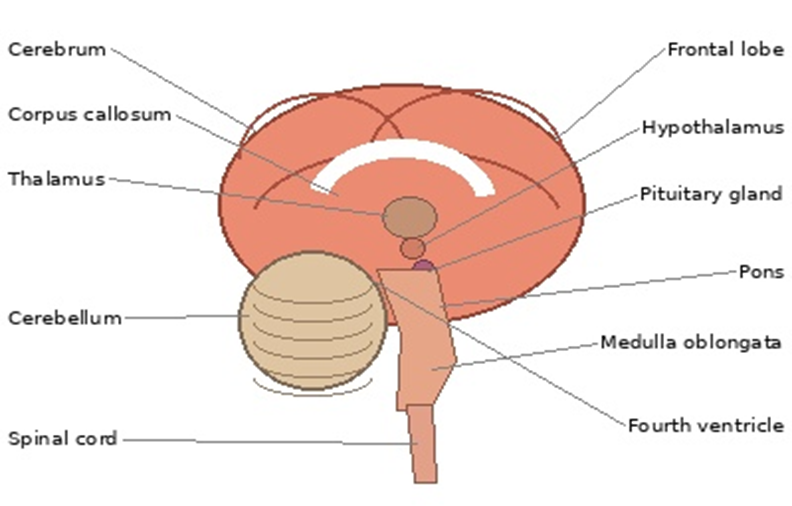
Cerebrum-
The largest and uppermost part of the brain.
It is divided into two hemispheres (right and left); each hemisphere controls activities on the opposite side of the body.
Functions: Controls thinking, memory, perception, emotions, voluntary movement, and interaction with the environment.
Cerebral Cortex:
The outer layer of the cerebrum. It contains neurons and serves as the center for thought, perception, and consciousness. It is divided into four lobes:
Frontal Lobe: Associated with logical thinking, planning, voluntary movement, and emotional control.
Parietal Lobe: Responsible for touch, pain, temperature sensation, and spatial awareness.
Temporal Lobe: Associated with hearing, memory, and language.
Occipital Lobe: Responsible for visual processing.
Cerebellum-
Located below the cerebrum and above the brainstem.
Functions: Controls motor coordination, balance, and the sense of movement, and contributes to learning fine motor skills.
Brainstem:
Located at the lower part of the brain, where it connects with the spinal cord. It consists of:
Midbrain: Helps control visual and auditory movements and reflexes.
Pons: Connects the cerebrum and cerebellum and contributes to the regulation of breathing.
Medulla Oblongata: Controls vital functions such as breathing, heart rate, blood pressure, and digestion.
Internal Brain Structures-
Cerebral Ventricles: Cavities filled with cerebrospinal fluid, which helps protect the brain.
Thalamus: Serves as a major relay center for sensory information traveling to the cerebral cortex.
Hypothalamus: Regulates essential body functions such as temperature, hunger, thirst, and the sleep-wake cycle.
Pituitary Gland: Produces hormones that regulate growth, reproductive functions, and many other body processes.
Areas Responsible for Movement and Language-
Broca’s Area: Located in the frontal lobe and responsible for speech production.
Wernicke’s Area: Located in the temporal lobe and involved in language comprehension.
These structures are intricately interconnected to ensure that all body functions are performed properly and in a coordinated manner.
Relationships Between the Structures:
The brain communicates with the rest of the body through the spinal cord, which transmits electrical signals that regulate different functions.
The brain integrates multiple functions to coordinate sensation, movement, and emotional control.
Neuroanatomy of Stroke
The brain receives its blood supply through major blood vessels, including the carotid and vertebral arteries. When one of these vessels becomes blocked or ruptures, blood flow to specific areas of the brain is interrupted, resulting in oxygen deprivation and damage to neural tissue.
- Neuroanatomy of Stroke
The brain receives its blood supply through major blood vessels, including the carotid and vertebral arteries. When one of these vessels becomes blocked or ruptures, blood flow to specific areas of the brain is interrupted, resulting in oxygen deprivation and damage to neural tissue.
- Definition of Stroke:
A stroke, or cerebrovascular accident (CVA), occurs when blood flow to part of the brain is interrupted or obstructed, depriving brain tissue of oxygen and essential nutrients. This interruption causes injury or death of brain cells and may produce temporary or permanent symptoms depending on the severity of the stroke. Stroke is a medical emergency, and immediate medical treatment is essential. Rapid emergency care can reduce brain damage and other stroke-related complications.
https://youtu.be/A18NEvXEYIM?si=eSIchN2-PP2tu6dv
- Types and Causes of Stroke
There are two primary causes of stroke. Ischemic stroke results from blockage of an artery in the brain, whereas hemorrhagic stroke occurs when a blood vessel in the brain leaks or ruptures. Some patients may experience a temporary interruption of cerebral blood flow, known as a transient ischemic attack (TIA), which does not cause permanent symptoms.
https://youtu.be/tEhJYe8ICyM?si=h2-Q_4Okp7Vlqr9O
-1. Ischemic Stroke
Ischemic stroke is the most common type of stroke. It occurs when blood vessels in the brain become narrowed or blocked, reducing blood flow to the brain—a condition known as ischemia. Narrowing or obstruction may result from fatty deposits within the blood vessels, or from blood clots or other debris that travel through the bloodstream, often from the heart.
An ischemic stroke occurs when such material becomes lodged in a cerebral blood vessel.
Some early research suggests that COVID-19 infection may increase the risk of ischemic stroke, although further studies are still needed.

- 2. Hemorrhagic Stroke
Hemorrhagic stroke occurs when a blood vessel in the brain leaks or ruptures. Intracerebral bleeding may result from several conditions that affect the blood vessels. Factors associated with hemorrhagic stroke include:
Uncontrolled hypertension.
Excessive anticoagulant therapy (blood-thinning medications).
Bulging at weak points in blood-vessel walls, known as aneurysms.
Head injury, such as trauma caused by a motor-vehicle accident or a blow to the head.
Protein deposits within blood-vessel walls that weaken the vessel, known as cerebral amyloid angiopathy.
Hemorrhagic transformation of an ischemic stroke. A less common cause of intracerebral bleeding is rupture of an arteriovenous malformation (AVM), an abnormal tangle of thin-walled blood vessels.
https://youtu.be/p0J5o6mn-ZM?si=LIsYVpcuerBsIiNy

- 3. Transient Ischemic Attack (Silent or Minor Stroke)
A transient ischemic attack (TIA) produces stroke-like symptoms that last for a short period but do not cause permanent damage. It results from a temporary reduction in blood supply to part of the brain and may last no more than five minutes. A TIA is sometimes called a mini-stroke.
A TIA occurs when a blood clot or fatty deposit temporarily reduces or completely blocks blood flow to part of the nervous system. Emergency care must be sought even when the person believes the event was only a TIA, because stroke and TIA cannot be distinguished on the basis of symptoms alone. A TIA indicates that an artery supplying the brain may be partially blocked or narrowed and increases the likelihood of a future stroke.
Seek emergency care immediately if signs or symptoms of a TIA occur. Symptoms include:
Numbness, tingling, or weakness of the face, arm, or leg, especially on one side of the body.
Difficulty speaking or understanding speech.
Difficulty seeing in one or both eyes.
Difficulty walking, dizziness, or loss of balance.
A sudden severe headache, which may be accompanied by nausea.
- Risk Factors
The principal modifiable risk factors for both major types of stroke include:
Hypertension.
Elevated cholesterol levels.
Diabetes mellitus.
Insulin resistance (an inadequate response to insulin), as occurs in type 2 diabetes.
Cigarette smoking.
Obesity, particularly when excess weight is concentrated around the abdomen.
Obstructive sleep apnea.
Excessive alcohol consumption.
Physical inactivity.
An unhealthy diet, such as one high in saturated fat, trans fat, and calories.
Depression or other psychological stressors.
Cardiac disorders that promote formation of blood clots in the heart, which may detach and travel through the blood vessels as emboli, such as myocardial infarction or atrial fibrillation.
Infective endocarditis: Infection of the inner lining of the heart, usually involving the heart valves.
Use of cocaine or amphetamines.
Vasculitis.
Many of these factors also increase the risk of atherosclerosis, a common cause of ischemic stroke. In atherosclerosis, arteries become narrowed or blocked by fatty deposits that form on their walls.
Coagulation disorders that cause excessive clotting increase the risk of ischemic stroke, whereas disorders that increase bleeding raise the risk of hemorrhagic stroke.
Hypertension is a particularly important risk factor for both ischemic and hemorrhagic stroke.
-For ischemic stroke, the principal modifiable risk factors include:
Atrial fibrillatio.
Carotid artery stenosis in the neck.
For hemorrhagic stroke, the principal modifiable risk factors include:
Use of anticoagulants (medications that inhibit blood clotting).
Bulging of a cerebral artery (cerebral aneurysm).
Abnormal connections between arteries and veins (arteriovenous malformations).
Hormones: Oral contraceptives or hormone therapies containing estrogen may increase the risk of stroke.
The incidence of stroke has declined in recent decades as public awareness of the importance of controlling hypertension and high cholesterol has increased and smoking-cessation rates have improved. Controlling these factors reduces the risk of atherosclerosis.
Non-modifiable risk factors include:
A previous stroke.
A family history of stroke (genetic factors).
Age: People aged 55 years and older have a higher risk of stroke than younger people.
Sex: Men are more likely to experience stroke than women. However, women are generally older when stroke occurs and are more likely than men to die from stroke.
Pathophysiology of Ischemic Stroke
Stroke results from loss of blood flow to part of the brain and initiates the ischemic cascade. Brain tissue ceases to function when deprived of oxygen for more than 60 to 90 seconds. After approximately three hours, tissue death and infarction may occur, causing permanent functional injury. This is why thrombolytic medications such as alteplase must be administered within the early treatment window after symptom onset. Atherosclerosis may compromise blood supply by narrowing the vascular lumen, reducing blood flow, and promoting intravascular thrombus formation.
An embolic infarction occurs when an embolus forms elsewhere in the circulation—commonly in the heart as a result of atrial fibrillation or in the carotid arteries—and then enters the cerebral circulation, obstructing a blood vessel in the brain. The resulting reduction in cellular energy forces the ischemic area to rely on anaerobic metabolism. Oxygen deprivation disrupts normal neuronal processes responsible for producing adenosine triphosphate (ATP), which is required for energy production. Lactic acid accumulates and may damage cells, disrupt cerebral acid-base balance, cause cellular depolarization, and permit ions, including calcium (Ca++), to enter the cell. Calcium influx may trigger further glutamate release. Phospholipases then break down the cell membrane, increasing its permeability and allowing additional ions and harmful chemicals to enter the cell.
Cerebral edema (brain swelling) occurs when large molecules, such as albumin, leak from blood vessels through a damaged blood-brain barrier. These molecules draw water into brain tissue by osmosis. This vasogenic edema compresses and damages brain tissue. Ischemia also stimulates the production of oxygen free radicals and other reactive oxygen species, which interact with and damage multiple intracellular and extracellular components.
Brain tissue is particularly vulnerable to ischemia because it has minimal respiratory reserve and depends almost entirely on aerobic metabolism, unlike most other organs.
Bleeding within the cranial cavity may occur for several reasons. Subdural and epidural hemorrhages are most often caused by trauma, whereas hemorrhagic strokes occur within the brain parenchyma or the ventricular spaces.
- Symptoms of Stroke:
Symptoms of stroke or TIA usually begin suddenly and vary according to the precise location of the cerebral blockage or bleeding. Each area of the brain is supplied by specific arteries. For example, if an artery supplying the area that controls movement of the left leg becomes blocked, the leg may become weak or paralyzed. If an area responsible for touch sensation in the right arm is damaged, sensation in that arm may be lost.
Consequences of Damage to Specific Brain Areas
Different brain regions control specific functions; therefore, the function lost depends on the location of the brain injury.
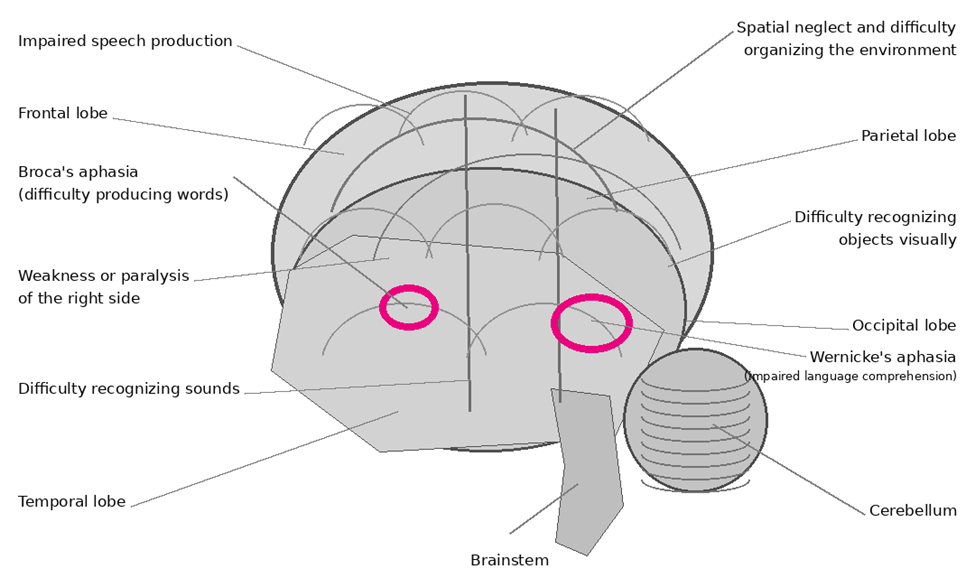
Stroke usually affects only one side of the brain because most nerve pathways cross to the opposite side of the body.
Symptoms therefore generally appear on the side of the body opposite the damaged cerebral hemisphere. However, when a stroke damages the brainstem and affects certain cranial nerves, some symptoms may occur on the same side as the brainstem lesion. Brainstem strokes may also affect both sides of the body. The brainstem connects the cerebrum—the largest part of the brain—with the spinal cord. Cranial nerves connect the brain and brainstem directly to the eyes, ears, nose, throat, and various structures of the head, neck, and trunk.
Stroke symptoms may include:
Difficulty speaking or understanding others. A person who has experienced a stroke may lose consciousness, slur words, or be unable to understand what is being said.
Numbness, weakness, or drooping of the face, or weakness or paralysis of an arm or leg. These symptoms usually affect only one side of the body. Ask the person to raise both arms above the head; downward drift of one arm may indicate a stroke. Drooping of one side of the mouth while smiling may also be a warning sign.
Visual disturbances in one or both eyes. The person may suddenly experience blurred or darkened vision in one or both eyes or may see double.
Headache. Stroke may be accompanied by a sudden severe headache, sometimes with vomiting, dizziness, or altered consciousness.
Difficulty walking. The person may stumble, lose balance, or have difficulty controlling movement.
Recognizing the signs and symptoms of stroke can save lives. Time is critical in stroke treatment: the earlier treatment begins, the better the chance of recovery. Because stroke symptoms may resemble other conditions, the only reliable way to confirm the diagnosis is to seek medical assessment as quickly as possible.
Additional Symptoms
Symptoms may include hemiplegia, facial muscle weakness, numbness or reduced sensation, initial flaccidity (reduced muscle tone), spasticity (increased muscle tone), and hyperreflexia. In most cases, symptoms affect only one side of the body. Depending on the injured area of the brain, the neurological deficit is usually on the opposite side of the body. If the brainstem is affected, cranial nerve deficits may occur, including:
Altered smell, taste, hearing, or partial or complete vision loss.
Drooping of the eyelid (ptosis) and weakness of the ocular muscles.
Reduced reflexes affecting speech, swallowing, or responsiveness.
Reduced facial sensation and facial muscle weakness.
Balance problems.
Changes in breathing and heart rate.
Weakness of the sternocleidomastoid muscle with inability to turn the head to one side.
If the cerebral cortex is affected, central nervous system pathways may be impaired, resulting in:
Aphasia (difficulty with verbal expression, auditory comprehension, reading, and/or writing).
Apraxia (impaired performance of voluntary movements).
Visual impairment.
Memory deficits associated with temporal-lobe involvement.
Disorganized thinking, confusion, and abnormal or inappropriate gestures.
If the cerebellum is affected, the patient may develop:
An altered gait.
Poor coordination of movement.
Dizziness, impaired balance, and difficulty moving the tongue from side to side.
Other Associated Symptoms
Loss of consciousness, headache, and vomiting occur more often with hemorrhagic stroke than with ischemic stroke because of increased intracranial pressure and compression of brain tissue. If symptoms are severe at onset, subarachnoid hemorrhage or embolic stroke may be the cause.
Spatial neglect (hemispatial neglect) is a cognitive-behavioral syndrome that may occur after stroke or other brain injury. It involves impaired spatial awareness, difficulty distinguishing right from left, and inability to recognize or navigate previously familiar places. This perceptual impairment may be temporary or permanent.
The principal warning signs of stroke can be remembered using B.E. F.A.S.T.:
Balance: Has the person suddenly lost balance or coordination?
Eyes: Is the person having difficulty focusing or experiencing double vision? Can the person see clearly?
Face: Can the person smile normally? Is one side of the face drooping?
Arms: Can the person raise both arms, or does one arm drift downward?
Speech: Can the person speak? Is speech slurred or unusual?
Time: Time is critical. Call emergency services immediately if any of these signs are present.
- Stroke-Specific Complications
Stroke may cause temporary or permanent disability. Complications vary according to the duration of interrupted cerebral blood flow and the area of the brain affected. They may include:
Loss of muscle movement (paralysis). Paralysis may affect one side of the body, or the patient may lose control of specific muscles, such as those on one side of the face or in one arm.
Difficulty speaking or swallowing. Stroke may affect the muscles of the mouth and throat, making it difficult to speak clearly, swallow, or eat. Language problems may also occur, including difficulty speaking, understanding speech, reading, or writing.
Memory loss or difficulty thinking. Many people experience memory loss after a stroke, while others have difficulty thinking, reasoning, making judgments, or understanding concepts.
Emotional problems. People who have had a stroke may have greater difficulty controlling their emotions, and some develop depression.
Pain. Pain, numbness, or other unusual sensations may occur in areas affected by the stroke. For example, if sensation is lost in the left arm, the patient may experience uncomfortable tingling in that arm.
Behavioral and self-care changes. People who have had a stroke may become more socially withdrawn and may require assistance with personal care and activities of daily living.
- Effects of Stroke
In most people with ischemic stroke, loss of function is greatest immediately after the event. However, in approximately 15% to 20% of patients, the stroke continues to progress, causing additional functional loss over the next one or two days. This is known as an evolving stroke. In hemorrhagic stroke, function is generally lost progressively over minutes to hours.
Patients usually recover part of the lost function over days to months. Although some brain cells die, others sustain limited injury, recover, and resume function. In addition, some brain areas may assume functions previously performed by the damaged region, a capacity known as neuroplasticity.
However, early effects of stroke, including paralysis, may become permanent. Muscles that are not used regularly may become chronically spastic and stiff, causing painful spasms. The patient may continue to have difficulty walking, swallowing, speaking clearly, or performing activities of daily living. Problems with memory, thinking, attention, learning, and emotional control may persist, as may depression, hearing or visual impairment, and dizziness.
- Stroke-Specific Complications
Stroke may cause temporary or permanent disability. Complications vary according to the duration of interrupted cerebral blood flow and the area of the brain affected. They may include:
Loss of muscle movement (paralysis). Paralysis may affect one side of the body, or the patient may lose control of specific muscles, such as those on one side of the face or in one arm.
Difficulty speaking or swallowing. Stroke may affect the muscles of the mouth and throat, making it difficult to speak clearly, swallow, or eat. Language problems may also occur, including difficulty speaking, understanding speech, reading, or writing.
Memory loss or difficulty thinking. Many people experience memory loss after a stroke, while others have difficulty thinking, reasoning, making judgments, or understanding concepts.
Emotional problems. People who have had a stroke may have greater difficulty controlling their emotions, and some develop depression.
Pain. Pain, numbness, or other unusual sensations may occur in areas affected by the stroke. For example, if sensation is lost in the left arm, the patient may experience uncomfortable tingling in that arm.
Behavioral and self-care changes. People who have had a stroke may become more socially withdrawn and may require assistance with personal care and activities of daily living.
- Prevention
Several measures can help prevent stroke. It is important to understand personal stroke risk factors and follow the healthcare professional’s recommendations regarding a healthy lifestyle. For a person who has already had a stroke, these measures may help prevent recurrence. After a TIA, they can reduce the likelihood of a future stroke. Follow-up care in hospital and after discharge also plays an important role.
Many stroke-prevention strategies are the same as those used to prevent heart disease. General healthy-lifestyle recommendations include:
https://youtu.be/y6VuE9NCaXY?si=E-CY9oTS55OmsJri
1. Home-Based Preventive Measures:
A healthy lifestyle for stroke prevention should include:
:Control Hypertension-
Controlling hypertension is one of the most important measures for reducing stroke risk. In patients with a previous stroke, lowering blood pressure may help prevent a subsequent TIA or stroke. Healthy lifestyle changes and medications are often required to manage hypertension.
: Reduce Foods High in Cholesterol and Fat-
Reducing dietary cholesterol and fat—particularly saturated and trans fats—may decrease fatty accumulation in the arteries. If dietary changes alone do not adequately control cholesterol, lipid-lowering medication may be required.
: Avoid Smoking
Smoking increases stroke risk in both smokers and nonsmokers exposed to secondhand smoke. Smoking cessation therefore helps reduce the likelihood of stroke.
: Manage Diabetes-
Control diabetes mellitus. A healthy diet, exercise, and weight loss can help maintain blood glucose within the target range. If lifestyle measures are insufficient, antidiabetic medications may be prescribed.
: Maintain a Healthy Weight-
Excess weight contributes to other stroke risk factors, including hypertension, cardiovascular disease, and diabetes mellitus.
: Exercise Regularly and Manage Psychological Stress-
Aerobic exercise reduces stroke risk in several ways: it can lower blood pressure, raise high-density lipoprotein (HDL) cholesterol, and improve overall vascular and cardiac health. It also supports weight loss, diabetes control, and stress reduction. Physical activity should be increased gradually to at least 30 minutes of moderate-intensity activity on most or all days of the week. The American Heart Association recommends 150 minutes of moderate-intensity aerobic activity or 75 minutes of vigorous aerobic activity each week. Moderate-intensity activities may include walking, jogging, swimming, and cycling.
: Avoid Alcoholic Beverages-
Heavy alcohol consumption increases the risk of hypertension and both ischemic and hemorrhagic stroke and may interact with the patient’s medications. The source text notes that small or moderate amounts may reduce clotting and possibly lower ischemic-stroke risk; however, the appropriate advice should be determined by a healthcare professional for each individual patient.
: Treat Obstructive Sleep Apnea-
Obstructive sleep apnea is a sleep disorder in which breathing repeatedly stops for brief periods during sleep. A healthcare professional may recommend a sleep study when symptoms are present. Treatment may include positive airway pressure delivered through a mask to keep the airway open during sleep.
: Avoid Illicit Drugs-
Certain illicit drugs, including cocaine and methamphetamine, are established risk factors for TIA and stroke.
: Maintain a Balanced, Healthy Diet-
Follow a diet rich in fruits and vegetables. Consuming five or more servings of fruit and vegetables daily may reduce stroke risk. A Mediterranean-style diet emphasizing olive oil, fruit, nuts, vegetables, and whole grains may also be beneficial.
2. Preventive Medications
Patients who have previously experienced an ischemic stroke may require medication to reduce the risk of another event. Following a TIA, medication may reduce the risk of a future stroke. These medications include:
: Antiplatelet Agents-
Platelets are blood cells involved in clot formation. Antiplatelet agents make platelets less adhesive and less likely to form clots. Aspirin is the most commonly used antiplatelet agent, and the physician may prescribe a dose appropriate for the patient’s condition.
After a TIA or minor stroke, aspirin may be prescribed together with another antiplatelet agent such as clopidogrel (Plavix) for a defined period
to reduce the risk of recurrent stroke. When aspirin is contraindicated, clopidogrel may be prescribed alone. Ticagrelor (Brilinta) is another antiplatelet medication that may be used for stroke prevention.
: Blood-Thinning Medications (Anticoagulants)-
These medications reduce blood clotting. Heparin is a rapid-acting anticoagulant that may be used for a short period in hospital.
Warfarin (Jantoven), which has a slower onset of action, may be used for longer-term therapy. Because warfarin is a potent anticoagulant, it must be taken exactly as prescribed, with monitoring for adverse effects. Regular blood testing is also required to assess its anticoagulant effect.
Several newer anticoagulants are available for stroke prevention in high-risk patients, including dabigatran (Pradaxa), rivaroxaban (Xarelto), apixaban (Eliquis), and edoxaban (Savaysa). They act more rapidly than warfarin and generally do not require routine blood tests or frequent medical monitoring. They may also reduce the risk of certain bleeding complications compared with warfarin.
3. Prevention Using Alternative Therapies
There is no herbal cure for stroke; however, some herbs may affect blood clotting, including:
Turmeric, ginger, cayenne pepper, Ginkgo biloba, garlic, and cinnamon.
- Treatment:
Treatment depends on the type of stroke and the time elapsed since symptom onset. It commonly includes:
Medication: One or more medications may be administered. Some are given immediately and for a short period, such as anticoagulants, while others may be required long term. When stroke is diagnosed promptly, an intravenous thrombolytic may be administered to restore blood flow to the affected area of the brain; it must be used within the first three to four hours after symptom onset.
Surgery/Endovascular Treatment: Some patients may require clot removal to restore cerebral blood flow. A catheter is inserted into an artery, usually through the groin, and a small device is advanced through the catheter to the affected cerebral artery.
This procedure is generally performed within the first six hours after onset of acute stroke symptoms.
Rehabilitation: Some patients require long-term rehabilitation, including physical therapy, occupational therapy, speech and language therapy, psychological support, nutritional management, and bladder management.
- References
Belleza, M. (2024). Cerebrovascular accident (stroke) nursing care. Retrieved from https://nurseslabs.com/cerebrovascular-accident-stroke/
Berman, A., Snyder, S., & Frandsen, G. (2022). Kozier & Erb’s: Fundamentals of nursing concepts, process, and practice (11th ed.). United Kingdom: Pearson Education
Centers for disease control and prevention (CDC) (2022). About stroke. Retrieved from https://www.cdc.gov/stroke/about/index.html#:~:text=A%20stroke%2C%20sometimes%20called%20a,term%20disability%2C%20or%20even%20death
Cherry, K. (2022). Parts of the brain: Anatomy, functions, and conditions. Retrieved from https://www.verywellmind.com/the-anatomy-of-the-brain-2794895
Cleveland clinic abudhabi.(2025).Avaliable at https://www.clevelandclinicabudhabi.ae/ar-ae/institutes-and-specialties/neurological/stroke-awareness.
Green, T., McNair, N., Hinkle, J., Middleton, S., Miller, E., Perrin, S., …& Summers, D. (2021). Care of the patient with acute ischemic stroke (posthyperacute and prehospital discharge): Update to 2009 comprehensive nursing care scientific statement: A scientific statement from the American Heart Association. Stroke, 52(5), e179–e197. https://doi.org/10.1161/STR.0000000000000357
HealthAwareness. (2025). Available at https://www.moh.gov.sa/HealthAwareness/EducationalContent/Diseases/Nervous-system/Pages/006.aspx.
Holland, K. (2021). Stroke: Symptoms, causes, treatment, types & more. Retrieved from https://www.healthline.com/health/stroke. Accessed at 3-4-2023
Indiartinie, A., Setiyowati, E., Septianingrum, Y., Muhith, A., Nadatien, I., Soleha, U., & Rusdianingseh, R. (2023). The importance of discharge planning in stroke patients: Literature review. Journal of Nursing Practice, (6)2, 130-136. https://doi.org/10.30994/jnp.v6i2.301
Kuriakose, D., & Xiao, Z. (2020). Pathophysiology and treatment of stroke: present status and future perspectives. International Journal of Molecular Sciences, 21(20), 7609. https://doi.org/10.3390/ijms21207609
Maldonado, K. A., & Alsayouri, K. (2023). Physiology, brain. Treasure Island (FL): StatPearls Publishing. Retrieved from https://www.ncbi.nlm.nih.gov/books/NBK551718/
Mayo Clinic. (2023). Stroke: Symptoms and causes. Retrieved from https://www.mayoclinic.org/diseases-conditions/stroke/symptoms-causes/syc-20350113
Mayoclinic. (2025). Available at https://www.mayoclinic.org/ar/diseases-conditions/stroke/symptoms-causes/syc-20350113.
Mcintosh, J. (2024). Stroke: Causes, symptoms, diagnosis, and treatment. Retrieved from https://www.medicalnewstoday.com/articles/7624
Medcare. (2024). Available at https://www.medcare.ae/ar/services/view/vascular-surgery/stroke.html.
Murphy, S., & Werring, D. (2020). Stroke: Causes and clinical features. Medicine, 48(9), 561–566. https://doi.org/10.1016/j.mpmed.2020.06.002.
National Heart, Lung and blood Institute. (2022). Stroke - What is a stroke? Retrieved from https://www.nhlbi.nih.gov/health/stroke
Shi, D., Li, Z., Yang, J., Liu, B., & Xia, H. (2018). Symptom experience and symptom burden of patients following first-ever stroke within 1 year: A cross-sectional study. Neural Regeneration Research, 13(11). 1907–1912. https://doi.org/10.4103/1673-5374.239440
Tadi, P., Lui, F., & Budd, L. (2023). Acute stroke (nursing). Treasure Island (FL): StatPearls Publishing. Retrieved from https://pubmed.ncbi.nlm.nih.gov/33760452/
Vasković, J. (2023). Nervous system: Structure, function and diagram. Retrieved from https://www.kenhub.com/en/library/physiology/the-nervous-system
Webteb. (2024). Available at https://www.webteb.com/neurology/diseases.