Stroke Treatment and Nursing Care
| Site: | EHC | Egyptian Health Council |
| Course: | Guidelines for stroke nursing procedures |
| Book: | Stroke Treatment and Nursing Care |
| Printed by: | Guest user |
| Date: | Thursday, 5 November 2026, 2:41 AM |
Description
"last update: 28 Sept. 2025" تحميل الدليل
Table of contents
- - Prepared
- - Introduction
- - Stroke First Aid (F.A.S.T. Warning Signs)
- - Stroke Treatment
- - Nursing Care for Patients with Stroke
- - The Nursing Role in the Use of Tissue Plasminogen Activator (tPA) for Thrombolysis in Acute Ischemic Stroke
- -Nursing Care for Neurosurgical Patients
- -Nursing Care for Patients with Altered Levels of Consciousness
- -References
- Prepared
Stroke Guideline
Under supervision
- Prof. Dr. Mohamed Latif, CEO of the Egyptian Health Council
Dr. Kawthar Mahmoud, Head of the Egyptian Nursing Syndicate - Member of the Senate
Prepared by
NO. | Name | Title |
1. | Prof.Dr/Amal Ahmed Khalil Morsy | Supervisor Of the Education Sector at Port Said University |
2. | Dr Afaf Abdel Aziz Abdel Aziz Basal | Dean Of Faculty Nursing, Professor of Medical and Surgical Nursing, Tanta University |
3. | Prof.Dr/Zeinab Hussain Ali | Vice Dean for Environmental Affairs and Community Service, Faculty of Nursing, Helwan University |
4. | Prof. Amal Saeed Taha Rifaie
| Professor and Head of the Medical-Surgical Nursing Department, Benha University |
5. | Prof. Hanan Ahmed El-Sebaie Ali
| Professor of Medical-Surgical Nursing, Faculty of Nursing, Cairo University |
6. | Dr. Nevine Abdrab-al-Nabi Mohamed Abdrab-al-Nabi | Head of the Central Nursing Administration(Former)– Ministry of Health |
7. | Dr. Maisa Hosni Ahmed Tamam
| General Director of the nursing Administration of PHC, Ministry of Health |
8. | Dr. Nancy Alaa El-Din Abdel-Baset Ali | Supervisor of Technical Education, General Authority for Healthcare |
9. | Dr. Sherine Mohamed Mohamed Saad El-Din
| Supervisor of Nursing Services Development, General Authority for Healthcare |
10. | Dr. Mai Mahmoud El-Assal
| General Director of the General Administration for Technical Health Institutes Affairs |
11. | Assoc. Prof. Heba Mahmoud Mohamed | Associate Professor of Maternal and Neonatal Health Nursing, Faculty of Nursing, Ain Shams University |
12. | Dr. Nabawiya Saleh Saleh Shehata | Associate Professor, Faculty of Nursing, Ain Shams University |
13. | Dr. Fatma Ali Ezz El-Regal
| Associate Professor of Community Health Nursing, Faculty of Nursing, Al-Azhar University |
14. | Dr. Laila Ragab Qasim Abdel Hamid
| Director of the Nursing Department, General Secretariat of Mental Health |
15. | Prof. Hanan Ibrahim Abdel Aziz Radi
| Professor of Psychiatric and Mental Health Nursing, Faculty of Nursing, Cairo University |
16. | Dr. Azza Galal Ahmed Khalil –
| Director of the Curative Nursing Department, Ministry of Health and Population |
Participants | ||
17. | Dr. Hadeer Salah El-Din Abdel-Samie Rizk | Lecturer, Department of Medical-Surgical Nursing, Faculty of Nursing, Cairo University |
18. | Dr. Reham Samir Fathallah El-Maadawy | Lecturer, Department of Medical-Surgical Nursing, Faculty of Nursing, Cairo University |
- Introduction
An ischemic stroke occurs when the blood supply to part of the brain is interrupted or reduced. This prevents brain tissue
from receiving oxygen and nutrients, and brain cells begin to die within minutes. Another type of stroke is hemorrhagic stroke.
It occurs when a blood vessel in the brain leaks or ruptures, causing bleeding within the brain. The accumulated blood increases pressure on brain cells and damages them.
Stroke is a medical emergency, and immediate medical treatment is essential. Rapid access to emergency care can reduce brain damage and other stroke-related complications.
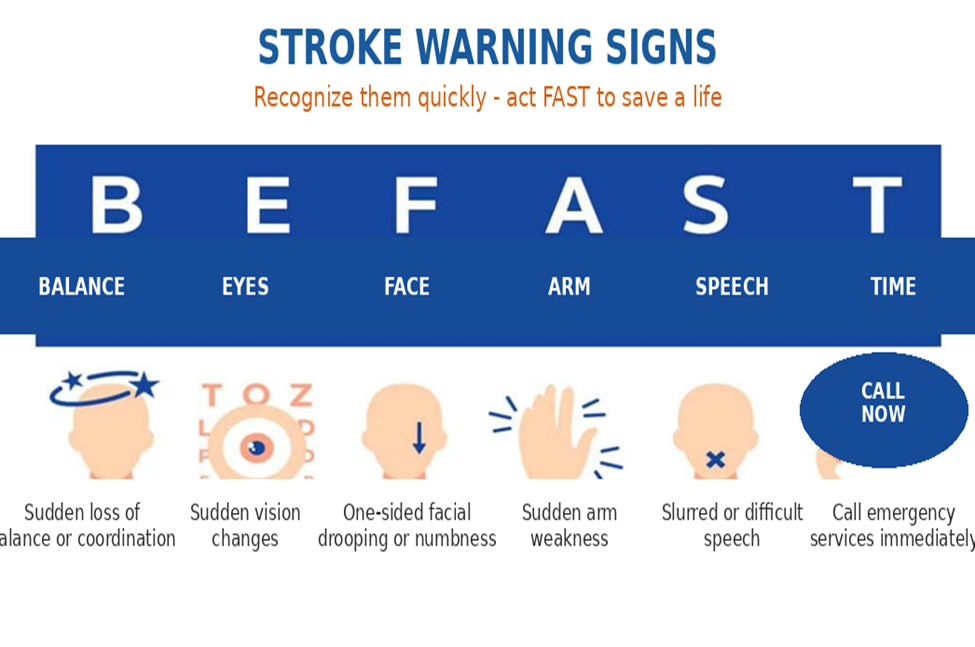
- Stroke First Aid (F.A.S.T. Warning Signs)
An ischemic stroke occurs when the blood supply to part of the brain is interrupted or reduced. This prevents brain tissue
from receiving oxygen and nutrients, and brain cells begin to die within minutes. Another type of stroke is hemorrhagic stroke.
It occurs when a blood vessel in the brain leaks or ruptures, causing bleeding within the brain. The accumulated blood increases pressure on brain cells and damages them.
Stroke is a medical emergency, and immediate medical treatment is essential. Rapid access to emergency care can reduce brain damage and other stroke-related complications.
- Stroke Treatment
Receiving immediate emergency medical care after the onset of stroke is critical. Treatment depends on the type of stroke, as follows:
1. Treatment of Ischemic Stroke
To treat an ischemic stroke, blood flow to the brain must be restored as quickly as possible. Thrombolytic medication, such as tissue plasminogen activator (tPA), should be administered within three hours of the first onset of symptoms when clinically appropriate. Prompt treatment not only improves survival but may also reduce stroke-related complications. The treating physician may recommend a procedure to open a partially or completely blocked artery, including:
• Carotid endarterectomy (CEA).
• Placement of a flexible mesh stent within the narrowed artery. https://youtube.com/shorts/vI63bzub54Y?si=C4PnZgHkKuHHkYss
https://youtu.be/acVlRqvxMeM?si=_FTL_HAxfb7H3LQi
https://youtu.be/H069gM_oOnk?si=zjgf7eoiuREVfEee
• Mechanical thrombectomy. https://youtube.com/shorts/qavUvIMm-J8?si=cuUMcupCZ7uDi2AK
2. Treatment of Hemorrhagic Stroke
Surgery may be useful in treating a hemorrhagic stroke or preventing a future stroke. https://youtu.be/p0J5o6mn-ZM?si=LIsYVpcuerBsIiNy
The physician may recommend one of the following procedures when the patient is at a high or increasing risk of aneurysm formation or blood-vessel rupture:
• Aneurysm clipping. https://youtu.be/MmgbIBckg70?si=-t0BsGuyeku6oE9E
• Aneurysm coiling, wrapping, or ligation.
• Removal or repair of malformed blood vessels.
- Nursing Care for Patients with Stroke
Evidence-based nursing care and continuous assessment are essential to reduce adverse outcomes after stroke.
First: Ongoing Clinical Assessment
· Assess neurological impairment using tools such as the Glasgow Coma Scale, together with evaluation of motor and sensory deficits.
· Assess the airway, breathing, circulation, and vital signs.
· Monitor the fluid-balance chart to maintain appropriate fluid balance, especially during the first 24 hours, with particular caution in patients with cardiac disease or renal impairment.
· Monitor cardiac function using electrocardiography (ECG) to detect atrial fibrillation or other cardiac arrhythmias.
· Maintain continuous cardiac monitoring for at least 24 hours during the acute phase.

Second: Respiratory Support and Circulatory Perfusion
· Position the patient correctly to maintain a patent airway and prevent complications such as pressure injuries or thrombosis.
· Use pillows or splints to support body alignment and prevent joint deformity.
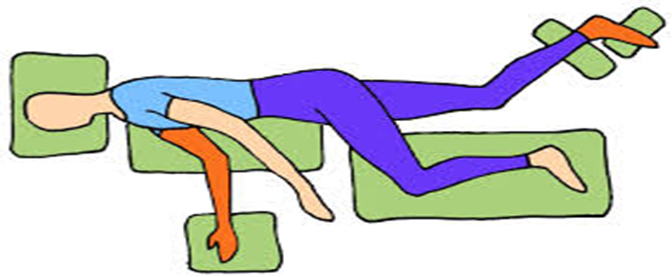
· In selected cases, a fully supine position may improve cerebral perfusion without increasing the risk of pneumonia.
· Maintain optimal oxygenation by monitoring oxygen saturation (SpO₂).
· Prevent respiratory complications such as aspiration pneumonia.
Third: Medication Management
· Administer medications as prescribed by the physician, including:
- Antithrombotic medications.
- Antiarrhythmic medications.
- Antihypertensive medications.
- Analgesics, medications for muscle spasticity, or neuropathic pain medications as required.
Fourth: Prevention of Complications
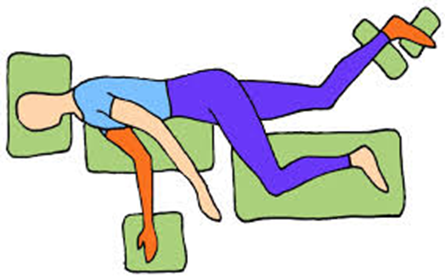
· Prevent pressure injuries by repositioning the patient every two hours and using pressure-relieving mattresses.
· Reduce skin friction and pressure by using appropriate positioning cushions.
· Use compression stockings and anticoagulants, as prescribed, to prevent deep-vein thrombosis.
· Apply infection-prevention and control protocols.
· Prevent falls by raising the bed rails as appropriate and providing a safe environment.
· Apply oral-hygiene protocols to reduce the risk of ventilator-associated or aspiration pneumonia.
Fifth: Nutrition and Dysphagia Management
· Monitor regularly for signs of dysphagia.
· Collaborate with the dietitian to develop an appropriate nutritional plan.
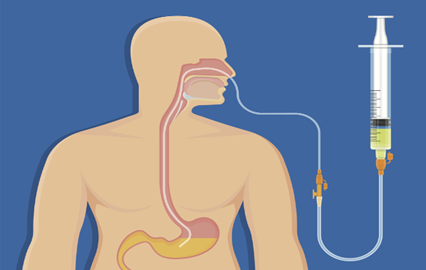
· In severe dysphagia, enteral feeding through a nasogastric tube should be initiated within 72 hours after the stroke, according to the care plan.
Sixth: Motor and Functional Rehabilitation
· Assist with physiotherapy to restore motor function and balance.
· Gradually support the patient in performing activities of daily living, such as:
o Personal hygiene.
o Eating.
o Dressing.
Seventh: Relief of Pain and Discomfort
· Implement a nursing care plan to relieve stroke-related symptoms, including:
o Headache.
o Muscle spasms or spasticity.
o Neuropathic pain.
Eighth: Psychological and Social Support
· Provide emotional support to the patient and family.
· Monitor and assess for signs of depression or anxiety.
· Provide counseling or refer the patient for psychological care when necessary.
Ninth: Promoting Independence and Safety
· Improve the patient’s ability to move and walk safely, with or without assistive devices.
· Encourage active participation in rehabilitation to achieve the highest possible level of independence.
- The Nursing Role in the Use of Tissue Plasminogen Activator (tPA) for Thrombolysis in Acute Ischemic Stroke
tPA is an effective emergency treatment for eligible patients with acute ischemic stroke and should be administered within the therapeutic time window, generally 3 to 4.5 hours from the first onset of symptoms. Nursing care is central to ensuring the safety and effectiveness of this treatment and includes the following:
1. Rapid Assessment and Early Recognition of Stroke Symptoms
· Use the F.A.S.T. protocol (Face, Arms, Speech, Time).
· Obtain an accurate medical history, particularly the exact time when symptoms began or the last known well time.
· Notify the medical team immediately to expedite transfer and brain imaging with CT or MRI.
2. Preparation for tPA Administration
· Confirm that the patient meets the eligibility criteria for tPA:
o Age: 18 years or older.
o Clinical diagnosis: confirmed acute ischemic stroke.
o Symptom onset: within the 3- to 4.5-hour treatment window.
o Brain imaging: CT or MRI shows no intracranial hemorrhage.
o Neurological deficit: clinically evident and functionally significant; the NIH Stroke Scale is used to determine severity.
o Weight: used to calculate the tPA dose (0.9 mg/kg; maximum dose 90 mg).
· Confirm that the patient has no contraindications to tPA, including:
o Current or previous intracranial hemorrhage.
o History of cerebral hemorrhage or an untreated cerebral aneurysm.
o Brain surgery, head injury, or stroke within the previous three months.
o Uncontrolled blood pressure of 185/110 mmHg or higher at presentation.
o Bleeding disorder or platelet count below 100,000/µL.
o Use of anticoagulants, such as heparin within the previous 48 hours, with an elevated INR or aPTT.
o Blood glucose below 50 mg/dL or above 400 mg/dL.
o Intracranial tumors or serious vascular disease.
· Obtain informed consent from the patient or family whenever possible.
· Collect blood samples for the required investigations, including coagulation studies, liver-function tests, and complete blood count (CBC).
· Insert an appropriate intravenous cannula and monitor vital signs.
3. Monitoring During tPA Administration
· Administer the dose according to the hospital protocol: 10% of the total dose as an IV bolus and the remainder by infusion over 60 minutes.
· Monitor vital signs every 15 minutes during the first hour, every 30 minutes during the next two hours, and then hourly for 24 hours.
· Monitor neurological status closely to detect any sudden deterioration.
4. Rapid Recognition of Potential Complications
o Monitor for signs of internal or intracranial bleeding, including decreased level of consciousness, sudden headache, vomiting, or new neurological changes.
o Inspect needle and catheter sites for external bleeding.
o Monitor for allergic manifestations or a severe medication reaction; these are uncommon but possible.
5. Care After tPA Administration
· Do not administer anticoagulant or antiplatelet medication during the first 24 hours after tPA unless explicitly prescribed by the physician.
· Avoid invasive procedures or punctures, such as lumbar puncture or catheter insertion, during the first 24 hours whenever possible.
· Repeat brain imaging after 24 hours to exclude hemorrhage before starting additional antithrombotic medication.
· Continue close monitoring of neurological status and vital functions.
6. Patient Education and Psychological Support
· Explain the treatment to the patient and family, including the importance of timely tPA administration.
· Provide psychological support during the acute phase.
· Follow the rehabilitation plan after treatment according to the patient’s condition.
-Nursing Care for Neurosurgical Patients
Definition:
Neurosurgery is the medical specialty concerned with the diagnosis and treatment of diseases and injuries affecting the brain, spinal cord, and peripheral nerves. Neurosurgeons manage a wide range of conditions, including brain tumors, traumatic injuries, degenerative disorders, and congenital abnormalities.
Types of Neurosurgical Conditions:
1. Brain Tumors
- Primary tumors: tumors that arise directly from brain tissue, such as gliomas and meningiomas.
- Secondary tumors: tumors that spread to the brain from another part of the body, such as breast or lung cancer metastases.
2. Traumatic Injuries
- Traumatic brain injuries: injuries to the brain resulting from accidents or falls.
- Spinal cord injuries: injuries that cause compression or disruption of the spinal cord.
3. Degenerative and Neurological Disorders
- Parkinson’s disease: a neurological disorder that affects movement and is characterized by tremor and bradykinesia.
- Epilepsy: disorders involving abnormal electrical activity in the brain.
4. Congenital Abnormalities
- Spina bifida: incomplete closure of the spinal column during fetal development.
- Vascular malformations: such as hemangiomas or arteriovenous malformations (AVMs).
5. Cerebrovascular Disorders
- Stroke: blockage or bleeding in the cerebral blood vessels, resulting in damage to brain tissue.
- Cerebral aneurysm: an abnormal dilation of a blood vessel in the brain that increases the risk of intracranial hemorrhage.
The Nursing Role in Neurosurgical Care
1. Before the Procedure
- Assessment and Preparation
· Health assessment: perform a comprehensive assessment of vital signs, medical history, and the patient’s neurological and surgical status.
· Perform a detailed neurological assessment to determine the functional status of the brain and spinal cord before surgery, including:
· Assessment of level of consciousness, muscle strength, and neurological responses.
· Education and information: explain the procedure to the patient and family, including surgical details, potential risks, and expected benefits.
· Provide information about what the patient can expect after surgery and how to prepare.
· Explain the importance of preoperative fasting, particularly in relation to anesthesia.
- Physical Preparation
· Personal preparation: confirm that the patient has fasted when required, usually for 6-8 hours before surgery, and complete the necessary preparations such as skin cleansing, removal of jewelry and other accessories, and urinary catheterization when indicated.
- Preparation of the Surgical Environment
· Prepare and sterilize all required instruments and equipment.
2. During the Procedure
- Supporting the Medical Team
· Assistance during the procedure: support the surgical team and ensure that all required instruments and equipment are available.
· Work closely with the anesthesia team to ensure that the patient remains clinically stable.
- Patient monitoring: continuously monitor vital signs and the effects of anesthesia.
- Respond promptly to any unexpected change in the patient’s condition during surgery.
3. After the Procedure
The Nursing Role in Intensive Care Following Neurosurgery:
1. Continuous Assessment and Monitoring
- Neurological Monitoring
· Neurological response assessment: regularly assess the level of consciousness and motor and cognitive function. Use tools such as the Glasgow Coma Scale (GCS) to evaluate consciousness, limb motor responses, and pupillary light reflexes.
· Monitoring for new neurological signs: observe for new symptoms such as visual changes, impaired coordination, sudden weakness, or speech disturbance, which may indicate complications such as hemorrhage or cerebral edema.
- Monitoring Vital Signs
· Vital signs: monitor blood pressure, pulse rate, respiratory rate, and temperature at regular intervals.
· Monitoring for signs of raised intracranial pressure: observe for changes that may indicate increased intracranial pressure, including severe headache, vomiting, or delayed neurological responses.
2. Pain Management and Comfort Care
- Pain Management
· Pain assessment: use an appropriate pain-assessment tool to determine pain severity and administer analgesics as prescribed.
· Comfort measures: assist the patient in finding a comfortable position and confirm that pain management is effective.
- Wound Care
· Surgical-wound monitoring: inspect the wound for signs of infection, bleeding, or irritation. Observe for abnormal changes such as redness or swelling.
· Dressing changes: change dressings regularly in accordance with medical instructions and maintain wound cleanliness.
3. Respiratory and Circulatory Care
- Respiratory Management
· Respiratory monitoring: monitor respiratory rate and blood oxygen level, and provide respiratory support when required.
· Mechanical ventilation: when the patient is mechanically ventilated, monitor ventilator settings and evaluate their effectiveness.
- Circulatory Care
· Fluid monitoring: monitor fluid and electrolyte balance and adjust intravenous fluids according to the patient’s needs and prescribed plan.
· Circulatory assessment: monitor vital signs, including blood pressure and pulse rate, to evaluate circulation and ensure hemodynamic stability.
4. Nutritional Care
- Nutrition Management
· Enteral feeding: if the patient is receiving tube feeding, verify the feed flow and monitor for potential complications such as vomiting or diarrhea.
· Nutritional-needs assessment: adjust the nutrition plan according to the patient’s condition and clinical recommendations to ensure adequate nutrient intake.
5. Education and Guidance
- Patient and Family Education
· Home-care training: teach the patient and family how to care for the wound, manage pain, and recognize warning signs that require medical attention.
· Discharge planning: provide instructions regarding physiotherapy, rehabilitation, and the home-care measures required after discharge from intensive care.
6. Documentation and Reporting - Documentation of Care
· Clinical notes: document all observations concerning neurological status, new symptoms, treatment, and any changes in the patient’s condition.
· Reporting to the medical team: provide accurate reports on the patient’s overall condition and any new complications or changes, ensuring continuous communication of updated clinical information.
-Nursing Care for Patients with Altered Levels of Consciousness
Definition:
These are patients who have lost consciousness and do not respond to environmental stimuli such as touch, sound, or light.
Loss of consciousness is a medical emergency that may result from a wide range of causes, from mild conditions to life-threatening emergencies.
It is a state in which the person does not respond to events or stimuli in the surrounding environment and lacks full awareness.
Causes:
Loss of consciousness may result from various diseases, injuries, or medical emergencies, including:
· Head injuries: trauma resulting from accidents, falls, or blows to the head may cause loss of consciousness.
· Neurological diseases: stroke, encephalitis, or brain tumors may cause loss of consciousness.
· Cardiac disorders: conditions such as myocardial infarction or abnormal cardiac rhythm may lead to loss of consciousness.
· Low blood glucose: severe hypoglycemia may cause loss of consciousness.
· Poisoning: exposure to chemicals or medication overdose may lead to loss of consciousness.
· Hypoxia: airway obstruction or respiratory problems may reduce oxygen delivery and result in loss of consciousness.
· Syncope: this results from a sudden reduction in blood flow to the brain and may occur after standing abruptly or during severe psychological stress.
Signs and Symptoms:
- Pallor.
- Pulse rate below the normal lower limit, generally below 60 beats/minute.
- Low blood pressure.
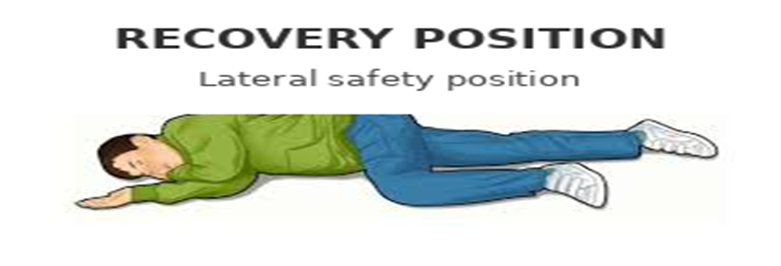
- The person may return to normal within a short period. During recovery, place the patient in an appropriate recovery position. If consciousness does not return, a full medical assessment is required.
During shock or coma:
Observe the pupils, breathing, movement, and level of consciousness.
Listen to the patient’s breathing, count the heart rate, and assess rhythm regularity.
Nursing Role:
1. Ensure that the airway is patent and breathing is adequate.
2. Monitor vital signs.
3. Place the patient in the shock or recovery position as clinically appropriate.
4. Initiate Ringer’s lactate solution or plasma infusion, if available and prescribed.
5. Connect the patient to a cardiac monitor.
6. Obtain an electrocardiogram (ECG).
7. Administer the prescribed medications.
8. Reorient the patient to the surroundings, location, and people present as consciousness returns.
Note: Most uncomplicated episodes of syncope require only an appropriate period of observation, after which the patient may be discharged from hospital accompanied by a family member or relative.
Life-threatening conditions include:
· Acute coronary thrombosis or acute myocardial infarction.
· Severe bradycardia or cardiac arrhythmia.
· Severe gastrointestinal bleeding.
· Pulmonary embolism.
· Renal failure.
· Medication toxicity causing severe cardiac and respiratory depression.
· Sepsis.
· Meningitis.
In such cases, the patient must be admitted for further investigations and appropriate treatment.
-References
Ashcraft, S., Wilson, S. E., Nyström, K. V., Dusenbury, W., Wira, C. R., Burrus, T. M., … American Heart Association Council on Cardiovascular and Stroke Nursing and the Stroke Council. (2021). Care of the patient with acute ischemic stroke (prehospital and acute phase of care): Update to the 2009 comprehensive nursing care scientific statement: A scientific statement from the American Heart Association. Stroke, 52(5), e164-e178. https://doi.org/10.1161/STR.0000000000000356
Babkair, L. A., Safhi, R. A., Balshram, R., Safhei, R., Almahamdy, A., Hakami, F. H., & Alsaleh, A. M. (2023). Nursing care for stroke patients: Current practice and future needs. Nursing Reports (Pavia, Italy), 13(3), 1236–1250. https://doi.org/10.3390/nursrep13030106
Burns, M., Pomager, L., & Young, B. C. (2023). Time is brain. American Nurse Journal, 18(1), 6-12. doi:10.51256/anj012306. Retrieved from https://www.myamericannurse.com/time-is-brain/
Greenberg, S. M., Ziai, W. C., Cordonnier, C., Dowlatshahi, D., Francis, B., Goldstein, J. N., ... American Heart Association/American Stroke Association. (2022). 2022 guideline for the management of patients with spontaneous intracerebral hemorrhage: A guideline from the American Heart Association/American Stroke Association. Stroke, 53(7), e282-e361. https://doi.org/10.1161/STR.0000000000000407
Hill, M., Baumann, J. J., & Newcommon, N. (2022). Nursing care of the acute ischemic stroke endovascular thrombectomy patient. Stroke, 53(9), 2958-2966. https://doi.org/10.1161/STROKEAHA.122.034536
Lippincot NursingCenter. (2024). Tissue Plasminogen Activator (tPA) for acute ischemic events. Retrieved from https://www.nursingcenter.com/clinical-resources/nursing-pocket-cards/alteplase-injection-for-acute-ischemic-stroke?utm_source=chatgpt.com
Oliveira-Filho, J., & Mullen, M. T. (2025). Initial assessment and management of acute stroke. Retrieved from https://www.uptodate.com/contents/initial-assessment-and-management-of-acute-stroke?utm_source=chatgpt.com
Powers, W. J., Rabinstein, A. A., Ackerson, T., Adeoye, O. M., Bambakidis, N. C., Becker, K., ... American Heart Association Stroke Council. (2019). Guidelines for the early management of patients with acute ischemic stroke: 2019 update to the 2018 guidelines for the early management of acute ischemic stroke: A guideline for healthcare professionals from the American Heart Association/American Stroke Association. Stroke, 50(12), e344-e418. https://doi.org/10.1161/STR.0000000000000211
Sanjuan, E., Pancorbo, O., Santana, K., Miñarro, O., Sala, V., Muchada, M., ... Rubiera, M. (2023). Management of acute stroke: Specific nursing care and treatments in the stroke unit. Neurología, 38(6), 419-426. https://doi.org/10.1016/j.nrleng.2020.07.026
Tadi, P., Lui, F., & Budd, L. A. (2023). Acute stroke (nursing). Treasure Island (FL): StatPearls Publishing. Retrieved from https://www.ncbi.nlm.nih.gov/books/NBK568693/?utm_source=chatgpt.com
Wagner, M. (2024). Stroke (CVA): Nursing diagnoses, care plans, assessment & interventions. Retrieved from https://www.nursetogether.com/stroke-cerebrovascular-accident-nursing-diagnosis-care-plan/?utm_source=chatgpt.com