Metabolic hypophospathemia (postparturient hemoglobinuria PPH)
| Site: | EHC | Egyptian Health Council |
| Course: | Large ruminant Medicine and surgery Guidelines |
| Book: | Metabolic hypophospathemia (postparturient hemoglobinuria PPH) |
| Printed by: | Guest user |
| Date: | Sunday, 20 September 2026, 6:51 PM |
Description
"last update: 19 May 2026" Download Guideline
- Acknowledgment
We would like to acknowledge the committee of the National Egyptian Guidelines for Veterinary Medical Interventions, Egyptian Health Council for adapting this guideline.
Executive Chief of the Egyptian Health Council: Prof. Mohamed Mustafa Lotief.
Head of the Committee: Prof. Ahmed M Byomi
The rapporteur of the Committee: Prof. Mohamed Mohamedy Ghanem.
Scientific Group Members: Prof. Nabil Yassien, Prof. Ashraf Aldesoky Shamaa, Prof. Amany Abbas, Prof. Dalia Mansour, Dr Essam Sobhy Dr Mohamed Elsharkawy, Prof. Dr Gamal A. Sosa., Dr Naglaa Radwan, Dr Hend El Sheikh
Editor/Author: Prof. Mohamed Ghanem
- Definition
Periparturient hemoglobinuria (PPH), also called post‑parturient hemoglobinuria, is a metabolic and hematologic disorder primarily affecting high‑producing dairy cows during late pregnancy or early lactation. It is characterized by intravascular hemolysis, hemoglobinuria, anemia, and, in severe cases, death. The disease is closely associated with severe hypophosphatemia, oxidative stress, and increased metabolic demands during lactation.
PPH is reported globally but is most common in high‑yielding dairy breeds such as Holstein‑Friesians. Cows between 4–8 years and those in the first 4–6 weeks of lactation are most frequently affected. Incidence increases in areas with dietary phosphorus deficiency or in herds fed high‑oxalate roughages.
Etiology
1-Hypophosphatemia: The central etiological factor. Low phosphorus leads to:
- reduced ATP synthesis
- fragile erythrocyte membranes
- decreased 2,3‑DPG levels
- impaired glycolysis: This instability increases susceptibility to oxidative hemolysis.
2-Oxidative Stress: High milk production increases oxidative load. Reduced glutathione levels weaken erythrocytes, leading to hemolysis.
3-Dietary Risk Factors
- Diets deficient in phosphorus (like Barseem rich in Ca deficiency in P)
- High-oxalate feeds (beet tops)
- Imbalanced Ca:P ratio (2:1).
- The disease mostly occurs in spring season in egypt due to feeding mainly on Barseem
4-Increased Metabolic Demand
During early lactation, phosphorus is heavily diverted toward milk production, exacerbating pre-existing dietary deficiency.
Pathogenesis
PPH develops through a sequence of metabolic events:
1. Negative phosphorus balance occurs due to increased lactational demand.
2. Serum inorganic phosphorus falls below 1.0 mmol/L, impairing erythrocyte energy metabolism.
3. ATP depletion leads to membrane fragility.
4. Oxidative stress causes massive intravascular hemolysis.
5. Free hemoglobin saturates plasma-binding proteins and spills into urine → hemoglobinuria.
6. Resulting anemia, hypoxia, and renal hemoglobin damage contribute to morbidity.
- Clinical Signs
1-Early Signs
- Sudden drop in milk yield
- Anorexia, depression
- Pale or icteric mucous membranes
2- Hemoglobinuria
- Passage of dark red to coffee-colored urine
- Normal consistency (distinguishes from myoglobinuria)
3- Systemic Manifestations
- Tachycardia, dyspnea due to anemia
- Weakness, reluctance to move
- Constipation or reduced rumen motility
4- Severe Cases
- Recumbency
- Hypothermia
- Death within 2–3 days if untreated
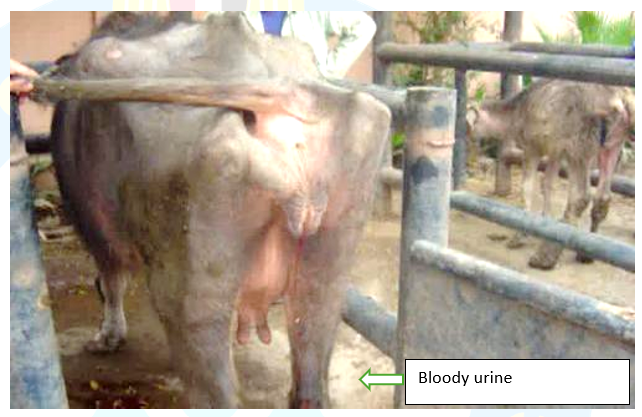
Figure (2): A buffalo with hemoglobinuria due to hypophosphatemia
- Diagnosis
Laboratory Findings
- Decreased serum P level
- Hemolytic anemia
- Hemoglobinemia
- Elevated bilirubin
- Normal muscle enzymes (to rule out myopathy)
- Normal or slightly elevated calcium
Differential Diagnoses of diseases causing red urine in cattle
- Bacillary hemoglobinuria
- Leptospirosis
- Babesiosis
- Copper toxicity
- Water intoxication
|
Disease |
Cause |
Fever |
Type of red urine |
Key clinical signs |
Laboratory findings |
Distinguishing features |
|
Metabolic hypophosphatemia (Post-parturient hemoglobinuria) |
Phosphorus deficiency causing RBC fragility |
Usually absent or mild |
Hemoglobinuria |
Early lactation, weakness, anemia, reduced milk |
Low phosphorus, anemia |
Fresh cow with low phosphorus and no infectious signs |
|
Babesiosis |
Babesia spp. infection |
High fever |
Hemoglobinuria |
Tick exposure, anemia, jaundice |
Parasites in RBCs |
Blood smear positive |
|
Leptospirosis |
Leptospira infection |
Fever common |
Hemoglobinuria |
Abortion, mastitis, jaundice |
Serology positive |
Reproductive problems present |
|
Bacillary hemoglobinuria |
Clostridium haemolyticum |
High fever |
Hemoglobinuria |
Sudden onset, depression |
Elevated liver enzymes |
Severe toxemia and liver infarcts |
|
Copper poisoning |
Chronic copper accumulation |
Variable |
Hemoglobinuria |
Jaundice, weakness |
High liver copper |
Hemolytic crisis after stress |
|
Chronic bracken fern poisoning |
Bone marrow suppression |
Usually absent |
Hematuria |
Weight loss, tumors, chronic bleeding |
Pancytopenia |
Chronic course with bladder tumors |
|
Enzootic hematuria |
Bracken fern toxicity |
No |
Hematuria |
Chronic blood loss |
RBCs in urine sediment |
True hematuria not hemoglobinuria |
|
Urinary tract infection |
Bacterial infection |
Sometimes |
Hematuria |
Dysuria, frequent urination |
RBCs and WBCs in urine |
Pain during urination |
|
Urolithiasis |
Urinary calculi |
Usually absent |
Hematuria |
Straining, colic signs |
Crystals in urine |
Obstruction signs |
|
Trauma to urinary tract |
Injury |
No |
Hematuria |
Injury history |
RBCs in urine |
Trauma evidence |
Confirmatory diagnosis
A combination of hypophosphatemia + hemoglobinuria + recent calving is usually diagnostic.
- Treatment
1-Phosphorus Supplementation (Essential)
- IV sodium acid phosphate: Provides rapid correction
- Oral phosphorus salts (dicalcium phosphate, monosodium phosphate)
- Maintain serum levels after IV therapy
2-Antioxidants
- Vitamin C
- Vitamin E and selenium
3-Supportive Care
- Blood transfusion in severe anemia (after cross-matching blood testing)
- High-quality diet with adequate phosphorus
- Fluid therapy for dehydration or renal compromise
Prevention and Herd Management
Nutritional Management
- Ensure 0.35–0.45% phosphorus in lactation diets
- Maintain Ca:P ratio at 2:1
- Avoid prolonged feeding of phosphorus-deficient crop residues like barseem
Supplementation Strategies
- Free-choice mineral licks
- Concentrates fortified with P
- Pasture fertilization in deficient areas
Prognosis
- Good if treated early
- Poor to guarded if severe hemolysis and renal damage occur
- Chronic phosphorus deficiency in the herd may lead to recurrent cases