Chronic obstructive pulmonary disease Management and Follow up.
| Site: | EHC | Egyptian Health Council |
| Course: | Pulmonology Guidelines |
| Book: | Chronic obstructive pulmonary disease Management and Follow up. |
| Printed by: | Guest user |
| Date: | Sunday, 20 September 2026, 5:52 PM |
Description
"last update: 29 Julay 2026" Download Guideline
- Executive Summary
This guideline offers evidence-based recommendations on the management of COPD. The recommendations are intended to provide healthcare professionals with practical guidance on diagnosis and treatment guidelines of COPD and improving health outcomes for people living with COPD.
1- Risk factors Recommendations
· 1a. We recommend Smoking cessation interventions as the most important intervention to prevent worsening and reduces mortality in COPD patients, as smoking is the most important risk factor for COPD development (Strong recommendation)
2- Diagnosis
· 2a. We recommend using pragmatic case-finding algorithm (annex 1,2) to enable accurate COPD diagnoses for most populations with a thorough history and examination for COPD as the first step to diagnosis. (Strong recommendation)
· 2b. We recommend using spirometry results showing post-bronchodilator FEV1/FVC ratio <0.7 for COPD diagnosis. (annex 3) (Strong recommendation)
· 2c. We recommend regular comprehensive assessment of functional status and impact of COPD as validated assessment tools such as: COPD Assessment Test (CAT) and mMRC (Modified Medical Research Council) Dyspnea Scale to measure dyspnea. (annex 4) (Strong recommendation)
· 2d. In cases with a large increase in post-bronchodilator FEV1 (with greater confidence if increase is >15% and >400 mL) that suggests asthma or coexisting asthma and COPD, We recommend considering patient history, pattern of symptoms, and investigations like eosinophils level to confirm diagnosis of COPD. (Strong recommendation)
· 2e. We advise using a person-centered systematic approach rather than a single-disease approach based on the ‘4Ms’ for elderly patients with chronic non-communicable diseases: Mentation, Mobility, Medications, and Morbidities, to manage patients with COPD. (annex 5,6) (Conditional recommendation)
· 2f. We strongly recommend Regular assessment of COPD symptoms and exacerbation risk by Combined initial COPD assessment (ABE GOLD) (annex 7) (strong recommendation)
3- Treatment
A. Pharmacological Treatment Recommendations (annex 11)
· 3Aa. We strongly recommend using a stepwise approach using initial therapy revised by management cycle then follow up treatment if needed to Optimize COPD treatment pharmacotherapy. (annex 8,9,10) (Strong recommendation)
· 3Ab: In COPD patients who complain of dyspnea or exercise intolerance, we strongly recommend LABA/LAMA combination therapy over LABA or LAMA monotherapy (strong recommendation).
· 3Ac: In COPD patients who complain of dyspnea or exercise intolerance despite dual therapy with LABA/LAMA, We strongly recommend use of triple therapy with ICS/LABA/LAMA over dual therapy with LABA/LAMA in those patients with a history of one or more exacerbations in the past year requiring antibiotics or oral steroids or hospitalization. (strong recommendation).
· 3Ad: In COPD patients who are receiving triple therapy (ICS/LABA/LAMA), we suggest withdrawing ICS if the patient has had no exacerbations in the past year. (conditional recommendation).
· 3Ae: In COPD patients with a history of one or more exacerbations in the past year requiring antibiotics or oral steroids or hospitalization, we suggest ICS as an additive therapy on a LABA+LAMA combination . (Strong recommendation).
· 3Af. We strongly recommend Regularly check inhaler technique and adherence. (Strong recommendation)
· 3Ag. we suggest using long-term macrolide antibiotics in people with moderate to severe COPD and frequent exacerbations (Conditional recommendation)
· 3Ah. We suggest considering biological therapy in COPD people with frequent exacerbations (annex 15) (Conditional recommendation)
B. Nonpharmacological Treatment Recommendations
· 3Ba. We strongly recommend non-pharmacological strategies such as pulmonary rehabilitation and regular exercise to anyone with COPD to improve quality of life, exercise capacity, and reduce COPD exacerbations. (annex 16) (Strong recommendation
· 3Bb. we suggest using Lung volume reduction (surgical and endobronchial) to enhance lung function, exercise capacity, and quality of life. (annex 17) (Conditional recommendation)
· 3Bc. we suggest encouraging vaccination to reduce risks associated with influenza, Streptococcus pneumoniae, respiratory syncytial virus (RSV), severe acute respiratory syndrome coronavirus (SARS-CoV2), pertussis, and varicella zoster (annex 18) (Conditional recommendation)
· 3Bd. We strongly recommend using long-term oxygen therapy (>18 hours) for COPD patients with resting hypoxemia. (Strong recommendation)
· 3Be. We strongly recommend using long-term non-invasive ventilation in people with stable COPD and hypercapnia to reduce mortality and hospital admissions. (Strong recommendation)
· 3Bf. Patient self-management programs incorporating multicomponent interventions (such as education, exercise training and psychosocial support) can improve health outcomes, quality of life and decrease healthcare utilization (Good Practice Statement)
4- Follow up and home care arrangements: (annex 19)
4a. Coordinate multidisciplinary support for patients who are receiving home management, implement systems for planned transfers of care to ensure patients receive continuous and coordinated primary care from their general practice or primary healthcare team. (Good Practice Statement)
4b. Arrange follow-up visit within 1-4 weeks to
· Evaluate ability to cope in his/her usual environment.
· Review and ensure patients understand treatment regimen.
· Re-assessment of inhaler techniques.
· Re- assessment of need for long term oxygen.
· Document the capacity to do physical activity and daily living. activities
· Document symptoms: CAT or mMRC.
· Determine status of comorbidities.
(Good Practice Statement)
4c. Arrange follow-up visit within 12-16 weeks to Measure FEV1. (Good Practice Statement)
- Recommendations
Section 1: Risk factors Recommendations:
· 1a. We recommend Smoking cessation interventions as the most important intervention to prevent worsening and reduce mortality in COPD patients, as smoking is the most important risk factor for COPD development. (Strong recommendation, high level of evidence)
Remarks
- Cigarette smoking is a key environmental risk factor for COPD
- Other types of tobacco (e.g., pipe, cigar, water pipe) and marijuana are also risk factors for COPD.
- Passive exposure to cigarette smoke, also known as environmental tobacco smoke (ETS), may also contribute to respiratory symptoms and COPD.
- Smoking during pregnancy poses a risk for the fetus. (5)
Summary of evidence
- An RCT meta-analysis studies presented suggestive evidence that smoking cessation offered significant benefits to COPD patients, notably in the improvement of specific key indicators of pulmonary function (FEV1% predicted, FEV1/FVC), alleviating symptoms, enhancing exercise tolerance, and could reduce mortality. (6)
- A significant volume of research associates COPD with an abnormal inflammatory response to the inhaled products of cigarette combustion. However, most smokers respond to the inhalation of cigarettes with inflammation, but not all develop airflow limitations, suggesting that other mechanisms may be responsible. These mechanisms include: 1) an imbalance between proteases and antiproteases; 2) an abnormal immunological reaction that results in some degree of autoimmunity and lung destruction; and 3) uncontrolled autophagy, enhanced apoptosis, and/or a process of accelerated lung aging. (7)
- A wide variety of studies showed Cigarette smokers have a higher prevalence of symptoms and lung function abnormalities, a greater annual rate of decline in FEV1, and greater COPD mortality rate than non-smokers. (8)
Rationale for the recommendation
- Smokers should be provided with counseling when attempting to quit.
- If possible, the patient should be referred to a comprehensive smoking cessation program that incorporates behavior change techniques that enhance patient motivation and confidence, patient education, and pharmacological and non-pharmacological interventions
Section 2- Diagnosis recommendations
· 2a. We recommend using pragmatic case-finding algorithm (annex 1,2) to enable accurate COPD diagnoses for most populations with a thorough history and examination for COPD as the first step to diagnosis. (Strong recommendation, high level of evidence)
Remarks:
- Main symptoms of COPD are breathlessness, cough and sputum production. Patients often attribute breathlessness to ageing or lack of fitness.
- Dyspnea is mainly progressive, exertional and persistent
- A persistent cough, typically worse in the mornings with mucoid sputum, is common in smokers. Chronic cough in COPD may be productive or unproductive. (9)
Summary of evidence:
- A meta-analysis of eight studies of the CAT questionnaire demonstrates moderately strong predictive values for aspects of COPD including a valid diagnosis, likelihood of exacerbations, depression, lung function and mortality. Confirming Dyspnea is a cardinal symptom of COPD and a major cause of the disability and anxiety associated with the disease. (1)
- Systematic Review and Meta-Analysis. Findings from the ASSESS study showed that overall health status, as defined by the COPD Assessment Test (CAT), was significantly lower in the cohort of patients who had at least one COPD symptom versus the cohort that reported no COPD symptoms, and this trend was observed consistently in the early morning, daytime, and nighttime (p < 0.001, each). (10)
- Chronic cough is often the first symptom of COPD and is frequently discounted by the patient as consequence of smoking and/or environmental exposures. Cough may be intermittent, but it may be present every day, often throughout the day. Real-world data suggest that COPD early-morning and nighttime symptoms are significantly more likely to have worse health-related quality of life than those without. (5)
- 1-year follow-up data showed that deterioration in health-related quality of life was associated with significant increases in COPD respiratory symptoms (dyspnea, coughing, and expectoration. (9)
- Survey data from patients COPD identified increased coughing, shortness of breath, fatigue, and increased sputum production as exacerbation symptoms that had the greatest impact on their wellbeing (42%, 37%, 37%, and 35%, respectively) It should be noted that there is only a weak correlation between FEV1, symptoms and impairment of a patient’s health status. For this reason, symptomatic assessment is required. (11)
Rationale for the recommendation:
- COPD should be considered in any patient who has dyspnea, chronic cough or sputum production, a history of recurrent lower respiratory tract infections and/or a history of exposure to risk factors for the disease.
- Using symptoms based initial diagnosis is important as screening method to identify patients who need spirometry.
- Clinical features and/or chest x-ray alone are not sufficient to diagnose COPD
· 2b. We recommend using spirometry results showing post-bronchodilator FEV1/FVC ratio <0.7 for COPD diagnosis. (annex 3) (Strong recommendation – low level of evidence)
Remarks:
- Well-performed spirometry is required for a COPD diagnosis. As COPD is defined by airflow limitation that is not fully reversible with bronchodilators (post-bronchodilator FEV1 / FVC ratio <0.7) confirms the presence of persistent airflow limitation. (1).
- There is a marked discordance between the level of airflow obstruction and the perceived symptoms, so more detailed evaluation should be carried out to better understand lung mechanics (e.g., full lung function tests and exercise testing), lung structure (e.g., CT tomography) and/or comorbidities (e.g., ischemic heart disease) that might impact patient symptoms.(12)
Summary of evidence:
- Spirometry criterion for airflow obstruction remains post-bronchodilator ratio of FEV1/FVC < 0.7. however, GOLD 2026 recommends pre-bronchodilator spirometry can exclude COPD, while post-bronchodilator measurement is needed to diagnose COPD This criterion is simple and independent of reference values because it relates to variables measured in the same individual and has been used in all the clinical trials that form the evidence base from which treatment recommendations are drawn.This will reduce clinical workload. Post-BD results close to the threshold should be repeated to ensure a correct diagnosis is made. Post-BD measurements ensure that volume responders are not overlooked and limit COPD overdiagnosis. (1)
- The classification of airflow limitation severity in COPD as uses specific spirometry cut points for purposes of simplicity. GOLD 1,2,3. This GOLD Science Committee review weighs the evidence for using pre- or post-bronchodilator (BD) spirometry to diagnose COPD. (11)
- Cohort studies have shown that pre- and post-BD spirometry give concordant diagnostic results in most cases, although the prevalence of COPD is up to 36% lower with post-BD values. Discordant results may occur in “volume” or “flow” responders. Volume responders have reduced FVC due to gas trapping causing FEV1/FVC ≥0.7 pre-BD, but a volume response occurs post-BD with a greater improvement in FVC relative to FEV1 decreasing the ratio to <0.7. (13)
- ECLIPSE and other studies showed Flow responders show a greater FEV1 improvement relative to FVC which may increase FEV1/FVC from <0.7 pre-BD to ≥0.7 post-BD; these individuals have an increased likelihood of developing post-BD obstruction during follow-up and require monitoring longitudinally. (11)
- Consideration of spirometry in COPD assessment (annex 1, 2, 3) (1)
Rationale for the recommendation:
- Use of spirometry is crucial for purpose of COPD assessment to determine the level of airflow limitation, the impact of disease on the patient’s health status, and the risk of future events (such as exacerbations, hospital admissions, or death), in order to guide therapy.
- Spirometry should be performed after the administration of an adequate dose of at least one short-acting inhaled bronchodilator to minimize variability.
- Documenting a post-bronchodilator spirometry test result in the clinical records of all patients with COPD is a practice goal for follow up.
- For borderline lung function results, (the post-bronchodilator FEV1/FVC ratio is between 0.60 and 0.80) on a single spirometric measurement, this should be confirmed by repeat spirometry on a separate occasion.
· 2c. We recommend regular comprehensive assessment of functional status and impact of COPD as validated assessment tools such as: COPD Assessment Test (CAT) and mMRC (Modified Medical Research Council) Dyspnea Scale to measure dyspnea. (annex 4) (Strong recommendation, high level of evidence)
Remarks:
- Once the diagnosis of COPD has been confirmed by spirometry, to guide therapy COPD assessment must focus on determining the following 4 fundamental aspects: (Severity of airflow limitation, Nature and magnitude of current symptoms, Previous history of moderate and severe exacerbations, Presence and type of other multimorbidity.(1)
- Dyspnea questionnaire: modified Medical Research Council (mMRC) dyspnea scale was the first questionnaire developed to measure breathlessness, which is a key symptom in many patients with COPD, although often unrecognized. While CAT is an 8-item questionnaire that assesses health status in patients with COPD annex 4
Summary of evidence:
- Based on Systematic Review and Meta-Analysis About Clinical Outcomes Prediction, The most comprehensive disease-specific health status questionnaires such as the Chronic Respiratory Questionnaire (CRQ) and St. George’s Respiratory Questionnaire (SGRQ)are important research tools, but they are too complex to use in routine practice. So shorter comprehensive measures, such as COPD Assessment Test (CAT) and The COPD Control Questionnaire (CCQ) have been developed and are suitable for use in clinic. (10,14,15)
- As assessed by many studies There is good correlation between CAT and mMRC scores (1)
Rationale for the recommendation:
- The mMRC score relates well to other multidimensional health status measures and predicts future mortality risk.
· 2d. In cases with a large increase in post-bronchodilator FEV1 (with greater confidence if increase is >15% and >400 mL) that suggests asthma or coexisting asthma and COPD, we recommend considering patient history, pattern of symptoms, and investigations like eosinophils level to confirm diagnosis of COPD. (Strong recommendation, high level of evidence)
Remarks:
- Inspiratory and/or expiratory wheezes and chest tightness are symptoms that may vary between days, and over the course of a single day. Alternatively, widespread inspiratory or expiratory wheezes can be present on auscultation.
- An absence of wheezing or chest tightness does not exclude a diagnosis of COPD, nor does the presence of these symptoms confirm a diagnosis of asthma (1)
Summary of evidence:
- Some patients may have coexisting COPD and asthma (Global Initiative for Asthma.(5)
- A Systematic Review and Meta-Analysis study revealed that Airflow limitation in COPD is irreversible and progressive, while conversely, it is usually reversible in asthma. FEV1% pred, as a key indicator of small airway function, is applied in assessing the severity of airflow limitation in COPD and the extent of variation for airflow limitation in asthma (16)
- Long-standing or poorly controlled asthma can lead to chronic, irreversible airway narrowing even in non-smokers, thought to be due to airway remodeling resulting from uncontrolled airway wall inflammation with release of cytokines and mediators.(17)
Rationale for the recommendation:
- Patients with COPD and features of asthma should receive inhaled corticosteroid (ICS) therapy (to treat the asthma component), as well as long-acting bronchodilators.
- LABA monotherapy without ICS should be avoided in patients who have a component of asthma
· 2e. We advise using a person-centered systematic approach rather than a single-disease approach based on the ‘4Ms’ for elderly patients with chronic non-communicable diseases: Mentation, Mobility, Medications and Morbidities to manage COPD patients. (annex 5,6) (Conditional recommendation, low level of evidence)
Remarks:
- Concomitant chronic diseases, including cardiovascular disease, skeletal muscle dysfunction, metabolic syndrome, osteoporosis, depression, anxiety, and lung cancer.
- Further investigations to consider include:
- COPD <40 years of age require further testing ie Alpha-1 Antitrypsin Deficiency (AAT)
- Chest x-ray (posteroanterior and lateral).
- Chest CT (not always required) can help detect emphysema and bronchiectasis and should be ordered if any red flag symptoms such as hemoptysis are present to exclude malignancy.
- In High resolution computed tomography (HRCT) scanning, the presence of emphysema and size and number of bullae can be determined. This is necessary if bullectomy or lung reduction surgery is being contemplated.
- HRCT is also appropriate for detecting bronchiectasis. Vertical reconstructions can provide a virtual bronchogram.
- Helical computed tomography (CT) scans with intravenous contrast should be used in other circumstances, such as for investigating and staging lung cancer. (annex 5)
- Electrocardiogram (ECG) and Cardiopulmonary exercise tests may be useful to differentiate between breathlessness resulting from cardiac or respiratory disease especially in cases of unexplained breathlessness
- Suspected sleep disorder (history of snoring, witnessed apnoea or excessive daytime sleepiness) needs sleep study
Summary of evidence:
- By real-world observational retrospective cohort study, comorbidities should be treated appropriately when present as they can influence mortality and hospitalization independently. (18)
- experts reached consensus on 73 recommendations and 81 conclusions on the clinical consequences of the presence of comorbidities. In general, the experts reached consensus on cardiovascular comorbidity and metabolic disorders. Consensus was reached on the use of selective serotonin reuptake inhibitors in cases of depression and the usefulness of referring patients with anxiety to respiratory rehabilitation programmes. (19)
- The presence of comorbidities impacts negatively on COPD patients, reducing quality of life and increasing the probability of hospital admission and mortality. Indeed, the presence of more than 1 comorbidity more than doubles the risk of mortality, and many patients with COPD die because of their comorbidities rather than their COPD, particularly in the mild and moderate phases (19,20)
- Results also showed consensus on usefulness of investigating quality of sleep, the treatment of pain with opioids and the evaluation of osteoporosis by lateral chest radiography. (20)
Rationale for the recommendation:
- CT pulmonary angiograms and echocardiography are useful for investigating possible pulmonary embolism and/or pulmonary hypertension
- Assessment for lung transplantation, lung volume reduction surgery, or bronchoscopy lung volume reduction are crucial in management and require further investigations.
· 2f. We strongly recommend Regular assessment COPD symptoms and exacerbation risk by Combined initial COPD assessment (ABE GOLD) (annex 7) (Strong recommendation, high level of evidence)
Remarks:
- Airflow limitation, COPD symptoms, and exacerbation risk should be assessed regularly, as they relate to prognosis and can guide COPD management strategies and treatment decisions.
- The initial version of the combined assessment relied on both the severity of airflow obstruction (GOLD grades 1-4) and the frequency of previous exacerbations to assess exacerbation risk was modified to new proposal. A and B groups are unchanged, but C and D groups are now merged into a single group termed “E” to highlight the clinical relevance of exacerbations annex 7
Summary of evidence:
- A Systematic literature review that included data from 76 studies included, 61 were observational and 15 were randomized controlled clinical trials (RCTs), Exacerbation history was the strongest predictor of future exacerbations, with 34 studies reporting a significant association between history of exacerbations and risk of future moderate or severe exacerbations. (21)
- In retrospective registry analyse (73 189 patients) by large-scale, real-world observational and retrospective cohort data study , The updated “GOLD ABE Assessment Tool” has highlighted the importance of COPD exacerbations by dissociating the presence of the “exacerbator” phenotype from the symptomatic burden and grouping all exacerbators together irrespective of presence and intensity of symptoms, thus giving priority to the presence of exacerbations over the respiratory symptoms. (22, 23)
- Severity of airflow obstruction was subsequently removed from this combined assessment scheme considering its lower precision at individual level (versus that at population level) to predict outcomes and drive treatment decisions, while complexifying classification by clinicians. (1, 24)
Rationale for the recommendation:
- combined assessment strategy used to incorporate patient-reported outcomes and highlight the importance of exacerbation prevention in the management of COPD.
Section 3- treatment recommendations
A. Pharmacological Treatment Recommendations
· 3Aa. We strongly recommend using a stepwise approach using initial therapy revised by management cycle then follow up treatment if needed to Optimize COPD treatment pharmacotherapy. (annex 8,9,10) (Strong recommendation, high level of evidence)
Remarks:
-Goals for treatment of stable COPD is to:
Reduce symptoms (Relive symptoms., Improve exercise tolerance, improve health status.) and Reduce risk (Prevent disease progression, Prevent and treat exacerbations, Reduce mortality) (1)
- Stepwise Approach for initial assessment, initiation and follow-up management of pharmacology (1)
a- initial COPD assessment (ABE GOLD)
b- initial nonpharmacological management should address reducing exposure to risk factors including smoking Cessation, Vaccination should be offered, and patients should receive general advice on healthy living, including diet, and that physical exercise is safe and encouraged for people with COPD. (1)
c- Initial pharmacotherapy should be based on the patient’s GOLD group, and Patients should be offered guidance on self-management of breathlessness, and stress management, and they should be given a written action plan. Comorbidities should also be managed as per specific guidelines, irrespective of the presence of COPD (1,25, 26)
d- Management cycle: Following implementation of therapy, patients should be reassessed by Management cycle: reviewed after a suitable interval (shorter in more severe patients and longer in less severe patients) and their current level of symptoms (using either the CAT or mMRC scores) and exacerbation frequency assessed. The effect of treatment and possible adverse effects should be evaluated, and comorbidities reassessed. (27)
e- Follow up treatment: Following review of patient response to treatment initiation, adjustments in pharmacological treatment may be needed ie. FOLLOW-UP treatment, where the management is based on two key treatable traits: persistence of dyspnea and occurrence of exacerbations. (annex 8,9,10)
Summary of evidence:
- INITIATION of pharmacological management of COPD according to the individualized assessment of symptoms and exacerbation risk following ABE assessment scheme. It is an attempt to provide clinical guidance. There is no high-quality evidence such as randomized controlled trials to support initial pharmacological treatment strategies in newly diagnosed COPD patients. (1,28)
- Many RCTs support Treatment escalated/de-escalated regimen based on the presence of the predominant symptoms (treatable traits) of breathlessness and exercise limitation, and the continued occurrence of exacerbations whilst on maintenance therapy.(25, 27)
Rationale for the recommendation:
- Tailored approach to initiate treatment based on the level of symptoms and risk for exacerbations.
- use of peripheral blood eosinophil counts as a biomarker to guide the use of ICS therapy for exacerbation prevention . Extensive data from large-scale randomized controlled trials (RCTs) (mostly through prespecified and post-hoc analyses) demonstrate a direct, continuous correlation: as the baseline BEC rises, the clinical benefit of ICS in reducing exacerbations increases proportionally. (29,30) (annex 11)
· 3Ab: In COPD patients who complain of dyspnea or exercise intolerance, we strongly recommend LABA/LAMA combination therapy over LABA or LAMA monotherapy. (Strong recommendation, high level of evidence)
Remarks:
- Combining bronchodilators with different mechanisms and durations of action may increase the degree of bronchodilation with a lower risk of side-effects compared to increasing the dose of a single bronchodilator.
- Combinations of SABAs and SAMAs are superior compared to either medication alone in improving FEV1 and symptoms.
- Combinations of LABA - LAMA in single inhaler are available.
Summary of evidence:
- According to 24 RCTs, Critical outcomes. Prioritization resulted in ranking hospital admissions, dyspnea, exacerbations, health-related QOL, and treatment-related adverse events. There was a statistically significant decrease in exacerbations and hospital admissions in patients receiving dual therapy as opposed to monotherapy. The evidence also showed statistically significant improvements in dyspnea and QOL with dual therapy. (2,31,32)
- In addition, the available studies did not reveal any evidence of harm with dual therapy compared with monotherapy (2)
Rationale for the recommendation:
- Patients would opt for dual therapy over monotherapy combinations of LABA and LAMA improve lung function, dyspnea and QOL and reduce exacerbations.
· 3Ac: In COPD patients who complain of dyspnea or exercise intolerance despite dual therapy with LABA/LAMA, We strongly recommend triple therapy with ICS/LABA/LAMA over dual therapy with LABA/LAMA in those patients with a history of one or more exacerbations in the past year requiring antibiotics or oral steroids or hospitalization. (Strong recommendation, high level of evidence)
Remarks:
- benefits of triple therapy with ICS/LABA/LAMA outweigh the risks as compared with treatment with LABA/LAMA dual therapy in patients with COPD
- COPD patients who complain of dyspnea or exercise intolerance despite dual therapy and have experienced one or more exacerbations in the past year are eligible for triple therapy
- Symptomatic patients with COPD and a history of exacerbations, the benefits of triple therapy in protecting against the risk of future exacerbations outweighed the increased risk of pneumonia.
Summary of evidence:
- Two large one-year randomized controlled trials reviewed below (named IMPACT and ETHOS) provide new evidence on mortality reduction with fixed-dose inhaled triple combinations compared to dual bronchodilation. (2,33,34)
- A post-hoc pooled analysis of three triple therapy clinical trials in COPD patients with severe airflow obstruction and a history of exacerbations showed a non-significant trend for lower mortality (assessed as a safety outcome) with triple inhaled therapy compared to non-ICS based treatments. (2,35)
Rationale for the recommendation:
- Step up in inhaled treatment to LABA plus LAMA plus ICS (triple therapy) can occur by various approaches and has been shown to improve lung function, patient reported outcomes and reduce exacerbations when compared to LAMA alone, LABA+LAMA and LABA+ICS.
· 3Ad: In COPD patients who are receiving triple therapy (ICS/LABA/LAMA), we suggest withdrawing ICS if the patient has had no exacerbations in the past year. (conditional recommendation - low level of evidence)
- Studies and meta-analysis assessing the effect of regular treatment with ICS alone on mortality in patients with COPD have not provided conclusive evidence of benefit. (2,36)
- In the TORCH trial, a trend toward higher mortality was observed for patients treated with fluticasone propionate alone compared to those receiving placebo or salmeterol plus fluticasone propionate combination. (37)
- However, an increase in mortality was not observed in COPD patients treated with fluticasone furoate in the Survival in COPD with Heightened Cardiovascular Risk (SUMMIT) trial. Also, in moderate COPD, fluticasone furoate alone or in combination with vilanterol was associated with slower decline in FEV1 compared with placebo or vilanterol alone by on average ml/year. (38)
· 3Ae: In COPD patients with a history of one or more exacerbations in the past year requiring antibiotics or oral steroids or hospitalization, we suggest ICS as an additive therapy on a LABA+LAMA combination. (strong recommendation, high level of evidence). (annex 12, 13,14) (1)
· Remarks
- use of blood eosinophil counts to predict ICS effects should always be combined with clinical assessment of exacerbation risk (as indicated by the previous history of exacerbations). Other factors (smoking status, ethnicity, geographical location) could influence the relationship between ICS effect and blood eosinophil count (29,30)
· Summary of evidence:
- Many RCTs randomized controlled trial as IMPACT, ETHOS and TRIBUTE studies has demonstrated the treatment effect of ICS containing regimens (LABA+LAMA+ICS and LABA+ICS vs LABA+LAMA) is higher in patients with high exacerbation risk (≥ 2 exacerbations and / or 1 hospitalization in the previous year).(1, 33,34)
Summary of treatment. (appendix 10)
Group A:
- All patients in group A should be offered bronchodilator treatment based on its effect on breathlessness. This can be either a short- or a long-acting bronchodilator. If available and affordable, a long-acting bronchodilator is the preferred choice except for patients with very occasional breathlessness. This should be continued if benefit is documented. (1)
Group B:
- Treatment should be initiated with a LABA+LAMA combination. It has been shown in a RCT that in patients with ≤ documented. ((xacerbation in the year before the study and a CAAT™ ≥ 10 LABA+LAMA is superior to a LAMA with regard to several endpoints. Therefore, providing there are no issues regarding availability, cost and side-effects LABA+LAMA is the recommended initial pharmacological choice. (1, 39)
- If a LABA+LAMA combination is not considered appropriate, there is no evidence to recommend one class of long-acting bronchodilators over another (LABA or LAMA) for initial relief of symptoms in this group of patients. In the individual patient, the choice should depend on the patient’s perception of symptom relief. (1)
- Patients in group B likely to have comorbidities that may add to symptomatology and impact on their prognosis, and these possibilities should be investigated and treated, (40,41)
Group E:
- A Cochrane systematic review and network meta-analysis comparing dual combination therapy versus mono long-acting bronchodilators showed that the LABA+LAMA combination was the highest ranked treatment group to reduce exacerbations. Therefore, provided there are no issues regarding availability, cost and side-effects LABA+LAMA is the preferred choice for initial therapy of patients in group E. (1,42)
- Use of LABA+ICS in COPD is not encouraged. If there is an indication for an ICS, then LABA+LAMA+ICS has been shown to be superior to LABA+ICS and is therefore the preferred choice. (1, 43,44)
- Consider LABA+LAMA+ICS as initial therapy in group E if eosinophil counts are ≥ 300 cells/μL (practical recommendation). The effect of ICS on exacerbation prevention is correlated to blood eosinophil count . There are no direct data in the literature concerning initiation of triple therapy in newly diagnosed patients. (1)
- Available studies performed mostly in treated patients provide a rationale for considering this treatment option as initial therapy for patients with a high eosinophil count (≥ 300 cells/μL).(1)
- Rescue short-acting bronchodilators should be prescribed to all patients for immediate symptom relief.(1)
- If patients with COPD have concomitant asthma they should be treated like patients with asthma. Under these circumstances the use of an ICS is mandatory.(1)
· 3Af. We strongly recommend Regularly check inhaler technique and adherence. (Strong recommendation, high level of evidence)
Remarks:
- Principals for appropriate inhalation device choice: Availability of the drug in the device. Patients’ belief satisfaction with current and previous devices and preferences need to be assessed and considered.
- The number of different devices should be minimized for each patient. Ideally, only one device type should be used.
- Device type should not be switched in the absence of clinical justification nor without proper information, education and medical follow up.
- Shared decision making as the most appropriate strategy for inhalation device choice patient’s cognition, dexterity and strength must be considered.
- Patient’s ability to perform the correct specific inhalation manoeuver for the device must be assessed.
Summary of evidence:
- Incorrect inhaler techniques are common and are associated with worse outcomes. (1)
- A systematic review of many RCTs and articles reporting direct observation of inhaler techniques in COPD and asthma reported that the overall prevalence of optimal inhaler technique was only 31% (95% CI 28 to 35%), and that this pattern had not improved over 40 years. (45)
- Common errors were identified, for the MDI these were poor coordination (45%; 95% CI 41 to 49%), inadequate speed and/or depth of inspiration (44%; 95% CI 40 to 47%), and the absence of post inhalation breath-hold (46%; 95% CI 42 to 49%). For the DPI, common errors included incorrect preparation in 29% (95% CI 26-33%), inadequate expiration before inhalation in 46% (95% CI 42 to 50%), and the absence of post inhalation breath-hold in 37% (95% CI 33-40%) (1,39).
- These data highlight the importance of inhalation technique education. (1, 46)
Rationale for the recommendation:
- Dry powder inhalers are appropriate only if the patient can make a forceful and deep inhalation.
- Metered dose inhalers and to lesser extent, soft mist inhalers require coordination between device triggering and inhalation and patients need to be able to perform a slow and deep inhalation.
- For patients unable to use MDI (with or without spacer/VHC), SMI or DPI a nebulizer should be considered.
- Other factors should be considered include size, portability, cost. Smart inhalers may be useful if there are issues with adherence / persistence or inhalation technique.
· 3Ag. we suggest using long-term macrolide antibiotics in people with moderate to severe COPD and frequent exacerbations (Conditional recommendation low level of evidence)
· Remarks:
- long-term use of macrolides is recommended by the British Thoracic Society and GOLD for COPD patients.
- Excessive production of mucus is a hallmark in COPD patients; increased mucus secretion is linked to a negative impact on their QOL
- The severity of phlegm production and productive cough is associated with more frequent COPD exacerbations, increased breathlessness, and a further decline in patient-reported QOL.
- Azithromycin’s potential to reduce the expression and release of mucin 5AC (MUC5AC) from airway epithelial goblet cells, triggered by lipopolysaccharides (LPS) or tumor necrosis factor alpha (TNFα), has been recognized
· Summary of evidence:
- meta-analysis included (9 RCTs randomized controlled trials involving 1965 patients. The analysis revealed an odds ratio (OR) of 0.34 (95% confidence interval [CI] 0.19, 0.59, p < 0.001) for the reduction in exacerbation frequency. (1,47)
- Long-term use of azithromycin or erythromycin suppresses COPD exacerbations, and previous studies have supported the advantages of a 12-month macrolide prescription over a placebo (1)
· Rationale for the recommendation:
- Long-term efficacy of using macrolides in patients with stable COPD.
- Macrolides effectively reduce the risk of exacerbation and hospitalization without causing obvious adverse effects.
· 3Ah. We suggest considering biological therapy in COPD people with frequent exacerbations (Conditional recommendation, low level of evidence) (annex 15)
· Remarks:
- Dupilumab is fully human monoclonal antibody that blocks shared receptor component for interleukin-4 and interleukin-13 By blocking type 2 inflammation more broadly, dupilumab may produce clinical benefit in patients COPD. (1)
- Mepolizumab is a humanized monoclonal antibody that targets IL-5. Across three phase III, double-blind, randomized, placebo-controlled trials, patients with COPD, a history of two or more moderate exacerbations or one or more severe exacerbation(s) in the last year despite treatment with LABA+LAMA+ICS, from GOLD 2-4, with and without chronic bronchitis, and blood eosinophil count of ≥ 300 cells/μL who received mepolizumab for 52 to 104 weeks and had fewer moderate or severe exacerbations and a reduction in exacerbations leading to ED visits or hospitalizations (Figure 3.11).(1)
· Summary of evidence:
- Among patients with COPD who had type 2 inflammation as indicated by elevated blood eosinophil counts, those who received dupilumab had fewer exacerbations, better lung function and quality of life, and less severe respiratory symptoms than those who received placebo (1,48)
- In two RCTs large, phase III, double-blind, randomized trials, patients with COPD, chronic bronchitis, a history of two or more moderate exacerbations or one or more severe exacerbation(s) in the last year despite treatment with LABA+LAMA+ICS, from GOLD 2-3, and blood eosinophil count of ≥ 300 cells/μL who received dupilumab had fewer exacerbations, annualized rate of moderate or severe exacerbations decreased, better lung function (over 52 weeks prebronchodilator FEV1 increased from baseline to week 12) and improved health status(SGRQ score had improved), moreover the numbers of patients with adverse events that led to discontinuation of dupilumab or placebo, serious adverse events, and adverse events that led to death were balanced in the two groups.(1, 48, 49)
- Add-on benralizumab was not associated with a lower annualized rate of COPD exacerbations than placebo among patients with moderate to very severe COPD, a history of frequent moderate or severe exacerbations, and blood eosinophil counts of 220 per cubic millimeter or greater (50)
· Rationale for the recommendation:
- Although COPD has long been recognized as involving an amplified innate immune response, there is growing recognition that some patients with this disease have type 2 inflammation. Evidence of type 2 inflammation is present in 20 to 40% of patients with COPD and is associated with an increased risk of exacerbation. (49)
B. Nonpharmacological Treatment Recommendations (annex 16)
· 3Ba. We strongly recommend non-pharmacological strategies such as pulmonary rehabilitation and regular exercise to anyone with COPD to improve quality of life, exercise capacity, and reduce COPD exacerbations. (annex 16) (Strong recommendation, high level of evidence)
· Remarks:
- Pulmonary rehabilitation is defined as “a comprehensive intervention based on thorough patient assessment followed by patient-tailored therapies that include exercise training, education, self-management intervention aiming at behavior change, designed to improve the physical and psychological condition of people with chronic respiratory disease and to promote the long-term adherence to health-enhancing behaviors.
· Summary of evidence:
- Systematic reviews (such as the one analyzing 20-21 RCTs and 1,274 participants) demonstrate that early pulmonary rehabilitation is highly beneficial for hospitalized COPD patients that reduces hospitalization for exacerbations of COPD (51)
- Wide range studies including randomized controlled trials (RCTs), reveals the benefits of pulmonary rehabilitation include a reduction in symptoms (dyspnea and fatigue), anxiety and depression, and improvements in health-related quality of life (HRQoL), peripheral muscle function and exercise capacity. Following pulmonary rehabilitation, participants have been shown to gain an enhanced sense of control over their condition(52)
- large cohort study of 2,398 individuals with COPD patients recruited as part of Health Surveys provide data demonstrating a reduction in mortality (1)
· Rationale for the recommendation:
- The benefits to COPD patients from pulmonary rehabilitation are considerable, and rehabilitation has been shown to be the most effective therapeutic strategy to improve shortness of breath, health status and exercise tolerance.
· 3Bb. we suggest using Lung volume reduction (surgical and endobronchial) to enhance lung function, exercise capacity, and quality of life. (annex 17) (Conditional recommendation, low level of evidence)
· Remarks:
- Lung volume reduction treatment has been shown to be a highly effective therapy for select patients with advanced emphysema and severe hyperinflation.
- Currently, the most important bronchoscopy options are treatment with one-way valves or endobronchial coils; both treatments are currently recommended in GOLD guidelines
- By reducing hyperinflation, the function of the diaphragm and chest wall mechanics is improved, expiratory airflow increases and gas exchange can improve
· Summary of evidence:
- multiple (RCTs randomized controlled studies,, revealed that Treatment with endobronchial one-way valves has proven to be effective in with clinically meaningful benefits in lung function, dyspnea, quality of life and exercise tolerance (53)
- In total 1471 patients included, median survival time of patients who were treated with BLVR was significantly longer compared to patients who were not treated with BLVR (and BLVR was found to be an independent predictor of survival when adjusting for other survival-influencing factors such as age, gender or severity of disease. (54)
- However, research is ongoing to predict optimal responders; treatment appears to be more successful in patients with even higher baseline RV (>200% predicted),higher emphysema score, absence of airway disease (24)
· Rationale for the recommendation:
- lung volume reduction in patients with severe emphysema on maximal medical treatment has clinically benefits.
· 3Bc. we suggest encouraging vaccination to reduce risks associated with influenza, Streptococcus pneumoniae, respiratory syncytial virus, severe acute respiratory syndrome coronavirus (SARS-CoV2), pertussis, and varicella zoster. (annex 18) (Conditional recommendation, low level of evidence)
· Remarks:
- GOLD recommendation advocates for vaccination against influenza, Streptococcus pneumoniae, respiratory syncytial virus (RSV), severe acute respiratory syndrome coronavirus (SARS-CoV2), pertussis, and varicella zoster.
- Aside from viruses, bacterial infections are also prevalent in COPD patients. Pulmonary and systemic invasive infection due to Streptococcus pneumoniae are significant contributors to hospitalization and mortality.
· Summary of evidence:
- Meta-analysis estimated that RSV-associated acute respiratory infections (RSV-ARI) lead to approximately 336,000 hospital admissions and 14,000 in-hospital deaths annually globally.(55)
- Studies have shown that seasonal influenza infection was a significant trigger for severe AECOPD, leading to increased rates of hospitalization, intubation, and mortality. Influenza infection leads to increased airway inflammation, bacterial colonization, and immune dysregulation in COPD(55, 56)
· Rationale for the recommendation:
- Viruses can be detected in approximately two-thirds of AECOPD while bacterial infections can be the identifiable trigger in up to half of these episodes.(1)
- COPD patients face an increased risk of severe respiratory infections caused by these pathogens; therefore, vaccination is crucial to prevent various adverse outcomes.
- Herpes zoster, resulting from reactivation of varicella-zoster virus (VZV), is reported to be more prevalent among patients with chronic medical diseases such as COPD (annex 18)
· 3Bd. We strongly recommend using long-term oxygen therapy (>18 hours) for COPD patients with resting hypoxemia. (Strong recommendation, high level of evidence)
· Remarks: oxygen therapy according to British Thoracic Society (BTS) guidelines prescribe it during pulmonary rehabilitation in patients with exercise-induced desaturations.
- Supplemental oxygen improves outcomes in patients with moderate hypoxemia, exercise-induced desaturations and post-exacerbation hypoxemia. (2)
- supplemental oxygen during exercise improves exercise endurance and maximal exercise capacity in COPD patients with exercise-induced hypoxemia
· Summary of evidence:
- Longitudinal analysis of consecutive patients in the population-based DISCOVERY cohort who started LTOT between 2000 and 2018 with a follow-up duration≥3 months revealed that LTOT is associated with reduced rates of both total and hospitalised acute exacerbations and all-cause hospitalisations in patients with COPD. Similar findings were observed in patients with hypercapnic and non-hypercapnic COPD. (57,58)
- Six identified randomised controlled trials RCTs were included in systematic reviews and meta-analyses of LTOT , to examine the effect of domiciliary LTOT on survival, quality of life, and physiological measures, showed that there was a significant improvement in mortality after 24 months. Also there was a significant improvement over five years in mortality in group receiving oxygen therapy (Peto odds ratio 0.42, 95% confidence interval 0.18 to 0.98).(59)
· Rationale for the recommendation:
- Long-term oxygen therapy (LTOT) improves survival in patients with severe chronic resting hypoxemia, LTOT is associated with reduced rates of both total and hospitalized acute exacerbations and all-cause hospitalizations in patients with COPD. (58,59)
- Particularly, nocturnal hypoxemia contributes to the development of secondary pulmonary hypertension and right heart failure, leading to a worse prognosis. (60)
· 3Be. We strongly recommend using long-term non-invasive ventilation in people with stable COPD and hypercapnia to reduce mortality and hospital admissions. (Strong recommendation, high level of evidence)
· Remarks:
- For patients with stable COPD with chronic hypercapnic respiratory failure, (defined as FEV1/FVC < 0.70; resting PaCO2 > 45 mm Hg; not during exacerbation), use of nocturnal noninvasive ventilation (NIV) in addition to usual care is recommended
- chronic stable hypercapnic COPD should undergo screening for obstructive sleep apnea before initiation of long-term NIV
· Summary of evidence:
- Long-Term Noninvasive Ventilation in Chronic Stable Hypercapnic Chronic Obstructive Pulmonary Disease was suggested in An Official American Thoracic Society Clinical Practice Guideline, suggest not using in-hospital initiation of long-term NIV after an episode of acute-on-chronic hypercapnic respiratory failure, favoring instead reassessment for NIV at 2–4 weeks after resolution. (61)
- European Respiratory Society (ERS) task force. suggested initiation of NIV shortly after hospitalization for an acute exacerbation of COPD if hypercapnia persists. No specific time frame was provided, and reassessment 2–4 weeks after the initial episode could be considered.(62)
· Rationale for the recommendation:
- In stable patients with COPD and chronic hypercapnia long-term NIV has the potential to improve physiological parameters (e.g., lung function or gas exchange), clinical symptoms (e.g., functional capacity, dyspnea, quality of life [QOL], and sleep quality) and patient-centered outcomes (e.g., hospital readmission and survival).
3Bf. Patient self-management programs incorporating multicomponent interventions (such as education, exercise training and psychosocial support) can improve health outcomes, quality of life and decrease healthcare utilization (Good Practice Statement)
4- Follow-up and home care arrangements: (Annex 19)
(eg, home oxygen, homecare, Meals on Wheels, community nurse, allied health, GP, specialist) have been completed.
4a. Coordinate multidisciplinary support for patients who are receiving home management, implement systems for planned transfers of care to ensure patients receive continuous and coordinated primary care from their general practice or primary healthcare team. (Good Practice Statement)
· Remarks:
- COPD is a common and long‐term lung condition that slowly worsens over years, and causes symptoms such as breathlessness, coughing, wheezing and increased sputum (mucus) production. This leads to loss of well‐being (also known as reduction in HRQoL).
- COPD self-management intervention is structured but personalized and often multi-component, with goals of motivating, engaging and supporting the patients to positively adapt their health behavior(s) and develop skills to better manage their disease. (63)
- Ultimate goals of self-management are a) optimizing and preserving physical health; b) reducing symptoms and functional impairments in daily life and increasing emotional well-being, social well-being and quality of life; and c) establishing effective alliances with healthcare professionals, family, friends and community.(63, 64)
· Summary of evidence:
- In Systematic review that evaluated 25 RCTs and two CRTs (described in 38 articles) on the effectiveness of COPD self‐management interventions compared to usual care, Positive effects of COPD self‐management interventions on HRQoL and respiratory‐related hospitalizations were detected. (63)
- Medium‐term effects (6-12 months) showed a pooled beneficial effect favoring self‐management. This could suggest that HRQoL may further improve when people with COPD develop their self‐management skills over time. (63)
- Because tailoring self-management interventions to individuals is desirable, heterogeneity is and will in all likelihood remain present in self‐management interventions. No difference between self‐management interventions and usual care for the risk of all‐cause mortality.(64, 65)
· Rationale for the recommendation:
- Self‐management interventions help people with COPD to acquire and practice the skills they need to carry out disease‐specific medical regimens, guide changes in health behavior and provide emotional support to enable them to control their disease
- self‐management interventions in people with COPD are associated with improvement in HRQoL, a reduction in both respiratory‐related admissions and ED visits.
- Likely improvement in both anxiety, depression symptoms, and exercise capacity; and probably more use of antibiotics.
- In addition, the lack of observed effects regarding respiratory‐related and all‐cause mortality strengthens the view that COPD self‐management interventions are unlikely to cause harm.
4b. arrange follow-up visit within 1-4 weeks to
- Evaluate ability to cope in his/her usual environment.
- Review and ensure patients understand treatment regimen.
- Re-assessment of inhaler techniques.
- Re- assessment of need for long term oxygen.
- Document the capacity to do physical activity and daily living. activities
- Document symptoms: CAT or mMRC.
- Determine status of comorbidities.
(Good Practice Statement).
4c: arrange follow-up visit within 12-16 week to Measure FEV1. (Good Practice Statement).
- Acknowledgement
Chair of the GDG:
· Prof. Mohamed Awad Tag El Din, Presidential Advisor for Health and Preventive Affairs, Head of the committee
Members of the Guideline Development Group (GDG):
· Prof. Ashraf Hatem, Professor of Pulmonology, Cairo University
· Prof. Hossam Hosni, Professor of Pulmonology, Cairo University
· Prof.Samiha Ashmawi, Professor of Pulmonology, Ain Shams University
· Prof.Yasser Mostafa, Professor of Pulmonology, Ain Shams University
· Prof. Gamal Agamy, Professor of Pulmonology, Assiut University
· Prof. Maha Ghanem, Professor of Pulmonology, Assiut University.
· Prof. Mohamed Metwally, Professor of Pulmonology, Assuit University
· Prof. Aiman Farghaly, Consultant pulmonology, Military medical Academy
· Prof. Gehan El Assal, Professor of Pulmonology, Ain Shams University
· Prof. Mohamed Hantera, Professor of Pulmonology and dean of Faculty of Medicine, Tanta University.
· Prof. Amany Abouzeid, Professor of Pulmonary, Cairo University.
· Prof. Youssef Amin, Professor of Pulmonology, Cairo University
· Prof. Reem El Korashy, Professor of Pulmonology, Cairo University
· Prof.Ahmed Abdel Hafiz, Professor of Pulmonology, Cairo University
· Prof. Safy Zahid Kaddah, Professor of Pulmonology, Cairo University
· Prof. Mohamed Helmy Zidan, Professor of Pulmonology, Alexandria University
· Prof. Ragia Samir Sharshar, Professor of Pulmonology, Tanta University.
· Prof. Amr Awad Tageldin Chest Consultant, Abbasia Chest Hospital.
· Prof. Hesham Moahmed Fahmy El Samadony Consultant Pulmonology, Abbassia Chest Hospital, Lecturer of Pulmonology, New Giza University
· Prof. Wagdy Amin Director of Chest Diseases, MOHP
We would like to acknowledge Chronic obstructive pulmonary disease (COPD) scientific Committee for adapting these guidelines.
We would like to acknowledge Chest diseases and Tuberculosis Scientific Committee of Egyptian Society of Chest Diseases and Tuberculosis.
- Abbreviations
AAT
Alpha-1 antitrypsin
CAT
COPD Assessment Test
COPD
Chronic obstructive pulmonary disease
ECG
Electrocardiogram
FEV1/FVC
ratio of forced expiratory volume in first one second to forced vital capacity of the lungs.
Global Initiative for Asthma - GINA
GOLD
Global Initiative for Chronic Obstructive Lung Disease
HRCT
High resolution computed tomography
ICS
inhaled corticosteroids
LABA
long-acting b2-agonist
LAMA
long-acting muscarinic antagonist
mMRC
Modified Medical Research Council Dyspnea Scale
OSA
Obstructive sleep apnea
PICO
Population, Intervention, Comparator, and Outcomes
- Glossary
COPD:
- Chronic Obstructive Pulmonary Disease (COPD) is a heterogeneous lung condition characterized by chronic respiratory symptoms (dyspnea, cough, sputum production and/or exacerbations) due to abnormalities of the airways (bronchitis, bronchiolitis) and/or alveoli (emphysema) that cause persistent, often progressive, airflow obstruction that usually caused by significant exposure to noxious particles or gases. (1)(2)
- Introduction
In 2021 a total of 213.39 million cases of COPD of all ages were detected, which represents a prevalence of 2.7% (2.5 age-standardized prevalence per 100,000) a change of −1.46% since 1990. Chronic Obstructive Pulmonary Disease (COPD) is now one of the top three causes of death worldwide and 90% of these deaths occur in low- and middle-income countries (LMICs). (3)
COPD represents an important public health challenge that is both preventable and treatable. COPD is a major cause of chronic morbidity and mortality throughout the world; many people suffer from this disease for years and die prematurely from it or its complications.Globally, the COPD burden is projected to increase in coming decades because of continued exposure to COPD risk factors and aging of the population. (1,4)
- Scope and Purpose
· The purpose of this clinical practice guideline is to address specific clinically important questions regarding management of COPD. The GDG prioritized and developed questions that addressed significant COPD management issues.
· These questions were rephrased by the methods team using the Population, Intervention, Comparator, and Outcomes (PICO) format. (ATS 2020)
- Methodology
· A comprehensive search for guidelines was undertaken to identify the most relevant guidelines to consider for adaptation.
· Inclusion/ exclusion criteria followed in the search and retrieval of guidelines to be adapted:
· Selecting only evidence-based guidelines (guideline must include a report on systematic literature searches and explicit links between individual recommendations and their supporting evidence)
· Selecting only national and/or international guidelines
· Specific range of dates for publication (using Guidelines published or updated in 2020 and later.
· Selecting peer reviewed publications only
· Selecting guidelines written in English language
· Excluding guidelines written by a single author, not on behalf of an organization to be valid and comprehensive, a guideline ideally requires multidisciplinary input
· Excluding guidelines published without references
All retrieved Guidelines were screened and appraised using AGREE II instrument (www.agreetrust.org) by at least three members. The panel decided on a cut-off point or ranked the guidelines (any guideline scoring above 50% on the rigor dimension was retained).
The GDG decided to adapt
1- Global Initiative for Chronic Obstructive Lung Disease (GOLD). Global Strategy for Prevention, Diagnosis and Management of COPD: 2026 Report.
2- American Thoracic Society clinical practice guideline ATS. Am J Respir Crit Care Med 2020;201: e56-e69
- Target Audience
This guideline targets: Health professionals caring for people living with COPD and is also highly relevant for a range of government and non-government stakeholders, including policy-makers, national COPD program managers, industry, researchers, and students., to afford the most appropriate tools for individuals with COPD
- Evidence assessment
· According to WHO Handbook for Guidelines, we used the GRADE (Grading of Recommendations, Assessment, Development and Evaluation) approach to assess the quality of a body of evidence, develop and report recommendations. GRADE methods are used by WHO because they represent internationally agreed standards for making transparent recommendations. Detailed GRADE information is available:
- GRADE working group: https://www.gradeworkinggroup.org/
· GRADE online training modules: http://cebgrade.mcmaster.ca/
· Evidence syntheses for each PICO question were focused on clinical outcomes for clinical decision-making.
Table 1 Quality and Significance of the four levels of evidence in GRADE:
|
Quality |
Definition |
Implications |
|
High |
The guideline development group is very confident that the true effect lies close to that of the estimate the effect |
Further research is very unlikely to change confidence in the of estimate of effect |
|
Moderate |
The guideline development group is moderately confident in the effect estimate: the true effect is likely to be close to the estimate of the effect, but there is a possibility that it is estimate substantially different |
Further research is likely to have an important impact on confidence in the estimate of effect and may change the estimate |
|
Low |
Confidence in the effect estimate is limited: the true effect may be substantially different from the estimate of the true effect |
Further research is very likely to have an important impact on confidence in the estimate of effect and is unlikely to change the estimate |
|
Very low |
The group has very little confidence in the effect estimate: the true effect is likely to be substantially different from the estimate of the effect |
Any estimate of effect is very uncertain |
table 2: Factors that determine How to upgrade or downgrade the quality of evidence
|
Downgrade in presence of |
Upgrade in presence of |
|
Study limitations -1 Serious limitations -2 Very serious limitations
Consistency -1 Important inconsistency
Directness -1 Some uncertainty -2 Major uncertainty
Precision -1 Imprecise data
Reporting bias -1 High probability of reporting bias |
Dose-response gradient +1 Evidence of a dose-response gradient
Direction of plausible bias +1 All plausible confounders would have reduced the effect
Magnitude of the effect +1 Strong, no plausible confounders, consistent and direct evidence
+2 Very strong, no major threats to validity and direct evidence |
The strength of the recommendation
The strength of a recommendation communicates the importance of adherence to the recommendation.
Strong recommendations
- With strong recommendations, the guideline communicates the message that the desirable effects of adherence to the recommendation outweigh the undesirable effects. This means that in most situations the recommendation can be adopted as policy.
Conditional recommendations
- These are made when there is greater uncertainty about the four factors above or if local adaptation should account for a greater variety in values and preferences, or when resource use makes the intervention suitable for some, but not for other locations. This means that there is a need for substantial debate and involvement of stakeholders before this recommendation can be adopted as policy.
When not to make recommendations
- When there is lack of evidence on the effectiveness of an intervention, it may be appropriate not to make a recommendation.
- Clinical indicators for monitoring implantation of these COPD guidelines
Indicators for COPD guidelines application;
A- diagnosis:
- % of spirometry-confirmed diagnosis
- % assessed using mMRC or CAT score
- % with documented GOLD classification (A–B–E)
B- management:
- % of patients prescribed appropriate inhaled therapy according to GOLD group
- % of patients on combination therapy LABA + LAMA ± ICS
- % of inappropriate ICS overuse
- % of patients receiving smoking cessation intervention
- % of patients vaccinated
- % of patients referred to pulmonary rehabilitation
- % of patients receiving inhaler technique education
- % of patients receiving Follow-up appointment
Indicators for outcome (Are patients improving?)
- Rate of COPD exacerbations per patient/year
- Hospital admission rate for COPD and Length of hospital stay
- 30-day readmission rate
Patient-Centered Outcomes
- Change in CAT score
- Change in mMRC dyspnea scale
- Quality of life measures (e.g., SGRQ)
- COPD-related mortality rate
Safety Indicators
- Rate of ICS-related pneumonia
- Medication errors (e.g., duplicate inhalers)
- Adverse drug reactions
- Research gaps
1- Abdulsattar, S.A., Hantera, M.S., Hodeb, H.A.M. et al. Study of blood eosinophils and plasma periostin as biomarkers for response of COPD patients to ICS/LABA treatment. Egypt J Bronchol 18, 81 (2024).
2- Eissa, S.A., Soliman, Y.M.A., Essawy, T.S. et al. Incidence of pulmonary hypertension in COPD and its relation to inflammatory marker interleukin-1. Egypt J Bronchol 18, 27 (2024).
3- Elkholy, A.A., Hantera, M.S., Abd-El-Zaher, A.H. et al. Screening of cardiovascular disorders among stable COPD patients. Egypt J Bronchol 19, 148 (2025).
4- Abdelrheem, Shaimaa S.1,2; Osman, Basma M.3; Mohamed, Gehad A.1; Mohammed, Hasnaa K.1; Darwish, Taher M.4; Mohamed Hussein, Aliae A.R.5; Sayed, Hend M.5; Abdul-Kareem, Ebtsam S.6. Determinants of health-related quality of life in stable chronic obstructive pulmonary disease patients. The Egyptian Journal of Chest Diseases and Tuberculosis 74(2):p 150-157, April-June 2025.
5- Elias, George M.M.; Helmy, Khaled M.W.; El Embaby, Dalia A.E.. Ultrasonographic assessment of diaphragmatic function and its correlation with chronic obstructive pulmonary disease severity in Ain Shams University Hospitals patients. The Egyptian Journal of Chest Diseases and Tuberculosis 75(1):p 98-108, January-March 2026.
- Updating of the guideline
- This guideline will be updated whenever there is new evidence of updated data
- REFERENCES
1. Global Initiative for Chronic Obstructive Lung Disease (GOLD). Global Strategy for Prevention, Diagnosis and Management of COPD: 2026 Report.
2. Nici L, Mammen MJ, Charbek E, Alexander PE, Au DH, Boyd CM, Criner GJ, et al: . Pharmacologic Management of Chronic Obstructive Pulmonary Disease. An Official American Thoracic Society Clinical Practice Guideline. Am J Respir Crit Care Med. 2020 May 1;201(9):e56-e69.
3. Wang Z, Lin J, Liang L, Huang F, Zheng J. Global, regional, and national burden of chronic obstructive pulmonary disease and its attributable risk factors from 1990 to 2021: an analysis for the Global Burden of Disease Study 2021. Respir Res. 2025 Jan 2;26(1):2.
4. World Health Organization, Chronic obstructive pulmonary disease (COPD). fact sheet. WHO, Geneva (2025) [citedSept 04].Available from https://www.who.int/news-room/factsheets/detail/chronic-obstructive-pulmonary-disease-(copd)
5. Global Initiative for Chronic Obstructive Lung Disease. Global strategy for prevention, diagnosis and management of COPD: 2023 report : GOLD; 2023.
6. Wang Z, Qiu Y, Ji X, Dong L. Effects of smoking cessation on individuals with COPD: a systematic review and meta-analysis. Front Public Health. 2024 Dec 11; 12:1433269. doi: 10.3389/fpubh.2024.1433269. PMID: 39722704; PMCID: PMC11668769.
7. Celli B, Fabbri L, Criner G, Martinez FJ, Mannino D, Vogelmeier C, Montes de Oca M, Papi A, Sin DD, Han MK, Agusti A. Definition and Nomenclature of Chronic Obstructive Pulmonary Disease: Time for Its Revision. Am J Respir Crit Care Med. 2022 Dec 1;206(11):1317-1325.
8. Sugawara H, Saito A, Yokoyama S, Tsunematsu K, Chiba H. Association between annual change in FEV1 and comorbidities or impulse oscillometry in chronic obstructive pulmonary disease. BMC Pulm Med. 2022 May 8;22(1):185.
9. Miravitlles, M., Ribera, A. Understanding the impact of symptoms on the burden of COPD. Respir Res 18, 67 (2017).
10. KARLOH, M., FLEIG MAYER, A., MAURICI, R., PIZZICHINI, M. M., JONES, P. W. & PIZZICHINI, E. 2016. The COPD Assessment Test: What Do We Know So Far?: A Systematic Review and Meta-Analysis About Clinical Outcomes Prediction and Classification of Patients Into GOLD Stages. Chest, 149, 413-25.
11. Singh D, Stockley R, Anzueto A, Agusti A, Bourbeau J, Celli BR, Halpin D. et al, GOLD Science Committee recommendations for the use of pre- and post-bronchodilator spirometry for the diagnosis of COPD. Eur Respir J. 2025 Feb 6;65(2):2401603.
12. Rossi A, Butorac-Petanjek B, Chilosi M, et al. Chronic obstructive pulmonary disease with mild airflow limitation: current knowledge and proposal for future research - a consensus document from six scientific societies. Int J Chron Obstruct Pulmon Dis. 2017 Aug 29; 12:2593-2610.
13. Couper D,LaVange LM,Han M,et al. Design of the Subpopulations and Intermediate Outcomes in COPD Study (SPIROMICS). Thorax. 2014;69(5):492-495.
14. Tsiligianni, I.G., van der Molen, T., Moraitaki, D. et al. Assessing health status in COPD. Head-to-head comparison between the COPD assessment test (CAT) and the clinical COPD questionnaire (CCQ). BMC Pulm Med 12, 20 (2012).
15. Checkley W, Yang M, Robertson NM, Sharma AK, Chandyo RK, Shrestha L, Das SK, Kirenga B, Alupo P, Gianella G, Siddharthan T, Pollard SL, Quaderi S, Rykiel N, Flores-Flores O, Hurst JR, Wise RA; Global Excellence in COPD outcomes (GECo) Study Investigators. Population-Based Screening for Chronic Obstructive Pulmonary Disease Using the St. George's Respiratory Questionnaire in Resource-Limited Settings. Am J Respir Crit Care Med. 2025 May;211(5):779-788.
16. Peng J, Wang M, Wu Y, Shen Y, Chen L. Clinical Indicators for Asthma-COPD Overlap: A Systematic Review and Meta-Analysis. Int J Chron Obstruct Pulmon Dis. 2022 Oct 12;17:2567-2575.
17. Shifren A, Witt C, Christie C, Castro M. Mechanisms of remodeling in asthmatic airways. J Allergy (Cairo). 2012;2012:316049.
18. Vogelmeier CF, Friedrich FW, Timpel P, Kossack N, Diesing J, Pignot M, Abram M, Gediga M, Halbach M. Comorbidities and Cause of Death in COPD Patients Compared to Non-COPD Controls: An 8-year Observational Retrospective Healthcare Claims Database Cohort Study. Int J Chron Obstruct Pulmon Dis. 2025 Jun 27;20:2117-2130.
19. Recio Iglesias J, Díez-Manglano J, López García F, Díaz Peromingo JA, Almagro P, Varela Aguilar JM. Management of the COPD Patient with Comorbidities: An Experts Recommendation Document. Int J Chron Obstruct Pulmon Dis. 2020 May 7;15:1015-1037.
20. National Asthma & COPD Guidelines, ministry of health in collaboration with Egyptian society of chest diseases and tuberculosis Egypt , 2023
21. Hurst JR, Han MK, Singh B, Sharma S, Kaur G, de Nigris E, Holmgren U, Siddiqui MK. Prognostic risk factors for moderate-to-severe exacerbations in patients with chronic obstructive pulmonary disease: a systematic literature review. Respir Res. 2022 Aug 23;23(1):213.
22. Miravitlles, M., Kostikas, K., Bizymi, N. & Tzanakis, N. A Novel Figure and Algorithm for the gold ABE Classification 702–704 (Elsevier, 2023).
23. Halpin DMG, Healey H, Skinner D, Carter V, Pullen R, Price D. Exacerbation history and blood eosinophil count prior to diagnosis of COPD and risk of subsequent exacerbations. Eur Respir J. 2024 Oct 3;64(4):2302240.
24. Van Dijk M, Gan CT, Koster TD, Wijkstra PJ, Slebos DJ, Kerstjens HAM, van der Vaart H, Duiverman ML. Treatment of severe stable COPD: the multidimensional approach of treatable traits. ERJ Open Res. 2020 Sep 21;6(3):00322-2019.
25. Kumar A, Kant S, Niranjan V. Phenotype to Treatable Traits-Based Management in Chronic Obstructive Pulmonary Disease. Cureus. 2024 May 16;16(5):e60423.
26. Schrijver J, Lenferink A, Brusse-Keizer M, Zwerink M, van der Valk PD, van der Palen J, Effing TW. Self-management interventions for people with chronic obstructive pulmonary disease. Cochrane Database Syst Rev. 2022 Jan 10;1(1):CD002990. Randomised controlled trials (RCTs)
27. López-Campos JL, Carrasco Hernández L, Ruiz-Duque B, Reinoso-Arija R, Caballero-Eraso C. Step-Up and Step-Down Treatment Approaches for COPD: A Holistic View of Progressive Therapies. Int J Chron Obstruct Pulmon Dis. 2021 Jul 12;16:2065-2076.
28. Celli B, Vestbo J. Simplifying pharmacotherapy for patients with COPD: a viewpoint. Eur Respir J. 2023 Aug 17;62(2):2300115.
29. Harries, T.H., Rowland, V., Corrigan, C.J. et al. Blood eosinophil count, a marker of inhaled corticosteroid effectiveness in preventing COPD exacerbations in post-hoc RCT and observational studies: systematic review and meta-analysis. Respir Res 21, 3 (2020).
30. Singh D. Blood Eosinophil Counts in Chronic Obstructive Pulmonary Disease: A Biomarker of Inhaled Corticosteroid Effects. Tuberc Respir Dis (Seoul). 2020 Jul;83(3):185-194. doi: 10.4046/trd.2020.0026. Epub 2020 Apr 29.
31. Celli B, Crater G, Kilbride S, Mehta R, Tabberer M, Kalberg CJ, et al. Once daily umeclidinium/vilanterol 125/25 mcg in COPD: randomized, controlled study. Chest 2014; 145:981–991.
32. Decramer M, Anzueto A, Kerwin E, Kaelin T, Richard N, Crater G, et al. Efficacy and safety of umeclidinium plus vilanterol versus tiotropium, vilanterol, or umeclidinium monotherapies over 24 weeks in chronic obstructive pulmonary disease: results from two multicentre, blinded, randomised controlled trials. Lancet Respir Med 2014;2:472–486.
33. Lipson, D.A.; Criner, G.; Dransfield, M.; Halpin, D.; Han, M.; Jones, C.E.; Kilbride, S.; Lange, P.; Lomas, D.; Martinez, F.; et al. The IMPACT Trial: Single Inhaler Triple Therapy vs dual therapies: Efficacy across multiple COPD endpoints over time. Eur. Respir. J. 2019, 54, PA2482.
34. Martinez, F.J.; Rabe, K.F.; Ferguson, G.T.; Wedzicha, J.A.; Singh, D.; Wang, C.; Rossman, K.; Rose, E.S.; Trivedi, R.; Ballal, S.; et al. Reduced All-Cause Mortality in ETHOS Trial of Budesonide/Glycopyrrolate/Formoterol for Chronic Obstructive Pulmonary Disease. A Randomized, Double-Blind, Multicenter, Parallel-Group Study. Am. J. Respir. Crit. Care Med. 2021, 203, 553–564
35. Li Y, Li J, Yang H, Zhang Y. Effect of triple therapy on mortality and cardiovascular risk in patients with moderate to severe COPD: a meta-analysis of randomized controlled trials. BMC Pulm Med. 2025 Jul 19;25(1):345.
36. Watz H, Tetzlaff K, Wouters EFM, Kirsten A, Magnussen H, Rodriguez-Roisin R, et al. Blood eosinophil count and exacerbations in severe chronic obstructive pulmonary disease after withdrawal of inhaled corticosteroids: a post-hoc analysis of the WISDOM trial. Lancet Respir Med 2016;4:390–398.
37. Jenkins CR, Jones PW, Calverley PM, et al: Efficacy of salmeterol/fluticasone propionate by GOLD stage of chronic obstructive pulmonary disease: analysis from the randomised, placebo-controlled TORCH study. Respir Res. 2009 Jun 30;10(1):59.
38. Vestbo J,Anderson JA,Brook RD,et al. Fluticasone furoate and vilanterol and survival in chronic obstructive pulmonary disease with heightened cardiovascular risk (SUMMIT): a double-blind randomised controlled trial. Lancet. 2016;387(10030):1817-1826.
39. Maltais F, Bjermer L, Kerwin EM, et al. Efficacy of umeclidinium/vilanterol versus umeclidinium and salmeterol monotherapies in symptomatic patients with COPD not receiving inhaled corticosteroids: the EMAX randomised trial. Respir Res 2019; 20(1): 238
40. Lange P, Marott JL, Vestbo J, et al. Prediction of the clinical course of chronic obstructive pulmonary disease, using new GOLD classification: a study of general population. Am J Respir Crit Care Med 2012; 186(10): 975-81
41. Agusti A, Edwards LD, Celli B, et al. Characteristics, stability and outcomes of the 2011 GOLD COPD groups in the ECLIPSE cohort. Eur Respir J 2013; 42(3): 636-46 .
42. Oba Y, Keeney E, Ghatehorde N, Dias S. Dual combination therapy versus long-acting bronchodilators alone for chronic obstructive pulmonary disease (COPD): a systematic review and network meta-analysis. Cochrane Database Syst Rev 2018; 12(12): CD012620
43. . Lipson DA, Barnhart F, Brealey N, et al. Once-Daily Single-Inhaler Triple versus Dual Therapy in Patients with COPD. N Engl J Med 2018; 378(18): 1671-80
44. Rabe KF, Martinez FJ, Ferguson GT, et al. Triple Inhaled Therapy at Two Glucocorticoid Doses in Moderate-to-Very-Severe COPD. N Engl J Med 2020; 383(1): 35-48 https
45. Sanchis J, Gich I, Pedersen S; Aerosol Drug Management Improvement Team (ADMIT). Systematic Review of Errors in Inhaler Use: Has Patient Technique Improved Over Time? Chest. 2016 Aug;150(2):394-406.
46. David M. G. Halpin, Donald A. Mahler, A Systematic Review of Published Algorithms for Selecting an Inhaled Delivery System in Chronic Obstructive Pulmonary Disease, Annals of the American Thoracic Society, Volume 19, Issue 7, July 2022, Pages 1213–1220,
47. Nakamura, K.; Fujita, Y.; Chen, H.; Somekawa, K.; Kashizaki, F.; Koizumi, H.; Takahashi, K.; et al: The Effectiveness and Safety of Long-Term Macrolide Therapy for COPD in Stable Status: A Systematic Review and Meta-Analysis. Diseases 2023, 11, 152.
48. Bhatt SP, Rabe KF, Hanania NA, et al. Dupilumab for COPD with Blood Eosinophil Evidence of Type 2 Inflammation. N Engl J Med 2024; 390(24): 2274-83
49. Bhatt SP, Rabe KF, Hanania NA, Vogelmeier CF et al ; BOREAS Investigators. Dupilumab for COPD with Type 2 Inflammation Indicated by Eosinophil Counts. N Engl J Med. 2023 Jul 20;389(3):205-214.
50. Criner GJ, Celli BR, Brightling CE, Agusti A, Papi A, Singh D,et al: GALATHEA Study Investigators; TERRANOVA Study Investigators. Benralizumab for the Prevention of COPD Exacerbations. N Engl J Med. 2019 Sep 12;381(11):1023-1034.
51. Lu HY, Chen CF, Lee DL, Tsai YJ, Lin PC. Effects of Early Pulmonary Rehabilitation on Hospitalized Patients with Acute Exacerbation of Chronic Obstructive Pulmonary Disease: A Systematic Review and Meta-Analysis. Int J Chron Obstruct Pulmon Dis. 2023 May 15; 18:881-893.
52. Vatrella A, Maglio A, Di Palo MP, Contursi EA, Buscetto AF, Cafà N, Garofano M, Del Sorbo R, Bramanti P, Pessolano C, Marino A, Calabrese M, Bramanti A. Effects of Pulmonary Rehabilitation on Dyspnea, Quality of Life and Cognitive Function in COPD: A Systematic Review. J Clin Med. 2026 Jan 14;15(2):670.
53. Díaz-Miravalls J, Romero-Linares A, Jiménez-Gómez M, Catalinas-Muñoz E, et al. Efficacy and Safety of Bronchoscopic Lung Volume Reduction With Endobronchial Valves: A Systematic Review and Meta-analysis. Open Respir Arch. 2025 May 17;7(3):100443.
54. Hartman JE, Welling JB, Klooster K, Carpaij OA, Augustijn SW, Slebos D. Survival in COPD patients treated with bronchoscopic lung volume reduction. Respir Med. (2022) 196:106825. 10.1016/j.rmed.2022.106825
55. Kwok WC, Wong JC, Cheung A, Tam TC. Vaccination in Chronic Obstructive Pulmonary Disease. Vaccines (Basel). 2025 Feb 22;13(3):218.
56. Bekkat-Berkani R., Wilkinson T., Buchy P., Dos Santos G., Stefanidis D., Devaster J.-M., Meyer N. Seasonal influenza vaccination in patients with COPD: A systematic literature review. BMC Pulm. Med. 2017;17:79.
57. Khor YH, Palm A, Wong AW, et al Effects of long-term oxygen therapy on acute exacerbation and hospital burden: the national DISCOVERY study Thorax Published Online First: 20 March 2025.
58. Katsenos S, Constantopoulos SH. Long-Term Oxygen Therapy in COPD: Factors Affecting and Ways of Improving Patient Compliance. Pulm Med. 2011; 2011:325362.
59. Cranston JM, Crockett AJ, Moss JR, Alpers JH. Domiciliary oxygen for chronic obstructive pulmonary disease. Cochrane Database Syst Rev. 2005 Oct 19;2005(4):CD001744.
60. Han T, Huang Q, Zhai Z, Zhang X. Nocturnal hypoxemia is associated with poor pulmonary hemodynamics in patients with chronic thromboembolic pulmonary disease. Respir Res. 2025 Jul 10;26(1):239.
61. Macrea M, Oczkowski S, Rochwerg B, Branson RD, Celli B, Coleman JM 3rd, Hess DR, et al. Long-Term Noninvasive Ventilation in Chronic Stable Hypercapnic Chronic Obstructive Pulmonary Disease. An Official American Thoracic Society Clinical Practice Guideline. Am J Respir Crit Care Med. 2020 Aug 15;202(4):e74-e87.
62. Ergan B, Oczkowski S, Rochwerg B, Carlucci A, Chatwin M, Clini E, Elliott M. European Respiratory Society guidelines on long-term home non-invasive ventilation for management of COPD. Eur Respir J. 2019 Sep 28;54(3):1901003.
63. Schrijver J, Lenferink A, Brusse-Keizer M, Zwerink M, van der Valk PD, van der Palen J, Effing TW. Self-management interventions for people with chronic obstructive pulmonary disease. Cochrane Database Syst Rev. 2022 Jan 10;1(1):CD002990.
64. Bos-Touwen I, Jonkman N, Westland H, Schuurmans M, Rutten F, de Wit N, Trappenburg J. Tailoring of self-management interventions in patients with heart failure. Curr Heart Fail Rep. 2015 Jun;12(3):223-35.
65. Effing TW, Vercoulen JH, Bourbeau J, Trappenburg J, Lenferink A, Cafarella P. Definition of a COPD self-management intervention: international expert group consensus. European Respiratory Journal 2016; 48:46-54
- Annex
Annex 1:
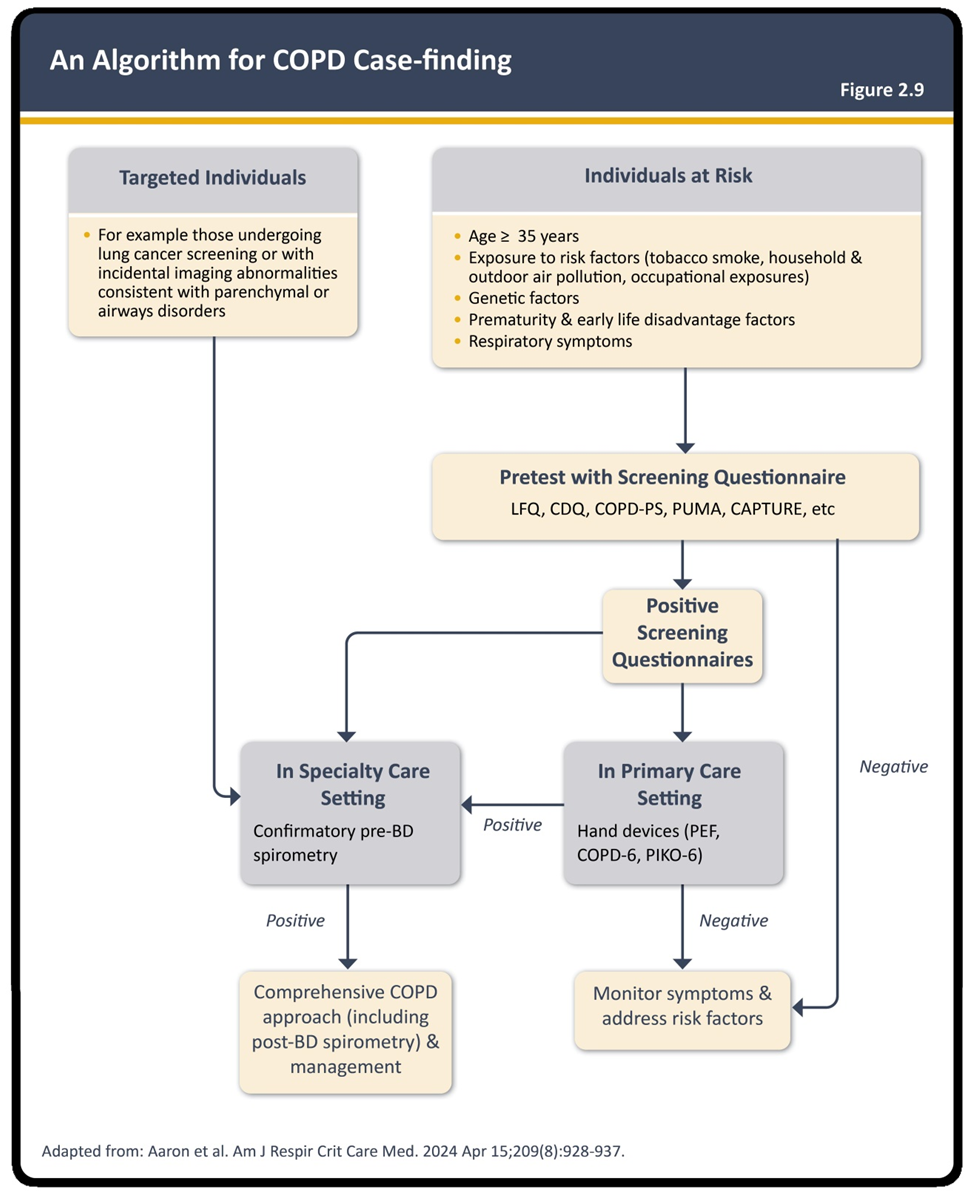
Annex 2: © 2025, 2026 Global Initiative for Chronic Obstructive Lung Disease
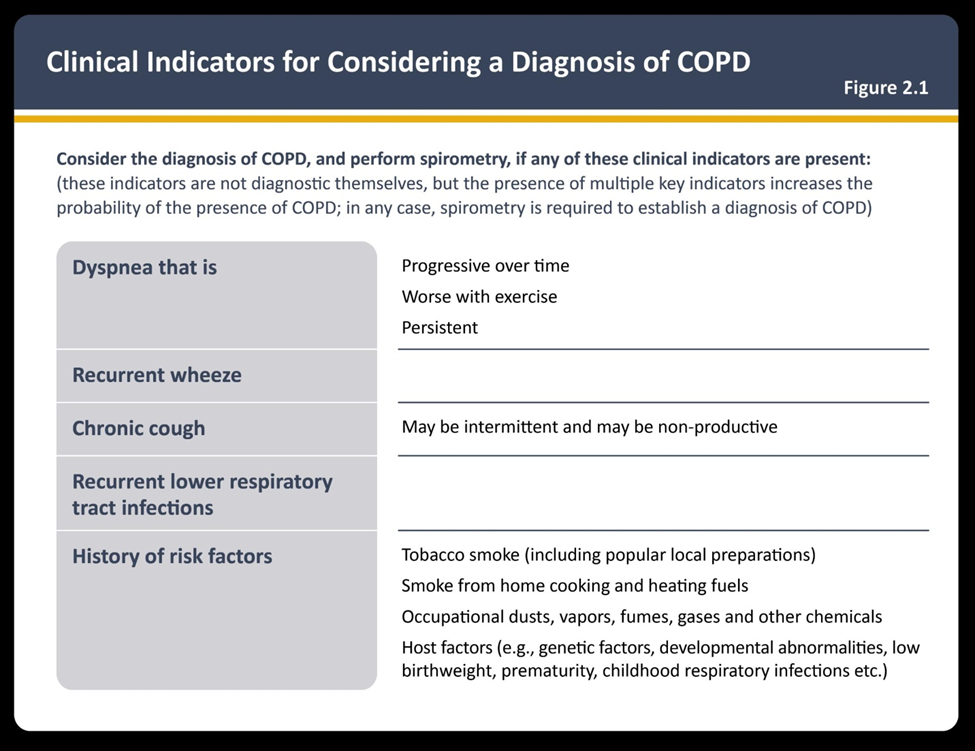
Annex 3 (a,b,c): Consideration of spirometry in COPD assessment © 2025, 2026 Global Initiative for Chronic Obstructive Lung Disease
Annex 3 (a: © 2025, 2026 Global Initiative for Chronic Obstructive Lung Disease
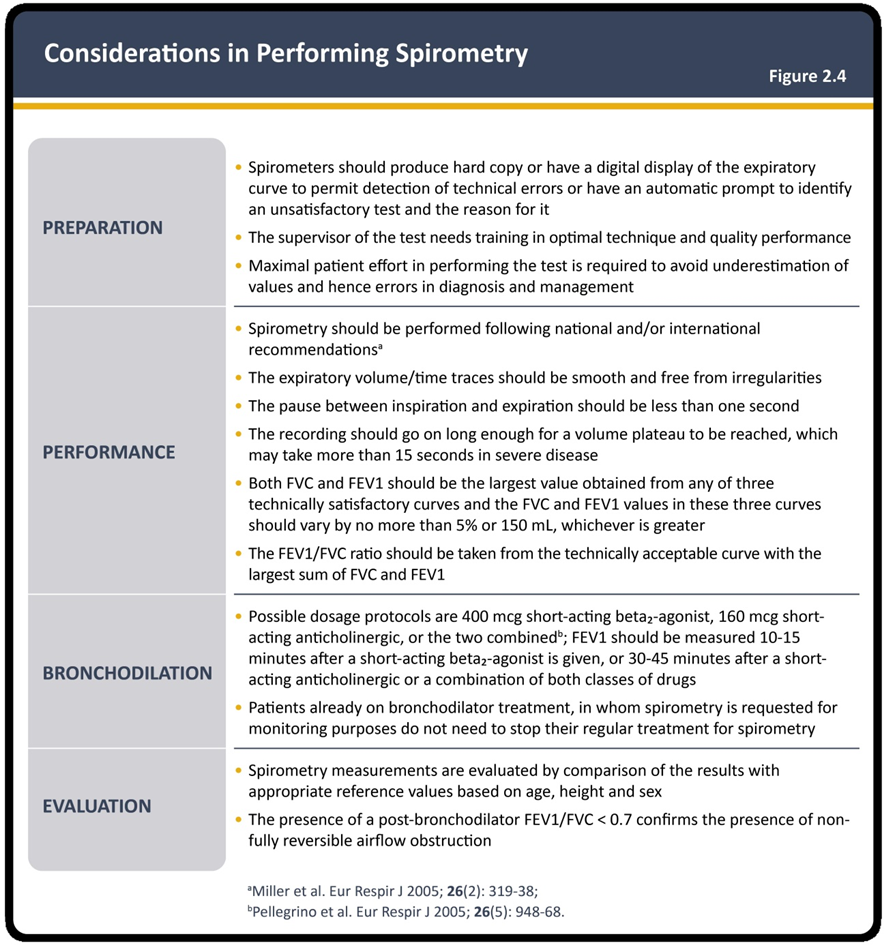
Annex 3 (b: © 2025, 2026 Global Initiative for Chronic Obstructive Lung Disease
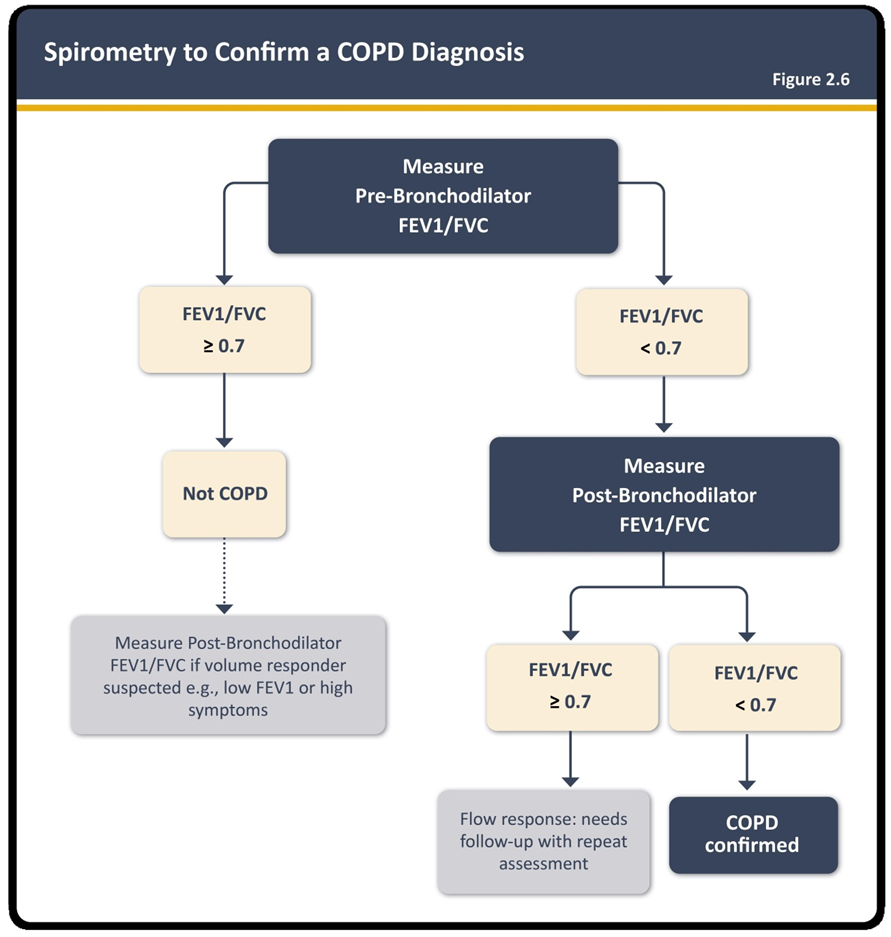
Annex 3 (c): © 2025, 2026 Global Initiative for Chronic Obstructive Lung Disease
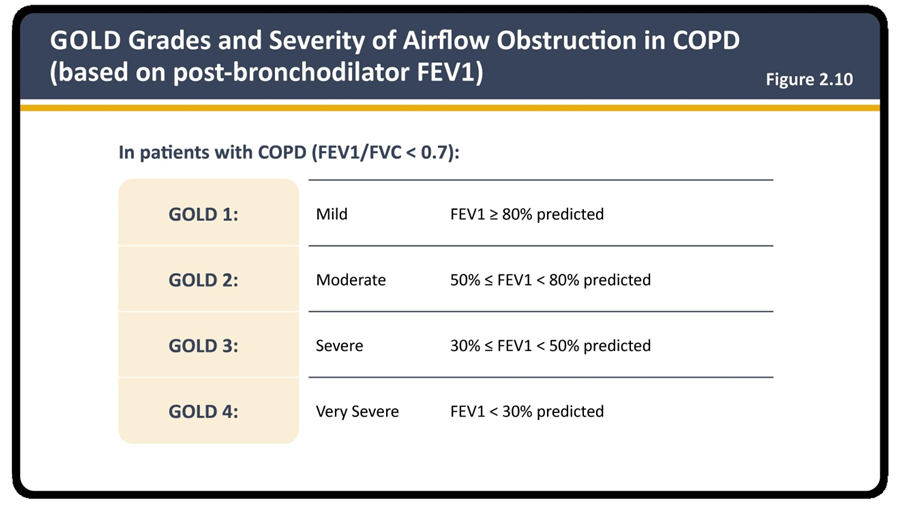
Annex 4 (a,b ): © 2025, 2026 Global Initiative for Chronic Obstructive Lung Disease
Annex 4 (a): © 2025, 2026 Global Initiative for Chronic Obstructive Lung Disease
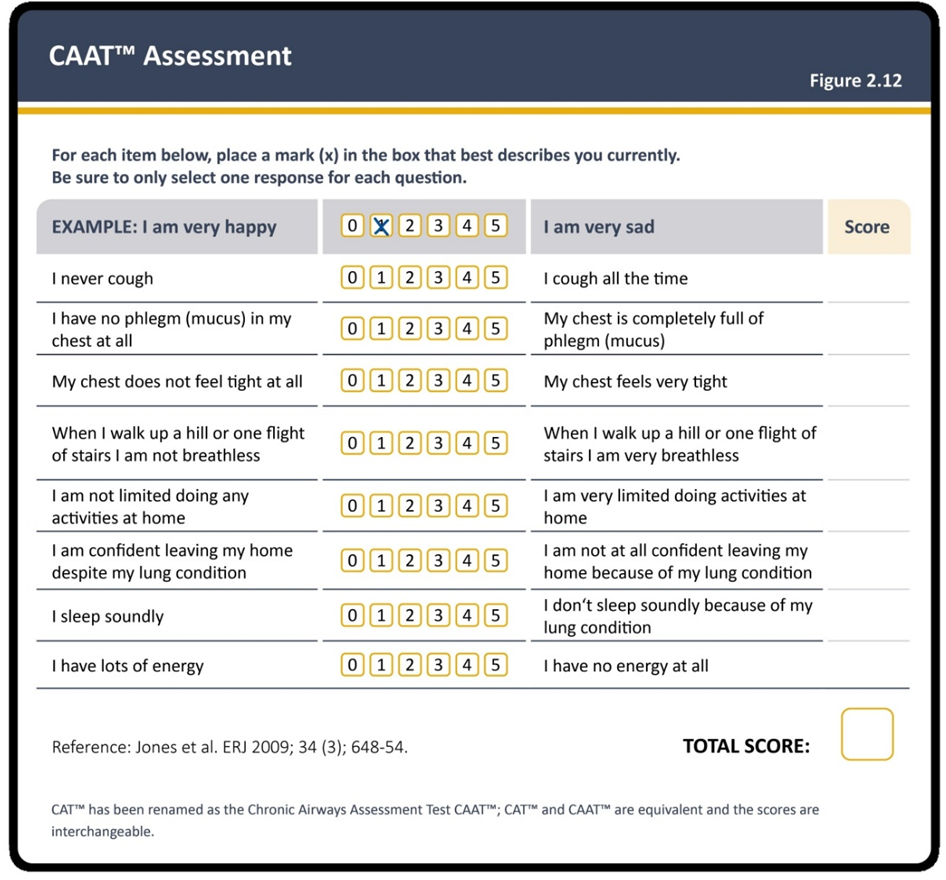
Annex 4 (b ): © 2025, 2026 Global Initiative for Chronic Obstructive Lung Disease
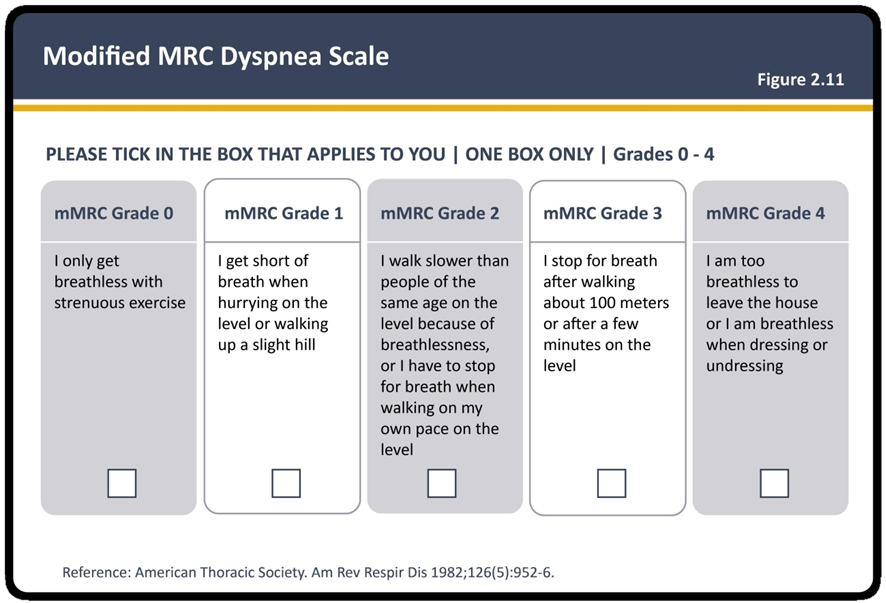
Annex 5: © 2025, 2026 Global Initiative for Chronic Obstructive Lung Disease
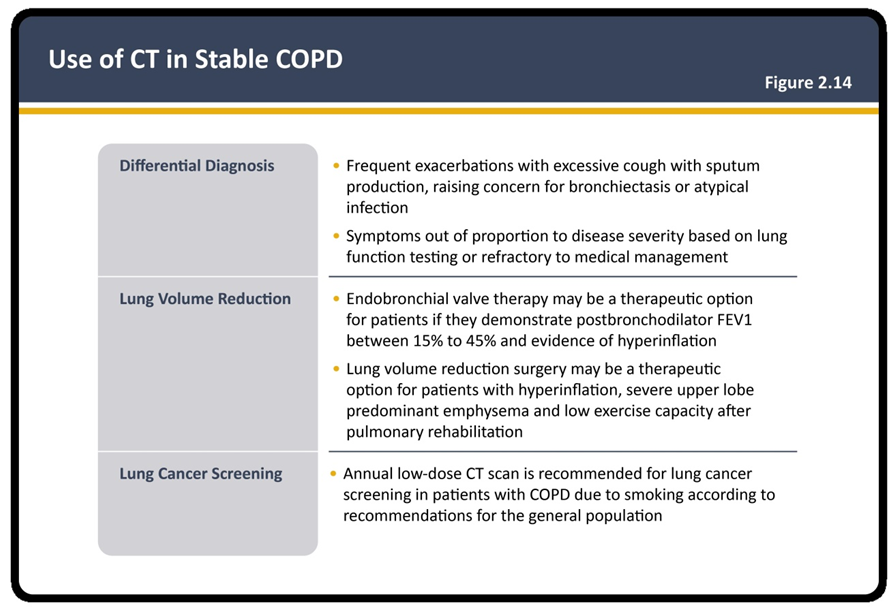
Annex 6 (a,b) : © 2025, 2026 Global Initiative for Chronic Obstructive Lung Disease
Annex 6 (a) : © 2025, 2026 Global Initiative for Chronic Obstructive Lung Disease
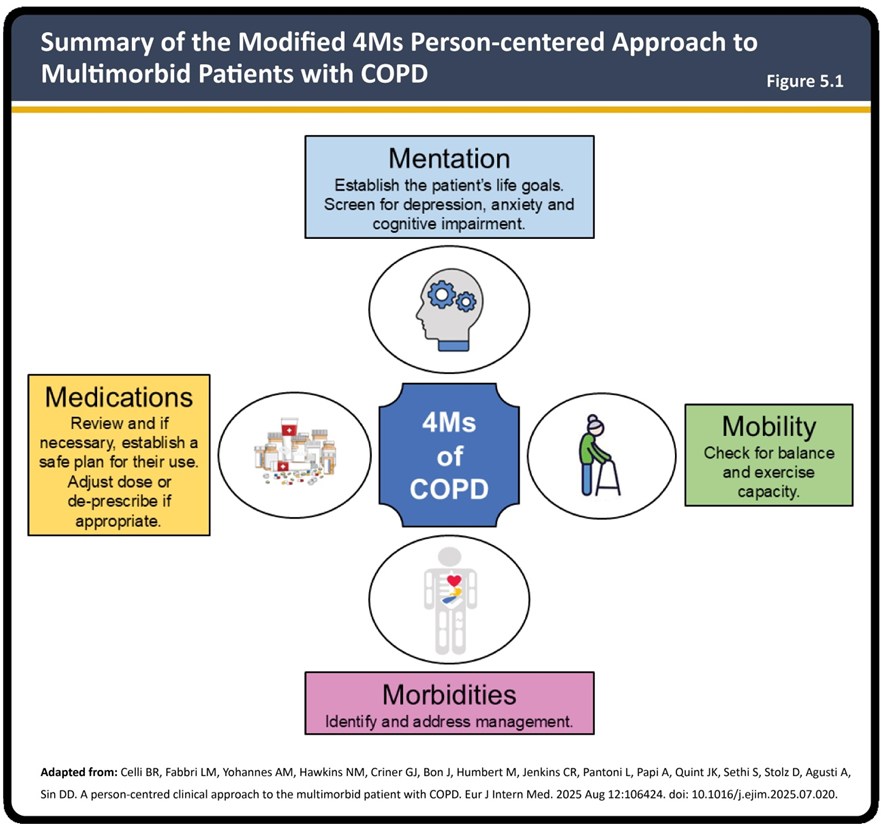
Annex 6 (b) : © 2025, 2026 Global Initiative for Chronic Obstructive Lung Disease
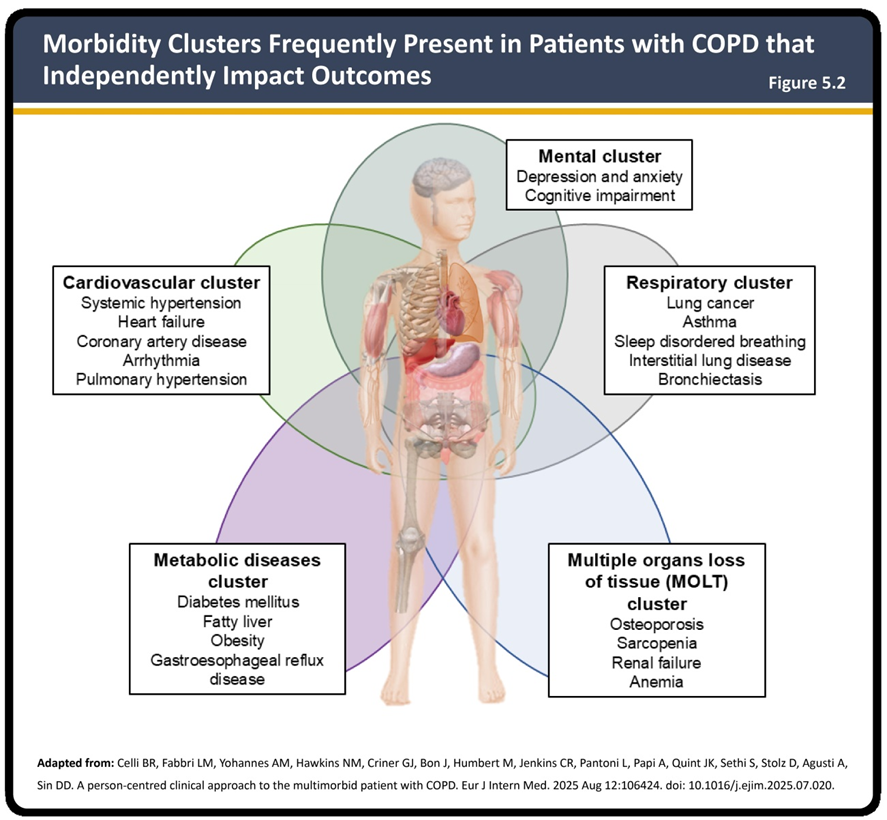
Annex 7: © 2025, 2026 Global Initiative for Chronic Obstructive Lung Disease
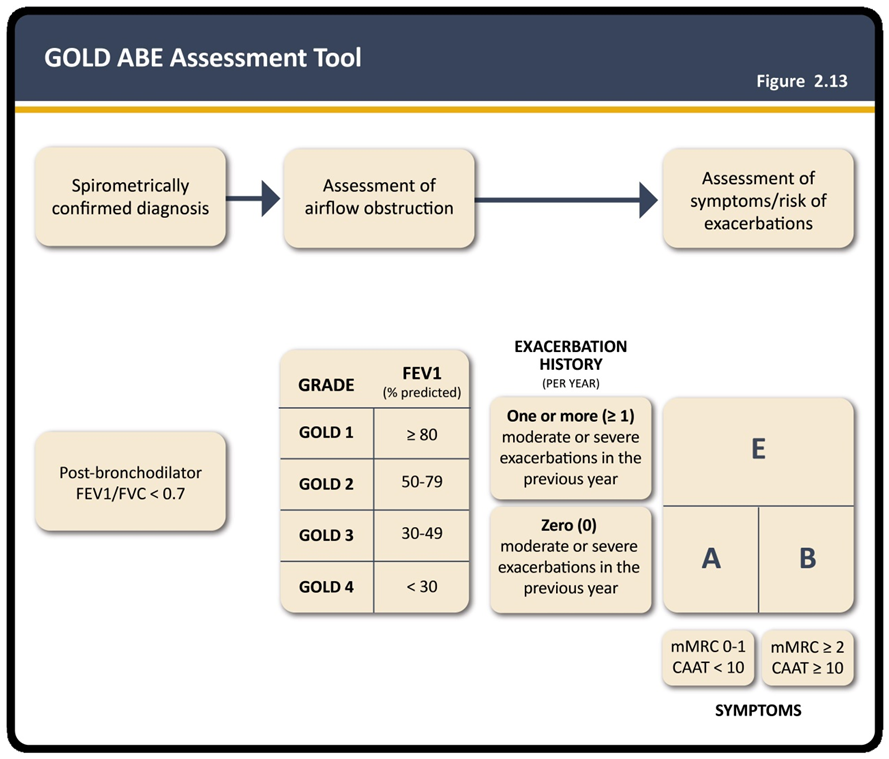
Annex 8,9: Management cycle of COPD
Annex 8: Management cycle of COPD
© 2025, 2026 Global Initiative for Chronic Obstructive Lung Disease
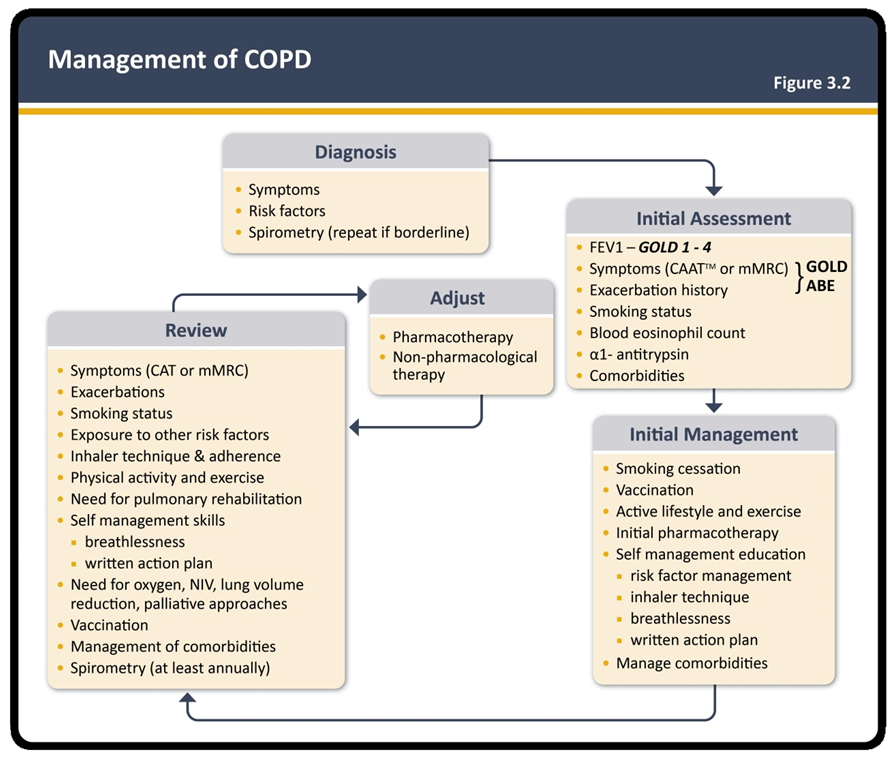
Annex 9: Management cycle of COPD
© 2025, 2026 Global Initiative for Chronic Obstructive Lung Disease
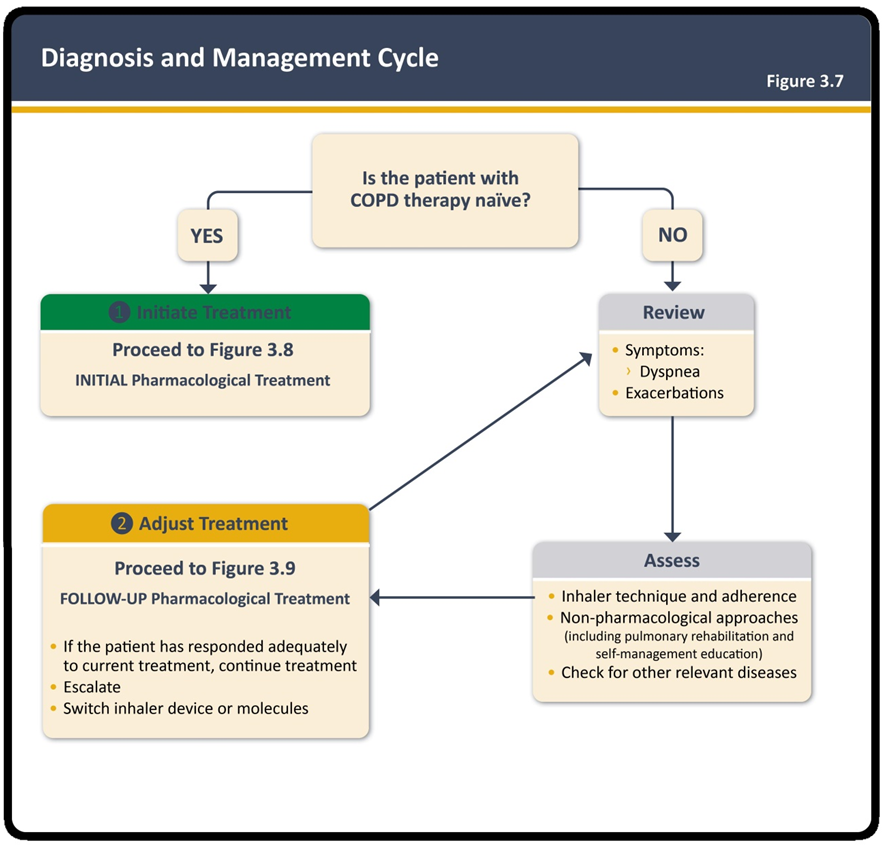
Annex 10(a,b): Pharmacological therapy approach © 2025, 2026 Global Initiative for Chronic Obstructive Lung Disease
Annex 10(a): Pharmacological therapy approach © 2025, 2026 Global Initiative for Chronic Obstructive Lung Disease
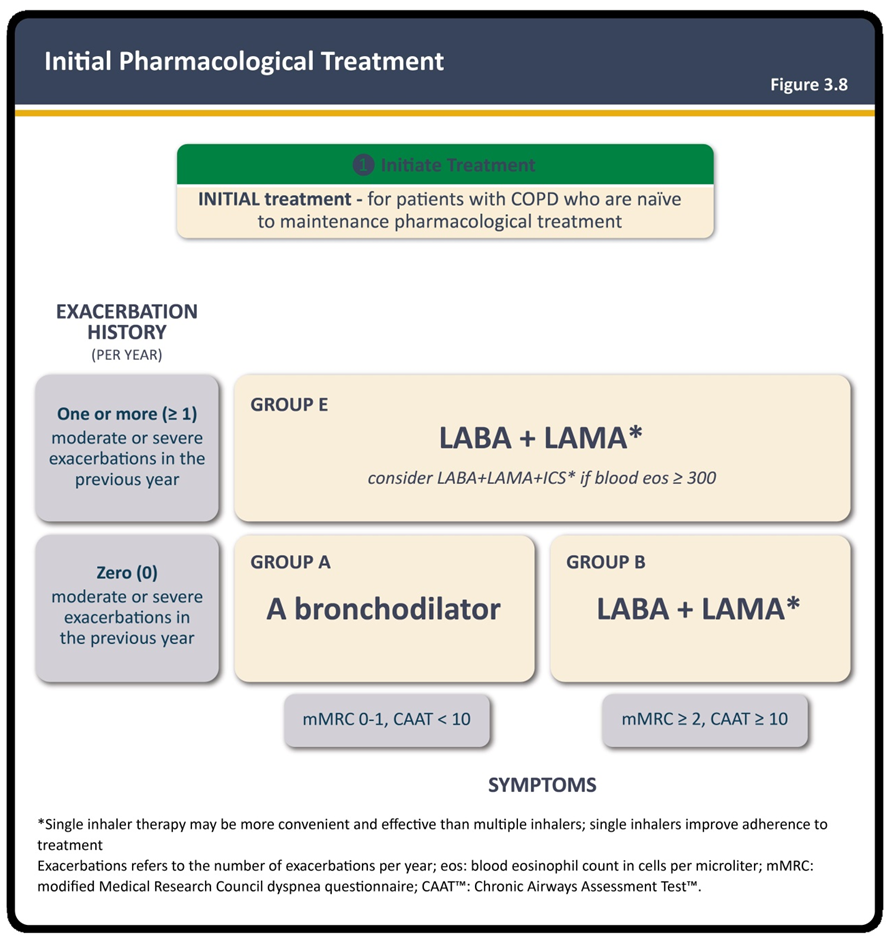
Annex 10(b): Pharmacological therapy approach © 2025, 2026 Global Initiative for Chronic Obstructive Lung Disease
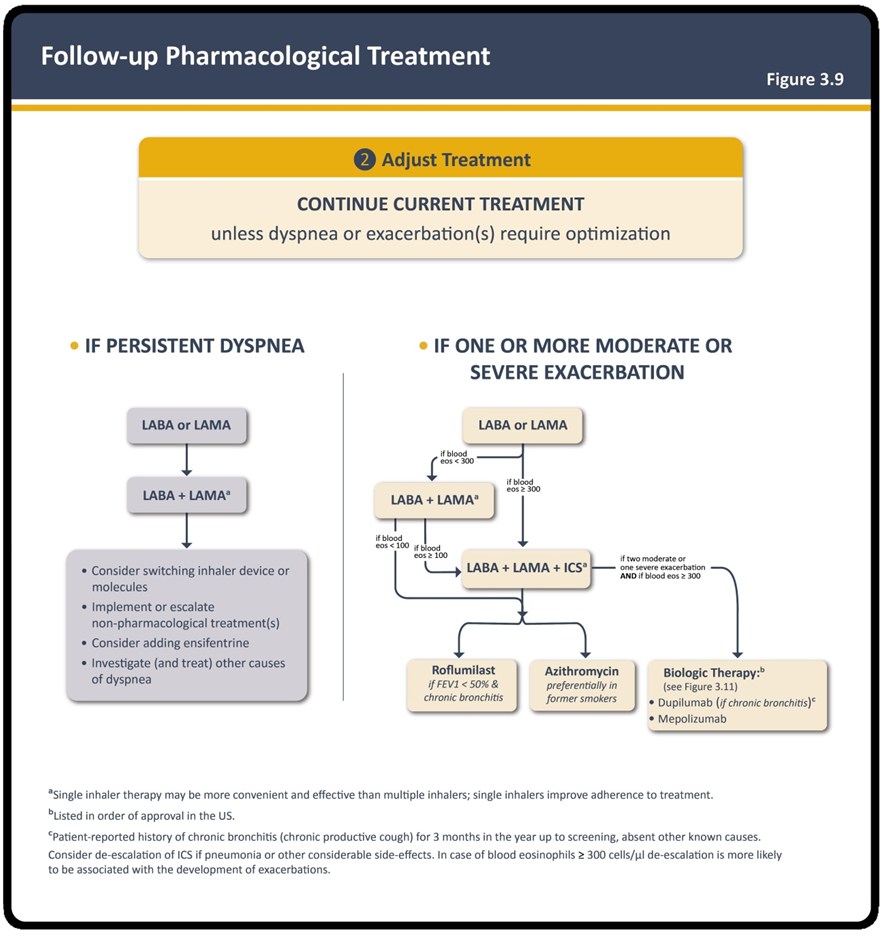
Annex 11: pharmacological combination therapy (30)
Table . Population, Intervention, Comparator, and Outcomes Questions and Recommendations for the Pharmacologic Treatment of Stable Chronic Obstructive Pulmonary Disease
|
PICO Question |
Recommendation |
Strength of Recommendation |
Certainty of Evidence |
|
1. In patients with COPD who complain of dyspnea or exercise intolerance, is LABA/LAMA combination therapy more effective than and as safe as LABA or LAMA monotherapy? |
In patients with COPD who complain of dyspnea or exercise intolerance, we recommend LABA/LAMA combination therapy over LABA or LAMA monotherapy. |
Strong |
Moderate certainty |
|
2. In patients with COPD who complain of dyspnea or exercise intolerance despite the use of dual therapy with LABA/LAMA, is triple therapy with ICS/LABA/LAMA more effective than and as safe as dual therapy with LABA/LAMA? |
In patients with COPD who complain of dyspnea or exercise intolerance despite dual therapy with LABA/LAMA, we suggest the use of triple therapy with ICS/LABA/LAMA over dual therapy with LABA/LAMA in those patients with a history of one or more exacerbations in the past year requiring antibiotics or oral steroids or hospitalization. |
Conditional |
Moderate certainty |
|
3. In patients with COPD who are receiving triple therapy (ICS/LABA/LAMA), should the ICS be withdrawn? |
In patients with COPD who are receiving triple therapy (ICS/LABA/LAMA), we suggest that the ICS can be withdrawn if the patient has had no exacerbations in the past year. |
Conditional |
Moderate certainty |
|
4. In patients with COPD and blood eosinophilia, should treatment include an ICS in addition to a long-acting bronchodilator? |
We do not make a recommendation for or against ICS as an additive therapy to long-acting bronchodilators in patients with COPD and blood eosinophilia, except for those patients with a history of one or more exacerbations in the past year requiring antibiotics or oral steroids or hospitalization, for whom we suggest ICS as an additive therapy. |
Conditional |
Moderate certainty |
|
5. In patients with COPD who have a history of severe and frequent exacerbations despite otherwise optimal therapy, is maintenance oral steroid therapy more effective than and as safe as no maintenance oral steroid therapy? |
In patients with COPD and a history of severe and frequent exacerbations despite otherwise optimal therapy, we advise against the use of maintenance oral corticosteroid therapy. |
Conditional |
Low certainty |
|
6. In patients with COPD who experience advanced refractory dyspnea despite otherwise optimal therapy, is opioid-based therapy more effective than and as safe as no additional therapy? |
In individuals with COPD who experience advanced refractory dyspnea despite otherwise optimal therapy, we suggest that opioid-based therapy be considered for dyspnea management, within a personalized shared decision-making approach. |
Conditional |
Very low certainty |
Annex 12, 13,14: combination therapy including ICS
© 2025, 2026 Global Initiative for Chronic Obstructive Lung Disease
Annex 12: © 2025, 2026 Global Initiative for Chronic Obstructive Lung Disease
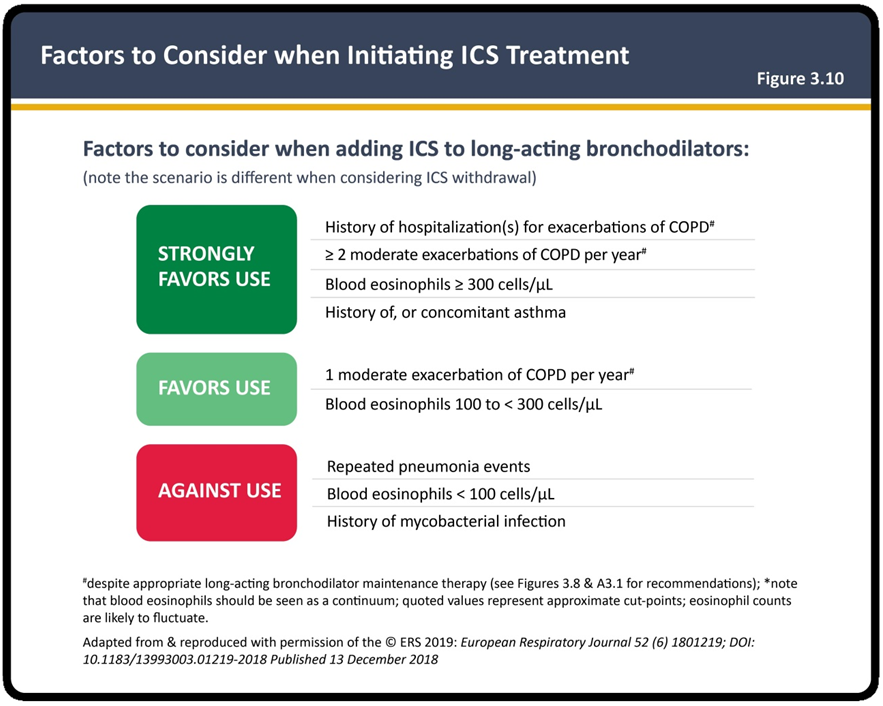
Annex 13 : © 2025, 2026 Global Initiative for Chronic Obstructive Lung Disease
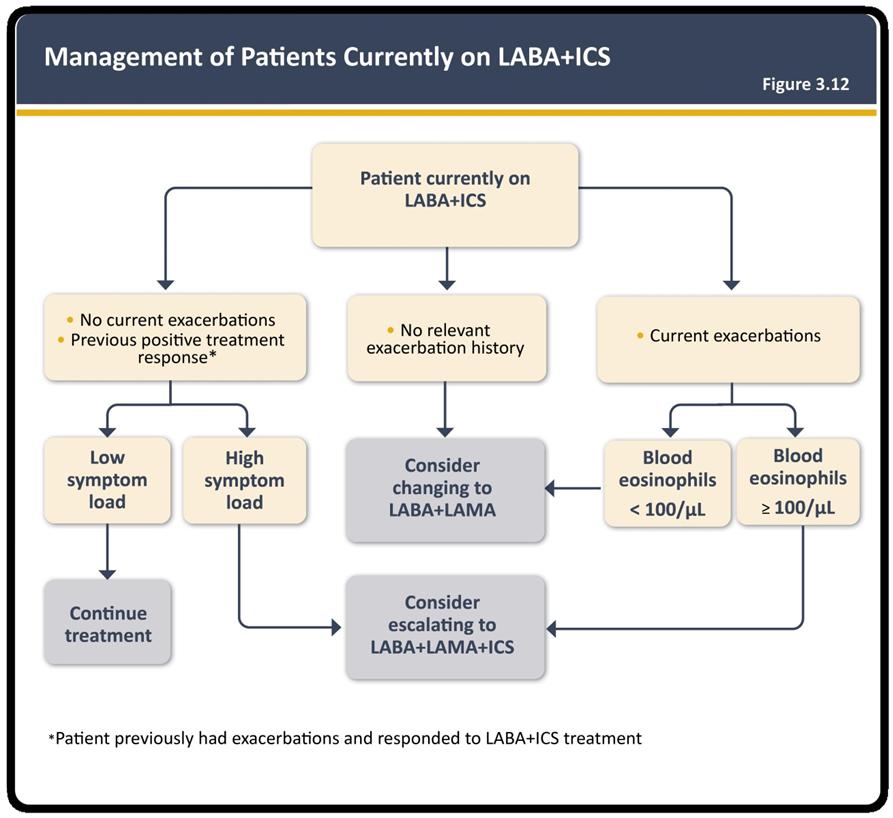
Annex 14: © 2025, 2026 Global Initiative for Chronic Obstructive Lung Disease
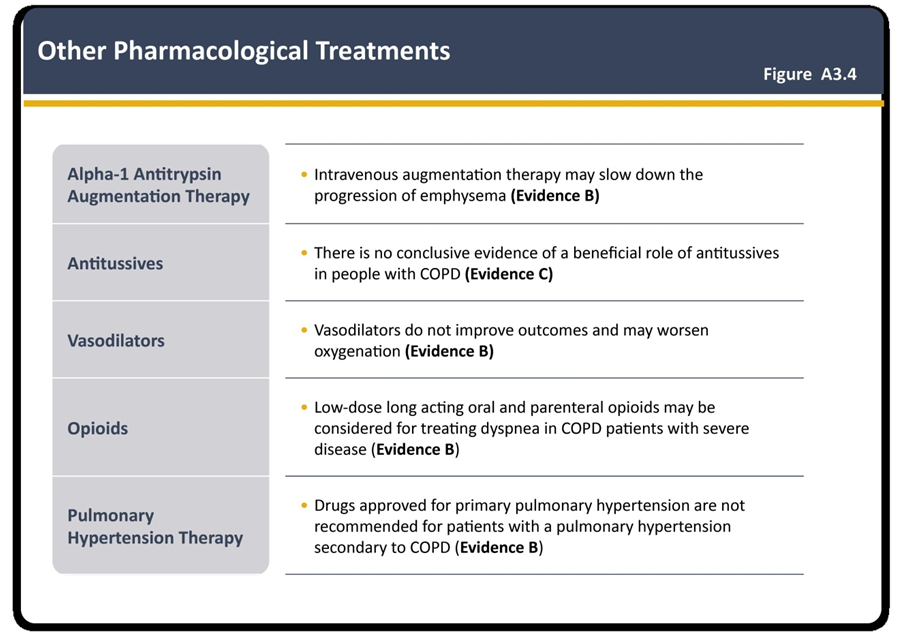
© 2025, 2026 Global Initiative for Chronic Obstructive Lung Disease
Annex 15: Biological therapy
© 2025, 2026 Global Initiative for Chronic Obstructive Lung Disease
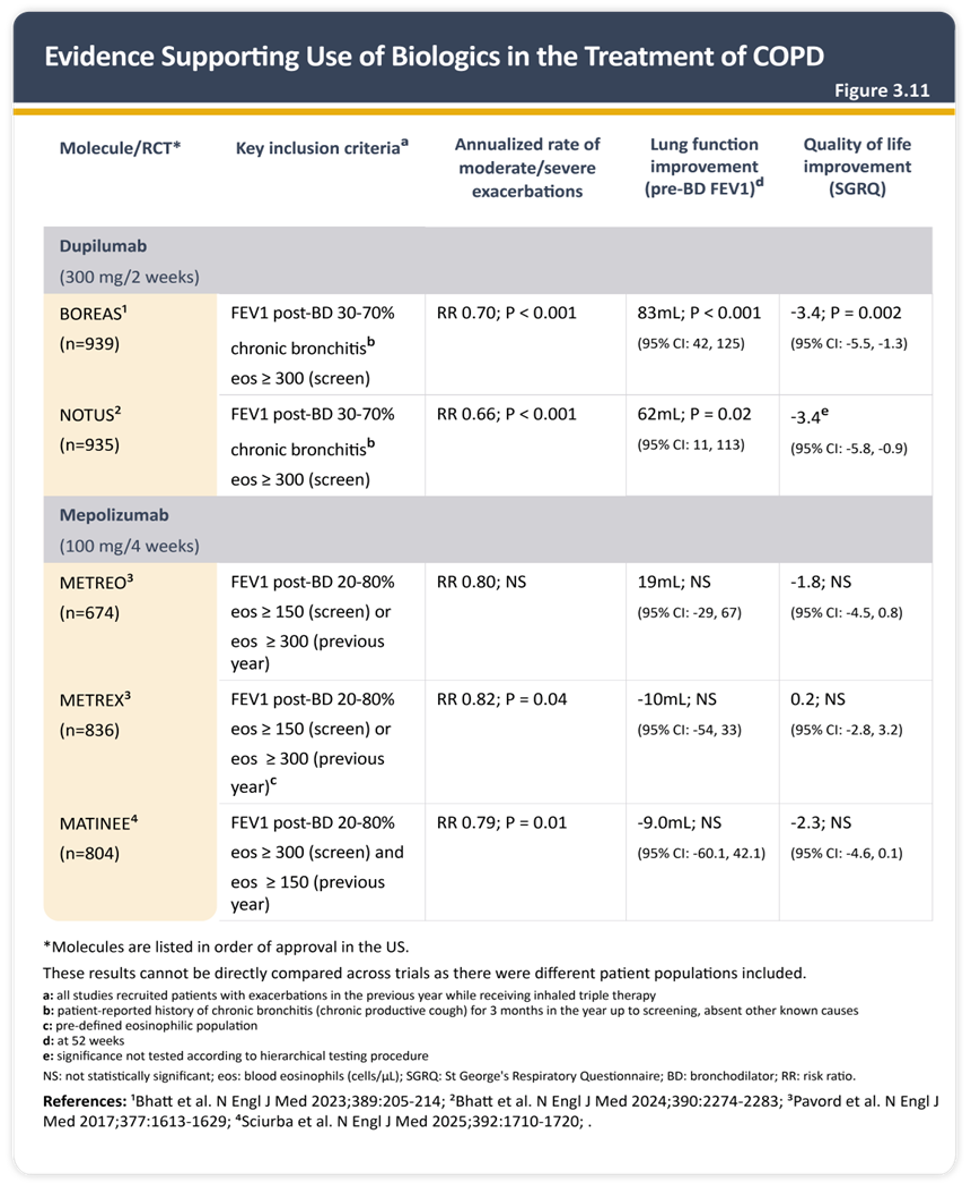
annex 16(a,b) : Nonpharmacological therapy
© 2025, 2026 Global Initiative for Chronic Obstructive Lung Disease
annex 16(a) : Nonpharmacological therapy
© 2025, 2026 Global Initiative for Chronic Obstructive Lung Disease
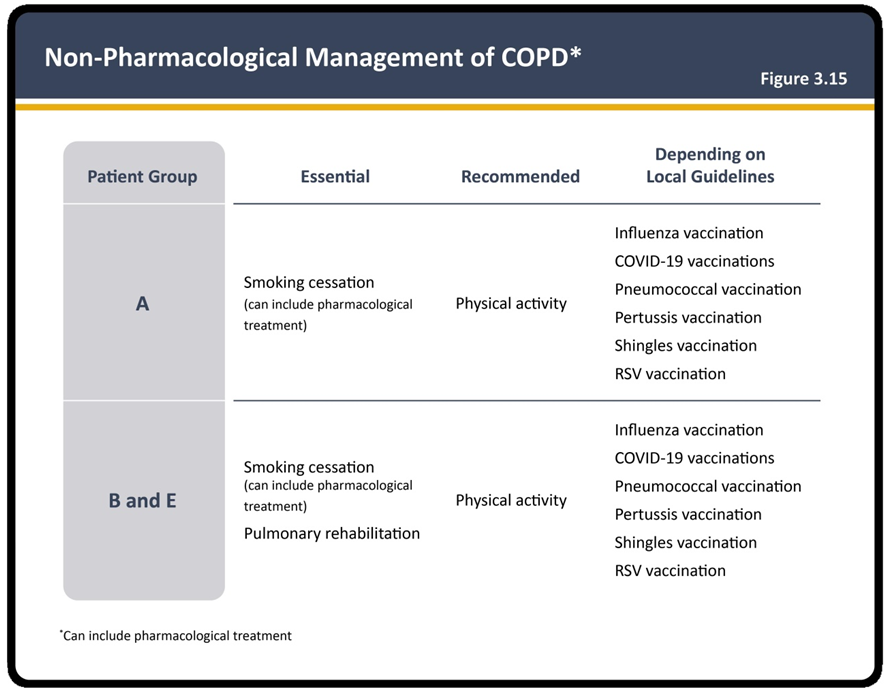
annex 16(b) : Nonpharmacological therapy
© 2025, 2026 Global Initiative for Chronic Obstructive Lung Disease
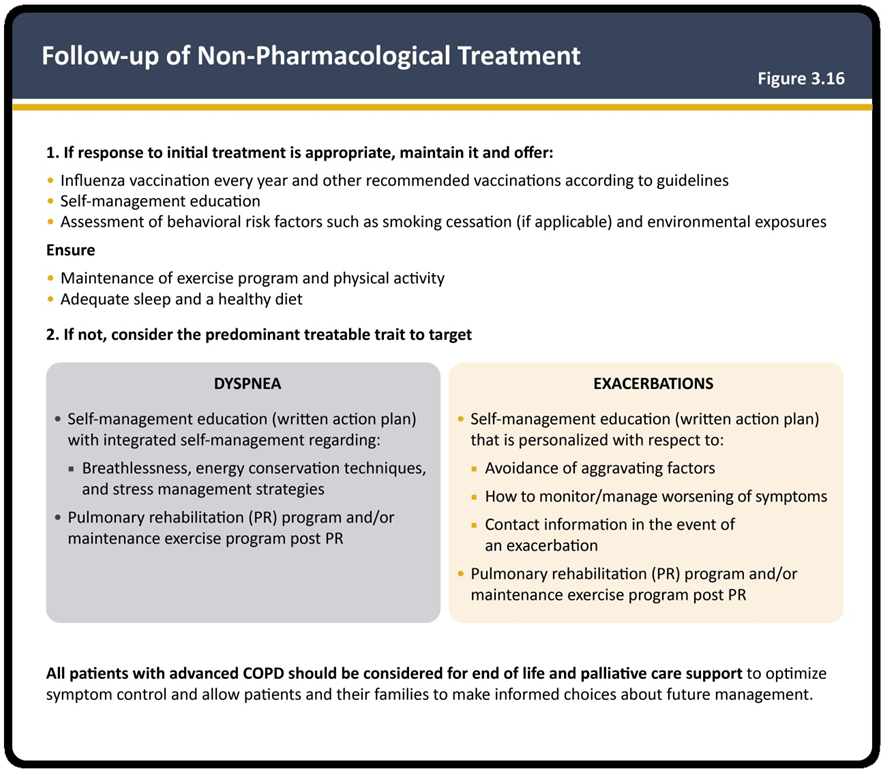
annex 17(a,b): Interventional therapy
© 2025, 2026 Global Initiative for Chronic Obstructive Lung Disease
annex 17(a): Interventional therapy
© 2025, 2026 Global Initiative for Chronic Obstructive Lung Disease
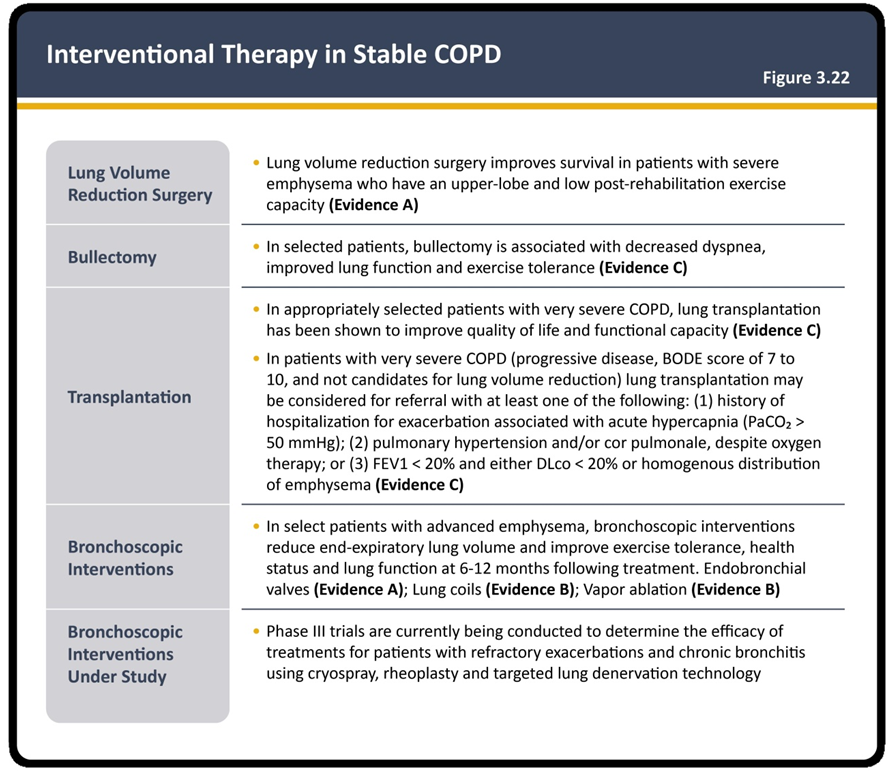
annex 17(b): Interventional therapy
© 2025, 2026 Global Initiative for Chronic Obstructive Lung Disease
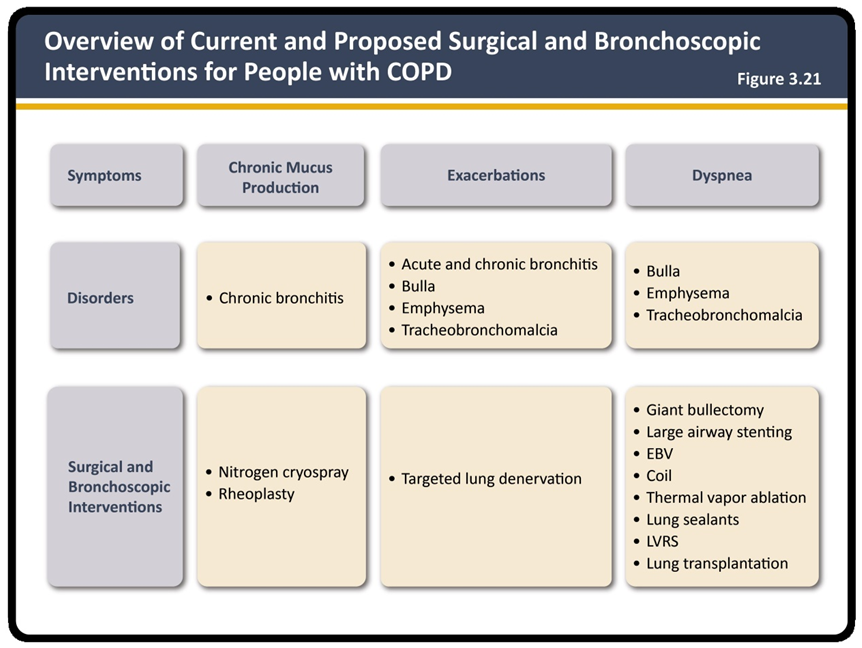
Annex 18: vaccination in COPD
© 2025, 2026 Global Initiative for Chronic Obstructive Lung Disease
Table 1. Vaccine recommended by GOLD for COPD patients.
|
Vaccine |
Dosing and Frequency |
Specific Scenario or Indication |
Level of Evidence |
|
Influenza |
Annually |
- |
B |
|
Pneumococcal |
|
- |
B |
|
PCV 20 |
Once |
|
B |
|
PCV 15 followed by PPSV 23 |
PSV23 administered 1 year after PCV15 (or ≥8 weeks after PCV15 in patients with an immunocompromising condition, cochlear implant, or CSF leak) |
|
B |
|
Severe acute respiratory syndrome coronavirus 2 |
Two 2024-2025 formula, with the second dose given 2-6 months after the first dose |
Age ≥ 65, immunocompetent |
B |
|
|
One dose 2024-2025 formula |
Age 5-64, immunocompetent |
B |
|
|
At least three mRNA vaccine doses |
Immunocompromised |
B |
|
Respiratory syncytial virus |
Once |
Age > 60 |
A |
|
Pertussis |
Once |
For patients who were not vaccinated in adolescence |
B |
|
Varicella zoster |
Two doses 2-6 months apart for recombinant vaccine |
Age > 50 |
B |
PCV: Pneumococcal conjugated vaccine, PPSV: Pneumococcal polysaccharide vaccine; CSF: Cerebrospinal fluid;
Annex19: follow up of COPD
© 2025, 2026 Global Initiative for Chronic Obstructive Lung Disease
Discharge Criteria and Recommendations for Follow-up (Figure 4.10)
|
1. Full review of all clinical and laboratory data 2. Check maintenance therapy (see Figure 3.9, patients with elevated blood eosinophils should be discharged on LABA+LAMA+ICS) 3. Reassess inhaler technique 4. Ensure understanding of withdrawal of acute medications (steroids and/or antibiotics) |
1. |
2. 5. Assess need for continuing supplemental oxygen 3. 6. Provide management plan 4. 7. Follow-up comorbidities such as cardiovascular disease 8. Ensure follow-up arrangements: early follow-up < 4 weeks, and late follow-up > 12 weeks as indicated |
|
1 – 4 Weeks Follow-up |
|
12 – 16 Weeks Follow-up |
|
· Evaluate ability to cope in his/her usual environment · Review understanding of treatment regimen · Reassessment of inhaler techniques · Reassess need for long-term oxygen · Document the capacity to do physical activity and consider patient eligibility to be enrolled in pulmonary rehabilitation · Document symptoms: CAATTM or mMRC · Determine status of comorbidities |
· |
· Evaluate ability to cope in his/her usual environment · Review understanding of treatment regimen · Reassessment of inhaler techniques · Reassess need for long-term oxygen · Document the capacity to do physical activity and activities of daily living · Measure spirometry: FEV1 · Document symptoms: CAATTM or mMRC · Determine status of comorbidities |
Annex 20: © 2025, 2026 Global Initiative for Chronic Obstructive Lung Disease
Anti-Inflammatory Maintenance Therapy (Figure A3.3)
|
Inhaled Corticosteroids |
· Regular treatment with ICS increases the risk of pneumonia especially in those with severe disease (Evidence A) · An ICS combined with a LABA is more effective than the individual components in improving lung function and health status and reducing exacerbations in patients with exacerbations and moderate to very severe COPD (Evidence A) · We do not encourage the use of a LABA+ICS combination in COPD. If there is an indication for an ICS the combination LABA+LAMA+ICS has been shown to be superior to LABA+ICS and is therefore the preferred choice · Triple inhaled therapy of LABA+LAMA+ICS improves lung function, symptoms and health status, and reduces exacerbations, compared to LABA+ICS, LABA+LAMA or LAMA monotherapy (Evidence A). Recent data suggesta beneficial effect of triple inhaled therapy versus fixed-dose LABA+LAMA combinations on mortality in symptomatic COPD patients with a history of frequent and/or severe exacerbations · If patients with COPD have features of asthma, treatment should always contain an ICS · Independent of ICS use, there is evidence that a blood eosinophil count < 2% increases the risk of pneumonia (Evidence C) · Combinations can be given as single or multiple inhaler therapy. Single inhaler therapy may be more convenient and effective than multiple inhalers |
|
Oral Glucocorticoids |
· Long-term use of oral glucocorticoids has numerous side effects (Evidence A) with no evidence of benefits (Evidence C) |
|
PDE Inhibitors |
· In patients with chronic bronchitis, severe to very severe COPD and a history of exacerbations: · Roflumilast improves lung function and reduces moderate and severe exacerbations (Evidence A) · Ensifentrine improves lung function (Evidence A) but an effect on exacerbations has not been evaluated in patients at increased exacerbation risk |
|
Antibiotics |
· Long-term azithromycin and erythromycin therapy reduces exacerbations over one year (Evidence A) · Preferentially, but not only in former smokers with exacerbations despite appropriate therapy, azithromycin can be considered (Evidence B) · Treatment with azithromycin is associated with an increased incidence of bacterial resistance (Evidence A) and hearing test impairments (Evidence B) |
|
Mucoregulators & Antioxidant Agents |
· Regular treatment with mucolytics such as erdosteine, carbocysteine and N-acetylcysteine reduces the risk of exacerbations in select populations (Evidence B) · Antioxidant mucolytics are recommended only in selected patients (Evidence A) |
|
Biologics |
· In patients with moderate to severe COPD with a history of exacerbations despite triple therapy and higher blood eosinophils ($\ge 300\text{ cells}/\mu\text{L}$): · Dupilumab reduces exacerbations, improves lung function and quality of life in patients with chronic bronchitis (Evidence A) · Mepolizumab reduces exacerbations in patients with and without chronic bronchitis (Evidence A) |
|
Other Anti-Inflammatory Agents |
· Statin therapy is not recommended for prevention of exacerbations (Evidence A) · Simvastatin does not prevent exacerbations in COPD patients at increased risk of exacerbations and without indications for statin therapy (Evidence A). However, observational studies suggest that statins may have positive effects on some outcomes in patients with COPD who receive them for cardiovascular and metabolic indications (Evidence C) · Leukotriene modifiers have not been tested adequately in COPD patients |
Annex 21: © 2025, 2026 Global Initiative for Chronic Obstructive Lung Disease
Maintenance Medications in COPD* Figure A3.1
|
Generic Drug Name |
Inhaler Type |
Nebulizer |
Oral/Injectable Delivery |
Duration of Action |
|
BETA₂-Agonists |
||||
|
Short-acting (SABA) |
||||
|
Fenoterol |
MDI |
✓ |
tablet, solution |
variable |
|
Levalbuterol |
MDI |
✓ |
variable |
|
|
Salbutamol (albuterol) |
MDI, DPI |
✓ |
syrup, tablet |
variable |
|
Terbutaline |
DPI |
tablet |
variable |
|
|
Long-acting (LABA) |
||||
|
Arformoterol |
✓ |
12 hours |
||
|
Formoterol |
DPI |
✓ |
12 hours |
|
|
Indacaterol |
DPI |
24 hours |
||
|
Olodaterol |
SMI |
24 hours |
||
|
Salmeterol |
MDI, DPI |
12 hours |
||
|
Anticholinergics |
||||
|
Short-acting (SAMA) |
||||
|
Iratropium bromide |
MDI |
✓ |
6-8 hours |
|
|
Oxitropium bromide |
MDI |
✓ |
7-9 hours |
|
|
Long-acting (LAMA) |
||||
|
Aclidinium bromide |
DPI |
12 hours |
||
|
Glycopyrronium bromide |
DPI |
✓ |
solution |
variable |
|
Tiotropium |
DPI, SMI, MDI |
24 hours |
||
|
Umeclidinium |
DPI |
24 hours |
||
|
Revefenacin |
✓ |
24 hours |
||
|
Combination Short-Acting Beta₂-Agonist Plus Anticholinergic in One Device (SABA+SAMA) |
||||
|
Fenoterol/ipratropium |
SMI |
✓ |
6-8 hours |
|
|
Salbutamol/ipratropium |
SMI, MDI |
✓ |
variable |
|
|
Combination Long-Acting Beta₂-Agonist Plus Anticholinergic in One Device (LABA+LAMA) |
||||
|
Formoterol/aclidinium |
DPI |
12 hours |
||
|
Formoterol/glycopyrronium |
MDI |
12 hours |
||
|
Indacaterol/glycopyrronium |
DPI |
12-24 hours |
||
|
Vilanterol/umeclidinium |
DPI |
24 hours |
||
|
Olodaterol/tiotropium |
SMI |
24 hours |
||
|
Methylxanthines |
||||
|
Aminophylline |
solution, injectable |
variable |
||
|
Theophylline (SR) |
tablet, capsule, elixir, solution, injectable |
variable |
||
|
Combination of Long-Acting Beta₂-Agonist Plus Corticosteroid in One Device (LABA+ICS) |
||||
|
Formoterol/beclometasone |
MDI, DPI |
12 hours |
||
|
Formoterol/budesonide |
MDI, DPI |
12 hours |
||
|
Formoterol/mometasone |
MDI |
12 hours |
||
|
Salmeterol/fluticasone propionate |
MDI, DPI |
12 hours |
||
|
Vilanterol/fluticasone furoate |
DPI |
24 hours |
||
|
Triple Combination in One Device (LABA+LAMA+ICS) |
||||
|
Fluticasone/umeclidinium/vilanterol |
DPI |
24 hours |
||
|
Beclometasone/formoterol/glycopyrronium |
MDI, DPI |
12 hours |
||
|
Budesonide/formoterol/glycopyrrolate |
MDI |
12 hours |
||
|
Phosphodiesterase-3 and/or -4 Inhibitors |
||||
|
Roflumilast |
tablet |
24 hours |
||
|
Ensifentrine |
✓ |
12 hours |
||
|
Mucolytic Agents |
||||
|
Erdosteine |
capsule, suspension |
12 hours |
||
|
Carbocysteine† |
capsule, packet, solution, syrup |
6-8 hours |
||
|
N-acetylcysteine† |
✓ |
solution, tablet |
2-6 hours |
|
|
Biologics |
||||
|
Dupilumab |
injectable |
2 weeks |
||
|
Mepolizumab |
injectable |
4 weeks |
||
Overview of the medications: Annex 20, 21:
Pharmacological therapy for COPD is used to reduce symptoms, reduce the frequency and severity of exacerbations, and improve exercise tolerance and health status
Bronchodilators:
- Bronchodilators are medications that increase FEV1 and/or change other spirometric variables.
- Toxicity is dose related.
- Use of short acting bronchodilators on a regular basis is not generally recommended
Beta2-agonists:
- To relax airway smooth muscle by stimulating beta2- adrenergic receptors, which increases cyclic AMP and produces functional antagonism to bronchoconstriction.
- The effect of short-acting SABAs Regular and as-needed use of SABAs improve FEV1 and symptoms.
- Long-acting (LABAs show duration of action of 12 or more hours and do not preclude additional benefit from as-needed SABA therapy. Formoterol and salmeterol are twice-daily LABAs that significantly improve FEV1 and lung volumes, dyspnea, health status, exacerbation rate and number of hospitalizations, but have no effect on mortality or rate of decline of lung function.
- Beta2-agonists side effects: Can produce resting sinus tachycardia and has the potential to precipitate cardiac rhythm disturbances in susceptible patients. Exaggerated somatic tremors are troublesome in older patients treated with higher doses of beta2-agonists, regardless of route of administration. hypokalemia can occur, especially when treatment is combined with thiazide diuretics, and oxygen consumption can be increased under resting conditions in patients with chronic heart failure, these metabolic effects decrease over time (i.e., show tachyphylaxis).
Anti-muscarinic drugs:
- Antimuscarinic drugs block the bronchoconstrictor effects of acetylcholine on M3 muscarinic receptors expressed in airway smooth muscle.
- Short-acting antimuscarinics (SAMAs), namely ipratropium and oxitropium, also block the inhibitory neuronal receptor M2, which potentially can cause vagally induced bronchoconstriction
- Long-acting antimuscarinic antagonists (LAMAs), such as tiotropium, aclidinium, glycopyrronium bromide and umeclidinium have prolonged binding to M3 muscarinic receptors, with faster dissociation from M2 muscarinic receptors, thus prolonging the duration of bronchodilator effect
- Ipratropium, a short acting muscarinic antagonist, alone provided small benefits over short-acting beta2-agonist in terms of lung function, health status and requirement for oral steroids.
- LAMA treatments (tiotropium) improve symptoms and health status. They also improve rehabilitation the effectiveness of pulmonary and reduce exacerbations and related hospitalizations.
- Antimuscarinic antagonists are poorly absorbed which limits the troublesome systemic effects observed with atropine.
- side effects include Dryness of mouth, Urinary symptoms, A bitter, metallic taste, An unexpected small increase in cardiovascular events.
Methylxanthines:
- Addition of theophylline to salmeterol produces a greater improvement in FEV1 and breathlessness than salmeterol alone.
- There is limited and contradictory evidence regarding the effect of low-dose theophylline on exacerbation rates.
- Toxicity is dose-related, which is a particular problem with xanthine derivatives.
Anti-inflammatory agents:
- To date, exacerbations (e.g., exacerbation rate, patients with at least one exacerbation, time-to-first exacerbation) represent the main clinically relevant endpoint used for efficacy assessment of drugs with anti-inflammatory effects.
- Inhaled corticosteroids (ICS): Efficacy of ICS (alone). Most studies have found that regular treatment with ICS alone does not modify the long-term decline of FEV1 nor mortality in patients with COPD.
Triple inhaled therapy:
- The step up in inhaled treatment to LABA plus LAMA plus ICS (triple therapy) can occur by various approaches.
- This may improve lung function; patients reported outcomes and prevent exacerbations.
- A double-blind, parallel group, RCT reported that treatment with single inhaler triple therapy had greater clinical benefits compared to exacerbations tiotropium in patients with symptomatic COPD, FEV1 < 50%, and a history of exacerbation but double blind RCTs have reported benefits of single-inhaler triple therapy compared with LABA/LAMA combination therapy.
Oral glucocorticoids:
- have numerous side effects, including steroid which can contribute to muscle weakness, decreased functionality, and respiratory failure in subjects with very severe COPD.
- Systemic glucocorticoids for treating acute exacerbations in hospitalized patients, or during emergency department visits, have been shown to reduce the rate of treatment failure, the rate of relapses and improve lung function and breathlessness. Long term effects of Oral glucocorticoids in stable COPD are limited.
- Oral glucocorticoids play a role in the acute management of exacerbations; they have no role in the chronic daily treatment in COPD because of a lack of benefit balanced against a high rate of systemic complications.
Phosphodiesterase-4 (PDE4) inhibitors (Add on treatment):
- The principal action of PDE4 inhibitors is to reduce inflammation by inhibiting the breakdown of intracellular cyclic AMP
- Roflumilast is a once daily oral medication with no direct bronchodilator activity.
- Roflumilast reduces moderate and severe exacerbations treated with systemic
- Corticosteroids in patients with chronic bronchitis, severe to very severe COPD, and a history of exacerbations. The effects on lung function are also seen when roflumilast is added to long-acting bronchodilators, and in patients who are not controlled on fixed-dose LABA/ICS combinations.
- The beneficial effects of roflumilast have been reported to be greater in patients with a prior history of hospitalization for acute exacerbation.
- Adverse effects: The most frequent are diarrhea, nausea, reduced appetite, weight loss, abdominal pain, sleep disturbance, and headache
Antibiotics:
- Regular use of some antibiotics may reduce exacerbation rate.
- Azithromycin (250 mg/day or 500 mg three times per week)
- erythromycin (500 mg two times per day) for one year in patients prone to exacerbations reduced the risk of exacerbations compared to usual care.
- Continuous use of antibiotics has had no effect on the frequency of exacerbations in COPD
- Adverse effects: Azithromycin use was associated with an increased incidence of bacteria resistance, prolongation of QTc interval, and impaired hearing tests.
Mucolytic (mucokinetics, mucoregulators) and antioxidant agents (NAC, carbocysteine)
- In COPD patients not receiving inhaled corticosteroids, regular treatment with mucolytics such as erdosteine, carbocysteine N-acetylcysteine may reduce exacerbations and modestly improve health status