steroid‑resistant nephrotic syndrome (SRNS)
| Site: | EHC | Egyptian Health Council |
| Course: | Pediatrics Guidelines |
| Book: | steroid‑resistant nephrotic syndrome (SRNS) |
| Printed by: | Guest user |
| Date: | Sunday, 20 September 2026, 9:43 PM |
Description
"last update: 17 September 2026" Download Guideline
Table of contents
- - Executive Summary
- - Recommendations
- - Acknowledgements
- - Abbreviations
- - Glossary
- - Introduction
- - Purpose and Scope
- - Methods
- - Evidence to recommendations: Considerations
- - Implementation Tools and Considerations
- - Limitations and suggestions for further research needs
- - Monitoring and evaluating the impact of the guideline.
- - Updating of the guideline
- - References
- - Annexes
- Executive Summary
Nephrotic syndrome is one of the most common chronic kidney diseases in children. Steroid sensitive type (SSNS) constitutes about 85–90%, whereas steroid-resistant type (SRNS) only 15–20%. While MCD is the most common histopathology in SS type, children with SRNS have MCD, mesangial proliferative glomerulonephritis, or focal and segmental glomerulosclerosis (FSGS). SRNS is defined as those who do not show remission after 6 weeks and standard dose of oral steroids ± 3 IV MPD doses.
This guideline focuses on prevention and management of steroid-resistant nephrotic syndrome
(SRNS).
➡️Guideline development process and methods
After reviewing all the inclusion and exclusion criteria and quality appraisal results, the GDG/ GAG recommended using the following source original clinical practice guidelines (CPGs):
1- IPNA clinical practice recommendations for the diagnosis and management of children with steroid-resistant nephrotic syndrome (2020).
2- Clinical practice guideline for pediatric idiopathic nephrotic syndrome 2013: medical therapy. Japanese Society of Nephrology and The Japanese Society for Pediatric Nephrology (2015).
3- KDIGO Clinical Practice Guideline on Glomerular Diseases (2012).
4- Kidney Disease: Improving Global Outcomes (KDIGO) Glomerular Disease Work Group. KDIGO 2021.Clinical Practice Guideline for the management of Glomerular Diseases. KidneyInt. (2021).
We conducted Adolopment for these guidelines: (Adoption, Adaptation, and Development)
- Adoption for most of the guideline recommendations.
- Development of Good Practice Statements
Recommendations and Good Practice Statements (GPS)
This version of the CPG includes recommendations and good practice statements on the following four sub-sections:
A. Diagnosis of steroid-resistant nephrotic syndrome.
The guideline covers infants 3 months till children and adolescents 18 years of age, presenting with nephrotic syndrome in secondary and tertiary healthcare setting like clinics, emergency
rooms, dialysis, or transplant wards. Excluded population were infants with congenital NS presenting during the first 3 months of life.
B. Management of steroid-resistant nephrotic syndrome
This section includes recommendations and good practice statements on management of steroid-resistant nephrotic syndrome
We can summarize the guidelines’ recommendations for steroid‑resistant nephrotic syndrome in the following:
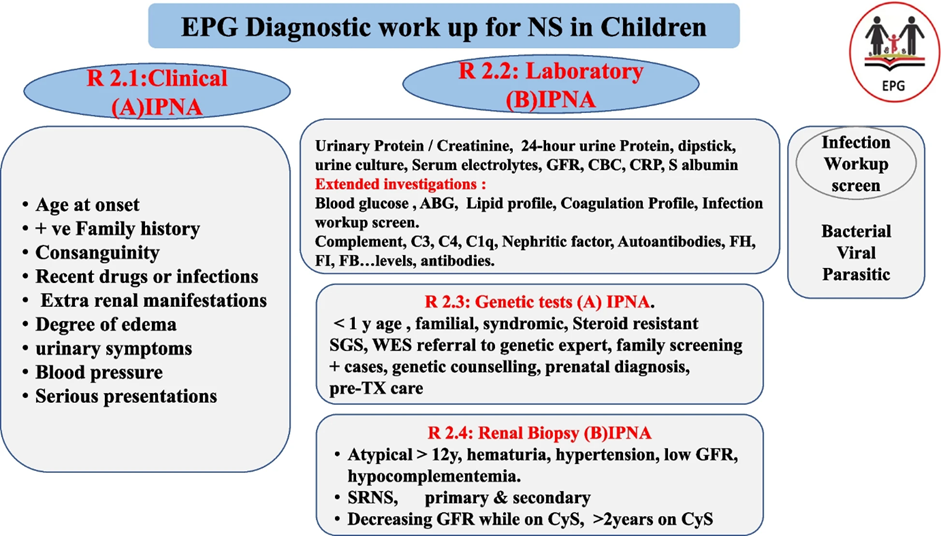
· We recommend clinical assessment to include family history for renal and extra-renal manifestations, consanguinity, patient age at onset of the disease, pattern of response to steroid therapy if already initiated (strong recommendation).
· We recommend careful physical examination of the patient including search for extra-renal manifestations, primary causes drugs, infections, autoimmune diseases. Identify high-Risk patients with severe edema, hypertension, low GFR (Strong recommendation).
· Extended laboratory investigations. We suggest performing Initial Basic Laboratory testing for blood, serum, and urine: Quantification of proteinuria, GFR. Screening for infections (hepatitis B, C, TB, syphilis, HIV and Covid-Sars to rule out secondary types of NS before immunosuppression, especially rituximab. Referral to secondary and tertiary PN centers with genetic facilities as indicated (conditional recommendation).
· We suggest Extended and follow-up investigations to include :
Urine: Spot urine (first morning void) protein/creatinine or proteinuria 24 H. Urine analysis including hematuria.
Blood-Complete blood count (CBC): C-reactive protein, creatinine, BUN, or urea, electrolytes, serum albumin, total protein. Estimated GFR
Lipid profile: (LDL- and HDL-cholesterol, triglycerides)
Glucose/fasting glucose: HbA1c. -C3, antinuclear antibodies, ds-DNA, ANA, ANCA, APLA2R.
Infection screen: (bacterial, viral, parasitic). TB, Malaria Schistosomiasis in endemic areas. HBs-Ag, anti-HCV-IgG, syphilis, and HIV test, Immunoglobulin G
Thyroid function: (T3, T4, TSH), Base line coagulation tests prothrombin time (INR), a PTT, fibrinogen, AT (111), ALP, PTH, 25(OH) vitamin D, Blood gas analysis (HCO3).
Drug-specific monitoring: as appropriate.
Imaging: Renal ultrasound, chest X ray, echocardiography, X-ray wrist for bone age for children < 5 y old should be evaluated for selected cases
Assessment for extra-renal involvement:
Depending on underlying disease and clinically evident extra-renal features:
*Brain MRI * Ophthalmology *Cardiology *Endocrinology *Dermatology *Orthopedics
*Immunology *Hematology (Good practice statement).
· We suggest genetic testing with high suspicious index for genetic types at any stage of disease presentation
(1) Early if familial, syndromic, < less than 1 year age at disease onset.
(2) After 4–6 weeks of steroid therapy for all steroid resistant if possible or those with target priority including (previously mentioned if not done), as well as all SR (FSGS, DMS) and CNI resistant,
C3GN/DDD with suspected complement mutation, and pretransplant. We suggest Referral
to the pediatric nephrology center with genetic experts and facilities being crucial for early diagnosis and proper management of these cases (Good practice statement).
We strongly recommends the availability of genetic testing in all its university related pediatric nephrology centers and to be covered by medical insurance (Good practice statement).
· Familial, syndromic, congenital/infantile onset. All SRNS at confirmation period, if possible.
All SRNS biopsy proven as FSGS/DMS to identify genetic types.
All SRNS/CNIs resistant after 6 m cyclosporine trial.
All C3GN/DDD with suspected complement mutation, resistant to plasma exchange and MMF. Such cases need treatment with complement blockade even after transplant to avoid recurrence.
All pretransplant donor and recipients as we follow live related donor transplant in a community with high rate of consanguinity (Good practice statement).
· We recommend Gene Panel SGS unless mutation is likely known where single gene analysis is recommended (Strong recommendation).
· We ssuggest referral to centers with genetic experts to:
Avoid use of steroids and immunosuppressive, renal biopsy, pre- and posttransplant aggressive protocols of PE, and rituximab that are recommended for idiopathic nonhereditary FSGS (conditional recommendation).
Allow genetic counseling, prenatal diagnosis. Transplant carries low recurrence rate (Good practice statement).
In these centers, pre-transplant care is available and well presented (nutritional support, CPD, management of complications as infection and thrombosis), proper selection of donors especially when potential donors are family related and when disease inheritance is unidentified (Good practice statement).
· Special treatment is available for some types as Q. Early diagnosis and management control progress of extra renal manifestations as well (Good practice statement).
· We recommend Renal Biopsy (LM, IF, EM) for all SRNS excluding genetic types especially those known as CNIs resistant and also secondary NS related to drugs, infections, or malignancy (strong recommendation).
· In countries where genetic tests are not available or limited to few tertiary centers or expensive and not covered with medical insurance, renal biopsy and lab immunology may be the gold standard diagnostic workup for NS in children test to put therapeutic plan and predict disease outcome based on renal histopathology (strong resommendation).
· We recommend ACI or ARBS to start early at 4th week (strong recommendation).
· We suggest to avoided it in CKD, AKI, hyperkalemia, volume depletion, and female adolescent (Good practice statement).
· We recommend statin in MDR, high LDL cholesterol, control of BP if 95th (strong recommendation). calcium, vitamin D (conditional recommendation) levothyroxine T4 if hypothyroidism (strong recommendation), magnesium if hypomagnesaemia (conditional recommendation). Diuretics to treat edema if severe, considering the risk of hypovolemia and thrombosis in under filled patients (Good practice statement).
· We recommend oral or IV furosemide if severe edema. In refractory edema, metolazone, thiazides, and amiloride potassium sparing diuretic (conditional recommendation).
· Albumin infusion 1 mg/kg 20–25% albumin over 4 h with furosemides at the middle and the end (Good practice statement).
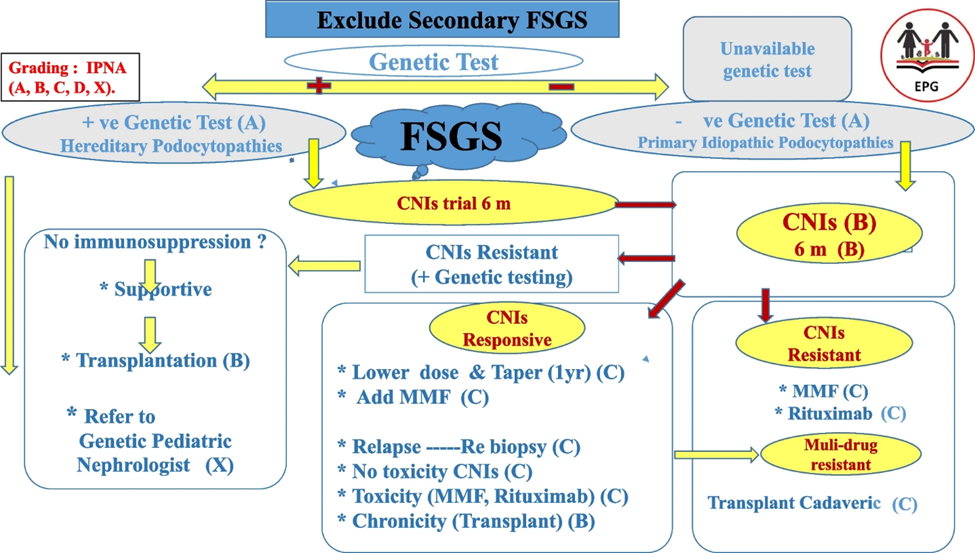
· We recommend identification of the cause of SRNS (1) secondary type need treatment of the cause (infections, drugs, auto immune disease). (2) Genetic types. Mostly need supportive care till transplantation is available, showing low recurrence rate. (3) Idiopathic types (MCD, FSGS, DMS) and (IMP, IMN) need immunosuppressive therapy (strong recommendation).
· We recommend for treatment plan to be based on cause, genetic testing, renal biopsy and lab immunology findings, and clinical severity of disease (GFR, presence of extrarenal manifestations) at its presentation (Good practice statement).
· We suggest to avoid excess salt intake 2 mEq/kg/day, with balanced fluid intake (conditional recommendation).
· We suggest statin in MDR, high LDL (conditional recommendation), control of BP if > 95th percentile (strong recommendation), calcium, vitamin D, (conditional recommendation), levothyroxine T4 if hypothyroidism (strong recommendation) magnesium if hypomagnesaemia (conditional recommendation).
· For prevention of infection, we suggest IVIG for children with recurrent infections or low IgG, (conditional recommendation).
· no routine antibiotics, cotrimoxazole in patients on rituximab 5–10 mg/kg/day three times weekly 3–6 m (conditional recommendation).
· Cotrimoxazole in patients on rituximab 5–10 mg/kg/day three times weekly 3–6 m (conditional recommendation).
· Receiving all vaccinations pneumococcal, meningococcal, influenza, and varicella (strong recommendation).
· Live vaccines should not be given to SR. on immunosuppressive. Family members can get live vaccines to limit risk of transfer to immunocompromised children but avoid exposure to their urine, stool, and respiratory excreta for 3–6 weeks after vaccination (Good practice statement).
· We recommend VZIG (Strong recommendation).
· on exposure to chickenpox, treatment with acyclovir 10 mg/kg 7 days within 7–10 days of exposure, varicella vaccine in remission (conditional recommendation).
· We suggest mobilization, avoid central lines (Good practice statement).
· We suggest low molecular weight heparin in previous history of thrombosis, central lines, hereditary thrombophilia predisposition, infection, or dehydration (conditional recommendation).
· We suggest thrombophilia screen in previous conditions for protein S, antithrombin, and factor V genes (conditional recommendation).
· While on dialysis and or waiting for kidney Transplant we recommend discussing with the family and dialysis team benefit risk of transplantation and post TX recurrence rate (Strong recommendation).
· We recommend daily monitoring of proteinuria for assessment of native residual function (Strong recommendation).
· We suggest nephrectomy if TX will be done before resolution of NS or if proteinuria is severe to minimize risk of thromboembolism (conditional recommendation).
· We recommend genetic tests to recipients as hereditary types show low recurrence as compared to non-genetic types (Strong recommendation).
· Discuss benefit risks for genetic and non- genetic. 43% of total kidney transplants in Egyptian children through 2009/2017 registry were identified as hereditary ESRD (Strong recommendation).
· We recommend TX ESRD/SRNS regardless of genetic or non-genetic (Strong recommendation).
· We recommend living related donor. Living related allograft donors should do GT as a part of evaluation in SRNS (Good practice statement).
· Donors candidate with a pathogenic or likely pathogenic variant in a dominant gene with or without symptoms to be excluded as a potential donor (Good practice statement).
· Carrier of recessive SRNS variant may be a potential donor after genetic counseling except in COL4A5, COL4A3, and COL4A4 (conditional recommendation).
· Asymptomatic carriers of a variant with unknown significance may be considered a TX donor following extensive evaluation and counseling where other organ donation options are not available (conditional recommendation).
· We recommend discussing risk of recurrence or graft failure with the donor (Strong recommendation).
· We ssuggest discouraging living related donation to recipients with previous recurrence in previous graft. Cadaveric graft always remains a better option than dialysis (conditional recommendation).
· We suggest for early diagnosis of recurrence, post TX monitoring of proteinuria daily for 4 months, weekly for 4 months, and monthly for 4 months for 1 year as a predictor of recurrence after exclusion of other causes; however, renal biopsy is conclusive (conditional recommendation).
· We suggest for prevention or of recurrence in high-risk types, pre and post-transplant plasma exchange (conditional recommendation).
· We suggest treating recurrence with pulse MPD, CNIs, rituximab, and plasma exchange (conditional recommendation).
· We recommend on recurrence to start RASI re-transplant as the deceased donor is ethically acceptable and considered more appropriate than dialysis (conditional recommendation).
➡️Guideline Registration
PREPARE (Practice guideline REgistration for transPAREncy), WHO Collaborating Center for Guideline Implementation and Knowledge Translation, EBM Center, University of Lanzhou, Lanzhou, China. Registration Number: ((submitted and in process)). Link: http://www.guidelines-registry.org/- Recommendations
Table 3. Recommendations |
|
| |||
A. Definition |
|
| |||
N | Health questions | Source Guideline | Recommendations | Quality of evidence | Strength of Recommendation |
A1 | What are the Definitions related to Nephrotic Syndrome? | IPNA 2020 | defined as nephrotic children not responding to 4–6 weeks of standard oral steroids ± 3 IV methyl prednisone pulses
We Recommend all definitions included in Table (4) | high | Strong |
Table (4)
Term | Definitions |
Nephrotic-range proteinuria
|
UPCR ≥ 200 mg/mmol (2 mg/mg) in first morning void or 24 h urine sample ≥ 1000 mg/m2/day corresponding to 3+ or 4+ by urine dipstick. |
Nephrotic syndrome | Nephrotic-range proteinuria and either hypoalbuminemia (serum albumin < 30 g/l) or edema when serum albumin level is not available. |
Complete remission
| UPCR (based on first morning void or 24 h urine sample) ≤ 20 mg/mmol (0.2 mg/mg) or negative or trace dipstick on three or more consecutive occasions. |
Partial remission
| UPCR (based on first morning void or 24 h urine sample) > 20 but < 200 mg/mmol and, if available, serum albumin ≥ 30 g/l. |
Relapse | Relapse Recurrence of nephrotic-range proteinuria. * In children, relapse is commonly assessed by urine dipstick and is thus defined as dipstick ≥ 3+ on 3 consecutive days, or UPCR ≥ 200 mg/mmol (2 mg/mg) on a first morning urine sample, with or without reappearance of edema in a child who had previously achieved partial or complete remission. |
Confirmation Period
| Time period between 4 and 6 weeks from PDN initiation during which response to further oral PDN and/or pulses of iv MPDN and RAASi are ascertained in patients achieving only partial remission at 4 weeks. * A patient achieving complete remission at 6 weeks is defined as a late responder. * A patient not achieving complete remission at 6 weeks although he had achieved partial remission at 4 weeks is defined as SRNS. |
SSNS | Complete remission within 4 weeks of prednisone or prednisolone (PDN) at standard dose (60 mg/m2/day or 2 mg/kg/day, maximum 60 mg/day). |
Infrequent relapsing NS | ˂ 2 relapses per 6 months or ˂ 4 relapses per 12 months.
|
Frequent relapsing NS | ≤ 2 relapses per 6 months or ≤ 4 relapses per 12 months.
|
Steroid dependent NS | Relapses during therapy with prednisone or prednisolone (either at full dose or during tapering) or within 15 days of prednisone or prednisolone discontinuation. |
SRNS | Lack of complete remission within 4 weeks of treatment with PDN at standard dose. |
Late Responder NS | Complete remission at 6 weeks.
|
CNI-resistant SRNS | Absence of at least partial remission after 6 months of treatment with a CNI at adequate doses and/or levels. |
Multi-drug-resistant SRNS | Absence of complete remission after 12 months of treatment with 2 mechanistically distinct steroid-sparing agents at standard doses (see text). |
Secondary steroid resistance | Children with initial steroid-sensitivity who in subsequent relapses develop SRNS. |
Recurrent nephrotic syndrome post-renal transplantation
| A child with SRNS presenting post-renal transplantation with a relapse of nephrotic-range proteinuria in the absence of other apparent causes and/or podocyte foot process effacement on kidney biopsy. * This diagnosis should also be considered in case of persistent proteinuria (UPCR ≥ 100 mg/mmol (1 mg/mg) in a previously anuric patient, or * An increase of UPCR ≥ 100 mg/mmol (1 mg/mg) in a patient with prevalent proteinuria at the time of transplant in the absence of other apparent causes. |
Table abbreviations | |
UPCR urine protein/creatinine ratio, SSNS steroid sensitive nephrotic syndrome, SRNS steroid-resistant nephrotic syndrome, PDN prednisolone or prednisone, MPDN methylprednisolone, RAASi renin-angiotensin-aldosterone system, CNI calcineurin inhibitor | |
Table 5. Recommendations |
|
| |||
B. Diagnosis |
|
| |||
N | Health questions | Source Guideline | Recommendations | Quality of evidence | Strength of Recommendation |
B1 | What are the Initial Diagnosis workup of a child with SRNS? | IPNA 2020
IPNA 2020
IPNA 2020
| We recommend clinical assessment to include family history for renal and extra-renal manifestations, consanguinity, patient age at onset of the disease, pattern of response to steroid therapy if already initiated
We recommend careful physical examination of the patient including search for extra-renal manifestations, primary causes drugs, infections, autoimmune diseases. Identify high-Risk patients with severe edema, hypertension, low GFR.
Extended laboratory investigations We suggest performing Initial Basic Laboratory testing for blood, serum, and urine: Quantification of proteinuria, GFR. Screening for infections (hepatitis B, C, TB, syphilis, HIV and Covid-Sars to rule out secondary types of NS before immunosuppression, especially rituximab. Referral to secondary and tertiary PN centers with genetic facilities as indicated.
We recommend Extended and follow-up investigations to include : Urine: Spot urine (first morning void) protein/creatinine or proteinuria 24 H. Urine analysis including hematuria. Blood-Complete blood count (CBC): C-reactive protein, creatinine, BUN, or urea, electrolytes, serum albumin, total protein. Estimated GFR Lipid profile: (LDL- and HDL-cholesterol, triglycerides) Glucose/fasting glucose: HbA1c. -C3, antinuclear antibodies, ds-DNA, ANA, ANCA, APLA2R. Infection screen: (bacterial, viral, parasitic). TB, Malaria Schistosomiasis in endemic areas. HBs-Ag, anti-HCV-IgG, syphilis, and HIV test, Immunoglobulin G Thyroid function: (T3, T4, TSH), Base line coagulation tests prothrombin time (INR), a PTT, fibrinogen, AT (111), ALP, PTH, 25(OH) vitamin D, Blood gas analysis (HCO3). Drug-specific monitoring: as appropriate. Imaging: Renal ultrasound, chest X ray, echocardiography, X-ray wrist for bone age for children < 5 y old should be evaluated for selected cases Assessment for extra-renal involvement: Depending on underlying disease and clinically evident extra-renal features: *Brain MRI * Ophthalmology *Cardiology *Endocrinology *Dermatology *Orthopedics *Immunology *Hematology | High
High
Low
| Strong
Strong
conditional
Good practice statement |
Table 6. Recommendations |
|
| |||
C. Genetic testing |
|
| |||
N | Health questions | Source Guideline | Recommendations | Quality of evidence | Strength of Recommendation |
C1
C2
C3 | When we recommend genetic testing?
What are the target population for referral?
Which tests and why recommended? | IPNA 2020
IPNA 2020
IPNA 2020
IPNA 2020
IPNA 2020
IPNA 2020
Ozaltin 2014
IPNA 2020 | We recommend genetic testing with high suspicious index for genetic types at any stage of disease presentation (1) Early if familial, syndromic, < less than 1 year age at disease onset. (2) After 4–6 weeks of steroid therapy for all steroid resistant if possible or those with target priority including (previously mentioned if not done), as well as all SR (FSGS, DMS) and CNI resistant, C3GN/DDD with suspected complement mutation, and pretransplant. We suggest Referral to the pediatric nephrology center with genetic experts and facilities being crucial for early diagnosis and proper management of these cases.
We strongly recommends the availability of genetic testing in all its university related pediatric nephrology centers and to be covered by medical insurance.
• Familial, syndromic, congenital/infantile onset. All SRNS at confirmation period, if possible. • All SRNS biopsy proven as FSGS/DMS to identify genetic types. All SRNS/CNIs resistant after 6 m cyclosporine trial. All C3GN/DDD with suspected complement mutation, resistant to plasma exchange and MMF. Such cases need treatment with complement blockade even after transplant to avoid recurrence. All pretransplant donor and recipients as we follow live related donor transplant in a community with high rate of consanguinity.
We recommend Gene Panel SGS unless mutation is likely known where single gene analysis is recommended. We recommend referral to centers with genetic experts to: • Avoid use of steroids and immunosuppressive, renal biopsy, pre- and posttransplant aggressive protocols of PE, and rituximab that are recommended for idiopathic nonhereditary FSGS.
• Allow genetic counseling, prenatal diagnosis. Transplant carries low recurrence rate. • In these centers, pre-transplant care is available and well presented (nutritional support, CPD, management of complications as infection and thrombosis), proper selection of donors especially when potential donors are family related and when disease inheritance is unidentified.
• Special treatment is available for some types as Q. Early diagnosis and management control progress of extra renal manifestations as well |
Intermediate
Low
| Good practice statement
Good practice statement
Good practice statement
Strong
conditional
Good practice statement
Good practice statement
Good practice statement
|
Table 7. Recommendations |
|
| |||
D. Renal biopsy |
|
| |||
N | Health questions | Source Guideline | Recommendations | Quality of evidence | Strength of Recommendation |
D1
| What are the indications of renal biopsy in the initial presentation of NS?
| IPNA 2020
IPNA 2020
IPNA 2020
| We recommend Renal Biopsy (LM, IF, EM) for all SRNS
excluding genetic types especially those known as CNIs resistant
and also secondary NS related to drugs, infections, or malignancy.
In countries where genetic tests are not available or limited to few tertiary centers or expensive and not covered with medical insurance, renal biopsy and lab immunology may be the gold standard diagnostic workup for NS in children test to put therapeutic plan and predict disease outcome based on renal histopathology. | High
Intermediate
High
Intermediate
| Strong
Strong
Strong
Strong
|
Table 8. Recommendations |
|
| |||
E. treatment |
|
| |||
N | Health questions | Source Guideline | Recommendations | Quality of evidence | Strength of Recommendation |
E1
E2
E3
E4
E5 | What is the first line treatment drug in first episode?
Should vitamin D & Calcium supplements be routinely given to FR&SD?
What are your (Diet, Fluids, Activity) recommendations?
What are the recommended vaccinations?
What information & instructions you like to share with the family during follow-up? prevention of thrombosis | IPNA 2020
IPNA 2020 KDIGO 2021
KDIGO 2021
IPNA 2020 | ACI or ARBS to start early at 4th week,
avoided in CKD, AKI, hyperkalemia, volume depletion, and female adolescent.
Statin. We suggest statin in MDR, high LDL cholesterol, control of BP if 95th,
calcium, vitamin D,
levothyroxine T4 if hypothyroidism,
magnesium if hypomagnesaemia.
Diuretics to treat edema if severe, considering the risk of hypovolemia and thrombosis in under filled patients.
We recommend oral or IV furosemide if severe edema. In refractory edema, metolazone, thiazides, and amiloride potassium sparing diuretic.
Albumin infusion 1 mg/ kg 20–25% albumin over 4 h with furosemides at the middle and the end.
We recommend identification of the cause of SRNS (1) secondary type need treatment of the cause (infections, drugs, auto immune disease). (2) Genetic types. Mostly need supportive care till transplantation is available, showing low recurrence rate. (3) Idiopathic types (MCD, FSGS, DMS) and (IMP, IMN) need immunosuppressive therapy.
We recommend for treatment plan to be based on cause, genetic testing, renal biopsy and lab immunology findings, and clinical severity of disease (GFR, presence of extrarenal manifestations) at its presentation.
We suggest to avoid excess salt intake 2 mEq/kg/day, with balanced fluid intake.
We suggest statin in MDR, high LDL,
control of BP if > 95th percentile,
calcium, vitamin D,
levothyroxine T4 if hypothyroidism,
magnesium if hypomagnesaemia
For prevention of infection, we suggest IVIG for children with recurrent infections or low IgG,
no routine antibiotics, cotrimoxazole in patients on rituximab 5–10 mg/kg/day three times weekly 3–6 m.
cotrimoxazole in patients on rituximab 5–10 mg/kg/day three times weekly 3–6 m.
Receiving all vaccinations pneumococcal, meningococcal, influenza, and varicella.
Live vaccines should not be given to SR on immunosuppressive. Family members can get live vaccines to limit risk of transfer to immunocompromised children but avoid exposure to their urine, stool, and respiratory excreta for 3–6 weeks after vaccination.
We recommend VZIG.
on exposure to chickenpox, treatment with acyclovir 10 mg/kg 7 days within 7–10 days of exposure, varicella vaccine in remission.
We recommend mobilization, avoid central lines.
• We suggest low molecular weight heparin in previous history of thrombosis, central lines, hereditary thrombophilia predisposition, infection, or dehydration. • We recommend thrombophilia screen in previous conditions for protein S, antithrombin, and factor V genes. | Intermediate
High
Low
High
Very low
Low
Intermediate
Low
Low
High
Low
High
Very low
Very low
Low
Low
High
High
Low
Low
Low | Strong
Good practice statement
Strong
Conditional
Strong
conditional
Good practice statement
conditional
Good practice statement
Strong
Good practice statement
Conditional
Conditional
Strong
Conditional
Strong
Conditional
Conditional
Conditional
Conditional
Strong
Good practice statement
Strong
Conditional
Good practice statement
Conditional
Conditional
|
Table 9. Recommendations |
|
| |||
F. Management of SRNS/ESRD |
|
| |||
N | Health questions | Source Guideline | Recommendations | Quality of evidence | Strength of Recommendation |
F1 | What information & instructions you like to share with the family considering transplantation? | IPNA 2020 | While on dialysis and or waiting for kidney Transplant we recommend discussing with the family and dialysis team benefit risk of transplantation and post TX recurrence rate.
We recommend daily monitoring of proteinuria for assessment of native residual function.
We recommend nephrectomy if TX will be done before resolution of NS or if proteinuria is severe to minimize risk of thromboembolism.
We recommend genetic tests to recipients as hereditary types show low recurrence as compared to non-genetic types.
Discuss benefit risks for genetic and non- genetic. 43% of total kidney transplants in Egyptian children through 2009/2017 registry were identified as hereditary ESRD. | High
High
Very low
Intermediate
High
| Strong
Strong
conditional
Strong
Strong |
Table 10. Recommendations |
|
| |||
G. Proper donor selection |
|
| |||
N | Health questions | Source Guideline | Recommendations | Quality of evidence | Strength of Recommendation |
G1 | What information & instructions you like to share with the family considering transplantation & donor? |
| We recommend TX ESRD/SRNS regardless of genetic or non-genetic.
We recommend living related donor. Living related allograft donors should do GT as a part of evaluation in SRNS.
Donors candidate with a pathogenic or likely pathogenic variant in a dominant gene with or without symptoms to be excluded as a potential donor.
Carrier of recessive SRNS variant may be a potential donor after genetic counseling except in COL4A5, COL4A3, and COL4A4.
Asymptomatic carriers of a variant with unknown significance may be considered a TX donor following extensive evaluation and counseling where other organ donation options are not available. | Intermediate
Low
Low | Strong
Good practice statement
Good practice statement
conditional
conditional
|
Table 11. Recommendations |
|
| |||
H. Recurrence risk |
|
| |||
N | Health questions | Source Guideline | Recommendations | Quality of evidence | Strength of Recommendation |
H1 | What information & instructions you like to share with the family considering recurrence? |
| We recommend discussing risk of recurrence or graft failure with the donor.
We recommend discouraging living related donation to recipients with previous recurrence in previous graft. Cadaveric graft always remains a better option than dialysis.
We recommend for early diagnosis of recurrence, post TX monitoring of proteinuria daily for 4 months, weekly for 4 months, and monthly for 4 months for 1 year as a predictor of recurrence after exclusion of other causes; however, renal biopsy is conclusive
We suggest for prevention or of recurrence in high-risk types, pre and post-transplant plasma exchange.
We recommend treating recurrence with pulse MPD, CNIs, rituximab, and plasma exchange. We recommend on recurrence to start RASI re-transplant as the deceased donor is ethically acceptable and considered more appropriate than dialysis. | High
Low
Low
Low
Low
Low
| Strong
conditional
conditional
conditional
conditional
conditional
|
- Acknowledgements
|
Egyptian Pediatric Clinical Practice Guidelines Committee (EPG) Guideline Development/ Adaptation Group (Clinicians subgroup) |
|||||
|
Name |
Affiliation, Area of expertise / Country / Primary location [work] |
Contribution |
|||
|
Bahia Moustafa |
Professor of Pediatrics & Pediatric Nephrology, Cairo University, Egypt |
Clinical expert |
|||
|
Sawsan Moselhy |
Department of Pediatric, Pediatric Nephrology Division, Faculty of Medicine, Ain Shams University, Cairo, Egypt. |
Clinical expert |
|||
|
Moftah Rabie |
Department of Pediatric, Pediatric Nephrology Division, Faculty of Medicine, Azhar University, Cairo, Egypt. |
Clinical expert |
|||
|
Ayman Hammad |
Department of Pediatric, Pediatric Nephrology Division, Faculty of Medicine, Mansoura University, Mansoura, Egypt. |
Clinical expert |
|||
|
Doaa Youssef |
Department of Pediatric, Pediatric Nephrology Division, Faculty of Medicine, Zagazig University, Zagazig, Egypt. |
Clinical expert |
|||
|
Mohamed Shouman |
Department of Pediatric, Medical Research and Clinical Studies Institute, National Research Centre, Cairo, Egypt. |
Clinical expert |
|||
|
Samuel Makar |
Department of Pediatric, Pediatric Nephrology Division, Faculty of Medicine, Cairo University, Cairo, Egypt |
Clinical expert |
|||
|
Ahmed Badr |
Department of Pediatric, Pediatric Nephrology Division, Faculty of Medicine, Cairo University, Cairo, Egypt |
Clinical expert |
|||
|
Sameh Mansour |
Department of Pediatric, Pediatric Nephrology Division, Faculty of Medicine, Azhar University, Cairo, Egypt. |
Clinical expert |
|||
|
Dina Ebrahim |
Department of Pediatric, Pediatric Nephrology Division, Faculty of Medicine, Ain Shams University, Cairo, Egypt. |
Clinical expert |
|||
|
Marwa Nabhan |
Department of Pediatric, Pediatric Nephrology Division, Faculty of Medicine, Cairo University, Cairo, Egypt |
Clinical expert |
|||
|
Fatma Ateia |
Department of Pediatric, Pediatric Nephrology Division, Faculty of Medicine, Cairo University, Cairo, Egypt |
Clinical expert |
|||
|
Hend Abdel‑Nabi |
Department of Pediatric, Pediatric Nephrology Division, Faculty of Medicine, Tanta University, Tanta, Egypt. |
Clinical expert |
|||
|
Ahmed Hussein |
Department of Pediatric, Pediatric Nephrology Division, Faculty of Medicine, Ain Shams University, Cairo, Egypt. |
Clinical expert |
|||
|
Manal Salman |
Department of Pathology, Faculty of Medicine, Ain Shams University, Cairo, Egypt. |
Clinical expert |
|||
|
Mai S. Korkor |
Department of Pediatric, Pediatric Nephrology Division, Faculty of Medicine, Mansoura University, Mansoura, Egypt. |
Clinical expert |
|||
|
Esraa A. Elbahkiry |
Clinical Pharmacist, Faculty of Medicine, Mansoura University, Mansoura, Egypt. |
Clinical expert |
|||
|
Marwa Dagher |
Clinical Pharmacist, Faculty of Medicine, Mansoura University, Mansoura, Egypt. |
Clinical expert |
|||
|
Abeer Selim |
Department of Pediatric, Medical Research and Clinical Studies Institute, National Research Centre, Cairo, Egypt. |
Clinical expert |
|||
|
Egyptian Pediatric Clinical Practice Guidelines Committee (EPG) Guideline Development/ Adaptation Group (Guideline Methodologists subgroup) |
|||||
|
Name |
Affiliation, Area of expertise / Country / Primary location [work] |
Contribution |
|||
|
Prof. Ashraf Abdel Baky |
Professor of Pediatrics Ain Shams University, Egypt Founder and Chair of EPG |
Overseeing the adolopment process of the guidelines, training and education of new members, revision of the final draft, and organizing online meetings of GDG |
|||
|
Dr. Yasser Sami Amer |
1. Pediatrics Department and Clinical Practice Guidelines and Quality Research Unit, Quality Management Department, King Saud University Medical City, Riyadh, Saudi Arabia; 2. Research Chair for Evidence-Based Health Care and Knowledge Translation, King Saud University, Riyadh, Saudi Arabia; 3. Chair, Adaptation Working Group, Guidelines International Network (GIN), Perth, Scotland 4. Department of Internal Medicine, Ribeirão Preto Medical School, University of São Paulo (FMRP-USP), Ribeirão Preto, São Paulo, Brazil. |
Overseeing the adolopment process of the guidelines, training and education of new members, participating in writing up the methodology of adaptation process, guideline appraisal, and revision of the final draft |
|||
|
Tarek El-Sayed Ismail Omar |
Professor of Pediatrics and Pediatric Neurology Alexandria Center for Evidence‑Based Clinical Practice Guidelines Faculty of Medicine Alexandria University, Egypt. |
Overseeing the adolopment process of the guidelines, participating in writing up the methodology of adaptation process, guideline appraisal, and revision of the final draft |
|||
|
|
Lecturer of Pediatrics, Faculty of Medicine, Modern University for Technology and Information (MTI), Egypt |
Participating in multiple steps of the guideline adaptation process, Writing the methodology of adaptation process and revised the whole document. |
|||
|
External Reviewers Group (ERG) |
|||||
|
External Reviewer(s) for Clinical Content |
|||||
|
|||||
|
Amr Sarhan |
Pediatric Nephrology Mansoura University
|
||||
|
Neveen A Soliman |
Pediatric Nephrology Cairo University |
||||
|
Ihab El Hakim |
Pediatric Nephrology Ain Shams University |
||||
|
International Peer Reviewers |
|||||
|
Federica Zotta |
Division of Nephrology, Department of Pediatric subspecialities. Bambino Gesu Children Hospital (IRCCS), Rome, Italy. |
||||
|
External Reviewer(s) for methodology |
|||||
|
Prof. Iván D. Flórez |
Department of Pediatrics, University of Antioquia, Medellín, Colombia, Department of Health Research Methods, Evidence, and Impact, McMaster University, Hamilton, Canada, Leader, AGREE Collaboration (Appraisal of Guidelines for Research & Evaluation) Director, Cochrane Colombia |
||||
· The GDG/ GAG acknowledge EPG for its help in completing this project.
· We acknowledge IPNA clinical practice recommendations for the diagnosis and management of children with steroid-resistant nephrotic syndrome (2020), Japanese Society of Nephrology and the Japanese Society for Pediatric Nephrology (2015), KDIGO Clinical Practice Guideline on Glomerular Diseases (2012), Kidney disease: Improving Global Outcomes (KDIGO) Glomerular Disease Work Group (2021) and KDIGO 2021 Clinical Practice Guideline for the management of Glomerular Diseases (2021) (the source original guidelines) for their cooperation in providing the permission for adapting our guidelines.
· Finally, we wish the best for all our patients and their families who inspired us. It is for them this work is being finalized.
Funding
· This work is not related to any pharmaceutical or industrial company. The members of the GDG/ GAG and their institutes and universities volunteered their participation and contributions.
- Abbreviations
|
ACEI |
Angiotensin-converting enzyme inhibitor |
||
|
ACR |
American College of Rheumatology of SLE |
||
|
Adolopment |
Adoption-Adaptation-Development |
||
|
AGREE II |
Appraisal of Guidelines for Research and Evaluation Instrument |
||
|
AGBM |
Anti-glomerular basement membrane antibodies |
||
|
Atypical hemolytic uremic syndrome |
|||
|
AKI |
Acute kidney injury |
||
|
ANCA |
Antineutrophil cytoplasmic antibodies |
||
|
ANCAV |
ANCA vasculitis |
||
|
APS |
Anti-phospholipid syndrome |
||
|
ARBs. |
Angiotensin receptor blockers |
||
|
ASOT |
Antistreptolysin O titer |
||
|
AZA |
Azathioprine |
||
|
BMD |
Bone mineral disease |
||
|
C3/DDD |
Complement 3/dense deposit disease |
||
|
C3G |
Complement 3 glomerulopathy |
||
|
C3GN |
Complement 3 glomerulonephritis |
||
|
CR |
Complete remission |
||
|
CKD |
Chronic kidney disease |
||
|
CNI |
Calcineurin |
||
|
CPD |
Chronic peritoneal dialysis |
||
|
CPG |
Clinical Practice Guideline |
||
|
CRF |
Chronic renal failure |
||
|
CS |
Corticosteroid |
||
|
CSF |
Cerebrospinal fluid |
||
|
CYC |
Cyclophosphamide |
||
|
CYS R |
Cyclosporin resistant |
||
|
CVD |
Cardiovascular disease |
||
|
DDD |
Dense deposit disease |
||
|
DHS |
Demographic and Health Survey |
||
|
DMS |
Diffuse mesangial sclerosis |
||
|
EM |
Electron microscopy |
||
|
EMA |
European Medicines Agency |
||
|
EPG |
Egyptian Pediatrics Clinical Practice Guidelines Committee |
||
|
EPG CPG |
EPG Clinical Practice Guideline |
||
|
ERG |
External Review Group |
||
|
ESKD |
End-stage kidney disease |
||
|
ESRD |
End-stage renal disease |
||
|
EULAR |
European League Against Rheumatism/American College |
||
|
FR |
Frequent relapse |
||
|
FSGS |
focal and segmental glomerulosclerosis |
||
|
GAG |
Guideline Adaptation Group |
||
|
GDG |
Guideline Development Group |
||
|
GFR |
Glomerular filtration rate |
||
|
GIT |
Gastroenteritis |
||
|
GPS |
Good Practice Statement |
||
|
GRADE |
Grading of Recommendations Assessment, Development and Evaluation |
||
|
GT |
Genetic tests |
||
|
Glucocorticoids |
Steroids |
||
|
HBV |
Hepatitis B virus |
||
|
HCV |
Hepatitis C virus |
||
|
HIV |
Human immunodeficiency virus |
||
|
IF |
Immunofluorescopy |
||
|
IFTA |
Interstitial fibrosis tubular atrophy |
||
|
IgAV |
IgA vasculitis |
||
|
IgAN |
IgA nephropathy |
||
|
INR |
International formalized ratio |
||
|
IPNA |
International Pediatric Nephrology Association |
||
|
ISKDC |
International Study Kidney Disease in Children |
||
|
ISN/RPS |
International Society of Nephrology/Renal Pathology Society |
||
|
I.V |
Intravenous |
||
|
IV CYC |
Intravenous cyclophosphamide |
||
|
IV MP |
Intravenous methyl prednisone |
||
|
KDIGO |
Kidney Disease International Global outcome |
||
|
LM |
Light microscopy |
||
|
LN |
Lupus nephritis |
||
|
MCD |
Minimal change disease |
||
|
MCNS |
Minimal change nephrotic syndrome |
||
|
MDR |
Multidrug resistant |
||
|
mg/kg |
Milligram of medication per kilogram of body weight |
||
|
MMF |
Mycophenolate mofetil |
||
|
MN |
Membranous nephropathy |
||
|
MP |
Methylprednisolone |
||
|
MP |
Membranoproliferative |
||
|
NCGL |
National Clinical Guideline |
||
|
NGS |
Next-generation sequencing |
||
|
NS |
Nephrotic syndrome |
||
|
NS-GAG |
Nephrotic Syndrome Guideline Adaptation Group |
||
|
PICO |
population, intervention, comparison, and outcomes |
||
|
Patient population, intervention, professionals, outcomes, and healthcare context |
||
|
PDN |
Prednisone |
||
|
PE |
Plasma exchange |
||
|
PLA2R |
Phospholipase A2 receptor antibodies |
||
|
PNC |
Pediatric nephrology center |
||
|
PP |
Practice point |
||
|
PR |
Partial remission |
||
|
PSGN |
Post streptococcal glomerulonephritis |
||
|
RASI |
Renin angiotensin system inhibitor |
||
|
RIGHT |
A Reporting Tool for Practice Guidelines in Health Care |
||
|
RPGN |
Rapidly progressive glomerulonephritis |
||
|
SCr |
Serum creatinine |
||
|
SD |
Steroid dependent |
||
|
SLE |
Systemic lupus erythematosus |
||
|
SLEDAI |
Diffuse activity index for lupus patients |
||
|
SRNS |
Steroid resistant nephrotic syndrome |
||
|
SSNS |
steroid-sensitive nephrotic syndrome |
||
|
TMA |
Thrombotic microangiopathy |
||
|
TX |
Transplantation |
||
|
TTP |
Thrombotic thrombocytopenic purpura |
||
|
UPCR |
Urine protein creatinine ratio |
||
|
VZIG |
Varicella-zoster immune globulin |
||
|
WES |
Whole exon sequencing |
||
|
WGS |
Whole genome sequencing |
- Glossary
Admission
Admission, for the purpose of this guideline, refers to a child being registered and entering inpatient care as a patient. This is distinguished from the term “enrolment”, which is used for outpatient care.
- Introduction
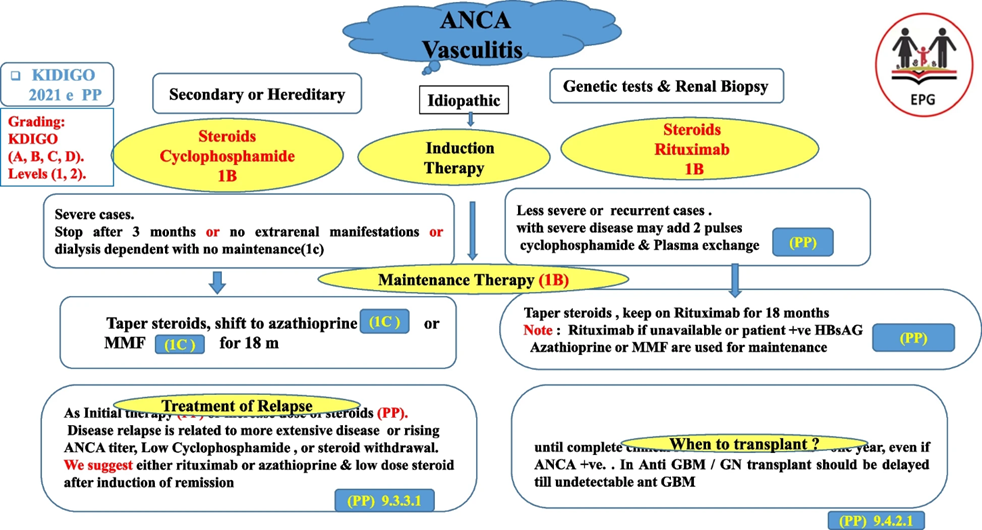
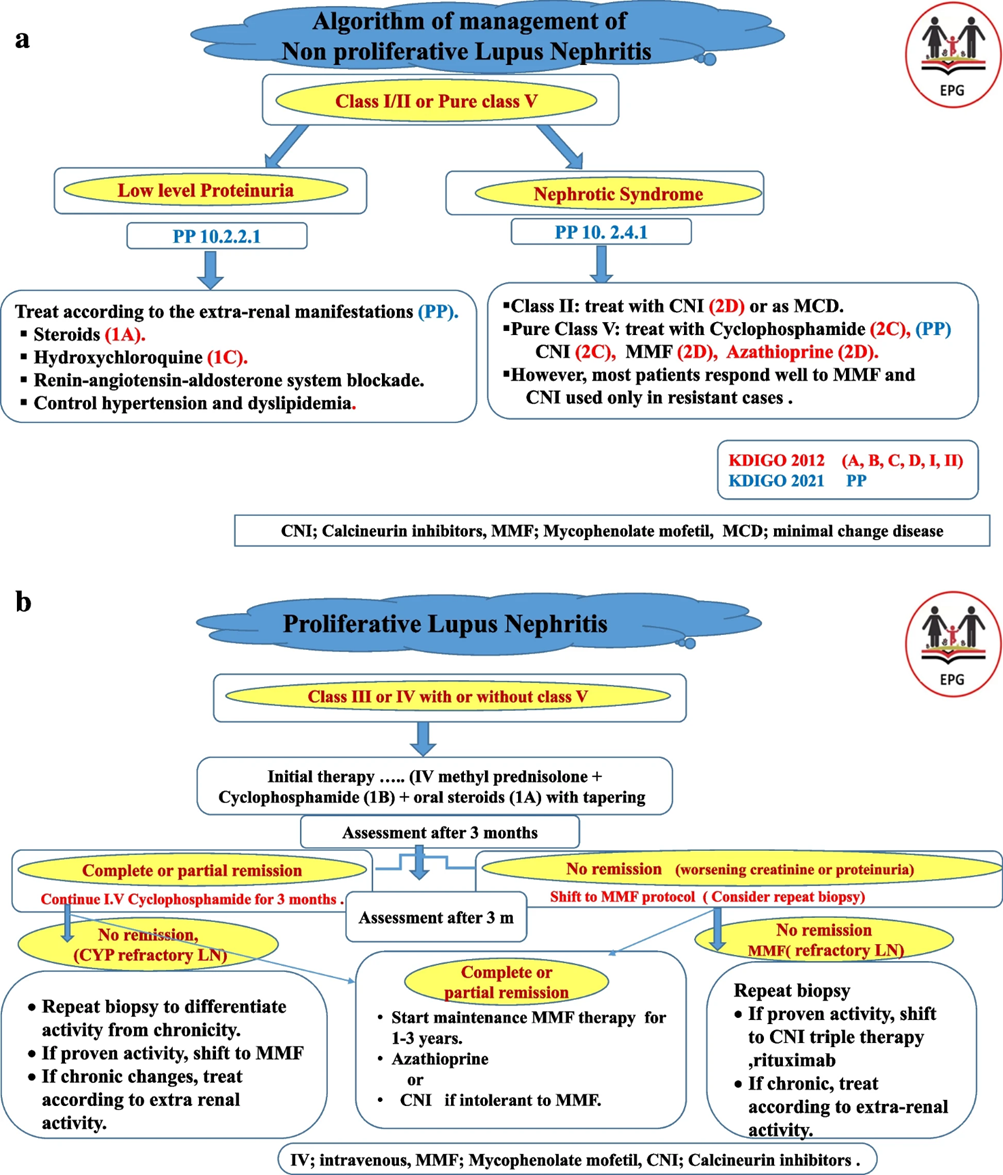
Most nephrotic children have steroid-sensitive nephrotic syndrome (SSNS), with only 20% of them having steroid resistant nephrotic syndrome (SRNS), depending on the geographic area [1]. MCD is the most common histopathology in SSNS, while children with SRNS have MCD, mesangial proliferative glomerulonephritis, or focal and segmental glomerulosclerosis (FSGS) [2]. In children, SRNS is defined as those who do not show remission after 6 weeks and standard dose of oral steroids ± 3 IV MPD doses [3]. Most nephrotic children (85–92%) show idiopathic type that affects only the kidney without extrarenal involvement and without identifiable cause. MCD pathology constitutes (75–85%) and FSGS (7–10%), while other histological types are rare [KDIGO 2021] [4]. The secondary type where the immune complex renal injury is mediated by a primary cause is less common and is related to drugs, infections, and autoimmune diseases such as lupus, IgAV, ANCA vasculitis, Wegner granulomatosis, AGBM, sarcoidosis, malignancies, and sickle cell disease.
Congenital and hereditary podocytopathies constitute two thirds of SRNS presenting in the first year of life and result from mutation in podocytes regulating genes [KDIGO 2021] [4]. Identification of a podocyte gene defect is fundamental to determine treatment response to steroids and calcineurin inhibitors. It is far superior to histopathology classification in predicting response to immune suppression, clinical course and progress to ESRD, and risk of post-transplant recurrence, thereby subsequent management of SRNS. To date, over sixty
genes have been identified as causing monogenic forms of SRNS recessive or dominant with an onset before 25 years [5–8]. Family counseling, screening of at-risk family members, and prenatal diagnosis are major steps following genetic diagnosis.
Renal biopsy and antibody serology is also crucial. Light microscopy identifies histopathology as MCD, FSGS, DMS or MP, MN and grade tubular atrophy, interstitial fibrosis, and glomerulosclerosis as prognostic markers of chronicity [9]. Occasionally, SRNS is secondary to infectious disease, drugs, and autoimmune disease such as SLE, IgA vasculitis, and malignancy. Therefore, infection screen for viruses and bacteria as well as serology tests for antibodies (ASOT, ANA, ADNA, ANCA, PLA2R ab) are important. Renal biopsy with immunofluorescence reports immune complex/complement deposits with pauci or linear or granular pattern. This helps in the diagnosis of SLE, IgAV, ANCAV, C3 C4/DDD, and immune complement mediated with membranoproliferative changes [KDIGO 2021] [4]. Electron microscopy reports the ultrastructure of glomerular basement membrane
(GBM) and podocytes that are helpful in many hereditary and syndromic types. Light microscopy without IF and EM is not enough as it would report only histopathology without referring to pathogenesis if immune complex mediated or genetic in origin [10].
SRNS without genetic mutation is expected to respond to immunosuppressive drugs with complete remission in up to 60% of cases and with partial remission in up to 19%. Those with no genetic mutation have a substantial advantage in terms of kidney survival over 10 years, with ESRD occurring in 71% of those with a genetic disease versus 29% in those without [11, 12]. Genetic types need transplantation with less rate of disease recurrence. Early treatment of infections (bacterial, viral, parasitic) [13–15], and proper treatment of auto immune disease according to its therapy plan is mandatory to prevent progress of renal injury [16, 17]. Current EPG/SRNS is an adaptation GL using both de novo IPNA 2020 and KDIGO 2021 guidelines customized to our community with high rate of infections,
consanguinity, autoimmune diseases such as SLE, and with shortage of genetic testing as routine screening for all SRNS. Renal biopsy and lab immunology are more available and thereby were suggested for EPG based on immune suppressive drug therapy plans. However, exclusion of genetic and secondary types is mandatory, as this significantly determine therapy plan.
- Purpose and Scope
These guidelines have been developed to standardize the delivery of services and to implement the guidance on the diagnosis and management of steroid-resistant nephrotic syndrome.
It provides guidance to physicians (viz. pediatrics, primary healthcare, family medicine, pediatric nephrology), nurses, and clinical pharmacists.
This version of the guideline includes recommendations and good practice statements for diagnosis and management of steroid-resistant nephrotic syndrome.
- Methods
➡️Methods of search:
A comprehensive search for guidelines was undertaken to identify the most relevant guidelines to consider for adaptation. Keywords used for search are: Steroid-resistant nephrotic syndrome, Diagnosis, Treatment, Follow up, Pediatric guidelines.
Inclusion / exclusion criteria followed in the search and retrieval of guidelines to be adapted:
• Selecting only evidence-based guidelines (guideline must include a report on methodology of development including the systematic literature searches and explicit links between individual recommendations and their supporting evidence)
• Selecting national and/or international guidelines
• Specific range of dates for publication (using Guidelines published or updated 2013 and later or the last 5 years)
• Selecting peer-reviewed publications only
• Selecting guidelines written in English language
• Excluding guidelines written by a single author
The following three categories of databases and websites were searched:
1. CPG databases and libraries (e.g., GIN, ECRI, SIGN, DynaMed, BIGG-REC PAHO)
2. Bibliographic databases (e.g., PubMed, Google Scholar)
3. Specialized professional societies (related to the pediatric subspecialty)
All retrieved Guidelines were screened and appraised using AGREE II instrument (www.agreetrust.org) by at least two members. The panel decided a cut-off point or rank the guidelines (any guideline scoring above 60% on the rigor dimension was retained)
After reviewing all the previous criteria the GDG/ GAG recommended using 5 guidelines:
1- IPNA clinical practice recommendations for the diagnosis and management of children with steroid-resistant nephrotic syndrome (2020).
2- Clinical practice guideline for pediatric idiopathic nephrotic syndrome 2013: medical therapy. Japanese Society of Nephrology and The Japanese Society for Pediatric Nephrology (2015).
3- KDIGO Clinical Practice Guideline on Glomerular Diseases (2012).
4- Kidney Disease: Improving Global Outcomes (KDIGO) Glomerular Disease Work Group. KDIGO 2021.Clinical Practice Guideline for the management of Glomerular Diseases. KidneyInt. (2021).
We did Adolopment for these guidelines: (Adoption, Adaptation, and Development)
- Adoption for most of the guideline recommendations.
- Development of Good Practice Statement
Contributors to the guideline development process:
Guideline Development Group (GDG)/ Guideline Adaptation Group (GAG):
The GDG/ GAG included two subgroups; the clinicians/ healthcare providers subgroup and the guideline methodologists’ subgroup.
Clinicians Subgroups
The clinicians’ subgroup or clinical panel for this guideline included experts with a range of knowledge, technical skills and diverse perspectives in the field of pediatric nephrology.
The main functions of the clinical panel were adolopment of diagnosis and management of steroid-resistant nephrotic syndrome Guidelines, determining the scope of the guideline and guideline, reviewing the evidence, and formulating evidence-informed recommendations in case of changing strength of recommendations.
Guideline Methodologists Subgroup
There were 3 guideline methodologists with expertise in guidelines development, adaptation, GRADE and translation of evidence into recommendations. Methodologists provided orientation and overview of evidence-informed guideline development processes using the GRADE approach, guideline adaptation using the Adapted ADAPTE, provided AGREE II assessment of the source guidelines in collaboration with the clinicians subgroup, generation of the EtD frameworks whenever applicable.
➡️External Review Group:
The External Review Group for this guideline comprises 4 clinical experts who have interest and expertise in pediatric nephrology.
They were identified by Egyptian Pediatric Clinical Practice Guidelines Committee (EPG) as people who can provide valuable insights during the guideline development process.
The External Review Group was asked to comment on (peer review) the final guideline to identify any criticism on the content and to comment on clarity and applicability as well as issues relating to implementation, dissemination, ethics, regulations, or monitoring, but not to change the recommendations formulated by the GDG/ GAG. The members of the External Review Group were required to submit declarations of interest before the peer review process.
Guideline Development/ Adaptation Group meetings:
GDG/ GAG meetings were organized virtually (weekly/bimonthly). Due to the extensive scope of the guideline, EPG was responsible for overseeing the adolopment process. the timetable and objectives of each meeting. GDG/ GAG meetings were also attended by members of the methodologists. Working rules for each contributor type were outlined by the chair at the start of each meeting, covering aspects such as vocal rights, voting, and evidence to decision and recommendation formulating processes.
Declarations of interests:
Prospective members of the GDG/ GAG were asked to fill in and sign the standard WHO declaration of interest and confidentiality undertaking forms. All guideline members and methodologists were also asked to fill in and sign the standard WHO declaration-of-interests.
Members of the external review group will be asked to fill in and sign the standard WHO declaration-of-interests form before the peer review process.
➡️Evidence for the guideline:
We used the GRADE system (Grading of Recommendations, Assessment, Development and Evaluation) for assigning the quality of evidence and strength of recommendations that includes the following definitions [18]. Informed by the evidence required for the GRADE Evidence to Decision (EtD) framework(s) was(were) done while considering changing strength of recommendations according to availability of some resources in the recommendations. Both ETD and changing strength of recommendation were not done in this guideline).
Description of the interpretation of the GRADE four levels of certainty of evidence:
Table 1. Classification of the Quality of Evidence
|
High |
We are very confident that the true effect lies close to that of the estimate of the effect. |
|
Moderate |
We are moderately confident in the effect estimate; the true effect is likely to be close to the estimate of the effect, but there is a possibility that it is substantially different. |
|
Low |
Our confidence in the effect estimate is limited; the true effect may be substantially different from the estimate of the effect. |
|
Very Low |
We have very little confidence in the effect estimate; the true effect is likely to be substantially different from the estimate of the effect. |
GRADE EtD’s contextual factors, criteria and considerations that link to the strength of recommendations:
Criteria and Considerations:
1. Benefits and harms: When a new recommendation is developed, desirable effects (benefits) need to be weighed against undesirable effects (risks/harms), considering any previous recommendation or another alternative. The larger the gap or gradient in favor of the desirable effects over the undesirable effects, the more likely that a strong recommendation will be made.
2. Certainty of the evidence about the effects: The higher the certainty of the scientific evidence base, the more likely that a strong will be made.
3. Values and preferences: If there is no important uncertainty or variability in how much people value the main outcomes, it is likely that a strong recommendation will be made. Uncertainty or variability around these values that could likely lead to different decisions, is more likely to lead to a conditional recommendation.
4. Economic implications: Lower costs (monetary, infrastructure, equipment or human resources) or greater cost-effectiveness are more likely to support a strong recommendation.
5. Equity and human rights: If an intervention will reduce inequities, improve equity or contribute to the realization of human rights, the greater the likelihood of a strong recommendation.
6. Feasibility: The greater the feasibility of an intervention to all stakeholders, the greater the likelihood of a strong recommendation.
7. Acceptability: If a recommendation is widely supported by health workers and program managers and there is widespread acceptance for implementation within the health service, the likelihood of a strong recommendation is greater.
Table 2. Classification of the Strengths of Recommendations
|
Strong |
The desirable effects of an intervention clearly outweigh the undesirable effects (or vice versa), so most patients should receive the recommended course of action. |
|
Conditional |
There is uncertainty about the trade-offs. The clinician and patient need to discuss the patient's values and preferences, and the decision should be individualized. |
Developing good practice statements:
The GDG/ GAG also developed good practice statements for this guideline, which are actionable messages relevant to the guideline questions. The justification for each good practice statement was carefully considered by the GDG/ GAG with an emphasis that they are clearly needed. Good practice statements were developed, guided by the following GRADE criteria:
1- Message is really necessary with regard to actual healthcare practice
2- Have large net positive consequence (relevant outcomes and downstream consequences) (GRADE EtD domains)
3- Collecting and summarizing the evidence is a poor use of time and resources
4- Include awell-documented, clear rationale connecting indirect evidence
5- Are clear and actionable statements.
The GDG/ GAG collectively drafted and finalized good practice statements with relevant justifications and remarks to help with their interpretation, with close support and input from the consultant and guideline methodologists.
We have used the Reporting Items for Practice Guidelines in Healthcare (RIGHT) extension for adapted guidelines (RIGHT-Ad@pt Tool) as a reporting checklist for this guideline adaptation process as recommended by the EQUATOR network.
- Evidence to recommendations: Considerations
The GDG/ GAG was guided by the results of the AGREE II appraisals of the eligible CPGs and thoroughly reviewed the recommendations of the original source WHO CPGs in consideration of local contextual factors related to the national Egyptian health system like burden of the disease, equity, acceptability, feasibility, and other relevant factors. The GDG decided through an informal consensus process to adopt most recommendation. Both ETD and changing strength of recommendation were not done in this guideline).
Also, GDG/ GAG develops group of good practice statements to improve acceptability and feasibility.
- Implementation Tools and Considerations
To improve healthcare provision, quality, safety, and patient outcome, evidence-based recommendations must not only be developed, but also disseminated and implemented at national and local levels and integrated into clinical practice.
Dissemination involves educating related healthcare providers to improve their awareness, knowledge and understanding of the guideline’s recommendations. It is one part of implementation, which involved translation of evidence-based guidelines into real life practice with improvement of health outcomes for the patients.
Implementation requires an evidence-based strategy involving professional groups and stakeholders and should consider the local cultural and socioeconomic conditions. Cost-effectiveness of implementation programs should be assessed.
Specific steps need to be followed before clinical practice recommendations can be integrated into local clinical practice, particularly in low resource settings.
Steps of implementing steroid‑resistant nephrotic syndrome diagnosis, treatment, and prevention strategies into the Egyptian health system:
1. Develop a multidisciplinary working group.
2. Assess the status of nutritional care delivery, care gaps and current needs.
3. Select the material to be implemented, agree on the main goals, identify the key recommendations for diagnosis, treatment and prevention and adapt them to the local context or environment.
4. Identify barriers to, and facilitators of implementation.
5. Select an implementation framework and its component strategies.
6. Develop a step-by-step implementation plan:
· Select the target populations and evaluate the outcome.
· Identify the local resources to support the implementation.
· Set timelines.
· Distribute the tasks to the members.
· Evaluate the outcomes.
7. Continuously review the progress and results to determine if the strategy requires modification.
Guideline implementation strategies will focus on the following: -
1. For Practitioners
· Educational meetings: conferences, lectures, workshops, grand rounds, seminars, and symposia.
· Educational materials: printed or electronic information (software).
· Web-based education: computer-based educational activities.
· A trained person meets with providers in their practice setting to provide information with the intention of changing the provider’s practice. The information may include feedback on the performance of the provider(s).
· Reminders: the provision of information verbally, on papers or on a computer screen to prompt a health professional to recall information or to perform or avoid a particular action related to patient care.
· Optimize professional-patient interactions, through mass media campaigns, reminders, and education materials.
· Practice tools: tools designed to facilitate behavioral/practice changes, e.g., flow charts.
2. For Patients and care givers
· Patient education materials (Arabic booklet): Printed/electronic information aimed at the patient/consumer, family, caregivers, etc.
· Reminders: the provision of information verbally, on papers or electronically to remind a patient/consumer to perform a particular health-related behaviors.
· Mass media campaigns.
3. For Nurses
· Educational meetings: lectures, workshops or traineeships, seminars, and symposia.
· Educational materials: printed.
· A trained person meets with nurses in their practice setting to provide information with the intention of changing the provider’s practice.
· Reminders: the provision of information verbally, on paper or on a computer screen to prompt them to recall information or to perform or avoid a particular action related to patient care.
· Practice tools: tools designed to facilitate behavioral/practice changes.
4. For Stakeholders
Plans have been made to contact with all the health sectors in Egypt including all sectors of the Ministry of Health and Population, National Nutrition Institute, University Hospitals, Ministry of Interior, Ministry of Defense, Non-Governmental Organizations, Private sector, and all Health Care Facilities.
· Information and communication technology: Electronic decision support, order sets, care maps, electronic health records, office-based personal digital assistants, etc.
· Any summary of clinical provision of health care over a specified period may include recommendations for clinical action. The information is obtained from medical records, databases, or observations by patients. Summary may be targeted at the individual practitioner or the organization.
· Administrative policies and procedures.
· Formularies: Drug safety programs, electronic medication administration records.
5. Other activities to assist the implementation of the adapted guideline’s recommendations include:
· International initiative: Dissemination of the presented adapted CPG internationally via sending the final adapted CPG to the Guidelines International Network (GIN) Adaptation Working Group and contacting the CPG developers.
· Gantt chart has been designed to manage the dissemination and implementation stages for the adapted CPG over an accurate time frame (Appendix).
➡️Guideline Implementation Tools
Educational materials based on this Adapted CPG for steroid‑resistant nephrotic syndrome have been made available in form of:
1. Manual for physician for diagnosis and algorithm for diagnosis and management of steroid‑resistant nephrotic syndrome
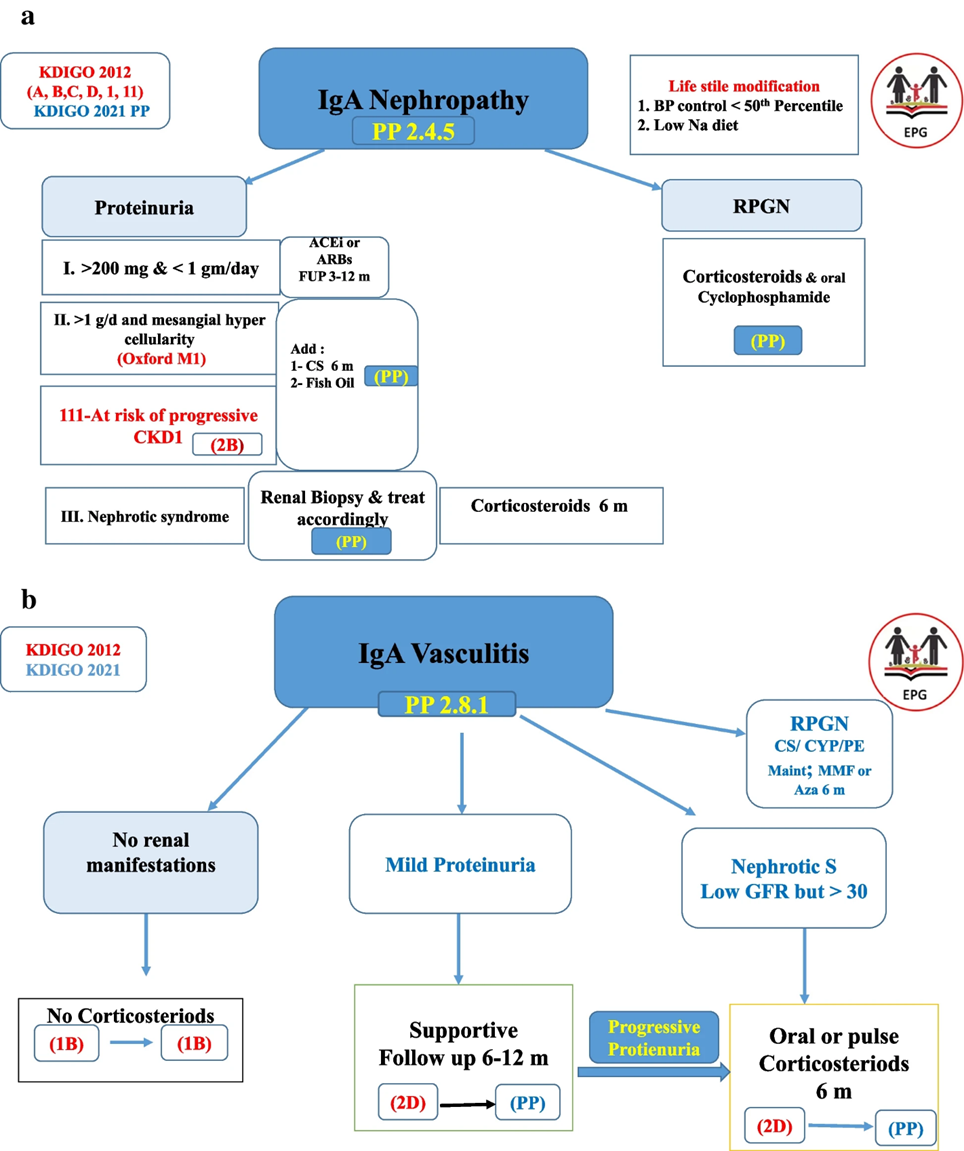
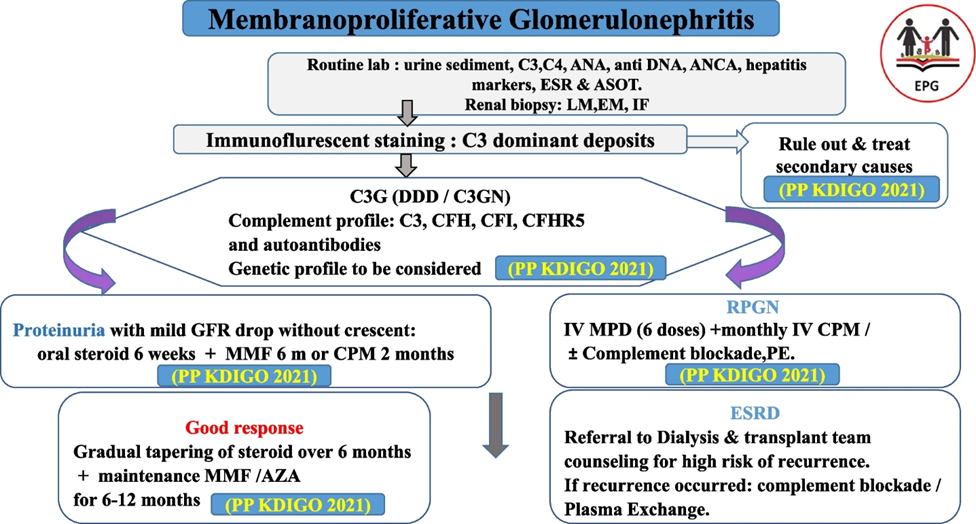
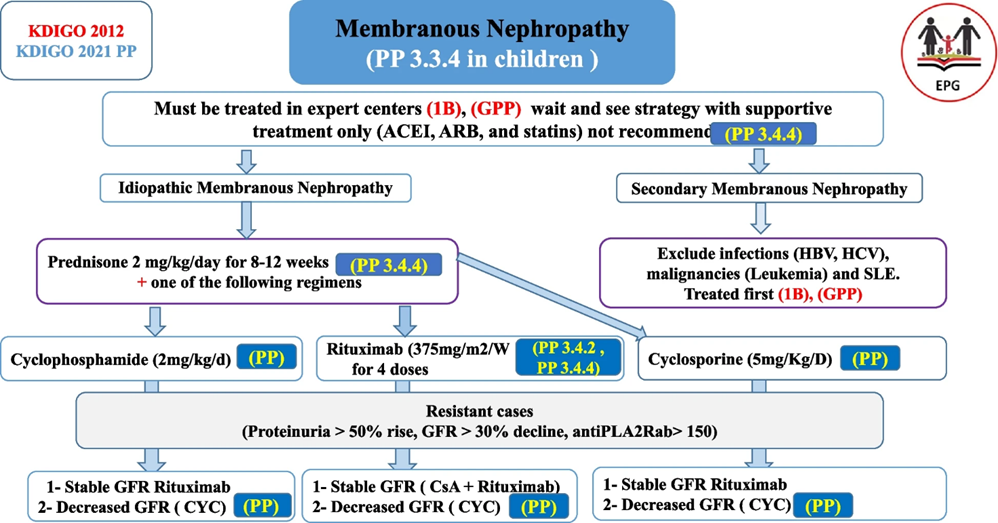
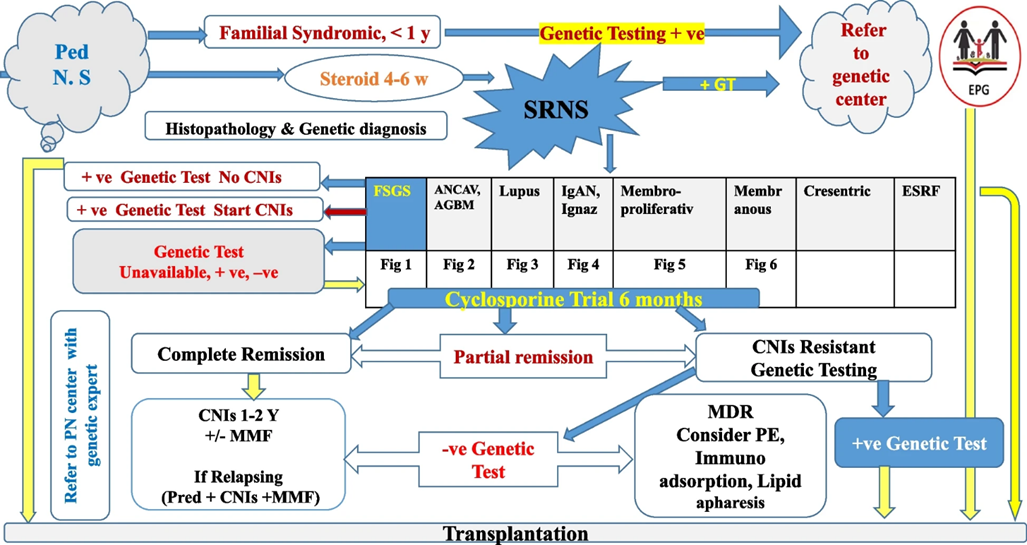
- Limitations and suggestions for further research needs
Future research recommendations for the management of steroid‑resistant nephrotic syndrome in children in the Egyptian context could include: • National Genetic Profile Registries: Conducting nationwide epidemiological and genetic mapping studies to identify common monogenic mutations unique to Egyptian pediatric SRNS cases, particularly in regions with high rates of consanguinity. • Efficacy and Safety of Novel Biologics: Carrying out multicenter prospective clinical trials to assess the long-term safety, optimal dosing, and efficacy of steroid-sparing agents (e.g., Rituximab, Mycophenolate Mofetil) and complement inhibitors within the local healthcare setting. • Post-Transplant Recurrence Outcomes: Establishing long-term registry tracking to better quantify recurrence rates of non-genetic SRNS post-kidney transplantation in living-related donor cohorts. • Secondary Cause Screen Optimization: Developing standardized, cost-effective screening protocols for endemic infections (such as schistosomiasis or hepatitis) that contribute to secondary nephrotic syndrome. These recommendations aim to address specific challenges and characteristics of the Egyptian context, potentially leading to more effective prevention and management strategies for steroid‑resistant nephrotic syndrome in children. Challenges • High Cost & Limited Access to Genetic Testing: Genetic testing remains expensive, limited to a few tertiary centers, and is not fully covered by national medical insurance, necessitating reliance on renal biopsy and laboratory immunology. • High Rates of Consanguinity: Consanguinity presents unique diagnostic challenges for living-related organ donation, requiring extensive genetic counseling and pre-transplant donor screening. Strengthen the evidence base of the next update of this guideline by generating GRADE summary of finding tables, evidence profiles, and EtD frameworks.- Monitoring and evaluating the impact of the guideline.
The following are three performance measures or indicators for implementing this adapted CPG for steroid‑resistant nephrotic syndrome in children:
1. Adherence to steroid‑resistant nephrotic syndrome Guidelines
· Numerator: Number of children with steroid‑resistant nephrotic syndrome who received treatment as per guideline recommendations.
· Denominator: Total number of children diagnosed with steroid‑resistant nephrotic syndrome
· Data Source: Hospital or clinic patient records.
2. Duration of Hospital Stay
· Numerator: Total number of hospital stay days for children with steroid‑resistant nephrotic syndrome
· Denominator: Total number of children admitted with steroid‑resistant nephrotic syndrome Data Source: Hospital admission and discharge records.
3. Rate of Readmission
· Numerator: Number of children readmitted with symptoms of steroid‑resistant nephrotic syndrome within a certain period (e.g., 30 days) after discharge.
· Denominator: Total number of children initially admitted with steroid‑resistant nephrotic syndrome
· Data Source: Hospital readmission records.
These key performance indicators are designed to measure the effectiveness and adherence to the guidelines, the efficiency of the treatment in terms of resource utilization (hospital stay), and the success of the treatment in preventing further complications (readmissions).
- Updating of the guideline
The EPG Nephrotic syndrome Group has decided to conduct the next review of this adapted CPG for updates after five years. This should be carried out in 2029 after checking for updates in the source CPGs, consultation of expert opinion on the changes needed for updating according to the newest evidence and recommendations published in this area and the clinical audit and feedback from implementation efforts in the aforementioned local healthcare settings except if any breakthrough evidence- based recommendations are published before that date. The process will be guided by the Checklist for the Reporting of Updated Guidelines (CheckUp) Tool that is freely provided by the AGREE Enterprise and by the Reporting Items for Practice Guidelines in Healthcare (RIGHT) extension for adapted guidelines RIGHT-Ad@pt Checklist.
- References
1. Mickinney PA, Feltbower RG, Brocklebank JT et al (2001) Time trends and ethnics pattern of childhood nephrotic syndrome in Yoorkshire, UK. Pediatr Nephrol 16:1040–1044.
2. International Study Kidney Disease in children (1981) primary nephrotic syndrome in children; clinical significance of histopathologic variant of minimal change and diffuse mesangial hypercellularity: a report of the International Study Kidney Disease in Children. Kidney int 20:765–771.
3. Trautmann A, Vivarelli M, Samuel S et al. IPNA 2020 clinical practice recommendations for the diagnosis and management of steroid–resistant nephrotic syndrome. Pediatr Nephrol 2020; 35: 1529–1561. Guideline URL:https://link.springer.com/article/https:// doi. org/ 10. 1007/s00467-020-04519-1.
4. KDIGO 21 d-kidney disease: Improving Global Outcomes (KDIGO) Glomerular Disease Work Group (2021) KDIGO 2021 Clinical Practice Guideline for the management of glomerular diseases. Kidney Int. 100(45):51-S276 (https:// kidigo. org/ guide lines/ gd/ (acess ed29/ 09/ 2021) (KDIGO 2021)
5. Sadowski CE, Lovric S, Ashraf S, Pabst WL, Gee HY, Kohl S, Engelmann S, Vega-Warner V, Fang H, Halbritter J, Somers MJ, Tan W, Shril S, Fessi I, Lifton RP, Bockenhauer D, El-Desoky S, Kari JA, Zenker M, Kemper MJ, Mueller D, Fathy HM, Soliman NA (2015) SRNS Study Group, Hildebrandt F. A single-gene cause in 29.5% of cases of steroid-resistant nephrotic syndrome. J Am Soc Nephrol. 26(6):1279–89
6. Lovric S, Ashraf S, Tan W, Hildebrandt F (2016) Genetic testing in steroid resistant nephrotic syndrome: when and how? Nephrol Dial Transplant 31(11):1802–1813. https:// doi. org/ 10. 1093/ ndt/ gfv355
7. Warejko JK, Tan W, Daga A, Schapiro D, Lawson JA, Shril S, Lovric S, Ashraf S, Rao J, Hermle T, Jobst-Schwan T, Widmeier E, Majmundar AJ, Schneider R, Gee HY, Schmidt JM, Vivante A, van der Ven AT, Ityel H, Chen J, Sadowski CE, Kohl S, Pabst WL, Nakayama M, Somers MJG, Rodig NM, Daouk G, Baum M, Stein DR, Ferguson MA, Traum AZ, Soliman NA, Kari JA, El Desoky S, Fathy H, Zenker M, Bakkaloglu SA, Müller D, Noyan A, Ozaltin F, Cadnapaphornchai MA, Hashmi S, Hopcian J, Kopp JB, Benador N, Bockenhauer D, Bogdanovic R, Stajić N, Chernin G, Ettenger R, Fehrenbach H, Kemper M, Munarriz RL, Podracka L, Büscher R, Serdaroglu E, Tasic V, Mane S, Lifton RP, Braun DA, Hildebrandt F (2018) Whole exome sequencing of patients with steroid-resistant nephrotic syndrome. Clin J Am Soc Nephrol 13(1):53–62
8. Lipska-Ziętkiewicz BS. Genetic Steroid-Resistant Nephrotic Syndrome Overview.2021 Aug 26. In: Adam MP, Ardinger HH, Pagon RA, et al., editors. Gene Reviews® [Internet]. Seattle (WA): University of Washington, Seattle; 1993–2021 .
9. Hommos MS, Zeng C, Liu Z, Troost JP, Rosenberg AZ, Palmer M, Kremers WK, Cornell LD, Fervenza FC, Barisoni L, Rule AD (2018) Global glomerulosclerosis with nephrotic syndrome; the clinical importance of age adjustment. Kidney Int 93(5):1175–1182
10. Tinawi M (2020) Update on the etiology, classification, and management of glomerular diseases. Avicenna J Med 10:61–67
11. Buscher AK, Kranz B, Buscher R et al (2010) Immunosuppression and renal outcome in congenital and pediatric steroid resistant nephrotic syndrome. Clin J Am Soc Nephrol 5:2075–2084
12. Buscher AK, Beck BB, Melk A et al (2016) Rapid response to cyclosporine A and favorable renal outcome in nongenetic vs genetic steroid-resistant nephrotic syndrome in children. Clin J Am Soc Nephrol 11:245–253
13. Moustafa B (2006) Infection associated nephropathies IPNA Palermo Seminar Italy 2006
14. KDIGO (2018) Kidney Disease Improving Global Outcomes Hepatitis C Work Group KDIGO 2018 Clinical Practice Guideline for the prevention, diagnosis, evaluation and treatment of hepatitis C in chronic kidney disease. Int Suppl 2018:891–165
15. Soliman 21 Neveen a. Soliman Review article COVID-19 infection and the kidney: learning the lesson. Journal of infection and public Health journal home page: http:// www. elsev ier. com/ locate/ jiph. Neveen A Soliman Department of pediatrics, Center of Pediatric Nephrology & Transplantation Kasr Al Ainy School of Medicine, Cairo University.
16. Ozen S (2020) Sag E Childhood vasculitis. Rheumatology (Oxford) (Suppl 3):iii 95-iii100. https:// doi. org/ 10. 1093/ rheum atolo gy/ kez599
17. Groot N, de Graeff N, Marks SD, et al (2017) European evidence-based recommendations for the diagnosis and treatment of childhood-onset lupus nephritis: the SHARE initiative. Ann Rheum Dis.
18. Abdel Baky A, Omar TEI, Amer YS; Egyptian Pediatric Clinical Practice Guidelines Committee (EPG). Adapting global evidence-based practice guidelines to the Egyptian healthcare context: the Egyptian Pediatric Clinical Practice Guidelines Committee (EPG) initiative. Bull Natl Res Cent. 2023;47(1):88. https://doi.org/10.1186%2Fs42269-023-01059-0
19. Alshehri A, Almazrou S, Amer Y. Methodological frameworks for adapting global practice guidelines to national context in the Eastern Mediterranean Region. Eastern Mediterranean Health Journal. 2023 Jul 1;29(7). https://www.emro.who.int/emhj-volume-29-2023/volume-29-issue-7/methodological-frameworks-for-adapting-global-practice-guidelines-to-national-context-in-the-eastern-mediterranean-region.html
20. Schünemann H, Brozek J, Guyatt G, Oxman A (editors). GRADE handbook: handbook for grading the quality of evidence and the strength of recommendations using the GRADE approach. Grading of Recommendations Assessment, Development and Evaluation (GRADE) Working Group; 2013 (Online updated version: https://gdt.gradepro.org/app/handbook/handbook.html Accessed 16/8/2024)
21. Klugar M, Lotfi T, Darzi AJ, et al. GRADE Guidance 39: Using GRADE-ADOLOPMENT to adopt, adapt or create contextualized recommendations from source guidelines and evidence syntheses. Journal of Clinical Epidemiology. 2024 Aug 6:111494. https://doi.org/10.1016/j.jclinepi.2024.111494 (in press)
22. Amer YS, Elzalabany MM, Omar TI, Ibrahim AG, Dowidar NL. The ‘Adapted ADAPTE’: an approach to improve utilization of the ADAPTE guideline adaptation resource toolkit in the A lexandria C enter for E vidence‐B ased C linical P ractice G uidelines. Journal of evaluation in clinical practice. 2015 Dec;21(6):1095-106. https://doi.org/10.1111/jep.12479
23. Brouwers MC, Kho ME, Browman GP, Burgers JS, Cluzeau F, Feder G, Fervers B, Graham ID, Grimshaw J, Hanna SE, Littlejohns P, Makarski J, Zitzelsberger L; AGREE Next Steps Consortium. AGREE II: advancing guideline development, reporting and evaluation in health care. CMAJ. 2010 Dec 14;182(18):E839-42. https://doi.org/10.1503%2Fcmaj.090449
24. Agree II (2022) AGREE Enterprise website. Available at: https://www.agreetrust.org/resource-centre/agree-ii/ (Accessed: 16/8/2024).
25. Song Y, Alonso-Coello P, Ballesteros M, et al. A Reporting Tool for Adapted Guidelines in Health Care: The RIGHT-Ad@pt Checklist[J]. Annals of Internal Medicine, 2022, 175(5):710-719. https://doi.org/10.7326/M21-4352 (Official RIGHT Statement Website: http://www.right-statement.org/extensions/13 Accessed 16/8/2024).
- Annexes
Annex Table 1.
Declaration of Conflict of Interests
The members of the guideline development/ adaptation group and the external review group have no academic, financial, or competing interests to declare and none of them were involved in the development of the original source guideline(s).
Any identified potential COI has been reported below.
|
Egyptian Pediatric Clinical Practice Guidelines Committee (EPG) Guideline Adaptation Group (Clinical subgroup) |
|||
|
Name |
Affiliation, Area of expertise / Role, Country / Primary location [work] |
Declaration of interests |
|
|
Interest identified |
Management plan & decision |
||
|
Bahia Moustafa |
Professor of Pediatrics & Pediatric Nephrology, Cairo University, Egypt |
None |
Not Applicable |
|
Sawsan Moselhy |
Department of Pediatric, Pediatric Nephrology Division, Faculty of Medicine, Ain Shams University, Cairo, Egypt. |
None |
Not Applicable |
|
Moftah Rabie |
Department of Pediatric, Pediatric Nephrology Division, Faculty of Medicine, Azhar University, Cairo, Egypt. |
None |
Not Applicable |
|
Ayman Hammad |
Department of Pediatric, Pediatric Nephrology Division, Faculty of Medicine, Mansoura University, Mansoura, Egypt. |
None |
Not Applicable |
|
Doaa Youssef |
Department of Pediatric, Pediatric Nephrology Division, Faculty of Medicine, Zagazig University, Zagazig, Egypt. |
None |
Not Applicable |
|
Mohamed Shouman |
Department of Pediatric, Medical Research and Clinical Studies Institute, National Research Centre, Cairo, Egypt. |
None |
Not Applicable |
|
Samuel Makar |
Department of Pediatric, Pediatric Nephrology Division, Faculty of Medicine, Cairo University, Cairo, Egypt |
None |
Not Applicable |
|
Ahmed Badr |
Department of Pediatric, Pediatric Nephrology Division, Faculty of Medicine, Cairo University, Cairo, Egypt |
None |
Not Applicable |
|
Sameh Mansour |
Department of Pediatric, Pediatric Nephrology Division, Faculty of Medicine, Azhar University, Cairo, Egypt. |
None |
Not Applicable |
|
Dina Ebrahim |
Department of Pediatric, Pediatric Nephrology Division, Faculty of Medicine, Ain Shams University, Cairo, Egypt. |
None |
Not Applicable |
|
Marwa Nabhan |
Department of Pediatric, Pediatric Nephrology Division, Faculty of Medicine, Cairo University, Cairo, Egypt |
None |
Not Applicable |
|
Fatma Ateia |
Department of Pediatric, Pediatric Nephrology Division, Faculty of Medicine, Cairo University, Cairo, Egypt |
None |
Not Applicable |
|
Hend Abdel‑Nabi |
Department of Pediatric, Pediatric Nephrology Division, Faculty of Medicine, Tanta University, Tanta, Egypt. |
None |
Not Applicable |
|
Ahmed Hussein |
Department of Pediatric, Pediatric Nephrology Division, Faculty of Medicine, Ain Shams University, Cairo, Egypt. |
None |
Not Applicable |
|
Manal Salman |
Department of Pathology, Faculty of Medicine, Ain Shams University, Cairo, Egypt. |
None |
Not Applicable |
|
Mai S. Korkor |
Department of Pediatric, Pediatric Nephrology Division, Faculty of Medicine, Mansoura University, Mansoura, Egypt. |
None |
Not Applicable |
|
Esraa A. Elbahkiry |
Clinical Pharmacist, Faculty of Medicine, Mansoura University, Mansoura, Egypt. |
None |
Not Applicable |
|
Marwa Dagher |
Clinical Pharmacist, Faculty of Medicine, Mansoura University, Mansoura, Egypt. |
None |
Not Applicable |
|
Abeer Selim |
Department of Pediatric, Medical Research and Clinical Studies Institute, National Research Centre, Cairo, Egypt. |
None |
Not Applicable |
|
Guideline Adaptation Group (Methodology Subgroup) |
|||
|
Prof. Ashraf Abdel Baky |
Professor of Pediatrics Ain Shams University, Egypt Founder and Chair of EPG |
None |
Not Applicable |
|
Dr. Yasser Sami Amer |
1. Pediatrics Department and Clinical Practice Guidelines and Quality Research Unit, Quality Management Department, King Saud University Medical City, Riyadh, Saudi Arabia; 2. Research Chair for Evidence-Based Health Care and Knowledge Translation, King Saud University, Riyadh, Saudi Arabia; 3. Chair, Adaptation Working Group, Guidelines International Network (GIN), Perth, Scotland 4. Department of Internal Medicine, Ribeirão Preto Medical School, University of São Paulo (FMRP-USP), Ribeirão Preto, São Paulo, Brazil. |
None |
Not Applicable |
|
Tarek El-Sayed Ismail Omar |
Professor of Pediatrics and Pediatric Neurology Alexandria Center for Evidence‑Based Clinical Practice Guidelines Faculty of Medicine Alexandria University, Egypt. |
None |
Not Applicable |
|
Dr. Lamis Mohsen Elsholkamy |
Lecturer of Pediatrics, Faculty of Medicine, Modern University for Technology and Information (MTI), Egypt |
None |
Not Applicable |
|
External Review Group |
|||
|
Amr Sarhan |
Pediatric Nephrology Mansoura University
|
None |
Not Applicable |
|
Neveen A Soliman |
Pediatric Nephrology Cairo University |
None |
Not Applicable |
|
Ihab El Hakim |
Pediatric Nephrology Ain Shams University |
None |
Not Applicable |
|
External Reviewer for methodology |
|||
|
Prof. Iván D. Flórez |
Department of Pediatrics, University of Antioquia, Medellín, Colombia, Department of Health Research Methods, Evidence, and Impact, McMaster University, Hamilton, Canada, Leader, AGREE Collaboration (Appraisal of Guidelines for Research & Evaluation) Director, Cochrane Colombia |
None |
Not Applicable |
|
International Peer Reviewers |
|
|
|
|
Federica Zotta |
Division of Nephrology, Department of Pediatric subspecialities. Bambino Gesu Children Hospital (IRCCS), Rome, Italy. |
None |
Not Applicable |
➡️Web annexes
The following annexes can be added as a package of standalone supplementary documents.
Keywords: The MeSH terms for "Guideline for the steroid‑resistant nephrotic syndrome " on PubMed are: : Steroid-resistant nephrotic syndrome, Diagnosis, Treatment, Follow up, Pediatric guidelines.
Annex Table 2. Results of the AGREE II assessment of
A- IPNA clinical practice recommendations for the diagnosis and management of children
with steroid-resistant nephrotic syndrome
b- Evidence-Based Clinical Practice Guidelines for Nephrotic Syndrome JSPN 2014,
c- KDIGO Clinical Practice Guideline on Glomerular Diseases, using the AGREE II Instrument.
Appendix Table 4. The RIGHT-Ad@pt checklist |
|||||
|
7 sections, 27 topics, and 34 items |
Assessment |
Page(s)* |
Note(s) |
||
|
BASIC INFORMATION |
|||||
|
Title/subtitle |
|||||
|
1 |
Identify the report as an adaptation of practice guideline(s), that is include "guideline adaptation", "adapting", "adapted guideline/recommendation(s)", or similar terminology in the title/subtitle. |
☒ Yes ☐ No ☐ Unclear |
|
|
|
|
2 |
Describe the topic/focus/scope of the adapted guideline. |
☒ Yes ☐ No ☐ Unclear |
|
|
|
|
Cover/first page |
|||||
|
3 |
Report the respective dates of publication and the literature search of the adapted guideline. |
☒ Yes ☐ No ☐ Unclear |
|
|
|
|
4 |
Describe the developer and country/region of the adapted guideline. |
☒ Yes ☐ No ☐ Unclear |
|
|
|
|
Executive summary/abstract |
|||||
|
5 |
Provide a summary of the recommendations contained in the adapted guideline. |
☒ Yes ☐ No ☐ Unclear |
|
|
|
|
Abbreviations and acronyms |
|||||
|
6 |
Define key terms and provide a list of abbreviations and acronyms (if applicable). |
☒ Yes ☐ No ☐ Unclear |
|
|
|
|
Contact information of the guideline adaptation group |
|||||
|
7 |
Report the contact information of the developer of the adapted guideline. |
☒ Yes ☐ No ☐ Unclear |
|
|
|
|
SCOPE |
|||||
|
Source guideline(s) |
|||||
|
8 |
Report the name and year of publication of the source guideline(s), provide the citation(s), and whether source authors were contacted. |
☒ Yes ☐ No ☐ Unclear |
|
|
|
|
Brief description of the health problem(s) |
|||||
|
9 |
Provide the basic epidemiological information about the problem (including the associated burden), health systems relevant issues, and note any relevant differences compared to the source guideline(s).
|
☒ Yes ☐ No ☐ Unclear |
|
|
|
|
Aim(s) and specific objectives |
|||||
|
10 |
Describe the aim(s) of the adapted guideline and specific objectives, and note any relevant differences compared to the source guideline(s). |
☒ Yes ☐ No ☐ Unclear |
|
|
|
|
Target population(s) |
|||||
|
11 |
Describe the target population(s) and subgroup(s) (if applicable) to which the recommendation(s) is addressed in the adapted guideline, and note any relevant differences compared to the source guideline(s). |
☒ Yes ☐ No ☐ Unclear |
|
|
|
|
End-users and settings |
|||||
|
12 |
Describe the intended target users of the adapted guideline, and note any relevant differences compared to the source guideline(s). |
☒ Yes ☐ No ☐ Unclear |
|
|
|
|
13 |
Describe the setting(s) for which the adapted guideline is intended, and note any relevant differences compared to the source guideline(s). |
☒ Yes ☐ No ☐ Unclear |
|
|
|
|
RIGOR OF DEVELOPMENT |
|||||
|
Guideline adaptation group |
|||||
|
14 |
List all contributors to the guideline adaptation process and describe their selection process and responsibilities. |
☒ Yes ☐ No ☐ Unclear |
|
|
|
|
Adaptation framework/methodology |
|||||
|
15 |
Report which framework or methodology was used in the guideline adaptation process. |
☒ Yes ☐ No ☐ Unclear |
|
|
|
|
Source guideline(s) |
|||||
|
16 |
Describe how the specific source guideline(s) was(were) selected. |
☒ Yes ☐ No ☐ Unclear |
|
|
|
|
Key questions |
|||||
|
17 |
State the key questions of the adapted guideline using a structured format, such as PICO (population, intervention, comparator, and outcome), or another format as appropriate. |
☒ Yes ☐ No ☐ Unclear |
|
|
|
|
18 |
Describe how the key questions were developed/modified, and/or prioritized. |
☐ Yes ☒ No ☐ Unclear |
|
|
|
|
Source recommendation(s) |
|||||
|
19 |
Describe how the recommendation(s) from the source guideline(s) was(were) assessed with respect to the evidence considered for the different criteria, the judgements and considerations made by the original panel. |
☐ Yes ☒ No ☐ Unclear |
|
|
|
|
Evidence synthesis |
|||||
|
20 |
Indicate whether the adapted recommendation(s) is/are based on existing evidence from the source guideline(s), and/or additional evidence. |
☐ Yes ☒ No ☐ Unclear |
|
|
|
|
21 |
If new research evidence was used, describe how it was identified and assessed. |
☐ Yes ☒ No ☐ Unclear |
NA |
|
|
|
Assessment of the certainty of the body of evidence and strength of recommendation |
|||||
|
22 |
Describe the approach used to assess the certainty/quality of the body/ies of evidence and the strength of recommendations in the adapted guideline and note any differences (if applicable) compared to the source guideline(s). |
☐ Yes ☒ No ☐ Unclear |
NA |
|
|
|
Decision-making processes |
|||||
|
23 |
Describe the processes used by the guideline adaptation group to make decisions, particularly the formulation of recommendations.
|
☒ Yes ☐ No ☐ Unclear |
|
|
|
|
RECOMMENDATIONS |
|||||
|
Recommendations |
|||||
|
24 |
Report recommendations and indicate whether they were adapted, adopted, or de novo. |
☒ Yes ☐ No ☐ Unclear |
|
|
|
|
25 |
Indicate the direction and strength of the recommendations and the certainty/quality of the supporting evidence and note any differences compared to the source recommendations(s) (if applicable). |
☒ Yes ☐ No ☐ Unclear |
|
|
|
|
26 |
Present separate recommendations for important subgroups if the evidence suggests important differences in factors influencing recommendations and note any differences compared to the source recommendations(s) (If applicable). |
☒ Yes ☐ No ☐ Unclear |
|
|
|
|
Rationale/explanation for recommendations |
|||||
|
27 |
Describe the criteria/factors that were considered to formulate the recommendations or note any relevant differences compared to the source guideline(s) (if applicable). |
☒ Yes ☐ No ☐ Unclear |
|
|
|
|
EXTERNAL REVIEW AND QUALITY ASSURANCE |
|||||
|
External review |
|||||
|
28 |
Indicate whether the adapted guideline underwent an independent external review. If yes, describe the process. |
☒ Yes ☐ No ☐ Unclear |
|
|
|
|
Organizational approval |
|||||
|
29 |
Indicate whether the adapted guideline obtained organizational approval. If yes, describe the process. |
☒ Yes ☐ No ☐ Unclear |
SNS & NEBMC |
|
|
|
FUNDING, DECLARATION, AND MANAGEMENT OF INTEREST |
|||||
|
Funding source(s) and funder role(s) |
|||||
|
30 |
Report all sources of funding for the adapted guideline and source guideline(s), and the role of the funders. |
☒ Yes ☐ No ☐ Unclear |
|
|
|
|
Declaration and management of interests |
|||||
|
31 |
Report all conflicts of interest of the adapted and the source guideline(s) panels, and how they were evaluated and managed. |
☒ Yes ☐ No ☐ Unclear |
|
|
|
|
OTHER INFORMATION |
|||||
|
Implementation |
|||||
|
32 |
Describe the potential barriers and strategies for implementing the recommendations (if applicable). |
☒ Yes ☐ No ☐ Unclear |
|
|
|
|
Update |
|||||
|
33 |
Briefly describe the strategy for updating the adapted guideline (if applicable). |
☒ Yes ☐ No ☐ Unclear |
|
|
|
|
Limitations and suggestions for further research |
|||||
|
34 |
Describe the challenges of the adaptation process, the limitations of the evidence, and provide suggestions for future research. |
☐ Yes ☒ No ☐ Unclear |
-- |
|
|