العمل الإجرائي لحالات الكلوستومى
| الموقع: | EHC | Egyptian Health Council |
| المقرر الدراسي: | دلائل الاجراءات التمريضية لأقسام الداخلي |
| كتاب: | العمل الإجرائي لحالات الكلوستومى |
| طبع بواسطة: | Guest user |
| التاريخ: | الأحد، 20 سبتمبر 2026، 5:06 PM |
الوصف
"last update: 13 April 2025" تحميل الدليل
- اعداد
دليل الأقسام الداخلية
تحت اشراف
- أ.د/ محمد لطيف الرئيس التنفيذي للمجلس الصحي المصري - د/ كوثر محمود نقيب عام التمريض المصري – عضو مجلس الشيوخ
اعداد
|
م |
الاسم |
الوظيفة |
|
1 |
أ. د /امل احمد خليل مرسي |
نائب رئيس الجامعة لشئون التعليم والطلاب – جامعة بورسعيد |
|
2 |
أ.د / عفاف عبد العزيز عبد العزيز بصل |
عميد كلية التمريض –استاذ تمريض باطنه وجراحي جامعة طنطا |
|
3 |
أ.د/ زينب حسين على محمد سعد |
وكيل الكلية لشئون البيئة وخدمة المجتمع – كلية التمريض – جامعه حلوان |
|
4 |
أ.د /امل سعيد طه رفاعي |
أستاذ ورئيس قسم التمريض الباطني الجراحي – جامعة بنها |
|
5 |
أ.د /حنان احمد السباعي على |
استاذ التمريض التمريض الباطني الجراحي- كلية التمريض – جامعة القاهرة |
|
6 |
د /نيفين عبدربه النبي محمد عبد النبي |
رئيس الإدارة المركزية ندباَ –وزاره الصحة |
|
7 |
د /مايسه حسني احمد تمام |
مدير عام للإدارة ندباَ – وزاره الصحة |
|
8 |
د نانسي علاء الدين عبد الباسط على |
المشرف على التعليم الفني- الهيئة العامة للرعاية الصحية |
|
9 |
د شيرين محمد محمد سعدالدين |
المشرف على تطوير الخدمات التمريضية –الهيئة العامة للرعاية الصحية |
|
10 |
د/ مى محمود العسال |
مدير عام الإدارة العامة لشئون المعاهد الفنية الصحية |
|
11 |
أ.م.د/ هبة محمود محمد |
أستاذ مساعد تمريض صحة الام وحديثي الولادة –كلية التمريض - جامعة عين شمس |
|
المشاركين |
||
|
12 |
/أنهلة كامل مصطفي |
مسئول التمريض بالهيئة العامة للرعاية الصحية فرع الإسماعيلية |
|
13 |
/أمها سعد محمد النادي |
عضو إدارة التمريض بالهيئة العامة للرعاية الصحية فرع الإسماعيلية |
|
14 |
/أثروت عبد العال محمد |
عضو إدارة التمريض بالهيئة العامة للرعاية الصحية فرع الإسماعيلية |
|
15 |
أ /منى على عبد الرحمن الكتامى |
أخصائي تمريض بالإدارة العامة للتمريض- وزارة الصحة |
|
16 |
أ / شيرين عبد الحكيم عبد الحكيم خطاب |
أخصائي تمريض بالإدارة العامة للتمريض- وزارة الصحة |
|
17 |
أ/بهاء فؤاد برسوم |
أخصائي تمريض بالإدارة العامة للتمريض- وزارة الصحة |
- قسم المهنة
"اقسم بالله العظيم
أن أخلص فى عملى و أتقى الله فى مهنتى و أحترم قوانينها و أنظمتها و أؤدى مهامى بكل كفاءة و إخلاص
و أن أستند فى أدائى على المعرفة المستمدة من علوم التمريض
و أبذل قصارى جهدى لرعاية كل من وكل إلى رعايتهم و أحفظ كرامتهم و أكتم سرهم و أدافع عن حقوقهم و حمايتهم من أى أذى
و ألا أخشى فى قول الحق لومة لائم و أوفر بيئة أمنة للمريض و الأسرة و المجتمع
و أن أستمر فى تطوير نفسى و أوقر من علمنى و أحترمه
و أتعاون مع زملائى فى المهنة على البر و التقوى
والله على ما أقول شهيد"
- رؤية ورسالة الرعاية التمريضية
رؤية الرعاية التمريضية بوحدة رعاية مرضى الداخلى
يتطلع أفراد هيئة التمريض بوحدة رعاية مرضى الداخلى للإرتقاء بمهنة التمريض وتقديم الرعاية التمريضية لمرضى الوحدة بفاعلية وأمان وجودة طبقاً للمعايير المصرية والقومية والعالمية.
رسالة الرعاية التمريضية بوحدة رعاية مرضى الداخلى
يلتزم أفراد هيئة التمريض بوحدة رعاية مرضى الداخلى برفع المستوى الصحي للمرضى وتقديم أفضل رعاية تمريضية لهم بما يتماشى مع أهداف وإجراءات المستشفى وإدارة التمريض وكذلك تعمل على الإرتقاء بالمستوى العلمي والعملي لجميع أفراد هيئة التمريض بالوحدة وتغيير إتجاهاتهم نحو الإتجاهات الحديثة فى العلوم التمريضية والطبية .
- تعريف القولون والمستقيم
القولون عضوٌ طويل يشبه الأنبوب داخل البطن. وهو أطول جزء في الأمعاء الغليظة. يحمل القولون الفضلات ليطردها خارج الجسم. ويشكِّل المستقيم آخر بضعة سنتيمترات من القولون.
إستئصال القولون هو إجراء جراحي لإزالة القولون كله أو جزء منه. والقولون جزء من الأمعاء الغليظة على هيئة عضو طويل شبيه بالأنبوب يقع في نهاية الجهاز الهضمي. وقد يكون استئصال القولون - الكولوستومي إما أن تكون مؤقتة أو دائمة وضروريًا لعلاج الأمراض وخاصة الأورام كما هو موضح بالشكل رقم (1) .
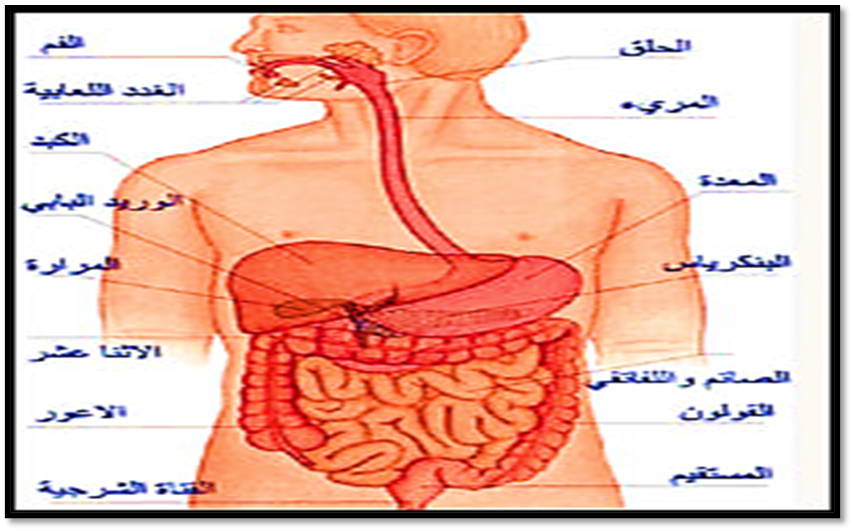
صورة (1) توضح شكل القولون
- أنواع من عمليات استئصال القولون
· استئصال القولون الكلي وفيه يُزال القولون بأكمله.
· استئصال القولون الجزئي ويُزال فيه جزء من القولون، وقد يطلق عليه أيضًا استئصال القولون شبه الكلي.
· استئصال نصف القولون ويُستأصل في هذه العملية الجزء الأيمن أو الأيسر من القولون.
· استئصال القولون والمستقيم وتُجرى هذه العملية لإزالة القولون والمستقيم.
عادة ما تتطلب جراحة استئصال القولون إجراءات أخرى لإعادة توصيل الأجزاء المتبقية من الجهاز الهضمى والسماح للفضلات بمغادرةالجسم .
أثناء استئصال القولون جزئيًا، يزيل الجراح الجزء المصاب من القولون، وجزء صغير من الأنسجة السليمة المحيطة. يقوم الجراح بتوصيل الأطراف المقطوعة من القولون بحيث تخرج الفضلات من الجسم بشكل طبيعي. أو قد يكون من الضروري توصيل القولون بفتحة في جدار البطن (ستوما)، حيث تغادر النفايات الجسم وتتجمع في كيس متصل بالفتحة. تكون الفتحة مؤقتة عادةً، ولكنها تظل دائمة في بعض الأحيان كما هو موضح بالشكل رقم (2) .
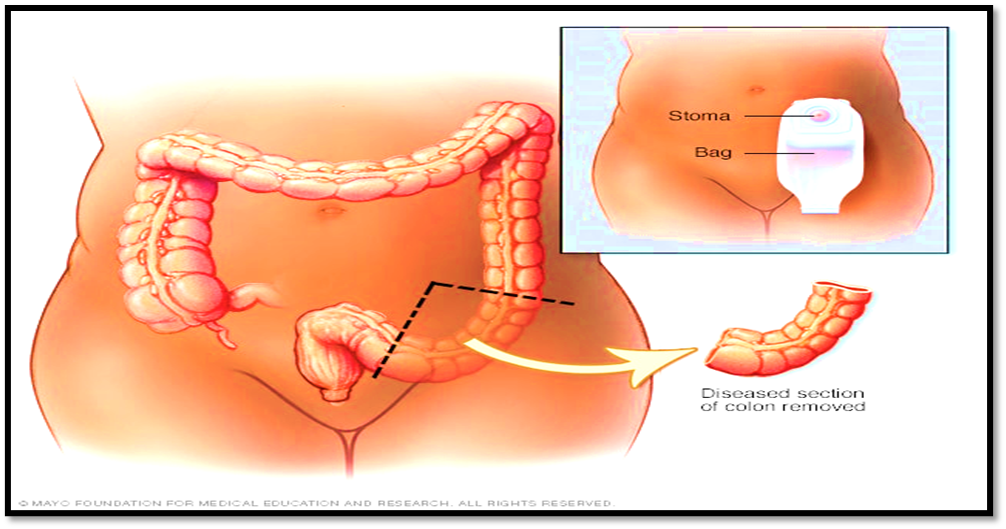
صورة (2) توضح شكل إستئصال القولون الجزئى
لماذا قد نلجأ لإجراء عمليات القولون بأنواعها؟
· قد يوصي الطبيب بإجراء أحد أنواع عمليات القولون لعدة حالات تؤثر على هذا الجزء من الجسم. القولون هو أطول جزء من الأمعاء الغليظة، وكما ذكرنا يعدُّ المسؤول عن المساعدة في إزالة بعض السوائل والمواد المغذية قبل تكوين الفضلات الصلبة في البراز وإخراجها من الجسم. قد يقوم الأطباء بإجراء أحد أنواع عمليات القولون للمساعَدة في تصحيح مشكلة في القولون، وتشمل أسباب الجراحة ما يلي
· سرطان القولون.
· التهاب الرتوج، وهي جيوب صغيرة منتفخة يمكن أن تتشكَّل في بطانة الجهاز الهضمي، وتوجد غالبًا في الجزء السفلي من الأمعاء الغليظة.
· إزالة انسداد البراز.
· مرض التهاب الأمعاء (IBD).
· علاج جرح أو عدوى جرثومية في القولون.
- الفرق فغر القولون وفغر اللفائفى؟
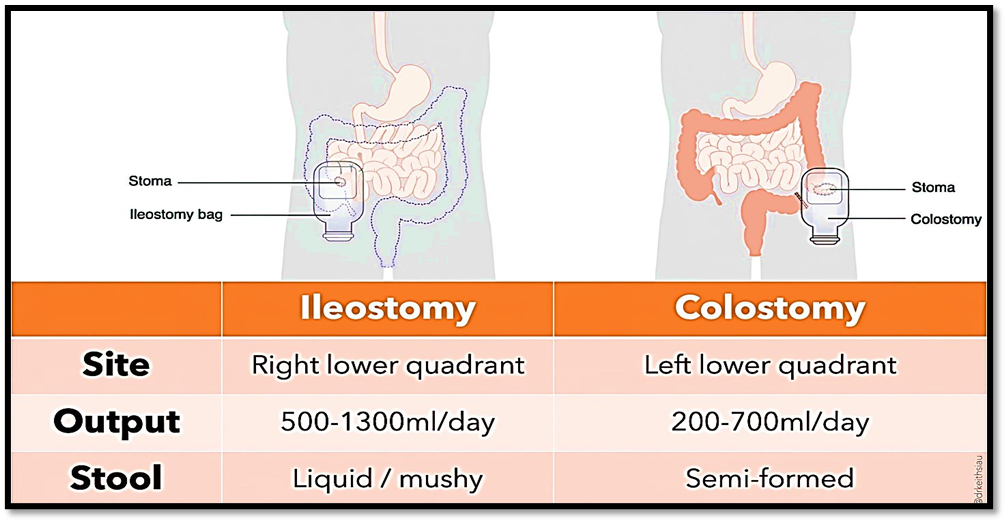
والفَغر هو إجراء جراحي يفتح مسارًا جديدًا للبراز ليخرج عن طريقه عندما لا يكون المسار الطبيعي المعتاد متاحًا. إذا لم يتمكن الجهاز الهضمي من تمرير فضلات الطعام إلى المستقيم والخروج عبر فتحة الشرج، تحتاج إلى طريقة أخرى لخروج البراز
فغر القولون ((colostomy هو عملية جراحية تربط القولون بجدار البطن، بينما فغر اللفائفي ileostomy) ) فتحة جراحية تجلب طرفا أو جزءا من الأمعاء الدقيقة (وبالتحديد اللفائفي) إلى سطح الجلد أو يمكن عمل الفتحة جراحيا. تطرح فضلات الأمعاء خارجا من خلال فغر اللفائفي إلى وسيلة جمع خارجية صناعية ملتصقة بالجلد. كيس مرتبط بالبطن الجزء الأخير من الأمعاء الدقيقة (اللفائفي) كما هو موضح بالشكل رقم (3) ورقم (4)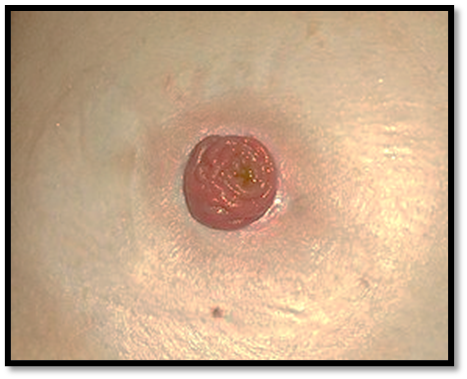
صورة (3) توضح شكل فتحة الجراحية بالبطن
- أنواع عمليات القولون التسعة
تختلف أنواع عمليات القولون باختلاف الحاجة الطبية لها، وباختلاف مكانها في القولون. فيما يلي بعض الأنواع الشائعة من جراحة القولون كما هو موضح بالشكل رقم (5)
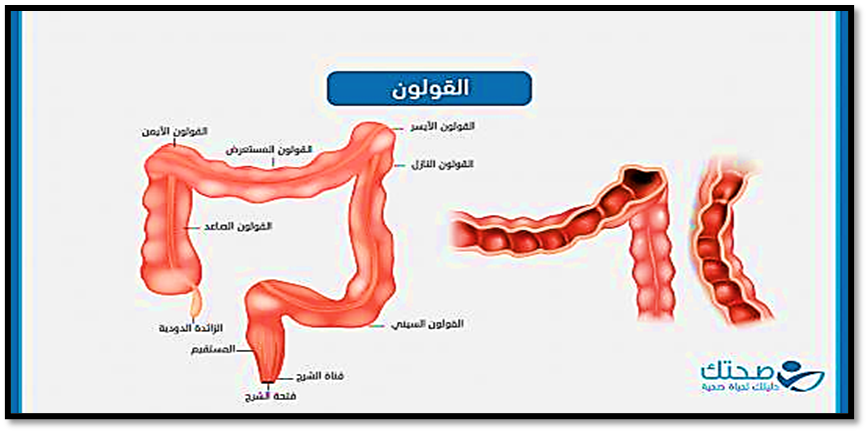
صورة (5) توضح االقولون
استئصال نصف القولون الأيمن
النوع الأول من عمليات القولون هو استئصال نصف القولون الأيمن، وهو أحد نوعَين من استئصال نصف القولون الأيمن أو الأيسر. استئصال نصف القولون هو عملية جراحية تهدف إلى إزالة جزء من الأمعاء الغليظة أو القولون.
في عملية استئصال نصف القولون الأيمن، يقوم الجراح بإزالة القولون الصاعد، وهو الجزء من القولون الذي يتصل بنهاية الأمعاء الدقيقة. بمجرد إزالته، سيقوم الجراح بخياطة الأمعاء الدقيقة بالقولون المستَعرض، وهو الجزء الذي يمر عبر البطن بشكل عرضي.
قد يوصي الطبيب بإجراء استئصال نصف القولون الأيمن كما هو موضح بالشكل (6) للحالات التي تؤثر على هذا الجزء من الأمعاء الغليظة قد تشمل هذه الحالات
· المرض او الاصابة
· التهاب الرتوج.
· السرطان.
· التهاب الأمعاء.
· الأورام الحميدة، وهي زوائد قد تصبح سرطانية.
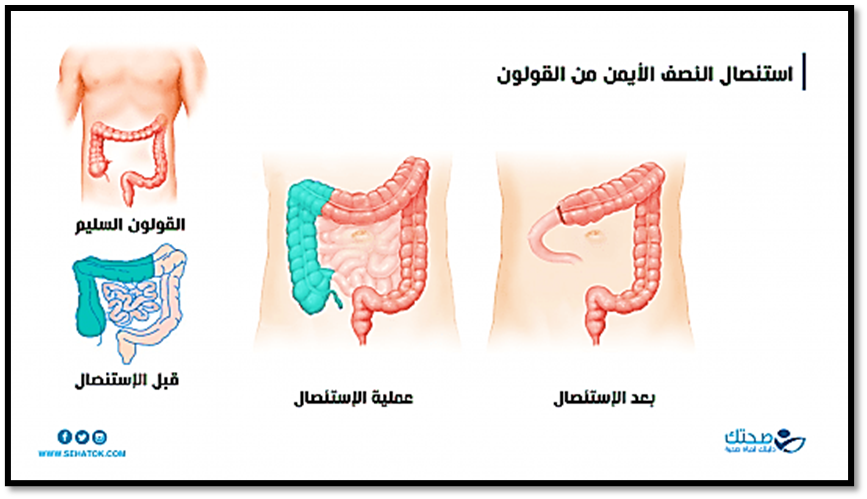
شكل (6) يوضح إستئصال النصف الأيمن من القولون
استئصال نصف القولون الأيسر
يستخدم الأطباء استئصال نصف القولون الأيسر في المقام الأول لعلاج سرطان القولون، وقد يوصون به أيضًا في حالات أخرى، بما في ذلك مرض التهاب الأمعاء (IBD)، أو التهاب الرتوج، أو عند حدوث مرض أو تمزق. أثناء عملية استئصال النصف الأيسر من القولون كما موضح بالشكل رقم (7)، يقوم الجراح بإزالة القولون النازل، وهو الجزء من القولون المتصل بالمستقيم، ثم يقوم الجراح بخياطة القولون المستعرض مباشرة بالمستقيم.
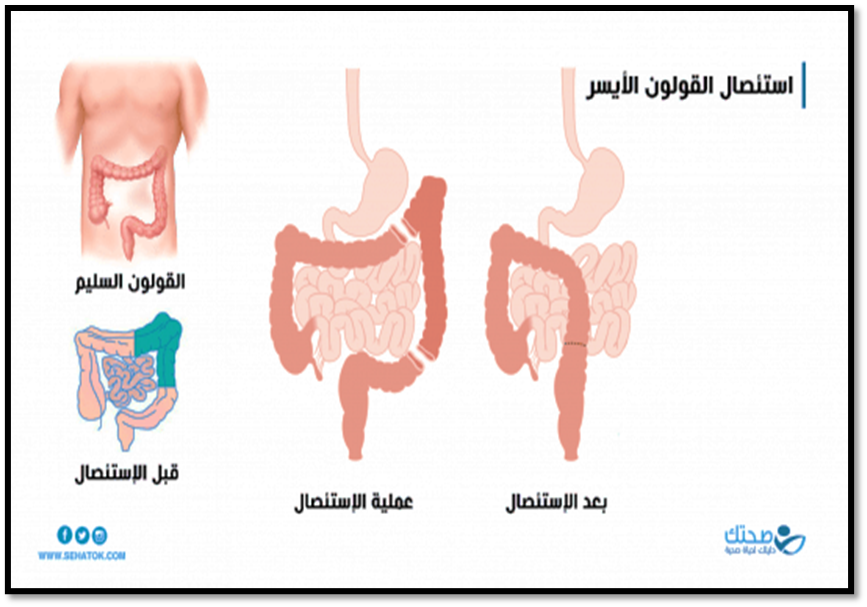
صورة رقم (7) توضح إستئصال القولون الأيسر
استئصال القولون الفرعي أو الجزئي
من أنواع عمليات القولون أيضًا استئصال القولون الفرعي. تُعرف عملية استئصال القولون الجزئي أيضًا باسم الاستئصال الفرعي الذي يزيل جزءًا فقط من القولون. أثناء هذا الإجراء، سيقوم الجراح بإزالة ما بين ربع إلى ثلث القولون، ثم يعيد خياطة ووصل نهايتَي القولون بعد الاستئصال. سيقوم الجراح بإزالة الجزء المصاب من القولون، وقد يوصى باستخدام هذه الجراحة لعلاج السرطان أو مرض التهاب الأمعاء (IBD)، أو الرضوض أو الأورام الحميدة أو التهاب الرتوج.
استئصال القولون الأمامي السفلي
الاستئصال الأمامي السفلي هو نوع من عمليات القولون لإزالة سرطان المستقيم. أثناء العملية، سيقوم الجراح بإزالة الجزء من المستقيم الذي يحتوي على السرطان، ثم يقوم بعد ذلك بتوصيل نهاية الأمعاء الغليظة بالجزء المتبقي من المستقيم للسماح بخروج البراز من الشرج بشكل طبيعي
استئصال العِجان
استئصال العِجان من عمليات القولون الجراحية المنتشرة، وهي عملية جراحية لإزالة سرطان المستقيم أو الشرج، وأثناء العملية، سيقوم الجراح بإزالة
· المستقيم
· فتحة الشرج.
· الجزء السفلي من القولون.
بما أن الجراح سيقوم بإزالة فتحة الشرج والمستقيم، فسوف يقوم بإخراج الجزء النهائي من القولون إلى خارج الجسم بشكل فَغر مؤقت أو دائم، ويغطى بكيس بلاستيكي يمكن تبديله عند اللزوم للتخلص من البراز، ويُعرف هذا باسم فَغر القولون، يَجمَع الكيس البراز، ويمكن للشخص إخفاؤه تحت الملابس. سيقوم أحد أعضاء فريق الرعاية بمراجعة كيفية العناية بفَغر القولون
استئصال المستقيم والقولون
في هذا النوع من عمليات القولون تتم إزالة القولون مع المستقيم. والمستقيم هو جزء الجسم الموجود في نهاية القولون، والذي يستخدم لحفظ البراز قبل أن يتم إخراجه من الجسم عبر فتحة الشرج. بعد إزالة القولون والمستقيم، سيحتاج الجسم إلى طريقة مختلفة للتخلص من البراز.
بالنسبة لمعظم الأشخاص المصابين بمرض التهاب الأمعاء، إما مرض كرون أو التهاب القولون التقرحي، فإن استئصال المستقيم والقولون يعني أيضًا إجراء فَغر لَفائفي. يتم إجراء الفَغر اللَفائفي عندما يتم إخراج جزء من الأمعاء الدقيقة عبر البطن لتكوين فَغرة، ثم يخرج البراز من الجسم من خلال الفَغرة، ويتم جَمعه في كيس الفَغرة الذي يتم ارتداؤه على الجزء الخارجي من الجسم. قد يكون الفغر اللفائفي دائمًا، أو قد يكون مؤقتًا
استئصال القولون السيني والمستقيم
كما موضح بالشكل رقم (8)
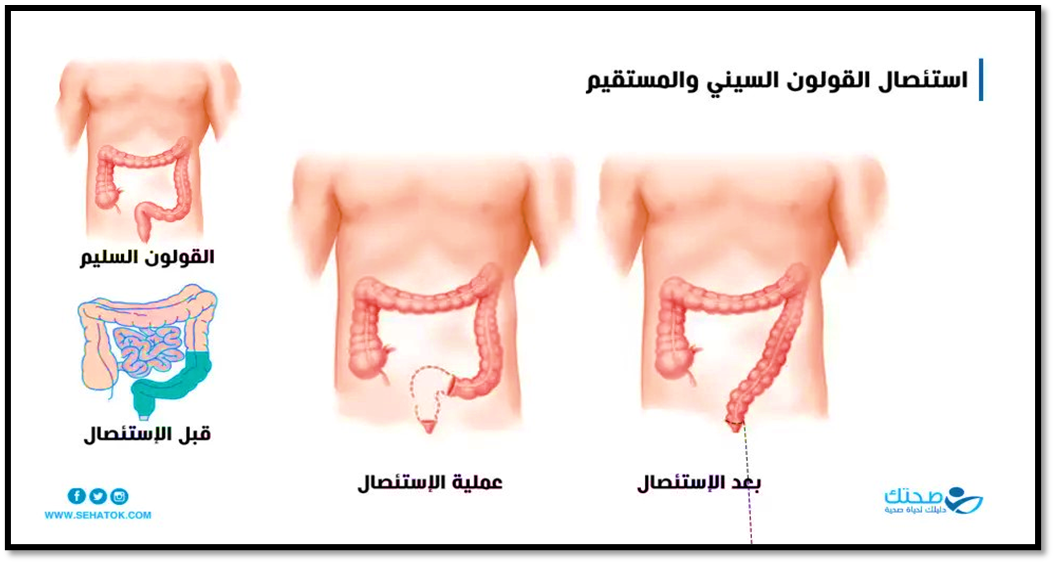
صورة رقم (8) إستئصال القولون السينى والمستقيم
جراحة الحقيبة بشكل حرف J
أحد أنواع عمليات القولون التي يتم إجراؤها في نفس الوقت أو في بعض الأحيان بعد استئصال المستقيم والقولون هو مفاغرة الحقيبة اللفائفية والشرج (IPAA). يُعرف هذا النوع من الجراحة بشكل أكثر شيوعًا باسم جراحة الحقيبة "J"، على الرغم من أن الحقائب الداخلية تُصنع أحيانًا على شكل "S" أو "W". في هذه العملية، يتم خياطة الجزء الأخير من الأمعاء الدقيقة (لَفائفي طرَفي) على شكل حرف "J"، ويمكنه بعد ذلك الاحتفاظ بالبراز في هذه الحقيبة الداخلية لفترة من الوقت، ويعمل مثل عمل المستقيم ويتم توصيل الحقيبة J بفتحة الشرج بعملية جراحية أخرى، يتم إجراء هذه الجراحة عادةً لمرضى التهاب القولون التقرحي، ولكن في بعض الحالات الخاصة، قد يتم إجراؤها للأشخاص المصابين بمرض كرون.
المفاغَرة اللفائفية الشرجية
نوع آخر من العمليات الجراحية يتم إجراؤها لاستعادة القدرة على إخراج البراز عبر فتحة الشرج، يسمى هذا النوع المفاغَرة اللَّفائفية الشرجية (السحب). في هذه الجراحة، بعد إزالة القولون والمستقيم، يتم توصيل الأمعاء الدقيقة مباشرة بفتحة الشرج. عادة ما يتم الاتصال بين الأمعاء الدقيقة والشرج أثناء الإجراء الأول، ويتم إنشاء فَغر لَفائفي للسماح للمفاغَرة بالشفاء عن طريق تحويل البراز بعيدًا عن الاتصال الجديد.
استئصال القولون الكلي
النوع الأخير من عمليات القولون هو استئصال القولون الكلي، يعني أن يتم إزالة القولون بكامله. يمكن أن يكون هذا المصطلح مربِكًا بعض الشيء عند مقارنته باستئصال المستقيم والقولون، لأنه في عملية استئصال القولون الكلي، يتم ترك المستقيم في مكانه.
يمكن إجراء استئصال القولون الكلي مع ترك بعض أو كل المستقيم في مكانه في حالات معينة من التهاب القولون التقرحي أو مرض كرون. سيتطلب استئصال القولون الكلي أيضًا إنشاء فَغر لَفائفي، ويمكن إجراء استئصال القولون الكامل في نفس الوقت الذي يتم فيه إجراء مفاغَرة لَفائفية مع المستقيم وتجنب الحاجة إلى فَغر خارجي. بعد إجراء عملية جراحية لربط الأمعاء الدقيقة بالمستقيم، يمكن إخراج البراز مرة أخرى من خلال فتحة الشرج
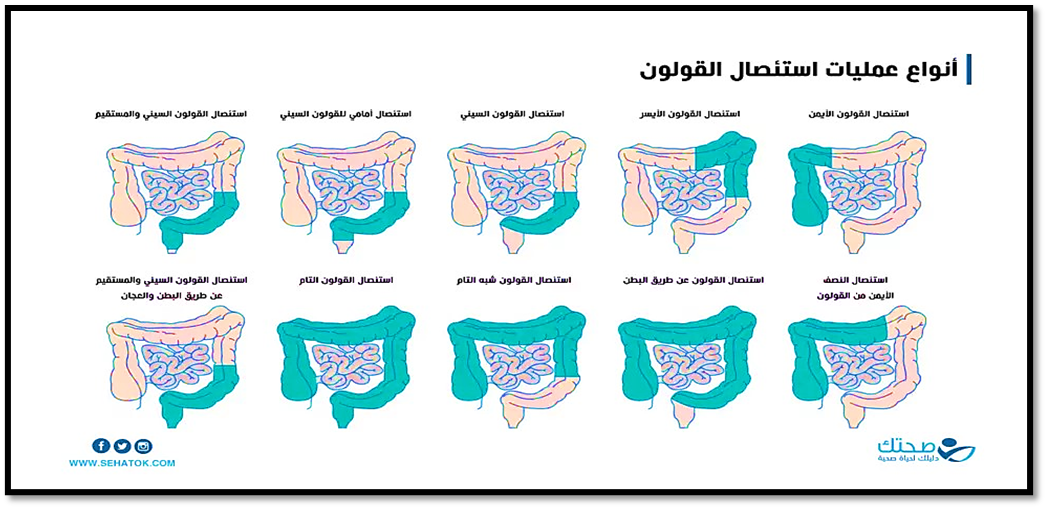
أنواع عمليات إستئصال القولون
كما موضح بالشكل (9)
- متى تستشير الطبيب بعد عملية الكولوستومي؟
· حين يتحول لون الجلد حول الكولوستومي إلى لون غير طبيعي أو يصبح الجلد مؤلماً.
· حينما يصير البراز ذا رائحة كريهة.
· لو خرج جزء من الأمعاء من فتحة الكولوستومي.
· لو حدثت أعراض انسداد مثل القيء أو الألم المتزايد في البطن أو الانتفاخ دون إخراج ريح.
· لو أصاب المريض ارتفاع في درجة الحرارة دون سبب واضح.
المضاعفات:.
1- تموت (necrosis)أنسجة الفتحة,حيث تظهر الفتحة بلون داكن بعد 24-72 ساعة بعد العملية وتستدعي الحالة عملية جراحية لمنع الاتشقاقات والتهاب البريتونه.
2-انسحاب الفتحة إلى داخل البطن وتحدث هذه الحالة أما خلل في طريقة العملية الجراحية أو لزيادة في وزن المريض وتحتاج الحالة إلى عملية إرجاع الفتحة إلى جدار البطن .
3- تضيق الفتحة (stenosis)ويظهر التضييق عند مستوى الجلد أو الفتحة.
ويشعر المريض بالإمساك والشعور يضغط عند مرور الفضلات وتعالج الحالة بالغذاء الذي يمنع الإمساك.وعمل غسل الفتحة والتوسيع.
4- خروج الفتحة prolepses) )وهو خروج الأمعاء خارج الفتحة.ويرجع إلى خلل في العملية الجراحية وقلة وصول الدم إلى الفتحة وحسب الحالة بعد خروج المريض من المستشفى وتتبع حالة (loop colostomy) وينصح المريض بوضع حلقة حول الفتحة أو ارتداء حزام إسناد للجمع لمنع فتح الجرح بعد العملية.
- العناية التمريضية بمريض الكولوستومي
أهداف العناية التمريضية:
- حماية الجلد حول الفغر من التهيج والالتهابات.
- منع التسرب من الكيس.
- الحفاظ على التغذية المناسبة.
- تعليم المريض وكافة أفراد الأسرة كيفية العناية بالفغر.
- دعم المريض نفسياً واجتماعياً.
مكونات العناية التمريضية:
1. تقييم الحالة:
o تقييم حالة الفغر: حجمه، شكله، لون الجلد المحيط به.
o تقييم إفرازات الفغر: كميتها، لونها، رائحتها.
o تقييم حالة الجلد المحيطة بالفغر: وجود احمرار، تورم، حكة.
o تقييم الحالة الصحية العامة للمريض.
2. تغيير الكيس:
o يجب تغيير الكيس بانتظام للحفاظ على نظافة الجلد ومنع التسرب.
o اختيار الكيس المناسب لحجم وشكل الفغر.
o اتباع الخطوات الصحيحة لتغيير الكيس لتجنب الإصابة.
3. العناية بالجلد:
o تنظيف الجلد حول الفغر بانتظام بماء دافئ وصابون لطيف.
o تجفيف الجلد برفق بعد التنظيف.
o استخدام واقي جلدي لحماية الجلد من التهيج.
4. التغذية:
o اتباع نظام غذائي متوازن غني بالألياف لتجنب الإمساك والإسهال.
o شرب كميات كافية من الماء.
o تجنب الأطعمة التي تسبب الغازات.
5. الترطيب:
o شرب كميات كافية من الماء للحفاظ على رطوبة الجسم.
6. التعليم:
o تعليم المريض وكافة أفراد الأسرة كيفية العناية بالفغر.
o الإجابة على جميع أسئلة المريض وشرح أي مخاوف لديه.
7. الدعم النفسي والاجتماعي:
o تقديم الدعم النفسي للمريض لمساعدته على التكيف مع التغيير في حياته.
o توجيه المريض إلى مجموعات الدعم.
نصائح للمريض:
- ارتداء الملابس القطنية الواسعة.
- تجنب الأنشطة التي تسبب ضغطًا على البطن.
- ممارسة الرياضة بانتظام بعد استشارة الطبيب.
- الحفاظ على وزن صحي.
- حضور جميع مواعيد المتابعة مع الطبيب.
- المراجع
- United Ostomy Associations of America (UOAA):
- https://www.ostomy.org/ Provides support, education, and advocacy for individuals with ostomies.
- International Ostomy Association (IOA): https://rarediseases.org/organizations/international-ostomy-association/ A global organization dedicated to improving the quality of life for people with ostomies.
- "Living with a Colostomy: A Guide to Self-Care and Well-Being" by Barbara J. Summers
- "The Ostomy Book: A Guide to Living Well with an Ostomy" by Bettye R. Young and William R. Young
- "The Ostomy Handbook: A Comprehensive Guide to Living Well with an Ostomy" by David B. Scholes
- National Institutes of Health (NIH): https://www.ncbi.nlm.nih.gov/books/NBK560503/ Offers information on colostomies, including causes, procedures, and care.
- Mayo Clinic: https://www.mayoclinic.org/tests-procedures/colectomy/multimedia/colostomy/img-20007593 Provides comprehensive information on colostomies, including symptoms, diagnosis, and treatment.