
Book
Nursing Care for Disability Prevention (Audiology / Hearing Screening)
- Neonatal Hearing Screening Program
Introduction: The program aims for the early detection of hearing loss in newborns. Early intervention (within 3–6 months) protects children from long-term consequences and ensures normal language and personality development.
Program Steps:
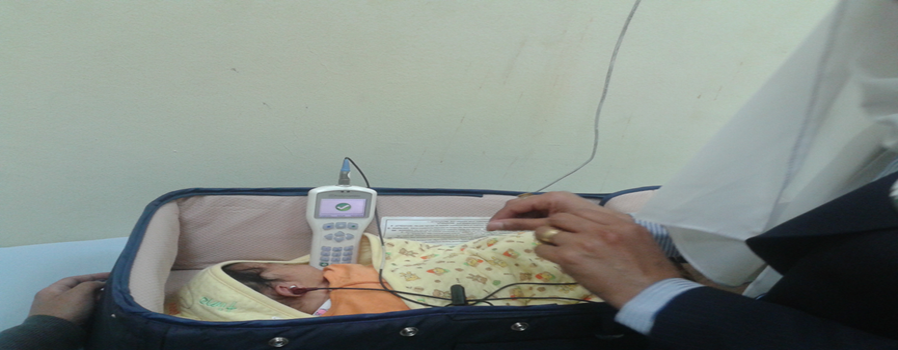
- Screening: Conducted in the first week of life (ideally with thyroid screening) using Otoacoustic Emissions (OAE). If failed, it is repeated after 1–2 weeks.
- Procedure: Performed by a trained nurse in a quiet room, testing each ear separately (max 3 attempts per ear).
- Timeline: Screening must be completed within 28 days.
- Documentation: Results are recorded in the designated register.
- Referral: If the child fails the second test, they are referred to a specialized audiology clinic in a public hospital.
Requirements:
- Training nurses on OAE device usage and data recording.
- Providing OAE devices and designated testing rooms.
- Educating families on the importance of early detection and ensuring follow-up through supervisors.
|
Risk factors: |
|
|
- Family History: Does anyone in the family (maternal or paternal side) have a history of hearing loss since childhood? |
|
|
- Maternal Health/Pregnancy History: Did the mother suffer from any illnesses during pregnancy, or did she have a history of recurrent miscarriages or stillbirths? |
|
|
- Prematurity/Low Birth Weight: Was the baby born prematurely (before 38 weeks of gestation) or had a birth weight of less than 1,500 grams? |
|
|
- Difficult Birth: Was the delivery complicated or difficult? |
|
|
- Birth Asphyxia: Did the baby experience cyanosis (bluish discoloration) at birth? |
|
|
- NICU Admission: Was the baby admitted to the Neonatal Intensive Care Unit (NICU) for 5 days or more? |
|
|
- Hyperbilirubinemia (Jaundice): Did the baby require a blood exchange transfusion due to severe jaundice? |
|
|
Congenital Malformations: Are there any congenital malformations in the head, face, palate, or ears (e.g., cleft lip, cleft palate, or auricular deformities)? |
|
Otoacoustic Emissions (OAE) Device
Field Monitoring and Follow-up Form
Monitor/Supervisor Name: ........................................ Primary Health Care Unit (PHCU): .......................... Month: .......................................................................
|
Indicator |
Performance rating |
||
|
Good |
fair |
Poor |
|
|
Registering children in the general screening log. |
|
|
|
|
Using the screening tool completely and accurately. |
|
|
|
|
Recording screening results in the designated registers. |
|
|
|
|
Ratio of screened infants to total outpatients. |
|
|
|
|
Percentage of positive cases among those screened. |
|
|
|
|
Physician review of positive cases. |
|
|
|
|
Systematic implementation of the screening process. |
|
|
|
|
Archiving/Maintaining children's screening forms. |
|
|
|
Additional Notes:
Monitor’s Comments and Recommendations: ......................................................
Monitoring and Follow-up Form User Guide
1. Registering children in the general screening log:
- Good: Immediate registration for all children.
- Acceptable: Immediate registration for some; delayed for others.
- Unacceptable: Not all children are registered.
2. Complete and accurate use of the screening tool:
- Good: Screening is age-appropriate; all sections are completed during the screening session.
- Acceptable: Developmental milestones for other age groups are used and/or the decision is finalized later.
- Unacceptable: Not all sections are completed (i.e., preliminary data, risk factors, developmental milestones, decision).
3. Recording screening results in the designated registers:
- Good: Immediate, accurate recording for all children in the correct registers.
- Acceptable: Accurate recording for all children in the correct registers, but at a later time.
- Unacceptable: Not all children are recorded, or the recording is inaccurate/in the wrong registers.
4. Ratio of screened infants to total outpatients:
- Good: > 75%.
- Acceptable: 25% – 75%.
- Unacceptable: < 25%.
5. Percentage of positive cases among those screened:
- Good: 5% – 20%.
- Acceptable: 1% – 5% or 20% – 30%.
- Unacceptable: < 1% or > 30%.
6. Physician review of positive cases:
- Good: Physician reviews all positive cases and signs them personally.
- Acceptable: Physician reviews approximately half of the positive cases and delegates the rest to nursing staff.
- Unacceptable: Physician is unavailable, or present but does not review cases.
7. Systematic implementation of the screening process:
- Good: Children enter the screening area one by one.
- Acceptable: No more than (5) children enter the screening area, organized in a queue.
- Unacceptable: More than (5) children in the screening area and/or no organized queue.
8. Maintaining children's screening forms:
- Good: All forms are perfectly organized in the appropriate files (Referral, Follow-up, Negative).
- Acceptable: All forms are filed appropriately (Referral, Follow-up, Negative) but are not perfectly organized.
- Unacceptable: All or some forms are not filed in the appropriate folders.
مقدمة :
يهدف البرنامج الى الاكتشاف المبكر للضعف السمعى عند المواليد حيث ثبت ان التدخل المبكر فى سن 3-6 شهور الاولى من العمر تحمى الاطفال من تبعات الضعف السمعى وتحقق نمو لغة طبيعى وشخصية سوية والقدرة على التحصيل الطبيعى فى التعلم .
خطوات البرنامج
1- عمل مسح سمعى للمواليد فى الاسبوع الاول من الولادة فى المراكز الصحية متزامن مع مواعيد اخذ عينات الغدة الدرقية باستعمال جهاز الانبعاث الصوتى ويفضل عمل اختبار السمع قبل اخذ عينة الغدة الدرقية وفى حالة عدم القدرة على عمل الاختبار او عدم اجتياز الاختبار يتم اعادتة مرة اخرى بعد اسبوع- اسبوعين على الاكثر.
2- يتم عمل الاختبار بواسطة ممرضة مدربة والطفل فى وضع ساكن وهدوء بالغرفة حتى لاتتأثر النتيجة بالضوضاء، ويتم أختبار كل اذن على حدى وتظهر النتيجة على شاشة الجهاز ويمكن تكرار المحاولة فى نفس الجلسة بحد اقصى 3 مرات لكل اذن .
3- يجب الانتهاء من اختبارات المسح السمعى فى حدود 28 يوم على اقصى تقدير .
4- تسجيل نتائج المسح السمعى للمواليد غى السجل المخصص بواسطة الممرضة .
5- فى حالة عدم اجتياز الاختبار للمرة الثانية او عدم المقدرة على عمله مرة اخرى يحول الطفل الى اقرب عيادة سمعيات بها طبيب سمعيات متخصص ( فى المستشفيات العامة ) حسب كل محافظة بموجب كارت تحويل .
متطلبات البرنامج
1- تدريب الممرضات المختصات بعمل اختبارات المسح السمعى للمواليد على جهاز الانبعاث الصوتى
2-جهاز لقياس الانيعاث الصوتى فى الوحدة الصحية الرئسية .
3-غرفة مخصصة لعمل الاختبار.
4- التدريب على التسجيل وتدوين البيانات والنتائج .
5- تدريب المشرفات على المتابعة وكذلك ممرضة يرنامج الغدة الدرقية على توعية الاهل باهمية الاكتشاف المبكر للاعاقة السمعية من خلال اختبار المسح السمعى للمواليد وتوجيهم الى المركز التابع لهم (الذى به حهاز المسح السمعى )
6-خطة عمل للجهاز فى الوحدة الصحية وعدد 2 وحدة صحية مجاورة .
7-سجلات لتسجيل الحالات ونتائج المسح السمعى الاول والثانى اذا طلب.
8- سجلات للاحصائيات الشهرية عن النتائج المجمعة لكل وحدة.
9-متابعة البرنامج من خلال مشرفات التمريض والتأكد من سلامة جميع الخطوات

جهازالانبعاث الصوتى OAE

استمارة الرصد و المتابعة الميدانية
المسؤول المتابعة:
وحدة الرعاية الصحية الأساسية:
شهر:
|
المؤشر |
درجة التحقق |
||
|
جيدة |
مقبولة |
غير مقبولة |
|
|
1- تسجيل الأطفال في السجل العام للكشف |
|
|
|
|
2- استخدام أداة الاكتشاف بشكل كامل و دقيق |
|
|
|
|
3- تسجيل نتيجة الكشف في السجلات الخاصة |
|
|
|
|
4- نسبة المفحوصين إلى المترددين |
|
|
|
|
5- نسبة الحالات الإيجابية بين المفحوصين |
|
|
|
|
6- قيام الطبيب بمراجعة الحالات الإيجابية |
|
|
|
|
7- تنفيذ عملية الكشف بنظام |
|
|
|
|
8- حفظ استمارات الأطفال |
|
|
|
ملاحظات إضافية:
رأي و توصيات القائم بزيارة المتابعة:
دليل استخدام استمارة الرصد و المتابعة
1- تسجيل الأطفال في السجل العام للكشف:
جيدة: يتم التسجيل فورياً لجميع الأطفال
مقبولة: يتم التسجيل فورياً للبعض و غير فوري لجميع الأطفال
غير مقبولة: لا يتم تسجيل جميع الأطفال
2- استخدام أداة الاكتشاف بالتمام و بدقة
جيدة:يتم الكشف بناء على سن الطفل و تستكمل جميع الأجزاء في الوقت الكشف
مقبولة:استخدام علامات التطور لمراحل عمرية أكثر و\أو يسكمل القرار لاحقاً
غير مقبولة:لا يتم استكمال كل الأجزاء (البيانات الأولية، عوامل الخطورة، علامات التطور، القرار)
3- تسجيل نتيجة الكشف في السجلات الخاصة
جيدة:يتم التسجيل فورياً لجميع الأطفال بشكل مضبوط في السجلات الصحيحة
مقبولة:يتم التسجيل لجميع الأطفال بشكل مضبوط في السجلات الصحيحة لاحقاً
غير مقبولة:لايتم التسجيل لجميع الأطفال أو يتم بشكل غير مضبوط في السجلات
4- نسبة المفحوصين إلى المترددين
جيدة:أكثر من 75%
مقبولة:من 25% إلى 75%
غير مقبولة:أقل من 25%
5- نسبة الحالات الإيجابية بين المفحوصين
جيدة:5 – 20 %
مقبولة:1- 5% أو 20 - 30%
غير مقبولة:أقل من 1% أو أكثر من 30%
6- قيام الطبيب بمراجعة الحالات الإيجابية
جيدة:الطبيب يقوم بمراجعة جميع الحالات الإيجابية و يوقع عليها بنفسه
مقبولة:الطبيب يقوم بمراجعة نحو نصف الحالات الإيجابية و يوكل الباقي للممرضات
غير مقبولة:الطبيب غير موجود أو موجود و لا يقوم بالمراجعة
7- تنفيذ عملية الكشف بنظام
جيدة: يتم دخول الأطفال لمكان الكشف واحداً فواحد
مقبولة: يدخل عدد لا يزيد عن (5) إلى مكان الكشف و يقفون في طابور
غير مقبولة: العدد في مكان الكشف أكثر من (5) و\أو غير منتظمين في طابور
8- حفظ استمارات الأطفال
جيدة: جميع الاستمارات محفوظة بترتيب كامل في الملفات الخاصة (تحويل- متابعة- سلبية)
مقبولة: جميع الاستمارات محفوظة بالملفات الخاصة (تحويل- متابعة- سلبية) بترتيب غير كامل
غير مقبولة: كل أو بعض الاستمارات غير محفوظة بالملفات السليمة