Book
Continuous Renal Replacement Therapy
Completion requirements
"last update: 10 March 2025"
- CRRT Treatment Procedures
(CRRT) involves several steps that are very similar to starting hemodialysis:Patient preparation : Before starting CRRT , the patient's vital signs, fluid status, and electrolyte levels are assessed. A dialysis catheter is inserted into a vein, usually in the neck or groin, and the catheter is connected to the CRRT machine.
- Blood flow rate : The blood flow rate is adjusted to ensure adequate removal of toxins and waste. Blood is pumped from the patient's body through the catheter to a hemodialysis machine or blood filter, where it is filtered and purified .
- Fluid replacement : Replacement fluids are added to the purified blood to maintain the normal electrolyte and fluid balance. The rate of fluid replacement is adjusted based on the patient's fluid status and electrolyte levels.
- Prevent blood clotting : Anticoagulants, such as heparin or citrate, are used to prevent blood from clotting in a blood filter or dialyzer . The dose of anticoagulants is carefully monitored to avoid bleeding or clotting complications .
- Monitoring and Adjustments : The patient's vital signs, fluid status, electrolyte levels, and blood flow rate are continuously monitored. The CRRT device is adjusted as needed to maintain optimal treatment parameters and avoid complications .
- Stop : CRRT may be stopped once the patient's kidney function improves or if the patient is transferred to another form of renal replacement therapy, such as intermittent hemodialysis or peritoneal dialysis .
CRRT is a complex and highly specialized procedure that requires careful monitoring and adjustments to ensure optimal outcomes for the patient. The treatment is performed by a team of healthcare professionals, including nephrologists and nurses, who work together to provide the best possible care for the patient .CRRT does some of the work that healthy kidneys do naturally. It gently filters and cleanses the patient’s blood by removing waste products and extra fluid. This maintains the balance of chemicals and electrolytes, such as potassium and phosphorus, in your child’s blood. CRRT doesn’t actually improve the patient’s kidney function, but instead keeps everything in his or her body in line until the kidneys regain function.
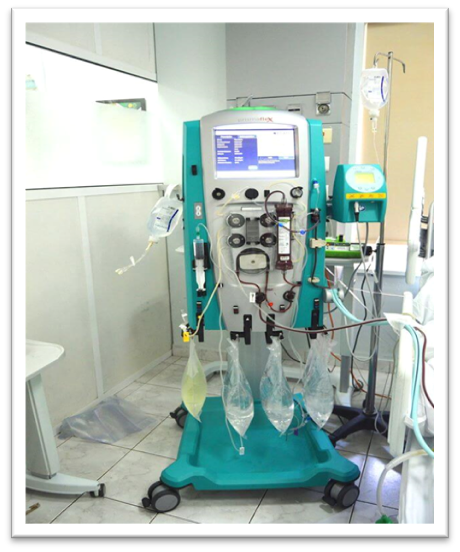
The central venous catheter is connected to a machine that circulates some of the patient's blood in a loop outside the body. After the blood is filtered and cleaned, it is returned to the body.
There are situations in which a patient is disconnected from the CRRT device These include
- If it needs to perform a test or procedure. The device will then restart.
- Routine replacement of pipes and filters to keep the system working well. This only requires a short period of shutdown.
- Sometimes, small blood clots get into the filter and tubing and prevent the machine from working properly. A nurse will change the tubing and filter if this happens.
The device alarm may sound during CRRT . Most alarms are not due to an emergency. They are usually intended to alert the nurse to change the solution bags. The device alarm may also sound to tell the nurse to change the patient's position or check the catheter to help the treatment go smoothly.