
Book
Neonatal Resuscitation Guide
- Apgar Score
- The Apgar score should not be used as the sole basis for deciding whether to start or continue resuscitation. Decisions about the course of resuscitation are not based on Apgar alone; the timing in resuscitation is measured in seconds, not minutes, although the score is used for overall assessment of the resuscitation process.
- The Apgar score is calculated for every newborn at 1, 5, and 10 minutes after birth.
- The 1-minute Apgar indicates the newborn’s need for further resuscitation steps and the degree of asphyxia around the time of birth.
- The score is expressed as a whole number only (no fractions) and ranges from 0 to 10.
Components of the Apgar Score:
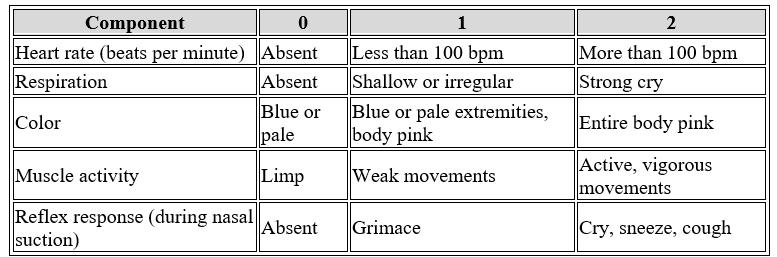
Interpretation of Apgar Score Results:
- If the Apgar score is 7–10, this indicates no neonatal distress.
- If the Apgar score is 4–6, this indicates moderate distress.
- If the Apgar score is 0–3, this indicates severe distress.
- A high Apgar score at the fifth minute indicates the success of the resuscitation process, while a low score at the fifth minute emphasizes the need to continue resuscitation steps.
- If the score is less than 7, reassessment should be done every 5 minutes until the score reaches 7 or higher, continuing up to 20 minutes.
