
Book
First Nursing Guideline for Burn Patient Care
- Skin Anatomy and Functions
The skin is the largest organ in the human body, covering the outer surface of the body. There are few areas where its covering differs, such as the eyes and lips. The skin functions as a protective layer around the body, safeguarding the delicate tissues underneath from damage. Naturally, the skin is always exposed to wear and tear, unlike other parts of the body that are protected. The skin is highly flexible and bends easily to adapt to the movements of various body parts. After bending with the movement of a joint, it returns easily to its original position when the joint returns to its natural state.
The surface of the skin contains many tiny openings, known as pores. These pores are the ends of sweat gland ducts from deeper skin layers. Sweat produced in the glands exits through the pores to the surface, although we usually don’t feel it as it evaporates as soon as it appears. However, when we engage in physical activity or when the weather is hot, large droplets of sweat form, wetting the skin. The evaporation of this moisture reduces the skin temperature, and consequently, the body's overall temperature remains within the normal range.
Skin Layers:
The skin is composed of three main layers, each differing in anatomy and function as follows:
- Epidermis: The epidermis is the thin outer layer of the skin that acts as a water barrier and is responsible for skin color. It is made up of three types of cells:
- Melanocytes: Cells that produce melanin, responsible for skin pigmentation, found in the basal cell layer.
- Langerhans cells: The skin's first line of defense, located in the spinous layer.
- Merkel cells and sensory nerves: Found in the basal layer, serving as mechanoreceptors for light touch.
The epidermis itself consists of five sub-layers working together to rebuild the skin surface:
- Basal Layer (Stratum Germinativum): The deepest layer containing small round cells called basal cells, which divide continuously, pushing older cells toward the surface.
- Squamous Cell Layer (Stratum Spinosum): Above the basal layer, this thicker layer is also known as the spinous layer. It contains basal cells that have been pushed upwards, now called squamous cells, which produce keratin, a strong protein forming the structure of the skin, hair, and nails.
- Granular Layer (Stratum Granulosum): Contains diamond-shaped cells with granules. Keratinocytes from the squamous layer are pushed into this layer, where they grow, flatten, and adhere to one another.
- Clear Layer (Stratum Lucidum): A thin transparent layer found in thick skin, such as on the palms and soles.
- Horny Layer (Stratum Corneum): The outermost layer, constantly shedding, with a full cell turnover occurring every 28 to 30 days in young people, and 45 to 50 days in the elderly.
- Dermis: The dermis lies beneath the epidermis and is thicker, consisting of two layers of connective tissue: the papillary dermis and the reticular dermis. The dermis contains:
- Blood vessels that supply the skin with nutrients and oxygen while removing waste.
- Lymphatic vessels that destroy infections or invasions by pathogens.
- Hair follicles that surround and nourish the hair.
- Sweat glands that produce sweat and regulate body temperature.
- Nerve endings containing pain and touch receptors that send sensations to the brain.
- Collagen, a strong protein that helps anchor muscles and organs in place, enhancing skin strength.
- Elastin, a substance allowing the skin to return to its shape after stretching, maintaining skin flexibility.
- Hypodermis: The hypodermis, the deepest layer, consists of a network of fat cells and collagen. It serves as insulation to retain body heat, cushions internal organs, and stores fat as an energy reserve.
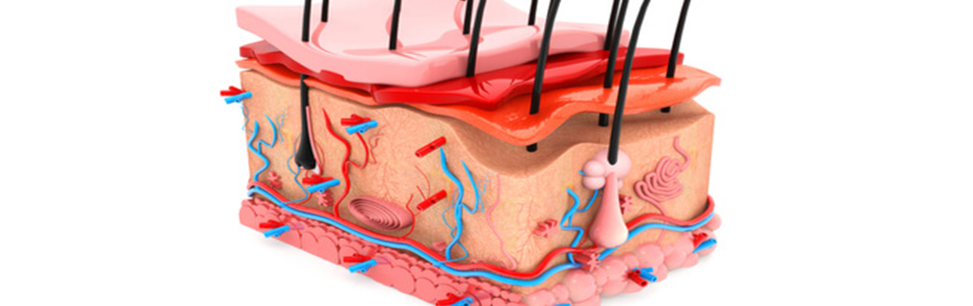
Functions of the Skin Layers:
The skin acts as a protective barrier against heat, light, injury, and infection. Other functions include:
- Storing water and fat.
- Regulating body temperature.
- Preventing water loss.
- Blocking bacterial entry.
- Producing vitamin D upon sunlight exposure.
- Serving as a barrier between the organism and the environment.
- Sensory perception.
The thickness of the skin varies across the body, categorized based on the thickness of the epidermis and dermis. The thickness of the hypodermis also differs across the body and from person to person. Hairless skin on the palms and soles is the thickest due to an additional layer, the stratum lucidum. The upper back is thicker based on dermal thickness, but is considered thin in tissue terms as it lacks the stratum lucidum, making the epidermis thinner than non-hairy skin.
