
Book
Handling serums
- RABIES immune globulin serum
Definition:
Rabies vaccination is giving the child or patient a dose of the rabies virus, which is a killed virus, so that the child’s immune system recognizes the virus and then quickly controls it and prevents the disease from developing if the child is bitten.
Initial symptoms of rabies:
Symptoms include fever, pain or tingling at the site of the wound, and as the disease progresses, the patient may experience hallucinations, insomnia or mental disturbance. Generally, the disease appears in the following two forms:
Rabies:
It appears in the form of hyperactivity, agitation, hydrophobia and sometimes aerophobia , and death usually occurs as a result of the respiratory muscles stopping after a few days
Paralytic rabies: This is less common, and in it the muscles gradually become paralyzed, starting at the site of the bite or scratch, then slowly progressing to coma and then death
It is worth noting that the World Health Organization's definition of the clinical diagnosis of human rabies is based on the appearance of neurological symptoms (encephalitis) in the infected person that develop into coma and death, in addition to a history of being bitten or scratched by an animal suspected of being infected with rabies.
Post-exposure prevention measures:
First : Local treatment of wounds
1- . good wound washing
The process of wound cleaning for all cases, regardless of the severity of the wound, is considered one of the essential pillars that determine the effectiveness of preventive procedures:
1. Wound Cleaning: The wound should be cleaned as quickly as possible for at least 15 minutes. All wounds should be washed with running water and soap, followed by the application of antiseptic agents (such as Povidone iodine or other virucidal substances). The wound should then undergo regular daily cleaning.
2. Wound Edge Removal or Primary Sutures: It is prohibited to perform wound edge excision or primary suturing, except in cases of life-saving interventions (such as continuous bleeding, reconnecting amputated limbs, or complex fractures).
3. Appropriate Treatment: Administer the appropriate treatment, including analgesics or antibiotics, as per the doctor's recommendations.
4. Tetanus Vaccine: Administer the tetanus vaccine intramuscularly according to the applicable protocol.
Second : Rabies Vaccine
The rabies vaccine currently used in Egypt is a vaccine cultured on vero cells, and it is administered for cases of bites, scratches, or contamination of mucous membranes or compromised skin by saliva from an animal suspected of having rabies.
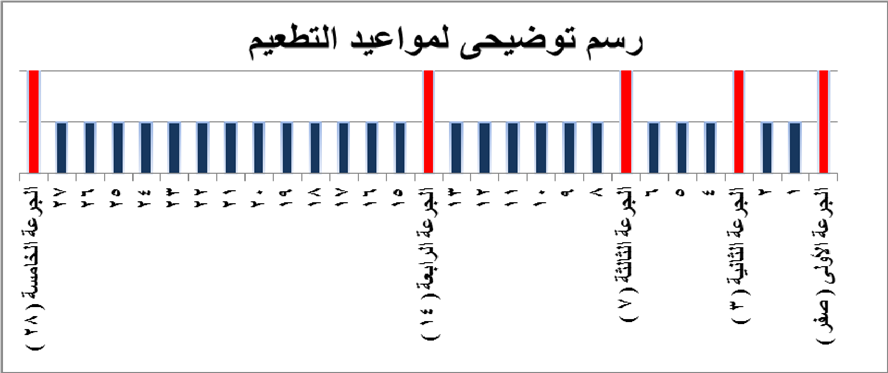
• Five (5) doses of the vaccine are given by injection according to the following schedule:
- First dose: Day 0 (Day of the bite)
- Second dose: Day 3
- Third dose: Day 7
- Fourth dose: Day 14
- Fifth dose: Day 28
• The vaccine is administered to both children and adults in the same
dosage and according to the same schedule.
• The vaccine is given to adults in the deltoid muscle (shoulder), while for
children under five years of age, it is administered in the anterior aspect of
the thigh muscle.
• There are no contraindications for the vaccine.
• The vaccination process can be stopped if the biting animal (in case of a dog
or cat bite) shows no symptoms within 10 days from the date of the bite, or if
it is confirmed that the animal is not infected with rabies through negative
laboratory results based on approved tests.
• The vaccine should be used with caution in cases of allergies to streptomycin
and neomycin. Some medications, such as corticosteroids and immunosuppressive
drugs, may affect the effectiveness of the vaccine.
• The vaccine should be stored in the refrigerator at a temperature of +2°C to
+8°C.
• Two doses of the vaccine are given: the first dose (Day 0) and the second
dose (Day 3) if it is confirmed that the person bitten has received a full
course of post-exposure vaccination in the last five years.
Third : Rabies Immunoglobulin
Immunoglobulin is given to cases with the following priorities:
1. Bites or scratches accompanied by bleeding on the arms and neck.
2. Deep or lacerated wounds, especially if they are multiple.
3. Bites or scratches from an animal suspected to be infected with rabies.
• Rabies immune globulin is administered (20 international units/kg of body weight, with a maximum of 1500 international units). Half of the dose is injected around the wound site, and the other half is given in the anterolateral aspect of the thigh muscle.
• The immune globulin dose is given once (on the day of the bite) and should not be repeated. It can be administered within a period not exceeding 7 days from the date of the first vaccination dose. It should not be given after that, as administering it after this period will inhibit the production of antibodies.
• Cases where immune globulin should not be given:
1. Bruises, abrasions, or superficial scratches not accompanied by bleeding.
2. Wounds not contaminated by the animal’s saliva (with a barrier like clothing or other material).
3. If it is confirmed that the person bitten has received a full and correct course of post-exposure vaccination in the last five years.
4. If the person visits the bite treatment center after 10 days or more have passed since the bite incident, with no signs of rabies in the biting animal.
Fourth: Patients are asked to follow the following:
• Care for wounds resulting from bites or scratches and treatment of surgical complications immediately after they occur
• Notify your doctor of any side effects that occur during treatment
• Refrain, as much as possible, from taking general anesthesia for surgical operations for at least six months