
كتاب
العمل الإجرائي للأمراض التنفسية
- مقدمة عن الجهاز التنفسي
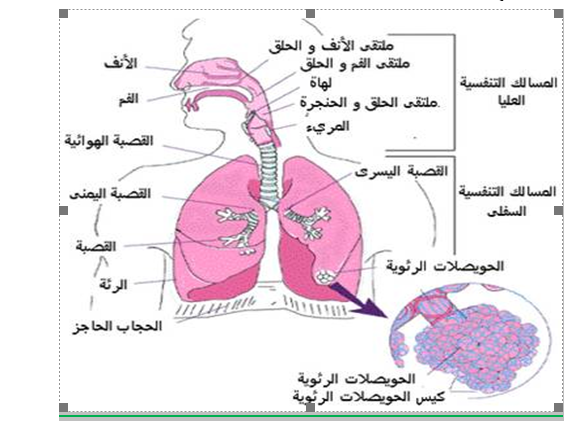
تشريح الجهاز التنفسى
الجهاز التنفسى من أهم أعضاء الجسم وهو مسئول عن نقل الأكسجين من الجو (الهواء الجوى) إلى الدم ثم ينتقل من الدم إلى باق أجزاء الجسم ويمر الهواء من الجو إلى الجهاز التنفسى وتحدث هذة العملية نتيجة لأنخفاض الضغط داخل الصدر عن الضغط الجوى وبذلك تحدث عملية الشهيق ويحدث الزفير نتيجة لأرتفاع الضغط داخل القفص الصدرى عن الضغط الجوى مما يسمح بمرور ابهواء من داخل القفص الصدرى إلى الجو وأثناء هذه المرحلة تحدث عملية تبادل الغازات وأنتقال الأكسجين من الجو إلى الحويصلات الهوائية ثم منها إلى الدم ثم يوزع على جميع خلايا الجسم.
اهميه الجهاز التنفسى
تكمن أهمية جهاز التنفس بأنه يوفر الكمية الكافية من الأوكسجين الذي تحتاجه كافة الخلايا للقيام بعملية التنفس الخلوي، وفي حال حدوث خلل واضطراب في جهاز التنفس، فسيؤدي إلى نقص الأوكسجين الواصل إلى الخلايا، وتعرف هذه الحالة بـhypoxia وسيؤثر هذا على جميع خلايا الجسم، وبشكلٍ خاص سيؤثر على خلايا الدماغ ويؤدي إلى موتها.
يتكون الجهاز التنفسى من :
1- التجويف الأنفى :
أول جزء من الجهاز التنفسى وهو يسمح بمرور الهواء وتنقيته وترطيبه قبل دخوله إلى الرئتين وتتم التنقية عن طريق شعر قصير موجود بتجويف الأنف وتتم التدفئة عن طريق شعيرات دمويه موجودة بتجويف الأنف ويتم ترطيب الهواء عن طريق الغشاء المخاطى المبطن للأنف
2- البلعوم :
وهو من أجزاء الجهاز الهضمي والتنفسي معا، والبلعوم عبارة عن ممر يحتوي على اللسان المزمار والذي يفصل ممر الهواء عن ممر الطعام.
3- الحنجرة :
وهو العضو المسئول عن الكلام وهويسمح بمرور الهواء من البلعوم إلى القصبة الهوائية - يحمى الجهاز التنفسى السفلى من الأجسام الغريبة وتسهل حدوث السعال.
4- القصبة الهوائية :
عبارة عن أنبوبة طولها 11سم وتتكون من حوالى 16 غضروف مبطنة بغشاء يعمل على تدفئة الهواء ويمر الهواء من خلالها إلى الشعب الهوائية بعد تدفئتة وترطيبه . ووظيفة القصبات الهوائية هي إيصال الهواء إلى من الأنف إلى الرئتين، ويبطن القصبه الهوائية الأهداب الصغيرة التي تجمع الجراثيم والأتربة وتطردها عبر المخاط
5- الشعب الهوائية :
وهي عبارة عن تفرعات صغيرة للقصبات الهوائية داخل الرئتين، وتكمن أهمية الشعيبات الهوائية بأنها توصل الهواء إلى مختلف أجزاء الرئتين.
تقع فى نهاية القصبة الهوائية وتنقسم إلى شعبيتن :
أ- الشعبة الهوائية اليمينية :
أقصر وأعرض وعمودية فى الوضع عن الشعبة الهوائية واليسارية
ب- الشعبة الهوائية اليسارية :
أطول واضيق وأفقية عن الشعب الهوائية اليمينية وذلك فأن الأجسام الغريبة من السهل دخولها إلى الرئة اليمنى عن اليسرى كما تنقسم كل شعبة هوائية إلى شعيبات هوائية اصغر .
6- الحويصلات الهوائية :
وهى أكياس منتظمة ممتلئة بالهواء موجودة فى نهاية الشعيبات الهوائية وهي عبارة عن الجزء الدقيق من الرئة المسؤول عن عملية تبادل الغازات، ويوجد بالرئتين ما يقارب 300 مليون حويصلة هوائية، وتحاط الحويصلات الهوائية بشبكة دقيقة من الشعيرات الدموية بحيث يتم تبادل الغازات بينها وبين الحويصلات الهوائية.3 .
7- الرئتين :
وهى تركيبة مطاطية تقع فى تجويف الصدر وهى تنقسم إلى رئة يمنى ويسرى
أ- الرئة اليسرى : تتكون من فصين
ب- الرئة اليمنى : تتكون من ثلاث فصوص وهى أوسع وأقصر من الرئة اليسرى كل فص من الرئة يحتوى على عدد كبير من الجيرات الصغيرة التى تحتوى على الحويصلات الهوائية
8- الغشاء البلورى:
غشاء يغطى الرئتين وهو طبقتين وبينهما فراغ يحتوى على كمية صغيرة يعمل على مرونة السطح الخارجى للرئتين لتسهيل حركتها أثناء التنفس .
أهمية الأكسجين وكيفية أنتقاله إلى الحويصلات الهوائية :
تحتاج خلايا الجسم إلى طاقة وهى تنتج عن عملية التمثيل الغذائى نتيجة لأحتراق الدهون والعناصر الغذائية وهذه العملية تحتاج لوجود الأكسجين الذى يصل إلى الجسم عن طريق التنفس. ونتيجة هذه الأكسدة يخرج ثانى أكسيد الكربون ويتخلص منه الجسم عن طريق التنفس أثناء عملية التنفس يمر الهواء بالجهاز التنفسى العلوى حتى يصل إلى الحويصلات الهوزائية حيث تمتلىء بالهواء وتتم عملية تبادل الغازات بين الحويصلات الهوائية والشغيرات الدموية المحيطة بها حيث يكون الأكسجين داخل الحويصلات الهوائية تركيزة أكبر من الأكسجين الموجود داخل الدم بالشعيرات الهوائية فيتم أنتقال الأكسجين من المكان الأكثر تركيزا وهو (الحويصلات) إلى الأقل تركيزا وهى ( الشعيرات الهوائية) ويحدث العكس لثانى أكسيد الكربون حيث أن تركيزة داخل الحويصلات يكون أقل من داخل الشعيرات الدموية فيتم أنتقال ثانى أكسيد الكربون من الشعيرات الدموية إلى الحويصلات الهوائية ويخرج ثانى أكسيد الكربون الزائد عن طريق الزفير وبذلك ينتقل الأكسجين إلى الدم ثم يوزع على جميع خلايا الجسموبذلك تتم عملية تبادل الغازات بين الحويصلات الهوائية والشعيرات الدموية ثم بين الشعيرات الدموية وخلايا الجسم من خلال عملية التنفس .
تقييم تمريضى لمرضى الجهاز التنفسى :
هناك عدة مشاكل مختلفة تؤثر على كمية الهواء الداخل أو الخارج من الحويصلات الهوائية مما يؤثر على عملية أمتصاص الغازات بالرئة والأضطرابات الحادة والمزمنة للجهاز التنفسى ونسبة مرتفعة من الأمراض التى تصيب الجهاز التنفسى معدية .
الأعراض و العلامات التى تشير إلى أمراض الجهاز التنفسى :
1- السعال : وهو عارض أكيد لمرض بالممرات الهوائية أو الشعب الهوائية ويحدث السعال لطرد أى جسم غريب بالممرات الهوائية كالأفرازات الضارة المهيجة للأغشية الداخلية بالجهاز التنفسى ويكون أما :
*جاف : إذا كان الغشاء المخاطى للشعب الرئوية محتقينا فقط
*مصحوب بمخاط : فيدل ذلك على وجود إفرازات غزيرة بالشغب ويمكن أن يكون ذلك نتيجة عدوى بالجهاز التنفسى .
2- البصاق : حيث يفرز المخاط كمية كبيرة ويحدث تهيج للممرات الهوائية مع تغير لونه ومكوناته فى حالات أمراض الجهاز التنفسى .
3- بصاق به دم : يحدث فى حالات الألتهابات الشعبية المزمنة والحادة وفى حالات الجلطة الرئوية - الأورام الشعبية - الدرن الرئوى - ضيق الصمام المترالى .
4- ألم فى الصدر : فى هذه الحالة يشعر المريض بألم شديد فى صدره وخصوصا مع الشهيق مما يجعل تنفس المريض سطحيا ويشعر المريض بألم على هيئة وخز أو طعن أو تمزق وأحيانا يوصفه بأنه قطعى ويكون أما تحت الأبط أو تحت الثدى - الظهر - القفص الصدرى .
5- ضيق فى التنفس : ويحدث صعوبه فى التنفس مما تؤثر الحالة العامة للمريض ونومه وجلوسه بالفراش وهى تحدث فى الحالات الشديدة وتحدث نتيجة وجود ألتهابات بالرئة أو تقلص بالشعب الهوائية كما يرجع الصعوبة فى التنفس إلى أمراض أخرى بالقلب
أهم الأحتياجات التمريضية لمرضى الجهاز التنفسى :
يحتاج مريض الجهاز التنفسى إلى الملاحظة مستمرة وعند وجود أى علامات غير طبيعية يبلغ الطبيب فورا.
الإحتياجات التمريضية تتضمن:
1. الراحة التامة للمريض بالفراش ووضعه على جهاز المونيتور لمتابعة رسم القلب وعدد نبضات القلب وحدوث أى تغير بها.
2. وضع المريض على ماسك أكسجين على معدل حسب أوامر الطبيب
3. ملاحظة سرعة التنفس وعمقه ( إذا كان صعوبة فى التنفس- سرغة فى التنفس-صعوبة فى التنفس)
4. ملاحظة لون المريض مثل حدوث زرقة الجسم والشفتين
5. ملاحظة حدوث سعال أوبصاق وملاحظة لونه وكميته ومحتوياته إذا كان مصحو بدم أو لا.
6. ملاحظة درجة حرارة الجسم لاحتمال وجود عدوى بالجهاز التنفسى.
7. عمل مزرعة بصاق إذا كان لونه غير طبيعى أو به رائحة كريهة.
8. مساعدة المريض على إخراج الأفرازات من الرئتين وذلك بعمل تمرينات التنفس وخصوصا بعد العمليات الجراحية بالصدر والقلب أو بعد فترة طويلة من التخدير.
9. أعطاء المريض العلاج حسب إرشادات الطبيب.
10. اعطاء المريض سوائل دافئة وغذاء ( حسب أوامر الطبيب).
11. حماية المريض من التعرض للعدوى وذلك عن طريق وضع منديل على فم المريض أثناء السعال ووضع المخلفات فى وعاء مغلق لمنع أنتشار العدوى.
12. فى حالة المرضى الموصوعين على جهاز التنفس الصناعى أو المريض فاقد الوعى يتم عمل تشفيط من الأنبوبة القصبة الهوائية وعمل تمرينات الصدر بإستمرار.
13. عمل تحليل غازات بالدم حسب أوامر الطبيب.
14. يبلغ الطبيب عند حدوث أى تغير فى حالة المريض
15. توفير الراحة الجسمانية والنفسية للمريض
16. توفير الجو الهادئ للمريض مع تقليل إزعاج المريض بالأنشطة التمريضية - العناية بالفم بإستمرار.
