
Book
The Procedural Approach For Respiratory Diseases
- Introduction to the Respiratory System
Anatomy of the Respiratory System:
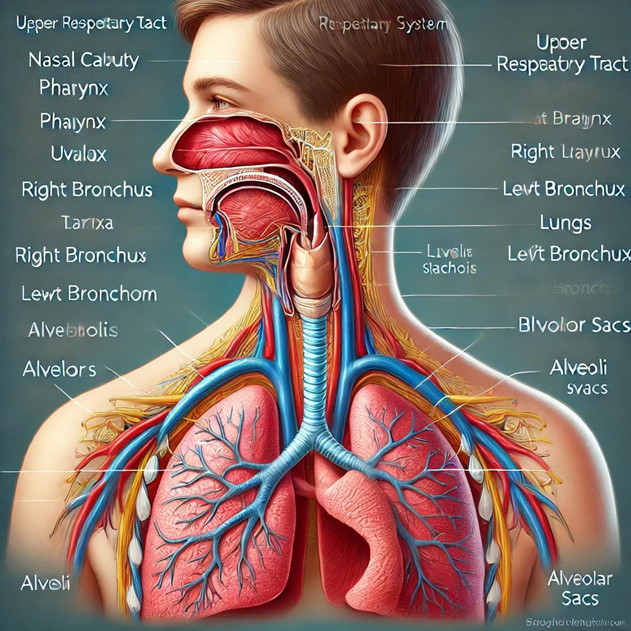
The respiratory system is one of the most important systems in the human body, responsible for transferring oxygen from the air (ambient air) to the blood, from where it is distributed to the rest of the body. Air flows from the environment into the respiratory system, and this process occurs due to the lower pressure inside the chest compared to the atmospheric pressure, leading to inhalation. Exhalation happens when the pressure inside the chest increases, causing air to be expelled from the lungs into the environment. During this process, gas exchange occurs, transferring oxygen from the air to the alveoli, from there into the blood, and then distributed to all body cells.
Importance of the Respiratory System:
The importance of the respiratory system lies in its provision of the necessary amount of oxygen required for cellular respiration. If there is any dysfunction or disruption in the respiratory system, it leads to insufficient oxygen supply to the cells, a condition known as hypoxia. This condition impacts all body cells, especially brain cells, leading to their death if untreated.
Components of the Respiratory System:
- Nasal Cavity:
The first part of the respiratory system, which allows the passage of air and filters, warms, and humidifies it before it enters the lungs. This is done through the fine hairs in the nasal cavity and the blood capillaries that warm the air. - Pharynx:
A common passage for both the respiratory and digestive systems. It contains the epiglottis, which separates the air passage from the food passage. - Larynx:
The organ responsible for voice production, allowing air to pass from the pharynx into the trachea. It protects the lower respiratory system from foreign bodies and facilitates coughing. - Trachea:
A tube approximately 11 cm in length, made up of about 16 cartilage rings, lined with a membrane that warms the air as it passes through to the bronchi. The bronchi further distribute air to the lungs. The trachea is also lined with small cilia that trap bacteria and dust, expelling them via mucus. - Bronchi:
These are small branches of the trachea that distribute air into different parts of the lungs. The bronchi divide into two branches: - Right Bronchus: Shorter, wider, and more vertical than the left bronchus.
- Left Bronchus: Longer, narrower, and more horizontal than the right bronchus, making foreign bodies more likely to enter the right lung. Each bronchus further divides into smaller bronchioles.
- Alveoli:
These are air-filled sacs located at the ends of the bronchioles and are the critical site for gas exchange. There are approximately 300 million alveoli in the lungs, and they are surrounded by a fine network of capillaries that facilitate the exchange of gases. - Lungs:
The elastic organs located in the chest cavity, with the right lung having three lobes and the left lung having two lobes. Each lobe contains a large number of small air sacs called alveoli, which are crucial for gas exchange. - Pleural Membrane:
A double-layered membrane covering the lungs, with a small space between the layers filled with fluid that helps the lungs move smoothly during breathing.
The Importance of Oxygen and How It Transports to Alveoli:
Body cells require energy, which is produced through metabolism as a result of burning fats and nutrients. This process depends on the presence of oxygen, which enters the body through breathing. During oxidation, carbon dioxide is produced, and the body expels it through exhalation. As air passes through the upper respiratory system and reaches the alveoli, the alveoli fill with air, allowing gas exchange to occur between the alveoli and the surrounding capillaries. Oxygen has a higher concentration in the alveoli than in the blood of the capillaries, so oxygen moves from the alveoli (high concentration) to the capillaries (low concentration). In contrast, carbon dioxide has a higher concentration in the capillaries than in the alveoli, so it moves from the capillaries to the alveoli to be exhaled. In this way, oxygen enters the bloodstream and is distributed to all body cells, completing the gas exchange process.
Nursing Assessment for Respiratory Patients:
Various problems can affect the amount of air entering or leaving the alveoli, impacting the gas exchange process. Respiratory disorders can be either acute or chronic, and many respiratory diseases are infectious.
Symptoms and Signs Indicating Respiratory Diseases:
- Cough:
A clear sign of a disease in the airways or bronchi. Coughing helps expel foreign bodies and harmful secretions irritating the respiratory mucous membranes. The cough may be: - Dry: If the mucous membranes of the bronchi are simply inflamed.
- Productive (with mucus): Indicating excessive secretions in the bronchi, possibly due to an infection.
- Sputum:
When the body produces large amounts of mucus, it can cause irritation in the airways, changing the color and consistency of the sputum, especially in respiratory illnesses. - Hemoptysis (Blood in Sputum):
May occur in cases of chronic or acute bronchitis, pulmonary embolism, bronchial tumors, tuberculosis, or mitral valve stenosis. - Chest Pain:
Severe pain in the chest, particularly with inhalation, which may make the patient breathe shallowly. The pain may be sharp or stabbing, and it can occur under the armpit, breast, back, or chest. - Shortness of Breath:
Difficulty breathing that can affect the patient’s general condition, including their ability to sleep and sit up in bed. This may result from lung inflammation or constriction of the bronchi and can also be related to heart disease.
Nursing Needs for Respiratory Patients:
Continuous monitoring is required for respiratory patients, and any abnormal signs should be promptly communicated to the physician.
Nursing needs include:
- Ensure complete bed rest for the patient and monitor with a heart rate monitor.
- Administer oxygen therapy as prescribed.
- Monitor the patient's breathing rate and depth (difficulty breathing, rapid or shallow breathing).
- Observe for cyanosis (bluish discoloration of the skin or lips).
- Track any coughing or sputum production, noting color, quantity, and whether blood is present.
- Check the patient's temperature to rule out respiratory infections.
- If sputum is abnormal or has a foul odor, perform a sputum culture.
- Assist the patient in expelling secretions from the lungs by teaching breathing exercises, especially after chest or heart surgery or extended anesthesia.
- Administer medications as directed by the physician.
- Provide warm fluids and nutrition as prescribed.
- Prevent infection by placing a tissue over the patient's mouth during coughing and disposing of waste in a sealed container.
- For patients on mechanical ventilation or unconscious patients, suction the trachea and perform chest exercises regularly.
- Conduct blood gas analysis as directed by the physician.
- Notify the physician of any changes in the patient's condition.
- Ensure the patient’s physical and psychological comfort.
- Provide a quiet environment and minimize disruptions during nursing activities, including regular oral care.
