
Book
The Procedural Approach For Respiratory Diseases
- Nursing Care for Pneumonia
Pneumonia
is a microbial infection that affects all or part of the lung, and it can be
caused by lung microbes or the inhalation of vomit or chemical gases, or due to
chronic inflammation of the respiratory system and reduced immunity.
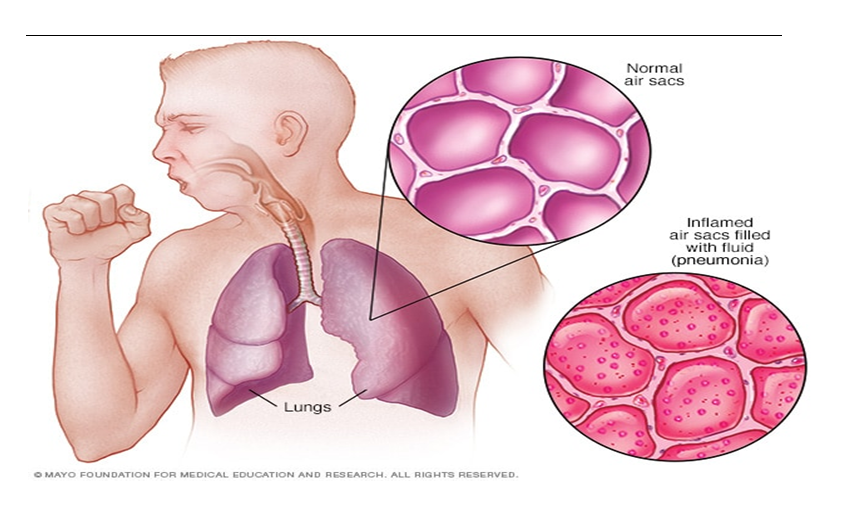
Symptoms:
- Fever
- Shivering
- Bluish discoloration of the lips, nails, and skin
- Increased heart rate and rapid breathing
- Cough with chest pain
Complications of Pneumonia: Common complications include:
- Low oxygen levels in the blood
- Drop in blood pressure to levels that threaten the patient’s life
- Lung abscess or empyema
- Severe lung injury
- Acute Respiratory Distress Syndrome (ARDS)
Treatment of Pneumonia:
- Antibiotics and sometimes antiviral or antifungal medications.
- Breathing support treatments.
Nursing Care:
- Continuously monitor vital signs (pulse, respiration, temperature).
- Observe the color of the patient (lips, nails).
- Monitor sputum (color, quantity, odor).
- Monitor the patient's symptoms and report immediately to the doctor if they occur, such as:
- Sudden drop in temperature with persistent pulse and respiration, indicating spread of the disease and shock.
- Persistent high fever, chest pain, and shortness of breath, which could suggest pus in the pleural membrane.
- Provide emotional and physical comfort to the patient.
- Ensure the patient is in a comfortable position in bed.
- Encourage the patient to cough to expel secretions and practice breathing exercises.
- Administer oxygen as per doctor's orders.
- Administer medication as prescribed by the doctor.
- Provide nutrition as instructed by the doctor.
- Maintain oral care, skin care, and general hygiene.
- Ensure laboratory blood tests and sample analysis are completed.
- Administer antibiotics as required.
- Keep the patient warm and comfortable.
- Perform suctioning as needed.
- Manage pain and cough.
- Provide overall comfort.
- Teach the patient proper hand hygiene.
