
Book
Procedural Work For Presseure Ulcers
- Bedsores
Bedsores, also known as pressure ulcers or decubitus ulcers, are injuries to the skin and underlying tissue that occur in areas subjected to prolonged pressure, particularly on bony prominences. These ulcers are commonly caused by prolonged periods of lying in bed, sitting in a wheelchair, or wearing a cast for an extended period of time. The most common areas affected are the elbows, knees, lower back, buttocks, back of the head, and ankles.
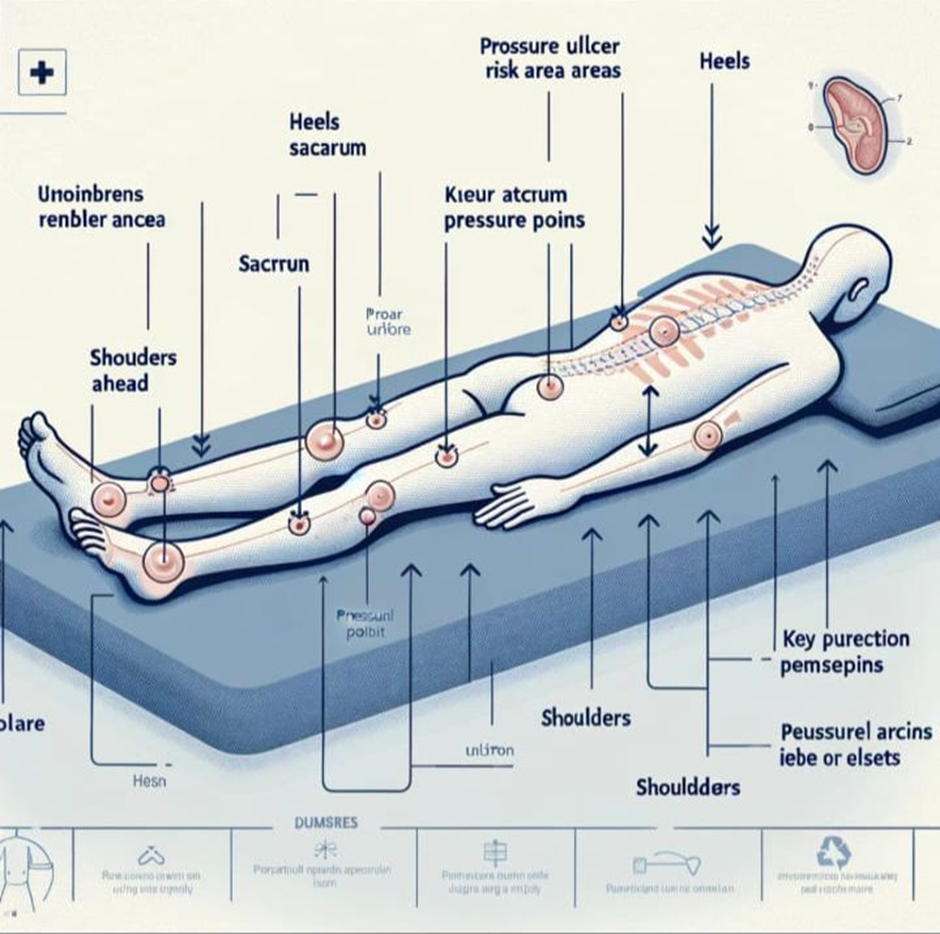
What Are the Causes of Bedsores?
- Moisture.
- Poor circulation.
- Malnutrition.
- Diabetes.
- Thinning of the skin.
- Poor hygiene and frequent contamination of the skin with urine and feces (therefore, the elderly and bedridden individuals wearing diapers are more likely to develop them).
- Friction (after prolonged lying, the skin becomes more fragile, and with friction or pulling of sheets, the skin is more prone to injury and sores).
- Wearing a cast for extended periods.
Symptoms of Bedsores:
- Skin color changes: The skin becomes pink or red if the skin is light, while dark skin may appear blue, purple, or only darken in the affected area. If the color does not disappear after changing positions and relieving pressure for 10–30 minutes, it indicates the formation of a pressure ulcer.
- Change in skin texture: The affected area may become firmer and warmer or may feel spongy, with pain and itching.
- Open wounds: After some time, sores may become open, containing fluid or pus, and the wound may extend into deeper tissue layers.
- Infection: In advanced stages, the color around the edges of the ulcer changes, becoming more painful, with increased pus or discharge. The tissue may turn yellow-green or black, and there may be fever or warmth in the surrounding area.
- In general, symptoms vary depending on the stage of the ulcer, as explained below.
Stages of Bedsores:
- Stage 1: The ulcer starts as a warm, red, or purple area that is slightly swollen, and the affected person may experience pain or itching.
- Stage 2: The area becomes more damaged, with an open wound, abrasion, or superficial skin erosion. The person may experience significant pain, and the skin surrounding the ulcer may change color.
- Stage 3: The ulcer deepens, becoming a pit due to tissue damage and the destruction of the fatty layer beneath the skin.
- Stage 4: The area is severely damaged and may appear as a large wound, often affecting muscles, and possibly extending to underlying tissues where bones and tendons may become visible. Infection is common at this stage, and the discharge may be yellow, green, or brown. This is the most dangerous stage and can lead to severe complications as the infection may spread to other parts of the body.
Prevention of Bedsores:
- Change the patient's position approximately every two hours.
- Use soft cushioning for wheelchairs and beds to reduce pressure on the skin.
- Provide good skin care, ensuring cleanliness, dryness, and continuous ventilation.
- Ensure a balanced diet with vitamins, minerals, proteins, and fluids to enhance overall immune health and skin condition.
- Quit smoking, as smoking increases the risk of bedsores due to damage to blood circulation.
Who Is Most at Risk for Bedsores?
- Older adults, as their skin becomes thinner, more fragile, and drier.
- Urinary incontinence and fecal incontinence, increasing the risk of skin damage and infection.
- Obesity, which increases pressure on the skin, especially when lying down for long periods.
- Medical conditions affecting blood supply, causing poor circulation, or making the skin more fragile, such as diabetes, peripheral arterial disease, kidney failure, heart failure, multiple sclerosis (MS), and Parkinson’s disease.
- Malnutrition, as not getting adequate nutrition affects skin condition, increasing the risk of bedsores.
Treatment for Bedsores:
- Regular position changes to improve blood circulation, reduce moisture, and ventilate the skin.
- Use of air mattresses equipped with a pump to provide continuous airflow.
- Provide healthy, balanced nutrition to the patient and encourage plenty of water intake.
- Clean minor wounds with water and soap, and clean open ulcers with saline solution. Regularly change the dressings and remove damaged tissue.
- Cover the wound with medical gauze or use dressings specifically designed for pressure ulcers.
- Topical antibiotics (creams and sprays) and prescribed oral antibiotics.
- Use barrier creams such as petroleum jelly around the ulcer to protect healthy skin surrounding the wound.
