Book
Newborn Assessment Guide
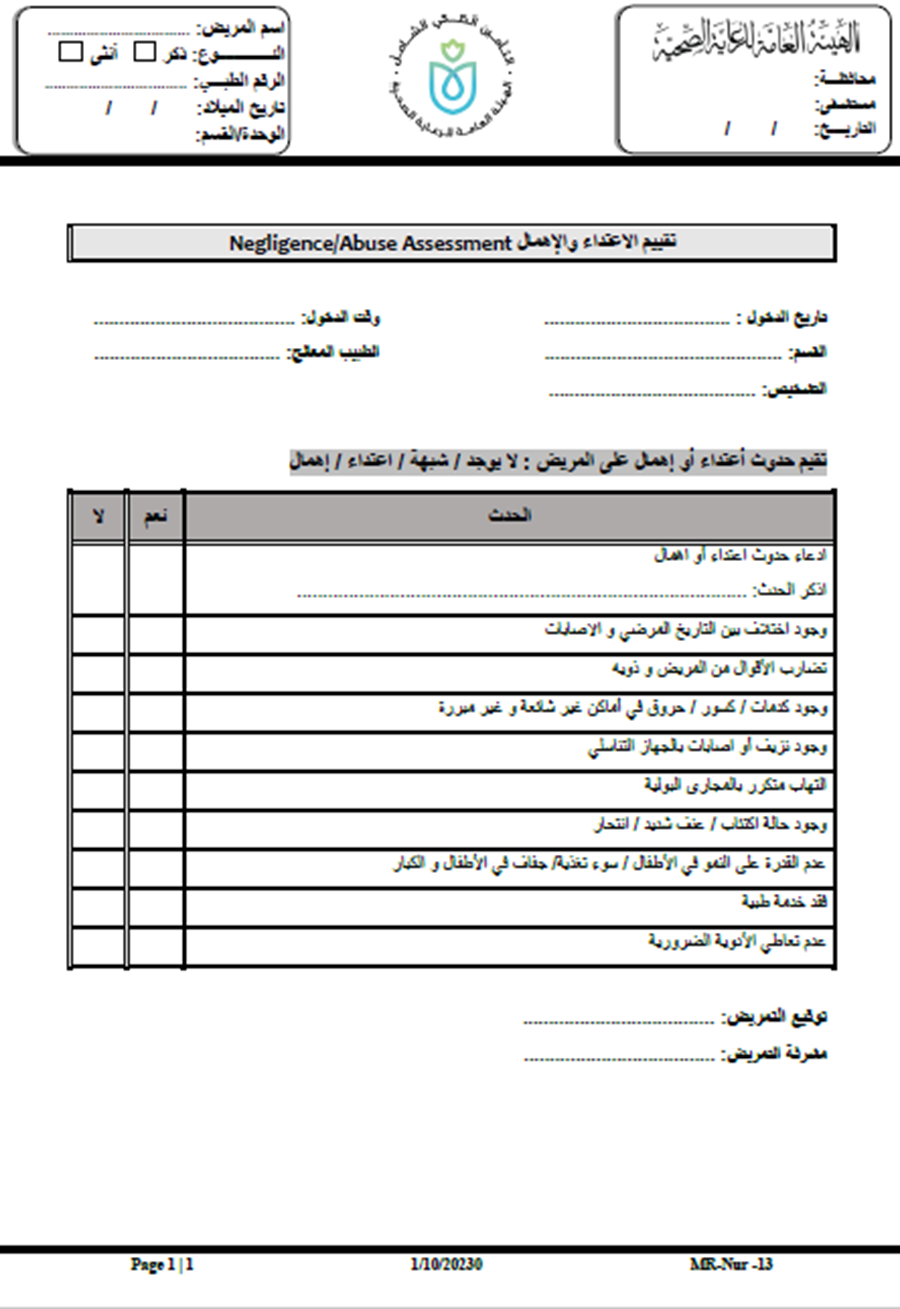
- Abuse and Neglect Assessment
Purpose:
- Establish guidelines and procedures for caring for at-risk patients by preventing unintentional or thoughtless actions that could cause injury or harm.
- Provide support and guidance to all medical team members in managing patients who may be at risk.
- Ensure respect for the rights, privacy, and dignity of vulnerable patients, particularly those with special needs.
Patients with Special Needs Who Are at Risk of Abuse and Neglect
Types of Abuse:
1. Mental Abuse (Psychological or Emotional Harm):
- Physical or verbal threats
- Intimidation
- Isolation
- Insults
- Humiliation
- Deprivation
2. Physical Abuse:
- Infliction of harm on the child’s body through (hitting, slapping, kicking)
Signs of Physical Abuse:
- Child falling or unexplained injuries
- Bedsores
- Untreated wounds
- Unexplained bruises or cuts
- Pain when touched
- Bite marks, scratches, abrasions, or bruises
- Signs of dehydration, malnutrition, sunken eyes, or eye injuries
3. Financial Abuse:
- Theft
- Misuse of money or property
- Extortion of the child’s guardians
- Fraudulent activities
- Unusual transactions in the child’s guardians’ bank accounts
- Reckless or irresponsible financial management
4. Neglect:
- Failure to provide necessary care without a valid medical reason by a responsible person during the child’s hospital stay.
Definition of a Vulnerable Patient:
- A person requiring assistance due to (intellectual disability, young age, brain atrophy, or functional impairment) that hinders their ability to protect themselves or provide self-care.
Potential Types of Neglect:
- Failure to provide adequate medical or nursing care
- Neglect in administering prescribed treatments
- Failure to meet social and psychological needs
- Lack of sufficient food and water
- Placing the patient in an unsafe environment without supervision
Procedures:
- The physician and nursing staff assess the child’s condition and determine their treatment needs.
- The physician and nursing staff inform the child’s guardians about the treatment plan and how it will be implemented.
- The ward supervisor conducts daily rounds to detect any signs of neglect or abuse, reporting them to hospital administration for appropriate action.
- If a case of abuse or neglect is identified:
- The attending physician evaluates the child’s condition, documents any signs of abuse or neglect, and ensures appropriate medical and psychological treatment.
- The physician encourages the guardians to submit a formal complaint if they choose, with or without their signature.
- The head of the medical team assigns the Patient Satisfaction Department to investigate the complaint and submit the findings for appropriate action.
Responsible Personnel:
- Physician
- Nursing staff
- Patient Satisfaction Department
Attachments:
- Abuse and Neglect Assessment Form