
كتاب
دليل العناية بمشكلات الجهاز التنفسي
- العلاج بالاكسجين
يستخدم الأكسجين كعلاج هام للمشاكل التنفسية الحادة، ولمنع التأثيرات الضارة التي قد يتسبب فيها نقص وصول الأكسجين إلى أنسجة الطفل، وخصوصاً المخ، ويعتبر الأكسجين علاجاً طبياً للأطفال حديثى الولادة المصابين بصعوبة التنفس، و بالتالى فإن معدل تدفق الأكسجين، وتركيزه لابد أن يكونا حسب تعليمات الطبيب، و تقوم الممرضة بملاحظتهما باستمرار، لمنع حدوث المضاعفات الناتجة عن نقص أو زيادة العلاج بالأكسجين.
دواعي الإستخدام :
· حالات نقص الأكسجين الملحوظة بنتائج غازات الدم الشريانية.
· الافاقة بعد الولادة و الأنعاش القلب الرئوى.
· حالات صعوبة التنفس المصحوبة بالزرقة.
· معالجة الإختلالات الوظيفية لأجهزة الجسم التي تنشأ عن نقص إمداد الأنسجة بالأكسجين (الصدمة).
· نوبات توقف التنفس المتكررة.
علامات حدوث نقص الأكسجين بالدم :
· زيادة معدل التنفس
· الأنجذاب الصدرى
· النتة أثناء الزفير
· التنفس السطحى السريع
· نوبات متكررة من توقف التنفس
· تغير لون الطفل إلى الزرقة
طرق إعطاء الأكسجين داخل وحدات رعاية حديثي الولادة :
يمكن إعطاء الأكسجين للأطفال حديثى الولادة بإحدى الطرق الآتية :
· أكسجين المحضن (Oxygen incubator)
· صندوق الرأس (Head box)
· قناع الوجه (Face mask)
· القثطرة الأنفية (Nasal catheter–prongs)
· القثطرة الأنفية البلعومية (Nasopharyngeal catheter)
· التنفس بإستخدام نظام الضغط الموجب المستمر على مجرى الهواء عن طريق الأنف (NCPAP)
·
التنفس الميكانيكي من خلال الأنبوب الحنجري (Mechanical ventilation)
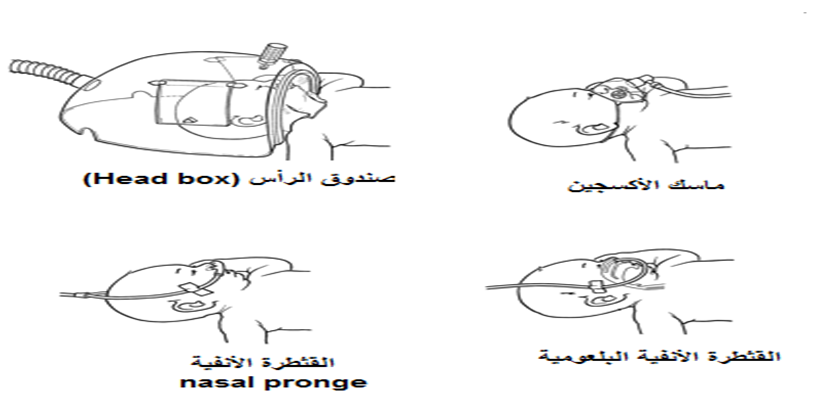
الطرق المختلفة لإعطاء الأكسجين داخل وحدات رعاية حديثي الولادة ومعدلات تدفق الأكسجين (لتر/دقيقة)، ومميزات وعيوب كل طريقة :
الطريقة | معدل تدفق الأكسجين لتر/دقيقة | المميزات | العيوب |
أكسجين المحضن | ٦ – ١٠ لتر/دقيقة | –طريقة غير إختراقية و غير مكلفة –تستخدم أثناء عملية فطام الطفل من الأكسجين | –طريقة غير فعالة مع الحالات الحرجة |
صندوق الرأس | ٤ – ۷ لتر/دقيقة | –طريقة غير إختراقية –تستخدم أثناء عملية فطام الطفل من الأكسجين | –طريقة غير مُحكمة، يمكن حدوث تسريب للأكسجين –يصعُب إعطاء الرعاية التمريضية المطلوبة للطفل |
قناع الوجة | ٣ – ٦ لتر/دقيقة | –طريقة غير إختراقية –طريقة بسيطة وغير مكلفة –تستخدم أثناء عملية الأفاقة بعد الولادة | –إنتفاخ بالبطن –ضغط على الوجه والعينين –إحتباس غاز ثاني أكسيد الكربون |
القثطرة الأنفية | 0,5 – ٢ لتر/دقيقة | –طريقة غير إختراقية –طريقة فعالة مع بعض حالات صعوبة التنفس | –إنتفاخ بالبطن –جروح بالأنف |
التنفس بإستخدام نظام الضغط الموجب المستمر على مجرى الهواء عن طريق الأنف | ۸ – ١٠ لتر/دقيقة (أكسجين + هواء مضغوط) | –طريقة غير إختراقية –طريقة فعالة لعلاج حالات صعوبة التنفس الشديدة | –إنتفاخ بالبطن –جروح شديدة بالحاجز الأنفي –إرتفاع التكلفة |
التنفس الصناعي من خلال الأنبوبة الحنجرية | حسب تعليمات الطبيب | –طريقة فعالة لعلاج حالات صعوبة التنفس الحادة المصحوبة بفشل وظائف التنفس | –طريقة إختراقية –قد تسبب عدوى الجهاز التنفسي –يحتاج عناية تمريضية ومهارات طبية عالية الجودة –يحتاج تقنية متقدمة (إمكانيات المستوى الثالث من الرعاية) –إرتفاع التكلفة |
الرعاية التمريضية :
▘ ملاحظة وتدوين اللون، الجهد التنفسي، العلامات الحيوية للطفل، وإبلاغ الطبيب فورًا في حالة حدوث أي إختلال.
▘ الملاحظة المستمرة لنسبة تشبع الدم بالأكسجين بإستخدام جهاز البالس أوكسيميتر (pulse oximeter)، والمحافظة عليها في حدود ۸٩ – ٩٣٪، وحسب تعليمات الطبيب.
▘ اعطاء الأكسجين رطب وذلك لمنع جفاف الغشاء المخاطى للمجرى الهوائى و الذى قد يتسبب فى زيادة لزوجة الأفرازات و تراكمها داخل الجهاز التنفسى.
▘ ملاحظة وتدوين معدل تدفق الأكسجين، الطريقة المستخدمة لأعطاء الأكسجين، و نسبة تشبع الدم بالأكسجين.
▘ تشفيط المجرى الهوائي كلما إستدعت الحالة مع ملاحظة و تدوين الإفرازات التي تم تشفيطها.
▘ عمل تحليل غازات وحموضة الدم الشرياني.
▘ متابعة قياس تركيز الأكسجين بإستخدام جهاز محلل الأكسجين (oxygen analyzer)؛ إن أمكن، لمنع المضاعفات التي قد تنتج عن زيادة نسبة الأكسجين المعطى للطفل عن الحد المسموح به.
المضاعفات الناتجة عن نقص الأكسجين :
▘ زيادة الضغط داخل الشريان الرئوى.
▘ التشنجات
▘ الأعتلال المخى بسبب نقص الأكسجين
▘ الشلل الدماغى
▘ الإعاقات الذهنية و السلوكية فى الأطفال على المدى البعيد.
المضاعفات الناتجة عن زيادة الأكسجين :
▘ تليف شبكية العين وفقدان البصر عند إعطاء الأكسجين؛ بنسب عالية لفترة طويلة، خصوصًا للمواليد ناقصي الوزن والنمو.
▘ تعّود الرئة على الأكسجين، وصعوبة الفطام من الأكسجين (مرض الرئة المزمن).
▘ الإسترواح الصدري؛ خاصةً مع إستخدام نظام الضغط الموجب المستمرعلى المجرى الهوائي أو التنفس الصناعي.
