
كتاب
الارشادي لمكافحه العدوى بالعمليات
- غسيل الأيدى
( غسل اليدين الجراحي )
الهدف من غسيل اليدين هو :
الجو الرطب الدافئ داخل القفاز الجراحي يساعد على النمو السريع للميكروبات على الأيدي داخل القفاز . ولذلك عملية الغسيل الجراحي باستخدام مطهر قبل بدء الإجراء الجراحي تساعد على منع هذا النمو السريع للميكروبات لفترة من الوقت مما يقلل من مخاطر حدوث عدوى للمرضى في حالة حدوث ثقب أو تهتك للقفاز في أثناء العملية .
غسيل الأيدى جراحياً :
1- يجب عدم لبس الخواتم أو الأساور أو الساعة في وحدة العمليات والجراحة .
2- يجب ألا تطال الأظافر .
3- يجب ألا تكون مدهونة بطلاء أظافر .
4- يجب عدم وجود أي أظافر صناعية .
5- يفضل أن يتم غسيل الأيدي بين كل عملية وأخرى ولكن يمكن استخدام 3-5 مم من الكحول
( Alcohol hand rub ) بين العمليات وتدعك به الأيدي جيداً حتى يجف وذلك عندما يكون هناك ضغط عمليات كثيرة وراء بعضها لمنع التهابات الجلد نتيجة لاستخدام البيتادين كثيراً .
6- يستخدم البيتادين في غسيل الأيدي جراحياً ولكن الأحدث الآن هو غسيل الأيدي بالماء الدافئ والصابون السائل ثم الدعك بالكحول ( Alcohol hand rub ) .
7- دائماً ترفع الأيدي فوق مستوى الكوع حتى ينساب الماء من الأيدي ( الأقل تلوث ) إلى الأذرع (الأكثر تلوث ) .
الدراسات الحديثة أوضحت أن استخدام الفرشاة الناعمة في دعك الأيدي لا يؤثر على تقليل الميكروبات أكثر بل على العكس قد يؤدي إلى تشققات وجروح دقيقة وتهيج للجلد مما يؤدي نتيجة عكسية .
متى يتم الغسيل الجراحى :
⬅️ قبل التدخلات الجراحية.
⬅️ قبل تركيب القساطر البولية.
⬅️ قبل تركيب قسطرة وريد مركزية.
⬅️ قبل الغيار على الجروح العميقة والحروق.
خطوات دلك اليدين بالكحول استعداداً للتدخل الجراحي :
⬅️ قبل القيام بأول تطهير لليدين يجب غسلهما جيداً باستخدام الصابون العادي بنفس الطريقة و الخطوات السابقة.
⬅️ التأكد من تجفيف اليدين جيداً ثم صب حوالي 5 ملل من الكحول في أحد الكفين.
⬅️ دلك الأيدي بالكحول والتأكد من وصوله إلى المناطق الموجودة أسفل الأظافر وأعلى الساعد.
⬅️ كرر الإجراء على اليد والساعد الآخر.
خطوات غسيل الإيدى الجراحي
1. اخلع جميع الحلي باليدين أو المعصمين.
2. بلل اليدين والساعدين تماماً إلى أعلى مستوى المرفق.
3. نظف أسفل كل ظفر من الأظافر وحول قاعدته، يحظر استخدام الفرشاة الخشنة لتنظيف الأظافر حيث أنها تتسيب في التهايات الجلد مما يساعد على انتقال العدوى.
4. ضع مادة مطهرة مما سبق ذكره على اليدين والساعدين إلى المرفق مع رفع اليدين إلى أعلى فوق مستوى المرفق وبحركة دائرية، ابدا عند أطراف الأصابع فى إحدى اليدين ورغي ثم اغسل بين الأصابع واستمر من أطراف الأصابع إلى المرفق. كرر هذه العملية باليد والذراع الأخريين. واصل الغسل لمدة ٥ دقائق على الأقل قبل أول عملية في اليوم ولمدة ٥ - ٢ دقائق على الأقل قبل العمليات التالية.
5. اشطف كل ذراع على حدة بدءا بأطراف الأصابع مع رفع اليدين أعلى مستوى المرفق.
6. استخدم منشفة معقمة للتجفيف. استخدم أحد جانبي المنشفة تجفيف إحدى اليدين والجالب الآخر من المنشفة لتجفيف اليد الأخرى.
7. اجعل اليدين فوق مستوى الخصر ولا تلمس أي شئ قبل ليس الرداء المعقم والقنارات الخاصة بالجراحة
" التنظيف " أو "التنظيف والتطهير" أو التنظيف والتعقيم" حسب نوع الأداء أو الآلة
المستخدمة وكيفية الاستخدام.
• التنظيف (Cleaning) : هو الخطوة الجوهرية الأولى التى يتم تنفيذها عند إعادة معالجة الأدوات • و تشتمل عملية التنظيف على مادة منظفة أو سائل إنزيمي للتخلص من المواد العالقة (مثل الأترية والمواد العضوية والميكروبات).
• التطهير (Disinfection) : أي صلية كيميائية أو فيزيانية تقلل الحمل الحيوي (عدد الكائنات الحية الدقيقة) إلى الحد الذي يصبح التعامل مع ما تم تطهيره أمناً.
• المادة المطهرة (Disinfectant) : هي عامل كيميائي في أغلب الأحيان وقد يكون عاملاً فيزيائياً (مثل الحرارة أو أشعة إكس أو الأشعة فوق البنفسجية) حيث تعمل هذه المواد على قتل كافة الميكروبات، إلا أنها قد تعجز عن قتل كل الحريصلات البكتيرية.
يستخدم التطهير الكيميائي إذا كان التطهير باستخدام الحرارة غير مناسب بسبب إمكانية تعرض المعدات للتلف عن طريق الحرارة ، وهناك مجموعة كبيرة من المطهرات الكيميائية ذات انشطة مختلفة في مقاومة الميكروبات. ومن المدير بالذكر أنه يجب التفرقة بين تلك المطهرات المستخدمة لتطهير الجوامد والأجسام الصلبة (Disinfectants) مثل الآلات والمعدات عن تلك التي يتم استخدامها في معالجة الأنسجة الحية والقضاء على الميكروبات . (Antiseptics) الموجودة على الجلد
ونظراً لاتساع قاعدة المطهرات فإنه يمكن تقسيمها وفقاً لنشاطها في مقاومة الميكرويات إلى ثلاثة أقسام: مطهرات ذات مستوى مرتفع ومطهرات ذات مستوى متوسط ومطهرات ذات بستوى منخفض،
• المطهر المنخفض المستوى ("Low level disinfectant "LLD) : هو العامل الذي يتسنى من خلاله القضاء على كافة البكتيريا الحية المتكاثرة غير المتحوصلة" (ما عدا البكتيريا المسبية للدرن) والفيروسات الدهنية وبعض الفيروسات غير الدهنية.
وبعض الفطريات.
: (Intermediate Level Disinfectant "ILD") المطهر ذو المستوى المتوسط •
هو عامل يمكن من خلاله القضاء على البكتيريا الحية المتكاترة متضمنة البكتيريا المسيبة المدرن ، والفيروسات الدهنية وبعض الفيروسات غير الدهنية والحويصلات الفطرية ، إلا أنه ليس فعالاً في القضاء على الحويصلات البكتيرية.
• المطهر ذو المستوى المرتقع ("High Level Disinfoctant "HLD) : يعرف
المطهر ذو المستوى المرتفع بأنه المادة التي يتسنى من خلالها القضاء على بعض
الحويصلات اليكتيرية حينما يتم استخدامه بتركيز مناسب وتحت درجة حرارة مناسبة ولعدة زمنية معددة وفي ظل الظروف المناسبة ، ومن المتوقع أن يكون لهذا العطير نو المستوى المرتفع أثراً بالغا فى مقاومة البكتيريا الحية المتكائرة غير المتحوصلة والفطريات والغيروسات كما يعمل على قتل عصيات البكتيريا العسبية لعرض الدرن .
لكن ميرز قصور هذا النوع من المطهرات في القضاء على اعداد كبيرة من الحريصلات ليكتيرية.
• الفيروس الدهني (Lipid Virus) : هو الغيروس الذي تحاط مادته الوراثية بطبقة من البروتين أو البروتين الدهني. ويمكن بسهولة أن يتم تقليل نشاط الغيروسات التي تتدرج تحت هذه الفئة من الغيروسات مثل فيروس العوز المناعي البشري (HIV) والالتهاب الكيدي الغيروسى بي" ، لسى" باستخدام الأنواع المختلفة من المطهرات بما في ذلك المطهرات ذات المستوى المنخفض ، وتعرف هذه الفيروسات أيضاً باسم الغروسات المغلقة،
• الفيزوس غير الدهني (Non-Lipid Virus) : هو الفيروس الذي لا يحاط الحمض النووي له بطبقة دهنية • وتتصف هذه الفيروسات بشكل عام بمقاومتها الشديدة لتأثير المطهرات حيث يصعب تقليل نشاطها ، وتسمى هذه القيروسات أيضاً باسم الفيروسات لممتصة للماء مثل فيروس الكوكساكي (coxsackie) ومجموعة الإنتير وفيرس
(Enteroviruses)
⁃ مولدات الحمى (Pyrogens) : هى المواد المسيبة للحمى مثل السعوم الداخلية الناتجة من الأعشية الخارجية للبكتيريا السالبة لصيغة حرام.
• تصنيف سبولدينج (Spaulding Classification) : الاستراتيجية التي وضعه د / لبرل اتش سبولديتج لإعادة معالجة الأدوات والآلات الطبية الملوثة.
وتنقسم الأدوات الطبية في طل هذا التصنيف إلى أدوات عالية الخطورة ومتوسطة الخطورة وقليلة الخطورة بناء على درجة الخطورة التي يتعرض لها المريض من الأداء الملوثة . ومن ثم فقد تم تطبيق ثلاثث طرق لإعادة المعائحة وفقاً لهذه الخطورة ، فعلى سبيل المثال، تعد الأداء التى يتم استخدامها في اختراق الأنسجة عالية الخطورة ومن ثم يتبغي أن يتم تنظيفها ثم تعقيمها، كذلك تحتاج الأداء التي تلامس الأغشية المخاملية إلى القيام يتنظيعها ثم تطبيرها بعادة مطهرة ذات مستوى عالي من الكفاءة إذا كانت لا تتحمل الحرارة العالية، وأما الأداء التى تلامس الجلد السليم فلا تحتاج سوبى التتخليف.
* المادة المعقمة (Sterilant) : هى التى تقضي على كافة الأشكال الميكروبية الحية والبرايرنات-
• التعقيم (Sterilization) : هو التخلص من الميكرربات والقضاء على كافة أنواع الحياة الميكروبية بما فى ذلك الحريصلات البكتيرية وذلك من خلال عمليات فيزيائية أو كيميائية ، ويلزم تنظيف وتعقيم الأدوات أو الآلات التي يتم تصنيفها على أنها أدوات خطيرة طبقاً لتصليف سبولدينج.
وتعتمد عملية التعقيم الخاصة بالأدوات أو المعدات على التعقيم باستخدام البخار المضغوط أو التعقيم الحرارى الجاف أو التعقيم تحت درجات حرارة متخفضة.
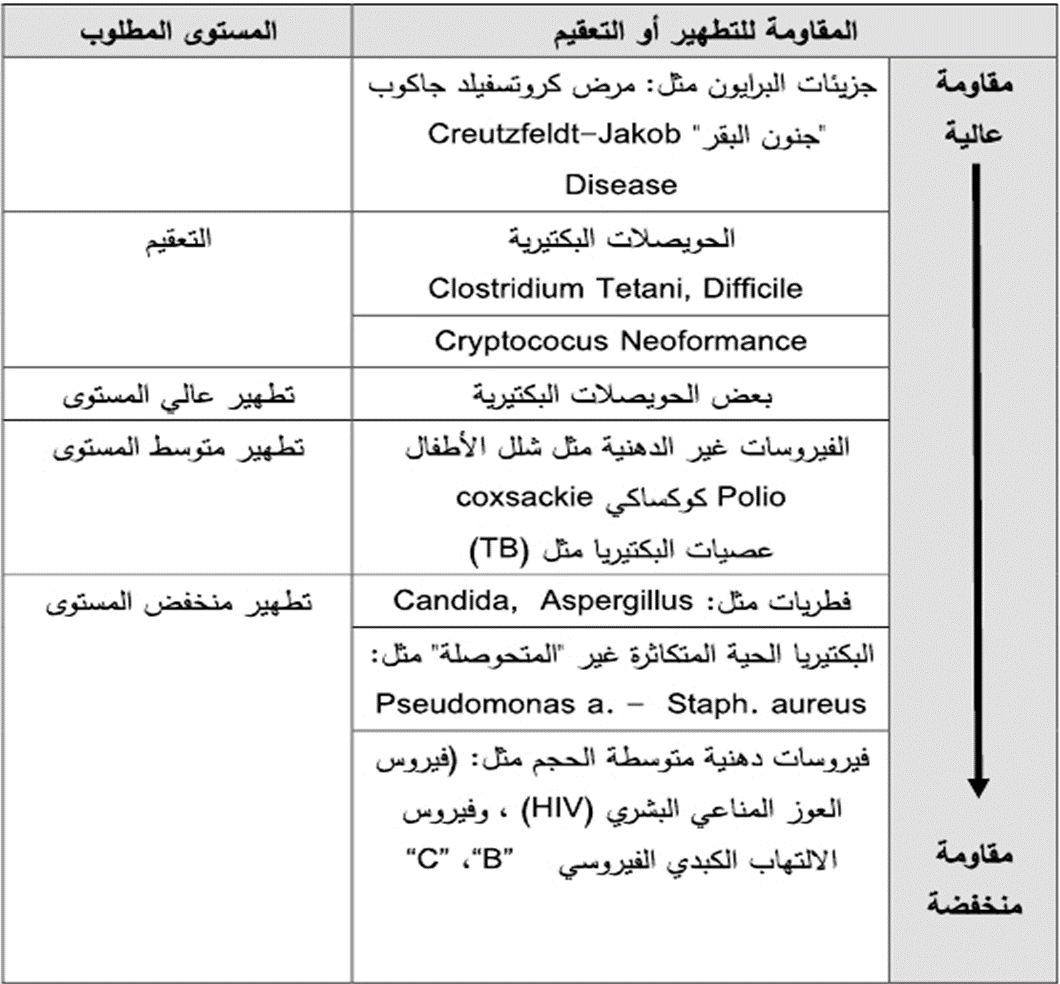
جدول رقم (١١): الترتيب التنازلى لمقاومة الميكروبات للتطهير والتعقيم :
وتتصف البرابونات بمقاومتها لطرق التطهير والتعقيم التقليدية.
