Book
Guide to using devices in surgical operating rooms
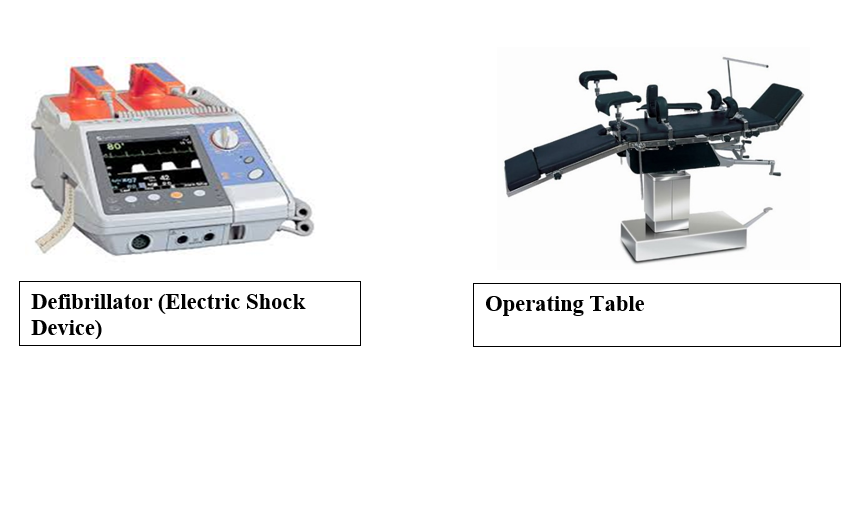
- Types of Electrical Shocks
1. Non-Synchronized Shock (Defibrillation)
- The shock is delivered immediately when the button is pressed (not synchronized with the heart rhythm).
- Energy levels:
- First shock: 200 J
- Second shock: 300 J
- Third shock: 360 J
- If unsuccessful, perform CPR for 1 minute and then reattempt defibrillation.
Indications for Non-Synchronized Shock:
1. Pulseless Ventricular Tachycardia (VT)
2. Ventricular Fibrillation (VF)
2. Synchronized Shock (Cardioversion)
- The shock is synchronized with the R wave of the ECG.
- The device automatically selects the right timing for shock delivery.
- Lower energy levels (typically 50–100 J).
- A sedative should be given before delivering the shock.
- Only one shock is delivered per cycle.
Indications for Synchronized Shock:
Unstable Tachycardia (irregular heart rate with low blood pressure), including:
1. Atrial Fibrillation (AF)
2. Ventricular Tachycardia (VT) with a pulse
3. Supraventricular Tachycardia (SVT)
If blood pressure is normal:
- Start with medications such as:
- Digoxin
- Adenosine
- Verapamil (Isoptin)
- Amiodarone (Cordarone)
- If blood pressure drops, then proceed with synchronized cardioversion.
Critical Mistake in Defibrillation
- Fatal error: Misdiagnosing Ventricular Tachycardia (VT) with a pulse as Pulseless Ventricular Tachycardia (PVT).
- Why is this dangerous?
- Both conditions may appear identical on an ECG.
- If the patient has a pulse, but a non-synchronized shock (defibrillation) is delivered instead of a synchronized shock (cardioversion), the incorrect shock can eliminate the pulse, worsening the condition and possibly causing death.

1. Ventricular Fibrillation (VF)

2. Immediately After the Electric Shock

3. In Case of Success