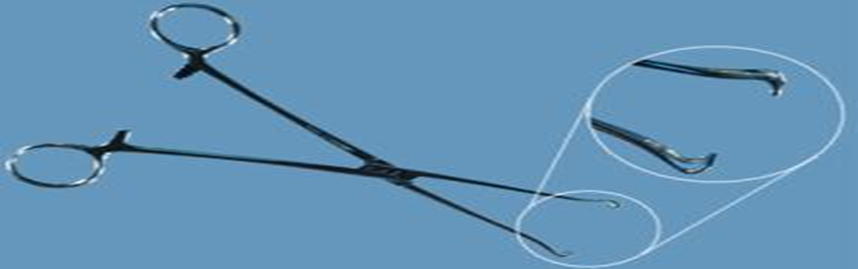
Book
Surgical Instruments Manual
- Dressing and Tissue Forceps
Forceps consist of two gripping tips held together at the end and equipped with a spring mechanism that allows them to open.
- Forceps can be classified as either dressing or tissue forceps:
- Dressing Forceps: Have smooth tips for handling dressings.
- Tissue Forceps: Have serrated tips for gripping tissues.
Most forceps are named after their designer, such as Adson forceps.
- Rat Tooth Tissue Forceps:
- Feature interlocking teeth that provide a firm grip on tissues without slipping.
- Used for holding skin and dense tissues.
Figure (2)

Adson Tissue Forceps
A fine-toothed instrument with small serrations at the tip. Adson tissue forceps have thin, precisely serrated tips, designed for carefully grasping tissues.
Figure (3)
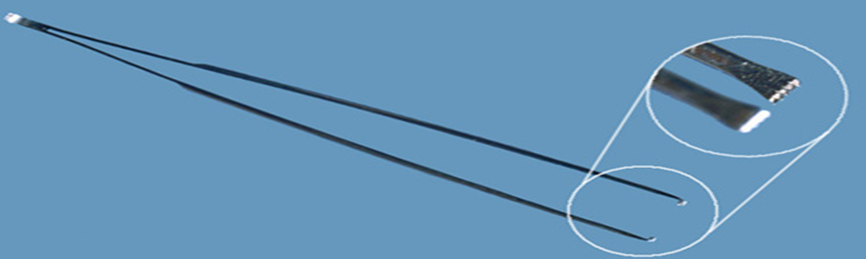
Intestinal Tissue Forceps
- Allis Forceps: Designed to lock when used to grasp tissues.
- Intestinal Tissue Forceps: Used for holding the intestines, tissues, omentum, and skin.
Figure (4)

Babcock Intestinal Tissue Forceps
- Babcock forceps have finer serrations than Allis forceps.
- Features a wide, outward-curving tip with a smooth gripping surface.
- Used for holding delicate, traumatized organs such as the intestines and bladder.
Figure (5)