Book
Supportive Developmental Care for Newborns
- Positive Touch and Massage
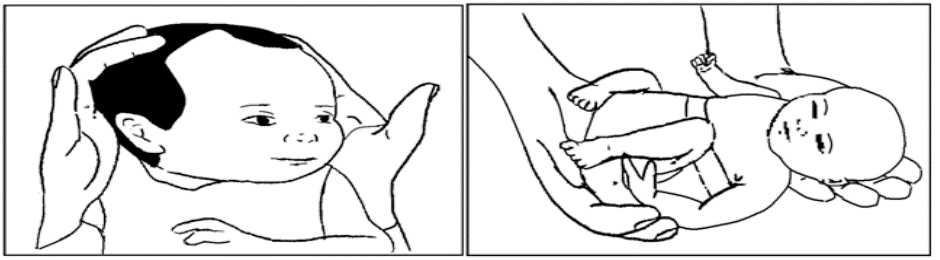
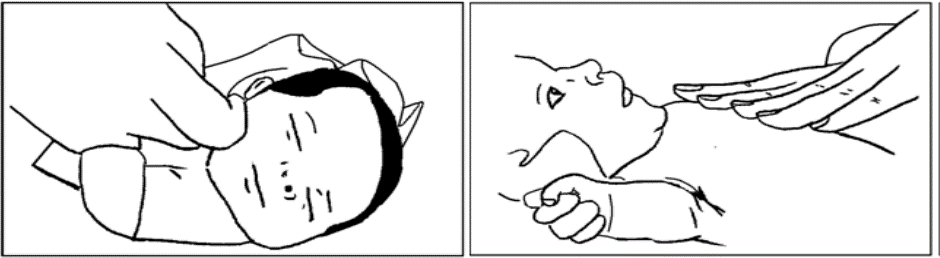
Positive touch and massage serve as a silent form of communication between the caregiver and the infant, aiming to provide a gentle and reassuring touch. It includes:
- Light finger tipping – Gentle tapping with fingertips.
- Resting a hand – Placing hands softly on the infant’s skin.
- Containment – Providing physical support to help the infant feel secure.
- Massage – Gentle rubbing to promote relaxation.
Benefits of Positive Touch
- Provides the infant with a sense of security and reassurance by introducing a comforting touch that is not associated with pain.
- Helps the infant return to a calm state after experiencing a painful procedure.
- Reduces stress caused by maternal separation.
- Enhances the infant’s ability to self-regulate.
Positive Touch for
the Newborn
Infant Massage
Infant Massage
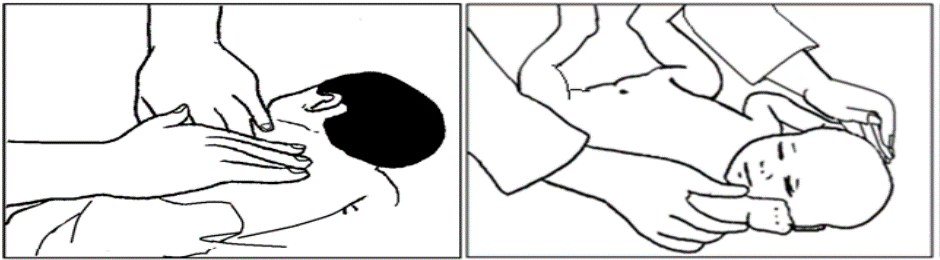
Massage involves gently gliding hands over the baby's skin to create a soothing, comforting, and muscle-relaxing effect.
Benefits of Infant Massage:
- Reduces episodes of apnea of prematurity (temporary pauses in breathing in preterm infants).
- Helps the baby reach full digestive feeding more quickly.
- Improves oxygen saturation levels in the blood.
- Enhances blood circulation.
- Helps the baby relax.
- Promotes deep and prolonged sleep in low-birth-weight infants.
- Aids in weight gain for preterm infants.
- Reduces the length of hospital stay.
Steps for Infant Massage:
Initially, the baby should be placed in a prone position (lying on the stomach), and each step should be repeated six times using gentle strokes:
- From the top of the head to the base of the skull, then back.
- From the neck to the shoulders, then back.
- From the shoulders to the lower back, then back along the spine.
- From the shoulders to the wrists, then back along the back of the arms.
- From the pelvis to the heels, then back along the back of the legs.
Next, turn the baby onto their back (supine position) and perform six repetitions of flexion and extension for:
- Each arm separately, while stabilizing near the collarbone.
- Each leg separately, while stabilizing near the pelvic bones.
- Both legs together, while holding the ankle joints.
Finally, turn the baby back onto their stomach and repeat steps 1 to 5.