
Book
Supportive Developmental Care for Newborns
- Nesting (Positioning the Infant in a Nest)
Definition:
Nesting refers to surrounding the infant with a soft fabric roll to create a
secure and supportive environment.
Objective:
Premature infants lack the ability to position themselves as they would in the womb due to their underdeveloped nervous system. Nesting helps simulate the womb-like environment, providing the baby with a sense of security and containment, which promotes stabilization of vital signs and weight gain.
Steps for Nesting:
- Prepare a clean, square cloth.
- Roll the edges of the cloth to form a soft cylindrical shape, making the middle section thicker and the ends slightly thinner.
- Shape the fabric roll into a horseshoe (U-shape).
- Position the thicker part under the baby’s lower back and wrap the rest of the roll around their body.
- Place a small towel under the baby’s shoulders for additional support.
- Adjust the baby’s arms and legs into a flexed position, bringing the limbs close to the midline of the body.
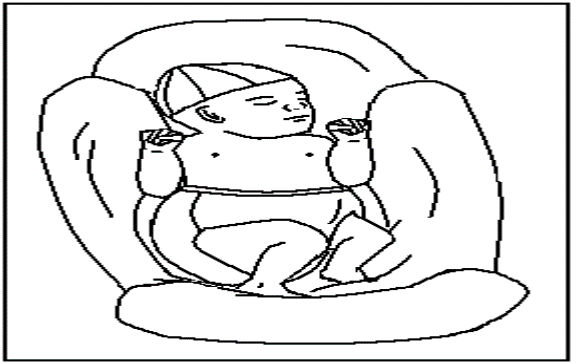
Nesting (Positioning the Infant in a Nest)
Benefits of Nesting for the Infant
- Helps the infant cope with stress caused by routine painful or uncomfortable procedures, such as heel pricks or blood sample collection.
- Assists in regulating the infant’s neuromuscular reflex response during challenging and painful procedures, such as airway suctioning and chest physiotherapy.
