
Book
Supportive Developmental Care for Newborns
- Kangaroo Mother Care (KMC)
Kangaroo care is inspired by how a mother kangaroo carries her baby in a pouch to provide warmth and security. The method involves direct skin-to-skin contact between the infant and a parent to enhance bonding.
Procedure:
- The infant is undressed, except for a diaper, hat, and socks.
- The infant is placed in an upright position against the parent’s bare chest.
- The head is turned so that the infant’s ear is aligned with the parent's heartbeat.
This technique promotes attachment, stabilizes vital signs, and supports growth and development.
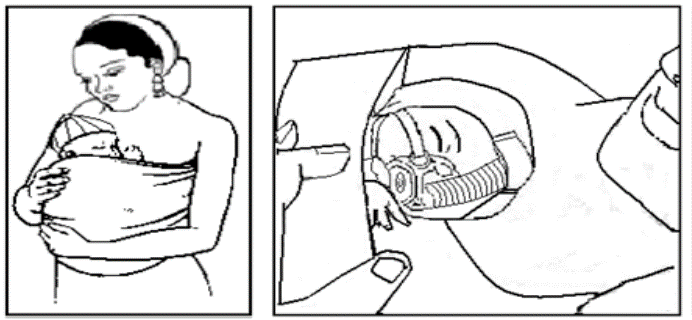
Kangaroo Mother Care
Kangaroo Mother Care (KMC)
Kangaroo Mother Care is inspired by how a kangaroo mother carries her baby in a pouch to keep it warm and safe. This method aims to strengthen the bond between the newborn and their parents through direct skin-to-skin contact, contributing to improved health and growth.
Benefits of Kangaroo Mother Care for the Infant
- Helps improve oxygen saturation levels.
- Helps regulate the infant’s heartbeat within normal rates.
- Stabilizes the infant’s body temperature.
- Reduces stress, which can negatively affect the infant’s nervous system.
- Supports early initiation of breastfeeding, increases milk production, and extends the breastfeeding duration.
- Contributes to weight gain by reducing energy loss.
- Shortens the infant’s hospital stay.
Benefits of Kangaroo Mother Care for Parents
- Strengthens the emotional bond between parents and their sick newborn.
- The infant’s pressure on the mother’s abdomen helps reduce postpartum bleeding.
Infants Suitable for Kangaroo Mother Care
- Can be applied to infants of any gestational age or postnatal age.
- The infant should be physiologically stable, with a body temperature not lower than 36°C.
- If the infant has apnea or a low heart rate, it should be mild and responsive to stimulation.
- Can be applied even if the infant is receiving nasal CPAP (NCPAP) or mechanical ventilation.
The Nurse's Role in Implementing Kangaroo Mother Care
- Explain the importance of this method to the mother to ensure successful implementation.
- Provide a comfortable chair for the mother to sit on.
- Offer suitable clothing for the mother, such as an open-front gown with another open-back gown on top.
- Maintain the mother’s privacy and ensure a quiet environment.
- Measure the infant’s temperature before placing them on the mother’s chest.
Reducing Pain from Invasive Procedures in Newborns
Both full-term and preterm infants experience pain and react to it, which is evident through changes in their cardiovascular and respiratory systems, such as increased heart rate, elevated blood pressure, and reduced oxygen saturation levels. Therefore, it is crucial to minimize pain exposure for newborns in neonatal intensive care units (NICUs) during invasive procedures by following these guidelines:
Before Performing an Invasive Procedure:
- Cluster invasive procedures and perform them before feeding.
During the Invasive Procedure:
- Swaddle the infant while carrying out the painful procedure.
- Use non-nutritive sucking by providing a pacifier.
After the Invasive Procedure:
- Reduce light exposure and limit noise.
- Perform massage therapy or other forms of positive touch.
- Allow a parent to apply Kangaroo Care or hold the infant immediately after the procedure.
- Maintain the infant’s position by surrounding them with hands or wrapping them in a cloth nest (Nesting).

Swaddling Newborns
